FACE PRESENTATION
DALIYA C A
O6 UNIT
FACE PRESENTATION
INTRODUCTION
• FETAL LIE
• PRESENTATION
• POSITION
• ATTITUDE
PRESENTATION
Part of the fetus that lies over the pelvic inlet and
occupies the lower pole of the uterus.
PRESENTING PART
Most dependent part of the fetus,which felt on
vaginal examination.
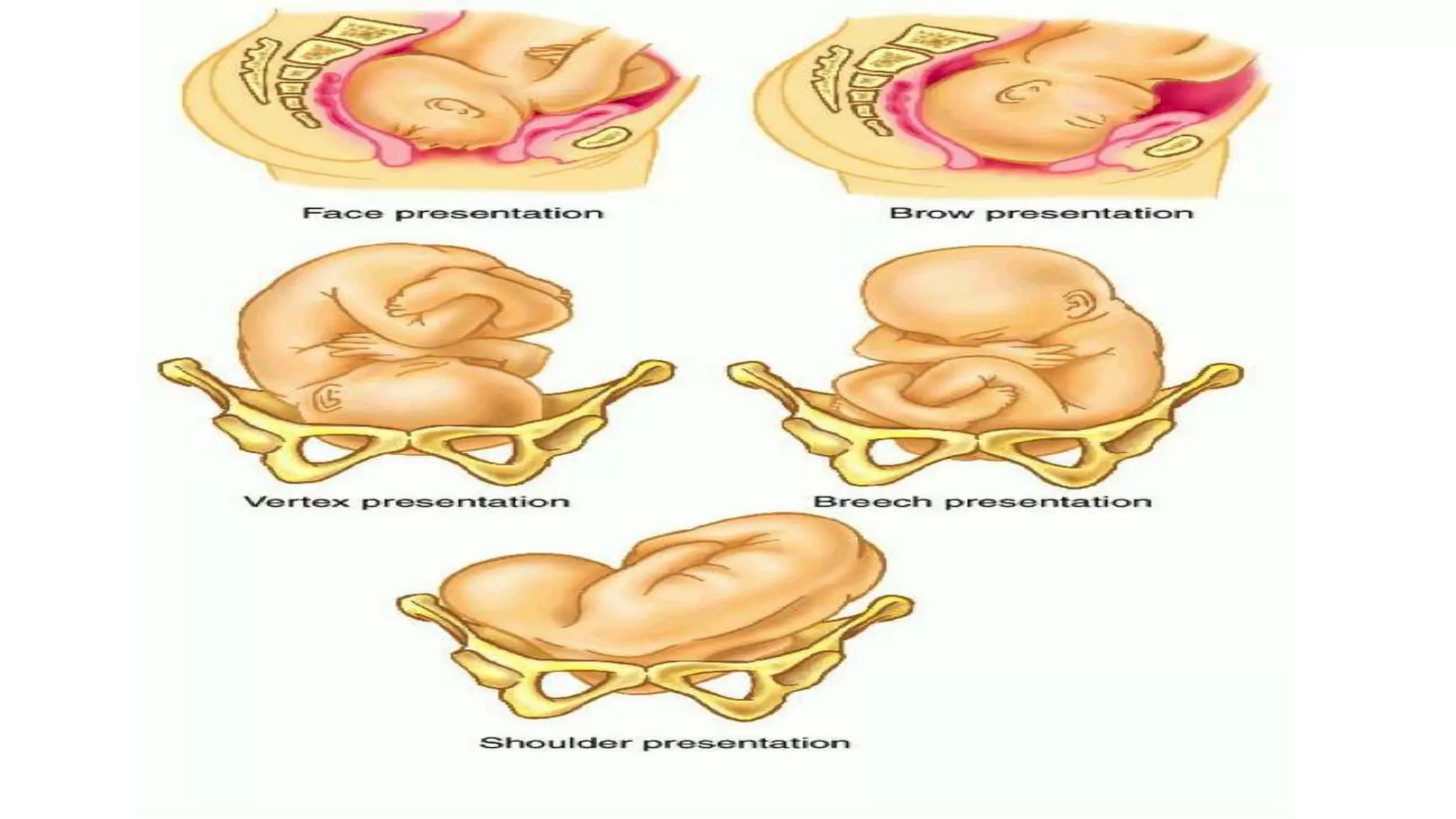
3 presentations are:
• Cephalic presentation
• Vertex presentation
• Brow presentation
• Face presentation
• Podalic/breech presentation
• Shoulder presentation
• In cephalic presentation,the presenting part may be
vertex,brow or face,depending upon the degree of
flexion.
• In breech presentation
• Flexed breech
• Extended breech
• Common presentation:Vertex it is
considered normal.
• Malpresentations:other than vertex
FACE PRESENTATION
• DEFENITION
• POSITIONS
• INCIDENCE&AET
IOLOGY
• DIAGNOSIS
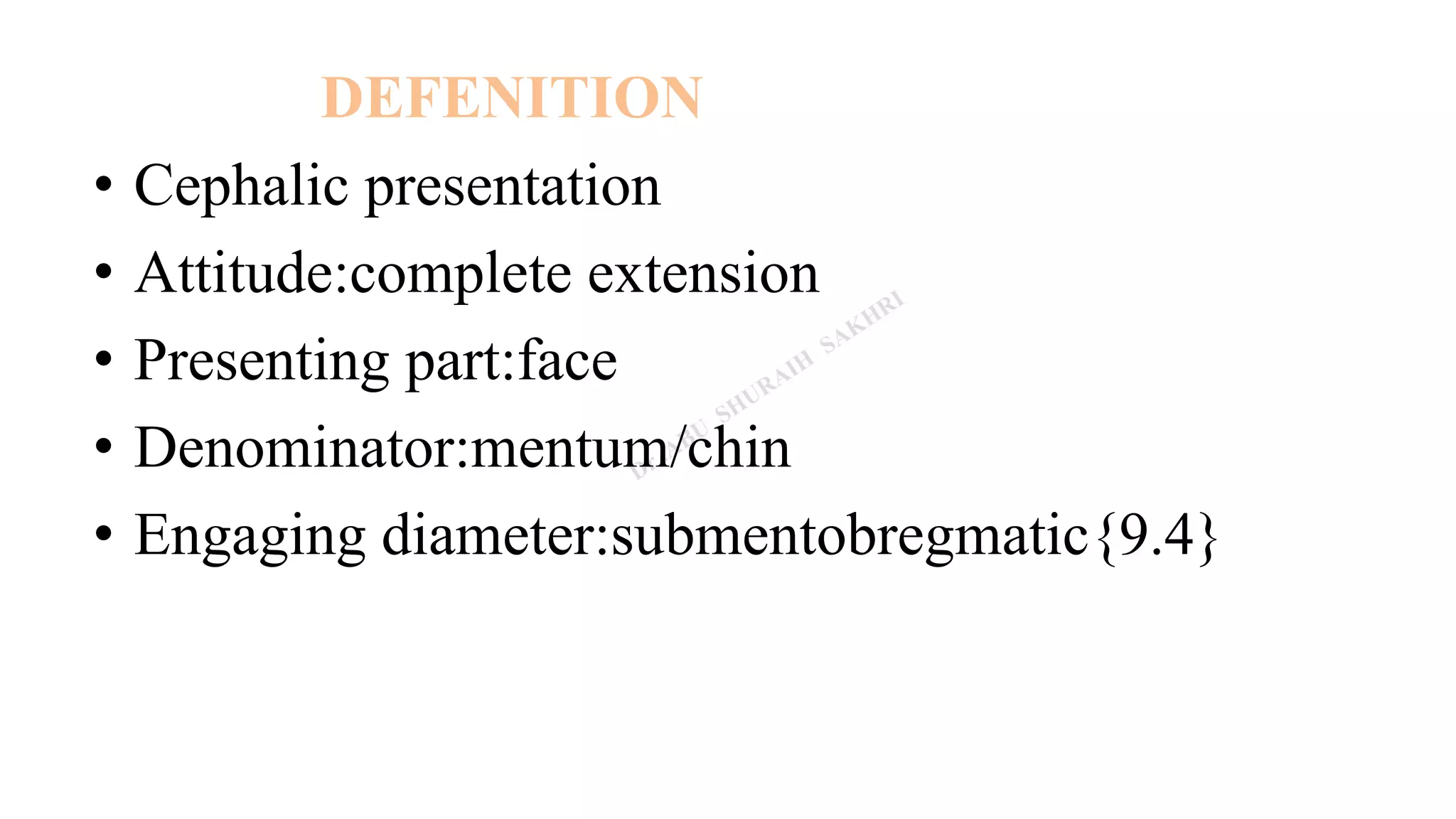
DEFENITION
• Cephalic presentation
• Attitude:complete extension
• Presenting part:face
• Denominator:mentum/chin
• Engaging diameter:submentobregmatic{9.4}
Presentation 2 types
Primary
present before onset of labour
rare
Secondary
caused by extension during labour
POSITIONS
• Left mentoanterior[LMA]
• Right mentoanterior[RMA]
• Right mentoposterior[RMP]
• Left mentoposterior[LMP]
• Mentoanterior-70%
• Mentoposterior-30%
INCIDENCE
• 1 in 500
• Anything that interferes with flexion can cause
face presentation
AETIOLOGY
• Maternal factors
• Fetal factors
Maternal factors
• Contracted pelvis
• Obliquity of uterus
• Multiparity & pendulous abdomen
fetal factors
• Anencephaly & iniencephaly
• Cord around the neck
• Tomours of neck like congenital goiter
• Spasms of stenocleidomastoid muscle
• Dolicocephalic head
DIAGNOSIS
• Very rarely made before labour
• It has little significance
• Made by both abdominal & vaginal examination
Abdominal examination
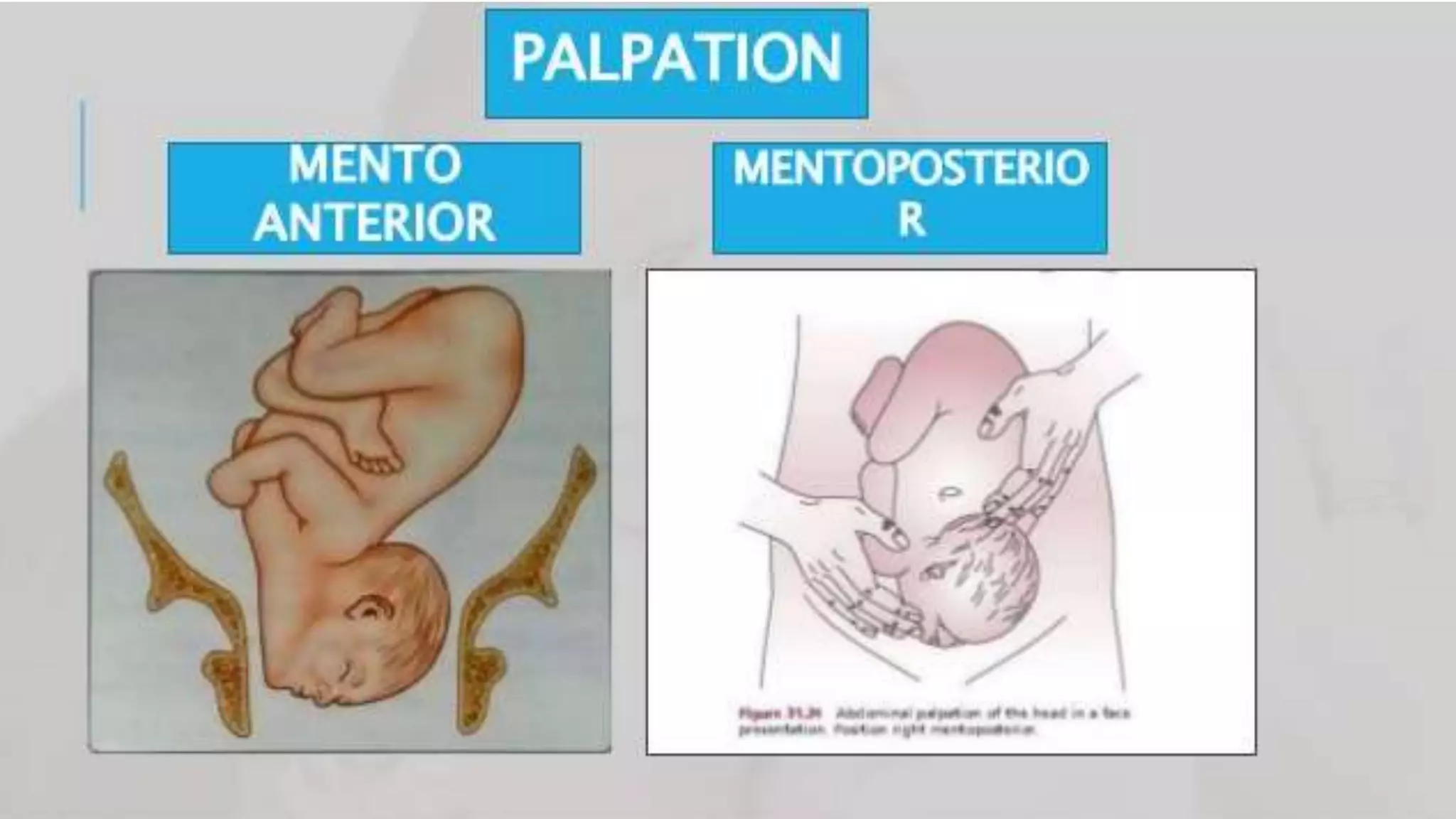
• In mentoanterior
limbs-anterior-felt easily
back-posterior-difficult to felt
• Head remains high
• Cephalic prominence:occiput
felt on the same side of back
• Groove b/w head & back –prominent
• FHS are transmitted through chest & heard
well anteriorly in mentoanterior
Vaginal examination
• Conical bag of membranes
• Chin,mouth,nose,malar eminences,and
supraorbital ridges are felt
• In mentoanterior-chin is in one anterior quadrant
& forehead in the opposite posterior quadrant
• Vaginal examination should be done gently &
without cream to avoid injury to the eyes
MECHANISM OF LABOUR :
MENTOANTERIOR POSITION :
1.ENGAGEMENT
2.DECENT WITH INCREASED EXTENSION
3.INTERAL ROTATION
4.FLEXION
5.RESTITUITION AND EXTERNAL ROTATION
Engagement
The engaging diameter is submentobregmatic.
In face presentaion the biparital diameter is 7cm behind the face unlike
in vertex presentation which is about 3-4 cm.
The biparital diameter will pass through the
inlet only when the face is low down in the perinium .
The head will get engaged when the face is distending the vulva
-DESCENT IS BROUGHT Y THE SAME FACTORS AS IN VEREX
PRESENTATION
-WHEN A RESISTANCE IS ENCOUNTERED BY THE PROCESS OF EXTENSION
- THE OCCIPUT IS PUSHED BACK WHILE THE CHIN DSCENTS
DESCENT WITH INCREASING
EXTENSION
INTERNAL ROTATION
-WITH FURTHER DESCENT THE CHIN WILL REACH THE
PELVIC FLOOR AND ROTATES 45 DEGREE ANTERIORLY
-THE ANTERIOR ROTATION DOES NOT TAKE PLACE UNTIL
THE FACE IS WELL APPLIED TO THE PELVIC FLOOR AND MAY
BE DELAYED
FLEXION
THE HEAD IS BORN BY FLEXION .
THE CHIN PIVOTS UNDER THE PUBIC SYMPHYSIS PUBIS AND
THE MOUTH ,NOSE , ORBIT , FOREHEAD , VERTEX AND
OCCIPUT ARE BORN BY FLEXION
RESTITUTION AND EXTERNAL ROTATION
RESTITUITION AND EXTERNAL ROTATION OF THE CHIN
OCCOURS TOWARDS THE SAME SIDE TO WHICH IT WAS
ORIGINALLY DIRECTED AND SHOULDERS ARE BORN BY
FLEXION
MECHANISM OF LABOUR IN
MENTOPOSTERIOR
IN PERSISTANT MENTOPOSTERIOR THE NECK IS TOO SHORT
TO SPAN 12CM OF ANTERIOR ASPECT OF SACRUM.
THE SHOULDER ALSO GET IMPACTED ALONG WITH THEHEAD
MAKING DELIVERY IMPOSSIBLE .THE ENGAGING DIAMETER
IS STERNOBREGMATIC.
HENCE THERE IS NO MECHANISM OF LABOUR FOR
MENTOPOSTERIOR
CAUSES OF PROLONG LABOUR
IN FACE :
1. FACE IS LESS EFFECTIVE DIALATOR OF CERVIX
2.NO MOULDING OF FACE
3.MORE CHANCES OF PREMATURE RUPTURE
OF MEMBRANE
4.LONG INT.ROTATION IN MENTOPOSTERIOR
5.INT. ROTATION OCCOURS ONLY LATE IN THE
SECOND STAGE
COMPLICATIONS
MATERNAL
FETAL
MATERNAL
1.PROLONGED LABOUR
2.INC. RISK OF OPERATIVE DELIVERY
3.OBSTRUCTED LABOUR IN PERSISTENT
MENTOPOSTERIOR
FETAL
1.SWOLLEN AND OEDEMATOUS FACE
2.LARYNGEAL OEDEMA CAN ALSO OCCUR AND SO THE
BABY SHOULD BE WATCHED CAREFULLY FOR THE
FIRST 24 hrs TO DETECT ANY BREATHING DIFFULTIES
3.CONGENITAL ANOMALY LIKE ANENCEPHALY
4.BIRTH ASPHYXIA DUE TO CORD PROLAPSE AND
PROLONGED LABOUR
MANAGEMENT OF LABOUR
1.THERE IS NO MECHANISM OF LABOUR IN MENTOPOSTERIOR AND
CAESAREAN SECTION HAS TO BE DONE BUT IN SOME FORWARD ROTATION
TAKE PLACE
2.IN MENTOANTERIOR IF THERE IS NO DISPROPORTION LABOUR CAN BE
ALLOWED TO PROGRESS
3. CEPHALOPELVIC DISPROPORTION ANDOTHER COMPLICATION SHOULD BE
EVALUATED AND IN SUCH CASES CAESAREAN SECTION SHOULD BE DONE
4.ANANCEPHALY AD OTHER ANOMALIES SHOULD BE RULED OUT
5.IF SEEN LATE IN LABOUR CAESAREAN SECTION OR
OBSTRUCTED LABOUR SUPERVENESIS DONE EVEN IF THE
BABY IS DEAD
6.CRANIOTOMY IS AN OPTION IF THE BABY IS NOT ALIVE .
7.LABOUR MANAEMENT REQUIRES CLOSE OBSERVATION OF
LABOUR PROGRESSION BECAUSE CEPHALOPELVIC
DISPPROPORTION ,DYSFUNCTIONAL LABOUUR AND
PROLONGED LABOUR ARE VERY COMMON
8.ATTEMPTS TO CORRECT THE FACE TO VERTEX POSITION ARE
RARELY SUCCESSFUL AND ARE ASSOCIATED WITH HOGH
FETAL MORTALITY AND MORBIDITY AND MATERNAL
MORBIDITY INC. CORD PROLAPSE /UTERINE RUPTURE ,AND
CERVICAL SPINE INJURY
THANK YOU

Face Presentation

  • 1.
    FACE PRESENTATION DALIYA CA O6 UNIT FACE PRESENTATION
  • 2.
    INTRODUCTION • FETAL LIE •PRESENTATION • POSITION • ATTITUDE
  • 3.
    PRESENTATION Part of thefetus that lies over the pelvic inlet and occupies the lower pole of the uterus.
  • 4.
    PRESENTING PART Most dependentpart of the fetus,which felt on vaginal examination.
  • 5.
    3 presentations are: •Cephalic presentation • Vertex presentation • Brow presentation • Face presentation • Podalic/breech presentation • Shoulder presentation
  • 6.
    • In cephalicpresentation,the presenting part may be vertex,brow or face,depending upon the degree of flexion. • In breech presentation • Flexed breech • Extended breech
  • 8.
    • Common presentation:Vertexit is considered normal. • Malpresentations:other than vertex
  • 9.
    FACE PRESENTATION • DEFENITION •POSITIONS • INCIDENCE&AET IOLOGY • DIAGNOSIS
  • 10.
    DEFENITION • Cephalic presentation •Attitude:complete extension • Presenting part:face • Denominator:mentum/chin • Engaging diameter:submentobregmatic{9.4}
  • 12.
    Presentation 2 types Primary presentbefore onset of labour rare Secondary caused by extension during labour
  • 13.
    POSITIONS • Left mentoanterior[LMA] •Right mentoanterior[RMA] • Right mentoposterior[RMP] • Left mentoposterior[LMP] • Mentoanterior-70% • Mentoposterior-30%
  • 15.
    INCIDENCE • 1 in500 • Anything that interferes with flexion can cause face presentation
  • 16.
  • 17.
    Maternal factors • Contractedpelvis • Obliquity of uterus • Multiparity & pendulous abdomen
  • 18.
    fetal factors • Anencephaly& iniencephaly • Cord around the neck • Tomours of neck like congenital goiter • Spasms of stenocleidomastoid muscle • Dolicocephalic head
  • 19.
    DIAGNOSIS • Very rarelymade before labour • It has little significance • Made by both abdominal & vaginal examination
  • 20.
    Abdominal examination • Inmentoanterior limbs-anterior-felt easily back-posterior-difficult to felt • Head remains high
  • 22.
    • Cephalic prominence:occiput felton the same side of back • Groove b/w head & back –prominent • FHS are transmitted through chest & heard well anteriorly in mentoanterior
  • 23.
    Vaginal examination • Conicalbag of membranes • Chin,mouth,nose,malar eminences,and supraorbital ridges are felt • In mentoanterior-chin is in one anterior quadrant & forehead in the opposite posterior quadrant
  • 24.
    • Vaginal examinationshould be done gently & without cream to avoid injury to the eyes
  • 25.
    MECHANISM OF LABOUR: MENTOANTERIOR POSITION : 1.ENGAGEMENT 2.DECENT WITH INCREASED EXTENSION 3.INTERAL ROTATION 4.FLEXION 5.RESTITUITION AND EXTERNAL ROTATION
  • 26.
    Engagement The engaging diameteris submentobregmatic. In face presentaion the biparital diameter is 7cm behind the face unlike in vertex presentation which is about 3-4 cm. The biparital diameter will pass through the inlet only when the face is low down in the perinium . The head will get engaged when the face is distending the vulva
  • 27.
    -DESCENT IS BROUGHTY THE SAME FACTORS AS IN VEREX PRESENTATION -WHEN A RESISTANCE IS ENCOUNTERED BY THE PROCESS OF EXTENSION - THE OCCIPUT IS PUSHED BACK WHILE THE CHIN DSCENTS DESCENT WITH INCREASING EXTENSION
  • 28.
    INTERNAL ROTATION -WITH FURTHERDESCENT THE CHIN WILL REACH THE PELVIC FLOOR AND ROTATES 45 DEGREE ANTERIORLY -THE ANTERIOR ROTATION DOES NOT TAKE PLACE UNTIL THE FACE IS WELL APPLIED TO THE PELVIC FLOOR AND MAY BE DELAYED
  • 29.
    FLEXION THE HEAD ISBORN BY FLEXION . THE CHIN PIVOTS UNDER THE PUBIC SYMPHYSIS PUBIS AND THE MOUTH ,NOSE , ORBIT , FOREHEAD , VERTEX AND OCCIPUT ARE BORN BY FLEXION
  • 30.
    RESTITUTION AND EXTERNALROTATION RESTITUITION AND EXTERNAL ROTATION OF THE CHIN OCCOURS TOWARDS THE SAME SIDE TO WHICH IT WAS ORIGINALLY DIRECTED AND SHOULDERS ARE BORN BY FLEXION
  • 31.
    MECHANISM OF LABOURIN MENTOPOSTERIOR IN PERSISTANT MENTOPOSTERIOR THE NECK IS TOO SHORT TO SPAN 12CM OF ANTERIOR ASPECT OF SACRUM. THE SHOULDER ALSO GET IMPACTED ALONG WITH THEHEAD MAKING DELIVERY IMPOSSIBLE .THE ENGAGING DIAMETER IS STERNOBREGMATIC. HENCE THERE IS NO MECHANISM OF LABOUR FOR MENTOPOSTERIOR
  • 32.
    CAUSES OF PROLONGLABOUR IN FACE : 1. FACE IS LESS EFFECTIVE DIALATOR OF CERVIX 2.NO MOULDING OF FACE 3.MORE CHANCES OF PREMATURE RUPTURE OF MEMBRANE 4.LONG INT.ROTATION IN MENTOPOSTERIOR 5.INT. ROTATION OCCOURS ONLY LATE IN THE SECOND STAGE
  • 33.
  • 34.
    MATERNAL 1.PROLONGED LABOUR 2.INC. RISKOF OPERATIVE DELIVERY 3.OBSTRUCTED LABOUR IN PERSISTENT MENTOPOSTERIOR
  • 35.
    FETAL 1.SWOLLEN AND OEDEMATOUSFACE 2.LARYNGEAL OEDEMA CAN ALSO OCCUR AND SO THE BABY SHOULD BE WATCHED CAREFULLY FOR THE FIRST 24 hrs TO DETECT ANY BREATHING DIFFULTIES 3.CONGENITAL ANOMALY LIKE ANENCEPHALY 4.BIRTH ASPHYXIA DUE TO CORD PROLAPSE AND PROLONGED LABOUR
  • 36.
    MANAGEMENT OF LABOUR 1.THEREIS NO MECHANISM OF LABOUR IN MENTOPOSTERIOR AND CAESAREAN SECTION HAS TO BE DONE BUT IN SOME FORWARD ROTATION TAKE PLACE 2.IN MENTOANTERIOR IF THERE IS NO DISPROPORTION LABOUR CAN BE ALLOWED TO PROGRESS 3. CEPHALOPELVIC DISPROPORTION ANDOTHER COMPLICATION SHOULD BE EVALUATED AND IN SUCH CASES CAESAREAN SECTION SHOULD BE DONE 4.ANANCEPHALY AD OTHER ANOMALIES SHOULD BE RULED OUT
  • 37.
    5.IF SEEN LATEIN LABOUR CAESAREAN SECTION OR OBSTRUCTED LABOUR SUPERVENESIS DONE EVEN IF THE BABY IS DEAD 6.CRANIOTOMY IS AN OPTION IF THE BABY IS NOT ALIVE . 7.LABOUR MANAEMENT REQUIRES CLOSE OBSERVATION OF LABOUR PROGRESSION BECAUSE CEPHALOPELVIC DISPPROPORTION ,DYSFUNCTIONAL LABOUUR AND PROLONGED LABOUR ARE VERY COMMON 8.ATTEMPTS TO CORRECT THE FACE TO VERTEX POSITION ARE RARELY SUCCESSFUL AND ARE ASSOCIATED WITH HOGH FETAL MORTALITY AND MORBIDITY AND MATERNAL MORBIDITY INC. CORD PROLAPSE /UTERINE RUPTURE ,AND CERVICAL SPINE INJURY
  • 38.