PUERPERALPUERPERAL
PYREXIAPYREXIA
MADE BYMADE BY
HAFSAHAFSA
4TH YEAR B.E.M.S4TH YEAR B.E.M.S
ROLL NOROLL NO
O7O7
EM-13-OO9EM-13-OO9
DEFINITIONDEFINITION
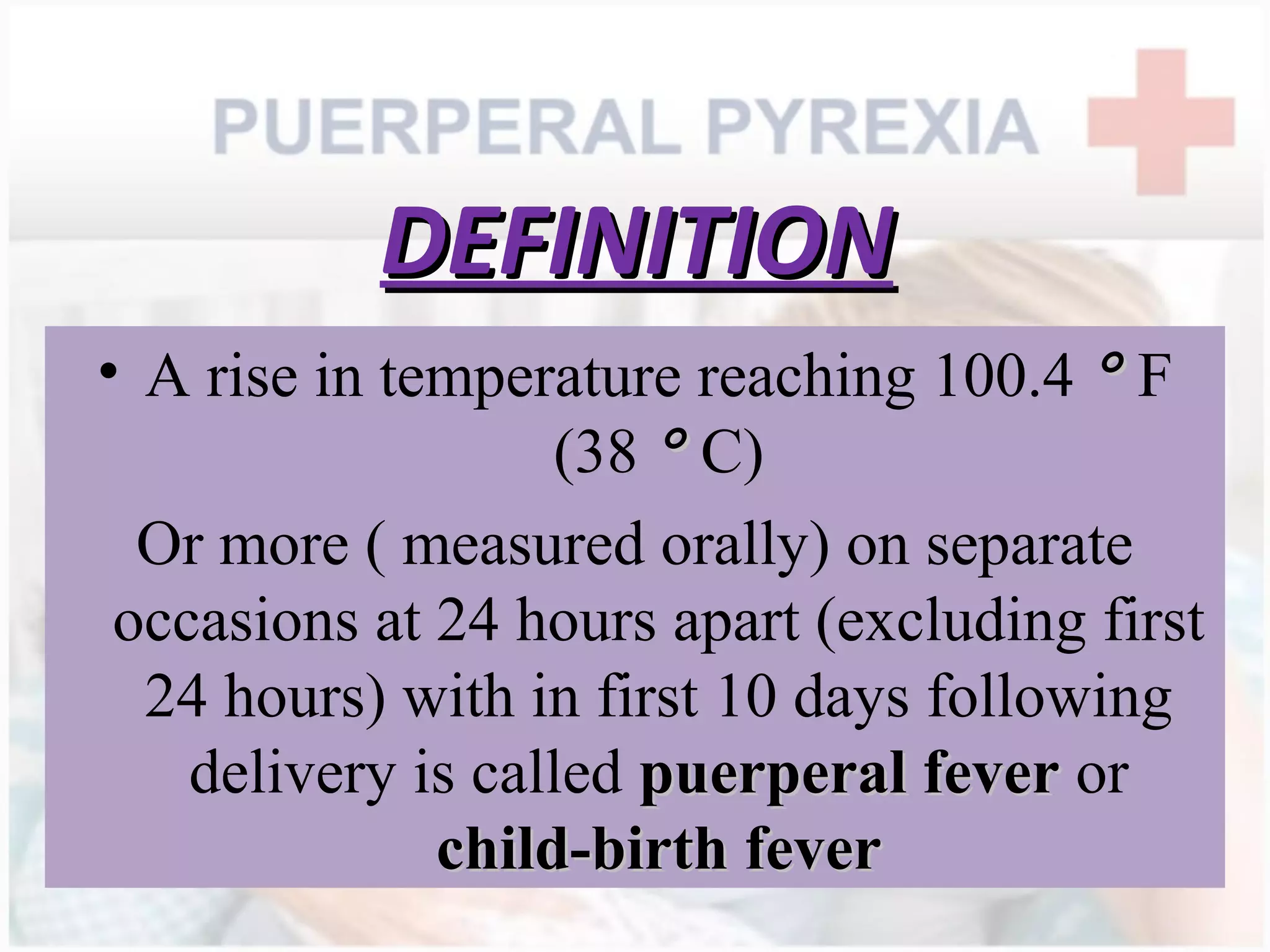
• A rise in temperature reaching 100.4 °° F
(38 °° C)
Or more ( measured orally) on separate
occasions at 24 hours apart (excluding first
24 hours) with in first 10 days following
delivery is called puerperal feverpuerperal fever or
child-birth feverchild-birth fever
Benign fever following vaginalBenign fever following vaginal
deliverydelivery
• Benign single-day fevers:
Fever in the first 24 hours after delivery often
resolves spontaneously and cannot be
explained by an identifiable infection.
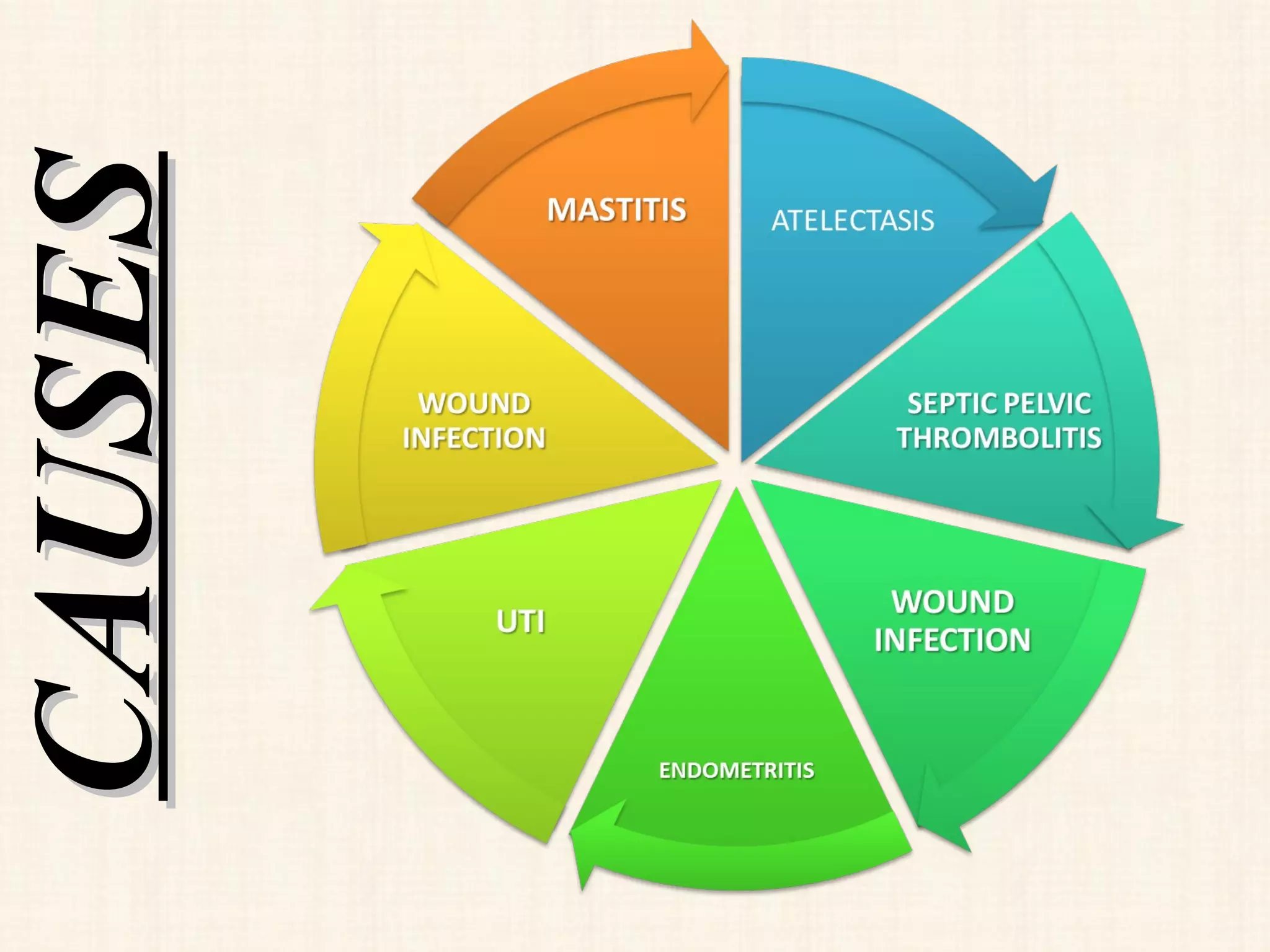
CAUSESCAUSES
• Some other causesSome other causes
• ❑ Premature rupture of the membranes
• ❑ retained products of conception
• ❑ hemorrhage
• ❑ maternal conditions, such as anemia, poor nutrition
during pregnancy.
• ❑ Genital tract infections
• (enterococci ,anaerobic strep, gonococci,(enterococci ,anaerobic strep, gonococci,
clostridium perfringens)clostridium perfringens)
• ❑ Use of a fetal scalp electrodefetal scalp electrode during labor.
• ❑ Obesity.
• ❑ Diabetes
• The associated symptoms depend on the site
and nature of the infection. The most typical
site of infection is the genital tract.
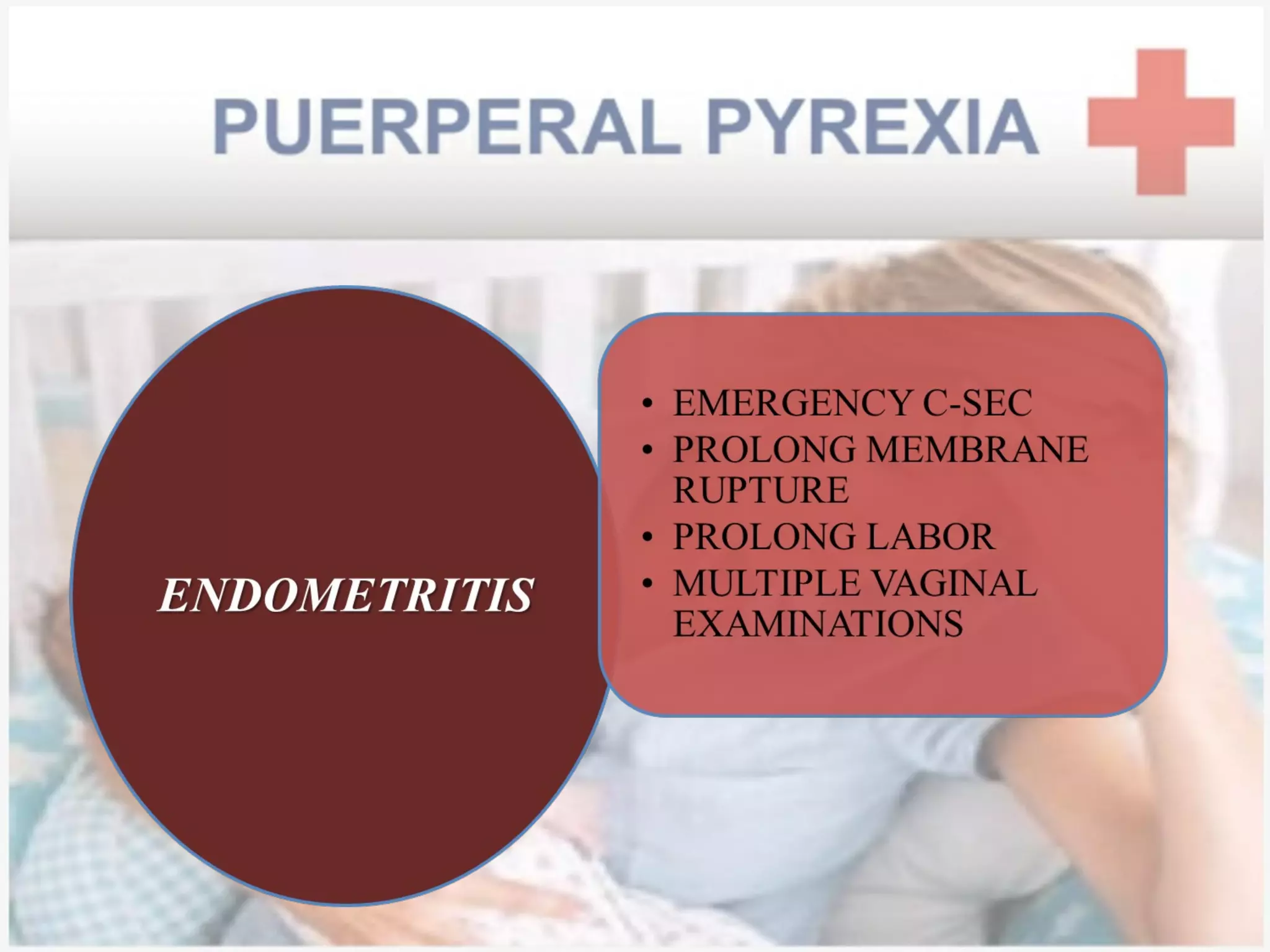
Endometritis,which affects the uterus, is the
most prominent of these infections.
Endometritis is much more common if a
small part of the placenta has been retained in
the uterus.
Physical examinationPhysical examination
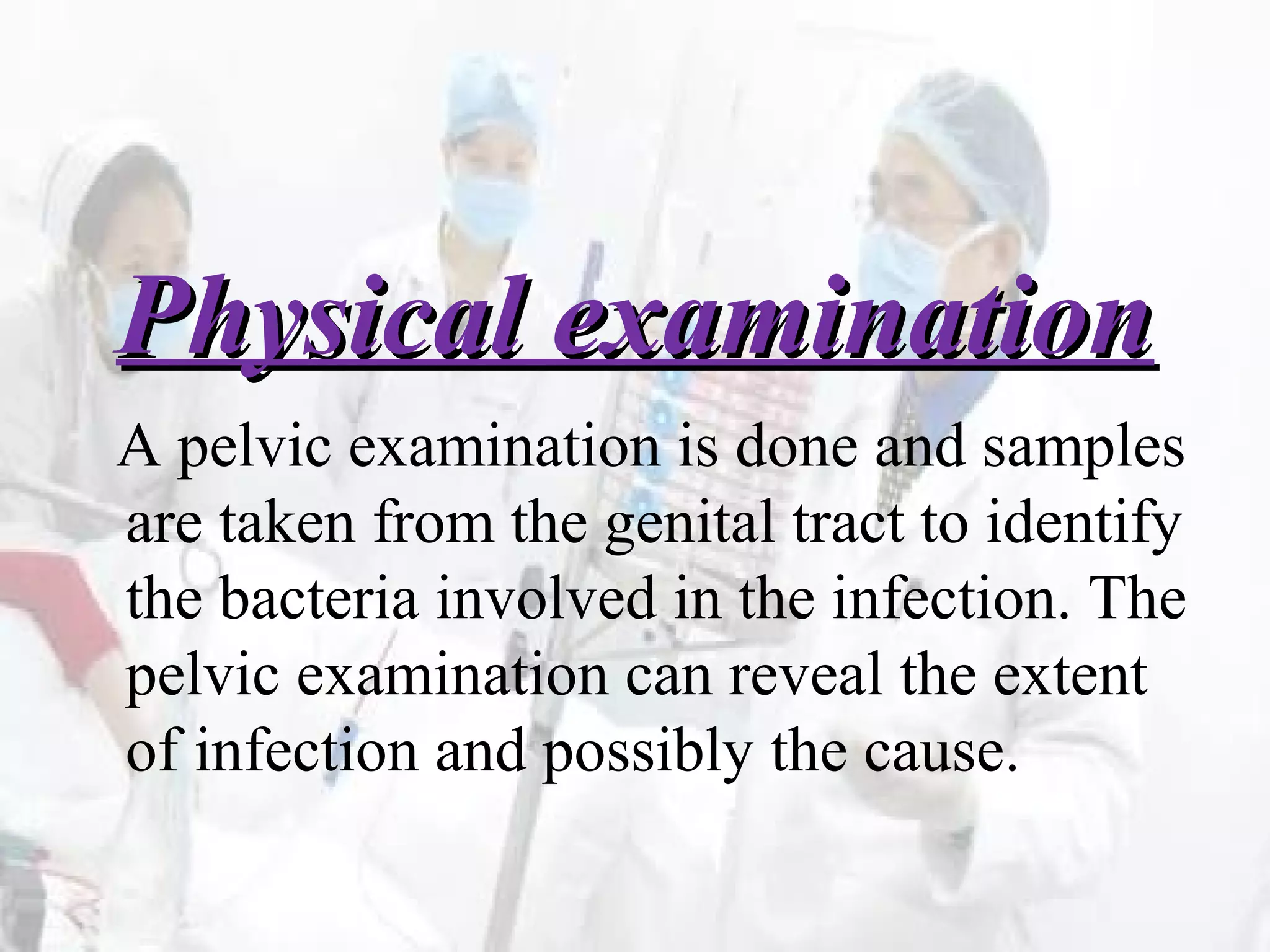
A pelvic examination is done and samples
are taken from the genital tract to identify
the bacteria involved in the infection. The
pelvic examination can reveal the extent
of infection and possibly the cause.
LaboratoryLaboratory
• Blood samples may also be taken for blood
counts , CRP, or blood culture.
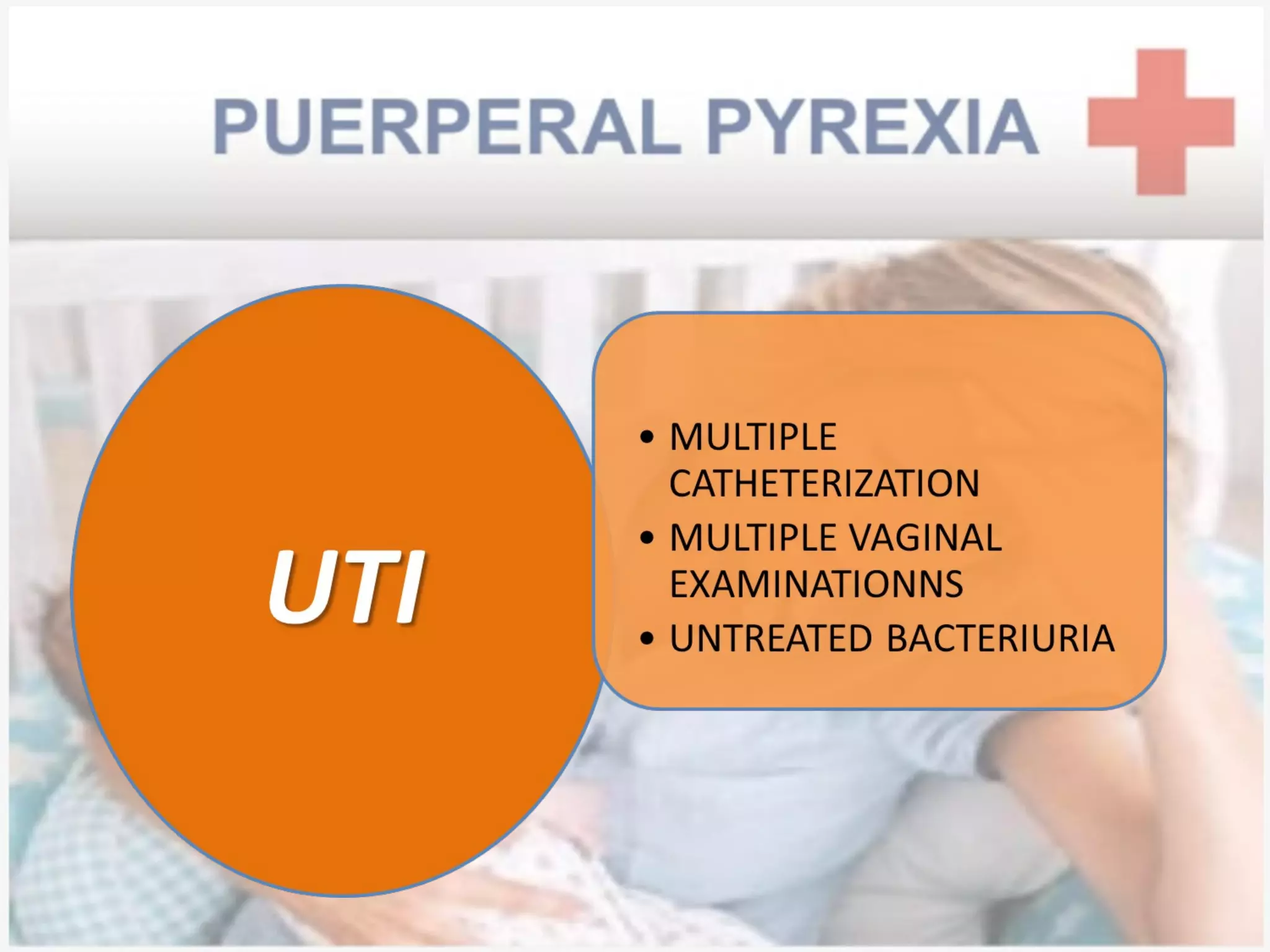
• A urinalysis may also be ordered, especially if
the symptoms are indicative of a urinary tract
infection.
• Chest x-ray
• Wound culture
TreatmentTreatment
• Treatment of puerperal infection usually begins with
I.V. infusion of broadspectrum antibiotics and is
continued for 48 hours after fever is resolved.
• Supportive care
• Symptomatic treatment
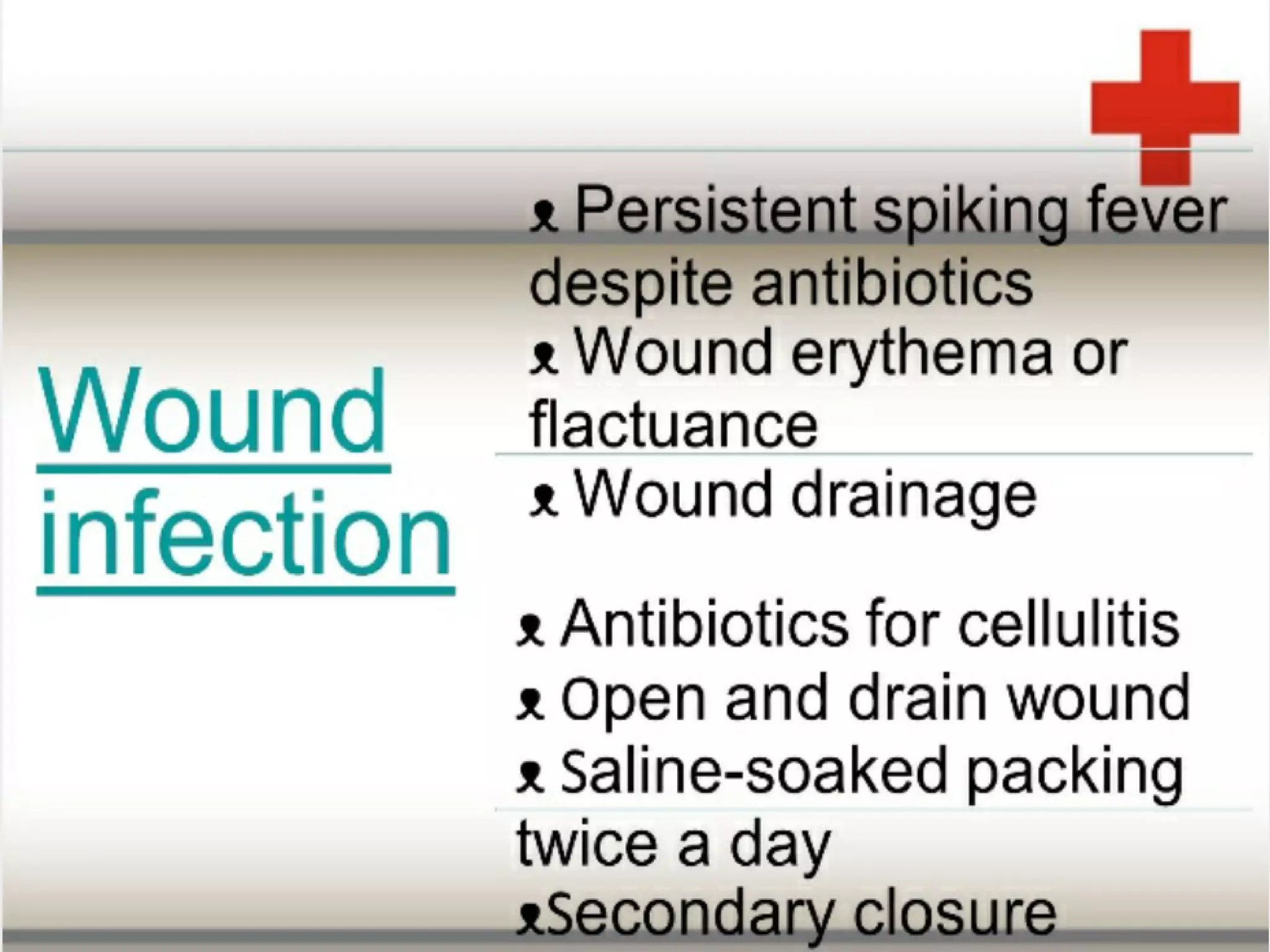
• Surgery may be necessary to remove any remaining
products of conception or to drain local lesions, such
as An infected episiotomy (incision made during
delivery) may need to be opened and drained.
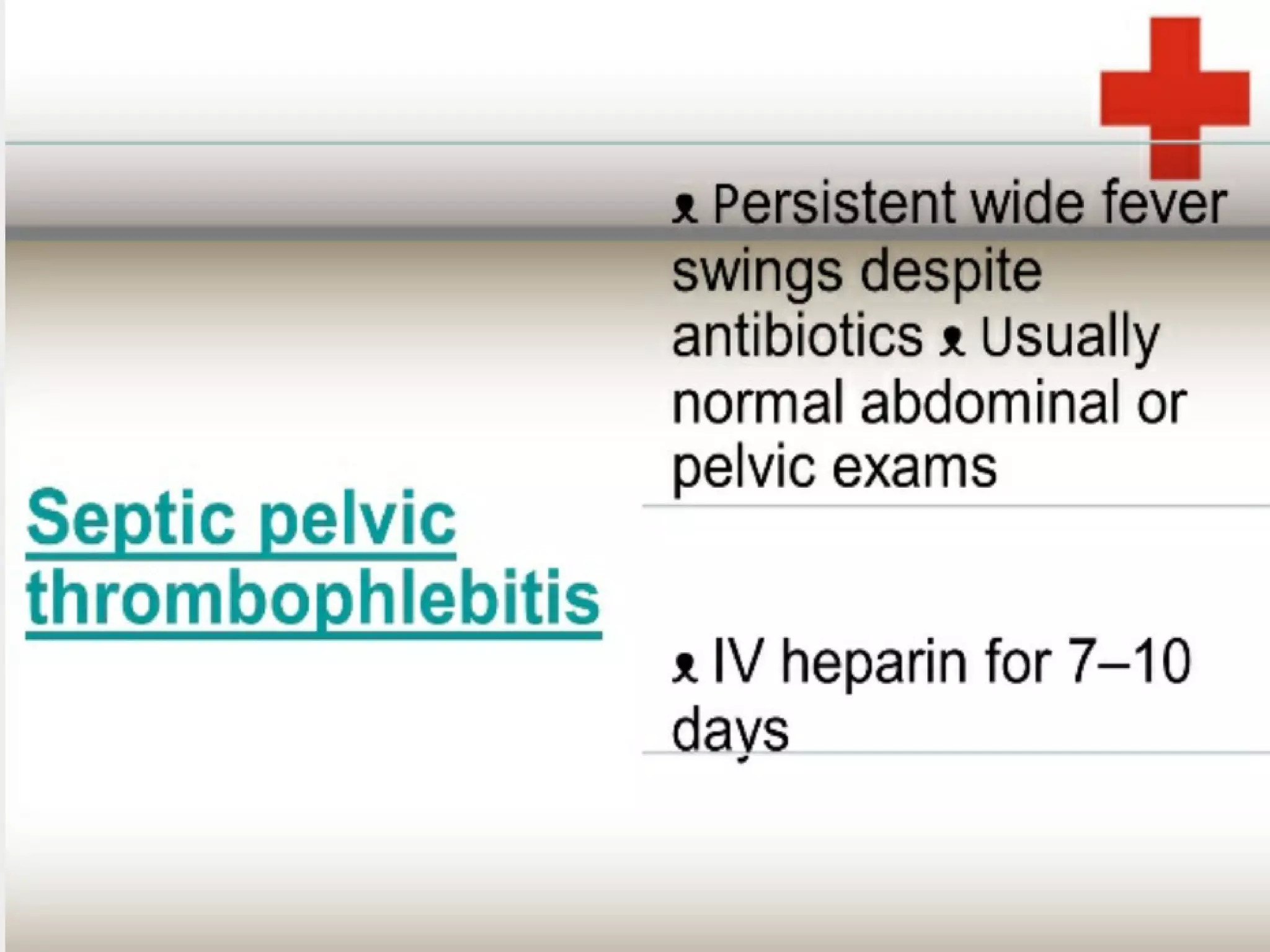
• In the presence of thrombophlebitis, heparin therapy
will be needed to provide anticoagulation.
PreventionsPreventions
• Avoid the risk factors
• Keep the episiotomy site clean
• Careful attention to antiseptic procedures
during childbirth is the basic underpinning of
preventing infection. With some procedures,
such as cesarean section, a doctor may
administer prophylactic antibiotics as a
preemptive strike against infectious bacteria.
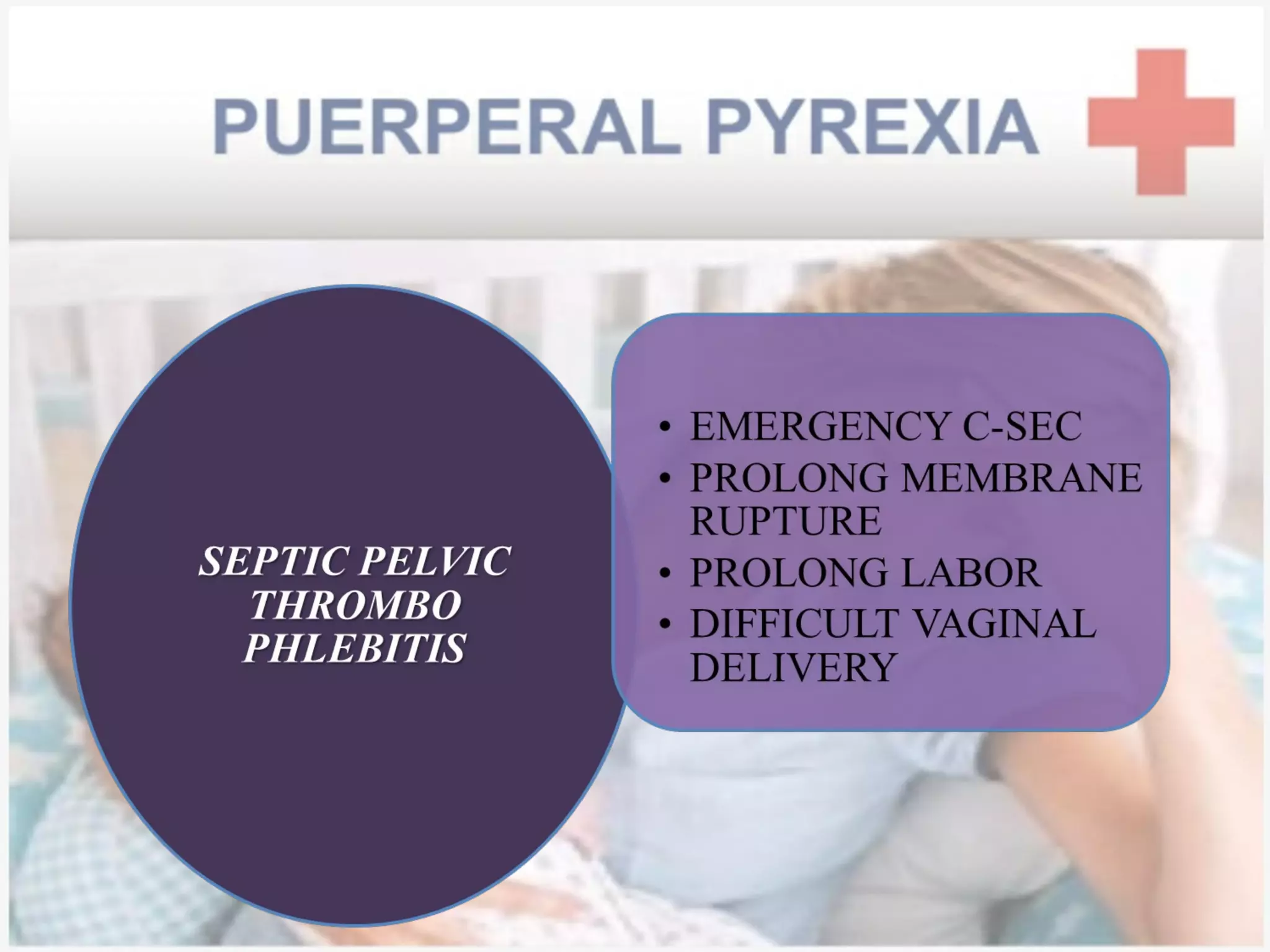
Puerperal Pyrexia

Puerperal Pyrexia

  • 1.
    PUERPERALPUERPERAL PYREXIAPYREXIA MADE BYMADE BY HAFSAHAFSA 4THYEAR B.E.M.S4TH YEAR B.E.M.S ROLL NOROLL NO O7O7 EM-13-OO9EM-13-OO9
  • 2.
    DEFINITIONDEFINITION • A risein temperature reaching 100.4 °° F (38 °° C) Or more ( measured orally) on separate occasions at 24 hours apart (excluding first 24 hours) with in first 10 days following delivery is called puerperal feverpuerperal fever or child-birth feverchild-birth fever
  • 3.
    Benign fever followingvaginalBenign fever following vaginal deliverydelivery • Benign single-day fevers: Fever in the first 24 hours after delivery often resolves spontaneously and cannot be explained by an identifiable infection.
  • 4.
  • 11.
    • Some othercausesSome other causes • ❑ Premature rupture of the membranes • ❑ retained products of conception • ❑ hemorrhage • ❑ maternal conditions, such as anemia, poor nutrition during pregnancy. • ❑ Genital tract infections • (enterococci ,anaerobic strep, gonococci,(enterococci ,anaerobic strep, gonococci, clostridium perfringens)clostridium perfringens) • ❑ Use of a fetal scalp electrodefetal scalp electrode during labor. • ❑ Obesity. • ❑ Diabetes
  • 12.
    • The associatedsymptoms depend on the site and nature of the infection. The most typical site of infection is the genital tract. Endometritis,which affects the uterus, is the most prominent of these infections. Endometritis is much more common if a small part of the placenta has been retained in the uterus.
  • 19.
    Physical examinationPhysical examination Apelvic examination is done and samples are taken from the genital tract to identify the bacteria involved in the infection. The pelvic examination can reveal the extent of infection and possibly the cause.
  • 20.
    LaboratoryLaboratory • Blood samplesmay also be taken for blood counts , CRP, or blood culture. • A urinalysis may also be ordered, especially if the symptoms are indicative of a urinary tract infection. • Chest x-ray • Wound culture
  • 21.
    TreatmentTreatment • Treatment ofpuerperal infection usually begins with I.V. infusion of broadspectrum antibiotics and is continued for 48 hours after fever is resolved. • Supportive care • Symptomatic treatment • Surgery may be necessary to remove any remaining products of conception or to drain local lesions, such as An infected episiotomy (incision made during delivery) may need to be opened and drained. • In the presence of thrombophlebitis, heparin therapy will be needed to provide anticoagulation.
  • 22.
    PreventionsPreventions • Avoid therisk factors • Keep the episiotomy site clean • Careful attention to antiseptic procedures during childbirth is the basic underpinning of preventing infection. With some procedures, such as cesarean section, a doctor may administer prophylactic antibiotics as a preemptive strike against infectious bacteria.