General need, principle and
procedure involved in the
Bioanalytical methods such as
Protein precipitation, Liquid -
Liquid extraction and Solid phase
extraction and other novel
sample preparation approach.
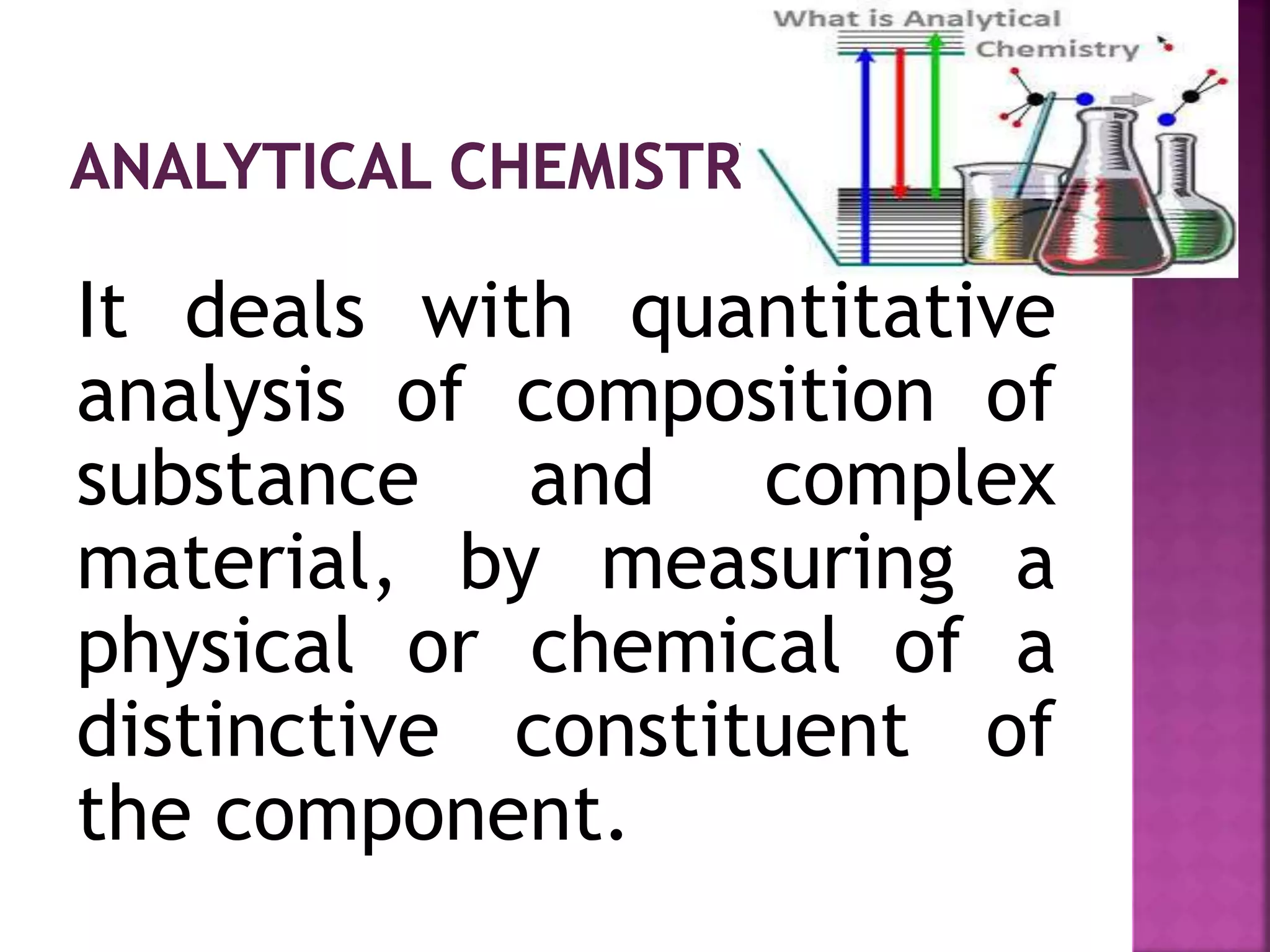
It deals with quantitative
analysis of composition of
substance and complex
material, by measuring a
physical or chemical of a
distinctive constituent of
the component.
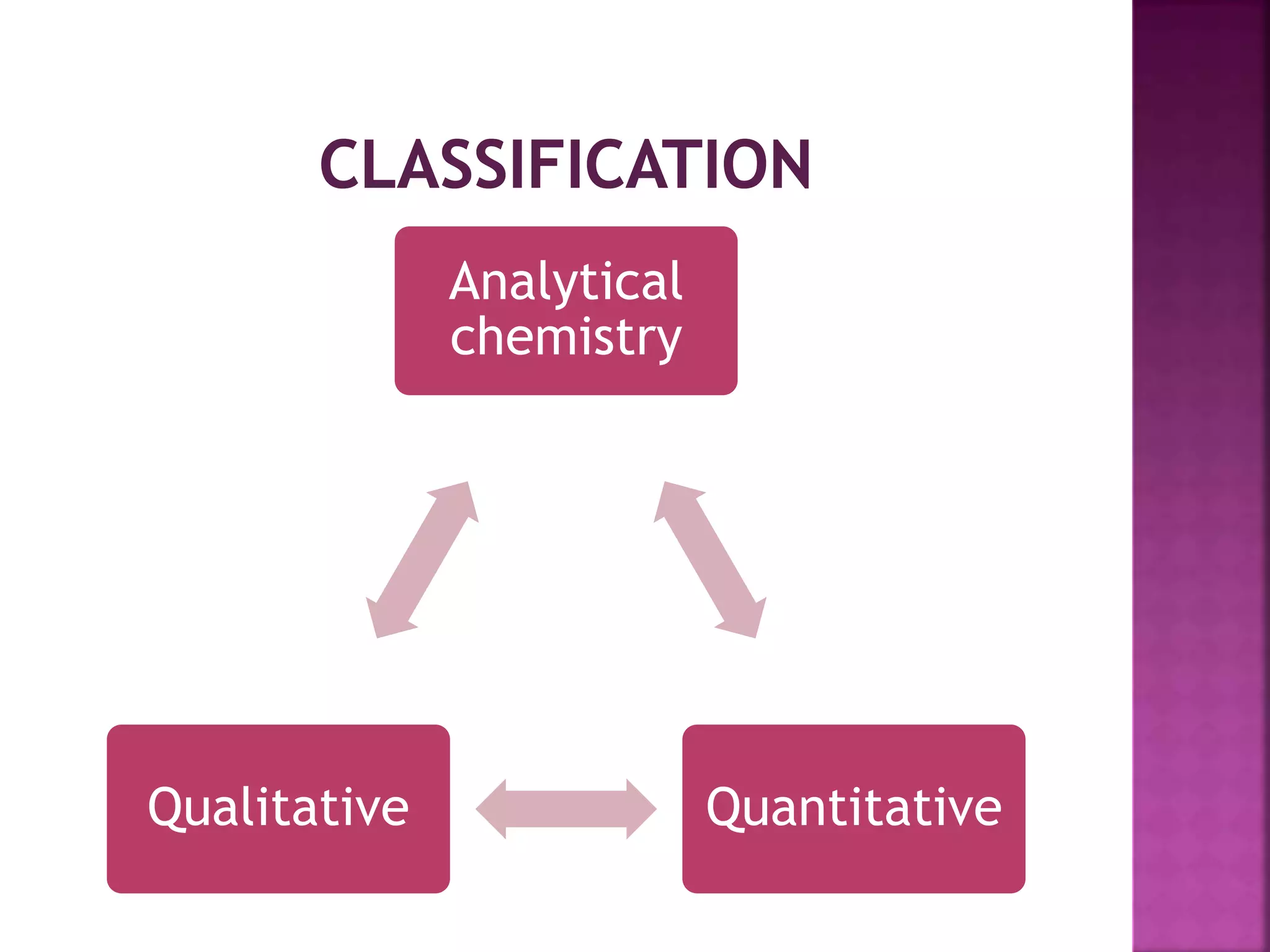
Analytical
chemistry
QuantitativeQualitative
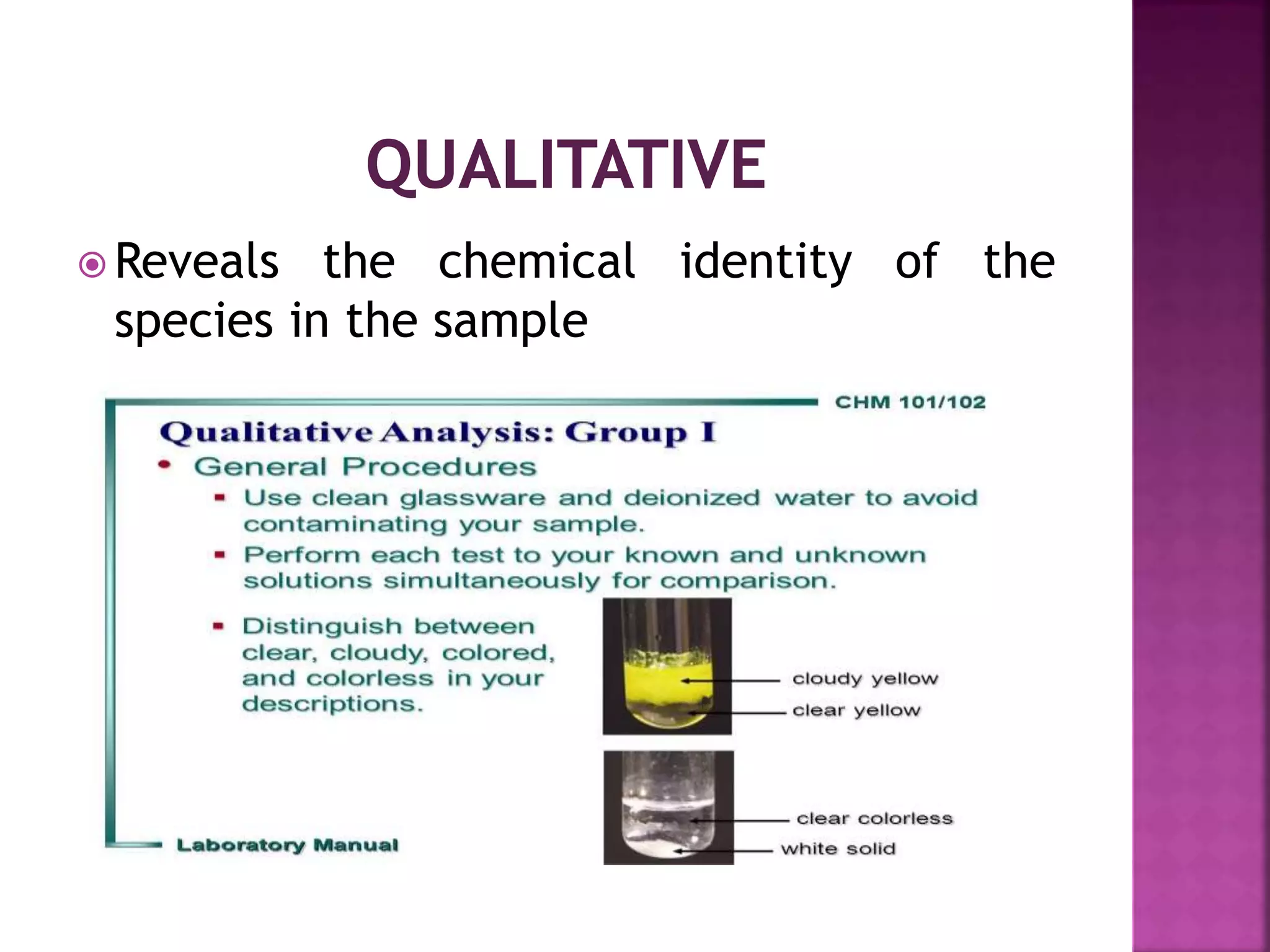
 Reveals the chemical identity of the
species in the sample
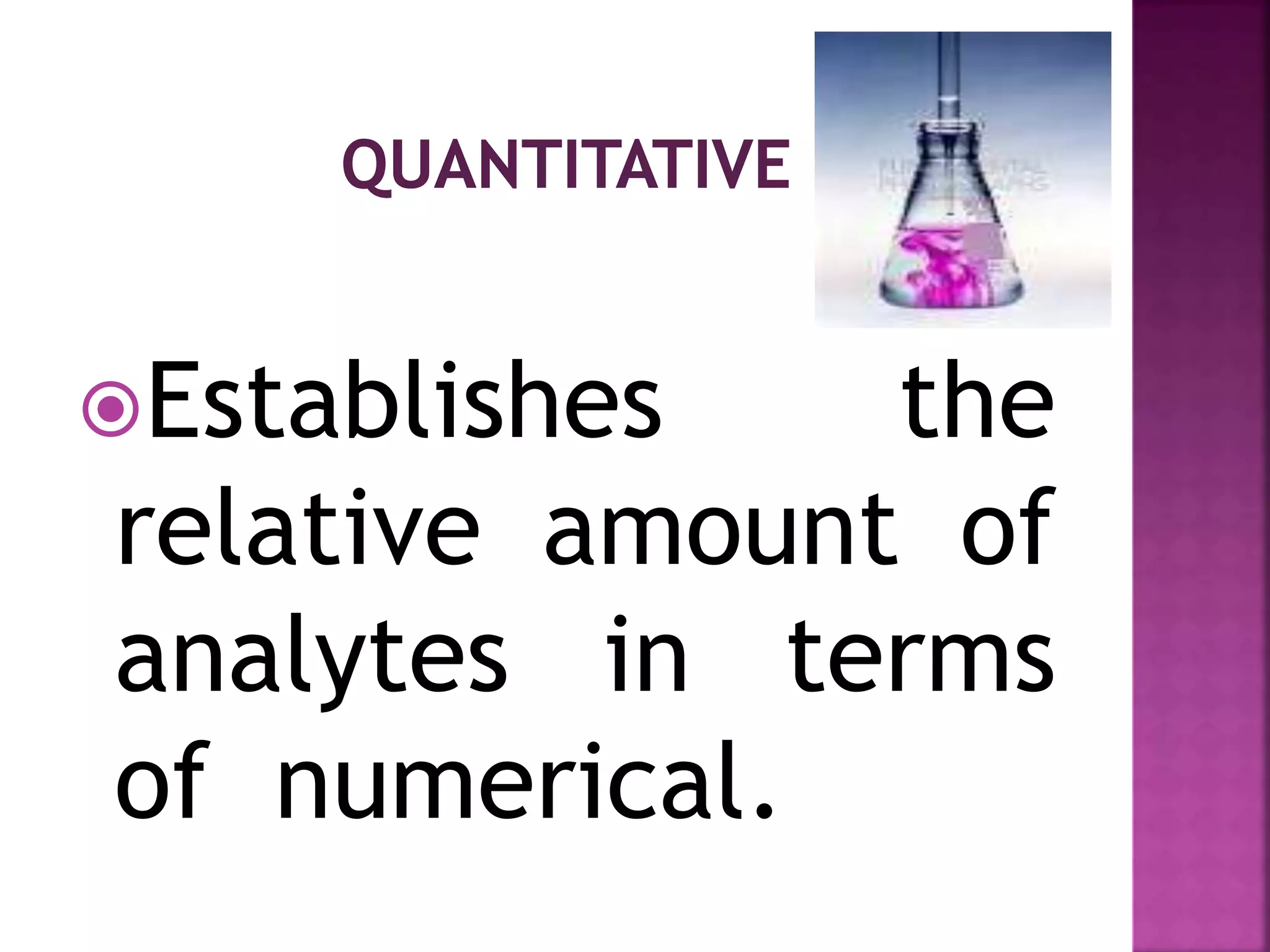
Establishes the
relative amount of
analytes in terms
of numerical.
 The components of the sample that are to be
determined
 The process of determining how much of a
given sample in the material indicated by its
name.
 The separation of the component is often
performed prior to the analysis.
 It is sub discipline of the analytical
chemistry covering the quantitative
measurement of xenobiotics [ drugs
,metabolites and biological molecule in the
unnatural location or concentration] and
biotics [macromolecules, proteins, DNA,
metabolites] in biological system
 The sample preparation portion of the
analysis is often the most critical and
difficult part, both in terms of time involved
and the difficulty of extracting the desired
analyte from the matrix. In addition, each
matrix has its own unique challenges. For
example, urine has a high salt content,
plasma contains a great deal of
phospholipids, whole blood contains red
blood cells that usually must be lysed and so
forth.
 Centrifugation
 Crystallization
 Gravity separation
 Magnetic separation
 Sedimentation
 Sublimation
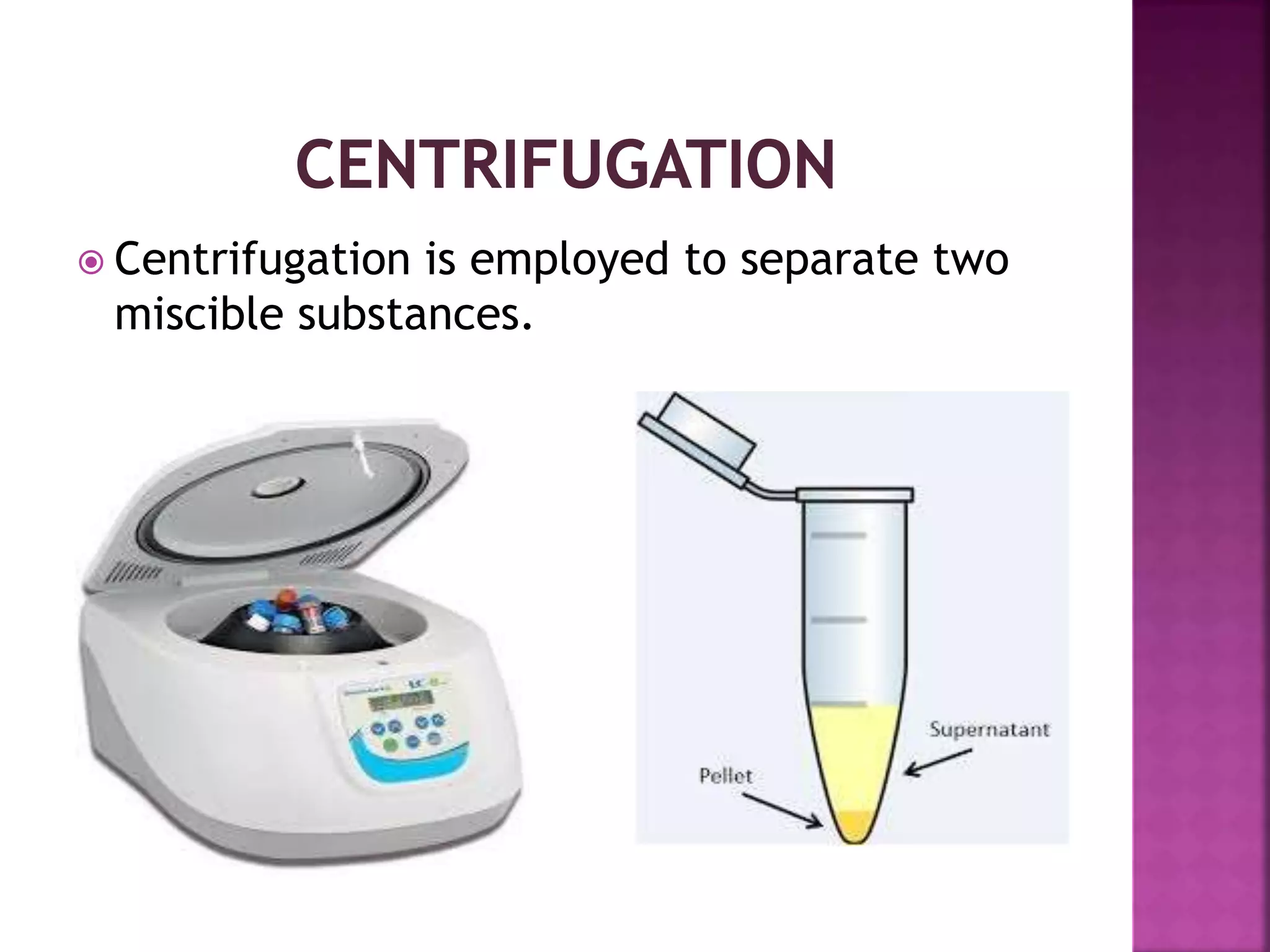
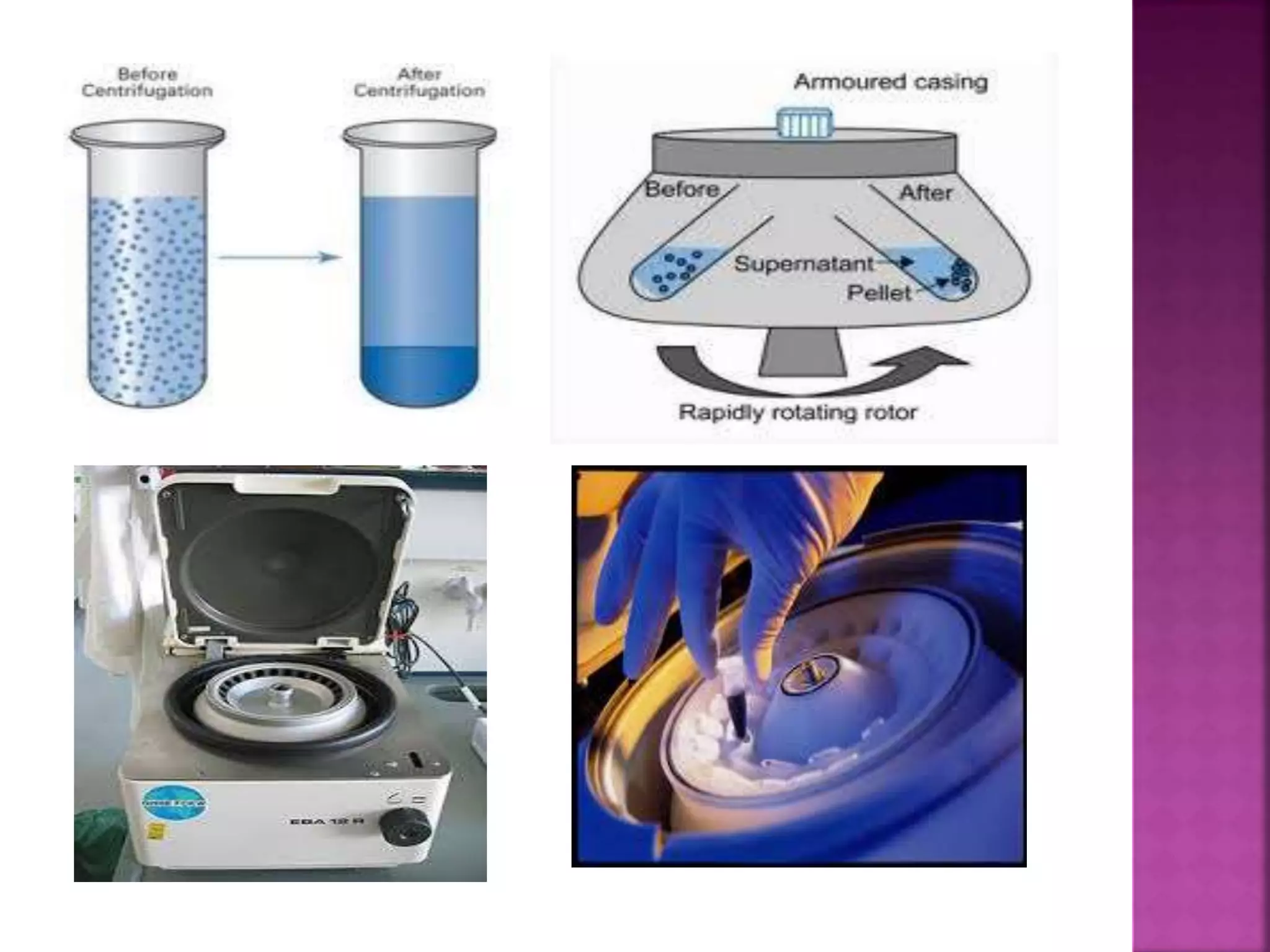
 Centrifugation is employed to separate two
miscible substances.
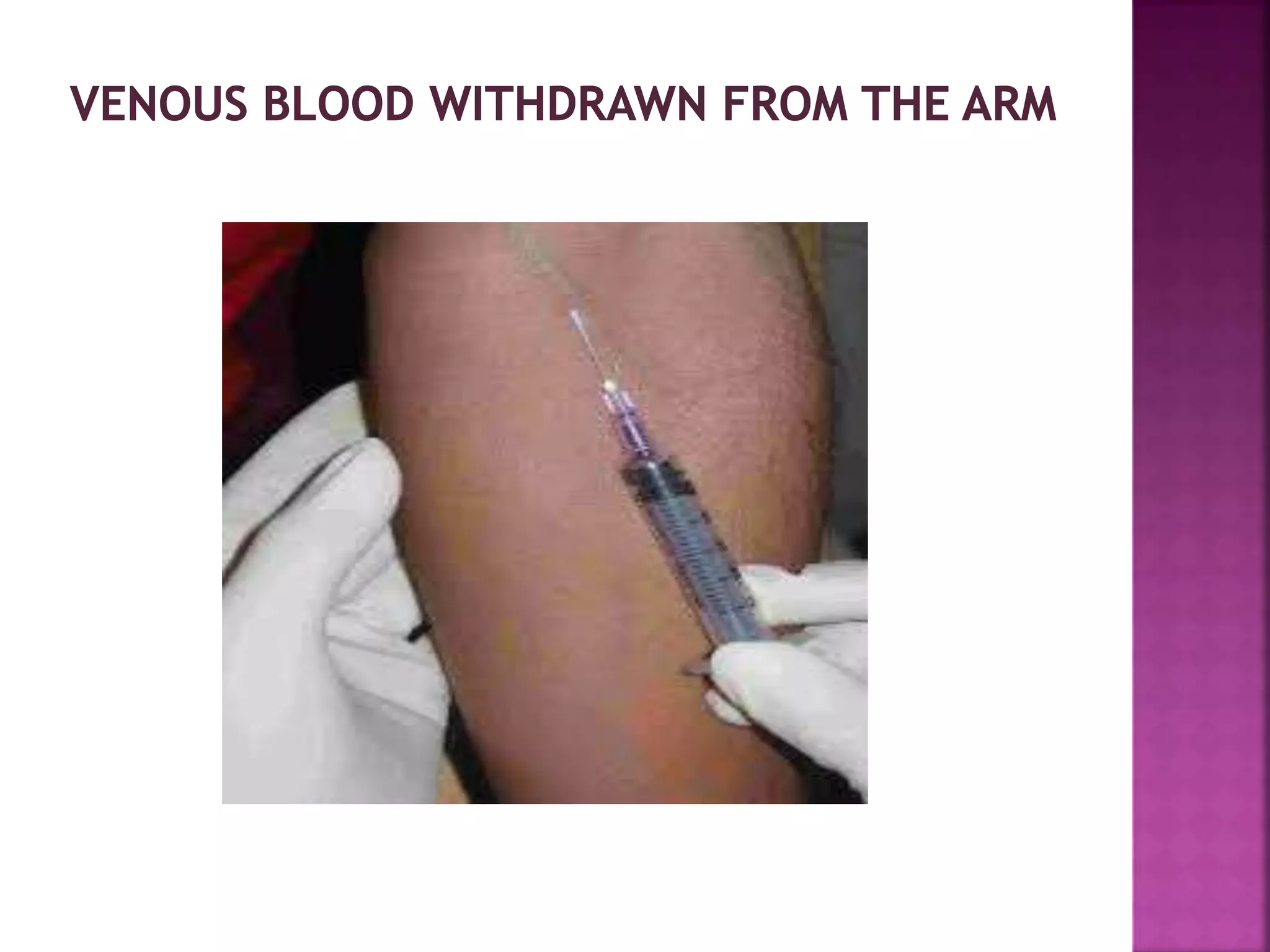
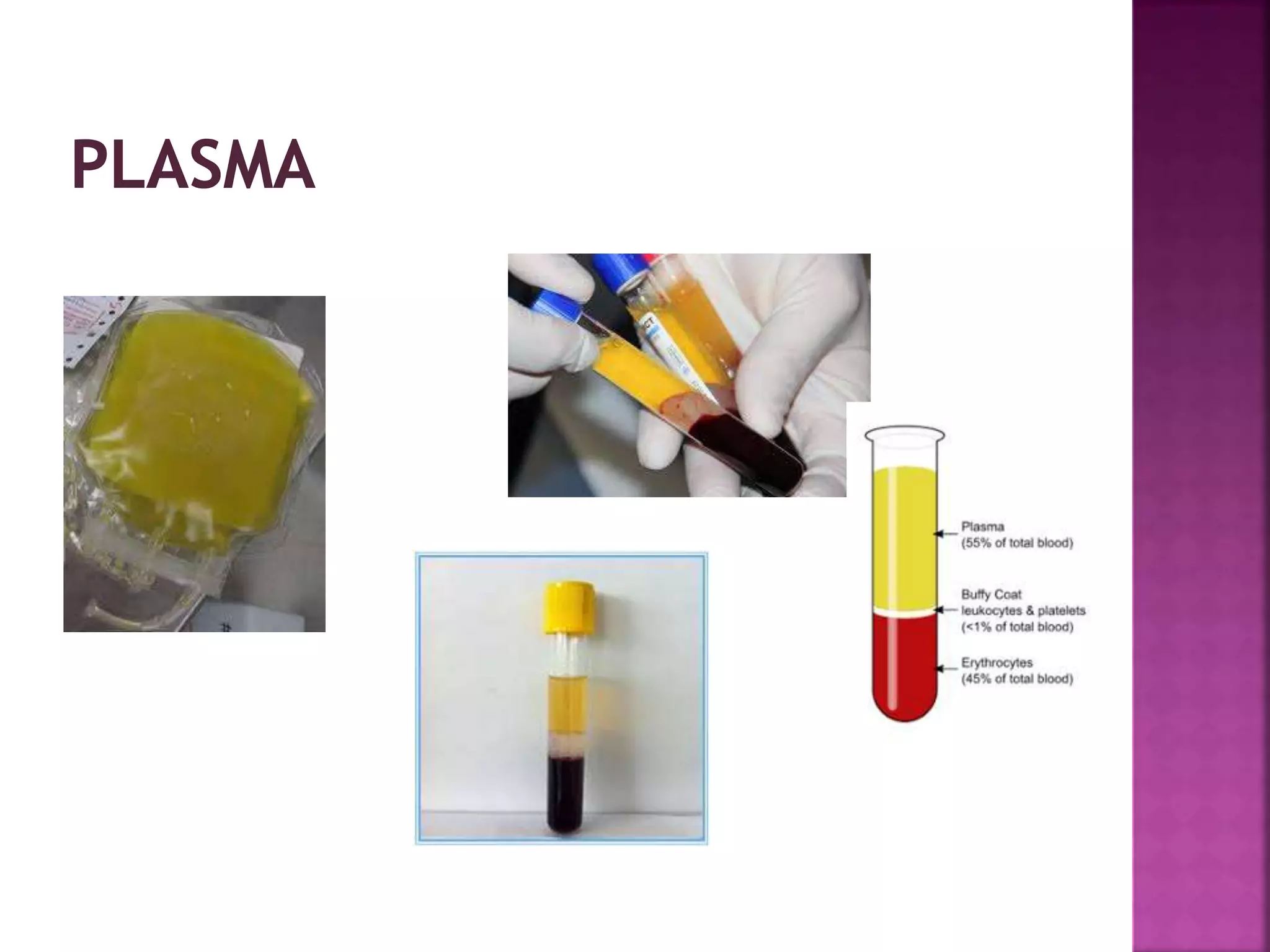
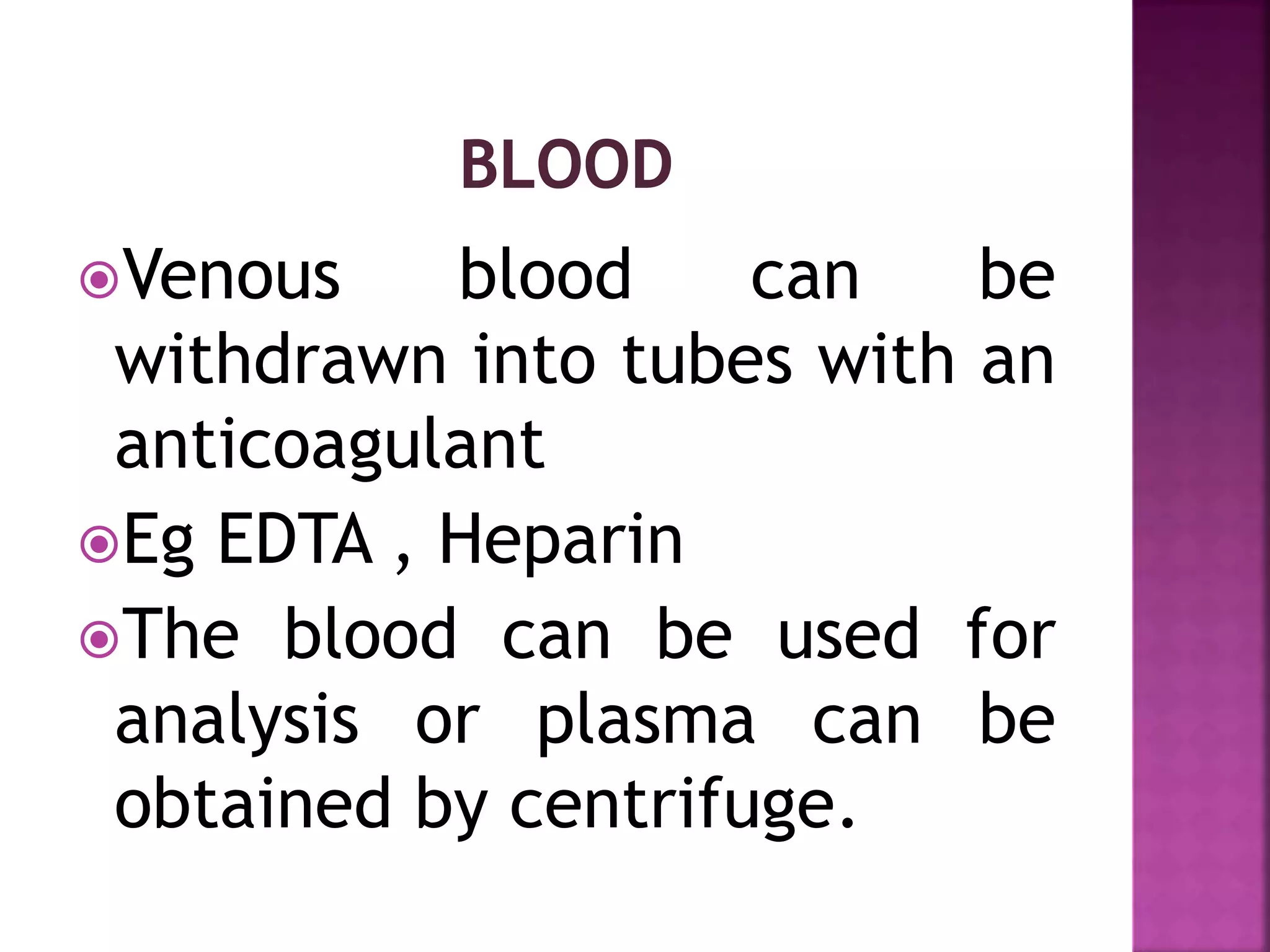
Venous blood can be
withdrawn into tubes with an
anticoagulant
Eg EDTA , Heparin
The blood can be used for
analysis or plasma can be
obtained by centrifuge.
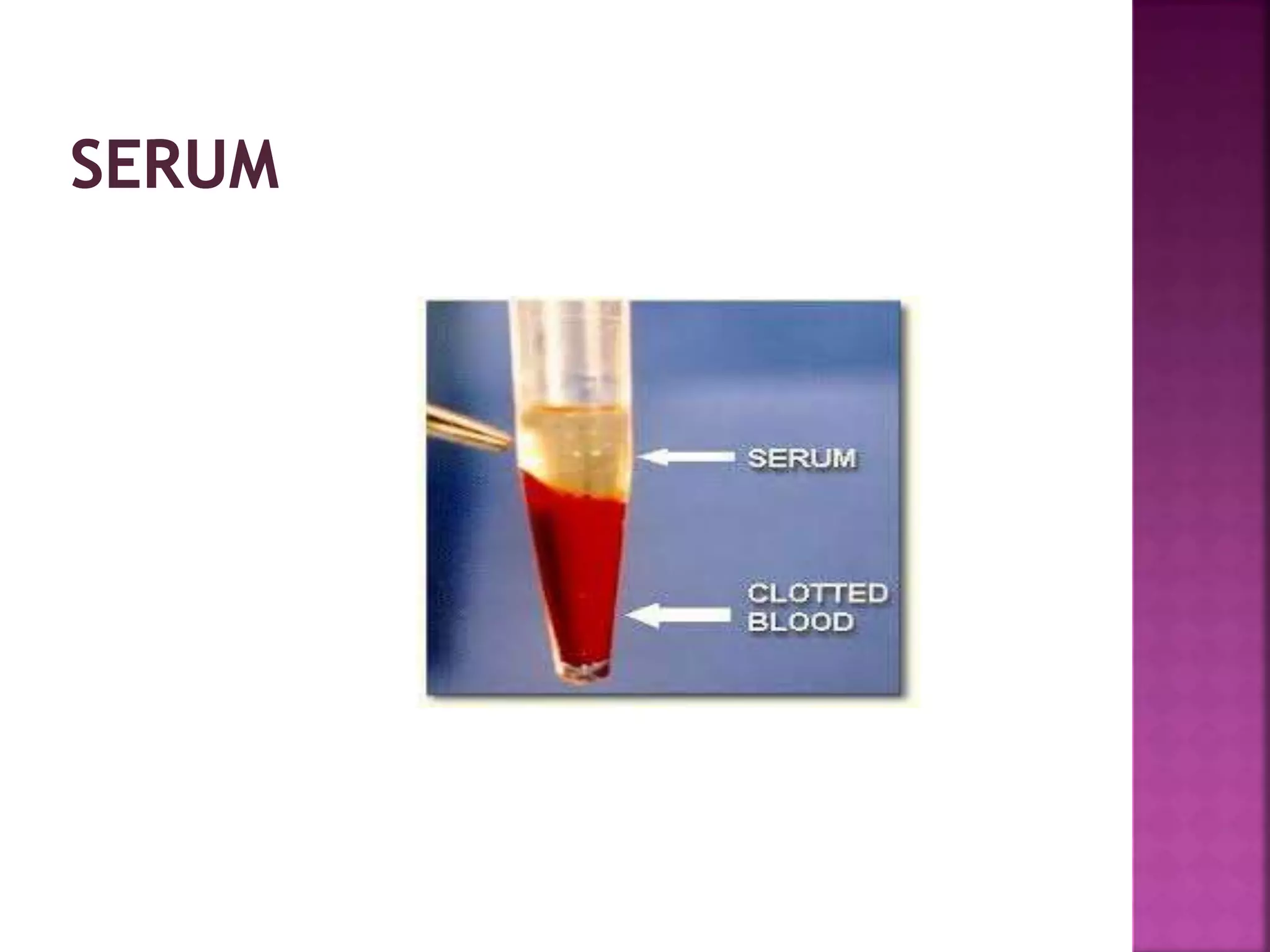
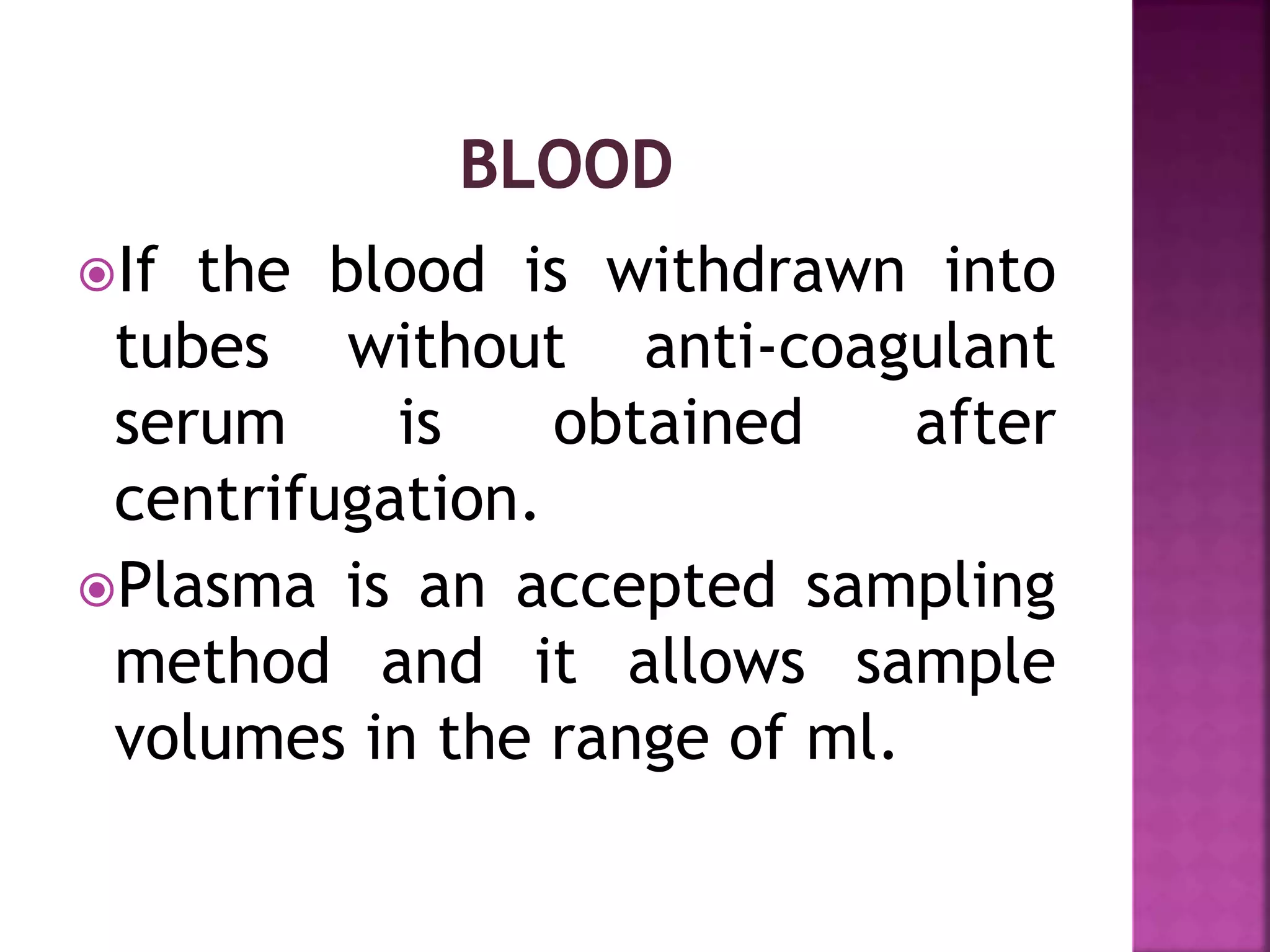
If the blood is withdrawn into
tubes without anti-coagulant
serum is obtained after
centrifugation.
Plasma is an accepted sampling
method and it allows sample
volumes in the range of ml.
 In Rural areas the centrifuge and freezers
may not be available.
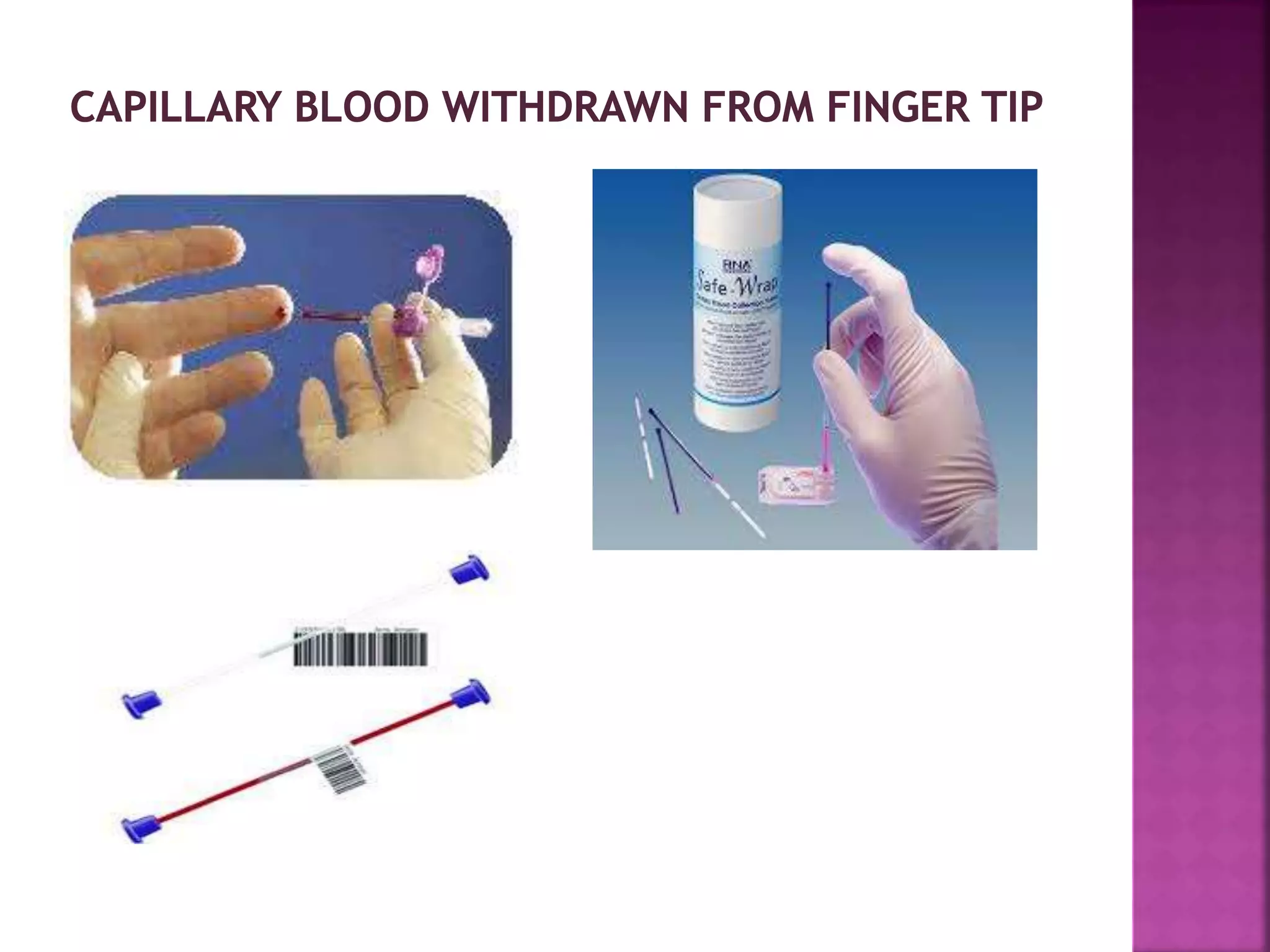
 It can be over come by the capillary blood
sampling.
 It is applied to the sampling paper i.e dried
blood spots.
 Blood is obtained by puncturing a fingertip
with a lancet.
 Blood is collected with a capillary pipette of
fixed size and the blood is applied onto a
sampling paper.
 The dried blood spots is dried completely
before storing the samples in plastic bags for
transportation to the laboratory.
 Moisture can cause bacterial and fungal
growth
 The dried blood spots sampling technique
compared with vein puncture requires
minimal training to perform.
 It is less invasive and low infectious risk
from viruse such as HIV and hepatitis C.
 The Hepatitis B virus can remain infectious
for at least seven days.
 Only 50 – 100 micro liter sample blood is
collected.
 Plasma/serum is used to determine the
pharmacokinetic profile of the analyte.
 Urine is used to determine the renal
elimination profile of the compound.
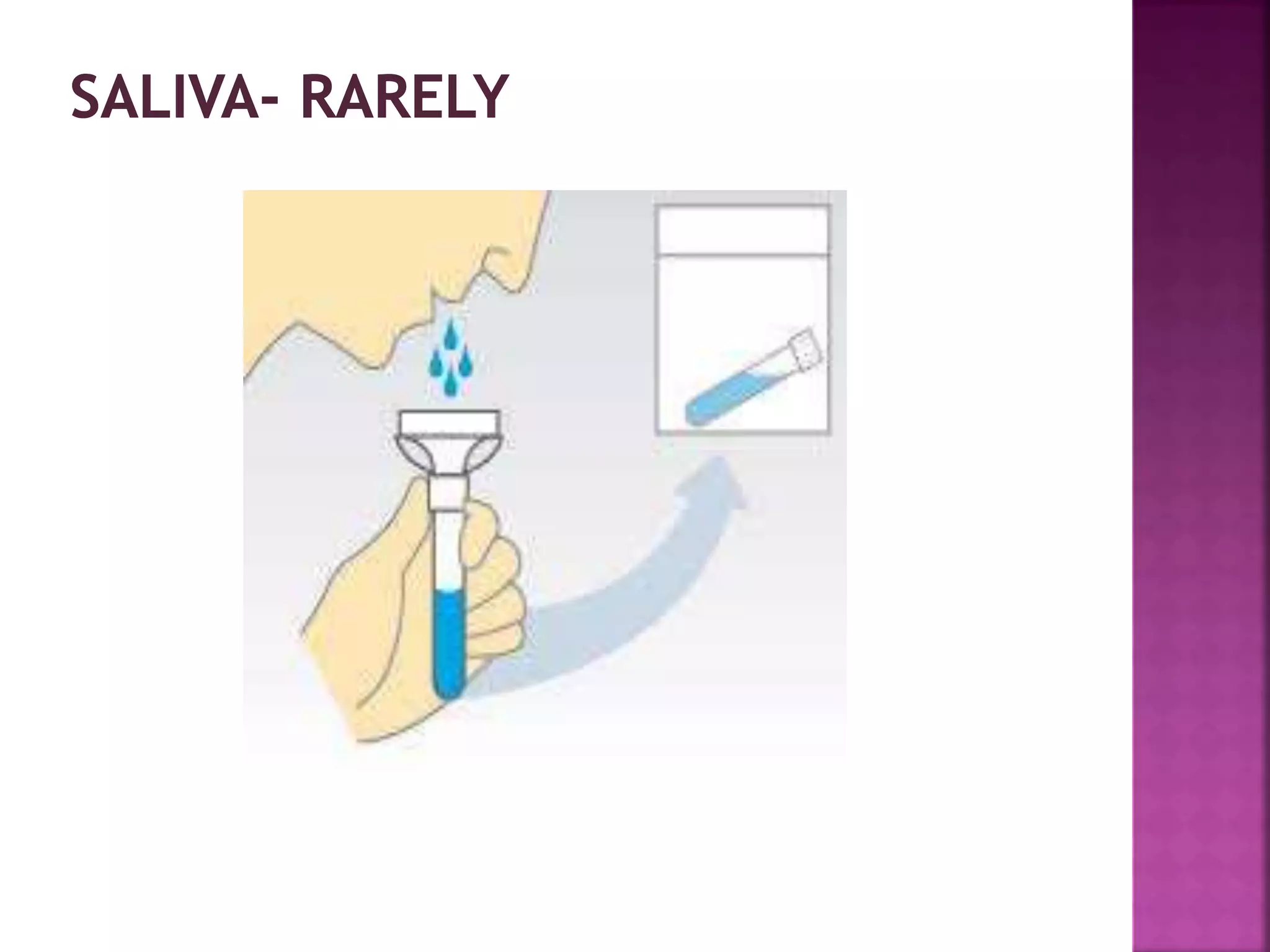
Saliva can be sampled with
saliva collecting tubes by
spitting in the tube.
Saliva can be collected using
salivette sampling device.
It involves chewing the cotton
roll that absorbs saliva and
placed in the sampling device
It is stored in refrigerator until
brought to the laboratory for
centrifugation and later analysis
The use of saliva for biochemical
analysis has a number of advantages
compared to blood .
Collection is invasive, stress free,
very convenient and cost effective.
 The sample preparation portion of the analysis
is often the most critical and difficult part, both
in terms of time involved and the difficulty of
extracting the desired analyte from the matrix.
 In addition, each matrix has its own unique
challenges.
 For example,
 urine has a high salt content,
 plasma contains a great deal of phospholipids,
 whole blood contains red blood cells that usually
must be lysed and so forth.
 Good bioanalysis starts with good sample collection
procedures .
 Therefore, the integrity of samples must be maintained
from the time of collection to the moment of analysis .
 The most common matrix is plasma; however, depending
on the characteristics of the drug and its metabolic
behavior, analysis of blood or serum may be more
appropriate.
 the key point in biological sample collection is to collect
them quickly and store them at the correct temperature,
stabilize an unstable drug in the matrix, and ensure that
the samples are labeled correctly.
 Sample preparation is applied to remove
interfering compounds.
 It is tedious and time consuming.
 Purity of the sample affects the overall
performance of the analysis.
 It is common that the mass spectroscopy
signal of the analyte.
 Dirty sample can cause contamination of the
ion source resulting in variations of the
detector response.
 Sample preparation together with the
analytical seperation will determine the
overall robustness of the analytical method.
 Sample treatment
 Sample cleanup
 Sample extraction.
 Removal of protein related materials that
may contaminate the chromatography
column.
 Elimination of endogenous compound such as
phospholipids that cause major ion
suppression and enhancement in LC/MS.
 Concentration to increase the assay
sensitivity.
Extraction of bioanalytical sample

Extraction of bioanalytical sample

  • 1.
    General need, principleand procedure involved in the Bioanalytical methods such as Protein precipitation, Liquid - Liquid extraction and Solid phase extraction and other novel sample preparation approach.
  • 2.
    It deals withquantitative analysis of composition of substance and complex material, by measuring a physical or chemical of a distinctive constituent of the component.
  • 3.
  • 4.
     Reveals thechemical identity of the species in the sample
  • 5.
    Establishes the relative amountof analytes in terms of numerical.
  • 6.
     The componentsof the sample that are to be determined
  • 7.
     The processof determining how much of a given sample in the material indicated by its name.
  • 8.
     The separationof the component is often performed prior to the analysis.  It is sub discipline of the analytical chemistry covering the quantitative measurement of xenobiotics [ drugs ,metabolites and biological molecule in the unnatural location or concentration] and biotics [macromolecules, proteins, DNA, metabolites] in biological system
  • 9.
     The samplepreparation portion of the analysis is often the most critical and difficult part, both in terms of time involved and the difficulty of extracting the desired analyte from the matrix. In addition, each matrix has its own unique challenges. For example, urine has a high salt content, plasma contains a great deal of phospholipids, whole blood contains red blood cells that usually must be lysed and so forth.
  • 10.
     Centrifugation  Crystallization Gravity separation  Magnetic separation  Sedimentation  Sublimation
  • 11.
     Centrifugation isemployed to separate two miscible substances.
  • 20.
    Venous blood canbe withdrawn into tubes with an anticoagulant Eg EDTA , Heparin The blood can be used for analysis or plasma can be obtained by centrifuge.
  • 21.
    If the bloodis withdrawn into tubes without anti-coagulant serum is obtained after centrifugation. Plasma is an accepted sampling method and it allows sample volumes in the range of ml.
  • 22.
     In Ruralareas the centrifuge and freezers may not be available.  It can be over come by the capillary blood sampling.  It is applied to the sampling paper i.e dried blood spots.  Blood is obtained by puncturing a fingertip with a lancet.  Blood is collected with a capillary pipette of fixed size and the blood is applied onto a sampling paper.
  • 23.
     The driedblood spots is dried completely before storing the samples in plastic bags for transportation to the laboratory.  Moisture can cause bacterial and fungal growth  The dried blood spots sampling technique compared with vein puncture requires minimal training to perform.  It is less invasive and low infectious risk from viruse such as HIV and hepatitis C.
  • 24.
     The HepatitisB virus can remain infectious for at least seven days.  Only 50 – 100 micro liter sample blood is collected.  Plasma/serum is used to determine the pharmacokinetic profile of the analyte.  Urine is used to determine the renal elimination profile of the compound.
  • 25.
    Saliva can besampled with saliva collecting tubes by spitting in the tube. Saliva can be collected using salivette sampling device. It involves chewing the cotton roll that absorbs saliva and placed in the sampling device
  • 26.
    It is storedin refrigerator until brought to the laboratory for centrifugation and later analysis The use of saliva for biochemical analysis has a number of advantages compared to blood . Collection is invasive, stress free, very convenient and cost effective.
  • 27.
     The samplepreparation portion of the analysis is often the most critical and difficult part, both in terms of time involved and the difficulty of extracting the desired analyte from the matrix.  In addition, each matrix has its own unique challenges.  For example,  urine has a high salt content,  plasma contains a great deal of phospholipids,  whole blood contains red blood cells that usually must be lysed and so forth.
  • 28.
     Good bioanalysisstarts with good sample collection procedures .  Therefore, the integrity of samples must be maintained from the time of collection to the moment of analysis .  The most common matrix is plasma; however, depending on the characteristics of the drug and its metabolic behavior, analysis of blood or serum may be more appropriate.  the key point in biological sample collection is to collect them quickly and store them at the correct temperature, stabilize an unstable drug in the matrix, and ensure that the samples are labeled correctly.
  • 29.
     Sample preparationis applied to remove interfering compounds.  It is tedious and time consuming.  Purity of the sample affects the overall performance of the analysis.  It is common that the mass spectroscopy signal of the analyte.
  • 30.
     Dirty samplecan cause contamination of the ion source resulting in variations of the detector response.  Sample preparation together with the analytical seperation will determine the overall robustness of the analytical method.
  • 31.
     Sample treatment Sample cleanup  Sample extraction.
  • 32.
     Removal ofprotein related materials that may contaminate the chromatography column.  Elimination of endogenous compound such as phospholipids that cause major ion suppression and enhancement in LC/MS.  Concentration to increase the assay sensitivity.