
New developments in HPLC – role and
principles of Ultra, Nano liquid
chromatography in pharmaceutical analysis
Presented by
G.Pavani
Y17MPHPA426
I/II M.Pharmacy
Department Of
Pharmaceutical Analysis
Chalapathi Institute of pharmaceutical sciences.
Lam,Guntur.
Contents
What is HPLC
New developments in HPLC
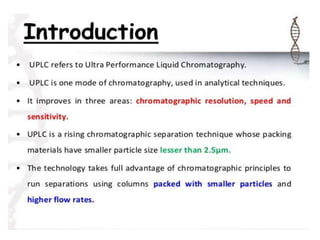
Role and principle of ultra performance liquid chromatography
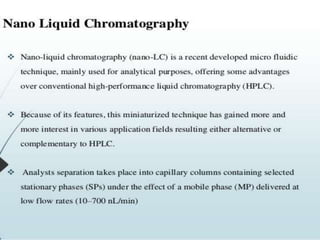
Role and principle of nano liquid chromatography
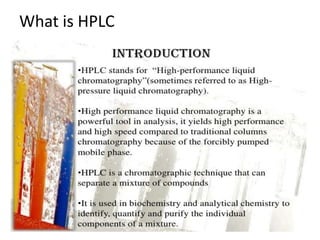
What is HPLC
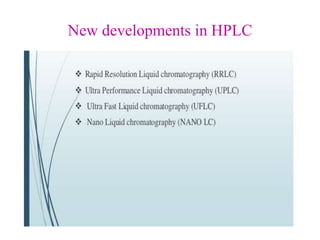
New developments in HPLC
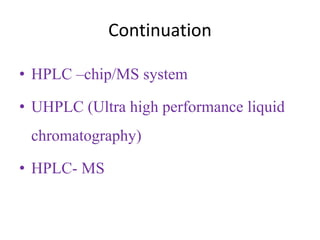
Continuation
• HPLC –chip/MS system
• UHPLC (Ultra high performance liquid
chromatography)
• HPLC- MS
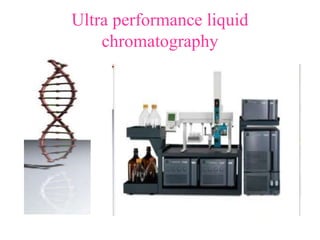
Ultra performance liquid
chromatography
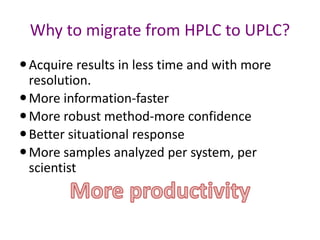
Why to migrate from HPLC to UPLC?
Acquire results in less time and with more
resolution.
More information-faster
More robust method-more confidence
Better situational response
More samples analyzed per system, per
scientist
References
1. K. Hosoya et al., Anal. Sci. 24, 149 (2008) B.A.
Olsen, B.C. Castle, D.P. Myers, TrAC Trends Anal.
Chem. 25, 796 (2006)
2. P. Sadílek, D. Šatínský, P. Solich, TrAC Trends
Anal. Chem. 26, 375 (2007) H.A
3. . Claessens, M.A. van Straten, J. Chromatogr. A
1060, 23 (2004)
4. L.M. Hewitt, C.H. Marvin, Mutat. Res., Rev.
Mutat. Res. 589, 208 (2005)
5. J. Eijkel, Lab Chip 7, 815 (2007)
http://pubs.rsc.org/
Uplc&nano

Uplc&nano

  • 1.
    New developments inHPLC – role and principles of Ultra, Nano liquid chromatography in pharmaceutical analysis Presented by G.Pavani Y17MPHPA426 I/II M.Pharmacy Department Of Pharmaceutical Analysis Chalapathi Institute of pharmaceutical sciences. Lam,Guntur.
  • 2.
    Contents What is HPLC Newdevelopments in HPLC Role and principle of ultra performance liquid chromatography Role and principle of nano liquid chromatography
  • 3.
  • 4.
  • 5.
    Continuation • HPLC –chip/MSsystem • UHPLC (Ultra high performance liquid chromatography) • HPLC- MS
  • 6.
  • 10.
    Why to migratefrom HPLC to UPLC? Acquire results in less time and with more resolution. More information-faster More robust method-more confidence Better situational response More samples analyzed per system, per scientist
  • 20.
    References 1. K. Hosoyaet al., Anal. Sci. 24, 149 (2008) B.A. Olsen, B.C. Castle, D.P. Myers, TrAC Trends Anal. Chem. 25, 796 (2006) 2. P. Sadílek, D. Šatínský, P. Solich, TrAC Trends Anal. Chem. 26, 375 (2007) H.A 3. . Claessens, M.A. van Straten, J. Chromatogr. A 1060, 23 (2004) 4. L.M. Hewitt, C.H. Marvin, Mutat. Res., Rev. Mutat. Res. 589, 208 (2005) 5. J. Eijkel, Lab Chip 7, 815 (2007) http://pubs.rsc.org/