CEIP NARCISO ALONSO CORTÉS
    VALLADOLID (SPAIN)
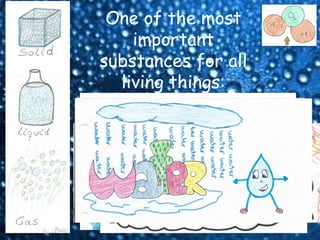
One of the most
    important
substances for all
  living things:
AFTER A SERIES
OF EXPERIMENTS
WITH WATER WE
 HAVE LEARNT
     THAT:
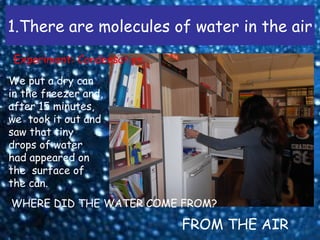
1.There are molecules of water in the air
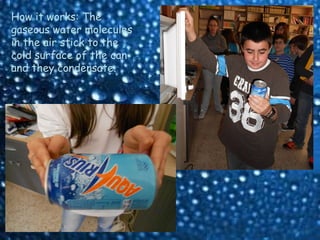
 Experiment: Condensation

We put a dry can
in the freezer and,
after 15 minutes,
we took it out and
saw that tiny
drops of water
had appeared on
the surface of
the can.
WHERE DID THE WATER COME FROM?

                            FROM THE AIR
How it works: The
gaseous water molecules
in the air stick to the
cold surface of the can
and they condensate.
2. There are absorbent materials
      and waterproof materials
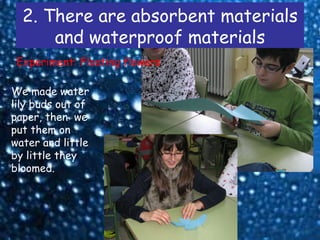
 Experiment: Floating flowers

We made water
lily buds out of
paper, then we
put them on
water and little
by little they
bloomed.
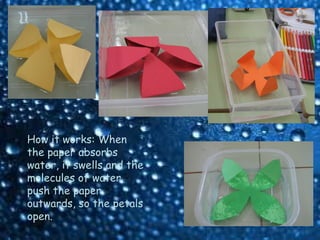
How it works: When
the paper absorbs
water, it swells and the
molecules of water
push the paper
outwards, so the petals
open.
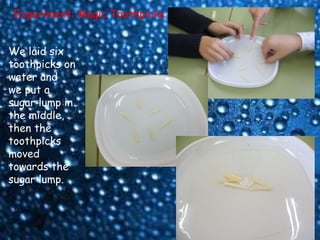
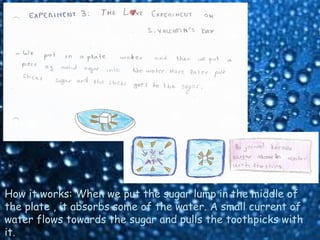
Experiment: Magic Toothpicks


We laid six
toothpicks on
water and
we put a
sugar lump in
the middle,
then the
toothpicks
moved
towards the
sugar lump.
How it works: When we put the sugar lump in the middle of
the plate , it absorbs some of the water. A small current of
water flows towards the sugar and pulls the toothpicks with
it.
3. Liquid water can change into
             gaseous water
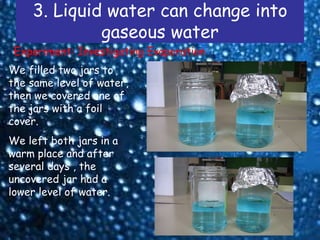
 Experiment: Investigating Evaporation
We filled two jars to
the same level of water,
then we covered one of
the jars with a foil
cover.
We left both jars in a
warm place and after
several days , the
uncovered jar had a
lower level of water.
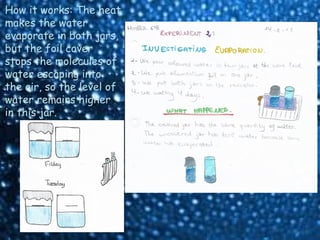
How it works: The heat
makes the water
evaporate in both jars,
but the foil cover
stops the molecules of
water escaping into
the air, so the level of
water remains higher
in this jar.
                           Escaneos
                           de dibujos
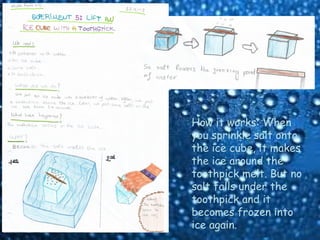
4. Salt lowers the freezing point
                of water
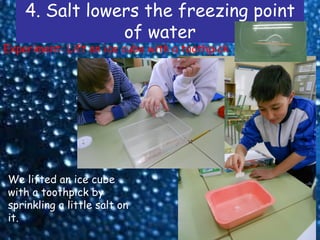
Experiment: Lift an ice cube with a toothpick


We lifted an ice cube
with a toothpick by
sprinkling a little salt on
it.
How it works: When
you sprinkle salt onto
the ice cube, it makes
the ice around the
toothpick melt. But no
salt falls under the
toothpick and it
becomes frozen into
ice again.
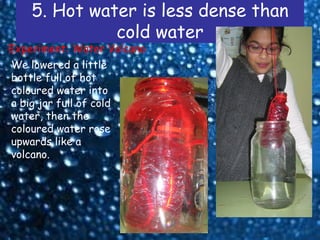
5. Hot water is less dense than
              cold water
Experiment: Water Volcano
We lowered a little
bottle full of hot
coloured water into
a big jar full of cold
water, then the
coloured water rose
upwards like a
volcano.
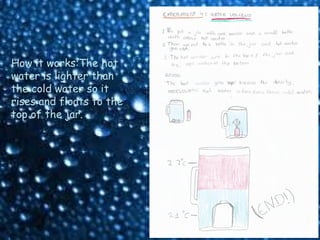
How it works:The hot
water is lighter than
the cold water so it
rises and floats to the
top of the jar.
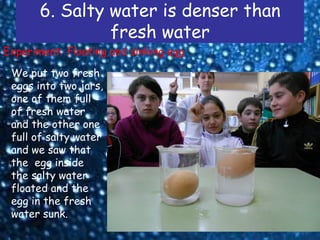
6. Salty water is denser than
                fresh water
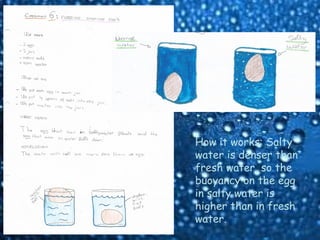
Experiment: Floating and sinking egg

 We put two fresh
 eggs into two jars,
 one of them full
 of fresh water
 and the other one
 full of salty water
 and we saw that
 the egg inside
 the salty water
 floated and the
 egg in the fresh
 water sunk.
How it works: Salty
water is denser than
fresh water, so the
buoyancy on the egg
in salty water is
higher than in fresh
water.
7. We can change water surface
                tension
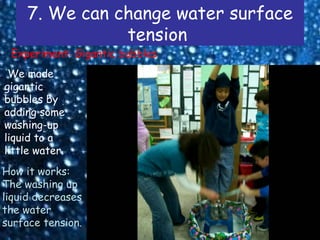
 Experiment: Gigantic bubbles
 We made
gigantic
bubbles by
adding some
washing-up
liquid to a
little water.
How it works:
The washing up
liquid decreases
the water
surface tension.
We think water is an
 amazing substance
and we will continue
 investigating with
   the help of our
Comenius partners.

Experiments with water

  • 1.
    CEIP NARCISO ALONSOCORTÉS VALLADOLID (SPAIN)
  • 2.
    One of themost important substances for all living things:
  • 3.
    AFTER A SERIES OFEXPERIMENTS WITH WATER WE HAVE LEARNT THAT:
  • 4.
    1.There are moleculesof water in the air Experiment: Condensation We put a dry can in the freezer and, after 15 minutes, we took it out and saw that tiny drops of water had appeared on the surface of the can. WHERE DID THE WATER COME FROM? FROM THE AIR
  • 5.
    How it works:The gaseous water molecules in the air stick to the cold surface of the can and they condensate.
  • 6.
    2. There areabsorbent materials and waterproof materials Experiment: Floating flowers We made water lily buds out of paper, then we put them on water and little by little they bloomed.
  • 7.
    How it works:When the paper absorbs water, it swells and the molecules of water push the paper outwards, so the petals open.
  • 8.
    Experiment: Magic Toothpicks Welaid six toothpicks on water and we put a sugar lump in the middle, then the toothpicks moved towards the sugar lump.
  • 9.
    How it works:When we put the sugar lump in the middle of the plate , it absorbs some of the water. A small current of water flows towards the sugar and pulls the toothpicks with it.
  • 10.
    3. Liquid watercan change into gaseous water Experiment: Investigating Evaporation We filled two jars to the same level of water, then we covered one of the jars with a foil cover. We left both jars in a warm place and after several days , the uncovered jar had a lower level of water.
  • 11.
    How it works:The heat makes the water evaporate in both jars, but the foil cover stops the molecules of water escaping into the air, so the level of water remains higher in this jar. Escaneos de dibujos
  • 12.
    4. Salt lowersthe freezing point of water Experiment: Lift an ice cube with a toothpick We lifted an ice cube with a toothpick by sprinkling a little salt on it.
  • 13.
    How it works:When you sprinkle salt onto the ice cube, it makes the ice around the toothpick melt. But no salt falls under the toothpick and it becomes frozen into ice again.
  • 14.
    5. Hot wateris less dense than cold water Experiment: Water Volcano We lowered a little bottle full of hot coloured water into a big jar full of cold water, then the coloured water rose upwards like a volcano.
  • 15.
    How it works:Thehot water is lighter than the cold water so it rises and floats to the top of the jar.
  • 16.
    6. Salty wateris denser than fresh water Experiment: Floating and sinking egg We put two fresh eggs into two jars, one of them full of fresh water and the other one full of salty water and we saw that the egg inside the salty water floated and the egg in the fresh water sunk.
  • 17.
    How it works:Salty water is denser than fresh water, so the buoyancy on the egg in salty water is higher than in fresh water.
  • 18.
    7. We canchange water surface tension Experiment: Gigantic bubbles We made gigantic bubbles by adding some washing-up liquid to a little water. How it works: The washing up liquid decreases the water surface tension.
  • 19.
    We think wateris an amazing substance and we will continue investigating with the help of our Comenius partners.