About the AIR 
 Air is the mixture of gases on the earth. 
 A thick blanket of air surrounding the earth’s surface is 
called as atmosphere. 
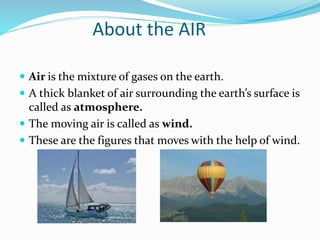
 The moving air is called as wind. 
 These are the figures that moves with the help of wind.
COMPOSITION OF AIR 
 These substances which made up air can be now 
individually identified. 
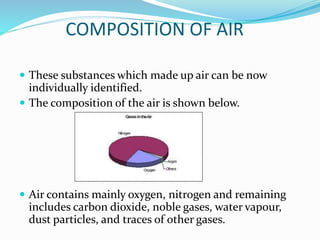
 The composition of the air is shown below. 
 Air contains mainly oxygen, nitrogen and remaining 
includes carbon dioxide, noble gases, water vapour, 
dust particles, and traces of other gases.
Nitrogen and oxygen 
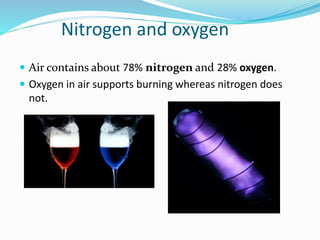
 Air contains about 78% nitrogen and 28% oxygen. 
 Oxygen in air supports burning whereas nitrogen does 
not.
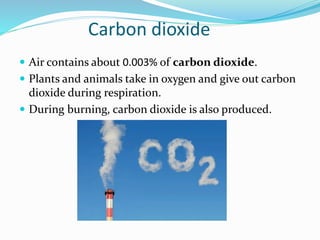
Carbon dioxide 
 Air contains about 0.003% of carbon dioxide. 
 Plants and animals take in oxygen and give out carbon 
dioxide during respiration. 
 During burning, carbon dioxide is also produced.
Water Vapour 
 Air contains varying amounts of water vapour 
depending on the weather of a place. 
 The sun heats the water in oceans and seas. This water 
evaporates and forms. 
 Here is an image of wet clothes dry.
Dust and Smoke 
Air contains dust. Air also contains 
smoke. 
Now that we know the constitutions of 
air. 
Now we learn the importance of 
survival of living beings on this planet.
AIR SUPPORTS LIFE 
 We all need air to survive. Air contains oxygen and 
carbon dioxide useful to plants and animals. 
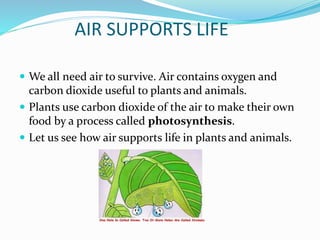
 Plants use carbon dioxide of the air to make their own 
food by a process called photosynthesis. 
 Let us see how air supports life in plants and animals.
In Plants 
 All animals need to respire, be it a cockroach, a fish, or 
an elephant. It is just that they use different organs 
and mechanisms for respiration. 
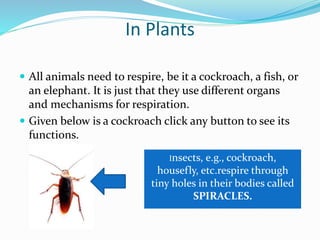
 Given below is a cockroach click any button to see its 
functions. 
Insects, e.g., cockroach, 
housefly, etc.respire through 
tiny holes in their bodies called 
SPIRACLES.
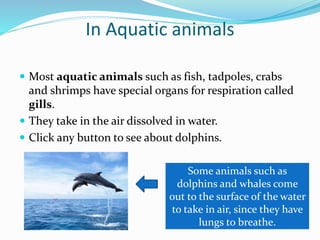
In Aquatic animals 
 Most aquatic animals such as fish, tadpoles, crabs 
and shrimps have special organs for respiration called 
gills. 
 They take in the air dissolved in water. 
 Click any button to see about dolphins. 
Some animals such as 
dolphins and whales come 
out to the surface of the water 
to take in air, since they have 
lungs to breathe.
In Amphibians 
 Amphibians such as frogs, newts and salamanders 
need breathing systems for both air and water. 
 Crocodiles and alligators swim through water with part 
of their snout above the water surface to breathe easily 
through nostrils 
Frogs have well-developed 
lungs to breathe air when on 
land. In water, frogs breathe 
with the help of their moist 
skin.
In Birds 
 Birds have a very efficient respiratory system as they 
need high levels of oxygen during flight. 
 Birds have a pair of lungs with air sacs that remain 
open all the time, so that air can easily pass through 
them.
In Mammals 
 Most mammals breathe with the help of lungs. 
 They take in oxygen and give out carbon dioxide. 
 This picture shows the human respiratory system.
BALANCE OF OXYGEN AND CARBONDIOXIDE 
IN THE AIR 
 The balance of oxygen and carbon dioxide in the 
atmosphere is maintained through respiration in plants 
and animals and by photosynthesis by plants. 
 Plants produce oxygen during photosynthesis and utilize 
oxygen during respiration. 
 They produce much more oxygen during photosynthesis 
than they consume. 
 This is how the oxygen consumed by plants and to large 
extent by animals is replenished in the air through 
photosynthesis.
Fill in the blanks 
1) Air is a …………. (solution/mixture) of gases 
2) …………. (Oxygen/Nitrogen) constitutes about 78% of 
air. 
3) ………... (Oxygen/Nitrogen) is needed for burning. 
4) During respiration, we utilize ……….. 
(oxygen/carbon dioxide) and give out ……….. 
(oxygen/carbon dioxide). 
5) Plants take in ………….. (oxygen/carbon dioxide) 
during photosynthesis.
End of lesson 
THE END

Air around us

  • 2.
    About the AIR  Air is the mixture of gases on the earth.  A thick blanket of air surrounding the earth’s surface is called as atmosphere.  The moving air is called as wind.  These are the figures that moves with the help of wind.
  • 3.
    COMPOSITION OF AIR  These substances which made up air can be now individually identified.  The composition of the air is shown below.  Air contains mainly oxygen, nitrogen and remaining includes carbon dioxide, noble gases, water vapour, dust particles, and traces of other gases.
  • 4.
    Nitrogen and oxygen  Air contains about 78% nitrogen and 28% oxygen.  Oxygen in air supports burning whereas nitrogen does not.
  • 5.
    Carbon dioxide Air contains about 0.003% of carbon dioxide.  Plants and animals take in oxygen and give out carbon dioxide during respiration.  During burning, carbon dioxide is also produced.
  • 6.
    Water Vapour Air contains varying amounts of water vapour depending on the weather of a place.  The sun heats the water in oceans and seas. This water evaporates and forms.  Here is an image of wet clothes dry.
  • 7.
    Dust and Smoke Air contains dust. Air also contains smoke. Now that we know the constitutions of air. Now we learn the importance of survival of living beings on this planet.
  • 8.
    AIR SUPPORTS LIFE  We all need air to survive. Air contains oxygen and carbon dioxide useful to plants and animals.  Plants use carbon dioxide of the air to make their own food by a process called photosynthesis.  Let us see how air supports life in plants and animals.
  • 9.
    In Plants All animals need to respire, be it a cockroach, a fish, or an elephant. It is just that they use different organs and mechanisms for respiration.  Given below is a cockroach click any button to see its functions. Insects, e.g., cockroach, housefly, etc.respire through tiny holes in their bodies called SPIRACLES.
  • 10.
    In Aquatic animals  Most aquatic animals such as fish, tadpoles, crabs and shrimps have special organs for respiration called gills.  They take in the air dissolved in water.  Click any button to see about dolphins. Some animals such as dolphins and whales come out to the surface of the water to take in air, since they have lungs to breathe.
  • 11.
    In Amphibians Amphibians such as frogs, newts and salamanders need breathing systems for both air and water.  Crocodiles and alligators swim through water with part of their snout above the water surface to breathe easily through nostrils Frogs have well-developed lungs to breathe air when on land. In water, frogs breathe with the help of their moist skin.
  • 12.
    In Birds Birds have a very efficient respiratory system as they need high levels of oxygen during flight.  Birds have a pair of lungs with air sacs that remain open all the time, so that air can easily pass through them.
  • 13.
    In Mammals Most mammals breathe with the help of lungs.  They take in oxygen and give out carbon dioxide.  This picture shows the human respiratory system.
  • 14.
    BALANCE OF OXYGENAND CARBONDIOXIDE IN THE AIR  The balance of oxygen and carbon dioxide in the atmosphere is maintained through respiration in plants and animals and by photosynthesis by plants.  Plants produce oxygen during photosynthesis and utilize oxygen during respiration.  They produce much more oxygen during photosynthesis than they consume.  This is how the oxygen consumed by plants and to large extent by animals is replenished in the air through photosynthesis.
  • 15.
    Fill in theblanks 1) Air is a …………. (solution/mixture) of gases 2) …………. (Oxygen/Nitrogen) constitutes about 78% of air. 3) ………... (Oxygen/Nitrogen) is needed for burning. 4) During respiration, we utilize ……….. (oxygen/carbon dioxide) and give out ……….. (oxygen/carbon dioxide). 5) Plants take in ………….. (oxygen/carbon dioxide) during photosynthesis.
  • 16.
    End of lesson THE END