 Described as an uncomfortable awareness of one's own heartbeat.
 Occurrence of palpitations does not necessarily mean that an arrhythmia is
present; conversely, an arrhythmia can occur without palpitations.
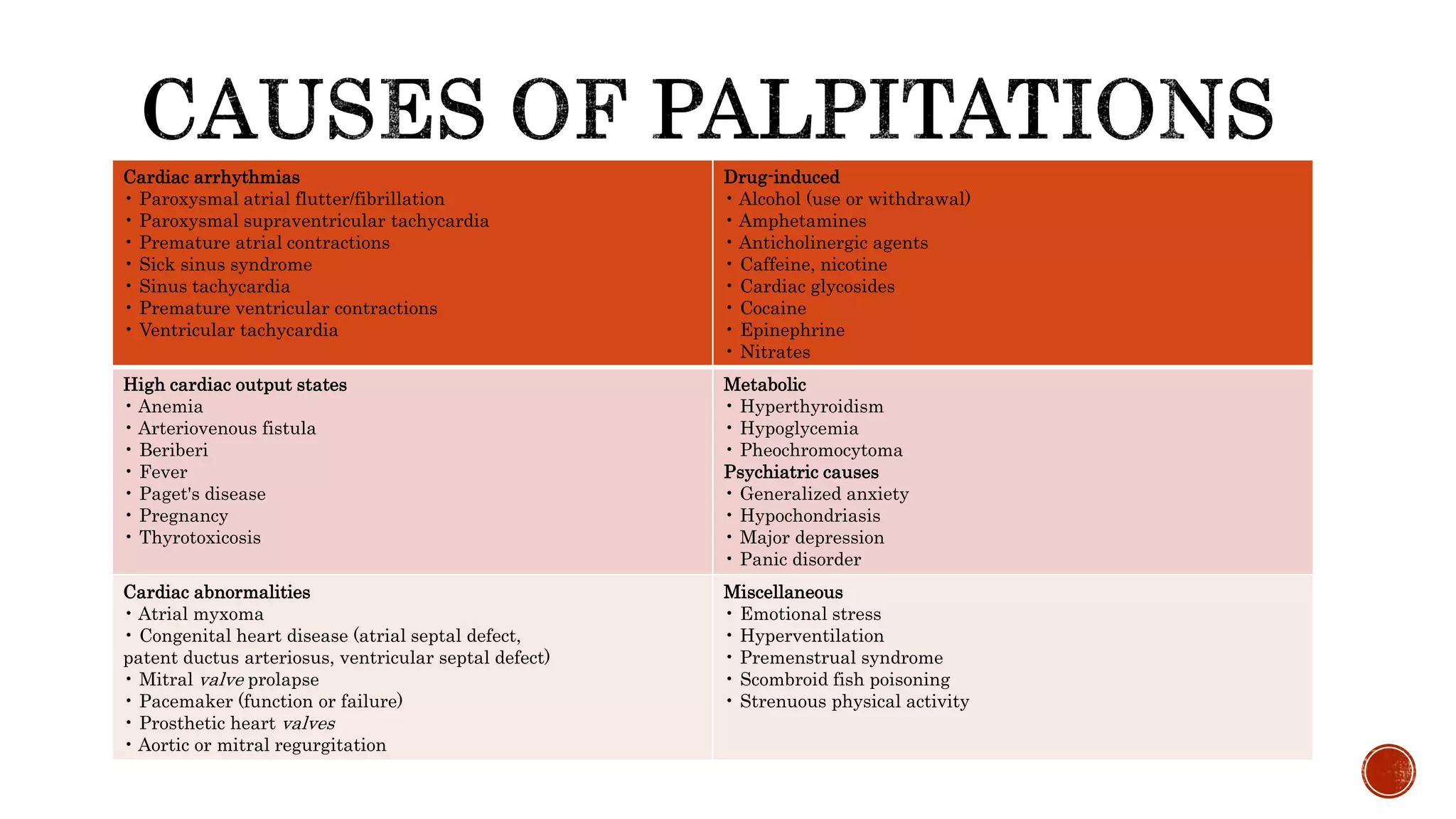
Cardiac arrhythmias
• Paroxysmal atrial flutter/fibrillation
• Paroxysmal supraventricular tachycardia
• Premature atrial contractions
• Sick sinus syndrome
• Sinus tachycardia
• Premature ventricular contractions
• Ventricular tachycardia
Drug-induced
• Alcohol (use or withdrawal)
• Amphetamines
• Anticholinergic agents
• Caffeine, nicotine
• Cardiac glycosides
• Cocaine
• Epinephrine
• Nitrates
High cardiac output states
• Anemia
• Arteriovenous fistula
• Beriberi
• Fever
• Paget's disease
• Pregnancy
• Thyrotoxicosis
Metabolic
• Hyperthyroidism
• Hypoglycemia
• Pheochromocytoma
Psychiatric causes
• Generalized anxiety
• Hypochondriasis
• Major depression
• Panic disorder
Cardiac abnormalities
• Atrial myxoma
• Congenital heart disease (atrial septal defect,
patent ductus arteriosus, ventricular septal defect)
• Mitral valve prolapse
• Pacemaker (function or failure)
• Prosthetic heart valves
• Aortic or mitral regurgitation
Miscellaneous
• Emotional stress
• Hyperventilation
• Premenstrual syndrome
• Scombroid fish poisoning
• Strenuous physical activity
 To detect and identify presence and nature of any underlying arrhythmia.
 To determine the presence of organic heart disease.
 To determine the presence of precipitating factors
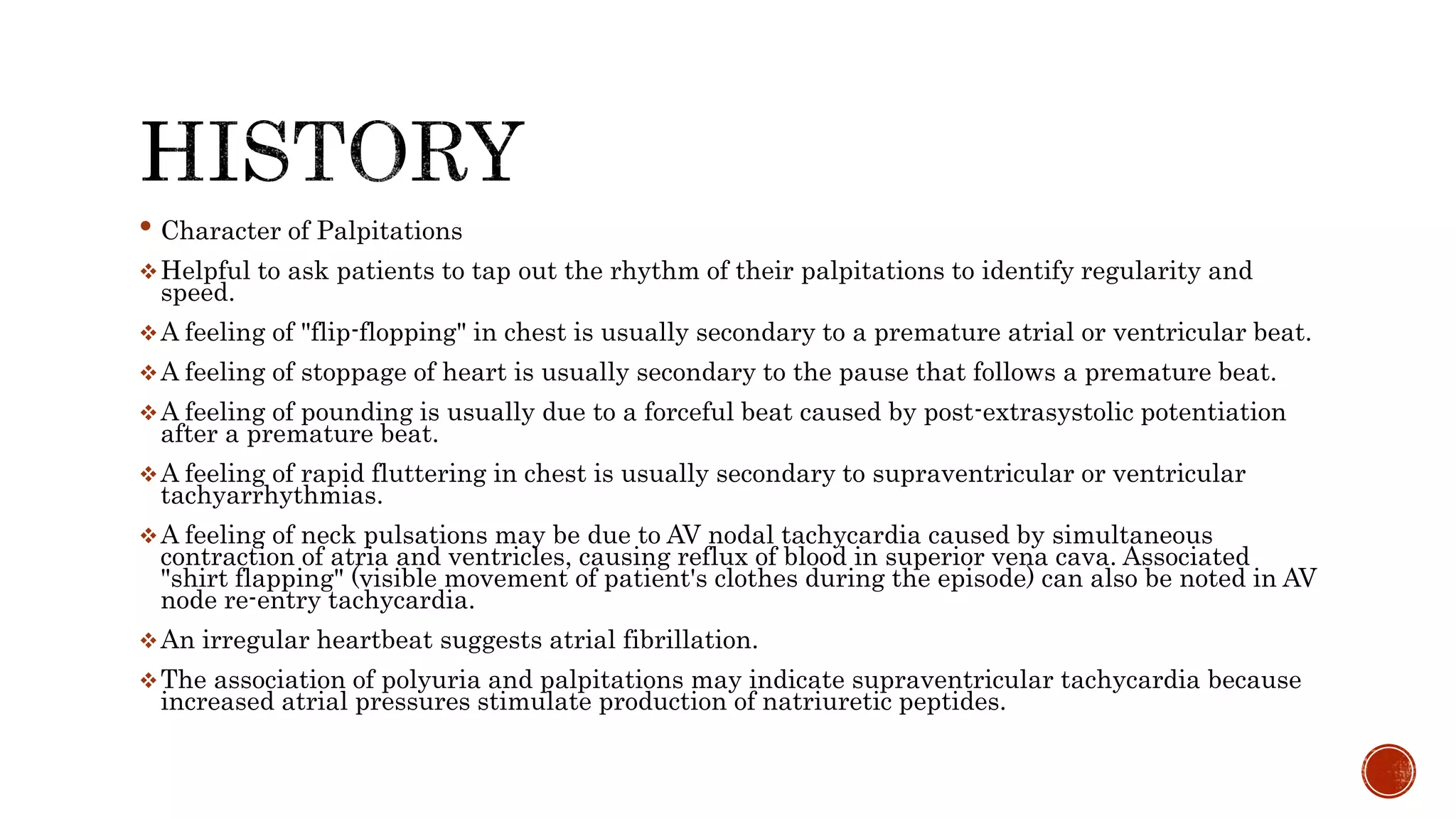
• Character of Palpitations
Helpful to ask patients to tap out the rhythm of their palpitations to identify regularity and
speed.
A feeling of "flip-flopping" in chest is usually secondary to a premature atrial or ventricular beat.
A feeling of stoppage of heart is usually secondary to the pause that follows a premature beat.
A feeling of pounding is usually due to a forceful beat caused by post-extrasystolic potentiation
after a premature beat.
A feeling of rapid fluttering in chest is usually secondary to supraventricular or ventricular
tachyarrhythmias.
A feeling of neck pulsations may be due to AV nodal tachycardia caused by simultaneous
contraction of atria and ventricles, causing reflux of blood in superior vena cava. Associated
"shirt flapping" (visible movement of patient's clothes during the episode) can also be noted in AV
node re-entry tachycardia.
An irregular heartbeat suggests atrial fibrillation.
The association of polyuria and palpitations may indicate supraventricular tachycardia because
increased atrial pressures stimulate production of natriuretic peptides.
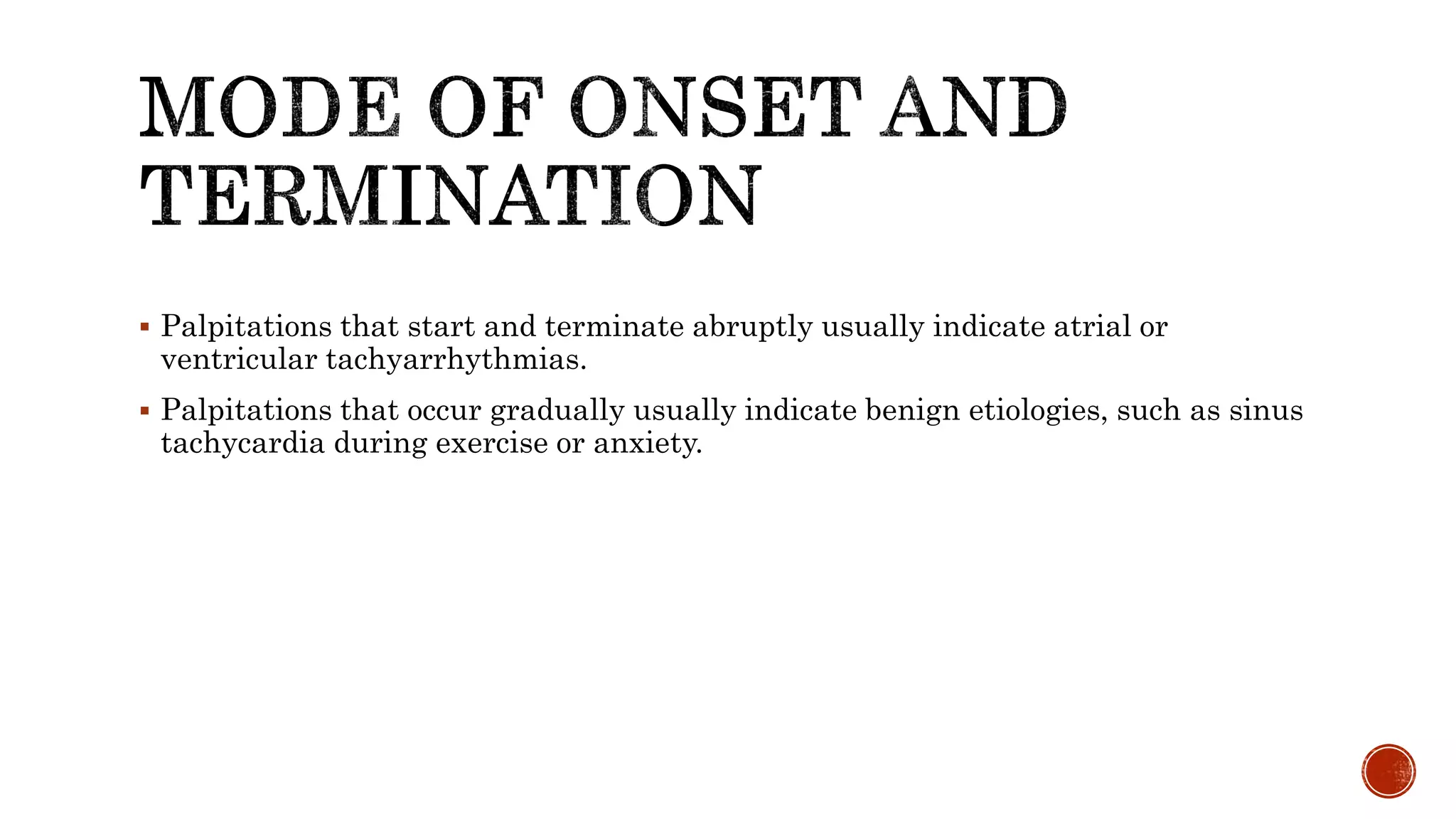
 Palpitations that start and terminate abruptly usually indicate atrial or
ventricular tachyarrhythmias.
 Palpitations that occur gradually usually indicate benign etiologies, such as sinus
tachycardia during exercise or anxiety.
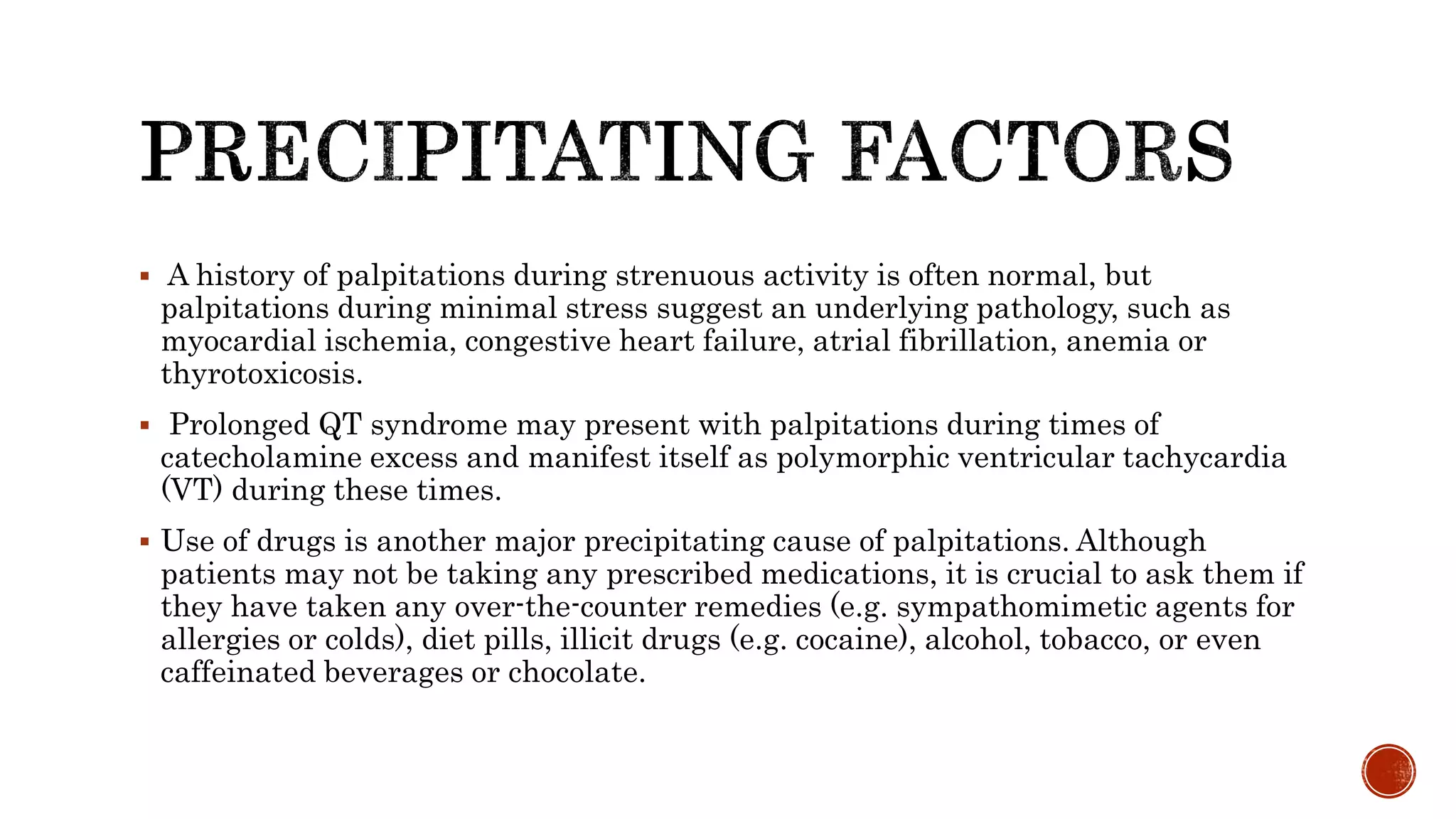
 A history of palpitations during strenuous activity is often normal, but
palpitations during minimal stress suggest an underlying pathology, such as
myocardial ischemia, congestive heart failure, atrial fibrillation, anemia or
thyrotoxicosis.
 Prolonged QT syndrome may present with palpitations during times of
catecholamine excess and manifest itself as polymorphic ventricular tachycardia
(VT) during these times.
 Use of drugs is another major precipitating cause of palpitations. Although
patients may not be taking any prescribed medications, it is crucial to ask them if
they have taken any over-the-counter remedies (e.g. sympathomimetic agents for
allergies or colds), diet pills, illicit drugs (e.g. cocaine), alcohol, tobacco, or even
caffeinated beverages or chocolate.
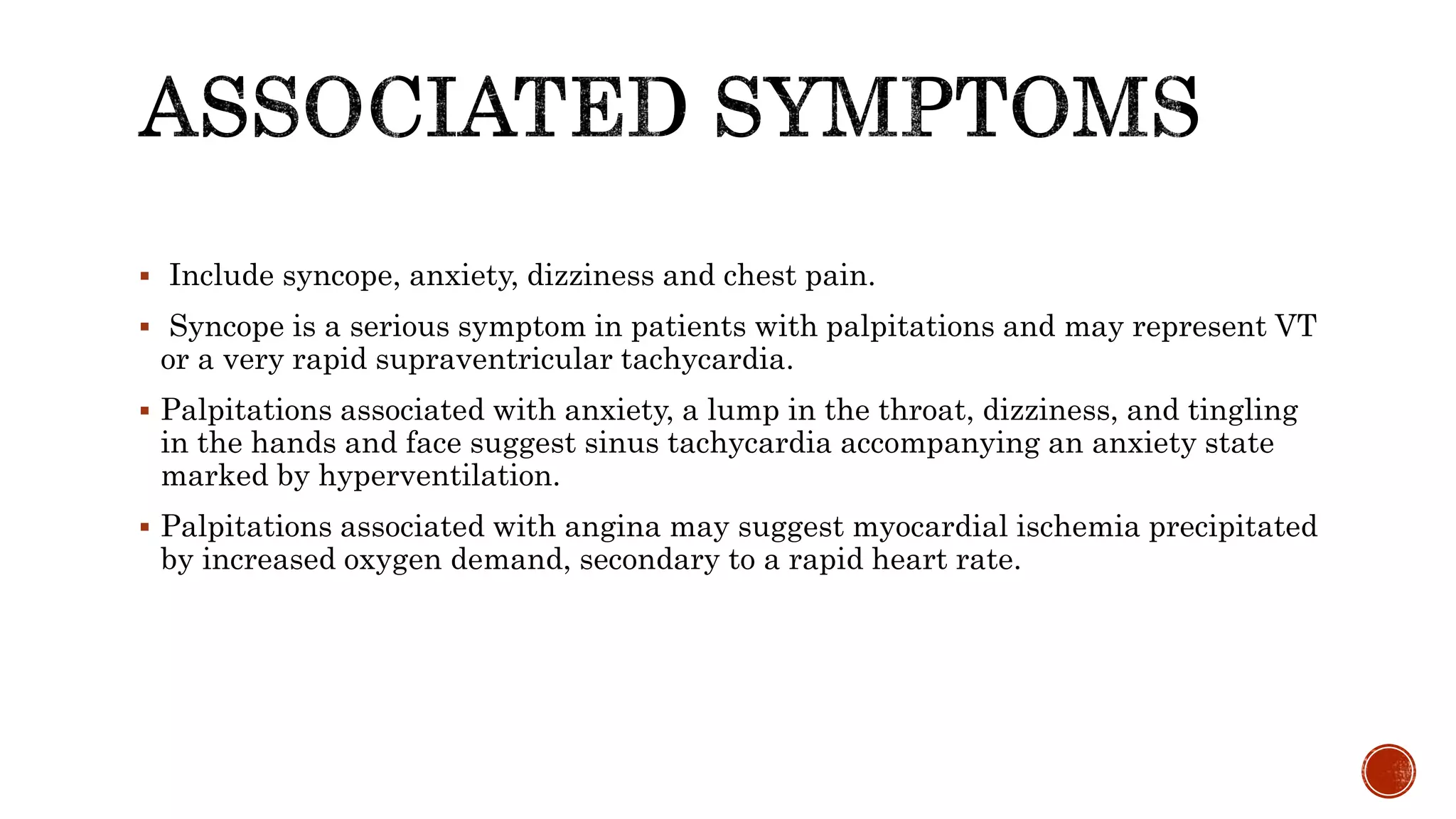
 Include syncope, anxiety, dizziness and chest pain.
 Syncope is a serious symptom in patients with palpitations and may represent VT
or a very rapid supraventricular tachycardia.
 Palpitations associated with anxiety, a lump in the throat, dizziness, and tingling
in the hands and face suggest sinus tachycardia accompanying an anxiety state
marked by hyperventilation.
 Palpitations associated with angina may suggest myocardial ischemia precipitated
by increased oxygen demand, secondary to a rapid heart rate.
 Termination of palpitations with carotid massage or other vagal maneuvers (e.g.
Valsalva maneuver) may be effective in patients with supraventricular
tachycardia.
 Family history of sudden cardiac death (e.g. arrhythmogenic right ventricular
cardiomyopathy, hypertrophic cardiomyopathy, prolonged QT interval).
 Examination is often done during symptom-free period.
 Important signs to look for include features of anxiety (e.g. tremors), abnormal
vital signs, pale skin, exophthalmos, goiter, jugular venous distension, carotid
bruits, diminished carotid upstroke, heart murmurs, gallops and clicks, wheezes,
crepitations, lower extremity edema and calf tenderness.
 Hemoglobin, serum glucose, electrolytes and thyroid function tests.
 Electrocardiogram-may show bundle branch block, short PR interval, delta waves,
prolonged QT interval, ischemia, chamber enlargement, prior myocardial
infarction or other forms of organic heart disease.
 Holter monitoring.
 Exercise electrocardiography may be helpful in patients whose palpitations are
precipitated by exercise and who have risk factors for ischemic heart disease.
 Echocardiography to evaluate for any structural heart disease and assessment of
left ventricular function.
 Electrophysiology study (an invasive test of electrical conduction system of heart)
in selected patients.

Approach to a patient with palpitations

  • 2.
     Described asan uncomfortable awareness of one's own heartbeat.  Occurrence of palpitations does not necessarily mean that an arrhythmia is present; conversely, an arrhythmia can occur without palpitations.
  • 3.
    Cardiac arrhythmias • Paroxysmalatrial flutter/fibrillation • Paroxysmal supraventricular tachycardia • Premature atrial contractions • Sick sinus syndrome • Sinus tachycardia • Premature ventricular contractions • Ventricular tachycardia Drug-induced • Alcohol (use or withdrawal) • Amphetamines • Anticholinergic agents • Caffeine, nicotine • Cardiac glycosides • Cocaine • Epinephrine • Nitrates High cardiac output states • Anemia • Arteriovenous fistula • Beriberi • Fever • Paget's disease • Pregnancy • Thyrotoxicosis Metabolic • Hyperthyroidism • Hypoglycemia • Pheochromocytoma Psychiatric causes • Generalized anxiety • Hypochondriasis • Major depression • Panic disorder Cardiac abnormalities • Atrial myxoma • Congenital heart disease (atrial septal defect, patent ductus arteriosus, ventricular septal defect) • Mitral valve prolapse • Pacemaker (function or failure) • Prosthetic heart valves • Aortic or mitral regurgitation Miscellaneous • Emotional stress • Hyperventilation • Premenstrual syndrome • Scombroid fish poisoning • Strenuous physical activity
  • 4.
     To detectand identify presence and nature of any underlying arrhythmia.  To determine the presence of organic heart disease.  To determine the presence of precipitating factors
  • 5.
    • Character ofPalpitations Helpful to ask patients to tap out the rhythm of their palpitations to identify regularity and speed. A feeling of "flip-flopping" in chest is usually secondary to a premature atrial or ventricular beat. A feeling of stoppage of heart is usually secondary to the pause that follows a premature beat. A feeling of pounding is usually due to a forceful beat caused by post-extrasystolic potentiation after a premature beat. A feeling of rapid fluttering in chest is usually secondary to supraventricular or ventricular tachyarrhythmias. A feeling of neck pulsations may be due to AV nodal tachycardia caused by simultaneous contraction of atria and ventricles, causing reflux of blood in superior vena cava. Associated "shirt flapping" (visible movement of patient's clothes during the episode) can also be noted in AV node re-entry tachycardia. An irregular heartbeat suggests atrial fibrillation. The association of polyuria and palpitations may indicate supraventricular tachycardia because increased atrial pressures stimulate production of natriuretic peptides.
  • 6.
     Palpitations thatstart and terminate abruptly usually indicate atrial or ventricular tachyarrhythmias.  Palpitations that occur gradually usually indicate benign etiologies, such as sinus tachycardia during exercise or anxiety.
  • 7.
     A historyof palpitations during strenuous activity is often normal, but palpitations during minimal stress suggest an underlying pathology, such as myocardial ischemia, congestive heart failure, atrial fibrillation, anemia or thyrotoxicosis.  Prolonged QT syndrome may present with palpitations during times of catecholamine excess and manifest itself as polymorphic ventricular tachycardia (VT) during these times.  Use of drugs is another major precipitating cause of palpitations. Although patients may not be taking any prescribed medications, it is crucial to ask them if they have taken any over-the-counter remedies (e.g. sympathomimetic agents for allergies or colds), diet pills, illicit drugs (e.g. cocaine), alcohol, tobacco, or even caffeinated beverages or chocolate.
  • 8.
     Include syncope,anxiety, dizziness and chest pain.  Syncope is a serious symptom in patients with palpitations and may represent VT or a very rapid supraventricular tachycardia.  Palpitations associated with anxiety, a lump in the throat, dizziness, and tingling in the hands and face suggest sinus tachycardia accompanying an anxiety state marked by hyperventilation.  Palpitations associated with angina may suggest myocardial ischemia precipitated by increased oxygen demand, secondary to a rapid heart rate.
  • 9.
     Termination ofpalpitations with carotid massage or other vagal maneuvers (e.g. Valsalva maneuver) may be effective in patients with supraventricular tachycardia.
  • 10.
     Family historyof sudden cardiac death (e.g. arrhythmogenic right ventricular cardiomyopathy, hypertrophic cardiomyopathy, prolonged QT interval).
  • 11.
     Examination isoften done during symptom-free period.  Important signs to look for include features of anxiety (e.g. tremors), abnormal vital signs, pale skin, exophthalmos, goiter, jugular venous distension, carotid bruits, diminished carotid upstroke, heart murmurs, gallops and clicks, wheezes, crepitations, lower extremity edema and calf tenderness.
  • 12.
     Hemoglobin, serumglucose, electrolytes and thyroid function tests.  Electrocardiogram-may show bundle branch block, short PR interval, delta waves, prolonged QT interval, ischemia, chamber enlargement, prior myocardial infarction or other forms of organic heart disease.  Holter monitoring.  Exercise electrocardiography may be helpful in patients whose palpitations are precipitated by exercise and who have risk factors for ischemic heart disease.  Echocardiography to evaluate for any structural heart disease and assessment of left ventricular function.  Electrophysiology study (an invasive test of electrical conduction system of heart) in selected patients.