Downloaded 340 times


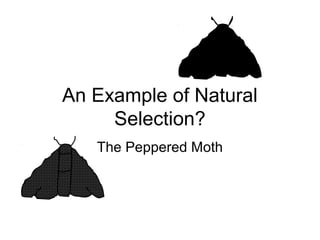


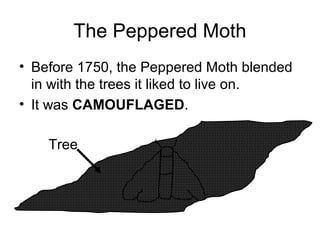
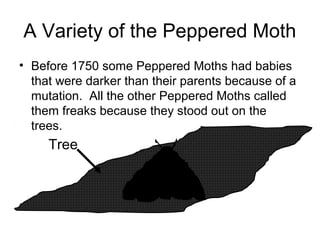

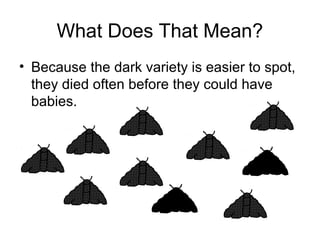

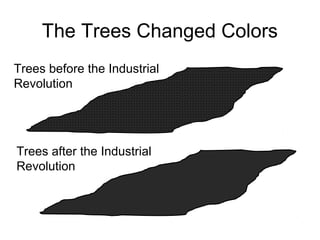
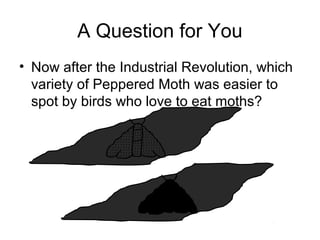



The document discusses evolution through natural selection using the example of the peppered moth. Before the Industrial Revolution, light-colored peppered moths were more common as they could camouflage on light-colored trees. Darker moths stood out and were more likely to be eaten by birds. During the Industrial Revolution, pollution from factories darkened tree bark, causing darker moths to blend in better while light moths were more visible and their numbers declined. This showed how environmental changes can cause natural selection to favor different varieties of a species over time, leading to evolution.


![Evolution+and+natural+selection pvms[1]](https://cdn.slidesharecdn.com/ss_thumbnails/evolutionandnaturalselectionpvms1-121017101003-phpapp01-thumbnail.jpg?width=640&height=640&fit=bounds)


