LIBERALART
of SCIENCES
“THEORY OF
EVOLUTION”
Lecturer: Taalai Mambetov
EVOLUTION
The theory that organisms
today developed from
more simple life forms and
have changed (evolved)
over time.
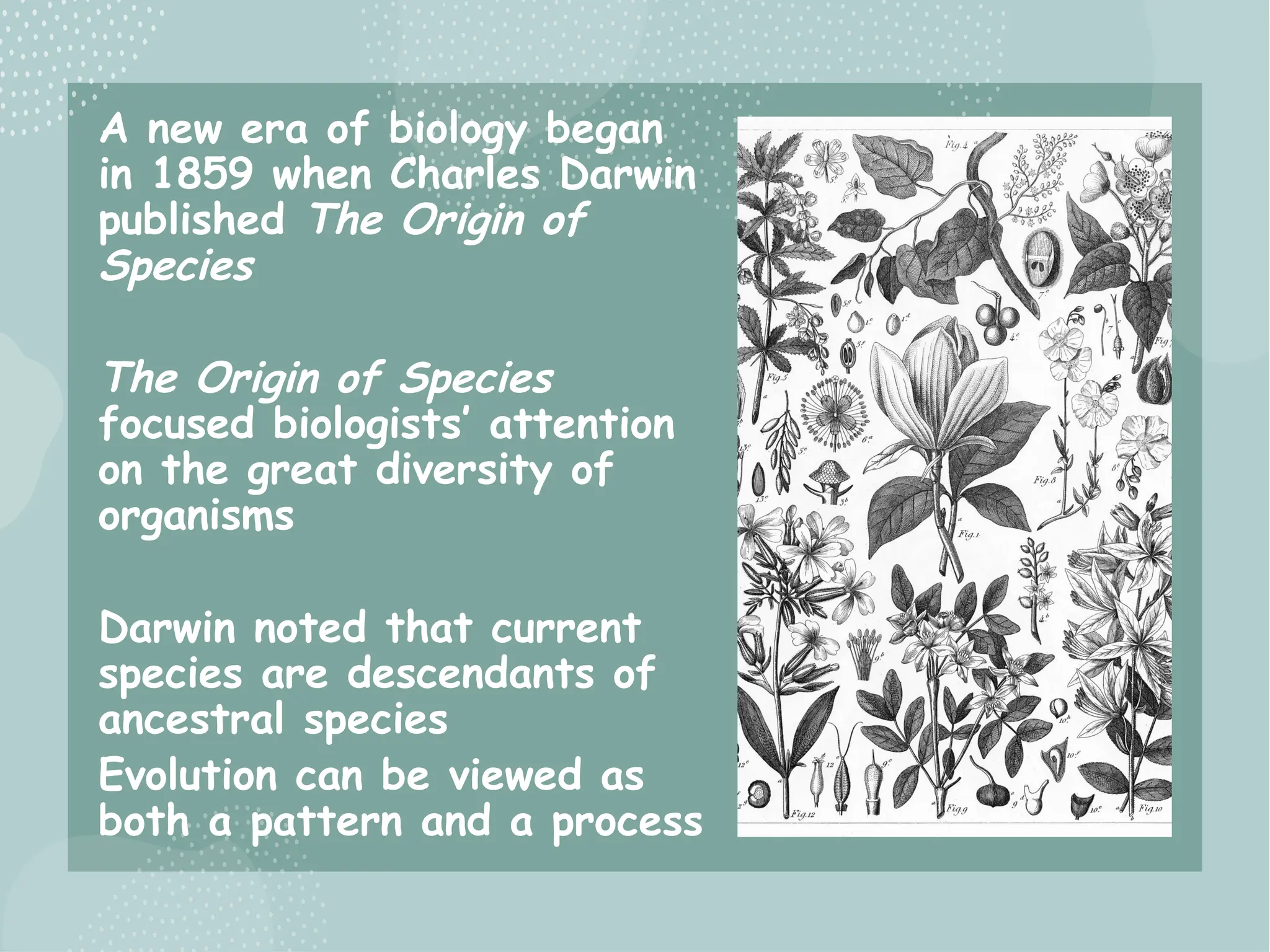
A new era of biology began
in 1859 when Charles Darwin
published The Origin of
Species
The Origin of Species
focused biologists’ attention
on the great diversity of
organisms
Darwin noted that current
species are descendants of
ancestral species
Evolution can be viewed as
both a pattern and a process
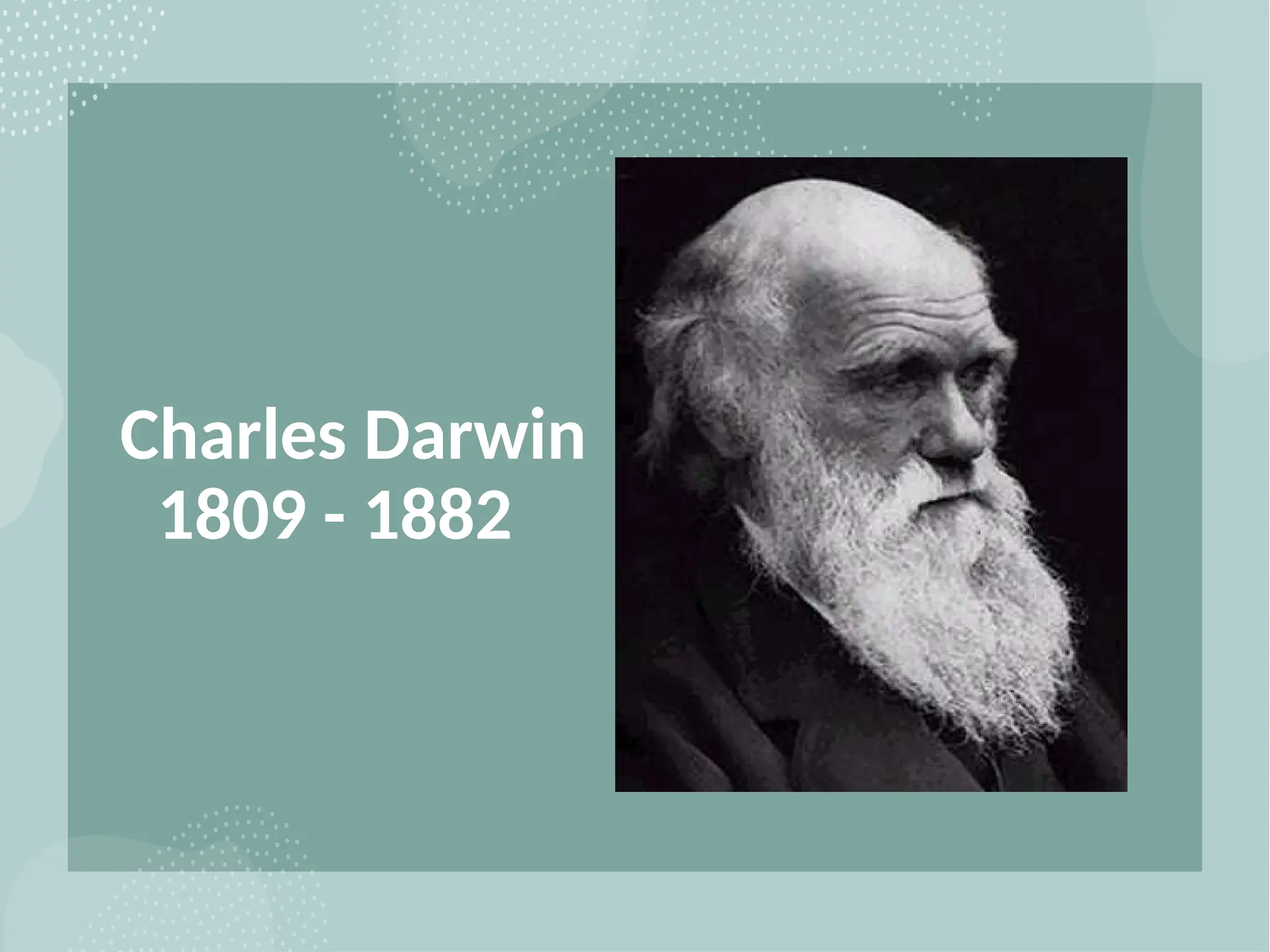
Charles Darwin
1809 - 1882
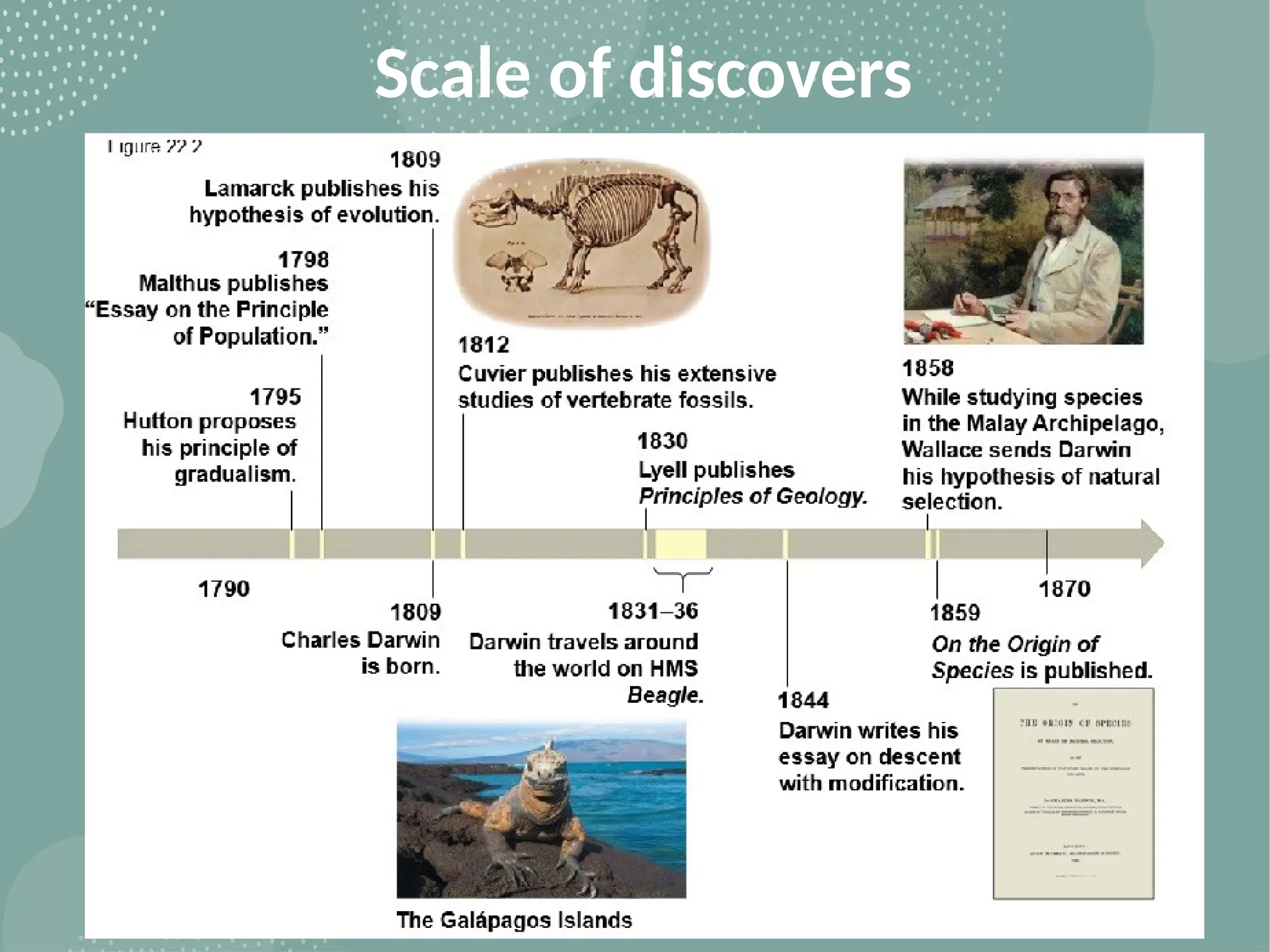
Scale of discovers
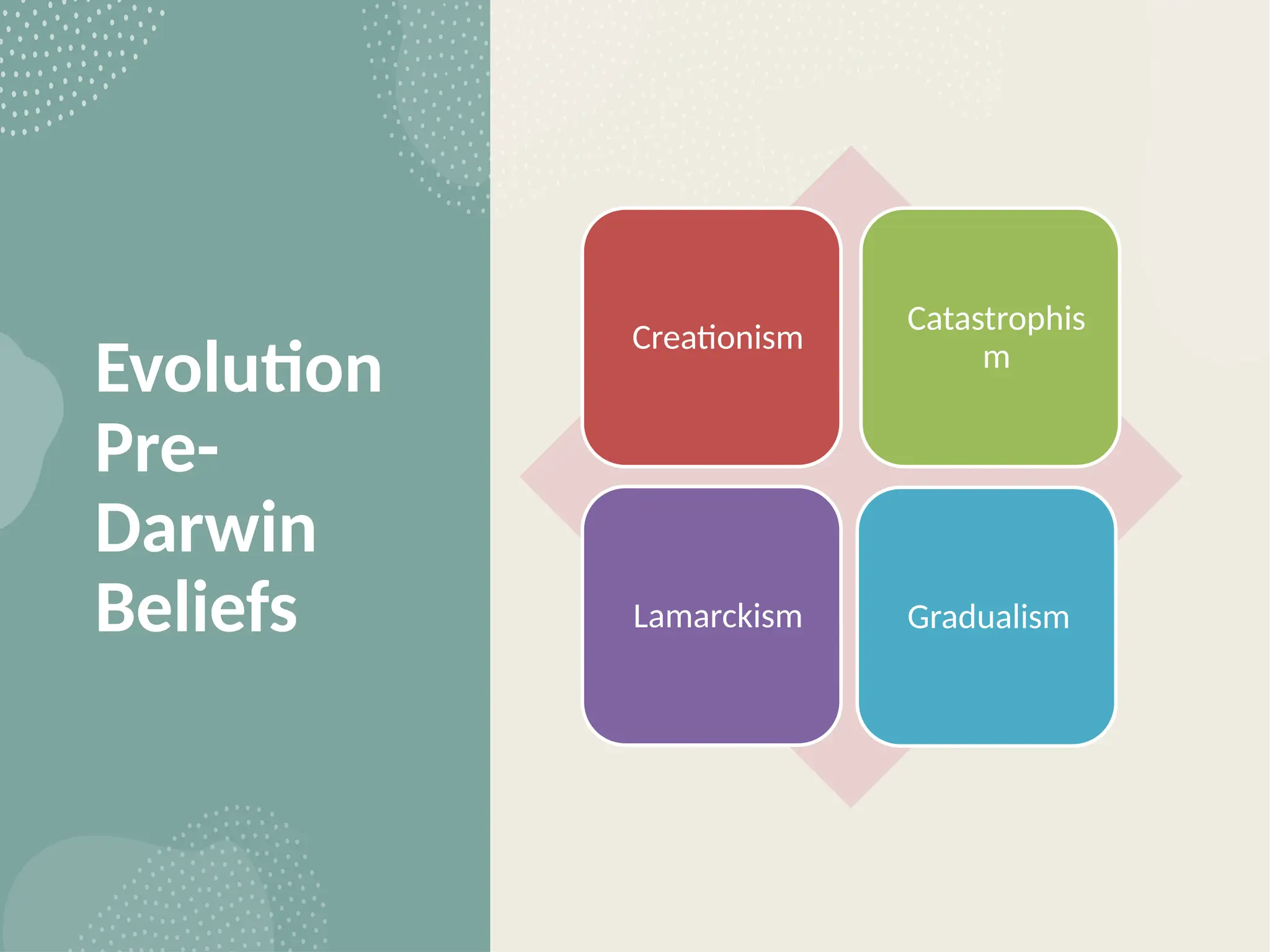
Evolution
Pre-
Darwin
Beliefs
Creationism
Catastrophis
m
Lamarckism Gradualism
Evolution
Pre-Darwin
Beliefs
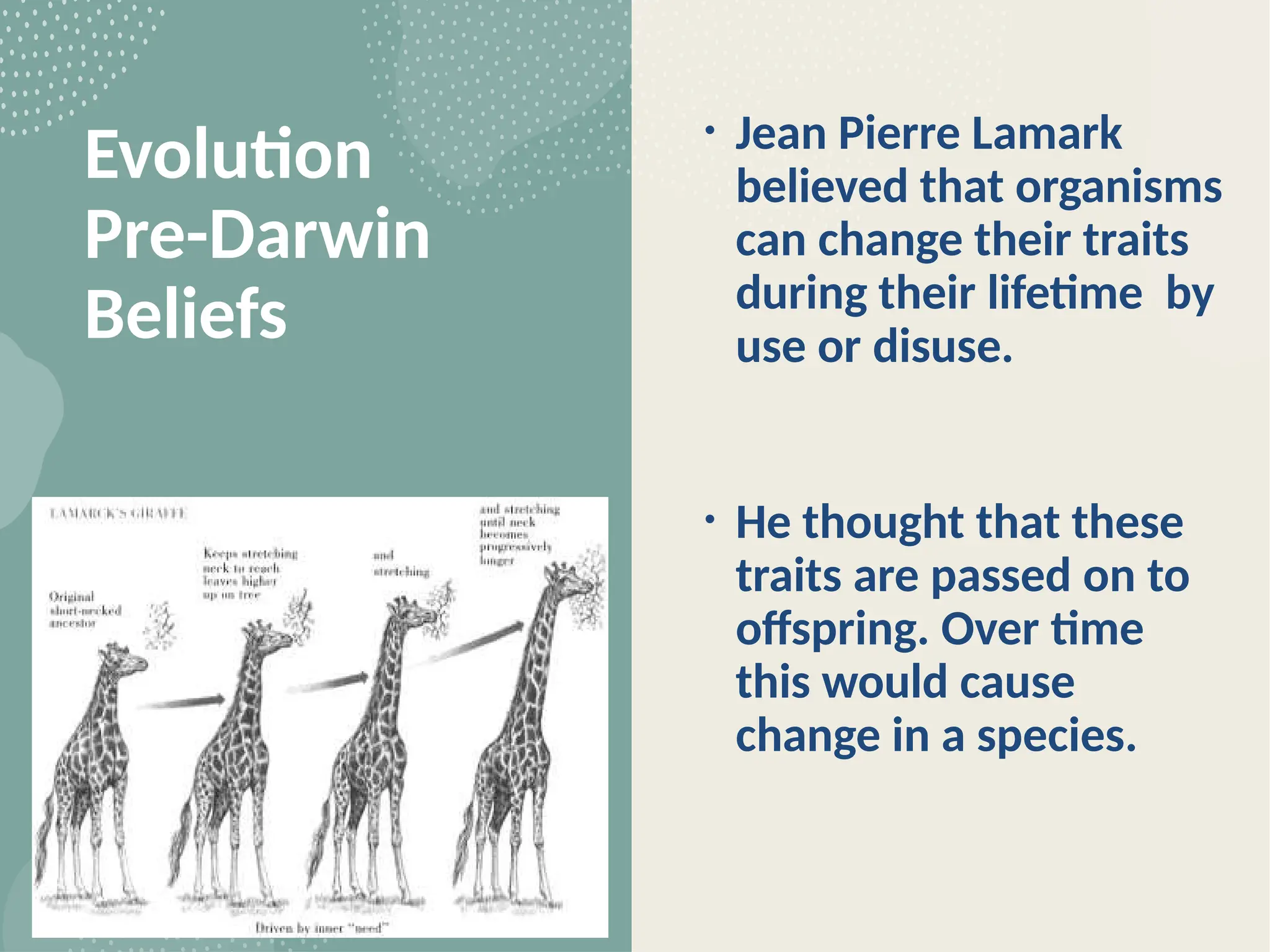
• Jean Pierre Lamark
believed that organisms
can change their traits
during their lifetime by
use or disuse.
• He thought that these
traits are passed on to
offspring. Over time
this would cause
change in a species.
Darwin’s
Research
• As a boy and into adulthood,
Charles Darwin had a consuming
interest in nature
• Darwin first studied medicine
(unsuccessfully), and then
theology at Cambridge University
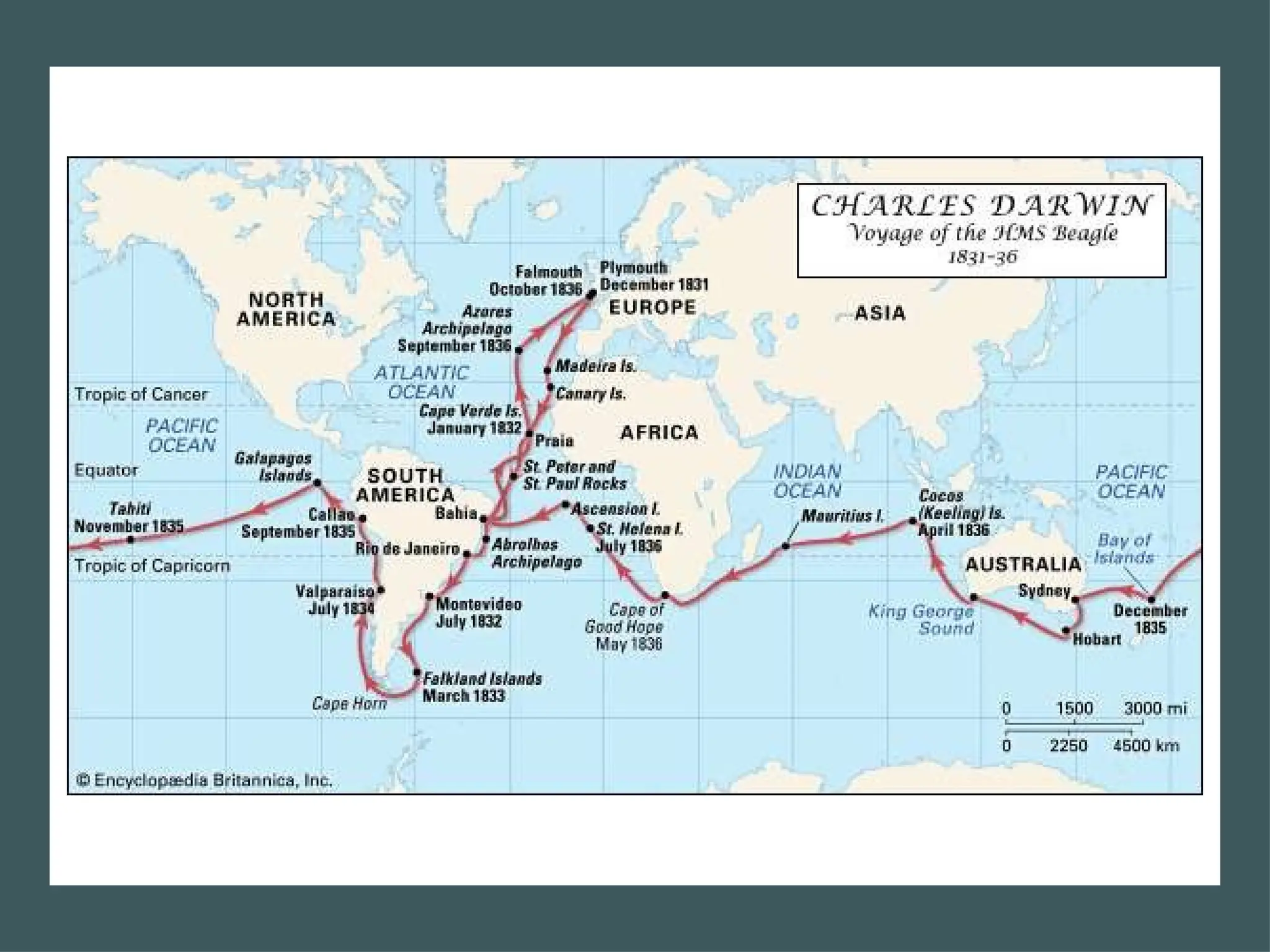
• After graduating, he took an
unpaid position as naturalist and
companion to Captain Robert
FitzRoy for a 5-year around the
world voyage on the Beagle
The Voyage of
the Beagle
• During his travels on the
Beagle, Darwin collected
specimens of South American
plants and animals
• He observed that fossils
resembled living species from
the same region, and living
species resembled other
species from nearby regions
• His interest in geographic
distribution of species was
kindled by a stop at the
Galápagos Islands west of
South America
• He hypothesized that species
from South America had
colonized the Galápagos and
speciated on the islands
Voyage of the Beagle
What did Darwin find?
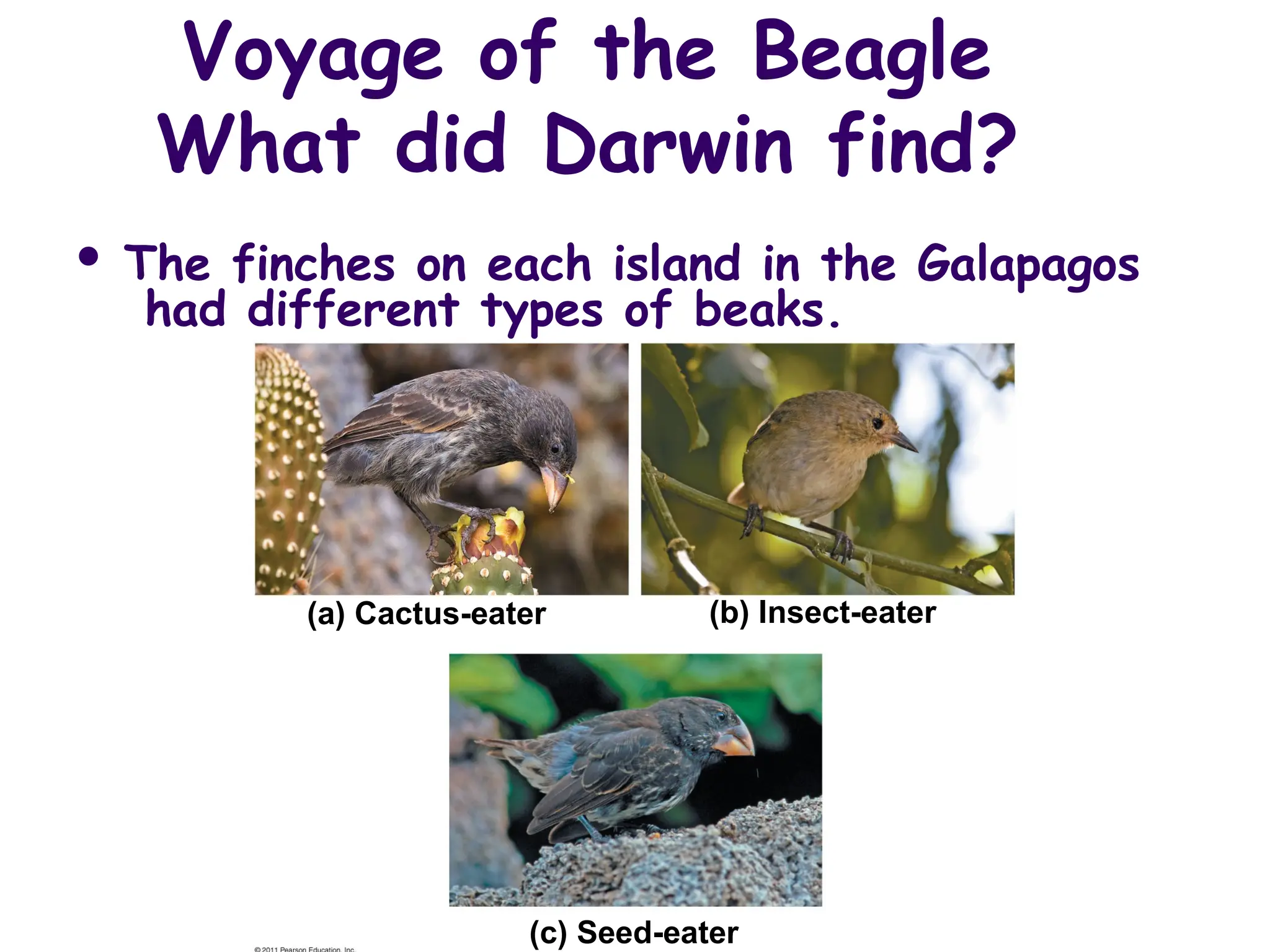
 The finches on each island in the Galapagos
had different types of beaks.
(a) Cactus-eater (b) Insect-eater
(c) Seed-eater
Voyage of the Beagle
What did Darwin find?
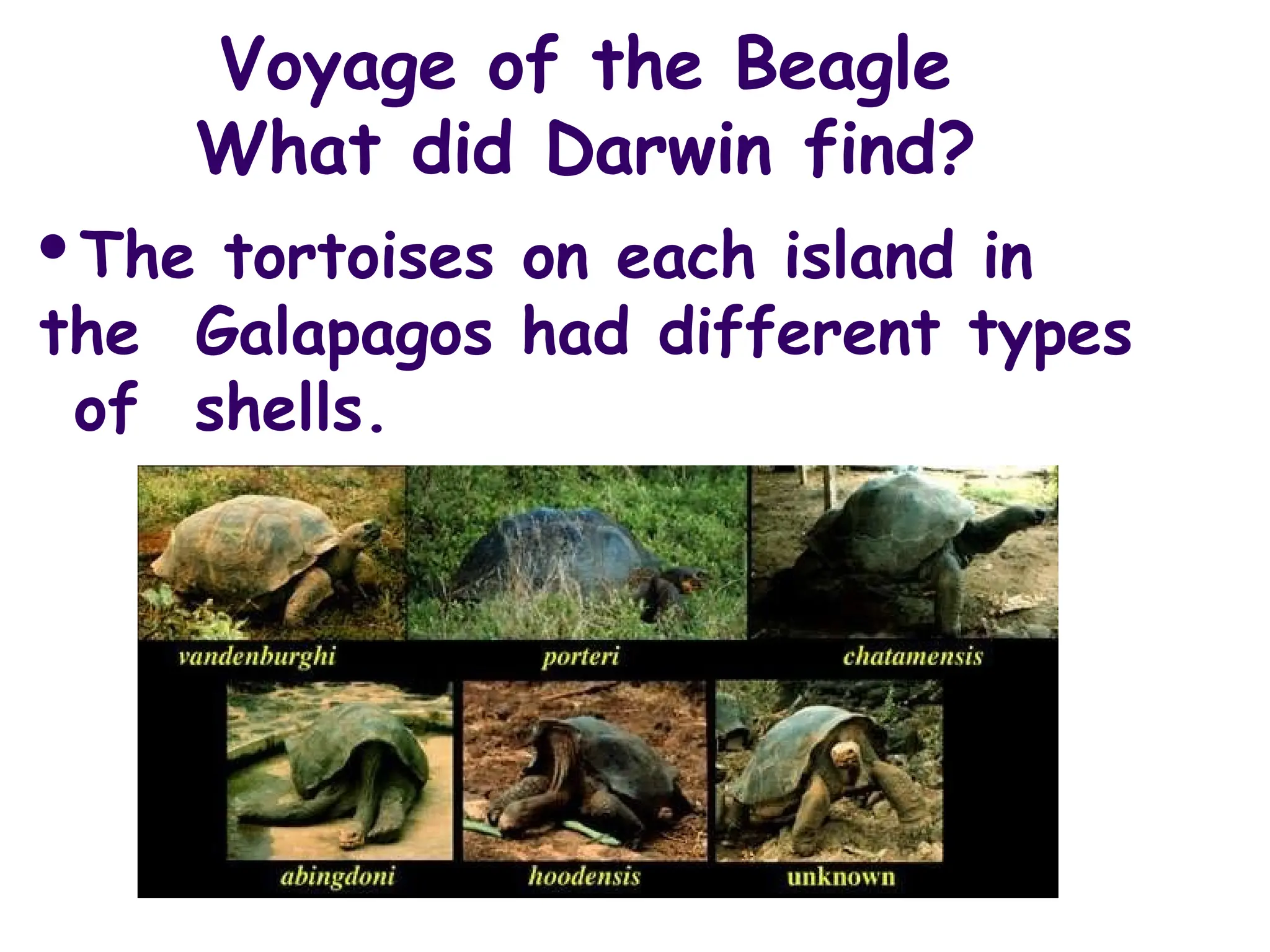
The tortoises on each island in
the Galapagos had different types
of shells.
hypothesis?
 Darwin
hypothesized that
organisms had a
common ancestor,
but had adapted
to their particular
environments and
changed over time.
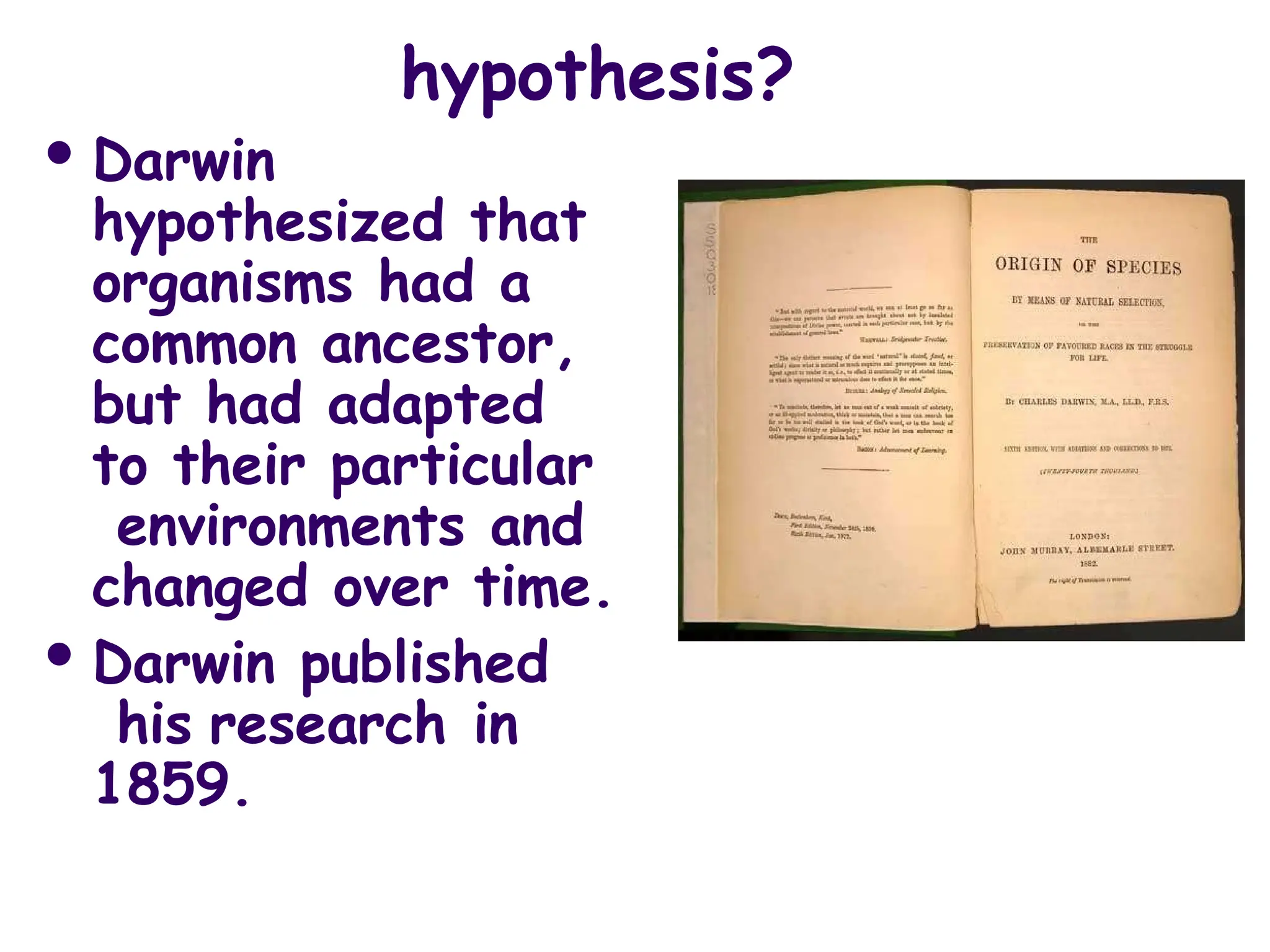
 Darwin published
his research in
1859.
Artificial Selection,
Evolution and
Natural Selection
Evolution & Natural
Selection
• Genetic variations are
passed on through
reproduction
• Evidence for evolution
illustrates how organisms are
related
• Natural selection leads to
evolution
• Our understanding of
evolution has changed
over time
Artificial Selection
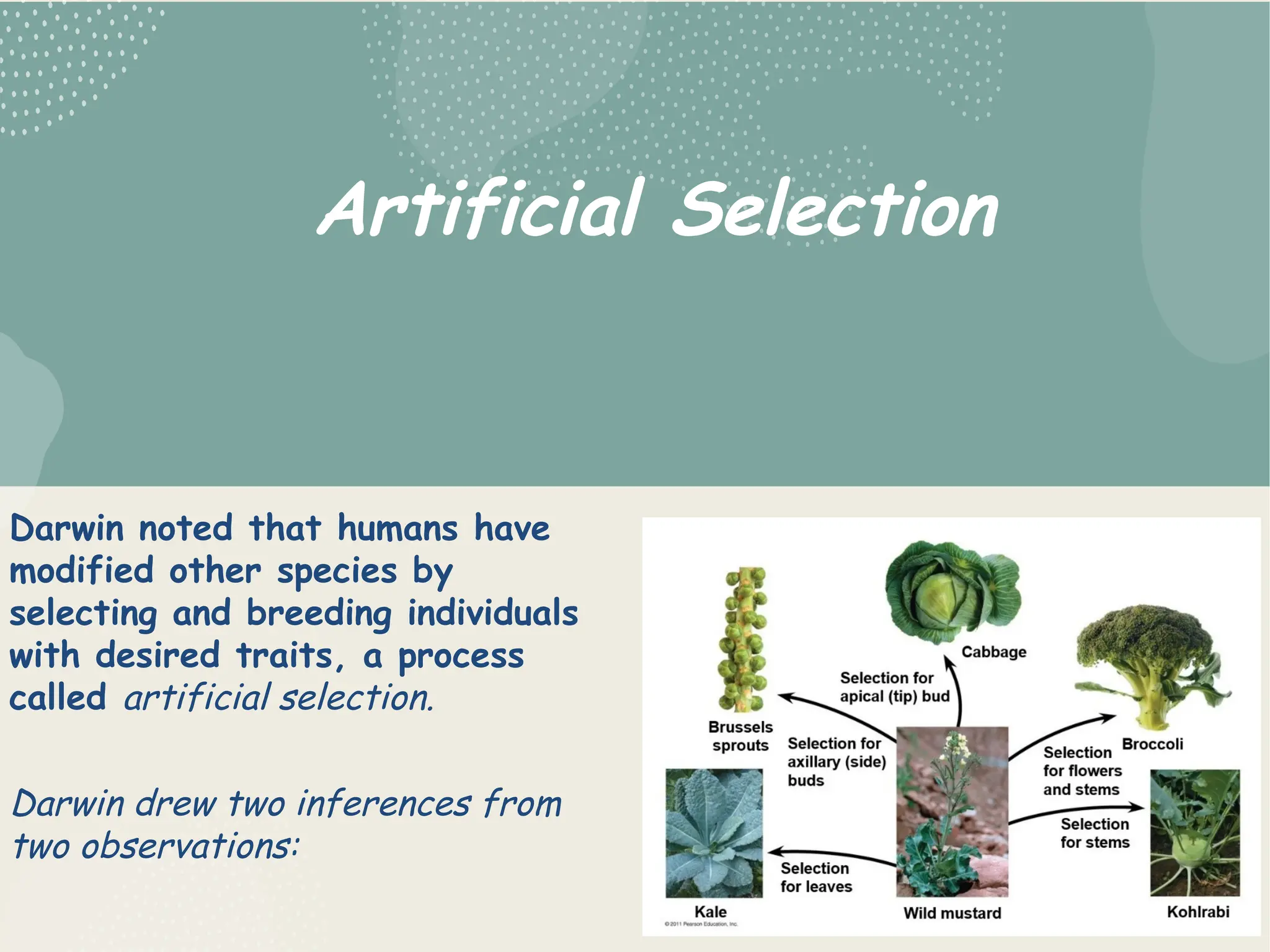
Darwin noted that humans have
modified other species by
selecting and breeding individuals
with desired traits, a process
called artificial selection.
Darwin drew two inferences from
two observations:
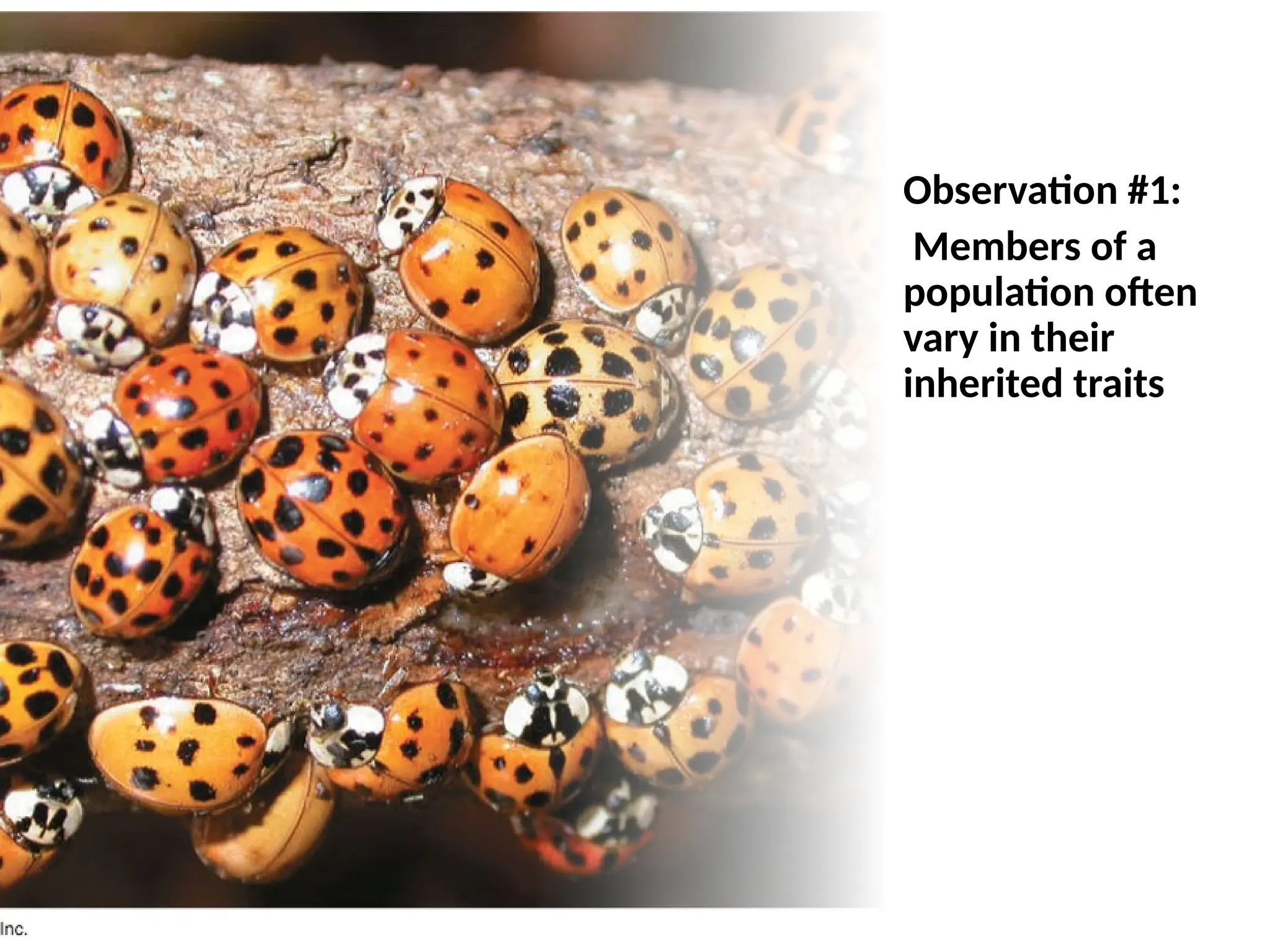
Observation #1:
Members of a
population often
vary in their
inherited traits
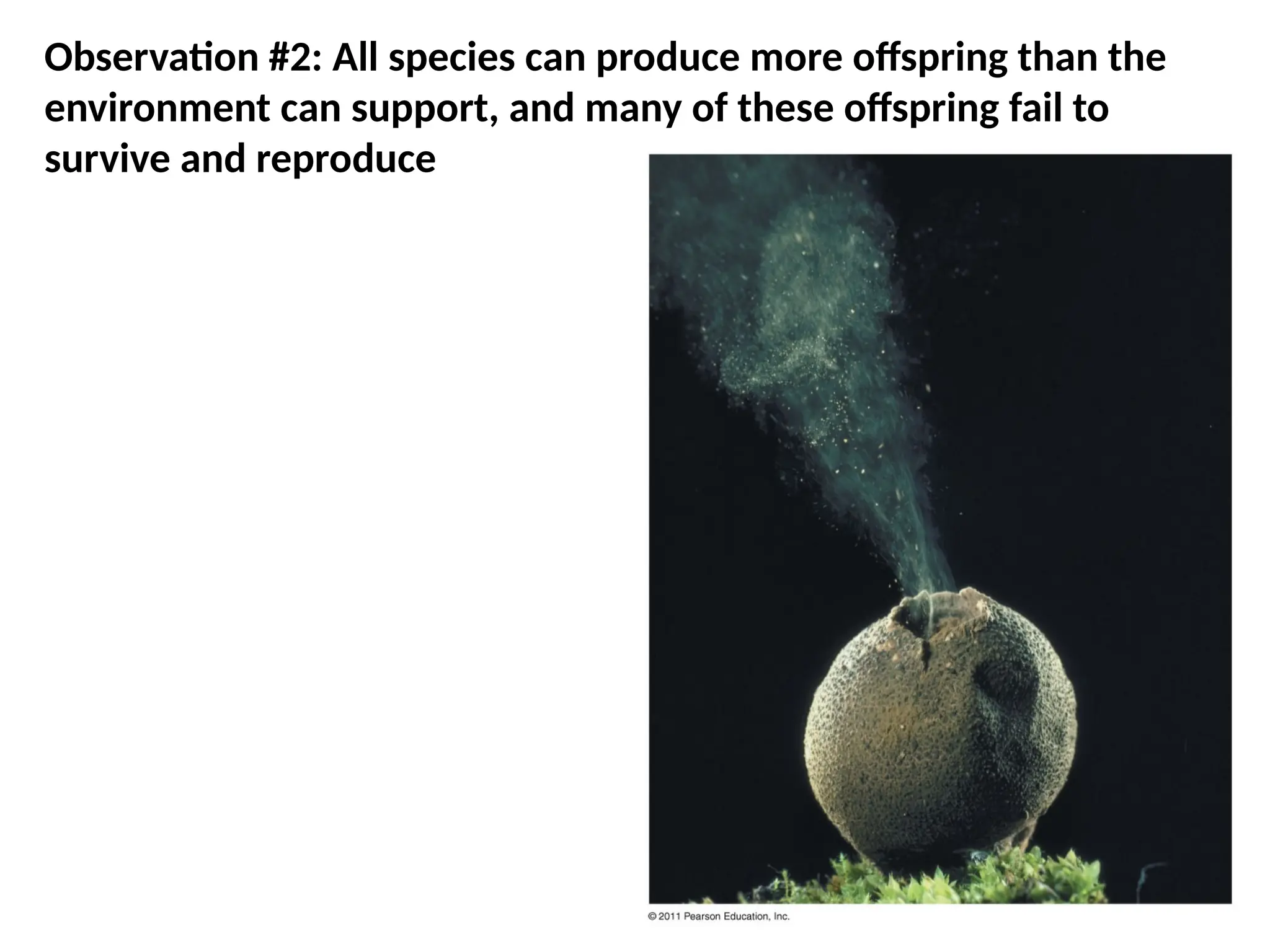
Spore
cloud
Observation #2: All species can produce more offspring than the
environment can support, and many of these offspring fail to
survive and reproduce
Natural Selection
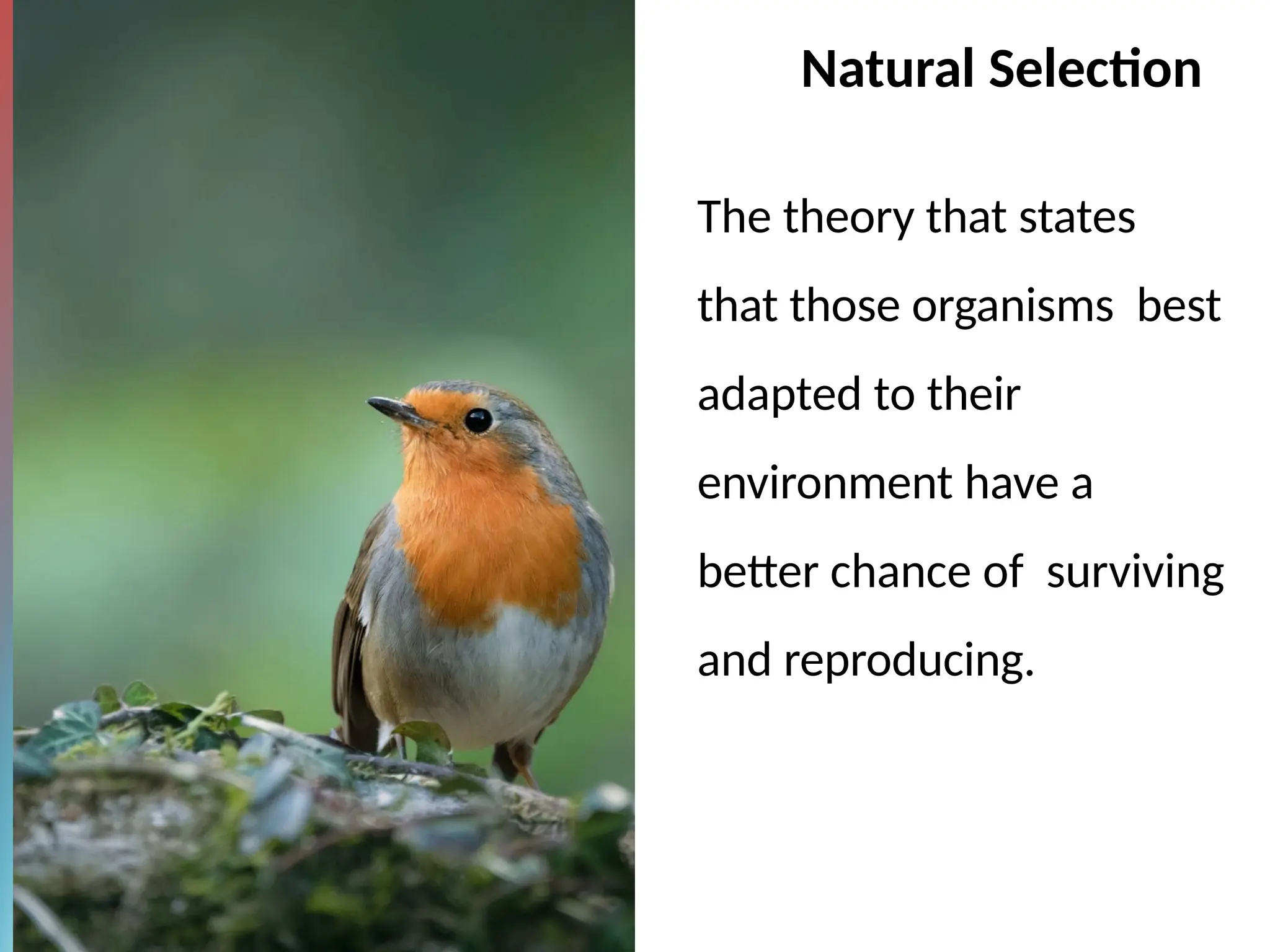
The theory that states
that those organisms best
adapted to their
environment have a
better chance of surviving
and reproducing.
Natural Selection
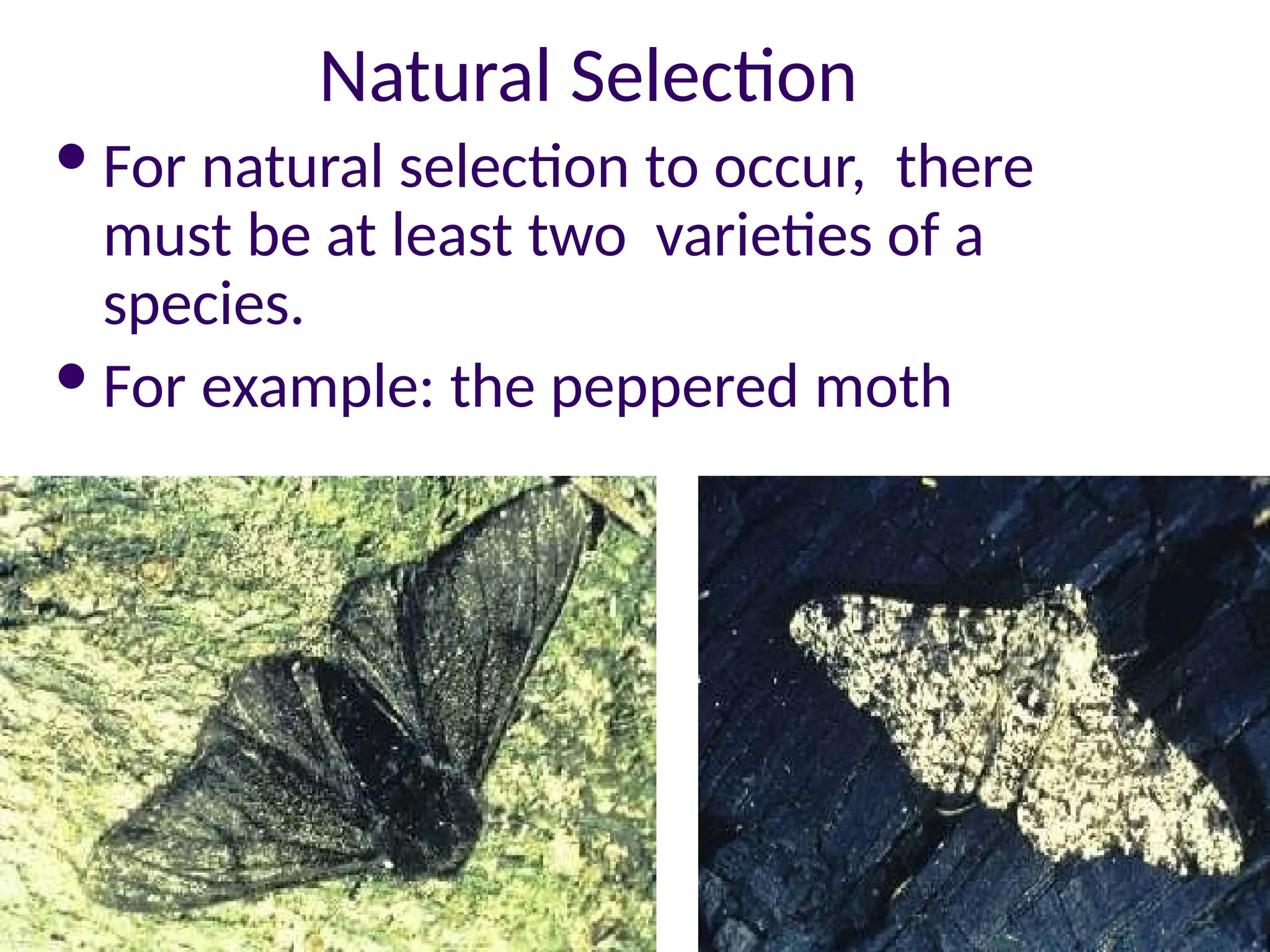
For natural selection to occur, there
must be at least two varieties of a
species.
For example: the peppered moth
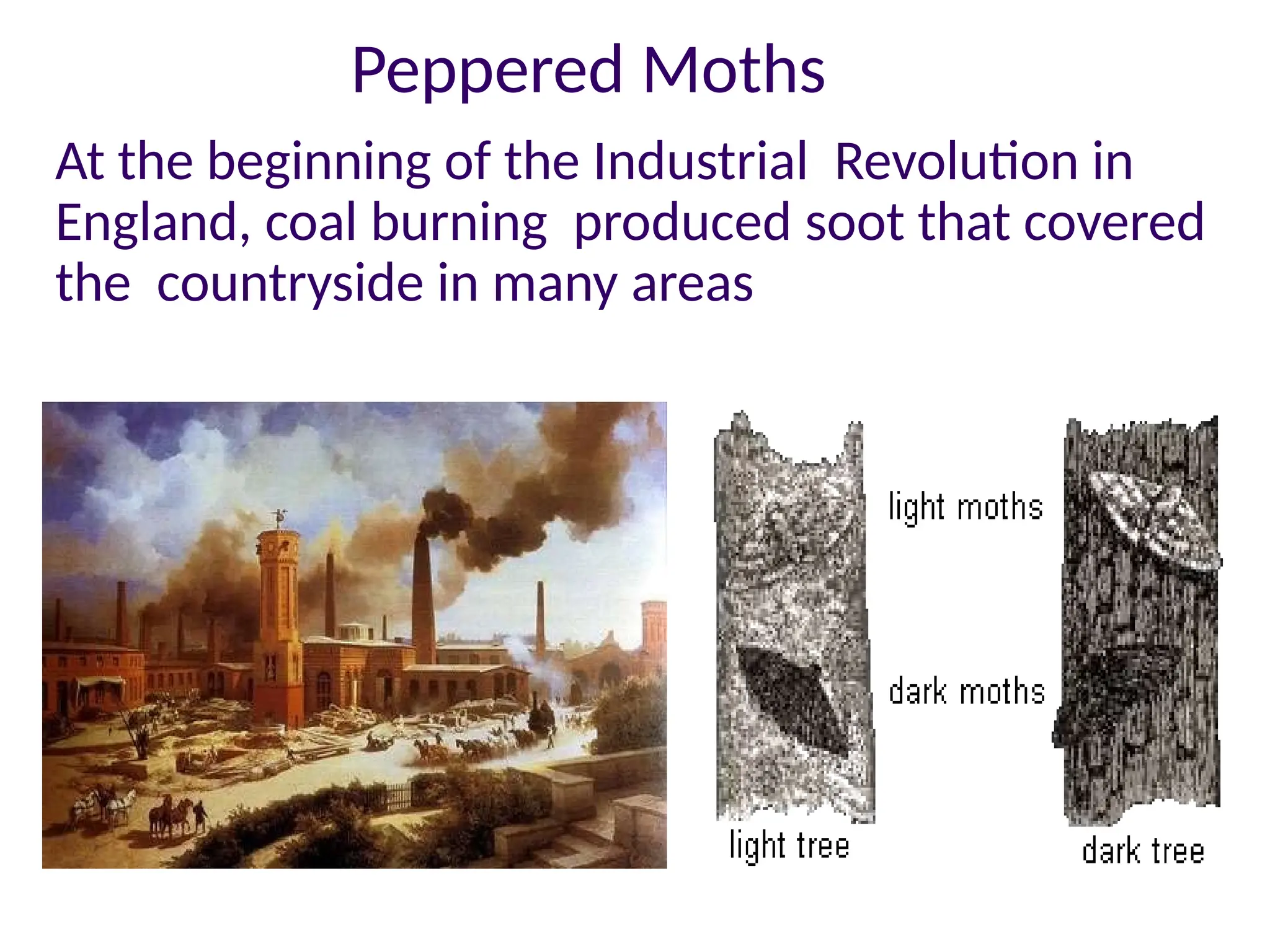
Peppered Moths
At the beginning of the Industrial Revolution in
England, coal burning produced soot that covered
the countryside in many areas
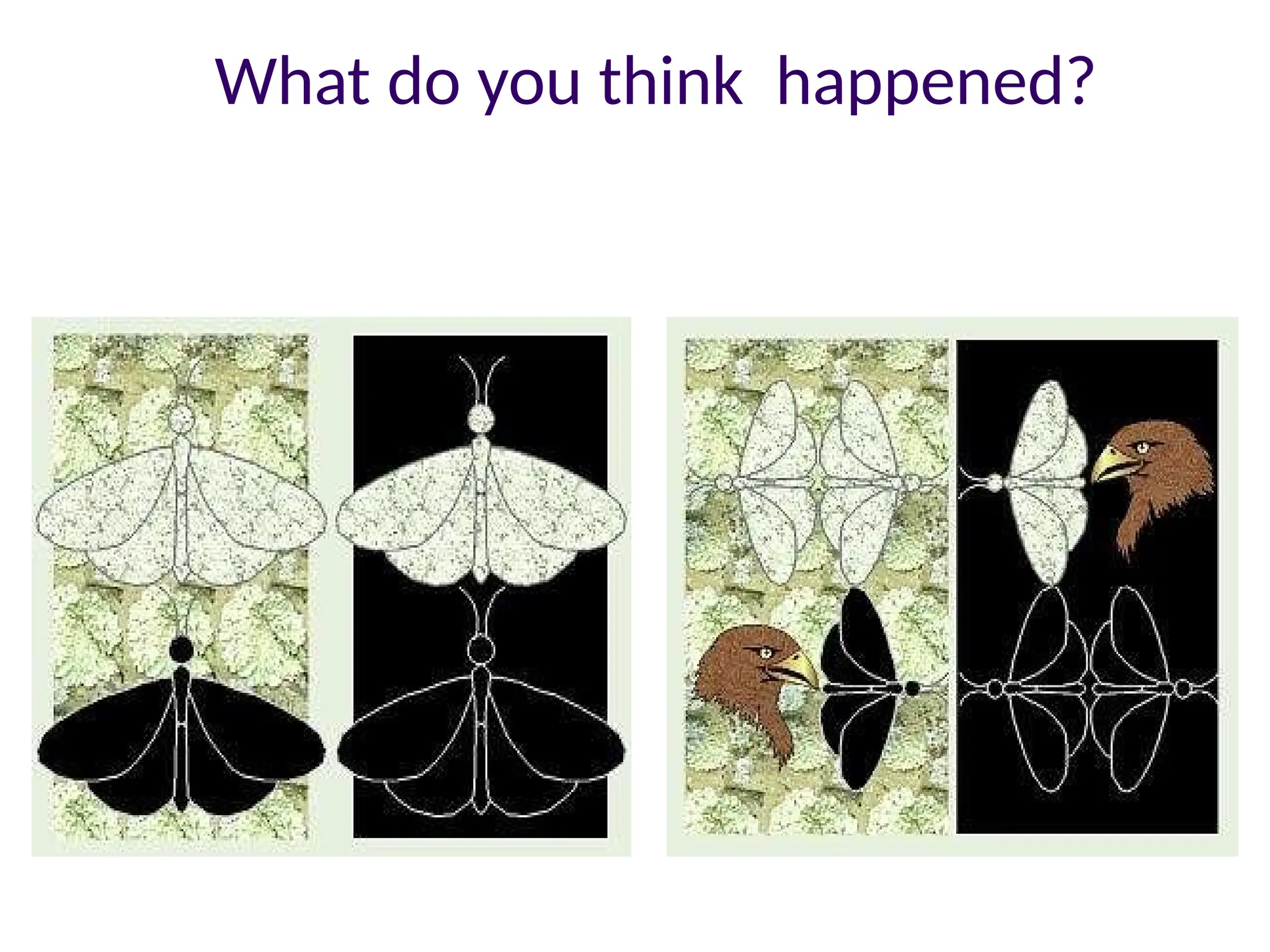
What do you think happened?
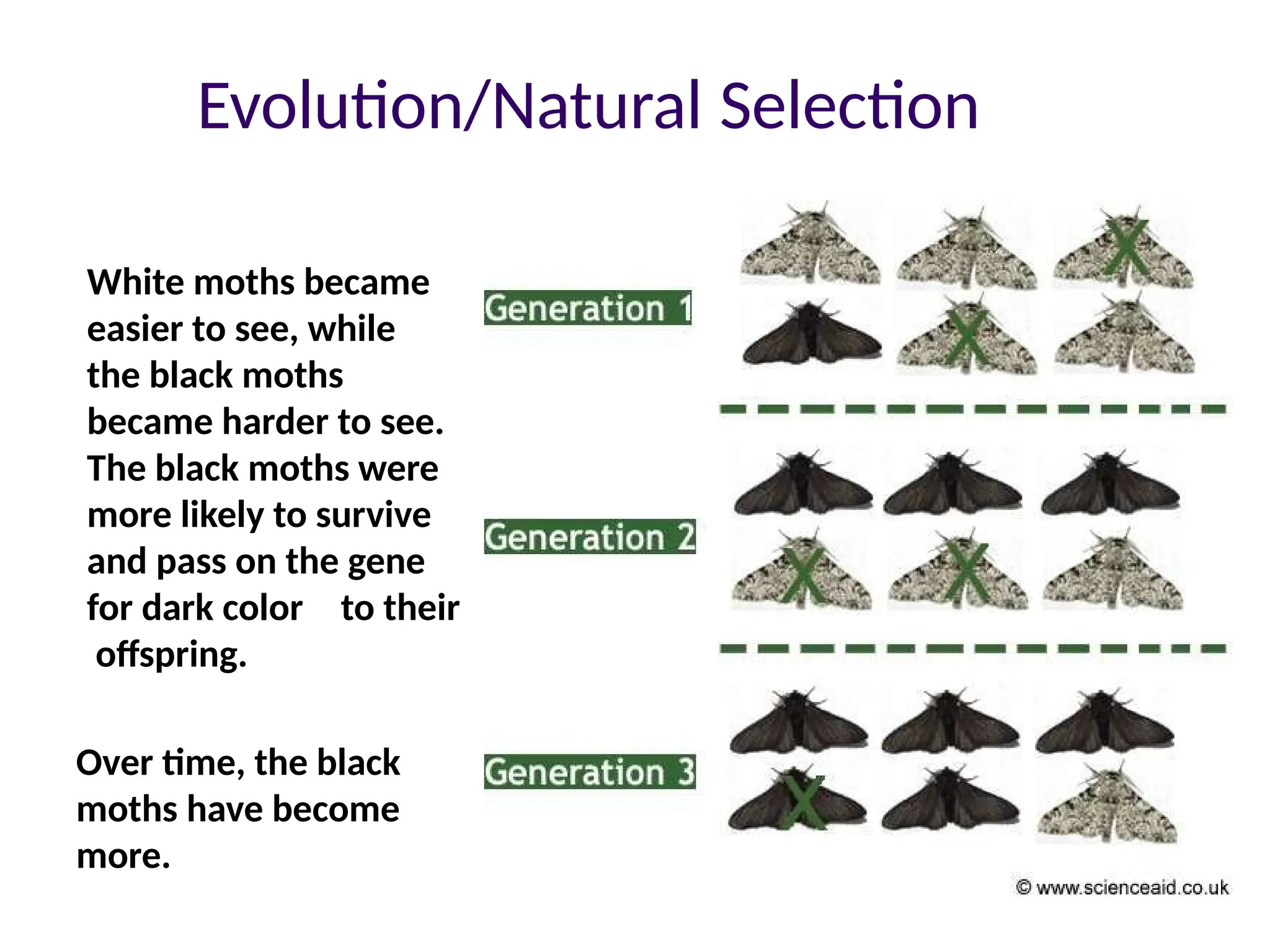
Evolution/Natural Selection
White moths became
easier to see, while
the black moths
became harder to see.
The black moths were
more likely to survive
and pass on the gene
for dark color to their
offspring.
Over time, the black
moths have become
more.
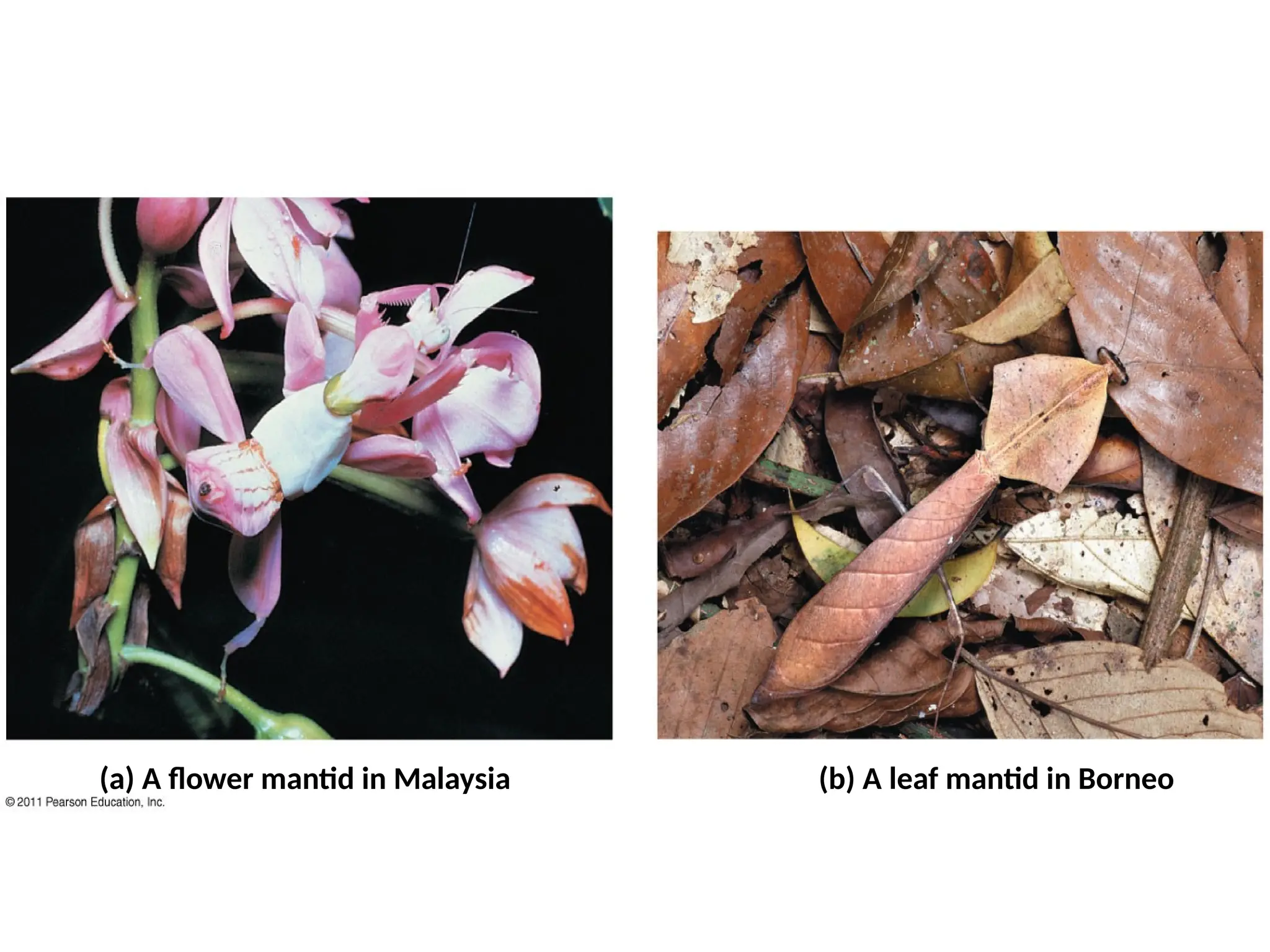
(a) A flower mantid in Malaysia (b) A leaf mantid in Borneo
Evidence for
Evolution:
Common
Ancestry
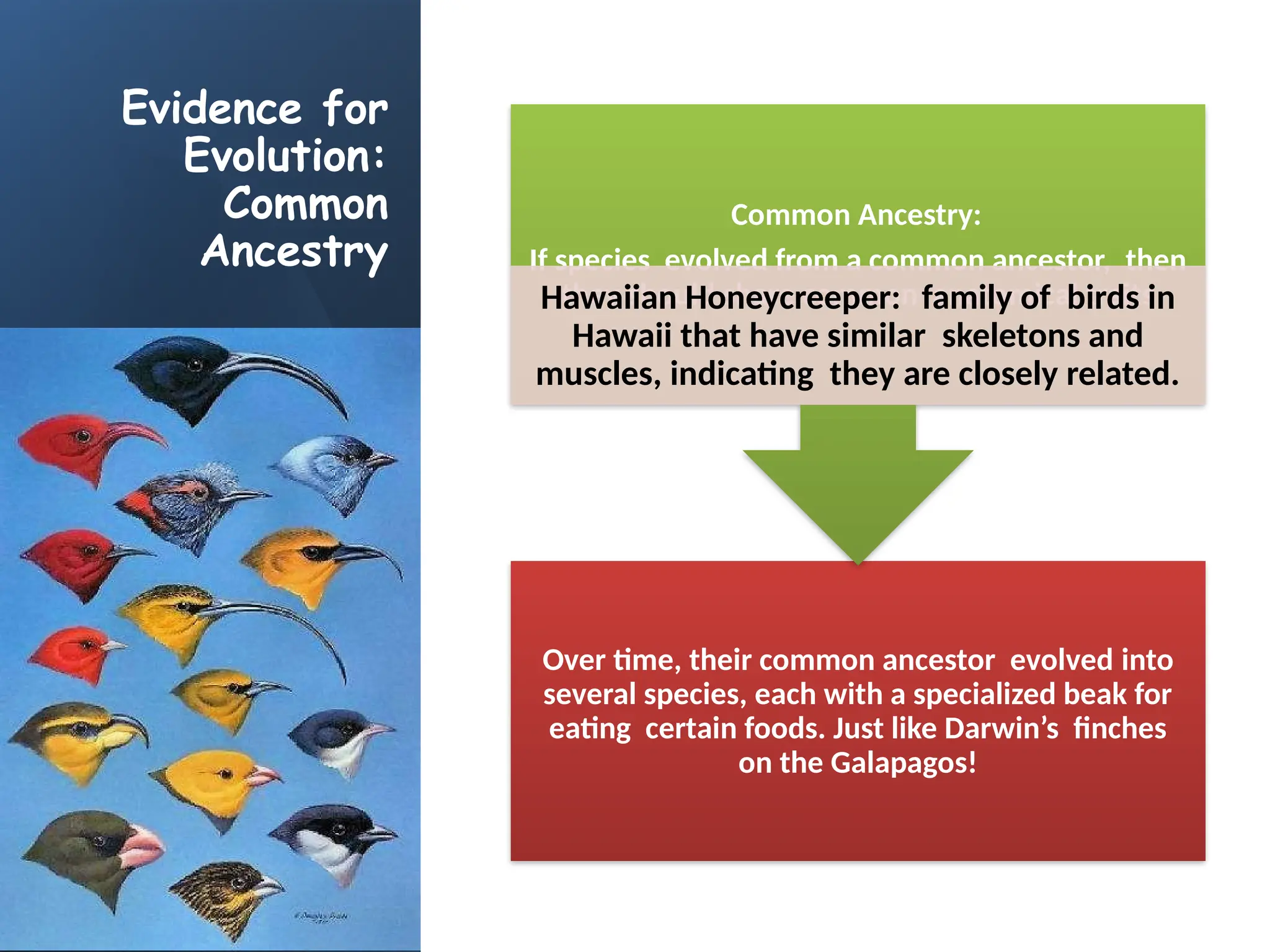
Over time, their common ancestor evolved into
several species, each with a specialized beak for
eating certain foods. Just like Darwin’s finches
on the Galapagos!
Common Ancestry:
If species evolved from a common ancestor, then
they should share common anatomical traits
Hawaiian Honeycreeper: family of birds in
Hawaii that have similar skeletons and
muscles, indicating they are closely related.
Evidence for
Evolution:
Homologous
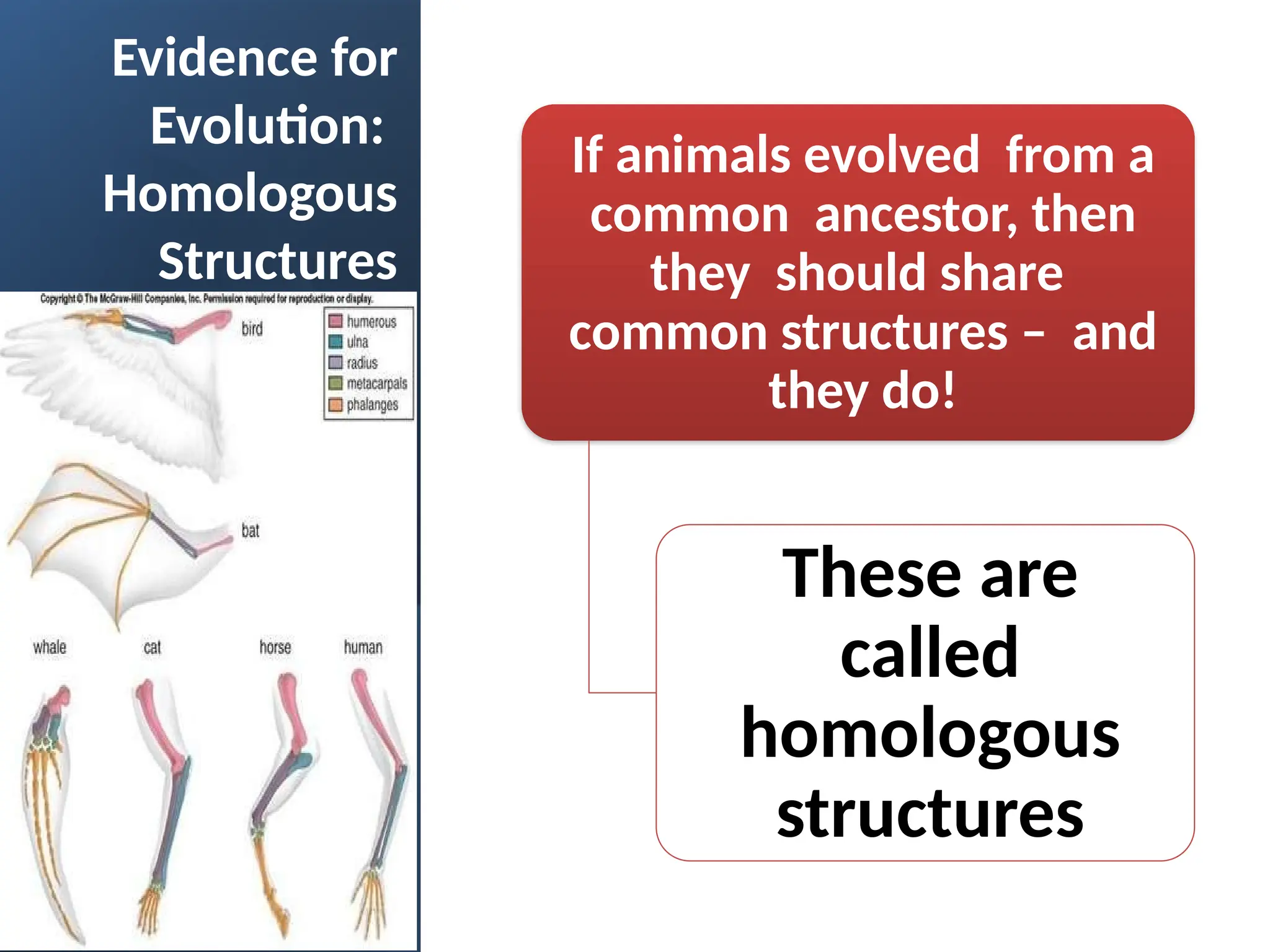
Structures
If animals evolved from a
common ancestor, then
they should share
common structures – and
they do!
These are
called
homologous
structures
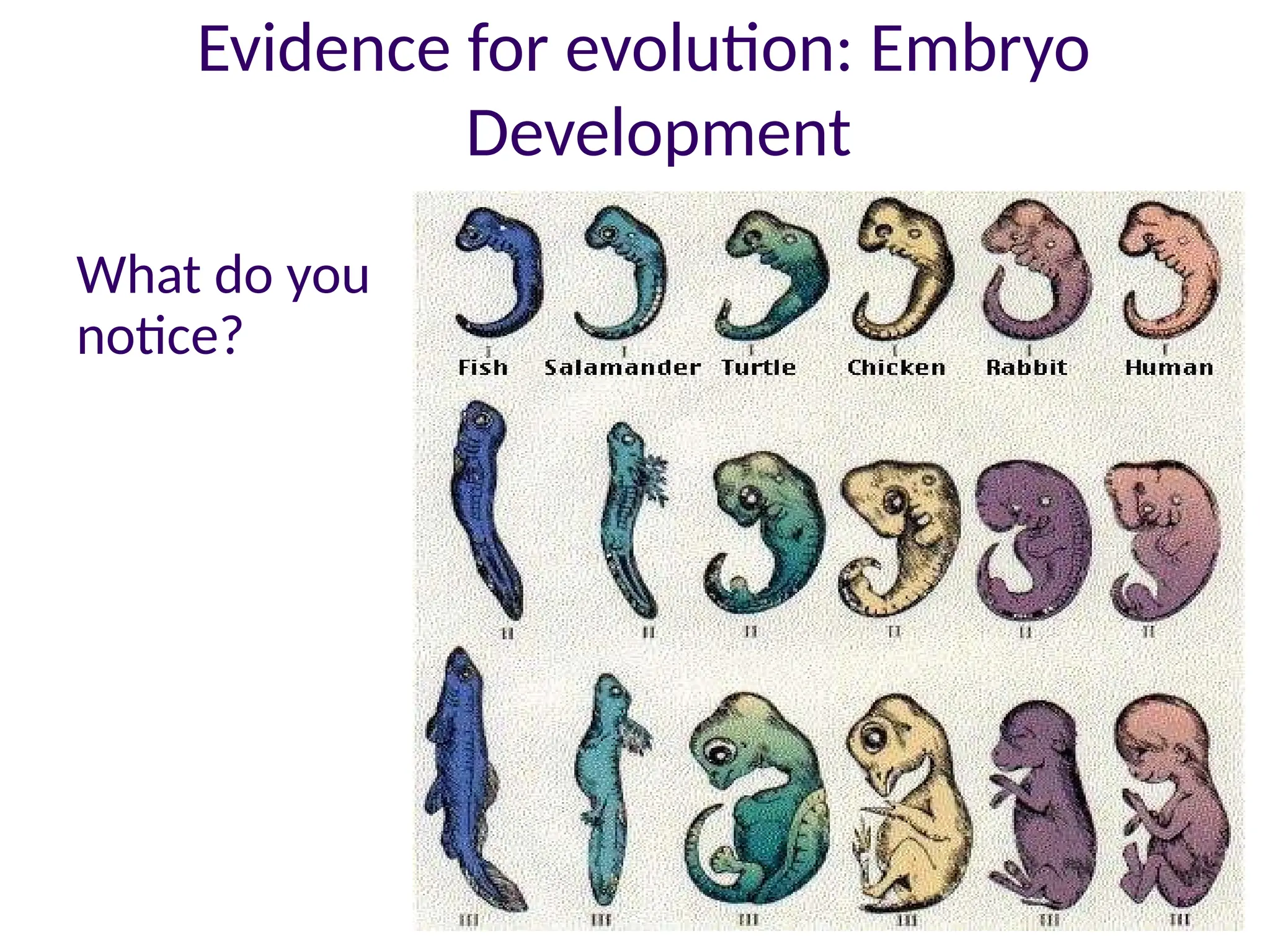
Evidence for evolution: Embryo
Development
What do you
notice?
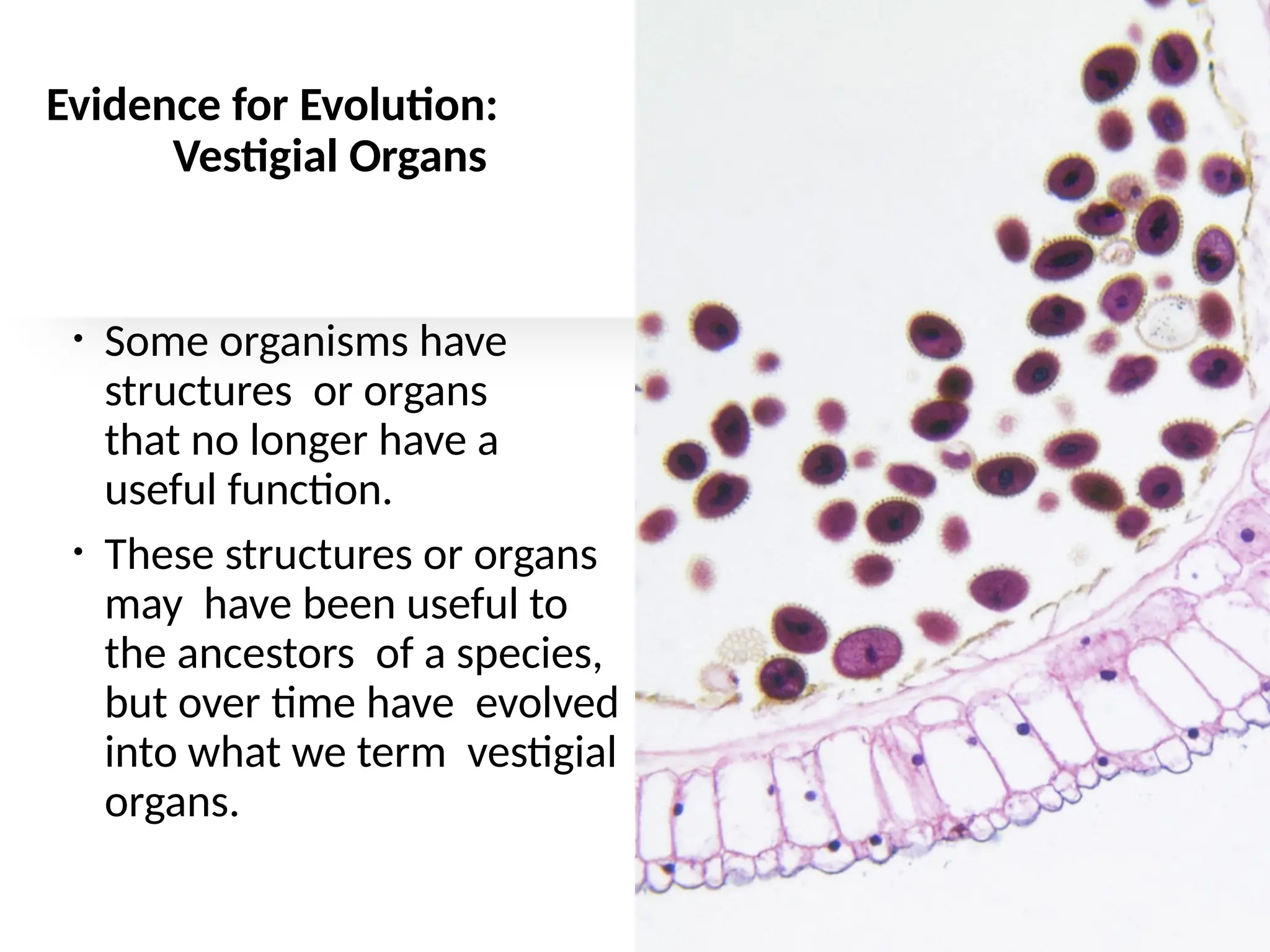
Evidence for Evolution:
Vestigial Organs
• Some organisms have
structures or organs
that no longer have a
useful function.
• These structures or organs
may have been useful to
the ancestors of a species,
but over time have evolved
into what we term vestigial
organs.
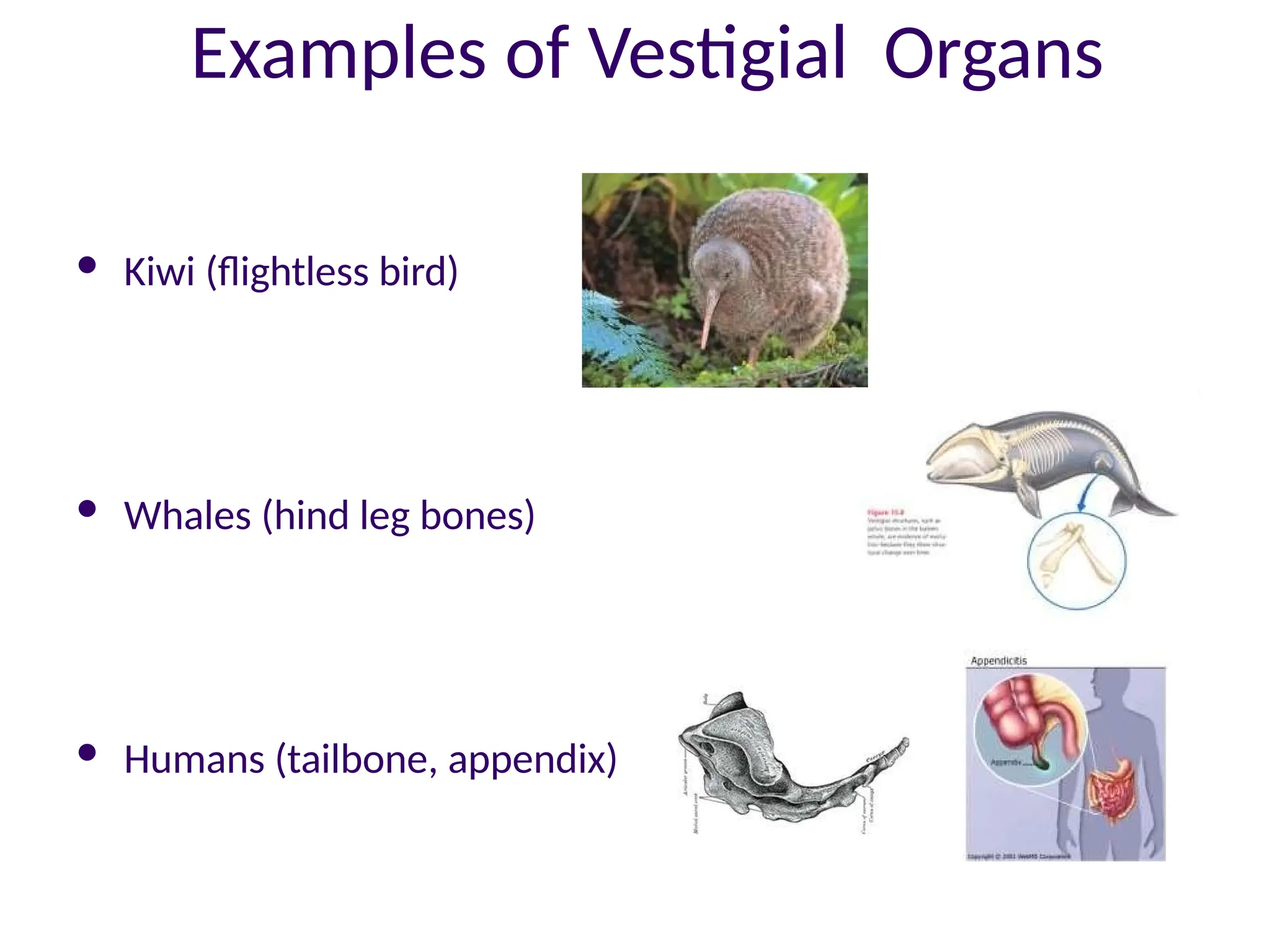
Examples of Vestigial Organs
 Kiwi (flightless bird)
 Whales (hind leg bones)
 Humans (tailbone, appendix)
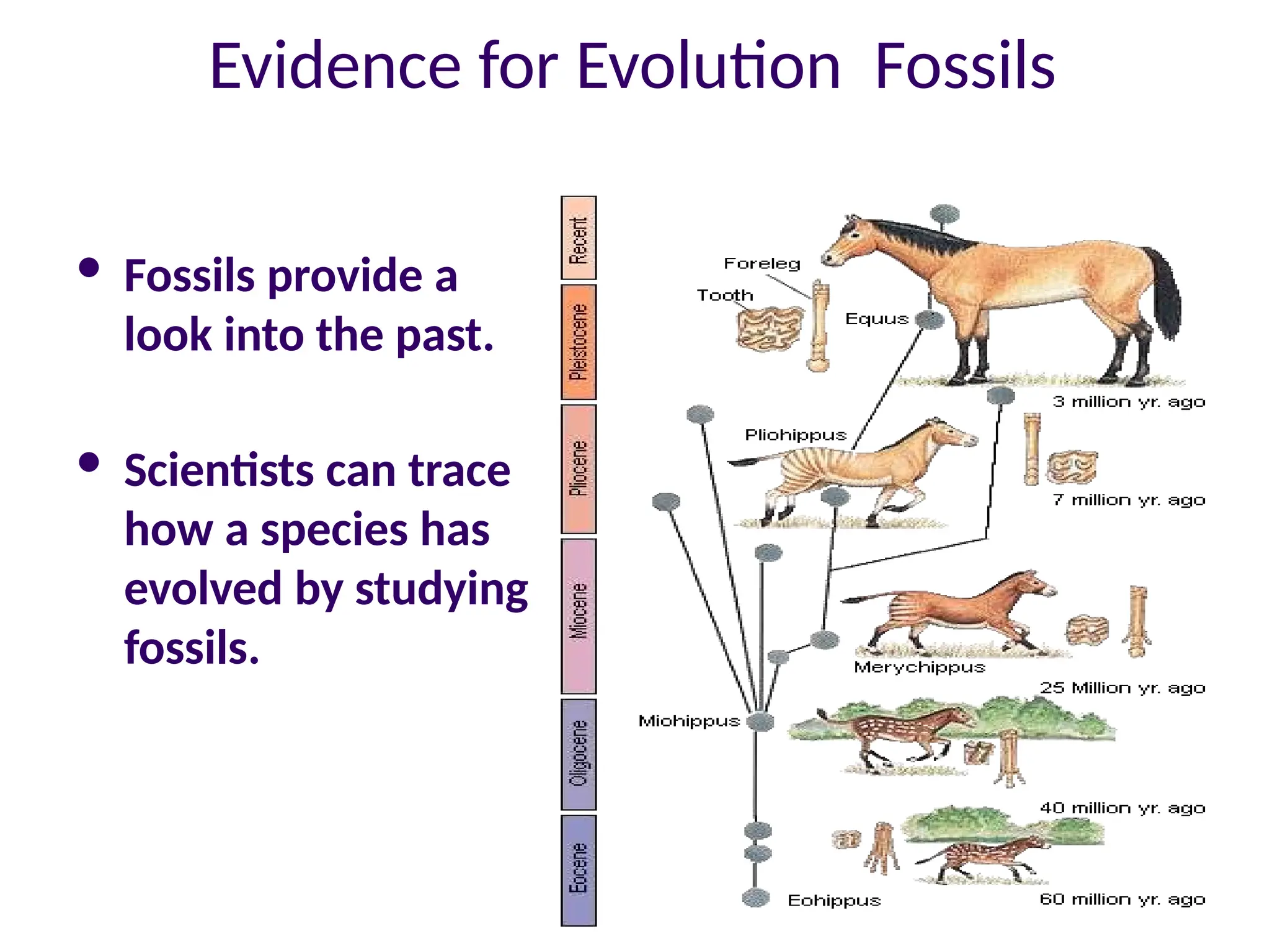
Evidence for Evolution Fossils
 Fossils provide a
look into the past.
 Scientists can trace
how a species has
evolved by studying
fossils.
Wrap Up
the
Evidence
Common Ancestry
Homologous Structures
Vestigial Organs
Embryonic Development
Fossils
Theory of Evolution (fundamental principles)

Theory of Evolution (fundamental principles)

  • 1.
  • 2.
    EVOLUTION The theory thatorganisms today developed from more simple life forms and have changed (evolved) over time.
  • 3.
    A new eraof biology began in 1859 when Charles Darwin published The Origin of Species The Origin of Species focused biologists’ attention on the great diversity of organisms Darwin noted that current species are descendants of ancestral species Evolution can be viewed as both a pattern and a process
  • 4.
  • 5.
  • 6.
  • 7.
    Evolution Pre-Darwin Beliefs • Jean PierreLamark believed that organisms can change their traits during their lifetime by use or disuse. • He thought that these traits are passed on to offspring. Over time this would cause change in a species.
  • 8.
    Darwin’s Research • As aboy and into adulthood, Charles Darwin had a consuming interest in nature • Darwin first studied medicine (unsuccessfully), and then theology at Cambridge University • After graduating, he took an unpaid position as naturalist and companion to Captain Robert FitzRoy for a 5-year around the world voyage on the Beagle
  • 9.
    The Voyage of theBeagle • During his travels on the Beagle, Darwin collected specimens of South American plants and animals • He observed that fossils resembled living species from the same region, and living species resembled other species from nearby regions • His interest in geographic distribution of species was kindled by a stop at the Galápagos Islands west of South America • He hypothesized that species from South America had colonized the Galápagos and speciated on the islands
  • 11.
    Voyage of theBeagle What did Darwin find?  The finches on each island in the Galapagos had different types of beaks. (a) Cactus-eater (b) Insect-eater (c) Seed-eater
  • 12.
    Voyage of theBeagle What did Darwin find? The tortoises on each island in the Galapagos had different types of shells.
  • 13.
    hypothesis?  Darwin hypothesized that organismshad a common ancestor, but had adapted to their particular environments and changed over time.  Darwin published his research in 1859.
  • 14.
  • 15.
    Evolution & Natural Selection •Genetic variations are passed on through reproduction • Evidence for evolution illustrates how organisms are related • Natural selection leads to evolution • Our understanding of evolution has changed over time
  • 16.
    Artificial Selection Darwin notedthat humans have modified other species by selecting and breeding individuals with desired traits, a process called artificial selection. Darwin drew two inferences from two observations:
  • 17.
    Observation #1: Members ofa population often vary in their inherited traits
  • 18.
    Spore cloud Observation #2: Allspecies can produce more offspring than the environment can support, and many of these offspring fail to survive and reproduce
  • 19.
    Natural Selection The theorythat states that those organisms best adapted to their environment have a better chance of surviving and reproducing.
  • 20.
    Natural Selection For naturalselection to occur, there must be at least two varieties of a species. For example: the peppered moth
  • 21.
    Peppered Moths At thebeginning of the Industrial Revolution in England, coal burning produced soot that covered the countryside in many areas
  • 22.
    What do youthink happened?
  • 23.
    Evolution/Natural Selection White mothsbecame easier to see, while the black moths became harder to see. The black moths were more likely to survive and pass on the gene for dark color to their offspring. Over time, the black moths have become more.
  • 24.
    (a) A flowermantid in Malaysia (b) A leaf mantid in Borneo
  • 26.
    Evidence for Evolution: Common Ancestry Over time,their common ancestor evolved into several species, each with a specialized beak for eating certain foods. Just like Darwin’s finches on the Galapagos! Common Ancestry: If species evolved from a common ancestor, then they should share common anatomical traits Hawaiian Honeycreeper: family of birds in Hawaii that have similar skeletons and muscles, indicating they are closely related.
  • 27.
    Evidence for Evolution: Homologous Structures If animalsevolved from a common ancestor, then they should share common structures – and they do! These are called homologous structures
  • 28.
    Evidence for evolution:Embryo Development What do you notice?
  • 29.
    Evidence for Evolution: VestigialOrgans • Some organisms have structures or organs that no longer have a useful function. • These structures or organs may have been useful to the ancestors of a species, but over time have evolved into what we term vestigial organs.
  • 30.
    Examples of VestigialOrgans  Kiwi (flightless bird)  Whales (hind leg bones)  Humans (tailbone, appendix)
  • 31.
    Evidence for EvolutionFossils  Fossils provide a look into the past.  Scientists can trace how a species has evolved by studying fossils.
  • 32.
    Wrap Up the Evidence Common Ancestry HomologousStructures Vestigial Organs Embryonic Development Fossils