


Antibiotic ResistanceSo You Think You Are Alone?Fall 2009
Long Interest in Controlling PestsPests that eat our crops/livestockPests that compete with our cropsPests that damage our materialsPests that cause diseases in humans or our plants and animals
PesticidesChemicals used to kill pests“First generation” of chemical pesticides used to kill pests were sometimes effective, but often had bad side effectsArsenic, cyanideImprovements in organic chemistry allowed scientists to develop “second generation” synthetic organic pesticides- 1940s
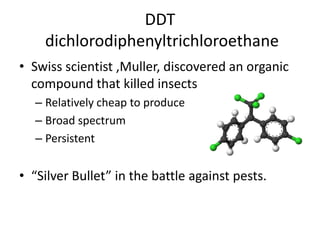
DDT dichlorodiphenyltrichloroethaneSwiss scientist ,Muller, discovered an organic compound that killed insectsRelatively cheap to produceBroad spectrumPersistent“Silver Bullet” in the battle against pests.
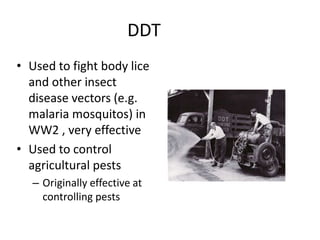
DDTUsed to fight body lice and other insect disease vectors (e.g. malaria mosquitos) in WW2 , very effectiveUsed to control agricultural pestsOriginally effective at controlling pests
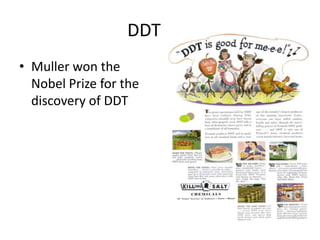
DDTMuller won the Nobel Prize for the discovery of DDT
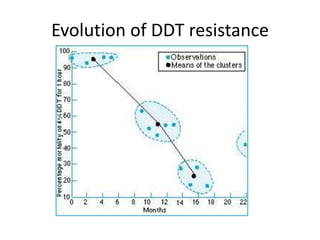
Evolution of DDT resistance
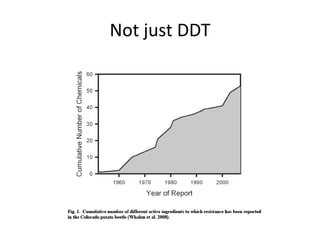
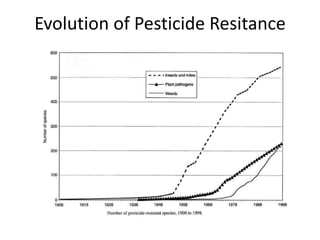
Pesticide TreadmillAs pests become resistant to pesticides farmers responded by increasing the concentration of pesticides  which selects for more resistant pests so farmers increase the concentration of pesticides ……Over the last 50 years farmers increased the amount of pesticides added 40 fold and suffer s lightly larger loss of crops to pests.
Not just DDT
Evolution of Pesticide Resitance
Other Problems From Applying Chemical Pesticides to Control CropsOften saw unintended effects of applying pesticidesDDT affects calcium metabolism and thus weakened bird shellsSometimes killed beneficial insectsThose that act as competitors or predators of pests
Other Problems From Applying Chemical Pesticides to Control CropsResurgenceApplying pesticides initially lowers pest population initially lowers pest populations but later the pest populations explode to a much larger size than beforeProbably occurs because the pesticide has killed a competitor or a predator that controlled the pests population size
Other Problems From Applying Chemical Pesticides to Control CropsSecondary OutbreaksAdding pesticides initially lowers the population of the pest species But over time the population of a second species that wasn’t initially a problem becomes so large that the second species becomes a larger population than the first species
What have we learned from ecology and evolutionary biology?Adding pesticides often has unintended consequences Especially true when adding “broad spectrum” pesticidesWe might expect similar effects when taking antibiotics
What have we learned from ecology and evolutionary biology?Animals, plants, and microbes have evolved resistance to pesticides.What a surprise, Natural selection works!!!!Should also be a concern for antibiotics
AntibioticsAntibiotics, also known as antimicrobial drugs, are drugs that fight infections caused by bacteria. From CDC
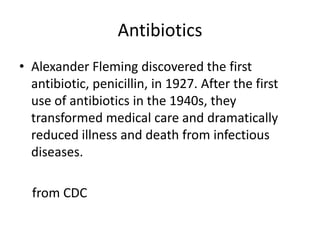
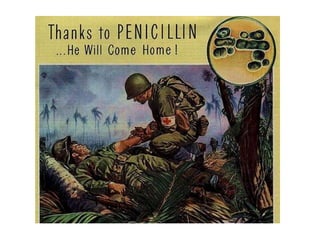
AntibioticsAlexander Fleming discovered the first antibiotic, penicillin, in 1927. After the first use of antibiotics in the 1940s, they transformed medical care and dramatically reduced illness and death from infectious diseases.    from CDC
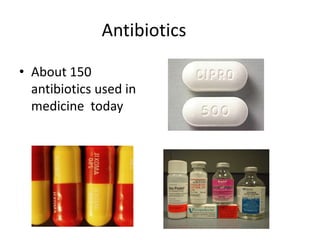
AntibioticsAbout 150 antibiotics used in medicine  today
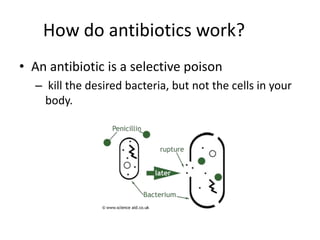
How do antibiotics work?An antibiotic is a selective poisonkill the desired bacteria, but not the cells in your body.
How Do Antibiotics WorkAntibiotics are compounds that either: 1. kill bacteria directly (bacteriocidal) 2. hamper their ability to grow and reproduce (bacteriostatic)
How Do Antibiotics Work?When you are fighting off a bacterial infection, your immune system can be overwhelmed by the invading bacteria. Antibiotics help fight the invaders until your immune system can recover and finish off the remaining bacteria.
How do antibiotics work?Mechanismscrippling production of the bacterial cell wall that protects the cell from the external environment interfering with protein synthesis by binding to the machinery that builds proteinsDisrupting with metabolic processes, such as the synthesis of folic acid, a B vitamin that bacteria need to thrive blocking synthesis of DNA and RNA
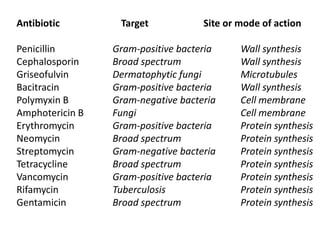
Antibiotic	                 Target                       Site or mode of action Penicillin 	Gram-positive bacteria 	Wall synthesis 	Cephalosporin 	Broad spectrum 		Wall synthesis 	GriseofulvinDermatophyticfungi 		Microtubules BacitracinGram-positive bacteria 	Wall synthesis 	Polymyxin B 	Gram-negative bacteria 	Cell membrane AmphotericinB 	Fungi 			Cell membrane Erythromycin Gram-positive bacteria 	Protein synthesis Neomycin Broad spectrum 	Protein synthesis Streptomycin Gram-negative bacteria 	Protein synthesis Tetracycline Broad spectrum 		Protein synthesis VancomycinGram-positive bacteriaProteinsynthesisRifamycinTuberculosis 		Protein synthesis GentamicinBroad spectrum 		Protein synthesis
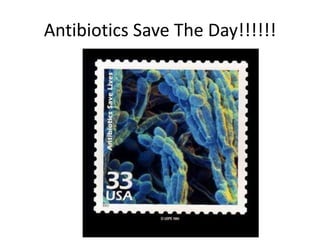
Antibiotics Save The Day!!!!!!
But…….
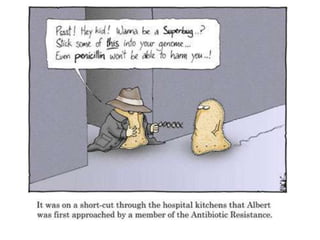
Antibiotic ResistanceQ: What is antibiotic resistance?A: Antibiotic resistance is the ability of bacteria or other microbes to resist the effects of an antibiotic. Antibiotic resistance occurs when bacteria change in some way that reduces or eliminates the effectiveness of drugs, chemicals, or other agents designed to cure or prevent infections. The bacteria survive and continue to multiply causing more harm.From- CDC
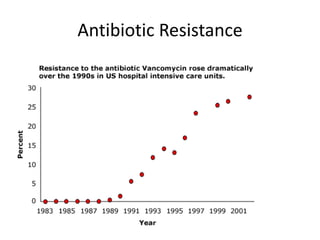
Antibiotic Resistance
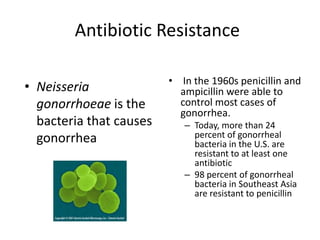
Antibiotic Resistance In the 1960s penicillin and ampicillin were able to control most cases of gonorrhea. Today, more than 24 percent of gonorrheal bacteria in the U.S. are resistant to at least one antibiotic98 percent of gonorrheal bacteria in Southeast Asia are resistant to penicillinNeisseriagonorrhoeaeis the bacteria that causes gonorrhea
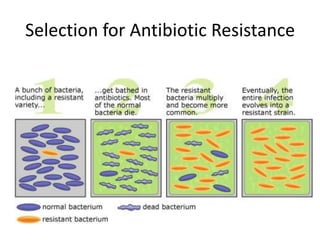
Selection for Antibiotic Resistance
Antibiotic Resistance and Pesticide Resistance Arise by Natural Selection                                                                       (notice how the term “natural selection” doesn’t appear in the CDC definition)why???????
CoevolutionEvolutionary Arms Race
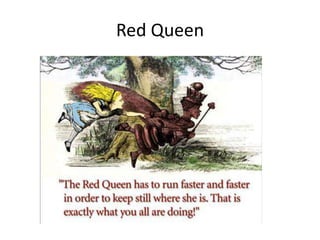
Red Queen
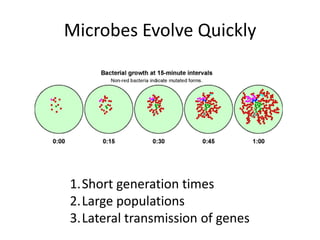
Microbes Evolve QuicklyShort generation timesLarge populationsLateral transmission of genes
6 Scariest GermsInfectious Diseases Society of America
Staphylococcus aureusFirst bacterium to show resistance to penicillin- 1947Just four years after the drug was mass producedMethicillin was antibiotic of choice, but damaged kidney so replaced by oxacillinMRSA (methicillin-resistant Staphylococcus aureus) was first detected in Britain in 1961Now common in hospitalsMost common antibiotic resistant microbe in US hospitals.Half of all S. aureus infections in the USA are resistant to penicillin, methicillin, tetracyclind and erythromycin.
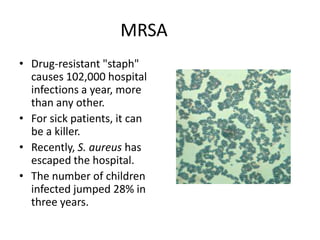
MRSADrug-resistant "staph" causes 102,000 hospital infections a year, more than any other. For sick patients, it can be a killer. Recently, S. aureus has escaped the hospital.The number of children infected jumped 28% in three years.
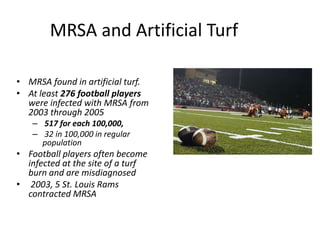
MRSA and Artificial TurfMRSA found in artificial turf.At least 276 football players were infected with MRSA from 2003 through 2005517 for each 100,000, 32 in 100,000 in regular populationFootball players often become infected at the site of a turf burn and are misdiagnosed 2003, 5 St. Louis Rams contracted MRSA
NOT SAFESAFE
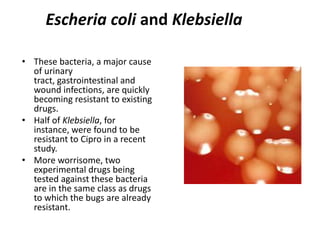
Escheria coli and KlebsiellaThese bacteria, a major cause of urinary tract, gastrointestinal and wound infections, are quickly becoming resistant to existing drugs. Half of Klebsiella, for instance, were found to be resistant to Cipro in a recent study. More worrisome, two experimental drugs being tested against these bacteria are in the same class as drugs to which the bugs are already resistant.
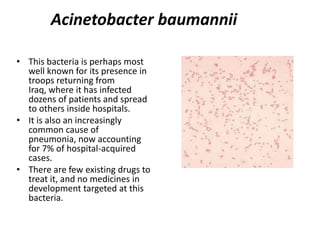
AcinetobacterbaumanniiThis bacteria is perhaps most well known for its presence in troops returning from Iraq, where it has infected dozens of patients and spread to others inside hospitals. It is also an increasingly common cause of pneumonia, now accounting for 7% of hospital-acquired cases. There are few existing drugs to treat it, and no medicines in development targeted at this bacteria.
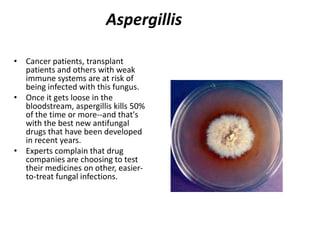
AspergillisCancer patients, transplant patients and others with weak immune systems are at risk of being infected with this fungus. Once it gets loose in the bloodstream, aspergillis kills 50% of the time or more--and that's with the best new antifungal drugs that have been developed in recent years. Experts complain that drug companies are choosing to test their medicines on other, easier-to-treat fungal infections.
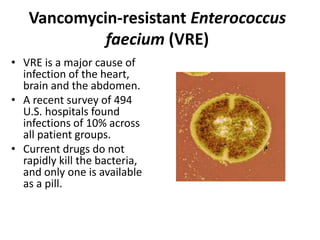
Vancomycin-resistant Enterococcusfaecium (VRE)VRE is a major cause of infection of the heart, brain and the abdomen.A recent survey of 494 U.S. hospitals found infections of 10% across all patient groups.Current drugs do not rapidly kill the bacteria, and only one is available as a pill.
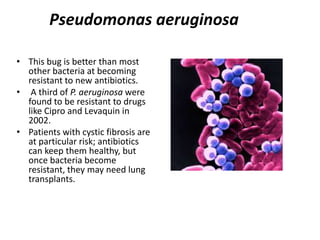
Pseudomonas aeruginosaThis bug is better than most other bacteria at becoming resistant to new antibiotics. A third of P. aeruginosa were found to be resistant to drugs like Cipro and Levaquin in 2002. Patients with cystic fibrosis are at particular risk; antibiotics can keep them healthy, but once bacteria become resistant, they may need lung transplants.
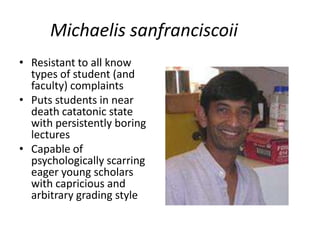
MichaelissanfranciscoiiResistant to all know types of student (and faculty)complaintsPuts students in near death catatonic state with persistently boring lecturesCapable of psychologically scarring eager young scholars with capricious and arbitrary grading style
How did this happen?Plenty of blame to go aroundDoctorsPatientsLivestock industry
How did this happen?Antibiotics are effective against bacteria and NOT virusesMany physicians have prescribed antibiotics to treat viral diseases such as the common coldProvided selection for resistance while providing no health benefit(maybe they should have taught about Natural Selection in Medical School)
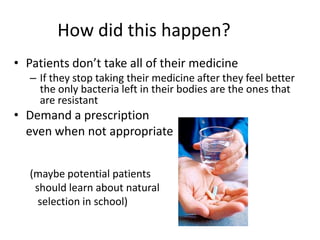
How did this happen?Patients don’t take all of their medicineIf they stop taking their medicine after they feel better the only bacteria left in their bodies are the ones that are resistantDemand a prescription   even when not appropriate(maybe potential patients  should learn about natural  selection in school)
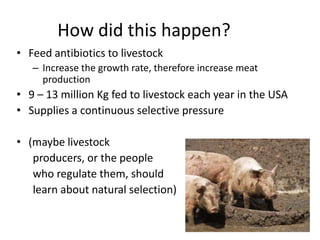
How did this happen?Feed antibiotics to livestockIncrease the growth rate, therefore increase meat production9 – 13 million Kg fed to livestock each year in the USASupplies a continuous selective pressure(maybe livestock      producers, or the people      who regulate them, should      learn about natural selection)
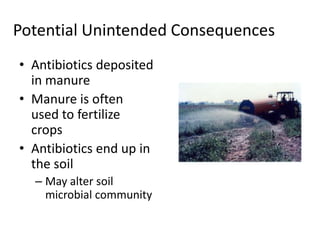
Potential Unintended ConsequencesAntibiotics deposited in manureManure is often used to fertilize cropsAntibiotics end up in the soilMay alter soil microbial community
Where do we find antibiotics?Because organisms have been in evolutionary arms races against microbes for such a long time it is not surprising that many antibiotics are natural chemicals
Where do we find antibiotics?Natural products A number of natural products, penicillin for example, have been discovered that are antibiotics suitable for therapy. They were originally discovered as secretions of fungi or soil bacteriaNow found in tropical rainforest plants and coral reef animals and plants
Finding New Natural AntibioticsBioprospectingSearching for natural chemicals with antiobiotic propertiesTwo approaches to bioprospectingTest everything to see if you can find any natural chemicals with antibiotic abilityFocus on speciesused by traditional medicineRely on indigenous knowledge
Rely on Traditional Knowledge
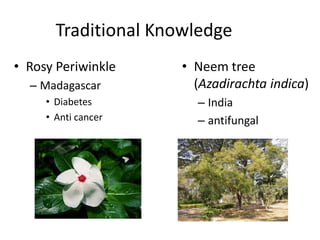
Traditional KnowledgeRosy PeriwinkleMadagascarDiabetesAnti cancerNeem tree (Azadirachtaindica)Indiaantifungal
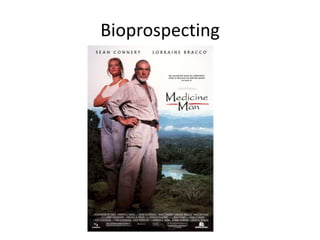
Bioprospecting
BioprospectingvsBiopiracyMany antibiotics have been found in tropical rainforests and coral reefs“value” to the biodiversity If local people can make money from drugs developed out of local ecosystems they might be more interested in conserving habitats and diversity“Biopiracy” occurs when big corporations take drugs from tropical ecosystem and make a fortune, but return no money to the local community.
Fighting “Biopiracy”Many tropical countries have made it much more difficult for scientists to remove material from the countryCan make it harder for scientists to do their researchE.g. difficult to remove materials from MalaysiaEven tissues from the wings of bats that could be used in genetic analysis
Where do we find antibiotics?Semi-synthetic products. These are natural products that have been chemically modified in the laboratory to improve the efficacy of the natural product reduce its side effects circumvent developing resistance by the targeted bacteria expand the range of bacteria that can be treated with it
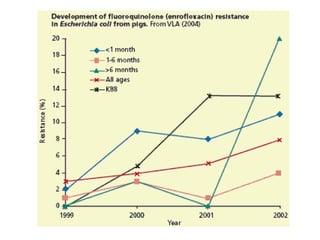
Where do we find antibiotics?Completely synthetic products.Create new chemicals in the labFluoroquinolonesbroad-spectrum antibiotics Cipro
If microbes are resistant to antibiotics then we should develop new types of antibiotics.
New AntibioticsIn the past decade, many big pharmaceutical players, including Wyeth, Roche and Eli Lilly, backed off antibiotic research. At the same time, new antibiotics were becoming increasingly difficult to develop. For 30 years--until 2000--there were no new classes of antibiotics approved.
New AntibioticsIn the past six years, there have been some new types of drugsZyvox, from Pfizer Cubicin, from Cubist Pharmaceuticals And maybeTygacil from WyethKetek from Sanofi-Aventis
Microbiological vs Evolutionary KnowledgeLots of progress has been made by scientists with detailed knowledge of how bacteria workHowever, organisms have been involved in evolutionary arms race with microbes for very long time we might be able to learn something from our knowledge of evolutionary biology
How Can We Use Our Knowledge of Evolutionary Biology?Don’t use antibiotics to treat viral infections.Antibiotics kill bacteria, not viruses. If you take antibiotics for a viral infection (like a cold or the flu), you will not kill the viruses, but you will introduce a selective pressure on bacteria in your body, inadvertently selecting for antibiotic-resistant bacteria.Basically, you want your bacteria to be “antibiotic virgins,” so that if they someday get out of hand and cause an infection that your immune system can’t handle, they can be killed by a readily available antibiotic.UC Berkeley
How Can We Use Our Knowledge of Evolutionary Biology?Avoid mild doses of antibiotics over long time periods.If an infection needs to be controlled with antibiotics, a short-term, high-dosage prescription is preferable. This is because you want to kill all of the illness-causing bacteria, leaving no bacterial survivors. Any bacteria that survive a mild dose are likely to be somewhat resistant. Basically, if you are going to introduce a selective pressure (antibiotics), make it so strong that you cause the extinction of the illness-causing bacteria in the host and not their evolution into resistant forms.
How Can We Use Our Knowledge of Evolutionary Biology?When treating a bacterial infection with antibiotics, take all your pills.Just as mild doses can breed resistance, an incomplete regimen of antibiotics can let bacteria survive and adapt. If you are going to introduce a selective pressure (antibiotics), make it a really strong one and a long enough one to cause the extinction of the illness-causing bacteria and not their evolution.
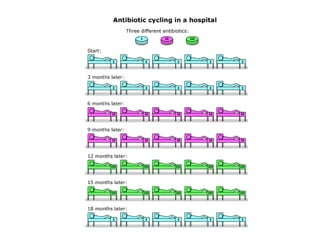
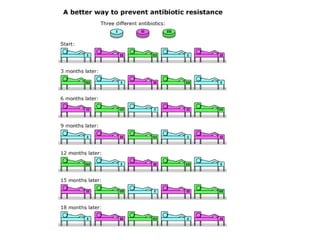
How Can We Use Our Knowledge of Evolutionary Biology?Use a combination of drugs to treat a bacterial infection.If one particular drug doesn’t help with a bacterial infection, you may be dealing with a resistant strain. Giving a stronger dose of the same antibiotic just increases the strength of the same selective pressure—and may even cause the evolution of a “super-resistant” strain. Instead, you might want to try an entirely different antibiotic that the bacteria have never encountered before. This new and different selective pressure might do a better job of causing their extinction, not their evolution.
How Can We Use Our Knowledge of Evolutionary Biology?Reduce or eliminate the “preventive” use of antibiotics on livestock and crops.Unnecessary use of antibiotics for agricultural and livestock purposes may lead to the evolution of resistant strains. Later, these strains will not be able to be controlled by antibiotics when it really is necessary. Preventive use of antibiotics on livestock and crops can also introduce antibiotics into the bodies of the humans who eat them.
How Can We Use Our Knowledge of Evolutionary Biology?We discussed how a benefit of sexual reproduction is the ability to fight infectious microbes by scrambling our genotypes (hence our defenses)Maybe we can use this knowledge of the importance of varying our defenses over time to help us fight microbes
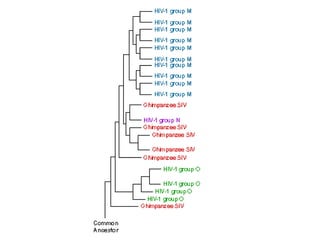
HIV1. What are the evolutionary origins of HIV?HIV  is closely related to other viruses. SIVs (simian immunodeficiency viruses)infect primatesHIV more distantly related  to FIVs (the feline strains), which infect cats.
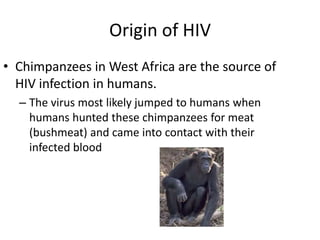
Origin of HIVChimpanzees in West Africa are the source of HIV infection in humans. The virus most likely jumped to humans when humans hunted these chimpanzees for meat (bushmeat) and came into contact with their infected blood
HIVInterestingly related viral lineages showed that primates with SIV and wild cats with FIV don't seem to be harmed by the viruses they carry.
If scientists can figure out how non-human primates and wild cats are able to live with these viruses, they may learn how to better treat HIV infections or prevent them altogether.Ways to Fight HIVReverse transcriptase (RT) inhibitors interfere with the critical step during the HIV life cycle known as reverse transcription. During this step, RT, an HIV enzyme, converts HIV RNA to HIV DNA. There are two main types of RT inhibitors. Protease inhibitors interfere with the protease enzyme that HIV uses to produce infectious viral particles. Entry and fusion inhibitors interfere with the virus' ability to fuse with the cellular membrane, thereby blocking entry into the host cell. Integrase inhibitors block integrase, the enzyme HIV uses to integrate genetic material of the virus into its target host cell. Multidrug combination products combine drugs from more than one class into a single product.
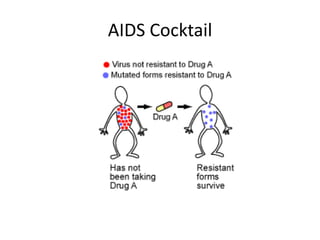
How can we control HIV's evolution of resistance to our drugs?Because of HIV's speedy evolution, it responds to selection pressures quickly: viruses that happen to survive the drug are favored, and resistant virus strains evolve within the patient, sometimes in just a few weeks.
AIDS Cocktail
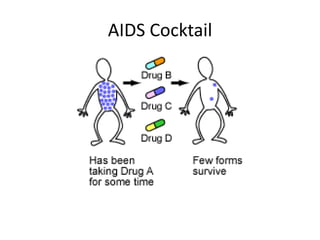
AIDS Cocktail
AIDS CocktailHIV treated a “cocktail” that contains three different drugs and thus tries to stop the virus in three different ways.Three-drug cocktail

Antiobiotic Resistance

  • 1.
    Antibiotic ResistanceSo YouThink You Are Alone?Fall 2009
  • 2.
    Long Interest inControlling PestsPests that eat our crops/livestockPests that compete with our cropsPests that damage our materialsPests that cause diseases in humans or our plants and animals
  • 3.
    PesticidesChemicals used tokill pests“First generation” of chemical pesticides used to kill pests were sometimes effective, but often had bad side effectsArsenic, cyanideImprovements in organic chemistry allowed scientists to develop “second generation” synthetic organic pesticides- 1940s
  • 4.
    DDT dichlorodiphenyltrichloroethaneSwiss scientist,Muller, discovered an organic compound that killed insectsRelatively cheap to produceBroad spectrumPersistent“Silver Bullet” in the battle against pests.
  • 5.
    DDTUsed to fightbody lice and other insect disease vectors (e.g. malaria mosquitos) in WW2 , very effectiveUsed to control agricultural pestsOriginally effective at controlling pests
  • 6.
    DDTMuller won theNobel Prize for the discovery of DDT
  • 7.
  • 8.
    Pesticide TreadmillAs pestsbecome resistant to pesticides farmers responded by increasing the concentration of pesticides which selects for more resistant pests so farmers increase the concentration of pesticides ……Over the last 50 years farmers increased the amount of pesticides added 40 fold and suffer s lightly larger loss of crops to pests.
  • 9.
  • 10.
  • 11.
    Other Problems FromApplying Chemical Pesticides to Control CropsOften saw unintended effects of applying pesticidesDDT affects calcium metabolism and thus weakened bird shellsSometimes killed beneficial insectsThose that act as competitors or predators of pests
  • 12.
    Other Problems FromApplying Chemical Pesticides to Control CropsResurgenceApplying pesticides initially lowers pest population initially lowers pest populations but later the pest populations explode to a much larger size than beforeProbably occurs because the pesticide has killed a competitor or a predator that controlled the pests population size
  • 13.
    Other Problems FromApplying Chemical Pesticides to Control CropsSecondary OutbreaksAdding pesticides initially lowers the population of the pest species But over time the population of a second species that wasn’t initially a problem becomes so large that the second species becomes a larger population than the first species
  • 14.
    What have welearned from ecology and evolutionary biology?Adding pesticides often has unintended consequences Especially true when adding “broad spectrum” pesticidesWe might expect similar effects when taking antibiotics
  • 15.
    What have welearned from ecology and evolutionary biology?Animals, plants, and microbes have evolved resistance to pesticides.What a surprise, Natural selection works!!!!Should also be a concern for antibiotics
  • 16.
    AntibioticsAntibiotics, also knownas antimicrobial drugs, are drugs that fight infections caused by bacteria. From CDC
  • 17.
    AntibioticsAlexander Fleming discoveredthe first antibiotic, penicillin, in 1927. After the first use of antibiotics in the 1940s, they transformed medical care and dramatically reduced illness and death from infectious diseases. from CDC
  • 19.
    AntibioticsAbout 150 antibioticsused in medicine today
  • 20.
    How do antibioticswork?An antibiotic is a selective poisonkill the desired bacteria, but not the cells in your body.
  • 21.
    How Do AntibioticsWorkAntibiotics are compounds that either: 1. kill bacteria directly (bacteriocidal) 2. hamper their ability to grow and reproduce (bacteriostatic)
  • 22.
    How Do AntibioticsWork?When you are fighting off a bacterial infection, your immune system can be overwhelmed by the invading bacteria. Antibiotics help fight the invaders until your immune system can recover and finish off the remaining bacteria.
  • 23.
    How do antibioticswork?Mechanismscrippling production of the bacterial cell wall that protects the cell from the external environment interfering with protein synthesis by binding to the machinery that builds proteinsDisrupting with metabolic processes, such as the synthesis of folic acid, a B vitamin that bacteria need to thrive blocking synthesis of DNA and RNA
  • 24.
    Antibiotic Target Site or mode of action Penicillin Gram-positive bacteria Wall synthesis Cephalosporin Broad spectrum Wall synthesis GriseofulvinDermatophyticfungi Microtubules BacitracinGram-positive bacteria Wall synthesis Polymyxin B Gram-negative bacteria Cell membrane AmphotericinB Fungi Cell membrane Erythromycin Gram-positive bacteria Protein synthesis Neomycin Broad spectrum Protein synthesis Streptomycin Gram-negative bacteria Protein synthesis Tetracycline Broad spectrum Protein synthesis VancomycinGram-positive bacteriaProteinsynthesisRifamycinTuberculosis Protein synthesis GentamicinBroad spectrum Protein synthesis
  • 25.
  • 26.
  • 27.
    Antibiotic ResistanceQ: Whatis antibiotic resistance?A: Antibiotic resistance is the ability of bacteria or other microbes to resist the effects of an antibiotic. Antibiotic resistance occurs when bacteria change in some way that reduces or eliminates the effectiveness of drugs, chemicals, or other agents designed to cure or prevent infections. The bacteria survive and continue to multiply causing more harm.From- CDC
  • 28.
  • 29.
    Antibiotic Resistance Inthe 1960s penicillin and ampicillin were able to control most cases of gonorrhea. Today, more than 24 percent of gonorrheal bacteria in the U.S. are resistant to at least one antibiotic98 percent of gonorrheal bacteria in Southeast Asia are resistant to penicillinNeisseriagonorrhoeaeis the bacteria that causes gonorrhea
  • 31.
  • 32.
    Antibiotic Resistance andPesticide Resistance Arise by Natural Selection (notice how the term “natural selection” doesn’t appear in the CDC definition)why???????
  • 33.
  • 34.
  • 35.
    Microbes Evolve QuicklyShortgeneration timesLarge populationsLateral transmission of genes
  • 36.
    6 Scariest GermsInfectiousDiseases Society of America
  • 37.
    Staphylococcus aureusFirst bacteriumto show resistance to penicillin- 1947Just four years after the drug was mass producedMethicillin was antibiotic of choice, but damaged kidney so replaced by oxacillinMRSA (methicillin-resistant Staphylococcus aureus) was first detected in Britain in 1961Now common in hospitalsMost common antibiotic resistant microbe in US hospitals.Half of all S. aureus infections in the USA are resistant to penicillin, methicillin, tetracyclind and erythromycin.
  • 38.
    MRSADrug-resistant "staph" causes102,000 hospital infections a year, more than any other. For sick patients, it can be a killer. Recently, S. aureus has escaped the hospital.The number of children infected jumped 28% in three years.
  • 39.
    MRSA and ArtificialTurfMRSA found in artificial turf.At least 276 football players were infected with MRSA from 2003 through 2005517 for each 100,000, 32 in 100,000 in regular populationFootball players often become infected at the site of a turf burn and are misdiagnosed 2003, 5 St. Louis Rams contracted MRSA
  • 40.
  • 41.
    Escheria coli andKlebsiellaThese bacteria, a major cause of urinary tract, gastrointestinal and wound infections, are quickly becoming resistant to existing drugs. Half of Klebsiella, for instance, were found to be resistant to Cipro in a recent study. More worrisome, two experimental drugs being tested against these bacteria are in the same class as drugs to which the bugs are already resistant.
  • 42.
    AcinetobacterbaumanniiThis bacteria isperhaps most well known for its presence in troops returning from Iraq, where it has infected dozens of patients and spread to others inside hospitals. It is also an increasingly common cause of pneumonia, now accounting for 7% of hospital-acquired cases. There are few existing drugs to treat it, and no medicines in development targeted at this bacteria.
  • 43.
    AspergillisCancer patients, transplantpatients and others with weak immune systems are at risk of being infected with this fungus. Once it gets loose in the bloodstream, aspergillis kills 50% of the time or more--and that's with the best new antifungal drugs that have been developed in recent years. Experts complain that drug companies are choosing to test their medicines on other, easier-to-treat fungal infections.
  • 44.
    Vancomycin-resistant Enterococcusfaecium (VRE)VREis a major cause of infection of the heart, brain and the abdomen.A recent survey of 494 U.S. hospitals found infections of 10% across all patient groups.Current drugs do not rapidly kill the bacteria, and only one is available as a pill.
  • 45.
    Pseudomonas aeruginosaThis bugis better than most other bacteria at becoming resistant to new antibiotics. A third of P. aeruginosa were found to be resistant to drugs like Cipro and Levaquin in 2002. Patients with cystic fibrosis are at particular risk; antibiotics can keep them healthy, but once bacteria become resistant, they may need lung transplants.
  • 46.
    MichaelissanfranciscoiiResistant to allknow types of student (and faculty)complaintsPuts students in near death catatonic state with persistently boring lecturesCapable of psychologically scarring eager young scholars with capricious and arbitrary grading style
  • 47.
    How did thishappen?Plenty of blame to go aroundDoctorsPatientsLivestock industry
  • 48.
    How did thishappen?Antibiotics are effective against bacteria and NOT virusesMany physicians have prescribed antibiotics to treat viral diseases such as the common coldProvided selection for resistance while providing no health benefit(maybe they should have taught about Natural Selection in Medical School)
  • 49.
    How did thishappen?Patients don’t take all of their medicineIf they stop taking their medicine after they feel better the only bacteria left in their bodies are the ones that are resistantDemand a prescription even when not appropriate(maybe potential patients should learn about natural selection in school)
  • 50.
    How did thishappen?Feed antibiotics to livestockIncrease the growth rate, therefore increase meat production9 – 13 million Kg fed to livestock each year in the USASupplies a continuous selective pressure(maybe livestock producers, or the people who regulate them, should learn about natural selection)
  • 52.
    Potential Unintended ConsequencesAntibioticsdeposited in manureManure is often used to fertilize cropsAntibiotics end up in the soilMay alter soil microbial community
  • 53.
    Where do wefind antibiotics?Because organisms have been in evolutionary arms races against microbes for such a long time it is not surprising that many antibiotics are natural chemicals
  • 54.
    Where do wefind antibiotics?Natural products A number of natural products, penicillin for example, have been discovered that are antibiotics suitable for therapy. They were originally discovered as secretions of fungi or soil bacteriaNow found in tropical rainforest plants and coral reef animals and plants
  • 55.
    Finding New NaturalAntibioticsBioprospectingSearching for natural chemicals with antiobiotic propertiesTwo approaches to bioprospectingTest everything to see if you can find any natural chemicals with antibiotic abilityFocus on speciesused by traditional medicineRely on indigenous knowledge
  • 56.
  • 57.
    Traditional KnowledgeRosy PeriwinkleMadagascarDiabetesAnticancerNeem tree (Azadirachtaindica)Indiaantifungal
  • 58.
  • 59.
    BioprospectingvsBiopiracyMany antibiotics havebeen found in tropical rainforests and coral reefs“value” to the biodiversity If local people can make money from drugs developed out of local ecosystems they might be more interested in conserving habitats and diversity“Biopiracy” occurs when big corporations take drugs from tropical ecosystem and make a fortune, but return no money to the local community.
  • 60.
    Fighting “Biopiracy”Many tropicalcountries have made it much more difficult for scientists to remove material from the countryCan make it harder for scientists to do their researchE.g. difficult to remove materials from MalaysiaEven tissues from the wings of bats that could be used in genetic analysis
  • 61.
    Where do wefind antibiotics?Semi-synthetic products. These are natural products that have been chemically modified in the laboratory to improve the efficacy of the natural product reduce its side effects circumvent developing resistance by the targeted bacteria expand the range of bacteria that can be treated with it
  • 62.
    Where do wefind antibiotics?Completely synthetic products.Create new chemicals in the labFluoroquinolonesbroad-spectrum antibiotics Cipro
  • 63.
    If microbes areresistant to antibiotics then we should develop new types of antibiotics.
  • 64.
    New AntibioticsIn thepast decade, many big pharmaceutical players, including Wyeth, Roche and Eli Lilly, backed off antibiotic research. At the same time, new antibiotics were becoming increasingly difficult to develop. For 30 years--until 2000--there were no new classes of antibiotics approved.
  • 65.
    New AntibioticsIn thepast six years, there have been some new types of drugsZyvox, from Pfizer Cubicin, from Cubist Pharmaceuticals And maybeTygacil from WyethKetek from Sanofi-Aventis
  • 66.
    Microbiological vs EvolutionaryKnowledgeLots of progress has been made by scientists with detailed knowledge of how bacteria workHowever, organisms have been involved in evolutionary arms race with microbes for very long time we might be able to learn something from our knowledge of evolutionary biology
  • 67.
    How Can WeUse Our Knowledge of Evolutionary Biology?Don’t use antibiotics to treat viral infections.Antibiotics kill bacteria, not viruses. If you take antibiotics for a viral infection (like a cold or the flu), you will not kill the viruses, but you will introduce a selective pressure on bacteria in your body, inadvertently selecting for antibiotic-resistant bacteria.Basically, you want your bacteria to be “antibiotic virgins,” so that if they someday get out of hand and cause an infection that your immune system can’t handle, they can be killed by a readily available antibiotic.UC Berkeley
  • 68.
    How Can WeUse Our Knowledge of Evolutionary Biology?Avoid mild doses of antibiotics over long time periods.If an infection needs to be controlled with antibiotics, a short-term, high-dosage prescription is preferable. This is because you want to kill all of the illness-causing bacteria, leaving no bacterial survivors. Any bacteria that survive a mild dose are likely to be somewhat resistant. Basically, if you are going to introduce a selective pressure (antibiotics), make it so strong that you cause the extinction of the illness-causing bacteria in the host and not their evolution into resistant forms.
  • 69.
    How Can WeUse Our Knowledge of Evolutionary Biology?When treating a bacterial infection with antibiotics, take all your pills.Just as mild doses can breed resistance, an incomplete regimen of antibiotics can let bacteria survive and adapt. If you are going to introduce a selective pressure (antibiotics), make it a really strong one and a long enough one to cause the extinction of the illness-causing bacteria and not their evolution.
  • 70.
    How Can WeUse Our Knowledge of Evolutionary Biology?Use a combination of drugs to treat a bacterial infection.If one particular drug doesn’t help with a bacterial infection, you may be dealing with a resistant strain. Giving a stronger dose of the same antibiotic just increases the strength of the same selective pressure—and may even cause the evolution of a “super-resistant” strain. Instead, you might want to try an entirely different antibiotic that the bacteria have never encountered before. This new and different selective pressure might do a better job of causing their extinction, not their evolution.
  • 71.
    How Can WeUse Our Knowledge of Evolutionary Biology?Reduce or eliminate the “preventive” use of antibiotics on livestock and crops.Unnecessary use of antibiotics for agricultural and livestock purposes may lead to the evolution of resistant strains. Later, these strains will not be able to be controlled by antibiotics when it really is necessary. Preventive use of antibiotics on livestock and crops can also introduce antibiotics into the bodies of the humans who eat them.
  • 72.
    How Can WeUse Our Knowledge of Evolutionary Biology?We discussed how a benefit of sexual reproduction is the ability to fight infectious microbes by scrambling our genotypes (hence our defenses)Maybe we can use this knowledge of the importance of varying our defenses over time to help us fight microbes
  • 75.
    HIV1. What arethe evolutionary origins of HIV?HIV is closely related to other viruses. SIVs (simian immunodeficiency viruses)infect primatesHIV more distantly related to FIVs (the feline strains), which infect cats.
  • 76.
    Origin of HIVChimpanzeesin West Africa are the source of HIV infection in humans. The virus most likely jumped to humans when humans hunted these chimpanzees for meat (bushmeat) and came into contact with their infected blood
  • 78.
    HIVInterestingly related virallineages showed that primates with SIV and wild cats with FIV don't seem to be harmed by the viruses they carry.
  • 79.
    If scientists canfigure out how non-human primates and wild cats are able to live with these viruses, they may learn how to better treat HIV infections or prevent them altogether.Ways to Fight HIVReverse transcriptase (RT) inhibitors interfere with the critical step during the HIV life cycle known as reverse transcription. During this step, RT, an HIV enzyme, converts HIV RNA to HIV DNA. There are two main types of RT inhibitors. Protease inhibitors interfere with the protease enzyme that HIV uses to produce infectious viral particles. Entry and fusion inhibitors interfere with the virus' ability to fuse with the cellular membrane, thereby blocking entry into the host cell. Integrase inhibitors block integrase, the enzyme HIV uses to integrate genetic material of the virus into its target host cell. Multidrug combination products combine drugs from more than one class into a single product.
  • 80.
    How can wecontrol HIV's evolution of resistance to our drugs?Because of HIV's speedy evolution, it responds to selection pressures quickly: viruses that happen to survive the drug are favored, and resistant virus strains evolve within the patient, sometimes in just a few weeks.
  • 81.
  • 82.
  • 83.
    AIDS CocktailHIV treateda “cocktail” that contains three different drugs and thus tries to stop the virus in three different ways.Three-drug cocktail