ORGANISATIONAL
BEHAVIOUR
Organisation
A structured social system consisting of
groups of individuals working together to
meet some agreed-on objectives
Organisational Behaviour is the field that
seeks knowledge of all aspects of
behaviours in organisational settings by
the use of the scientific method
Three levels
 Individuals
 Groups
 Organisations
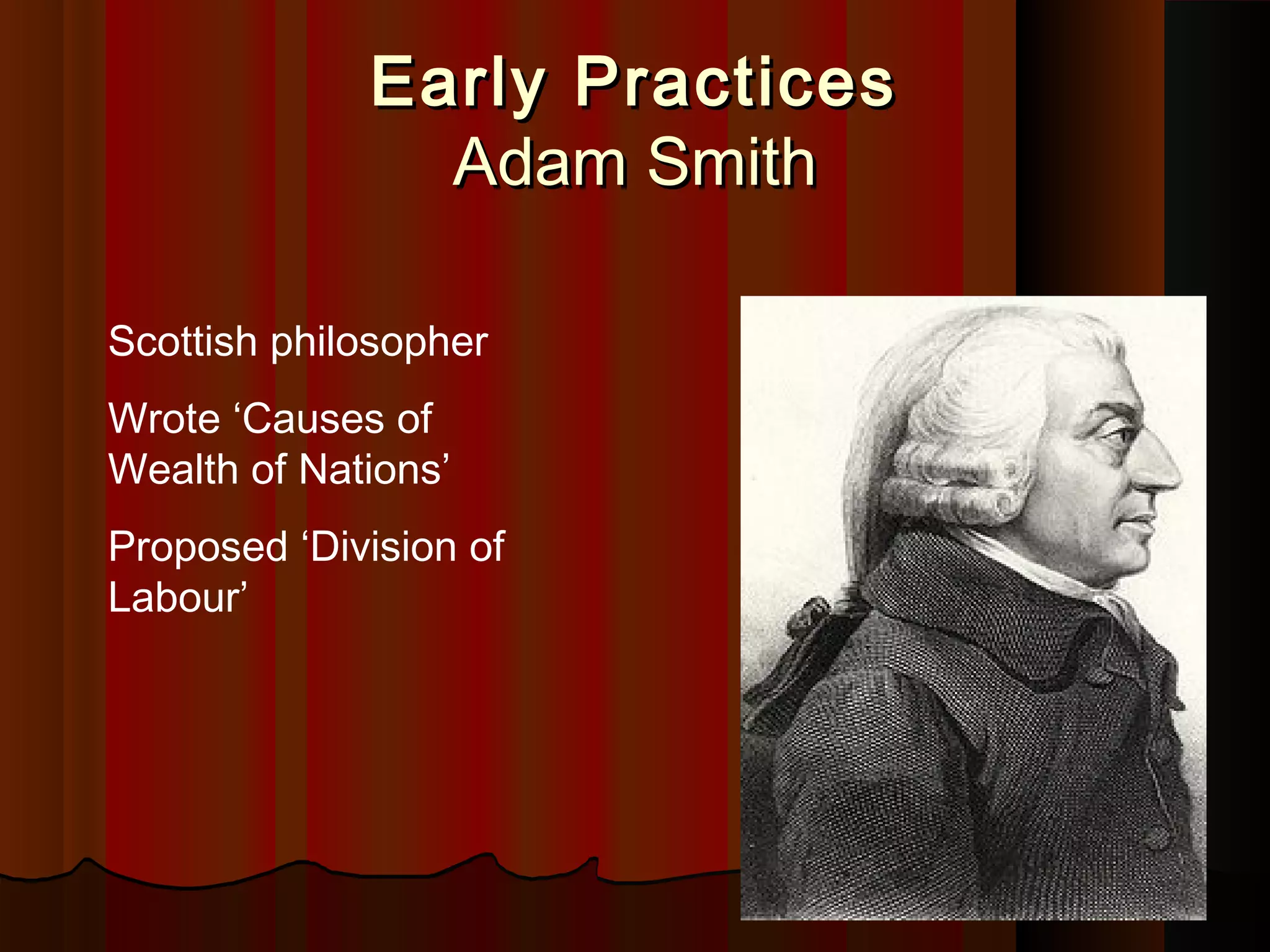
Early Practices
Adam Smith
Scottish philosopher
Wrote ‘Causes of
Wealth of Nations’
Proposed ‘Division of
Labour’
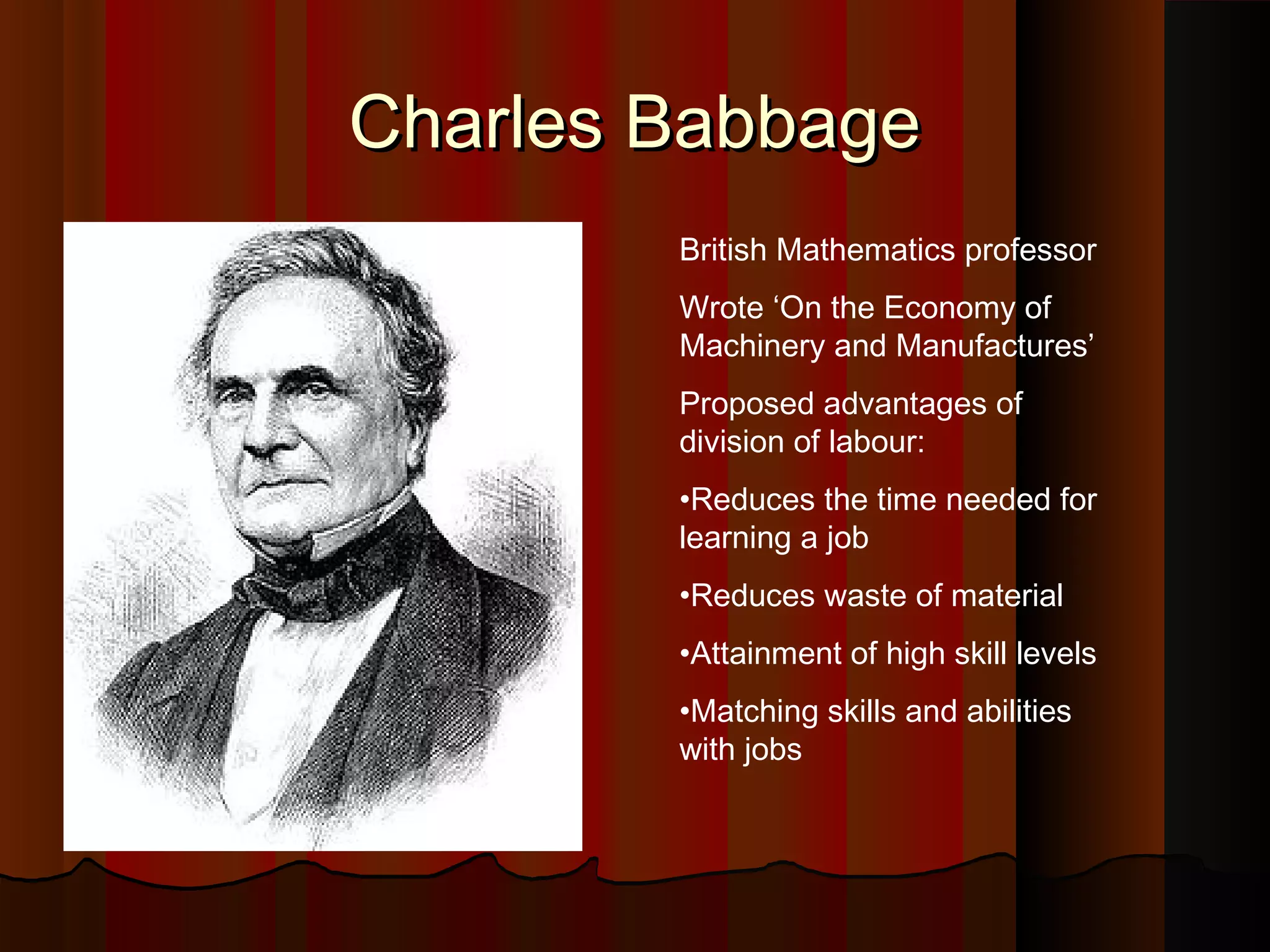
Charles Babbage
British Mathematics professor
Wrote ‘On the Economy of
Machinery and Manufactures’
Proposed advantages of
division of labour:
•Reduces the time needed for
learning a job
•Reduces waste of material
•Attainment of high skill levels
•Matching skills and abilities
with jobs
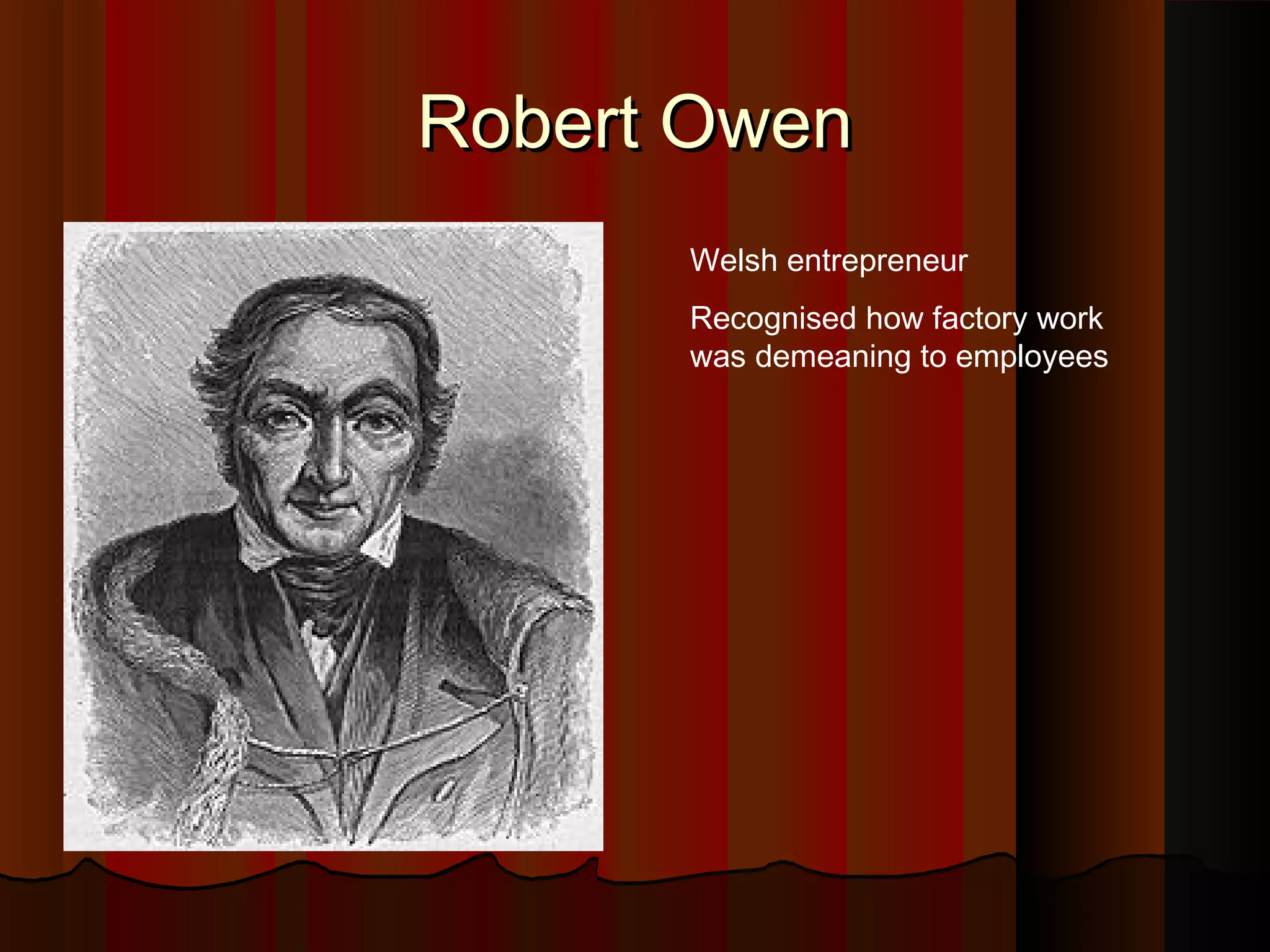
Robert Owen
Welsh entrepreneur
Recognised how factory work
was demeaning to employees
The Classical Era
Scientific Management- Frederick Taylor
 Develop a science for each element of an
individual’s work
 Scientifically select, train, teach and
develop worker
 Cooperation with workers
 Divide work responsibility equally between
management and workers
Hawthorne studies
Illumination experiment
Relay room experiment
Mass interviewing
Bank wiring observation
Classical Organisation Theory
Administrative Theory
 French industrialist Henry Fayol
 Proposed that a manager plans,
organises, directs, controls and
coordinates
 14 principles of management including
division of labour, authority, scalar chain,
unity of command, initiative
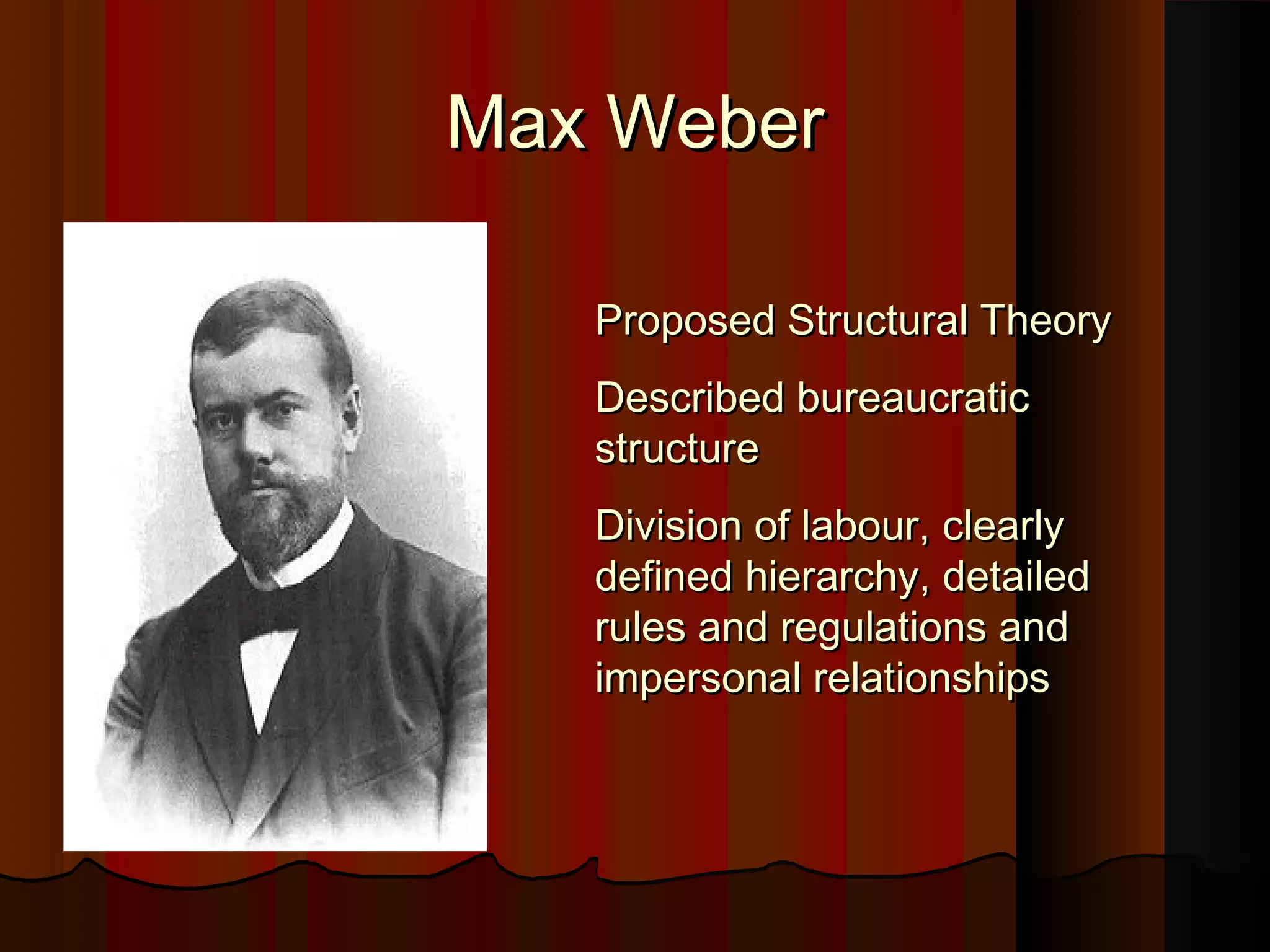
Max Weber
Proposed Structural Theory
Described bureaucratic
structure
Division of labour, clearly
defined hierarchy, detailed
rules and regulations and
impersonal relationships
 Formal rules regulations
 Division of labour
 Hierarchical structure
 Authority structure
 Lifelong commitment
Social Man Theory
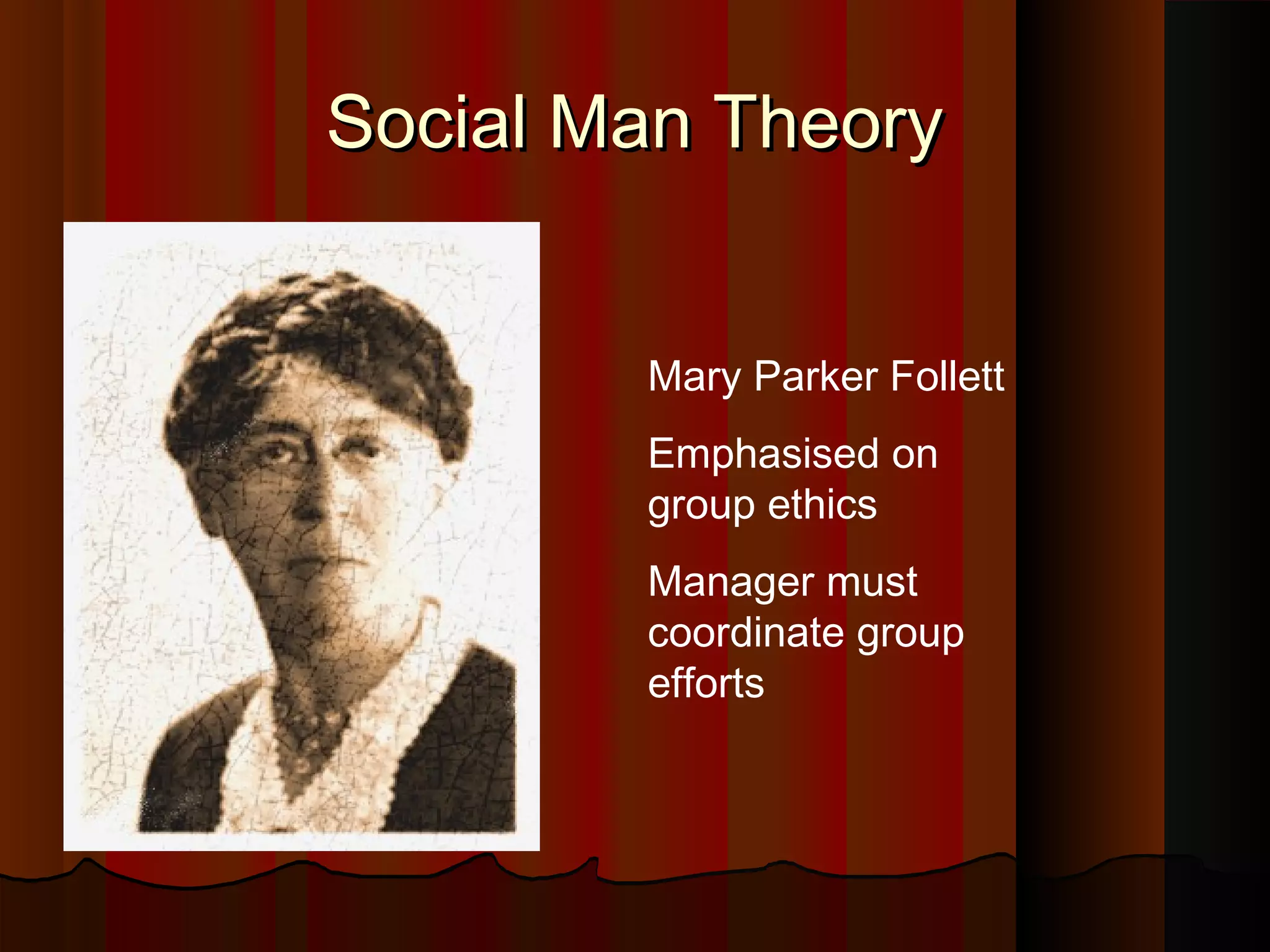
Mary Parker Follett
Emphasised on
group ethics
Manager must
coordinate group
efforts
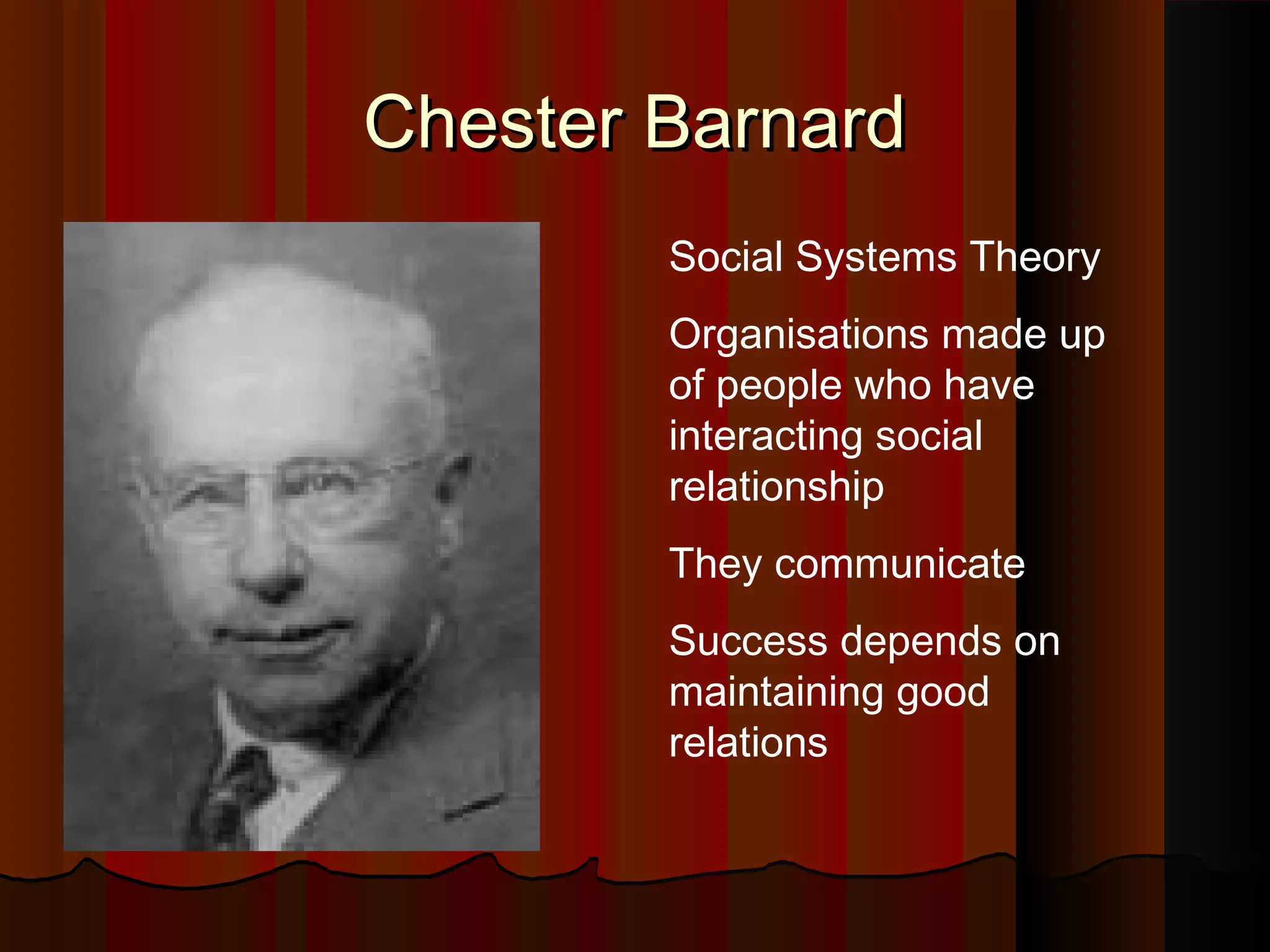
Chester Barnard
Social Systems Theory
Organisations made up
of people who have
interacting social
relationship
They communicate
Success depends on
maintaining good
relations
Herbert Simon
 Described

organisations as a complex
network of decisional process
 Decision process comprises i) intelligent
activity ii) design activity iii) choice activity
 Bounded rationality
 administrative
Peter Drucker
 Nature

of management as innovative and
creative
 Manager has to act as administrator,
entrepreneur, set objectives etc.
 Organisation structure to facilitate effective
functioning
 MBO
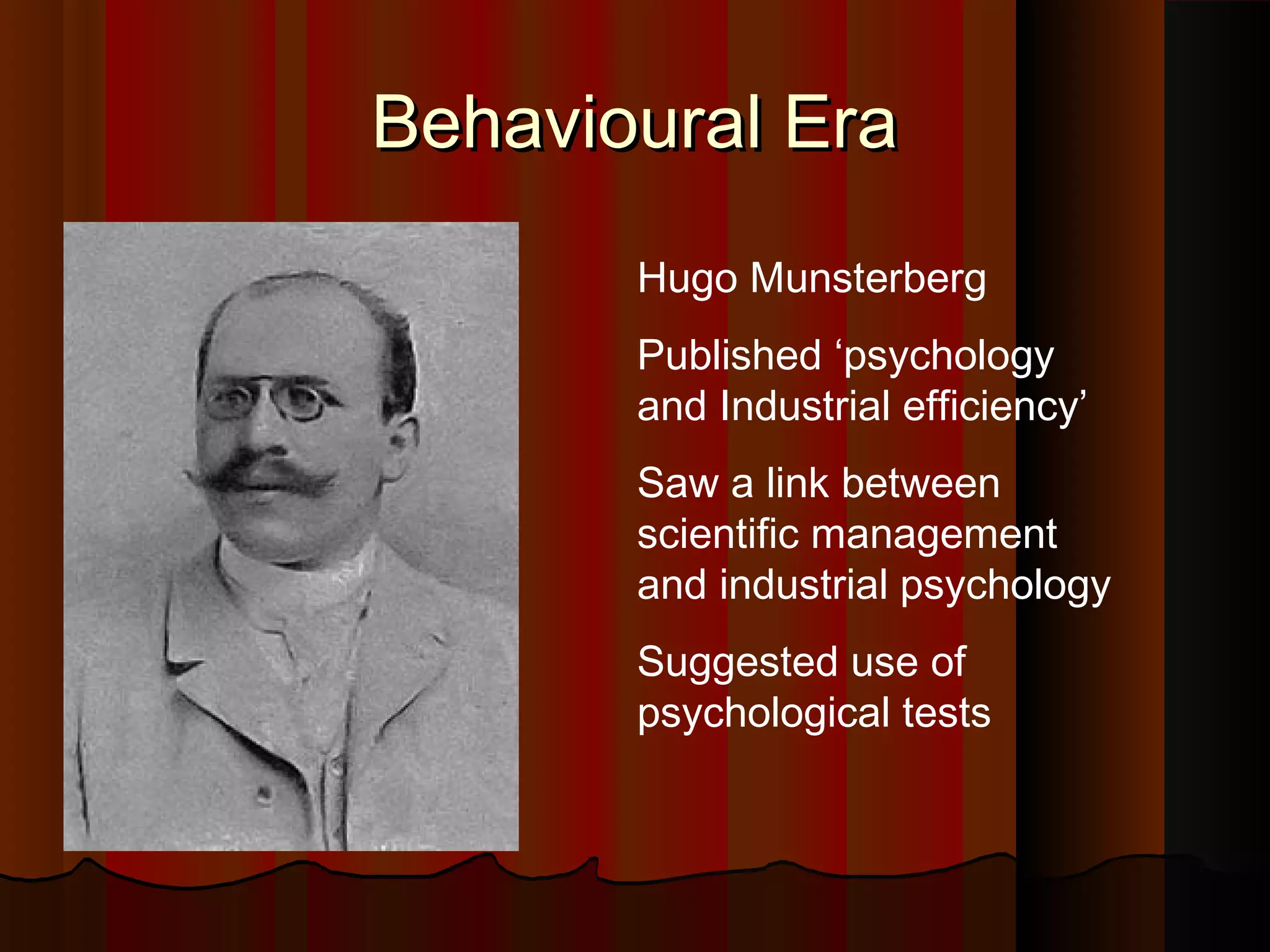
Behavioural Era
Hugo Munsterberg
Published ‘psychology
and Industrial efficiency’
Saw a link between
scientific management
and industrial psychology
Suggested use of
psychological tests
Wagner Act
 After great depression of 1929, Wagner

Act was passed which recognised union
as the authorised representatives of
workers
Human Relations
 Hawthorne studies
 DALE carnegie
 Maslow
 McGregor
Behavioural Science Theories
 Moreno-sociometry for studying group

interactions
 Skinner-operant conditioning
 McClelland Theory-need theory
 Fiedler-situational theory of leadership
Contingency perspective
 No one ‘best way’ to manage people.
Challenges/emerging issues for
OB
 Globalisation
 Workforce diversity
 Nature of organisation
 Changing nature of work
 Changing employee needs
 Improving quality and productivity
Orgnisations are dynamic
 Open systems

-Self sustaining systems that transform input
from the external environment into input,
which the system then returns to the
environment
Forces shaping OB
 Globalisation of economy
 Diversification of workforce
 New working arrangements (flexitime,

compressed workweek,job sharing,
telecommuting
 MNCs
 Multicultural society
New forms of organisation
 Leaner organisations

-informate : process by which workers
manipulate objects through inserting data
between themselves and those objects
 Outsourcing
 Contingent workforce
 Virtual corporations

Highly flexible, temporary organisations
formed by a group of companies to exploit
a specific opportunity
Evolution of organisation behaviour

Evolution of organisation behaviour

  • 1.
  • 2.
    Organisation A structured socialsystem consisting of groups of individuals working together to meet some agreed-on objectives
  • 3.
    Organisational Behaviour isthe field that seeks knowledge of all aspects of behaviours in organisational settings by the use of the scientific method
  • 4.
    Three levels  Individuals Groups  Organisations
  • 5.
    Early Practices Adam Smith Scottishphilosopher Wrote ‘Causes of Wealth of Nations’ Proposed ‘Division of Labour’
  • 6.
    Charles Babbage British Mathematicsprofessor Wrote ‘On the Economy of Machinery and Manufactures’ Proposed advantages of division of labour: •Reduces the time needed for learning a job •Reduces waste of material •Attainment of high skill levels •Matching skills and abilities with jobs
  • 7.
    Robert Owen Welsh entrepreneur Recognisedhow factory work was demeaning to employees
  • 8.
    The Classical Era ScientificManagement- Frederick Taylor  Develop a science for each element of an individual’s work  Scientifically select, train, teach and develop worker  Cooperation with workers  Divide work responsibility equally between management and workers
  • 9.
    Hawthorne studies Illumination experiment Relayroom experiment Mass interviewing Bank wiring observation
  • 10.
    Classical Organisation Theory AdministrativeTheory  French industrialist Henry Fayol  Proposed that a manager plans, organises, directs, controls and coordinates  14 principles of management including division of labour, authority, scalar chain, unity of command, initiative
  • 11.
    Max Weber Proposed StructuralTheory Described bureaucratic structure Division of labour, clearly defined hierarchy, detailed rules and regulations and impersonal relationships
  • 12.
     Formal rulesregulations  Division of labour  Hierarchical structure  Authority structure  Lifelong commitment
  • 13.
    Social Man Theory MaryParker Follett Emphasised on group ethics Manager must coordinate group efforts
  • 14.
    Chester Barnard Social SystemsTheory Organisations made up of people who have interacting social relationship They communicate Success depends on maintaining good relations
  • 15.
    Herbert Simon  Described organisationsas a complex network of decisional process  Decision process comprises i) intelligent activity ii) design activity iii) choice activity  Bounded rationality  administrative
  • 16.
    Peter Drucker  Nature ofmanagement as innovative and creative  Manager has to act as administrator, entrepreneur, set objectives etc.  Organisation structure to facilitate effective functioning  MBO
  • 17.
    Behavioural Era Hugo Munsterberg Published‘psychology and Industrial efficiency’ Saw a link between scientific management and industrial psychology Suggested use of psychological tests
  • 18.
    Wagner Act  Aftergreat depression of 1929, Wagner Act was passed which recognised union as the authorised representatives of workers
  • 19.
    Human Relations  Hawthornestudies  DALE carnegie  Maslow  McGregor
  • 20.
    Behavioural Science Theories Moreno-sociometry for studying group interactions  Skinner-operant conditioning  McClelland Theory-need theory  Fiedler-situational theory of leadership
  • 21.
    Contingency perspective  Noone ‘best way’ to manage people.
  • 22.
    Challenges/emerging issues for OB Globalisation  Workforce diversity  Nature of organisation  Changing nature of work  Changing employee needs  Improving quality and productivity
  • 23.
    Orgnisations are dynamic Open systems -Self sustaining systems that transform input from the external environment into input, which the system then returns to the environment
  • 24.
    Forces shaping OB Globalisation of economy  Diversification of workforce  New working arrangements (flexitime, compressed workweek,job sharing, telecommuting  MNCs  Multicultural society
  • 25.
    New forms oforganisation  Leaner organisations -informate : process by which workers manipulate objects through inserting data between themselves and those objects  Outsourcing  Contingent workforce
  • 26.
     Virtual corporations Highlyflexible, temporary organisations formed by a group of companies to exploit a specific opportunity