Downloaded 12 times


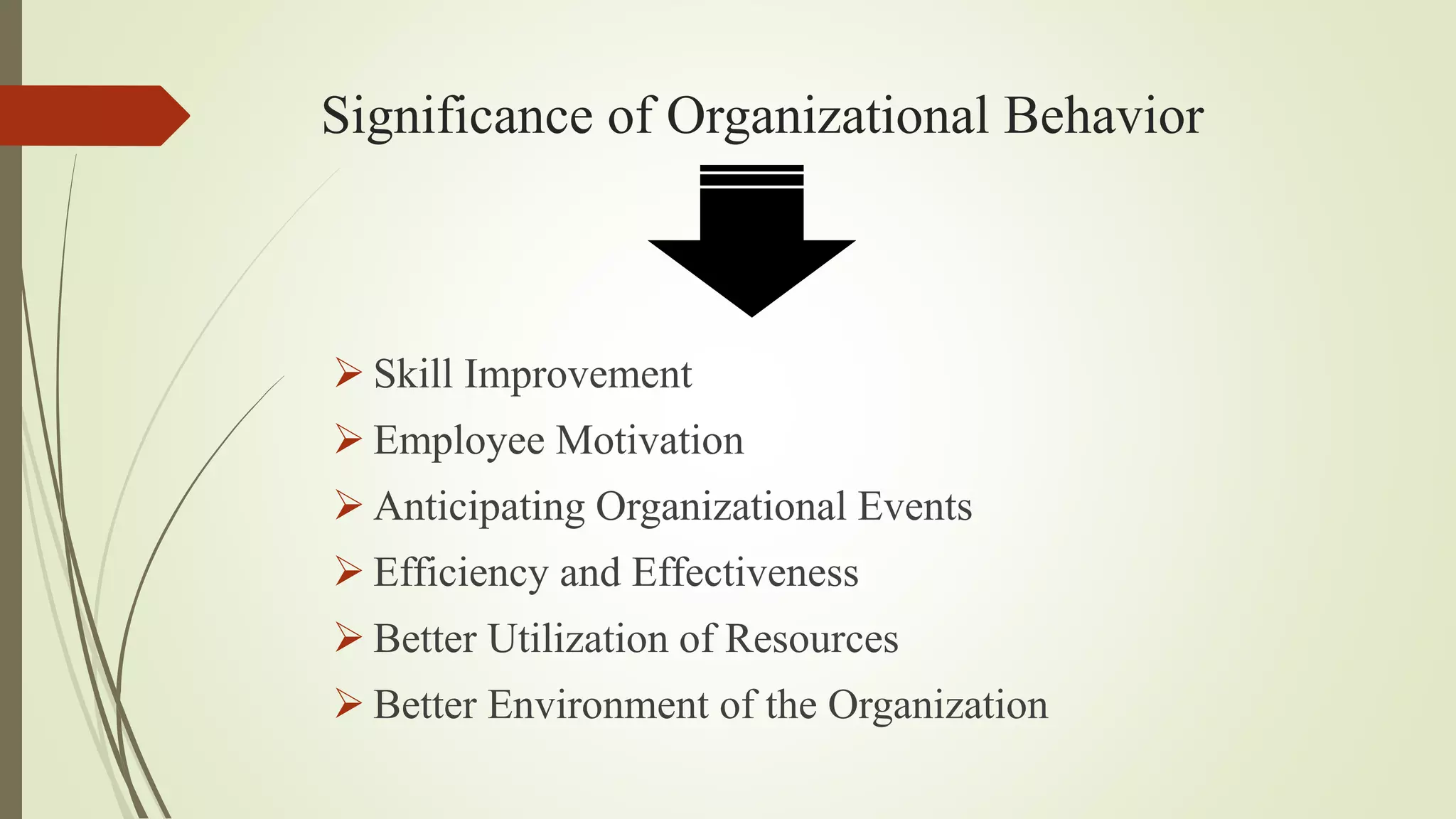


Organizational behavior is the study of human behavior in organizations and the interface between human behavior and the organization itself. It examines key elements like employees, structure, and technology, and draws from theories like classical, neoclassical, and contingency theory. Understanding organizational behavior allows organizations to improve skills, motivate employees, anticipate events, increase efficiency and effectiveness, better utilize resources, and enhance the overall work environment.
The presentation introduces the significance of Organizational Behavior by Mriganka Sekhar Das.
Organizational Behavior studies the interplay of human behavior and organizational settings reflecting on both humans and organizations.
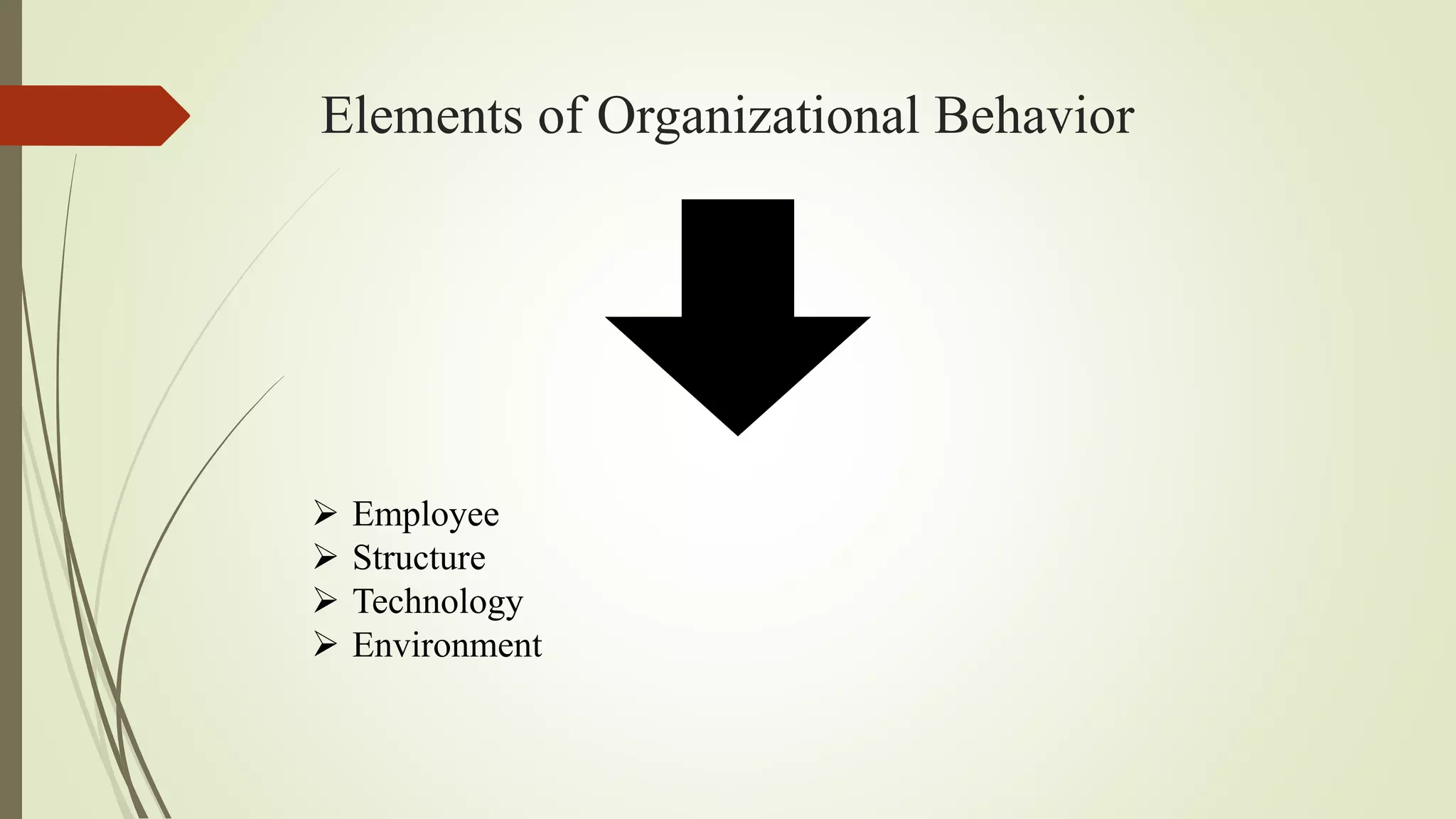
Main elements include Employee, Structure, Technology, and Environment that influence behavior in organizations.
Covers Classical Theory, Neoclassical Theory, and Contingency Theory as foundational theories of organizational behavior.
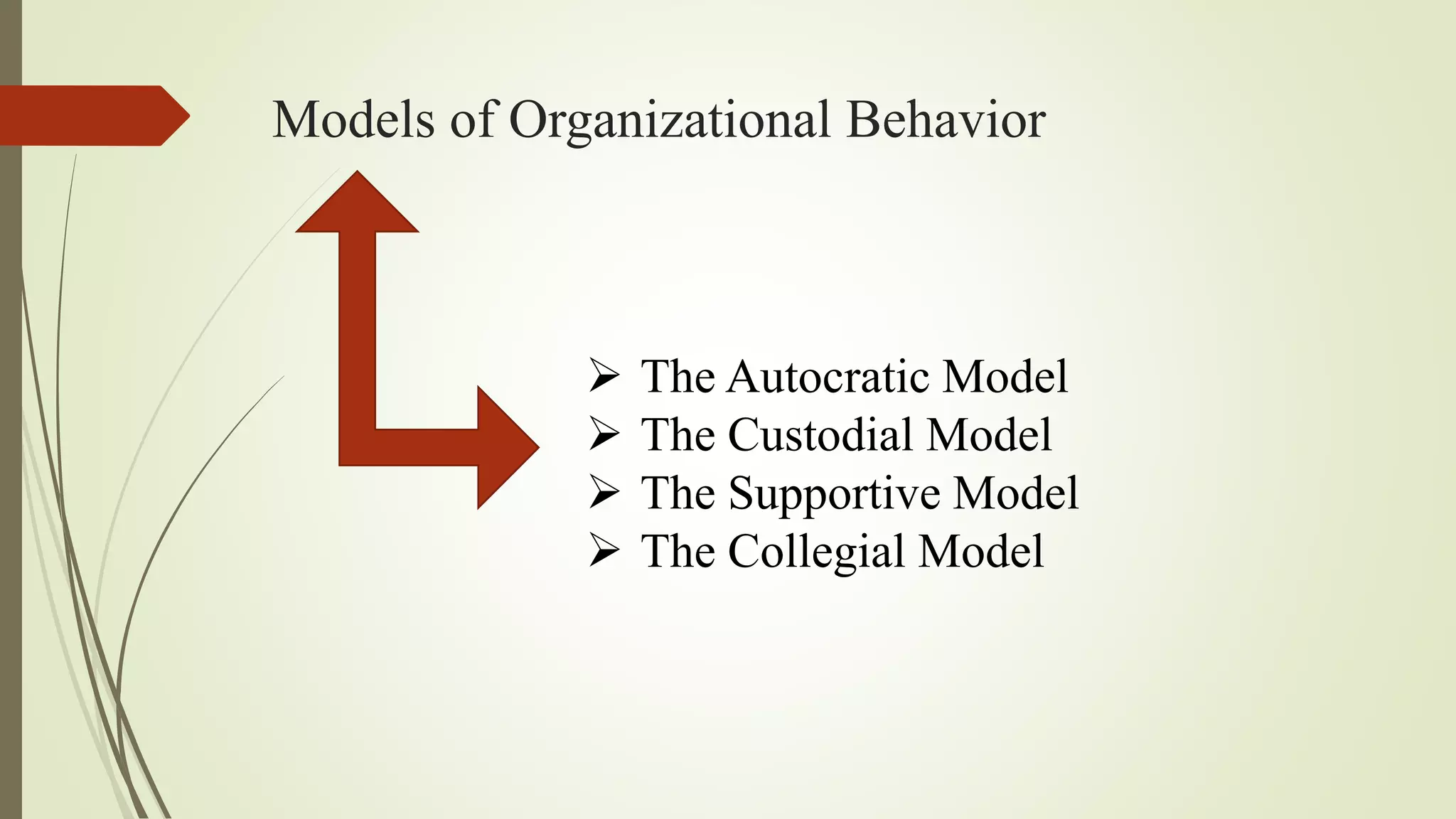
Presents various models of Organizational Behavior including Autocratic, Custodial, Supportive, and Collegial Models.
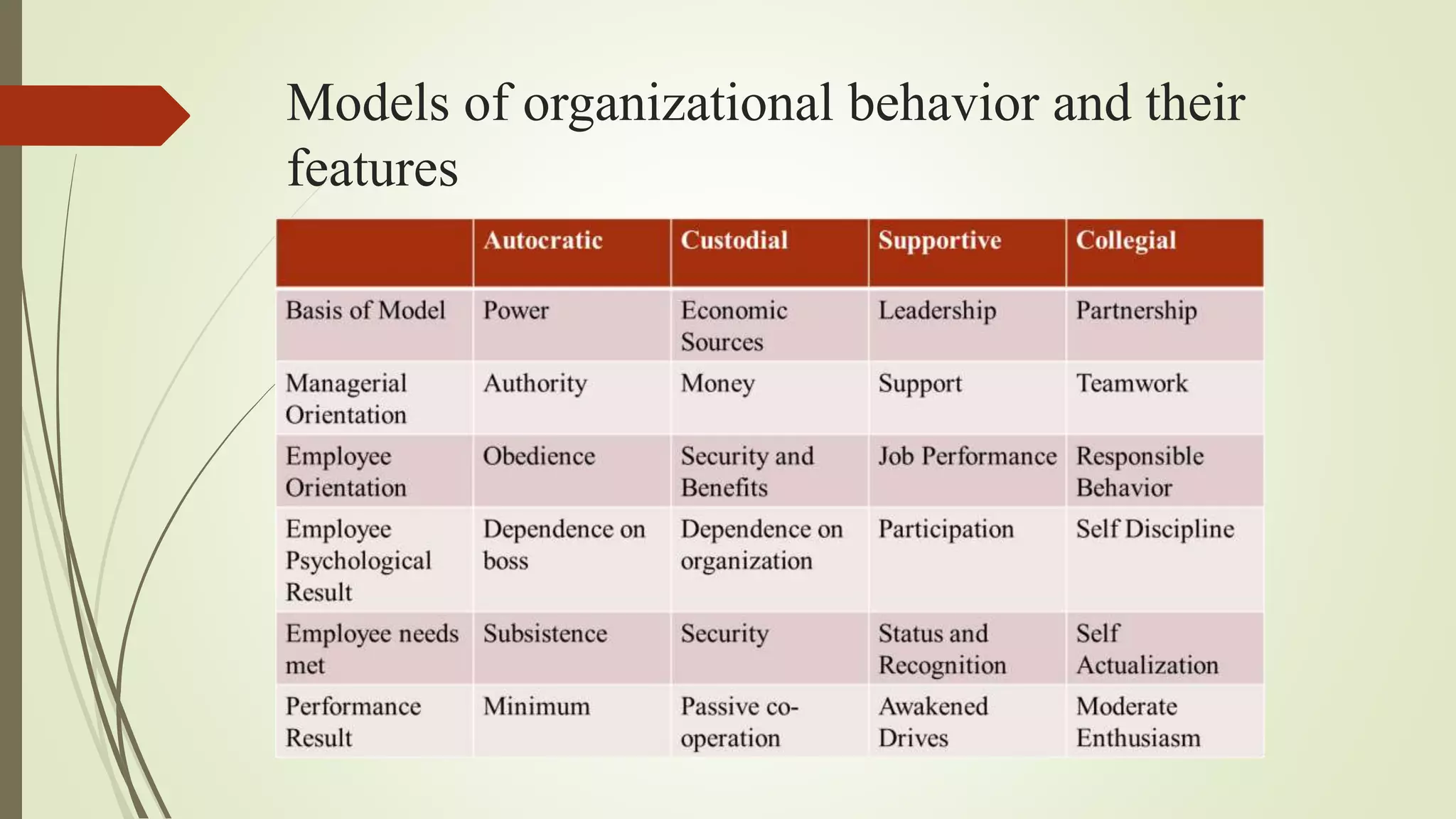
Discusses the features of different models of Organizational Behavior to highlight their unique characteristics.
Emphasizes the significance of Organizational Behavior in skill improvement, motivation, efficiency, and resource utilization.
The presentation concludes with a thank you note, summarizing the insights shared about Organizational Behavior.


