EVIDENCE-BASED
PRACTICE IN NURSING
By: ROMMEL LUIS C. ISRAEL III
"EBP is the integration
of clinical expertise,
patient values, and the
best research
evidence into the
decision making process
for patient care"
(Sackett D, 1996).
•EBP is a problem-solving approach to
decision-making that integrates the best
available scientific evidence with the best
available experiential (patient and
practitioner) evidence, and encourages
critical thinking in the judicious application
of evidence to the care of the individual
patient, patient population or system.
EBP IN NURSING
• Evidence-based practice in nursing involves providing holistic, quality
care based on the most up-to-date research and knowledge rather
than traditional methods, advice from colleagues, or personal beliefs.
• Nurses can expand their knowledge and improve their clinical practice
experience by collecting, processing, and implementing research
findings. Evidence-based practice focuses on what's at the heart of
nursing — your patient. Learn what evidence-based practice in
nursing is, why it's essential, and how to incorporate it into your daily
patient care.
WHY IS EBP IMPORTANT FOR NURSING?
EBP is important because it moves practice from tradition to sound
scientific evidence.
It provides Nurses a process by which questions can be answered.
EBP improves outcomes for patients by making sure the care they
receive is in line with current best practices.
Why Is Evidence-
Based Practice in
Nursing Essential?
(AMERICAN NURSES
ASSOCIATION)
• Implementing evidence-based practice in
nursing bridges the theory-to-practice gap
and delivers innovative patient care using
the most current health care findings.
• The topic of evidence-based practice will
likely come up throughout your nursing
career.
• Its origins trace back to Florence Nightingale.
This iconic founder of modern nursing
gathered data and conclusions regarding the
relationship between unsanitary conditions
and failing health. Its application remains
essential today.
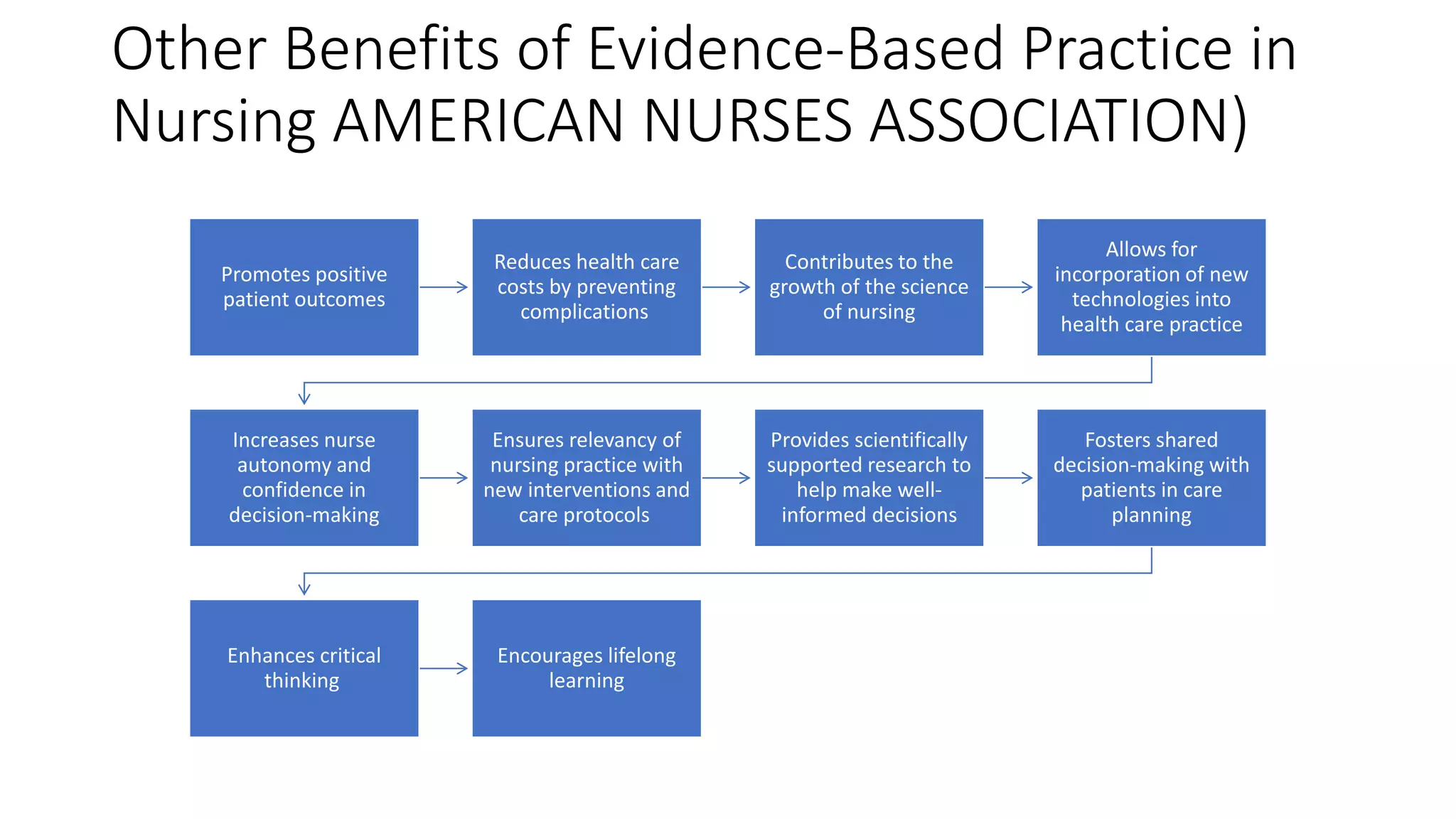
Other Benefits of Evidence-Based Practice in
Nursing AMERICAN NURSES ASSOCIATION)
Promotes positive
patient outcomes
Reduces health care
costs by preventing
complications
Contributes to the
growth of the science
of nursing
Allows for
incorporation of new
technologies into
health care practice
Increases nurse
autonomy and
confidence in
decision-making
Ensures relevancy of
nursing practice with
new interventions and
care protocols
Provides scientifically
supported research to
help make well-
informed decisions
Fosters shared
decision-making with
patients in care
planning
Enhances critical
thinking
Encourages lifelong
learning
EBP IS AN
EXPLICIT
PROCESS
Five Steps to
Implement
Evidence-Based
Practice in Nursing
1. Ask a clear question about the patient's
issue and determine an ultimate goal,
such as improving a procedure to help
their specific condition.
2. Acquire the best evidence by searching
relevant clinical articles from legitimate
sources.
3. Appraise the resources gathered to
determine if the information is valid, of
optimal quality compared to the
evidence levels, and relevant for the
patient.
4. Apply the evidence to clinical practice by
making decisions based on your nursing
expertise and the new information.
5. Assess outcomes to determine if the
treatment was effective and should be
considered for other patients.
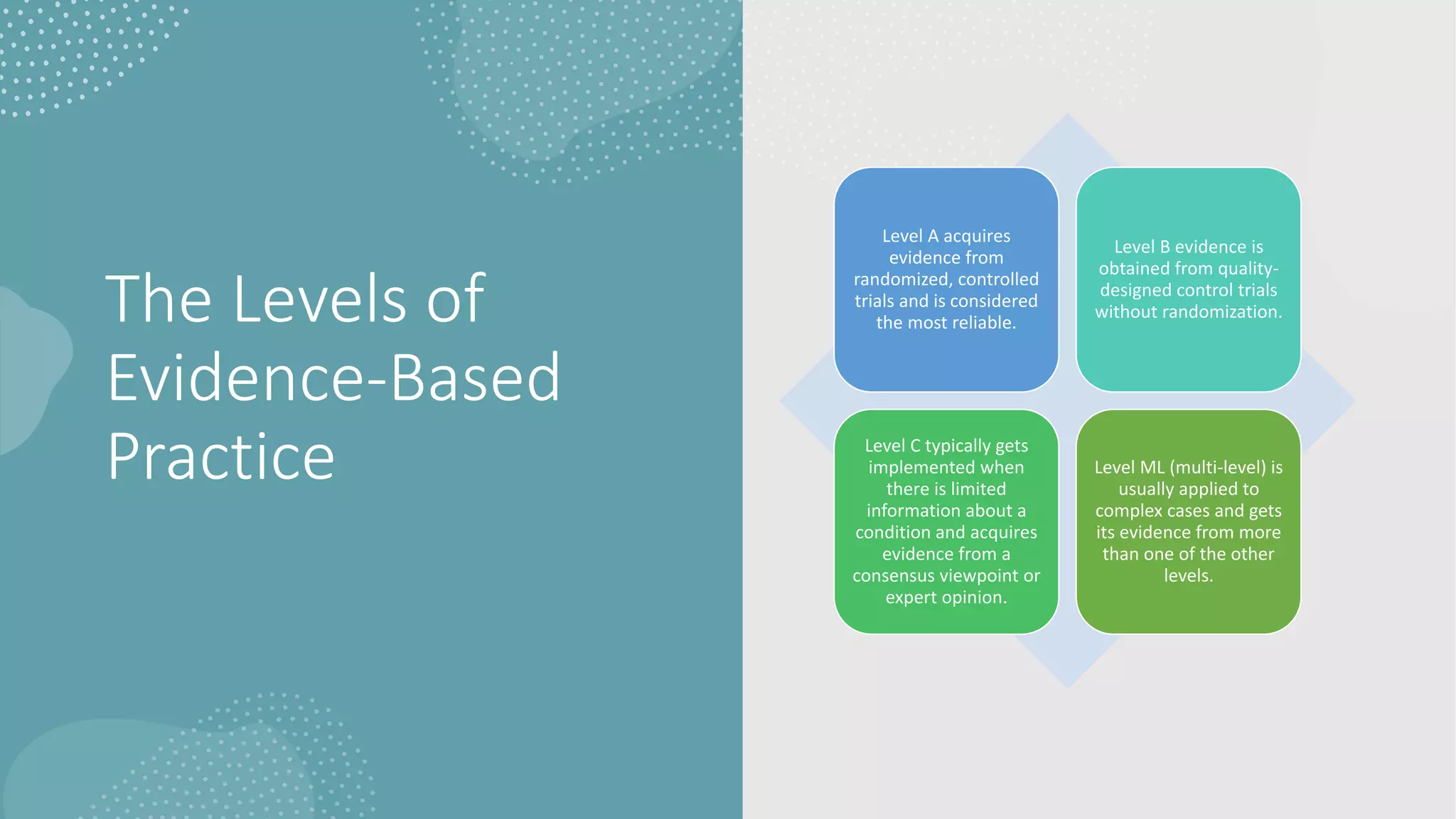
The Levels of
Evidence-Based
Practice
Level A acquires
evidence from
randomized, controlled
trials and is considered
the most reliable.
Level B evidence is
obtained from quality-
designed control trials
without randomization.
Level C typically gets
implemented when
there is limited
information about a
condition and acquires
evidence from a
consensus viewpoint or
expert opinion.
Level ML (multi-level) is
usually applied to
complex cases and gets
its evidence from more
than one of the other
levels.
REFERENCES
• American Nurses Association. (2023, May 5). What Is Evidence-Based
Practice in Nursing? ANA. https://www.nursingworld.org/practice-
policy/nursing-excellence/evidence-based-practice-in-nursing/
• Tsistinas, O. (n.d.). Subject Guides: Johns Hopkins Nursing Evidence-
Based Practice: Home. Guides.upstate.edu.
https://guides.upstate.edu/c.php?g=1023176&p=7411225
•

EVIDENCE-BASED PRACTICE IN NURSING

  • 1.
    EVIDENCE-BASED PRACTICE IN NURSING By:ROMMEL LUIS C. ISRAEL III
  • 2.
    "EBP is theintegration of clinical expertise, patient values, and the best research evidence into the decision making process for patient care" (Sackett D, 1996).
  • 3.
    •EBP is aproblem-solving approach to decision-making that integrates the best available scientific evidence with the best available experiential (patient and practitioner) evidence, and encourages critical thinking in the judicious application of evidence to the care of the individual patient, patient population or system.
  • 4.
    EBP IN NURSING •Evidence-based practice in nursing involves providing holistic, quality care based on the most up-to-date research and knowledge rather than traditional methods, advice from colleagues, or personal beliefs. • Nurses can expand their knowledge and improve their clinical practice experience by collecting, processing, and implementing research findings. Evidence-based practice focuses on what's at the heart of nursing — your patient. Learn what evidence-based practice in nursing is, why it's essential, and how to incorporate it into your daily patient care.
  • 6.
    WHY IS EBPIMPORTANT FOR NURSING? EBP is important because it moves practice from tradition to sound scientific evidence. It provides Nurses a process by which questions can be answered. EBP improves outcomes for patients by making sure the care they receive is in line with current best practices.
  • 7.
    Why Is Evidence- BasedPractice in Nursing Essential? (AMERICAN NURSES ASSOCIATION) • Implementing evidence-based practice in nursing bridges the theory-to-practice gap and delivers innovative patient care using the most current health care findings. • The topic of evidence-based practice will likely come up throughout your nursing career. • Its origins trace back to Florence Nightingale. This iconic founder of modern nursing gathered data and conclusions regarding the relationship between unsanitary conditions and failing health. Its application remains essential today.
  • 8.
    Other Benefits ofEvidence-Based Practice in Nursing AMERICAN NURSES ASSOCIATION) Promotes positive patient outcomes Reduces health care costs by preventing complications Contributes to the growth of the science of nursing Allows for incorporation of new technologies into health care practice Increases nurse autonomy and confidence in decision-making Ensures relevancy of nursing practice with new interventions and care protocols Provides scientifically supported research to help make well- informed decisions Fosters shared decision-making with patients in care planning Enhances critical thinking Encourages lifelong learning
  • 9.
  • 10.
    Five Steps to Implement Evidence-Based Practicein Nursing 1. Ask a clear question about the patient's issue and determine an ultimate goal, such as improving a procedure to help their specific condition. 2. Acquire the best evidence by searching relevant clinical articles from legitimate sources. 3. Appraise the resources gathered to determine if the information is valid, of optimal quality compared to the evidence levels, and relevant for the patient. 4. Apply the evidence to clinical practice by making decisions based on your nursing expertise and the new information. 5. Assess outcomes to determine if the treatment was effective and should be considered for other patients.
  • 11.
    The Levels of Evidence-Based Practice LevelA acquires evidence from randomized, controlled trials and is considered the most reliable. Level B evidence is obtained from quality- designed control trials without randomization. Level C typically gets implemented when there is limited information about a condition and acquires evidence from a consensus viewpoint or expert opinion. Level ML (multi-level) is usually applied to complex cases and gets its evidence from more than one of the other levels.
  • 12.
    REFERENCES • American NursesAssociation. (2023, May 5). What Is Evidence-Based Practice in Nursing? ANA. https://www.nursingworld.org/practice- policy/nursing-excellence/evidence-based-practice-in-nursing/ • Tsistinas, O. (n.d.). Subject Guides: Johns Hopkins Nursing Evidence- Based Practice: Home. Guides.upstate.edu. https://guides.upstate.edu/c.php?g=1023176&p=7411225 •