ERP Human Resources
Module
Explore the comprehensive functionalities of the ERP Human Resources
module. Learn how to set up and manage employee data, performance
evaluations, talent acquisition, and more. Discover the benefits and
challenges of implementing the HR module.
Sean Olabode Badiru
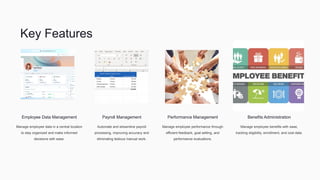
Employee Data Management
Manage employee data in a central location
to stay organized and make informed
decisions with ease.
Payroll Management
Automate and streamline payroll
processing, improving accuracy and
eliminating tedious manual work.
Performance Management
Manage employee performance through
efficient feedback, goal setting, and
performance evaluations.
Benefits Administration
Manage employee benefits with ease,
tracking eligibility, enrollment, and cost data.
Key Features
Talent Acquisition and Succession Planning
Proactive Talent Sourcing
Outline talent needs and goals and
manage job postings, applicant
tracking, and job offers.
Career Development
Empower your workforce to
achieve career goals with training
planning, certifications, and
continuing education tracking.
Succession Planning
Create long-term plans for staffing
needs, promoting from within, and
creating a deep candidate pool.
Engagement and Retention
Use HR data analytics to assess employee engagement, turnover, succession, and workforce gaps.
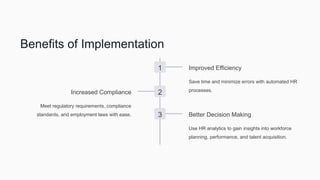
Benefits of Implementation
1 Improved Efficiency
Save time and minimize errors with automated HR
processes.
2
Increased Compliance
Meet regulatory requirements, compliance
standards, and employment laws with ease. 3 Better Decision Making
Use HR analytics to gain insights into workforce
planning, performance, and talent acquisition.
Challenges of
Implementation
1 Cost
ERP systems can be
expensive and require
significant upfront
investment.
2 Integration
Integrating HR data with
other ERP modules
requires careful planning
and effort.
3 User Adoption
Ensure effective training and communication to help employees
adjust to new processes and tools.
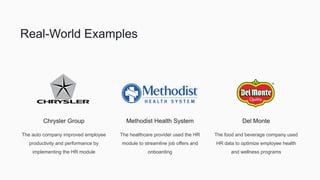
Real-World Examples
Chrysler Group
The auto company improved employee
productivity and performance by
implementing the HR module
Methodist Health System
The healthcare provider used the HR
module to streamline job offers and
onboarding
Del Monte
The food and beverage company used
HR data to optimize employee health
and wellness programs
Employee Self-Service
Benefits
• Employees can view benefits
and update personal
information
• Cuts down on manual data entry
Performance
• Allows employees to give and
receive feedback more easily
• Helps managers provide timely
and constructive feedback
Talent Acquisition
• Referral programs can be
launched to attract new
employees
• Job openings can be
advertised to a broader
audience
Conclusion
The ERP Human Resources module is an essential tool for managing employee data, payroll, performance, training, and talent
acquisition. By leveraging its functionalities, businesses can gain insights to improve workforce planning, achieve compliance, and
make effective decisions backed by HR analytics. While there are challenges to implementation, the benefits are undeniable.
Real-world examples highlight the potential ROI and positive impact on employees' well-being.
Sean Bode Badiru
bodebadiru

ERP Human Resources Module

  • 1.
    ERP Human Resources Module Explorethe comprehensive functionalities of the ERP Human Resources module. Learn how to set up and manage employee data, performance evaluations, talent acquisition, and more. Discover the benefits and challenges of implementing the HR module. Sean Olabode Badiru
  • 2.
    Employee Data Management Manageemployee data in a central location to stay organized and make informed decisions with ease. Payroll Management Automate and streamline payroll processing, improving accuracy and eliminating tedious manual work. Performance Management Manage employee performance through efficient feedback, goal setting, and performance evaluations. Benefits Administration Manage employee benefits with ease, tracking eligibility, enrollment, and cost data. Key Features
  • 3.
    Talent Acquisition andSuccession Planning Proactive Talent Sourcing Outline talent needs and goals and manage job postings, applicant tracking, and job offers. Career Development Empower your workforce to achieve career goals with training planning, certifications, and continuing education tracking. Succession Planning Create long-term plans for staffing needs, promoting from within, and creating a deep candidate pool. Engagement and Retention Use HR data analytics to assess employee engagement, turnover, succession, and workforce gaps.
  • 4.
    Benefits of Implementation 1Improved Efficiency Save time and minimize errors with automated HR processes. 2 Increased Compliance Meet regulatory requirements, compliance standards, and employment laws with ease. 3 Better Decision Making Use HR analytics to gain insights into workforce planning, performance, and talent acquisition.
  • 5.
    Challenges of Implementation 1 Cost ERPsystems can be expensive and require significant upfront investment. 2 Integration Integrating HR data with other ERP modules requires careful planning and effort. 3 User Adoption Ensure effective training and communication to help employees adjust to new processes and tools.
  • 6.
    Real-World Examples Chrysler Group Theauto company improved employee productivity and performance by implementing the HR module Methodist Health System The healthcare provider used the HR module to streamline job offers and onboarding Del Monte The food and beverage company used HR data to optimize employee health and wellness programs
  • 7.
    Employee Self-Service Benefits • Employeescan view benefits and update personal information • Cuts down on manual data entry Performance • Allows employees to give and receive feedback more easily • Helps managers provide timely and constructive feedback Talent Acquisition • Referral programs can be launched to attract new employees • Job openings can be advertised to a broader audience
  • 8.
    Conclusion The ERP HumanResources module is an essential tool for managing employee data, payroll, performance, training, and talent acquisition. By leveraging its functionalities, businesses can gain insights to improve workforce planning, achieve compliance, and make effective decisions backed by HR analytics. While there are challenges to implementation, the benefits are undeniable. Real-world examples highlight the potential ROI and positive impact on employees' well-being.
  • 9.