ERP Implementation
Challenges and
Troubleshooting
Implementing an ERP system can be challenging. Learn about common
issues and troubleshooting techniques to ensure a smooth
implementation process.
Sean Olabode Badiru
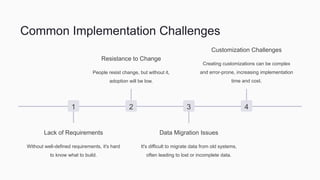
Common Implementation Challenges
1
Lack of Requirements
Without well-defined requirements, it's hard
to know what to build.
2
Resistance to Change
People resist change, but without it,
adoption will be low.
3
Data Migration Issues
It's difficult to migrate data from old systems,
often leading to lost or incomplete data.
4
Customization Challenges
Creating customizations can be complex
and error-prone, increasing implementation
time and cost.
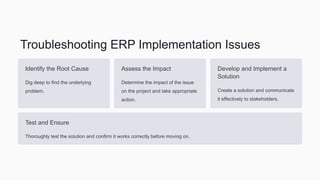
Troubleshooting ERP Implementation Issues
Identify the Root Cause
Dig deep to find the underlying
problem.
Assess the Impact
Determine the impact of the issue
on the project and take appropriate
action.
Develop and Implement a
Solution
Create a solution and communicate
it effectively to stakeholders.
Test and Ensure
Thoroughly test the solution and confirm it works correctly before moving on.
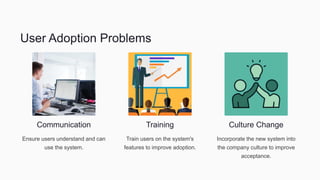
User Adoption Problems
Communication
Ensure users understand and can
use the system.
Training
Train users on the system's
features to improve adoption.
Culture Change
Incorporate the new system into
the company culture to improve
acceptance.
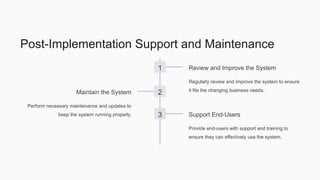
Post-Implementation Support and Maintenance
1 Review and Improve the System
Regularly review and improve the system to ensure
it fits the changing business needs.
2
Maintain the System
Perform necessary maintenance and updates to
keep the system running properly. 3 Support End-Users
Provide end-users with support and training to
ensure they can effectively use the system.
Best Practices
Plan Ahead
Create a plan and communicate it
to stakeholders.
Involve All Parties
Involve all parties during the
implementation process, including
end-users and management.
Test, Test, Test
Thoroughly test the system before
release to catch any issues early
on.
Be Patient
ERP implementation takes time and patience. Don't get discouraged and stay focused on the end goal.
Conclusion
Implementing an ERP system can be challenging, but with the right approach, it can be a success. Remember to address
common challenges, troubleshoot issues effectively, and follow best practices to ensure a smooth implementation process.
Sean Bode Badiru
bodebadiru

ERP Implementation Challenges and Troubleshooting

  • 1.
    ERP Implementation Challenges and Troubleshooting Implementingan ERP system can be challenging. Learn about common issues and troubleshooting techniques to ensure a smooth implementation process. Sean Olabode Badiru
  • 2.
    Common Implementation Challenges 1 Lackof Requirements Without well-defined requirements, it's hard to know what to build. 2 Resistance to Change People resist change, but without it, adoption will be low. 3 Data Migration Issues It's difficult to migrate data from old systems, often leading to lost or incomplete data. 4 Customization Challenges Creating customizations can be complex and error-prone, increasing implementation time and cost.
  • 3.
    Troubleshooting ERP ImplementationIssues Identify the Root Cause Dig deep to find the underlying problem. Assess the Impact Determine the impact of the issue on the project and take appropriate action. Develop and Implement a Solution Create a solution and communicate it effectively to stakeholders. Test and Ensure Thoroughly test the solution and confirm it works correctly before moving on.
  • 4.
    User Adoption Problems Communication Ensureusers understand and can use the system. Training Train users on the system's features to improve adoption. Culture Change Incorporate the new system into the company culture to improve acceptance.
  • 5.
    Post-Implementation Support andMaintenance 1 Review and Improve the System Regularly review and improve the system to ensure it fits the changing business needs. 2 Maintain the System Perform necessary maintenance and updates to keep the system running properly. 3 Support End-Users Provide end-users with support and training to ensure they can effectively use the system.
  • 6.
    Best Practices Plan Ahead Createa plan and communicate it to stakeholders. Involve All Parties Involve all parties during the implementation process, including end-users and management. Test, Test, Test Thoroughly test the system before release to catch any issues early on. Be Patient ERP implementation takes time and patience. Don't get discouraged and stay focused on the end goal.
  • 7.
    Conclusion Implementing an ERPsystem can be challenging, but with the right approach, it can be a success. Remember to address common challenges, troubleshoot issues effectively, and follow best practices to ensure a smooth implementation process.
  • 8.