M a n a g e m e n t I n f o r m a t i o n S y s t e m
S u b m i t t e d To P r e s e n t e d B y
N . V. K U M A R A S H U T O S H PAT H A K ( 1 8 )
H I M A N S H U S A H U ( 1 9 )
1 5 T H B a t c h
EXECUTIVE INFORMATION SYSTEM
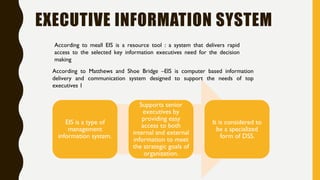
EIS is a type of
management
information system.
Supports senior
executives by
providing easy
access to both
internal and external
information to meet
the strategic goals of
organization.
It is considered to
be a specialized
form of DSS.
According to meall EIS is a resource tool : a system that delivers rapid
access to the selected key information executives need for the decision
making
According to Matthews and Shoe Bridge –EIS is computer based information
delivery and communication system designed to support the needs of top
executives 1
FEATURES OF EXECUTIVE INFORMATION SYSTEM
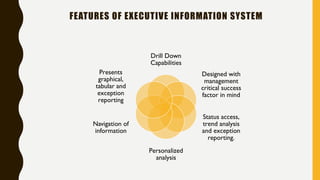
Drill Down
Capabilities
Designed with
management
critical success
factor in mind
Status access,
trend analysis
and exception
reporting.
Personalized
analysis
Navigation of
information
Presents
graphical,
tabular and
exception
reporting
COMPONENTS OF EIS
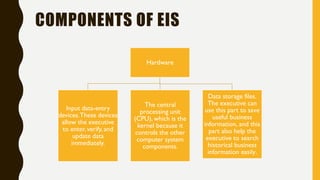
Hardware
Input data-entry
devices.These devices
allow the executive
to enter, verify, and
update data
immediately.
The central
processing unit
(CPU), which is the
kernel because it
controls the other
computer system
components.
Data storage files.
The executive can
use this part to save
useful business
information, and this
part also help the
executive to search
historical business
information easily.
CONTINUED…
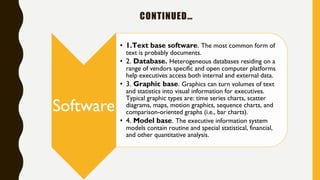
Software
• 1.Text base software. The most common form of
text is probably documents.
• 2. Database. Heterogeneous databases residing on a
range of vendors specific and open computer platforms
help executives access both internal and external data.
• 3. Graphic base. Graphics can turn volumes of text
and statistics into visual information for executives.
Typical graphic types are: time series charts, scatter
diagrams, maps, motion graphics, sequence charts, and
comparison-oriented graphs (i.e., bar charts).
• 4. Model base. The executive information system
models contain routine and special statistical, financial,
and other quantitative analysis.
CONTINUED…
• Interface
An EIS needs to be efficient to retrieve relevant data for decision makers, so the interface is very
important. Several types of interfaces can be available to the EIS structure, such as scheduled
reports, questions & answers, menu driven, command language, natural language, and input &
output.
• Telecommunication
As decentralizing is becoming the current trend in companies, telecommunications will play a
pivotal role in networked information systems.Transmitting data from one place to another has
become crucial for a reliable network. In addition, telecommunications within an EIS can
accelerate the need for access to distributed data.
Factors Influencing The Functioning
Of Executive Systems:
• Organization leis and render the necessary supporting functions to the senior
managers setup :
• Policies and procedures followed
• Ex. if company believes in centralization of authority and hesitates to delegate authority
then EIS will be provided for the top managers in the organization.
• Internal and external factors :
• Connect directly or indirectly with the organization
• Ex. if matters relating to compliance of tax, audit and other statutory matters are
handled by the senior managers only then EIS will be targeted to them alone
• On the other hand if clerical labour is also involved in the same procedures EIS they
will also be able to access
The success of executive information
system lies in two issues.
• Firstly : The information should properly reach the concerned
executives.
• Secondly : They should accord importance and act upon it.Above all
whatever they say must be given due consideration by
the decision making authority.
Applications Of EIS
Manufacturing :• Basically, marketing is the transformation of the raw materials into finished
goods for sale, or intermediate processes involving the production
or finishing of semi-manufactures.
Marketing :• In an organization, marketing executives’ role is to create the future. The main
duty is managing available marketing resources to create.
Financial :• A financial analysis is one of the most important steps to companies today. EIS
enables executives to focus more on the long-term basis of current year and
beyond.
Executive needs to use financial ratios and cash flow analysis to estimate the trend
and make capital investment decisions.
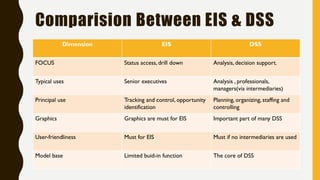
Comparision Between EIS & DSS
Dimension EIS DSS
FOCUS Status access, drill down Analysis, decision support.
Typical uses Senior executives Analysis , professionals,
managers(via intermediaries)
Principal use Tracking and control, opportunity
identification
Planning, organizing, staffing and
controlling
Graphics Graphics are must for EIS Important part of many DSS
User-friendliness Must for EIS Must if no intermediaries are used
Model base Limited buid-in function The core of DSS
Executive  information sysytem

Executive information sysytem

  • 1.
    M a na g e m e n t I n f o r m a t i o n S y s t e m S u b m i t t e d To P r e s e n t e d B y N . V. K U M A R A S H U T O S H PAT H A K ( 1 8 ) H I M A N S H U S A H U ( 1 9 ) 1 5 T H B a t c h
  • 2.
    EXECUTIVE INFORMATION SYSTEM EISis a type of management information system. Supports senior executives by providing easy access to both internal and external information to meet the strategic goals of organization. It is considered to be a specialized form of DSS. According to meall EIS is a resource tool : a system that delivers rapid access to the selected key information executives need for the decision making According to Matthews and Shoe Bridge –EIS is computer based information delivery and communication system designed to support the needs of top executives 1
  • 3.
    FEATURES OF EXECUTIVEINFORMATION SYSTEM Drill Down Capabilities Designed with management critical success factor in mind Status access, trend analysis and exception reporting. Personalized analysis Navigation of information Presents graphical, tabular and exception reporting
  • 4.
    COMPONENTS OF EIS Hardware Inputdata-entry devices.These devices allow the executive to enter, verify, and update data immediately. The central processing unit (CPU), which is the kernel because it controls the other computer system components. Data storage files. The executive can use this part to save useful business information, and this part also help the executive to search historical business information easily.
  • 5.
    CONTINUED… Software • 1.Text basesoftware. The most common form of text is probably documents. • 2. Database. Heterogeneous databases residing on a range of vendors specific and open computer platforms help executives access both internal and external data. • 3. Graphic base. Graphics can turn volumes of text and statistics into visual information for executives. Typical graphic types are: time series charts, scatter diagrams, maps, motion graphics, sequence charts, and comparison-oriented graphs (i.e., bar charts). • 4. Model base. The executive information system models contain routine and special statistical, financial, and other quantitative analysis.
  • 6.
    CONTINUED… • Interface An EISneeds to be efficient to retrieve relevant data for decision makers, so the interface is very important. Several types of interfaces can be available to the EIS structure, such as scheduled reports, questions & answers, menu driven, command language, natural language, and input & output. • Telecommunication As decentralizing is becoming the current trend in companies, telecommunications will play a pivotal role in networked information systems.Transmitting data from one place to another has become crucial for a reliable network. In addition, telecommunications within an EIS can accelerate the need for access to distributed data.
  • 7.
    Factors Influencing TheFunctioning Of Executive Systems: • Organization leis and render the necessary supporting functions to the senior managers setup : • Policies and procedures followed • Ex. if company believes in centralization of authority and hesitates to delegate authority then EIS will be provided for the top managers in the organization. • Internal and external factors : • Connect directly or indirectly with the organization • Ex. if matters relating to compliance of tax, audit and other statutory matters are handled by the senior managers only then EIS will be targeted to them alone • On the other hand if clerical labour is also involved in the same procedures EIS they will also be able to access
  • 9.
    The success ofexecutive information system lies in two issues. • Firstly : The information should properly reach the concerned executives. • Secondly : They should accord importance and act upon it.Above all whatever they say must be given due consideration by the decision making authority.
  • 10.
    Applications Of EIS Manufacturing:• Basically, marketing is the transformation of the raw materials into finished goods for sale, or intermediate processes involving the production or finishing of semi-manufactures. Marketing :• In an organization, marketing executives’ role is to create the future. The main duty is managing available marketing resources to create. Financial :• A financial analysis is one of the most important steps to companies today. EIS enables executives to focus more on the long-term basis of current year and beyond. Executive needs to use financial ratios and cash flow analysis to estimate the trend and make capital investment decisions.
  • 11.
    Comparision Between EIS& DSS Dimension EIS DSS FOCUS Status access, drill down Analysis, decision support. Typical uses Senior executives Analysis , professionals, managers(via intermediaries) Principal use Tracking and control, opportunity identification Planning, organizing, staffing and controlling Graphics Graphics are must for EIS Important part of many DSS User-friendliness Must for EIS Must if no intermediaries are used Model base Limited buid-in function The core of DSS