The document provides an overview of Enterprise Resource Planning (ERP), detailing its definition, goals, modules, and the advantages and disadvantages of implementation. It emphasizes the importance of managing resources effectively to acquire, retain, and grow customers while integrating business functions. The conclusion highlights the necessity of balancing people, processes, and technology for successful ERP implementation.
INTRODUCTION
E.R.P. stands for-
E-AnEnterprise is a group of people with a common goal,
which has certain resources at its disposal to achieve that
goal.
R-Resources included are money, and all other things that are
required to run the enterprise.
P-Planning is done to ensure that nothing goes wrong.
4.
BREIF DESCRIPTION OFERP
ENTERPRISE RESOURSE PLANNING
is business process management
software
.It allows an
organization to use a system of
integrated applications.
. It manage the business and
automate many back office functions
related to technology and human
5.
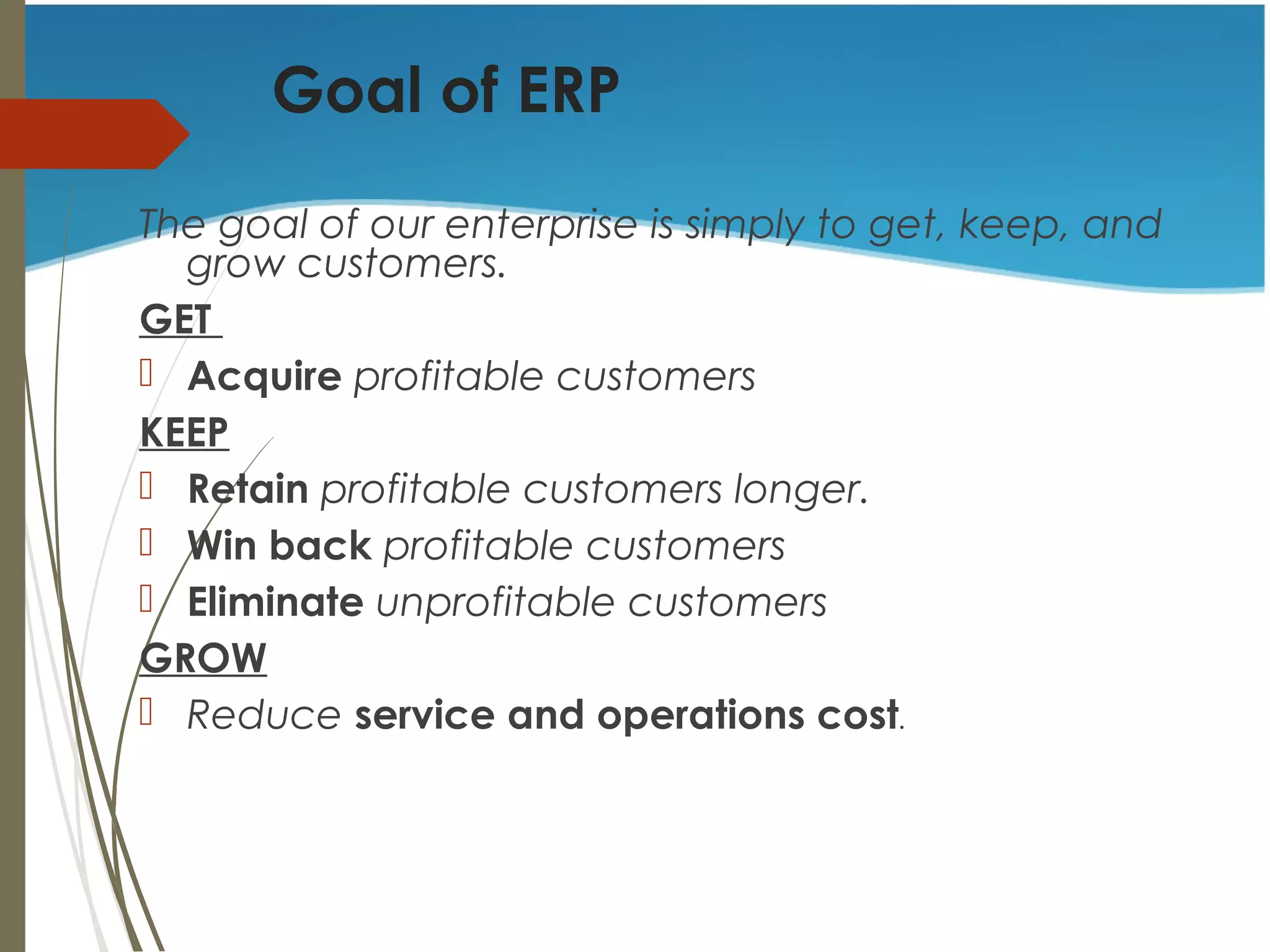
Goal of ERP
Thegoal of our enterprise is simply to get, keep, and
grow customers.
GET
Acquire profitable customers
KEEP
Retain profitable customers longer.
Win back profitable customers
Eliminate unprofitable customers
GROW
Reduce service and operations cost.
6.
Why ERP?
•ERP offerssolutions for all business
functions
•Packages available for organizations
of all sizes and types
7.
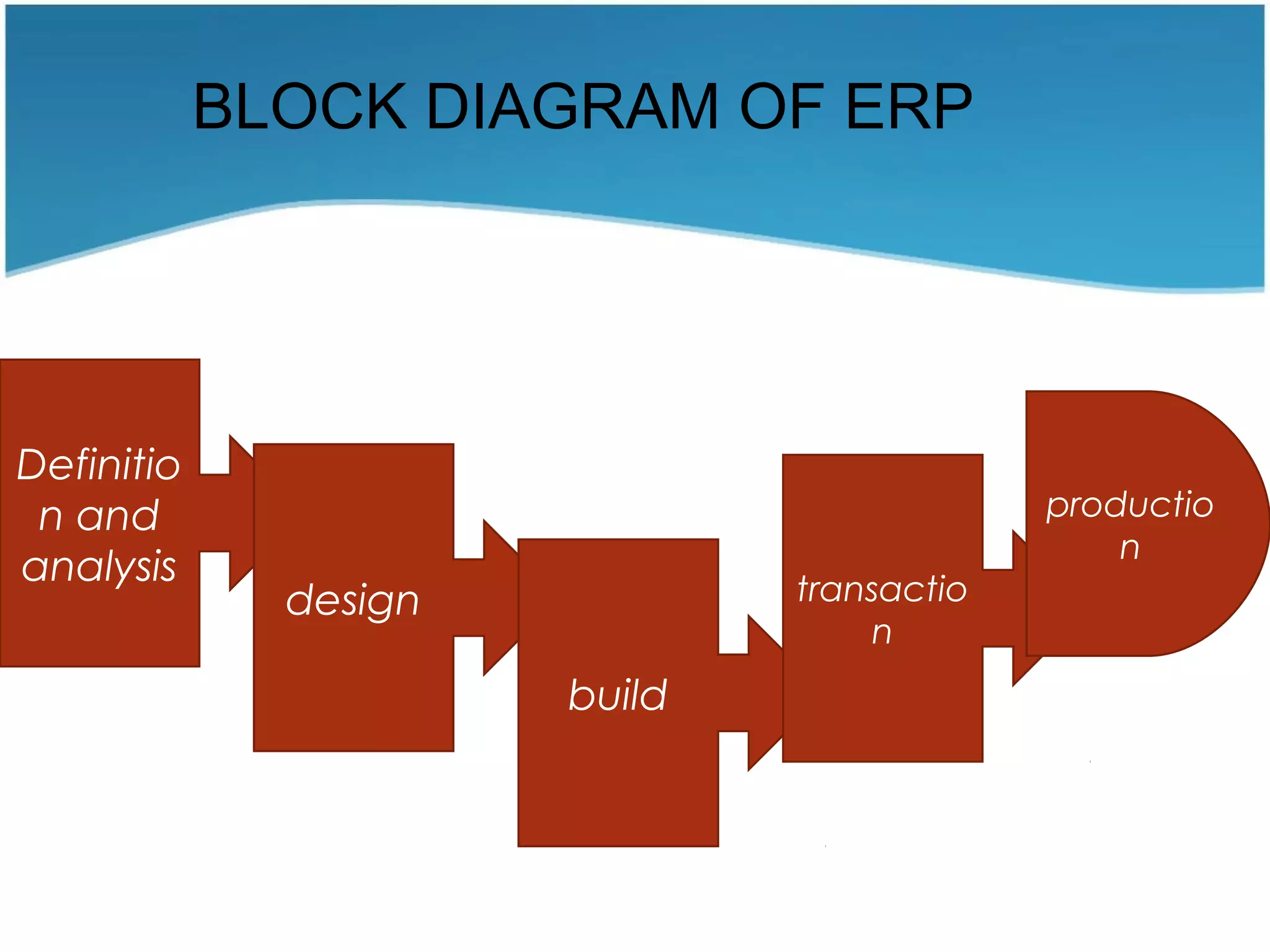
BLOCK DIAGRAM OFERP
Definitio
n and
analysis
design
build
transactio
n
productio
n
Conclusion
•To successfully implement;a proper
mix of people, processes and
technology should be maintained
• Technology is an enabler, not the
driver (it is there to assist the
organization to achieve business
goals)








![Erp Enterprise Resource Planning[1]](https://cdn.slidesharecdn.com/ss_thumbnails/erpenterpriseresourceplanning1-1223721554705020-8-thumbnail.jpg?width=640&height=640&fit=bounds)


