Viruses cause…
 Cell death (cytocidal effect)
Eg: Poliovirus.
 Cellular proliferation
 Eg:Molluscum contagiosum.
 Malignant transformation
 Eg:Oncogenic viruses.
 Some virus and host cell enter into a peaceful
coexistence-’Steady state infection’.
 Seen in tissue culture
 Viral infection of cells leads to readily observable
cellular changes called cytopathic effects
 Enteroviruses- crenation of cells and degeneration
of cell sheet HEMA
 Measles- syncytium formation
 Adenovirus – bunch of grapes
 Herpes virus – discrete focal degeneration
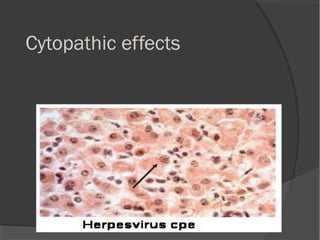
Cytopathic effects
Lead to observable cellularLead to observable cellular
changes in tissue culture.changes in tissue culture.
Inclusion bodies….(SN,MCQs)
Structures with distinct size, shape, location and
staining properties that can be demonstrated in virus
infected cells under the light microscope.
CLASSIFICATION
They may be situated at:
 Cytoplasm (intracytoplasmic)- pox virus
 Nucleus (intranuclear)- herpes
 Both - Measles
Appearance of Inclusion body….
• They are generally acidophilic.
• Seen as pink structures when stained with giemsa or
eosin methylene blue.
• Some viruses form basophilic inclusions.
Eg: Adenovirus.
General features…
 May be crystalline aggregates of
virions.
Made of virus antigens present at the
site of virus synthesis.
Represent degenerative changes
produced by viral infection.
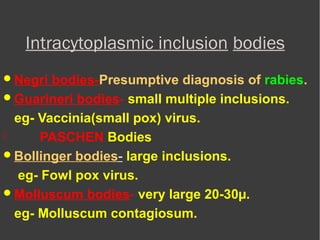
Intracytoplasmic inclusion bodies
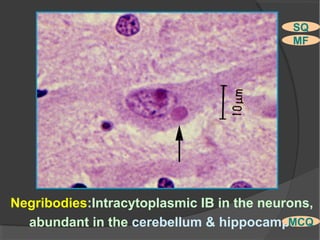
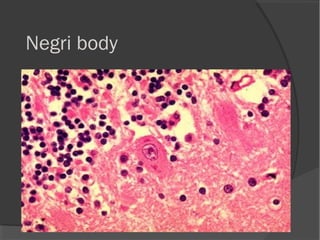
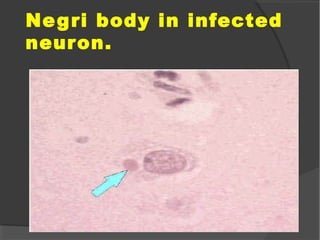
Negri bodies-Presumptive diagnosis of rabies.
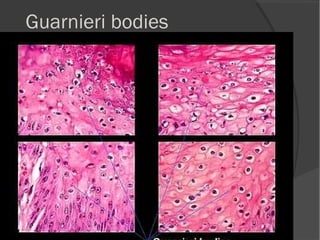
Guarineri bodies- small multiple inclusions.
eg- Vaccinia(small pox) virus.
 PASCHEN Bodies
Bollinger bodies- large inclusions.
eg- Fowl pox virus.
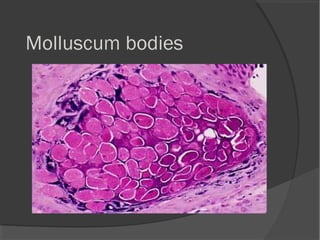
Molluscum bodies- very large 20-30µ.
eg- Molluscum contagiosum.
Negribodies:Intracytoplasmic IB in the neurons,
abundant in the cerebellum & hippocampusMCQ
SQ
MF
Negri body
Negri body in infected
neuron.
Guarnieri bodies- small multiple
inclusions.
eg- Vaccinia(small pox) virus.
Guarnieri bodies
Molluscum bodies- very large 20-30µ.
eg- Molluscum contagiosum.
Molluscum bodies
Intranuclear inclusion bodies
Classified by Cowdry- 2types
Cowdry type A inclusions: variable and
granular
Eg-herpesvirus, yellow fever virus.
Cowdry type B inclusions: circumscribed and
multiple
Eg- Adenovirus, Poliovirus.

Inclusion bodies

  • 1.
    Viruses cause…  Celldeath (cytocidal effect) Eg: Poliovirus.  Cellular proliferation  Eg:Molluscum contagiosum.  Malignant transformation  Eg:Oncogenic viruses.  Some virus and host cell enter into a peaceful coexistence-’Steady state infection’.
  • 2.
     Seen intissue culture  Viral infection of cells leads to readily observable cellular changes called cytopathic effects  Enteroviruses- crenation of cells and degeneration of cell sheet HEMA  Measles- syncytium formation  Adenovirus – bunch of grapes  Herpes virus – discrete focal degeneration
  • 3.
    Cytopathic effects Lead toobservable cellularLead to observable cellular changes in tissue culture.changes in tissue culture.
  • 4.
    Inclusion bodies….(SN,MCQs) Structures withdistinct size, shape, location and staining properties that can be demonstrated in virus infected cells under the light microscope. CLASSIFICATION They may be situated at:  Cytoplasm (intracytoplasmic)- pox virus  Nucleus (intranuclear)- herpes  Both - Measles
  • 5.
    Appearance of Inclusionbody…. • They are generally acidophilic. • Seen as pink structures when stained with giemsa or eosin methylene blue. • Some viruses form basophilic inclusions. Eg: Adenovirus.
  • 6.
    General features…  Maybe crystalline aggregates of virions. Made of virus antigens present at the site of virus synthesis. Represent degenerative changes produced by viral infection.
  • 7.
    Intracytoplasmic inclusion bodies Negribodies-Presumptive diagnosis of rabies. Guarineri bodies- small multiple inclusions. eg- Vaccinia(small pox) virus.  PASCHEN Bodies Bollinger bodies- large inclusions. eg- Fowl pox virus. Molluscum bodies- very large 20-30µ. eg- Molluscum contagiosum.
  • 8.
    Negribodies:Intracytoplasmic IB inthe neurons, abundant in the cerebellum & hippocampusMCQ SQ MF
  • 9.
  • 10.
    Negri body ininfected neuron.
  • 11.
    Guarnieri bodies- smallmultiple inclusions. eg- Vaccinia(small pox) virus.
  • 12.
  • 13.
    Molluscum bodies- verylarge 20-30µ. eg- Molluscum contagiosum.
  • 14.
  • 15.
    Intranuclear inclusion bodies Classifiedby Cowdry- 2types Cowdry type A inclusions: variable and granular Eg-herpesvirus, yellow fever virus. Cowdry type B inclusions: circumscribed and multiple Eg- Adenovirus, Poliovirus.