Dr.T.V.Rao MD
EPSTEIN-BARR VIRUS
DR.T.V.RAO MD 1
EPSTEIN-BARR VIRUS : HISTORY
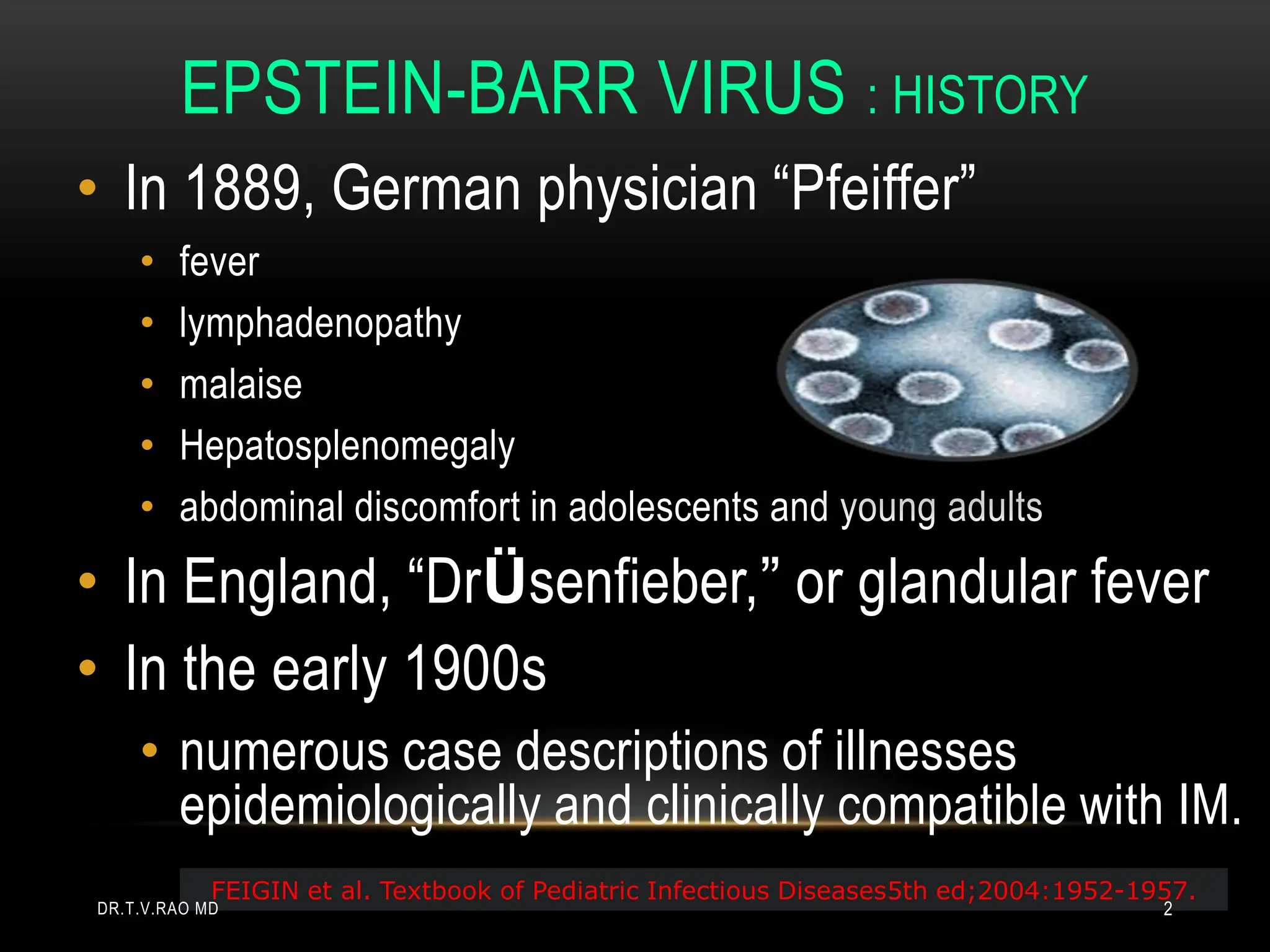
• In 1889, German physician “Pfeiffer”
• fever
• lymphadenopathy
• malaise
• Hepatosplenomegaly
• abdominal discomfort in adolescents and young adults
• In England, “DrÜsenfieber,” or glandular fever
• In the early 1900s
• numerous case descriptions of illnesses
epidemiologically and clinically compatible with IM.
FEIGIN et al. Textbook of Pediatric Infectious Diseases5th ed;2004:1952-1957.
DR.T.V.RAO MD 2
EPSTEIN-BARR VIRUS : HISTORY
• In 1920, Sprunt and Evans
• published cases of spontaneously resolving acute
leukemia associated with blast-like cells in the
blood
• In 1923, Downey and McKinlay
• detailed description of the lymphocyte morphology.
• In 1932, Paul and Bunnell
• Identified heterophile antibodies in serum during
acute IM.
FEIGIN et al. Textbook of Pediatric Infectious Diseases5th ed;2004:1952-1957.
DR.T.V.RAO MD 3
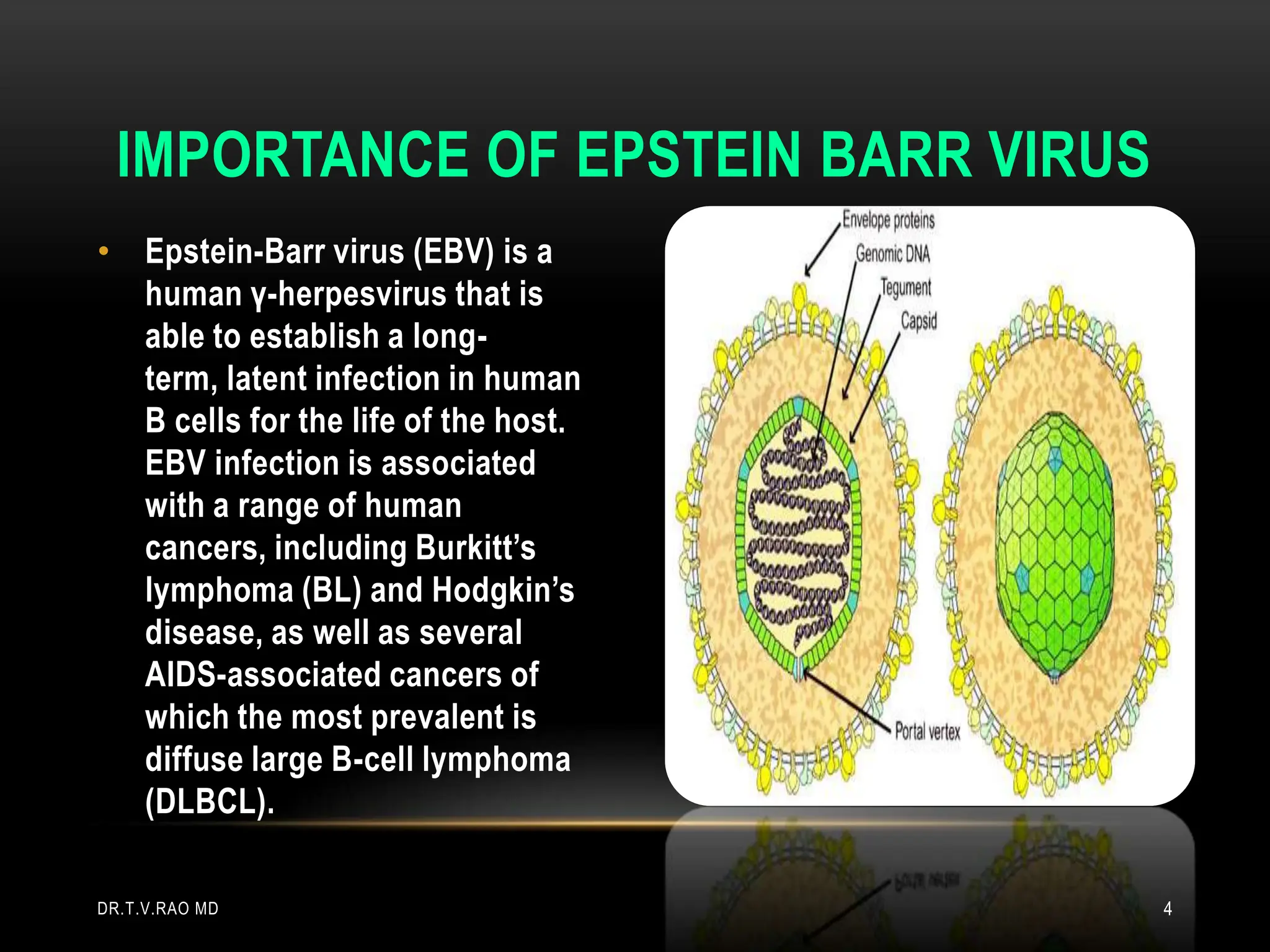
• Epstein-Barr virus (EBV) is a
human γ-herpesvirus that is
able to establish a long-
term, latent infection in human
B cells for the life of the host.
EBV infection is associated
with a range of human
cancers, including Burkitt’s
lymphoma (BL) and Hodgkin’s
disease, as well as several
AIDS-associated cancers of
which the most prevalent is
diffuse large B-cell lymphoma
(DLBCL).
IMPORTANCE OF EPSTEIN BARR VIRUS
DR.T.V.RAO MD 4
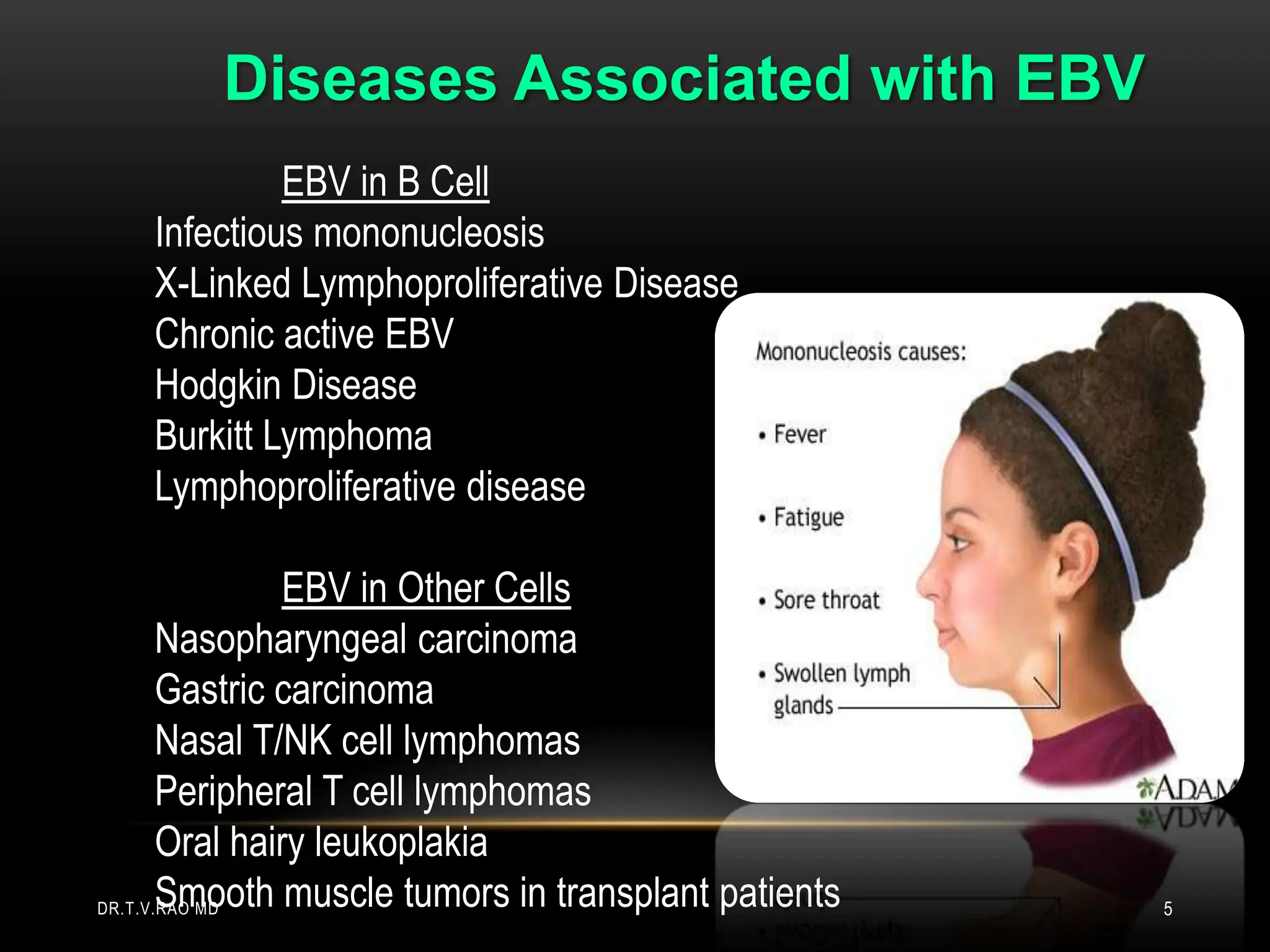
EBV in B Cell
Infectious mononucleosis
X-Linked Lymphoproliferative Disease
Chronic active EBV
Hodgkin Disease
Burkitt Lymphoma
Lymphoproliferative disease
EBV in Other Cells
Nasopharyngeal carcinoma
Gastric carcinoma
Nasal T/NK cell lymphomas
Peripheral T cell lymphomas
Oral hairy leukoplakia
Smooth muscle tumors in transplant patients
Diseases Associated with EBV
DR.T.V.RAO MD 5
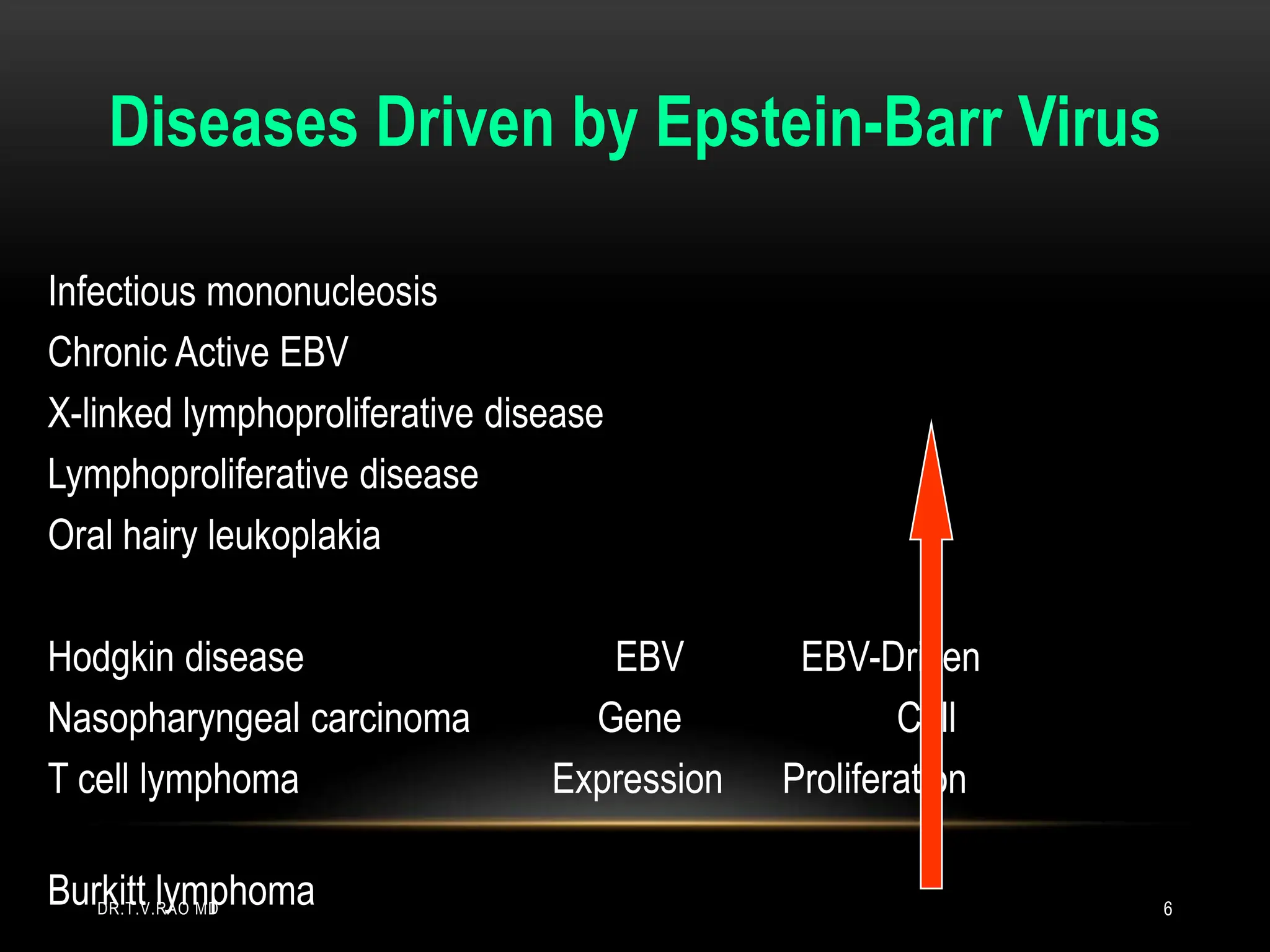
Diseases Driven by Epstein-Barr Virus
Infectious mononucleosis
Chronic Active EBV
X-linked lymphoproliferative disease
Lymphoproliferative disease
Oral hairy leukoplakia
Hodgkin disease EBV EBV-Driven
Nasopharyngeal carcinoma Gene Cell
T cell lymphoma Expression Proliferation
Burkitt lymphoma
DR.T.V.RAO MD 6
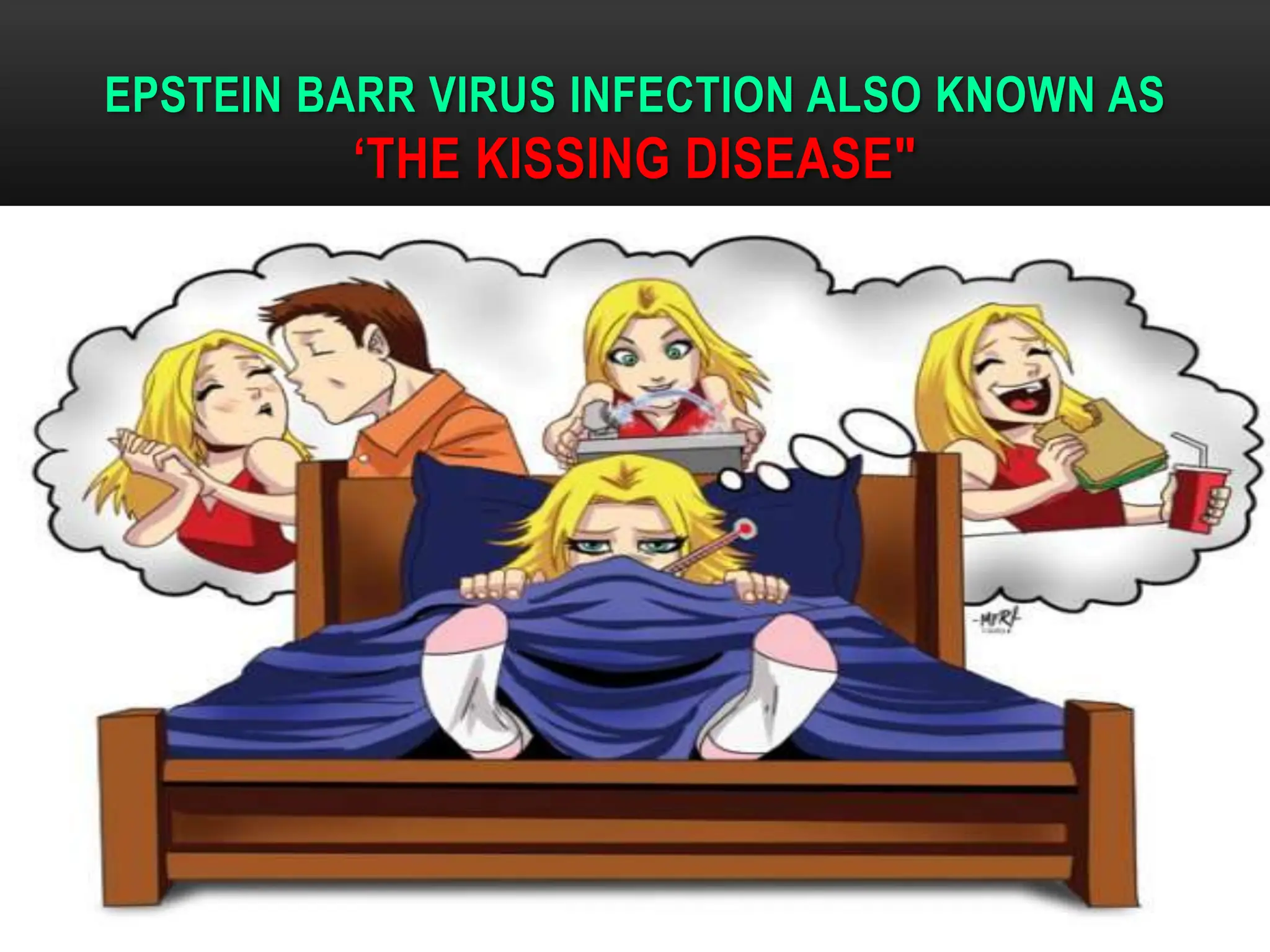
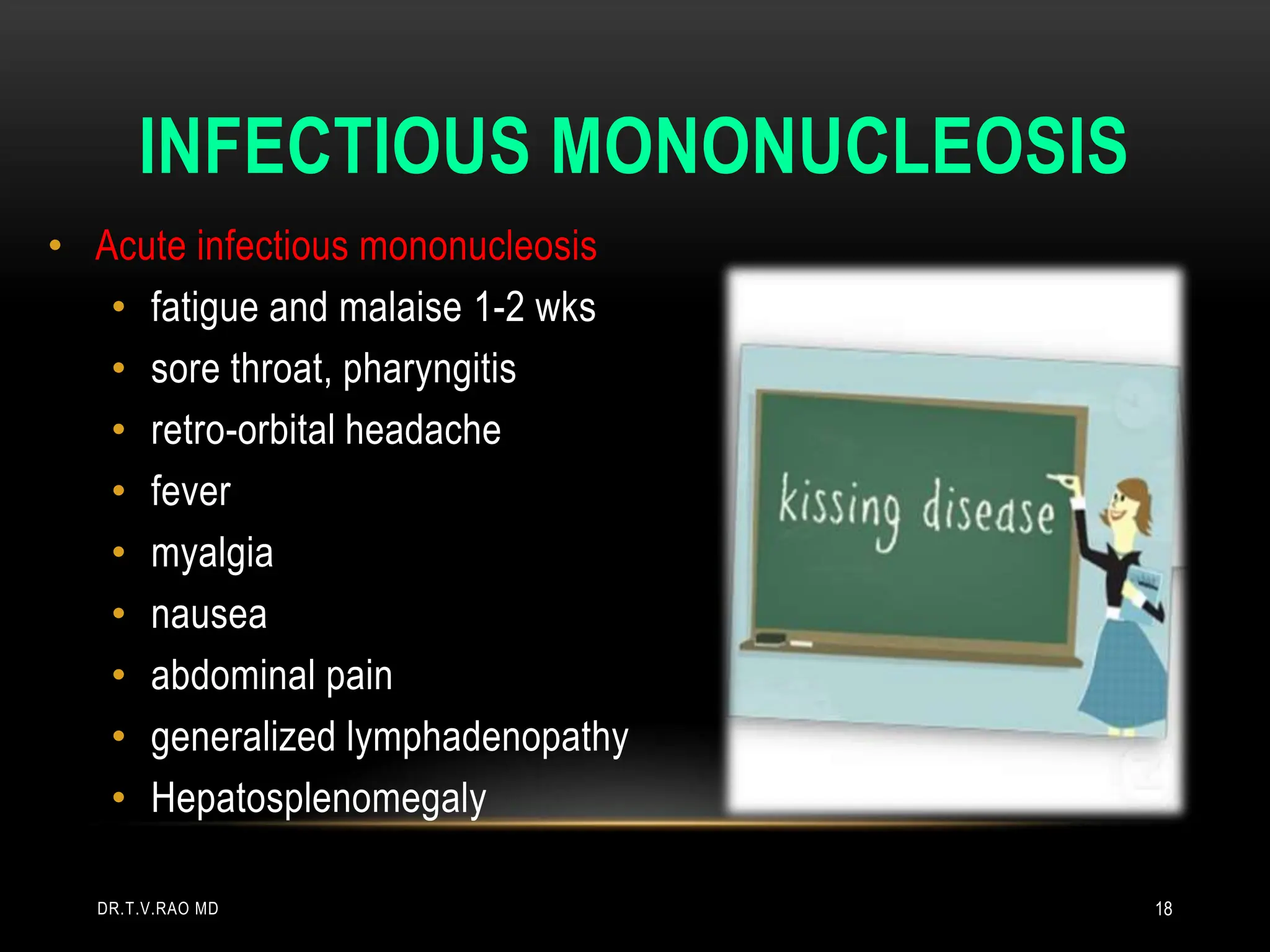
EPSTEIN BARR VIRUS INFECTION ALSO KNOWN AS
‘THE KISSING DISEASE"
DR.T.V.RAO MD 7
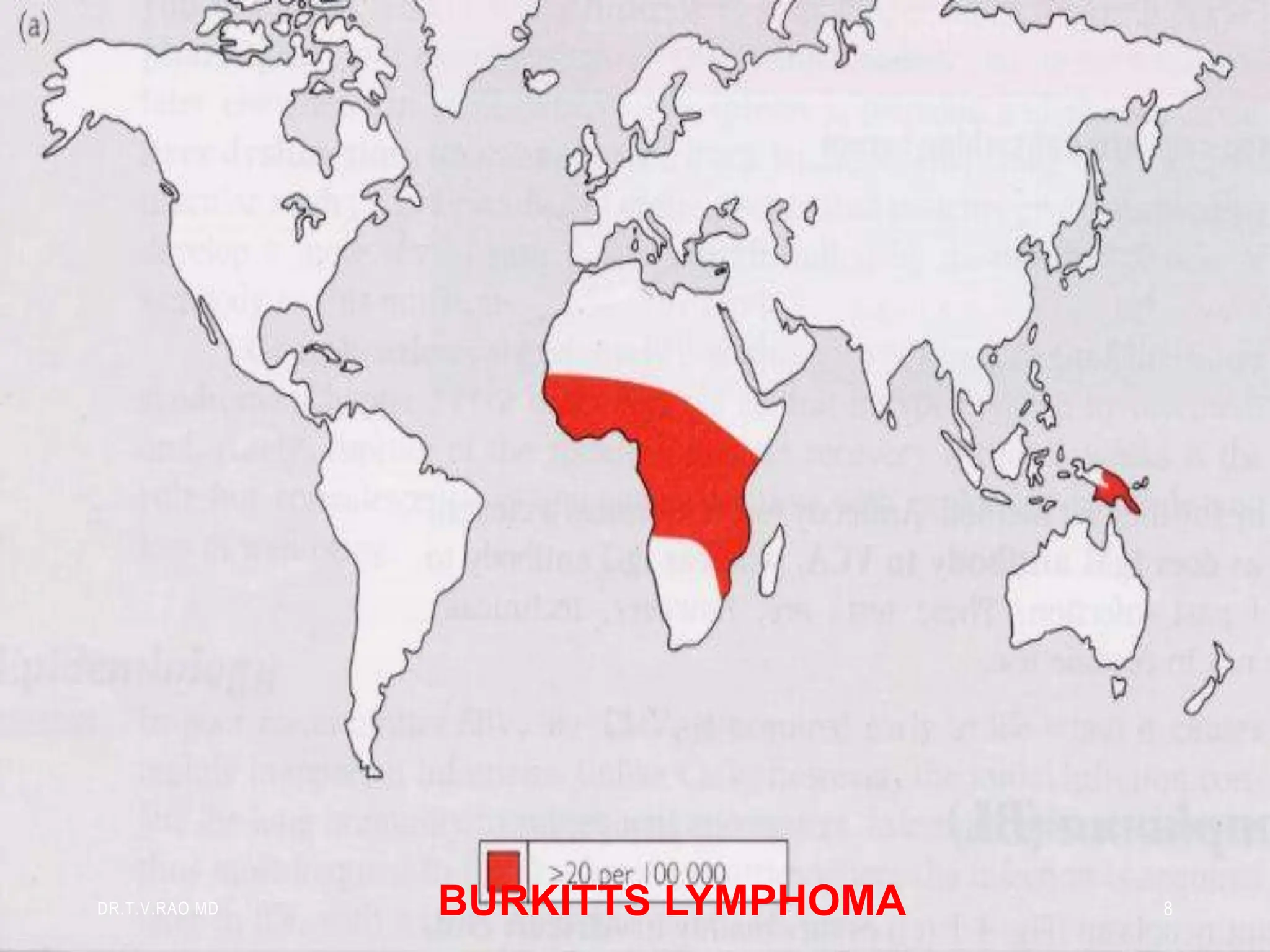
BURKITTS LYMPHOMA
DR.T.V.RAO MD 8
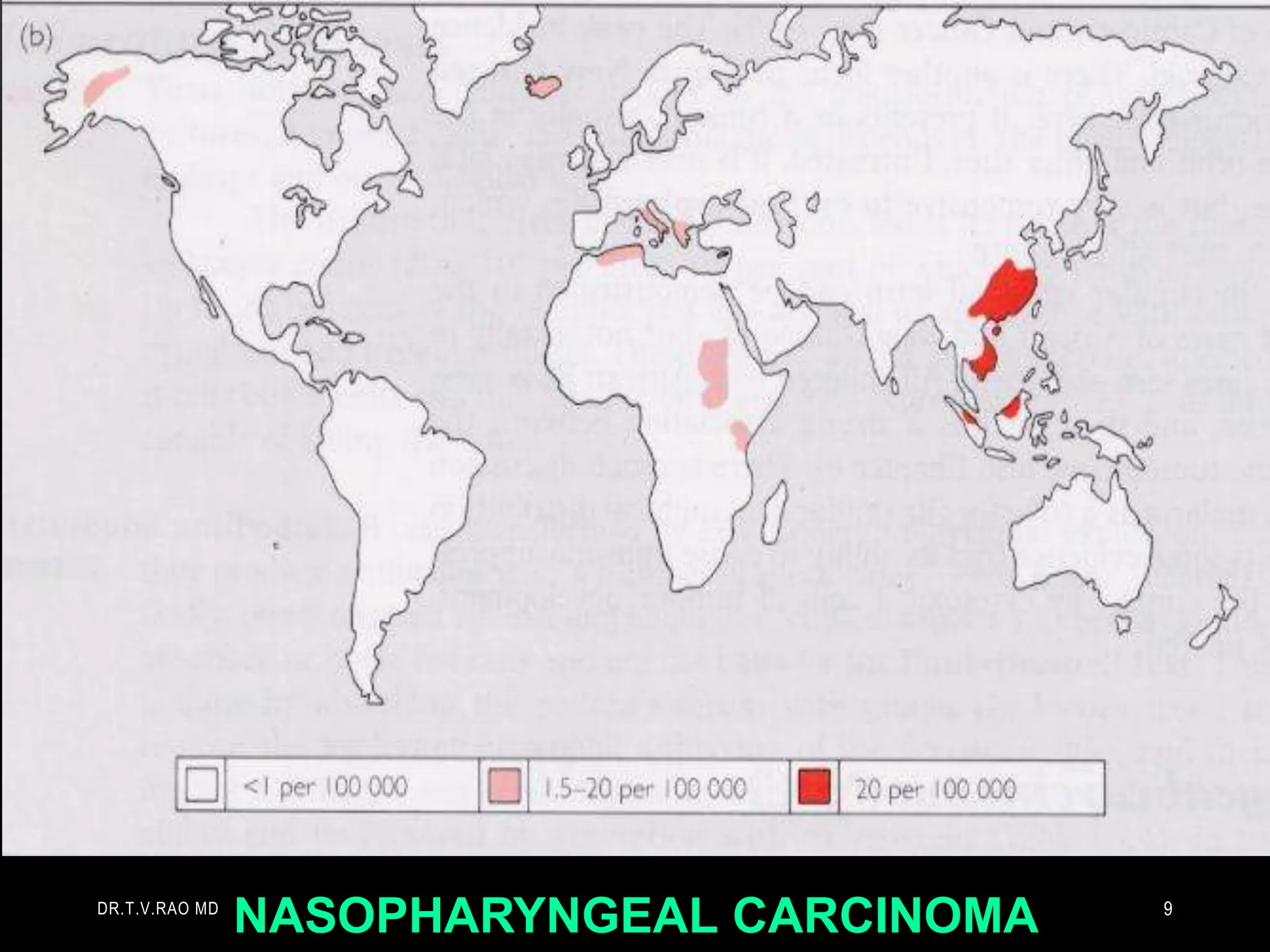
NASOPHARYNGEAL CARCINOMA
DR.T.V.RAO MD 9
EPSTEIN-BARR VIRUS (EBV)
• Belong to the gammaherpesvirus subfamily of herpes viruses
• Nucleocapsid 100 nm in diameter, with 162 capsomers
• Membrane is derived by budding of immature particles
through cell membrane and is required for infectivity.
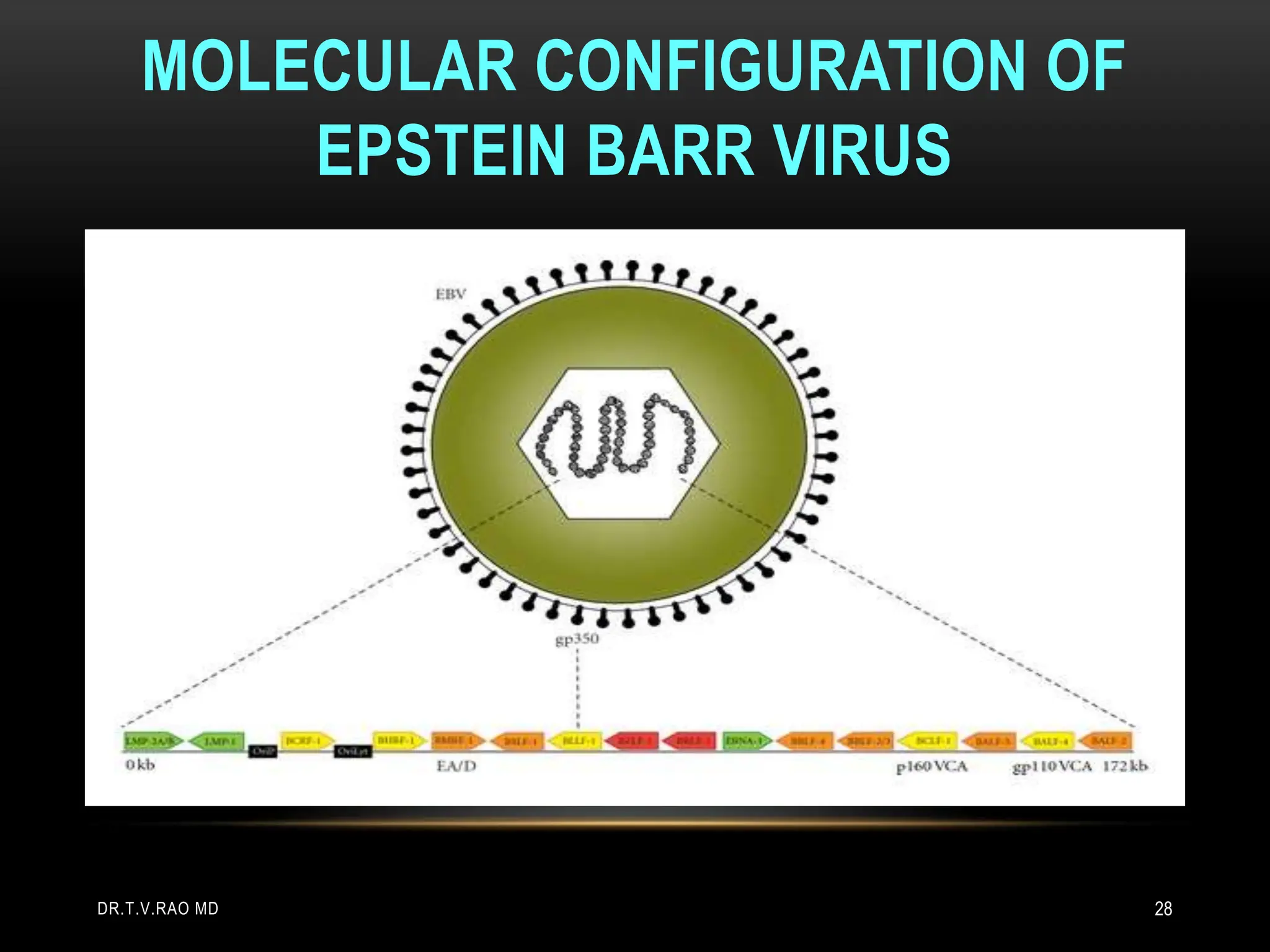
• Genome is a linear double stranded DNA molecule with 172
kbp
• The viral genome does not normally integrate into the
cellular DNA but forms circular episomes which reside in the
nucleus.
• The genome is large enough to code for 100 - 200 proteins
but only a few have been identified.
DR.T.V.RAO MD 10
PATHOGENESIS
• Once infected, a lifelong carrier state develops whereby a low
grade infection is kept in check by the immune defenses.
• Low grade virus replication and shedding can be demonstrated in
the epithelial cells of the pharynx of all seropositive individuals.
• EBV is able to immortalize B-lymphocytes in vitro and in vivo
• Furthermore a few EBV-immortalized B-cells can be
demonstrated in the circulation which are continually cleared by
immune surveillance mechanisms.
• EBV is associated with several very different diseases where it
may act directly or one of several co-factors.
DR.T.V.RAO MD 11
DISEASE ASSOCIATION
1. Infectious Mononucleosis
2. Burkitt's lymphoma
3. Nasopharyngeal carcinoma
4. Lymphoproliferative disease and lymphoma in the
immunosuppressed.
5. X-linked lymphoproliferative syndrome
6. Chronic infectious mononucleosis
7. Oral leukoplakia in AIDS patients
8. Chronic interstitial pneumonitis in AIDS patients.
DR.T.V.RAO MD 12
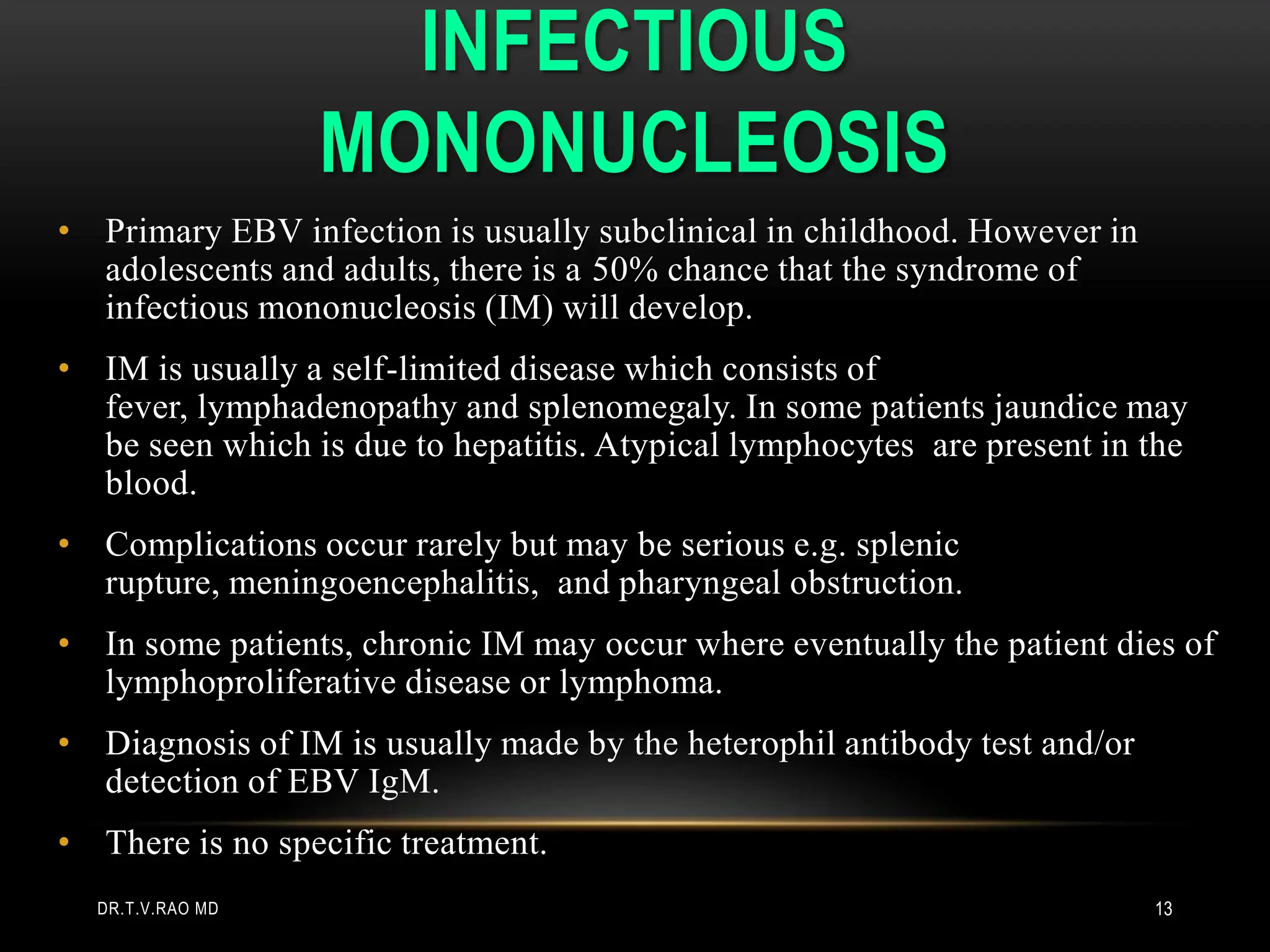
INFECTIOUS
MONONUCLEOSIS
• Primary EBV infection is usually subclinical in childhood. However in
adolescents and adults, there is a 50% chance that the syndrome of
infectious mononucleosis (IM) will develop.
• IM is usually a self-limited disease which consists of
fever, lymphadenopathy and splenomegaly. In some patients jaundice may
be seen which is due to hepatitis. Atypical lymphocytes are present in the
blood.
• Complications occur rarely but may be serious e.g. splenic
rupture, meningoencephalitis, and pharyngeal obstruction.
• In some patients, chronic IM may occur where eventually the patient dies of
lymphoproliferative disease or lymphoma.
• Diagnosis of IM is usually made by the heterophil antibody test and/or
detection of EBV IgM.
• There is no specific treatment.
DR.T.V.RAO MD 13
DR.T.V.RAO MD 14
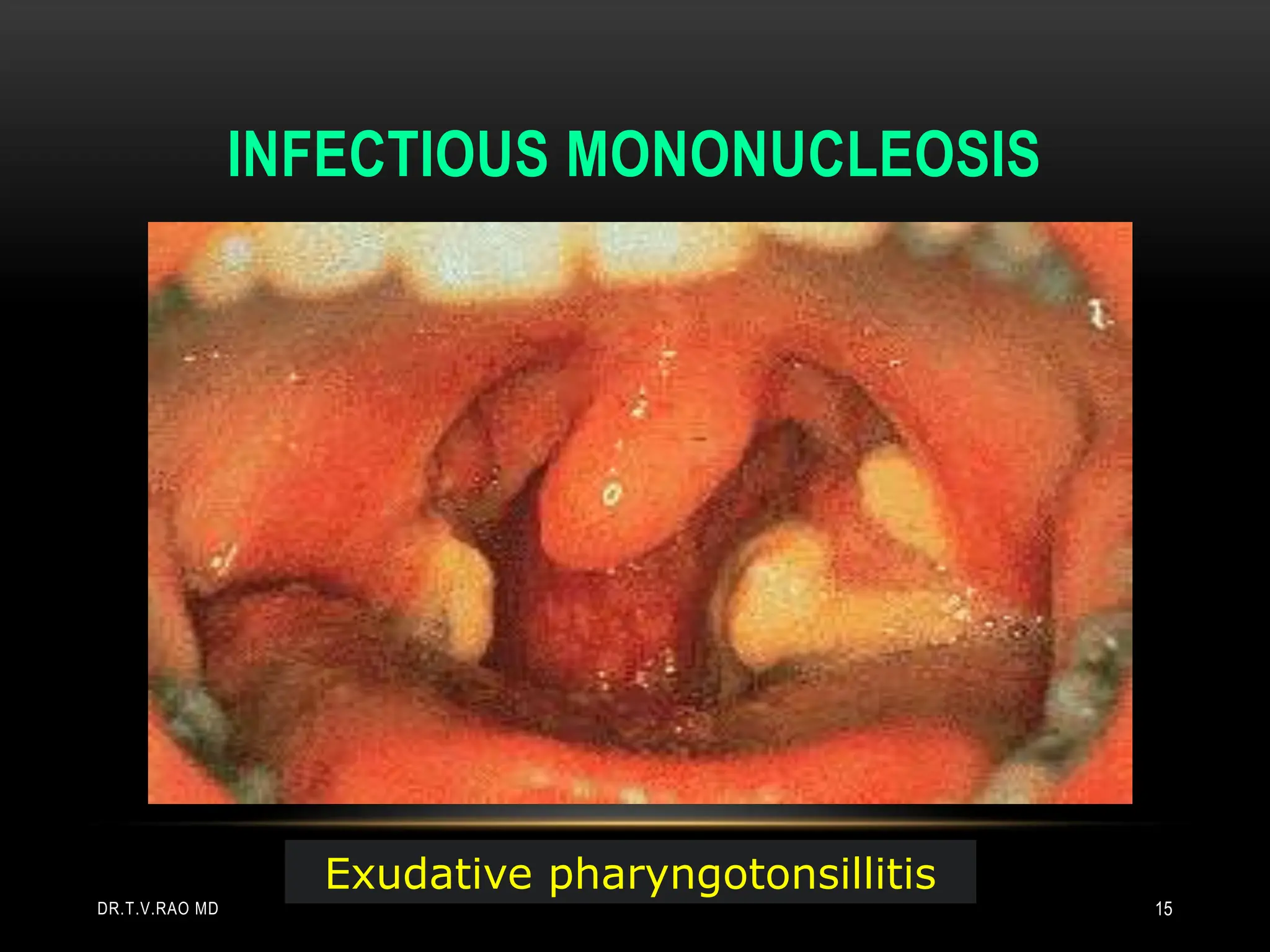
INFECTIOUS MONONUCLEOSIS
Exudative pharyngotonsillitis
DR.T.V.RAO MD 15
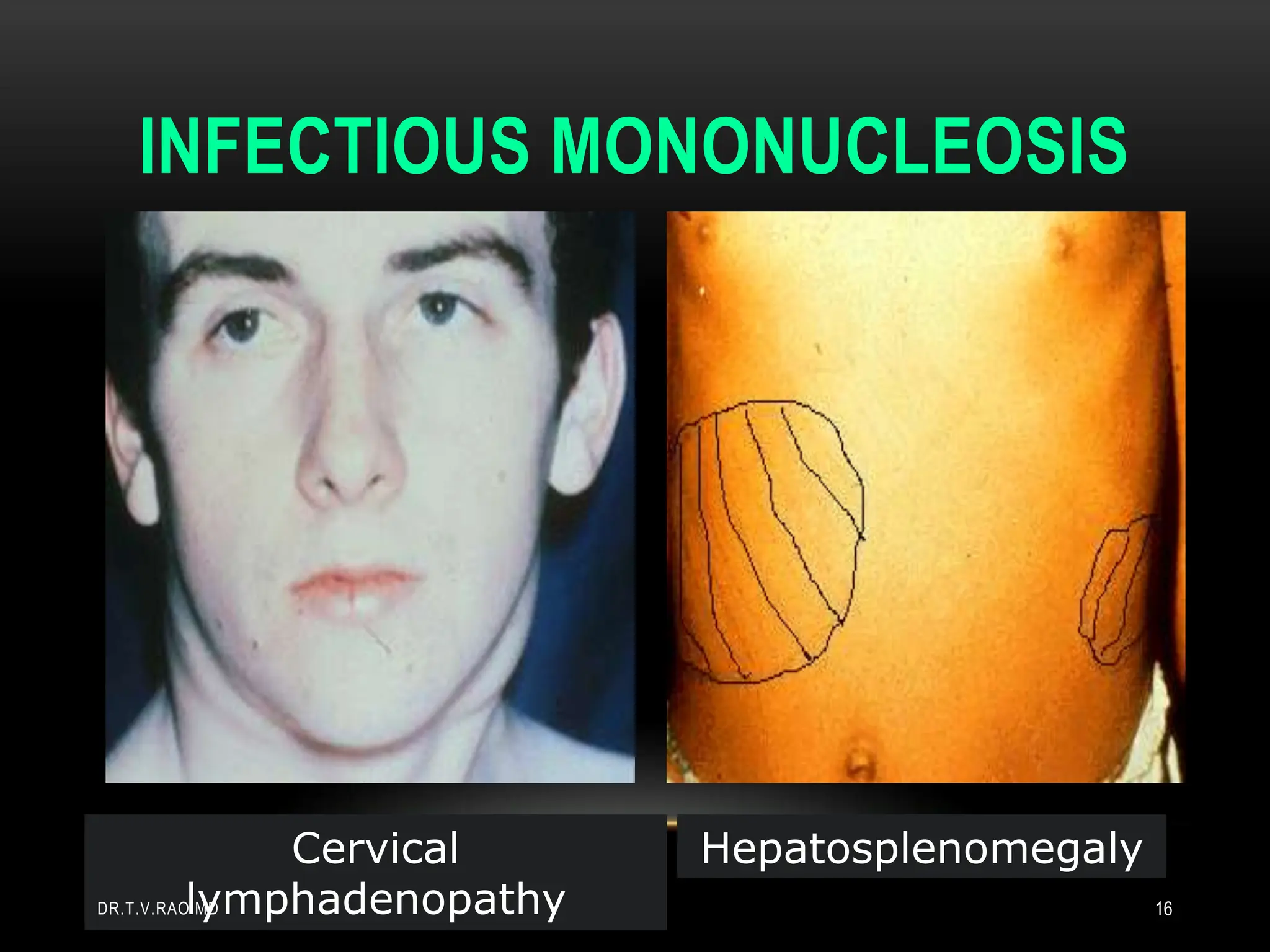
INFECTIOUS MONONUCLEOSIS
Hepatosplenomegaly
Cervical
lymphadenopathy
DR.T.V.RAO MD 16
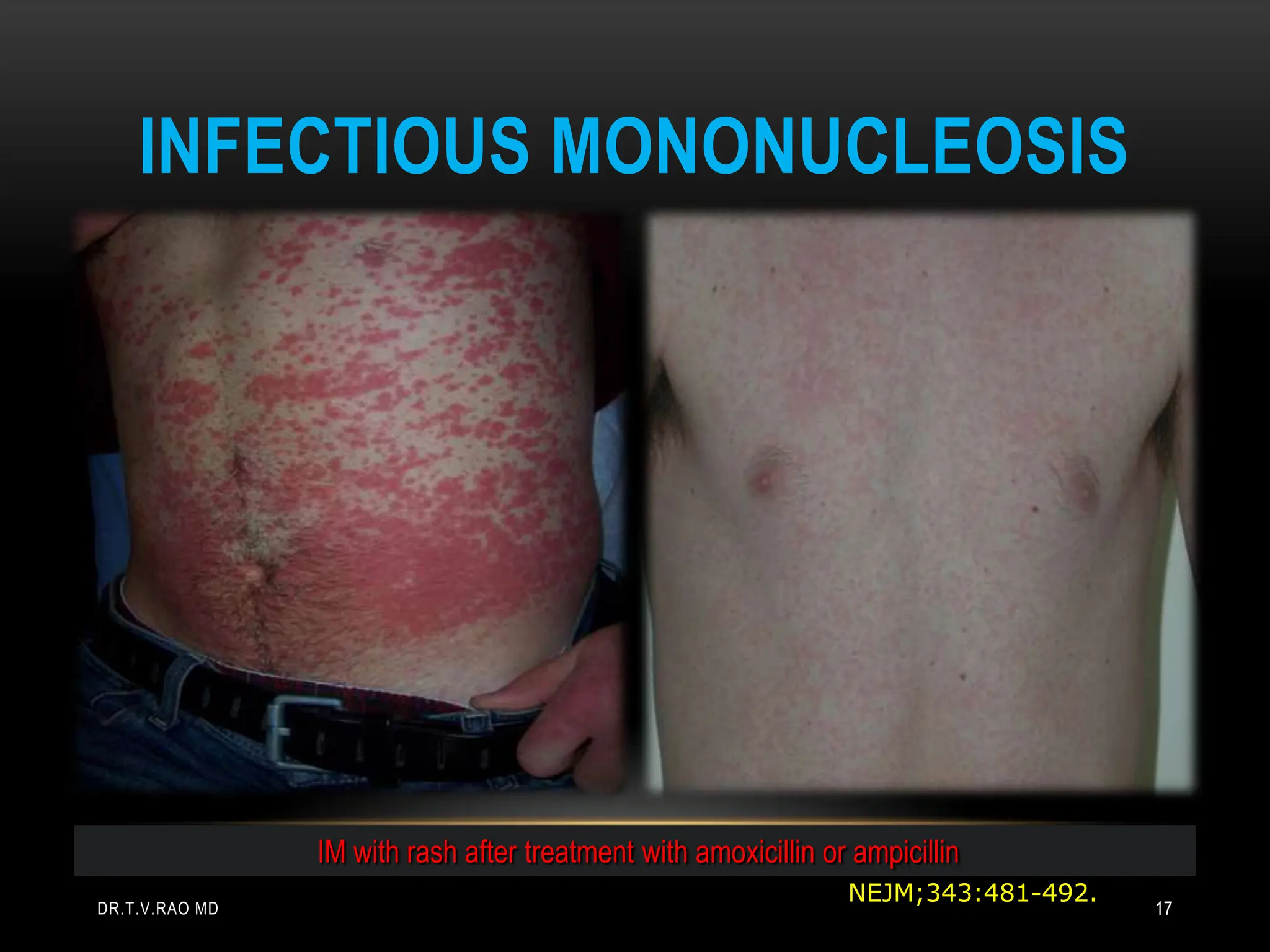
INFECTIOUS MONONUCLEOSIS
IM with rash after treatment with amoxicillin or ampicillin
NEJM;343:481-492.
DR.T.V.RAO MD 17
INFECTIOUS MONONUCLEOSIS
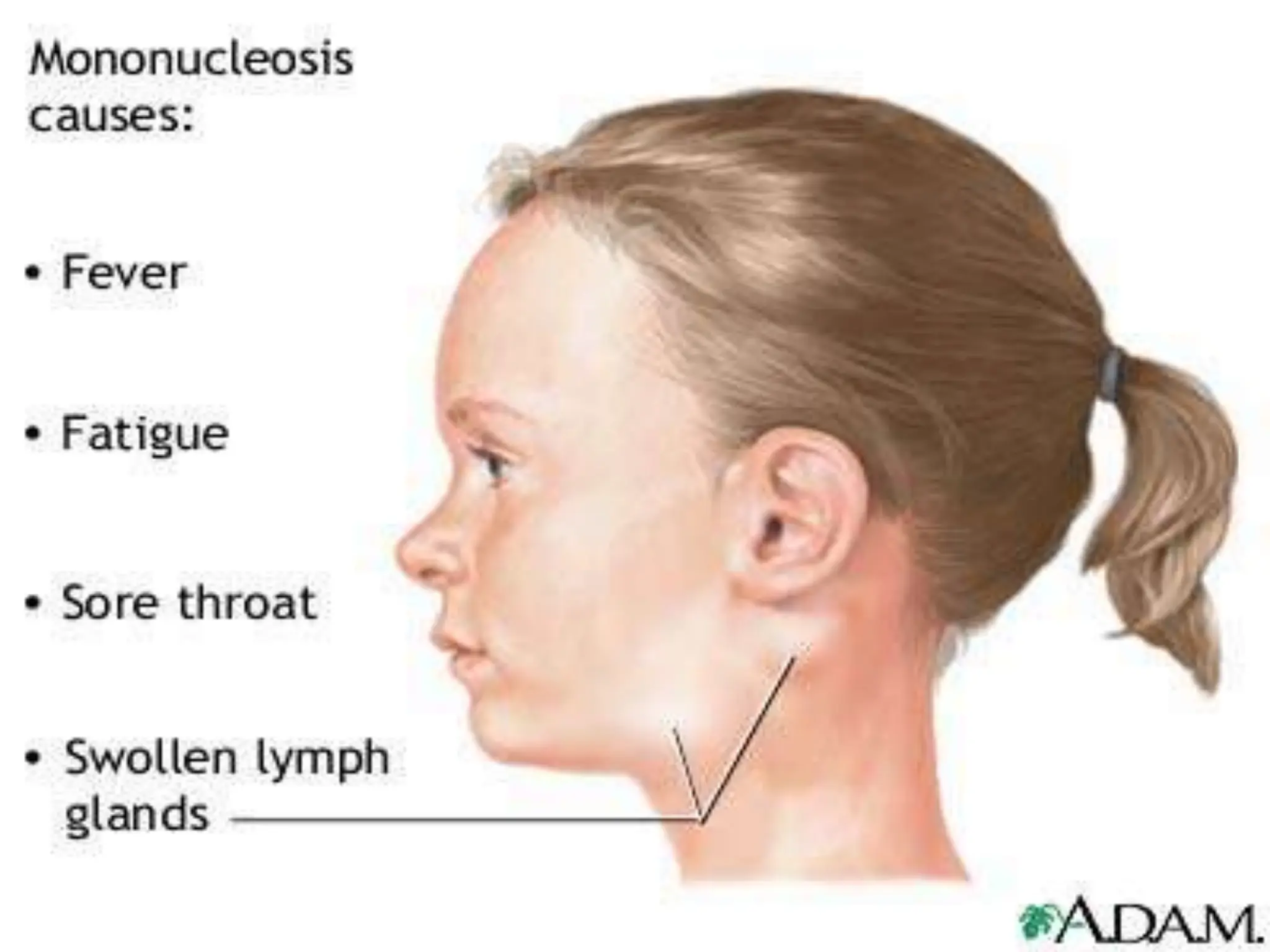
• Acute infectious mononucleosis
• fatigue and malaise 1-2 wks
• sore throat, pharyngitis
• retro-orbital headache
• fever
• myalgia
• nausea
• abdominal pain
• generalized lymphadenopathy
• Hepatosplenomegaly
DR.T.V.RAO MD 18
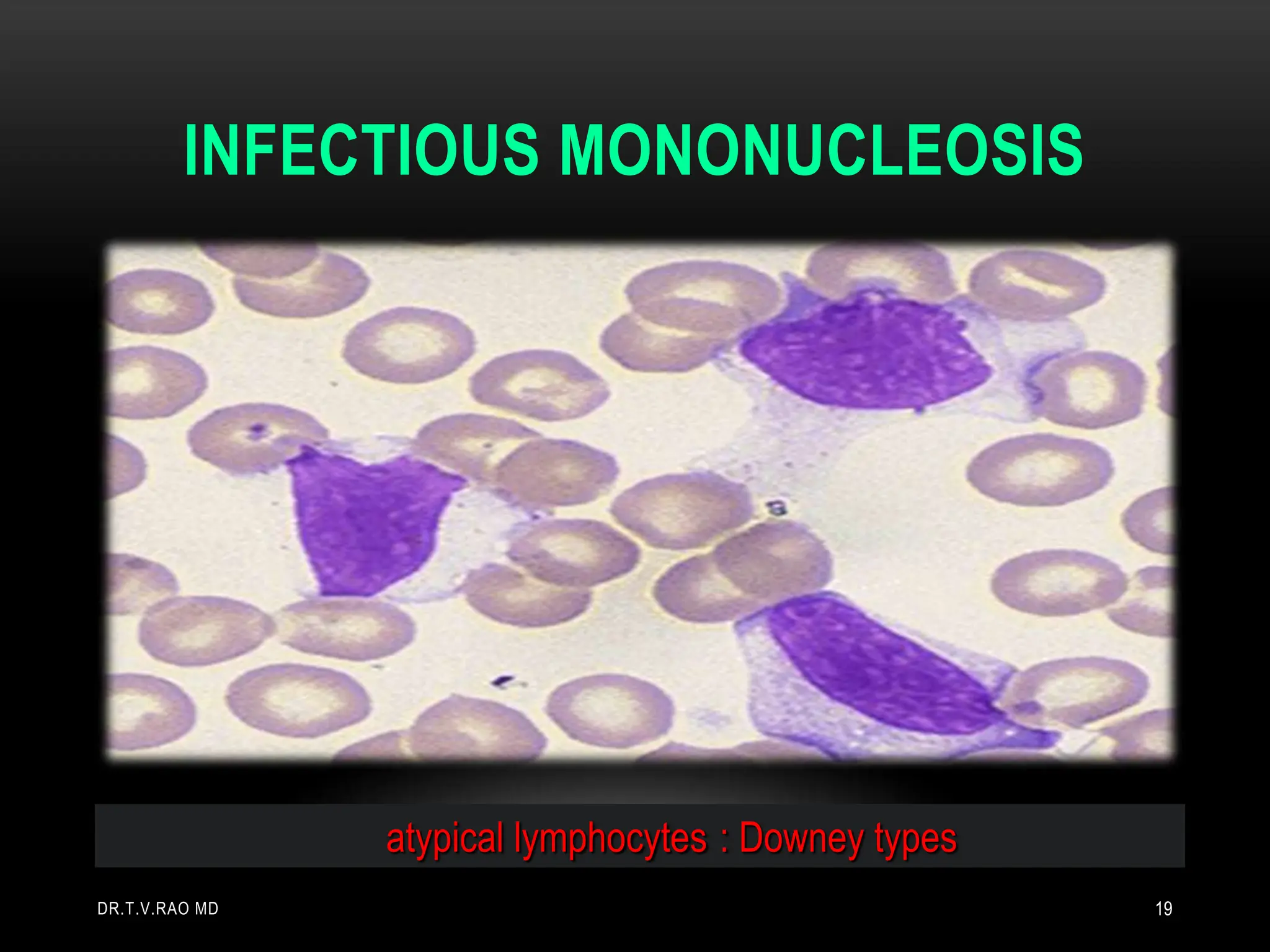
INFECTIOUS MONONUCLEOSIS
atypical lymphocytes : Downey types
DR.T.V.RAO MD 19
BURKITT'S LYMPHOMA
• Burkitt's lymphoma (BL) occurs endemically in parts of Africa
(where it is the commonest childhood tumor) and Papua New
Guinea. It usually occurs in children aged 3-14 years. It
respond favorably to chemotherapy.
• It is restricted to areas with holoendemic malaria. Therefore it
appears that malaria infection is a cofactor.
• Multiple copies of EBV genome and some EBV antigens can be
found in BL cells and patients with BL have high titres of
antibodies against various EBV antigens.
DR.T.V.RAO MD 20
EBV+: 90% of cases in developing countries – jaw tumors
20% cases in US – children with abdominal tumors
AIDS patients – tumors in lymph nodes
EBV may be one “hit” but all tumors have c-myc
translocations
Dysregulation of c-myc oncogene
Only EBV EBNA-1 expressed
Therapy: Chemotherapy
Burkitt Lymphoma
DR.T.V.RAO MD 21
BURKITT’S LYMPHOMA
• BL cells show a reciprocal translocation between the long arm of
chromosome 8 and chromosomes 14, 2 or 22.
• This translocation result in the c-myc oncogene being transferred
to the Immunoglobulin gene regions. This results in the
deregulation of the c-myc gene. It is thought that this
translocation is probably already present by the time of EBV
infection and is not caused by EBV.
• Sporadic cases of BL occur, especially in AIDS patients which
may or may not be associated with EBV.
• In theory BL can be controlled by the eradication of malaria (as
has happened in Papua New Guinea) or vaccination against EBV.
DR.T.V.RAO MD 22
B-CELL LYMPHOMA
• In most individuals infected with EBV, the virus is
present in the B-cells, which are normally
controlled by T-lymphocytes
• When T-cell deficiency exists, one clone of EBV-
infected B-lymphocytes escapes immune
surveillance to become autonomously proliferating.
• EBV induced B cell lymphomas are most
prevalent in immunocompromised patients.
DR.T.V.RAO MD 23
EBV+: 60-70% of cases in
developing countries
35-50% cases in US
EBV in Reed-Sternberg cells
Therapy: Chemotherapy,
radiation Anti-EBV CTLs
effective in some cases
Hodgkin Disease
LMP-1 expression
DR.T.V.RAO MD 24
NASOPHARYNGEAL CARCINOMA
• Nasopharyngeal carcinoma (NPC) is a malignant tumor of the squamous
epithelium of the nasopharynx. It is very prevalent in S. China, where it is
the commonest tumor in men and the second commonest in women.
• The tumor is rare in most parts of the world, though pockets occur in N.
and C. Africa, Malaysia, Alaska, and Iceland.
• Multiple copies of EBV genome and EBV EBNA-1 antigen can be found
in cells of undifferentiated NPC. Patients with NPC have high titers of
antibodies against various EBV antigens.
• Besides EBV there appears to be a number of environmental and genetic
cofactors in NPC.
• NPC usually presents late and thus the prognosis is poor.
• In theory NPC can be prevented by vaccination.
DR.T.V.RAO MD 25
IMMUNOCOMPROMISED PATIENTS
• After primary infection, EBV maintains a steady low grade latent
infection in the body. Should the person become
immunocompromised, the virus will reactivate. In a few
cases, lymphoproliferative lesions and lymphoma may develop. These
lesions tend to be extranodal and in unusual sites such as the GI tract
or the CNS.
• Transplant recipients e.g. renal - EBV is associated with the
development of lymphoproliferative disease and lymphoma.
• AIDS patients - EBV is associated with oral leukoplakia and with
various Non-Hodgkin's lymphoma.
• Duncan X-linked lymphoproliferative syndrome - this condition occurs
exclusively in males who had inherited a defective gene in the X-
chromosome . This condition accounts for half of the fatal cases of IM.
DR.T.V.RAO MD 26
MOLECULAR BIOLOGY : REPLICATION
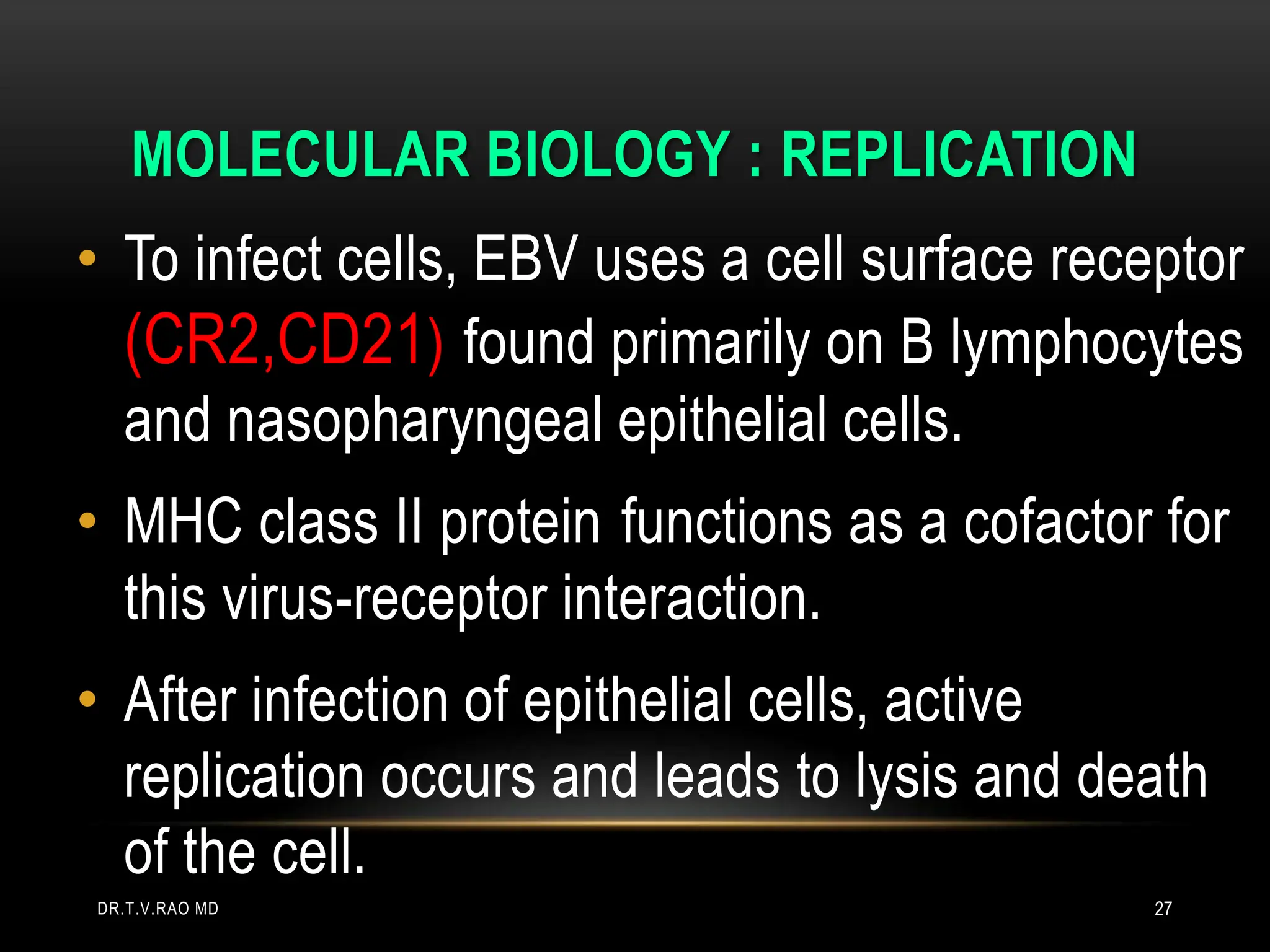
• To infect cells, EBV uses a cell surface receptor
(CR2,CD21) found primarily on B lymphocytes
and nasopharyngeal epithelial cells.
• MHC class II protein functions as a cofactor for
this virus-receptor interaction.
• After infection of epithelial cells, active
replication occurs and leads to lysis and death
of the cell.
DR.T.V.RAO MD 27
MOLECULAR CONFIGURATION OF
EPSTEIN BARR VIRUS
DR.T.V.RAO MD 28
MOLECULAR BIOLOGY : REPLICATION
• Viral capsid antigens (VCAs) are the primary
structure proteins in viral capsids and are found in
replicating cells.
• EBV early antigens (EAs) consist of >15 proteins
codes by genes distributed throughout the
genome.
• EBV nuclear antigen (EBNA) corresponds to six
virally encoded proteins found in the nucleus of an
EBV-infected cell.
DR.T.V.RAO MD 29
MOLECULAR BIOLOGY : LATENCY
• Latently infected B cells are the primary
reservoir of EBV in the body.
• >100 gene products may be expressed during
active viral replication, only 11 are expressed
during viral latency.
• In this way, the virus limits cytotoxic T-cell
recognition of EBV-infected cells.
DR.T.V.RAO MD 30
DIAGNOSIS
• Acute EBV infection is usually made by the heterophil antibody test
and/or detection of anti-EBV VCA IgM.
• Cases of Burkitt’s lymphoma should be diagnosed by histology. The
tumour can be stained with antibodies to lambda light chains which
should reveal a monoclonal tumour of B-cell origin. In over 90% of
cases, the cells express IgM at the cell surface.
• Cases of NPC should be diagnosed by histology.
• The determination of the titre of anti-EBV VCA IgA in
screening for early lesions of NPC and also for
monitoring treatment.
• A patient with with non-specific ENT symptoms who have elevated
titers of EBV IgA should be given a thorough examination.
DR.T.V.RAO MD 31
INFECTIOUS MONONUCLEOSIS :
LAB
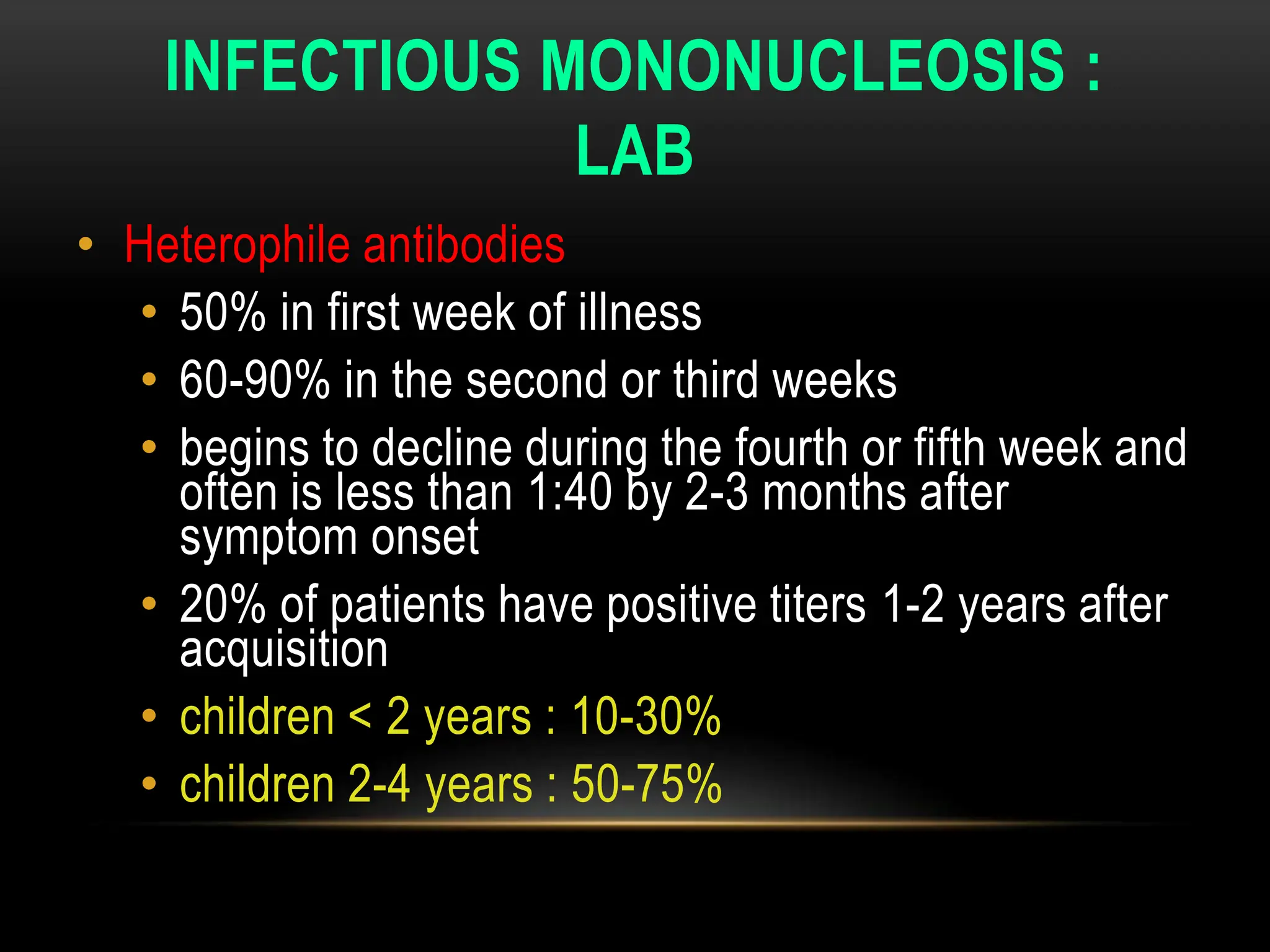
• Heterophile antibodies
• 50% in first week of illness
• 60-90% in the second or third weeks
• begins to decline during the fourth or fifth week and
often is less than 1:40 by 2-3 months after
symptom onset
• 20% of patients have positive titers 1-2 years after
acquisition
• children < 2 years : 10-30%
• children 2-4 years : 50-75%
PRIMARY EBV INFECTION :
SEROPREVALENCE
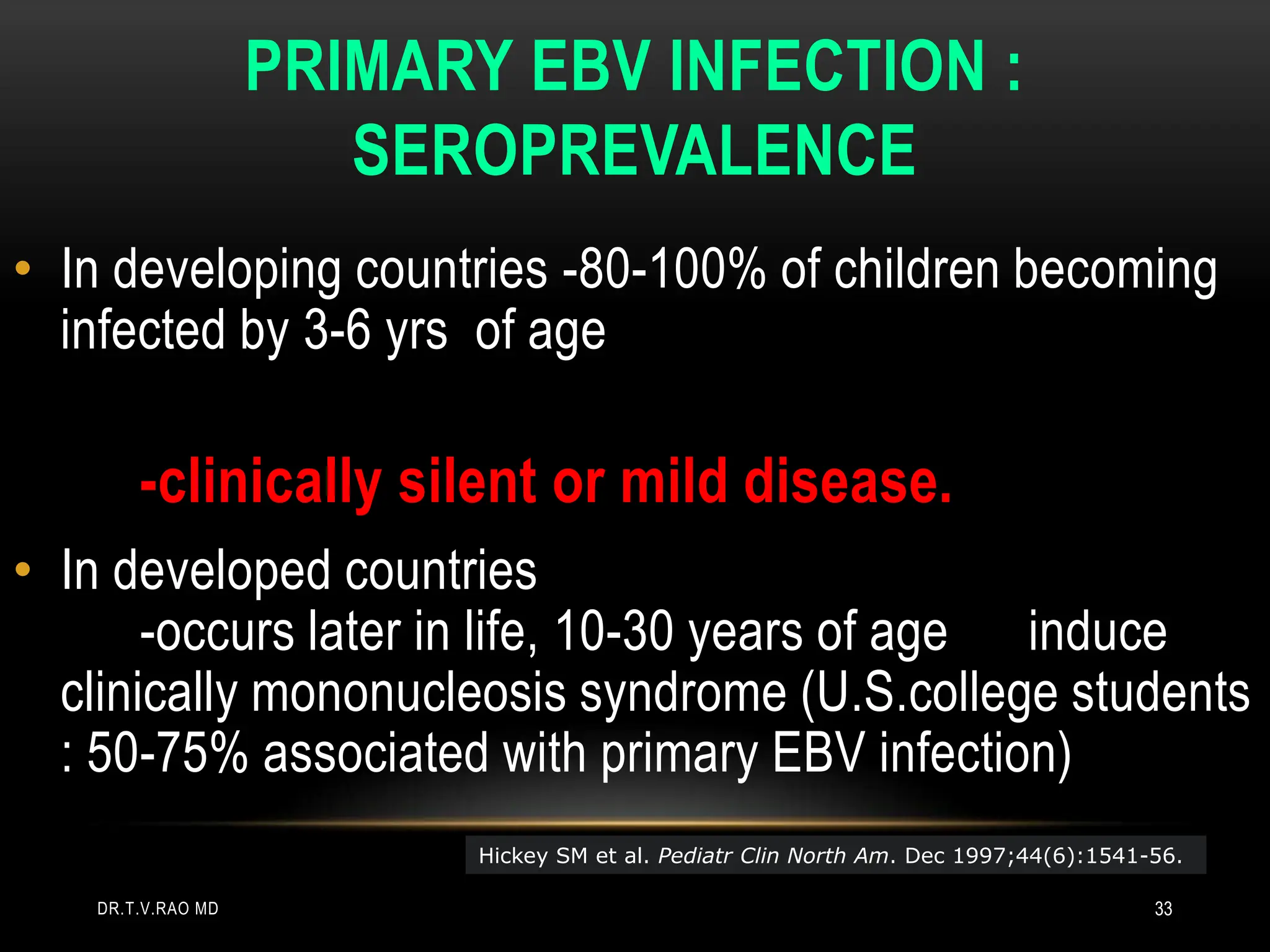
• In developing countries -80-100% of children becoming
infected by 3-6 yrs of age
-clinically silent or mild disease.
• In developed countries
-occurs later in life, 10-30 years of age induce
clinically mononucleosis syndrome (U.S.college students
: 50-75% associated with primary EBV infection)
Hickey SM et al. Pediatr Clin North Am. Dec 1997;44(6):1541-56.
DR.T.V.RAO MD 33
INFECTIOUS MONONUCLEOSIS : LAB
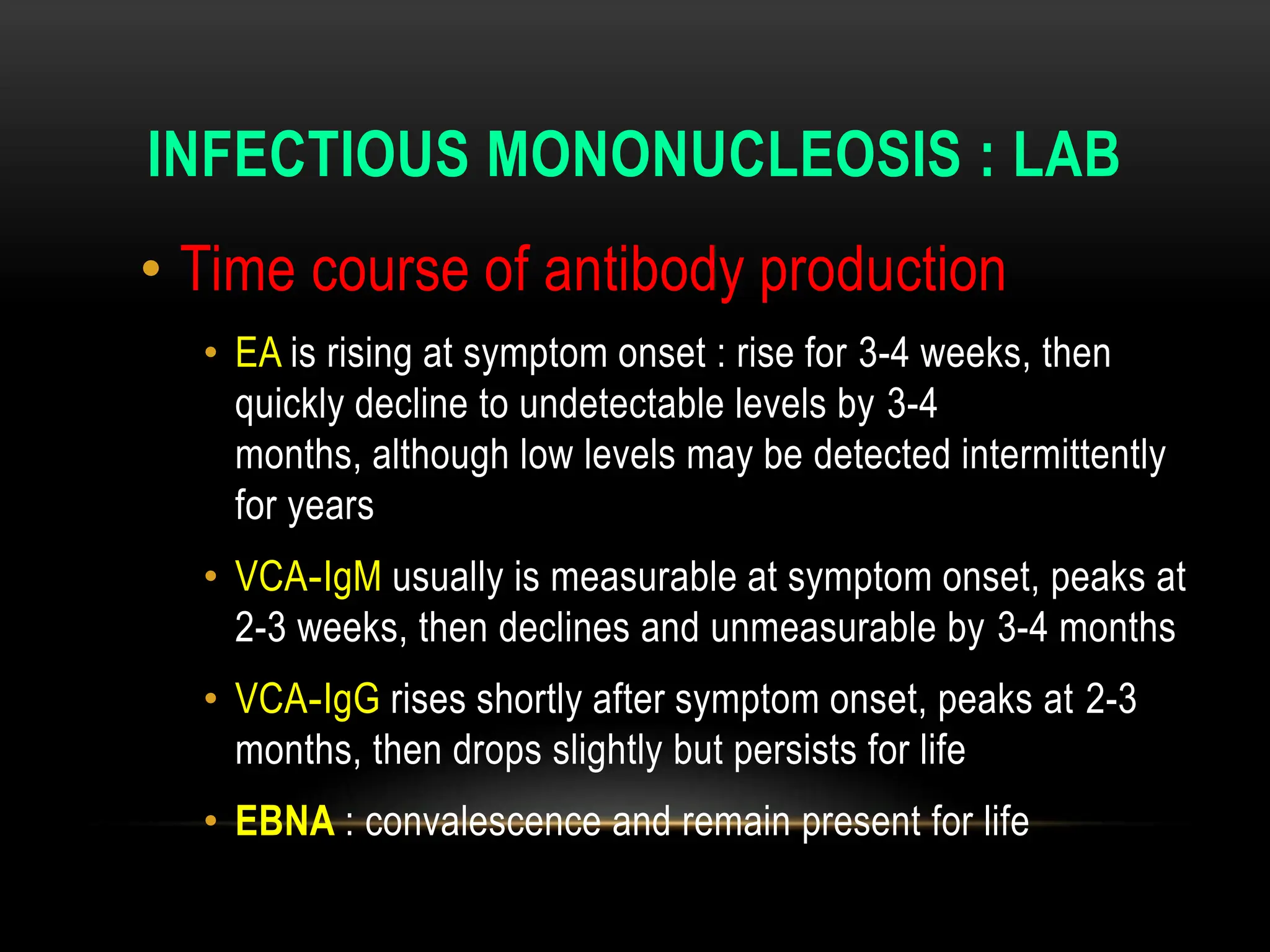
• Time course of antibody production
• EA is rising at symptom onset : rise for 3-4 weeks, then
quickly decline to undetectable levels by 3-4
months, although low levels may be detected intermittently
for years
• VCA-IgM usually is measurable at symptom onset, peaks at
2-3 weeks, then declines and unmeasurable by 3-4 months
• VCA-IgG rises shortly after symptom onset, peaks at 2-3
months, then drops slightly but persists for life
• EBNA : convalescence and remain present for life
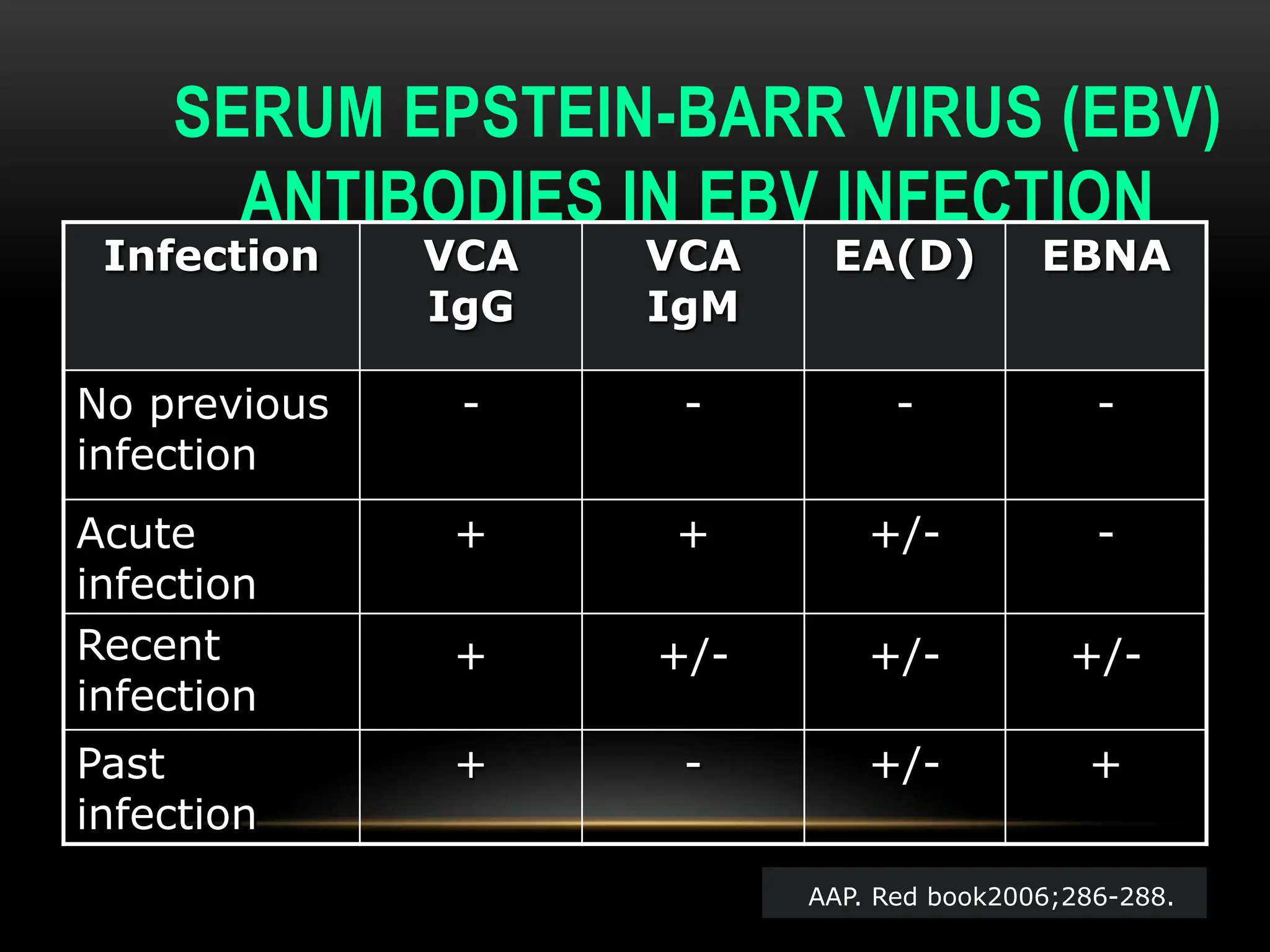
SERUM EPSTEIN-BARR VIRUS (EBV)
ANTIBODIES IN EBV INFECTION
Infection VCA
IgG
VCA
IgM
EA(D) EBNA
No previous
infection
- - - -
Acute
infection
Recent
infection
+
+
+
+/-
+/-
+/-
-
+/-
Past
infection
+ - +/- +
AAP. Red book2006;286-288.
DIAGNOSTIC APPROACH
• Examination of the blood usually shows an increase in the
white blood cells, due to the appearance of many atypical
lymphocytes in the blood.
• Blood serum in IM often contains an antibody known as
heterophile antibody that agglutinates, or clumps, the red blood
cells of sheep.
• Heterophile antibodies are antibodies that are stimulated by
one antigen and react with an entirely unrelated surface
antigen present on cells from different mammalian species.
DR.T.V.RAO MD 36
DIAGNOSIS
• Heterophile antibody titers rise during the first two or three weeks with
half or more developing a significant titer during the first week of illness.
• The level of antibody gradually declines and usually disappears in eight
to twelve weeks following the onset.
• Elevated titers sometimes linger for four to six months up to a year or
more.
• Heterophile antibody most commonly used in the serological diagnosis
of IM is an IgM antibody which agglutinates sheep red blood cells.
DR.T.V.RAO MD 37
DIAGNOSIS
• The original Paul-Bunnell test was a simple titration of sheep cell
agglutinins but this procedure was subsequently modified in order to
distinguish between sheep cell agglutinins formed in IM and the
Forssmann-type antibodies found in normal serum, serum sickness and
in certain other conditions.
• Tissues rich in Forssmann antigen (guinea pig kidney) absorb
Forssmann antibodies but do not affect the heterophile antibodies in IM.
• Heterophile antibodies are absorbed by beef cells,
• Forssmann Hapten is a glycolipid usually associated with a protein, the
determinant being largely carbohydrate and therefore heat stable.
DR.T.V.RAO MD 38
PAUL BUNNELL TEST
• The original Paul-Bunnell test was a simple titration of sheep cell
agglutinins but this procedure was subsequently modified in order
to distinguish between sheep cell agglutinins formed in IM and the
Forssmann-type antibodies found in normal serum, serum sickness
and in certain other conditions.
• Tissues rich in Forssmann antigen (guinea pig kidney) absorb
Forssmann antibodies but do not affect the heterophile antibodies
in IM.
• Heterophile antibodies are absorbed by beef cells,
• Forssmann Hapten is a glycolipid usually associated with a
protein, the determinant being largely carbohydrate and therefore
heat stable.
DR.T.V.RAO MD 39
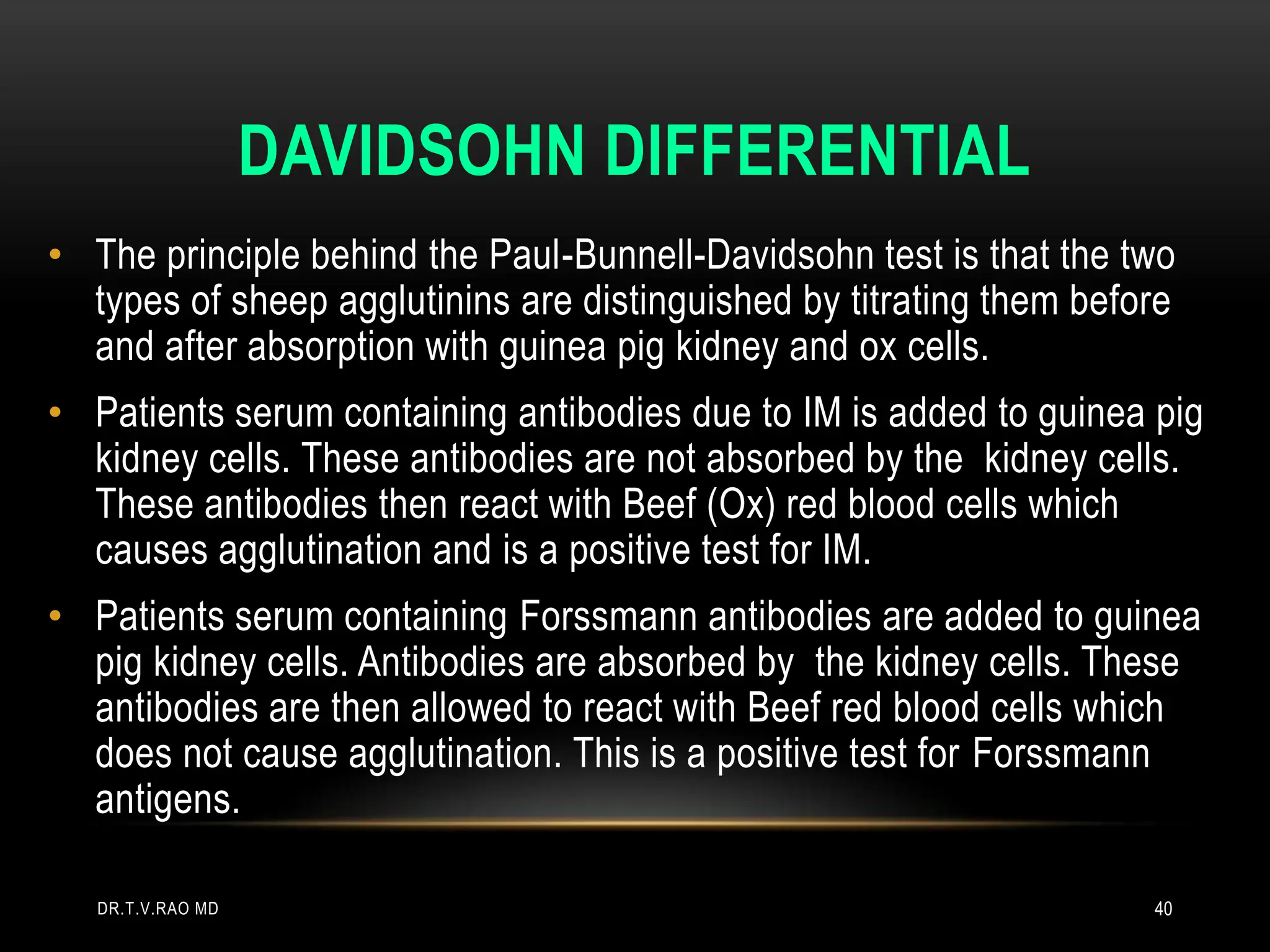
DAVIDSOHN DIFFERENTIAL
• The principle behind the Paul-Bunnell-Davidsohn test is that the two
types of sheep agglutinins are distinguished by titrating them before
and after absorption with guinea pig kidney and ox cells.
• Patients serum containing antibodies due to IM is added to guinea pig
kidney cells. These antibodies are not absorbed by the kidney cells.
These antibodies then react with Beef (Ox) red blood cells which
causes agglutination and is a positive test for IM.
• Patients serum containing Forssmann antibodies are added to guinea
pig kidney cells. Antibodies are absorbed by the kidney cells. These
antibodies are then allowed to react with Beef red blood cells which
does not cause agglutination. This is a positive test for Forssmann
antigens.
DR.T.V.RAO MD 40
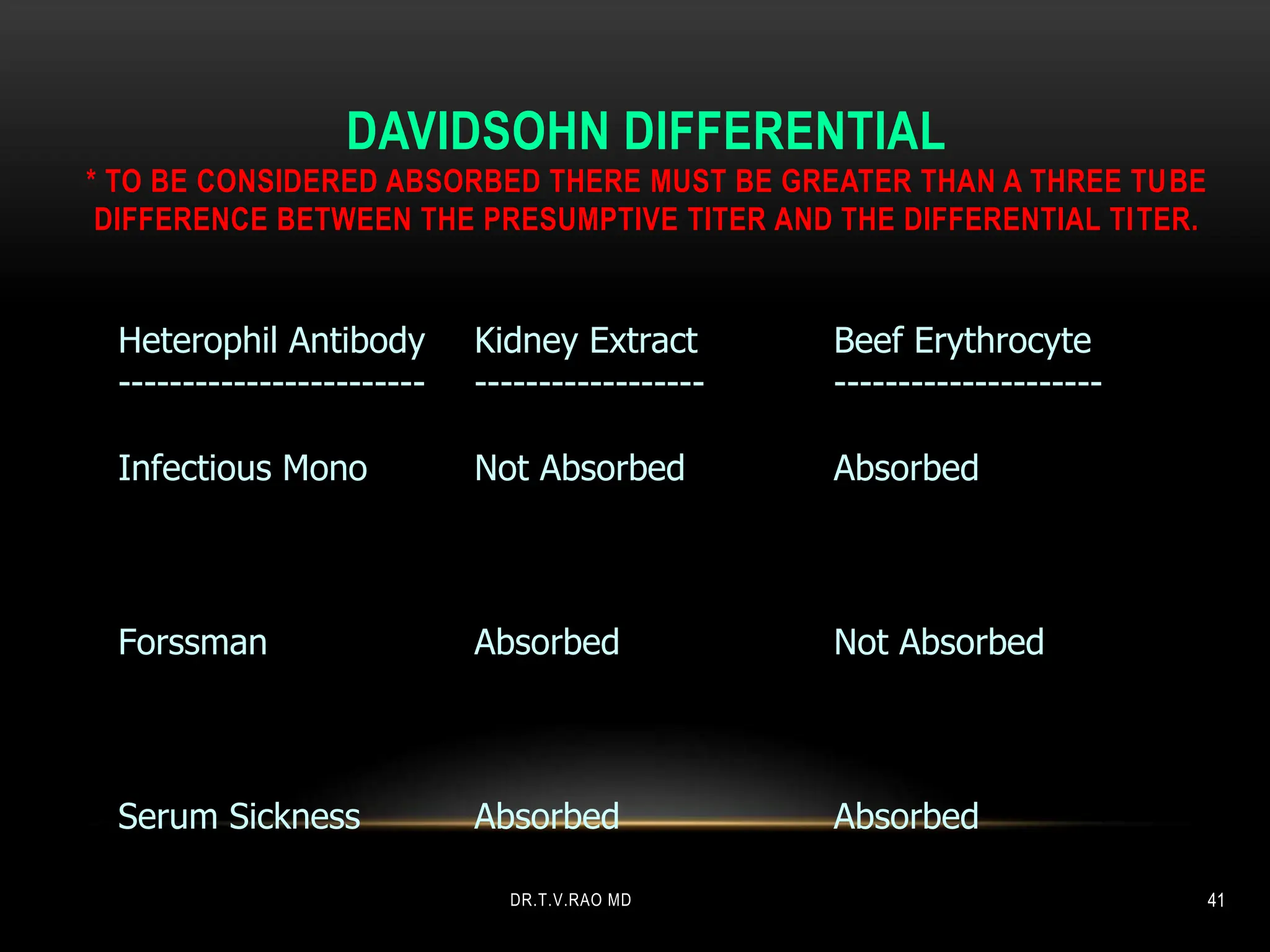
DAVIDSOHN DIFFERENTIAL
* TO BE CONSIDERED ABSORBED THERE MUST BE GREATER THAN A THREE TUBE
DIFFERENCE BETWEEN THE PRESUMPTIVE TITER AND THE DIFFERENTIAL TITER.
Heterophil Antibody
------------------------
Infectious Mono
Kidney Extract
------------------
Not Absorbed
Beef Erythrocyte
---------------------
Absorbed
Forssman Absorbed Not Absorbed
Serum Sickness Absorbed Absorbed
DR.T.V.RAO MD 41
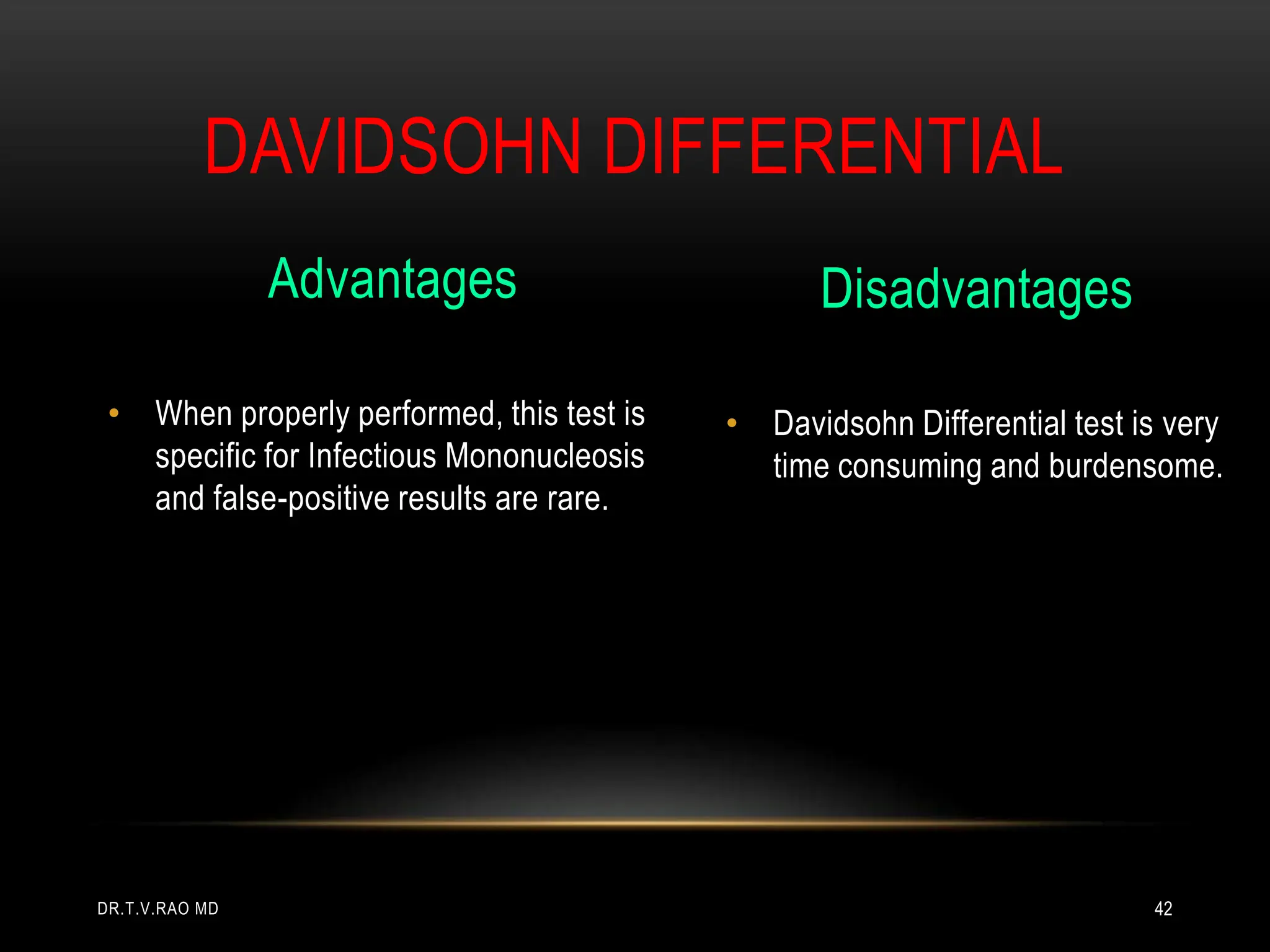
DAVIDSOHN DIFFERENTIAL
Advantages
• When properly performed, this test is
specific for Infectious Mononucleosis
and false-positive results are rare.
Disadvantages
• Davidsohn Differential test is very
time consuming and burdensome.
DR.T.V.RAO MD 42
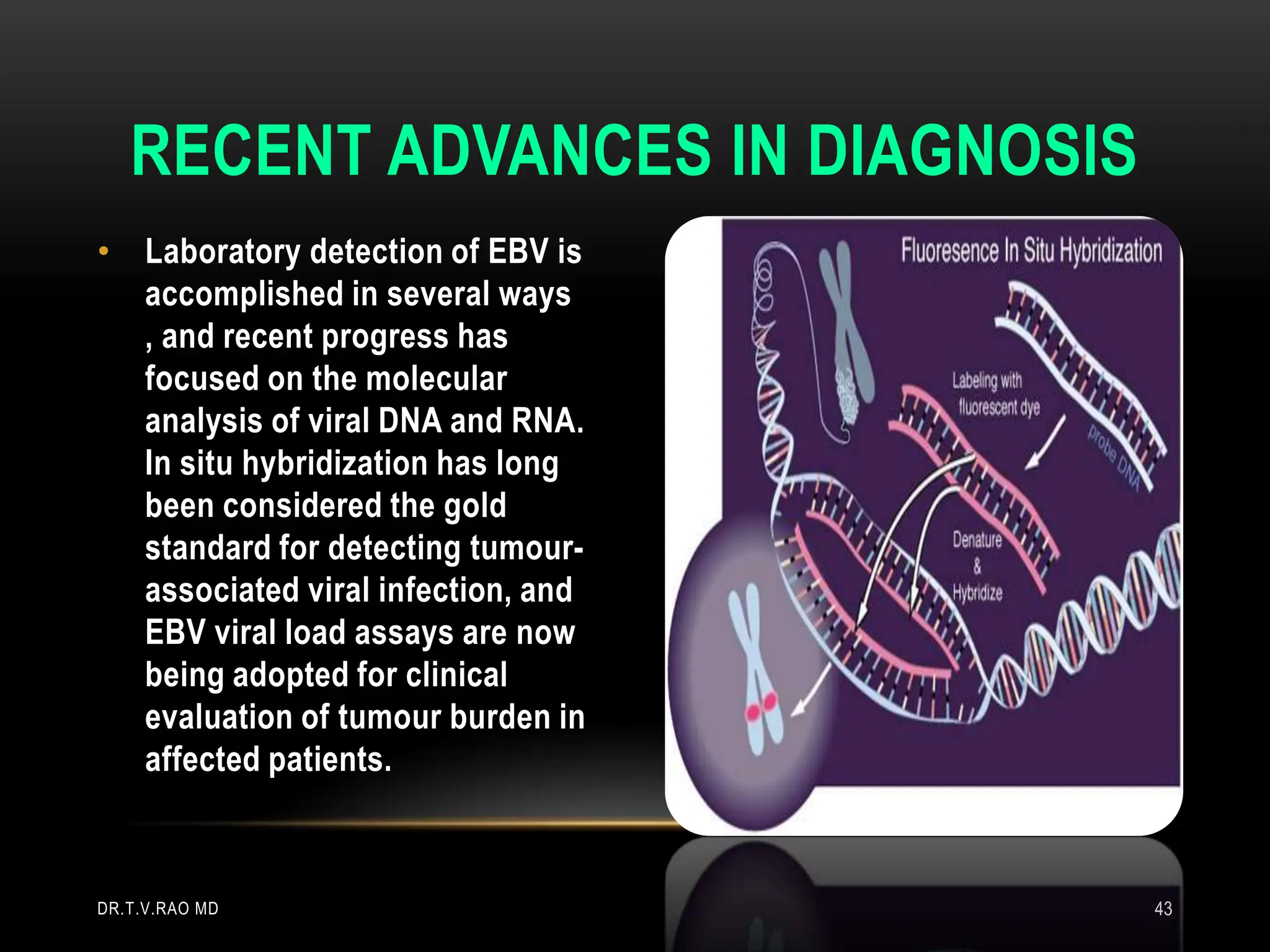
• Laboratory detection of EBV is
accomplished in several ways
, and recent progress has
focused on the molecular
analysis of viral DNA and RNA.
In situ hybridization has long
been considered the gold
standard for detecting tumour-
associated viral infection, and
EBV viral load assays are now
being adopted for clinical
evaluation of tumour burden in
affected patients.
RECENT ADVANCES IN DIAGNOSIS
DR.T.V.RAO MD 43
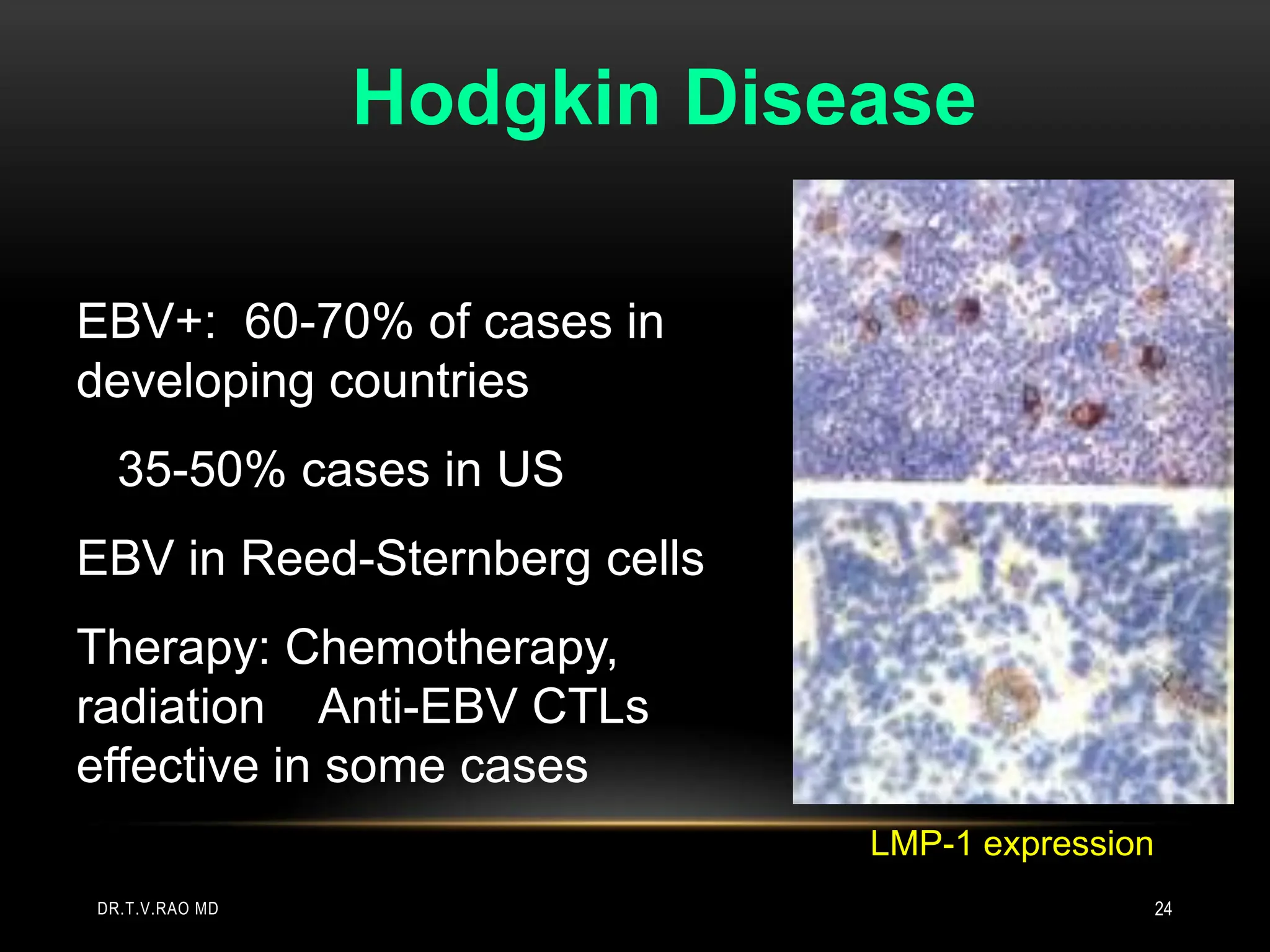
IM TREATMENT
Medical Care
• self-limited illness : not require specific therapy
• Inpatient therapy of medical and surgical complications
may be required
• Acyclovir (10 mg/kg/dose IV q8h for 7-10 d)
• inhibit viral shedding from the oropharynx
• clinical course is not significantly
• IVIG (400 mg/kg/d IV for 2-5 d)
• immune thrombocytopenia associated with
Andersson J et al. J Infect Dis. Feb 1986;153(2):283-90.
Cyran EM et al. Am J Hematol. Oct 1991;38(2):124-9.
DR.T.V.RAO MD 44
EPIDEMIOLOGY
• Two epidemiological patterns are seen with EBV.
• In developed countries, 2 peaks of infection are
seen : the first in very young preschool children
aged 1 - 6 and the second in adolescents and young
adults aged 14 - 20 Eventually 80-90% of adults are
infected.
• In developing countries, infection occurs at a much
earlier age so that by the age of two, 90% of
children are seropositive.
• The virus is transmitted by contact with saliva, in
particularly through kissing.
DR.T.V.RAO MD 45
EPSTEIN BARR VIRUS INFECTION
CONTINUES TO BE IMPORTANT
• In addition to clinical signs and symptoms, laboratory testing is necessary to establish
or confirm the diagnosis of IM. This can provide important information for both the
diagnosis and management of EBV-associated disease.
• If the classic signs and symptoms of IM are absent, a diagnosis of IM is more difficult
to make. A definite diagnosis of IM can be established by serologic antibody testing.
The antibodies present in IM are heterophile and EBV antibodies.
• EBV is widely disseminated. It is estimated that 95% of world’s population is exposed
to the virus, which makes it the most ubiquitous virus known to man.
• EBV is only a minor problem for immunocompetent persons, but it can become a
major one for immunologically compromised patients
• After primary exposure a person is considered to be immune and generally no longer
susceptible to overt reinfection.
DR.T.V.RAO MD 46
VISIT FOR MORE ARTICLES OF INTEREST ON
INFECTIOUS DISEASES
DR.T.V.RAO MD 47
DR.T.V.RAO MD 48
• Programme Created By Dr.T.V.Rao MD
for Medical and Paramedical Students in
the Developing World
• Email
• doctortvrao@hotmail.com

epstein-barrvirus-120805023924-phpapp02.pdf

  • 1.
  • 2.
    EPSTEIN-BARR VIRUS :HISTORY • In 1889, German physician “Pfeiffer” • fever • lymphadenopathy • malaise • Hepatosplenomegaly • abdominal discomfort in adolescents and young adults • In England, “DrÜsenfieber,” or glandular fever • In the early 1900s • numerous case descriptions of illnesses epidemiologically and clinically compatible with IM. FEIGIN et al. Textbook of Pediatric Infectious Diseases5th ed;2004:1952-1957. DR.T.V.RAO MD 2
  • 3.
    EPSTEIN-BARR VIRUS :HISTORY • In 1920, Sprunt and Evans • published cases of spontaneously resolving acute leukemia associated with blast-like cells in the blood • In 1923, Downey and McKinlay • detailed description of the lymphocyte morphology. • In 1932, Paul and Bunnell • Identified heterophile antibodies in serum during acute IM. FEIGIN et al. Textbook of Pediatric Infectious Diseases5th ed;2004:1952-1957. DR.T.V.RAO MD 3
  • 4.
    • Epstein-Barr virus(EBV) is a human γ-herpesvirus that is able to establish a long- term, latent infection in human B cells for the life of the host. EBV infection is associated with a range of human cancers, including Burkitt’s lymphoma (BL) and Hodgkin’s disease, as well as several AIDS-associated cancers of which the most prevalent is diffuse large B-cell lymphoma (DLBCL). IMPORTANCE OF EPSTEIN BARR VIRUS DR.T.V.RAO MD 4
  • 5.
    EBV in BCell Infectious mononucleosis X-Linked Lymphoproliferative Disease Chronic active EBV Hodgkin Disease Burkitt Lymphoma Lymphoproliferative disease EBV in Other Cells Nasopharyngeal carcinoma Gastric carcinoma Nasal T/NK cell lymphomas Peripheral T cell lymphomas Oral hairy leukoplakia Smooth muscle tumors in transplant patients Diseases Associated with EBV DR.T.V.RAO MD 5
  • 6.
    Diseases Driven byEpstein-Barr Virus Infectious mononucleosis Chronic Active EBV X-linked lymphoproliferative disease Lymphoproliferative disease Oral hairy leukoplakia Hodgkin disease EBV EBV-Driven Nasopharyngeal carcinoma Gene Cell T cell lymphoma Expression Proliferation Burkitt lymphoma DR.T.V.RAO MD 6
  • 7.
    EPSTEIN BARR VIRUSINFECTION ALSO KNOWN AS ‘THE KISSING DISEASE" DR.T.V.RAO MD 7
  • 8.
  • 9.
  • 10.
    EPSTEIN-BARR VIRUS (EBV) •Belong to the gammaherpesvirus subfamily of herpes viruses • Nucleocapsid 100 nm in diameter, with 162 capsomers • Membrane is derived by budding of immature particles through cell membrane and is required for infectivity. • Genome is a linear double stranded DNA molecule with 172 kbp • The viral genome does not normally integrate into the cellular DNA but forms circular episomes which reside in the nucleus. • The genome is large enough to code for 100 - 200 proteins but only a few have been identified. DR.T.V.RAO MD 10
  • 11.
    PATHOGENESIS • Once infected,a lifelong carrier state develops whereby a low grade infection is kept in check by the immune defenses. • Low grade virus replication and shedding can be demonstrated in the epithelial cells of the pharynx of all seropositive individuals. • EBV is able to immortalize B-lymphocytes in vitro and in vivo • Furthermore a few EBV-immortalized B-cells can be demonstrated in the circulation which are continually cleared by immune surveillance mechanisms. • EBV is associated with several very different diseases where it may act directly or one of several co-factors. DR.T.V.RAO MD 11
  • 12.
    DISEASE ASSOCIATION 1. InfectiousMononucleosis 2. Burkitt's lymphoma 3. Nasopharyngeal carcinoma 4. Lymphoproliferative disease and lymphoma in the immunosuppressed. 5. X-linked lymphoproliferative syndrome 6. Chronic infectious mononucleosis 7. Oral leukoplakia in AIDS patients 8. Chronic interstitial pneumonitis in AIDS patients. DR.T.V.RAO MD 12
  • 13.
    INFECTIOUS MONONUCLEOSIS • Primary EBVinfection is usually subclinical in childhood. However in adolescents and adults, there is a 50% chance that the syndrome of infectious mononucleosis (IM) will develop. • IM is usually a self-limited disease which consists of fever, lymphadenopathy and splenomegaly. In some patients jaundice may be seen which is due to hepatitis. Atypical lymphocytes are present in the blood. • Complications occur rarely but may be serious e.g. splenic rupture, meningoencephalitis, and pharyngeal obstruction. • In some patients, chronic IM may occur where eventually the patient dies of lymphoproliferative disease or lymphoma. • Diagnosis of IM is usually made by the heterophil antibody test and/or detection of EBV IgM. • There is no specific treatment. DR.T.V.RAO MD 13
  • 14.
  • 15.
  • 16.
  • 17.
    INFECTIOUS MONONUCLEOSIS IM withrash after treatment with amoxicillin or ampicillin NEJM;343:481-492. DR.T.V.RAO MD 17
  • 18.
    INFECTIOUS MONONUCLEOSIS • Acuteinfectious mononucleosis • fatigue and malaise 1-2 wks • sore throat, pharyngitis • retro-orbital headache • fever • myalgia • nausea • abdominal pain • generalized lymphadenopathy • Hepatosplenomegaly DR.T.V.RAO MD 18
  • 19.
    INFECTIOUS MONONUCLEOSIS atypical lymphocytes: Downey types DR.T.V.RAO MD 19
  • 20.
    BURKITT'S LYMPHOMA • Burkitt'slymphoma (BL) occurs endemically in parts of Africa (where it is the commonest childhood tumor) and Papua New Guinea. It usually occurs in children aged 3-14 years. It respond favorably to chemotherapy. • It is restricted to areas with holoendemic malaria. Therefore it appears that malaria infection is a cofactor. • Multiple copies of EBV genome and some EBV antigens can be found in BL cells and patients with BL have high titres of antibodies against various EBV antigens. DR.T.V.RAO MD 20
  • 21.
    EBV+: 90% ofcases in developing countries – jaw tumors 20% cases in US – children with abdominal tumors AIDS patients – tumors in lymph nodes EBV may be one “hit” but all tumors have c-myc translocations Dysregulation of c-myc oncogene Only EBV EBNA-1 expressed Therapy: Chemotherapy Burkitt Lymphoma DR.T.V.RAO MD 21
  • 22.
    BURKITT’S LYMPHOMA • BLcells show a reciprocal translocation between the long arm of chromosome 8 and chromosomes 14, 2 or 22. • This translocation result in the c-myc oncogene being transferred to the Immunoglobulin gene regions. This results in the deregulation of the c-myc gene. It is thought that this translocation is probably already present by the time of EBV infection and is not caused by EBV. • Sporadic cases of BL occur, especially in AIDS patients which may or may not be associated with EBV. • In theory BL can be controlled by the eradication of malaria (as has happened in Papua New Guinea) or vaccination against EBV. DR.T.V.RAO MD 22
  • 23.
    B-CELL LYMPHOMA • Inmost individuals infected with EBV, the virus is present in the B-cells, which are normally controlled by T-lymphocytes • When T-cell deficiency exists, one clone of EBV- infected B-lymphocytes escapes immune surveillance to become autonomously proliferating. • EBV induced B cell lymphomas are most prevalent in immunocompromised patients. DR.T.V.RAO MD 23
  • 24.
    EBV+: 60-70% ofcases in developing countries 35-50% cases in US EBV in Reed-Sternberg cells Therapy: Chemotherapy, radiation Anti-EBV CTLs effective in some cases Hodgkin Disease LMP-1 expression DR.T.V.RAO MD 24
  • 25.
    NASOPHARYNGEAL CARCINOMA • Nasopharyngealcarcinoma (NPC) is a malignant tumor of the squamous epithelium of the nasopharynx. It is very prevalent in S. China, where it is the commonest tumor in men and the second commonest in women. • The tumor is rare in most parts of the world, though pockets occur in N. and C. Africa, Malaysia, Alaska, and Iceland. • Multiple copies of EBV genome and EBV EBNA-1 antigen can be found in cells of undifferentiated NPC. Patients with NPC have high titers of antibodies against various EBV antigens. • Besides EBV there appears to be a number of environmental and genetic cofactors in NPC. • NPC usually presents late and thus the prognosis is poor. • In theory NPC can be prevented by vaccination. DR.T.V.RAO MD 25
  • 26.
    IMMUNOCOMPROMISED PATIENTS • Afterprimary infection, EBV maintains a steady low grade latent infection in the body. Should the person become immunocompromised, the virus will reactivate. In a few cases, lymphoproliferative lesions and lymphoma may develop. These lesions tend to be extranodal and in unusual sites such as the GI tract or the CNS. • Transplant recipients e.g. renal - EBV is associated with the development of lymphoproliferative disease and lymphoma. • AIDS patients - EBV is associated with oral leukoplakia and with various Non-Hodgkin's lymphoma. • Duncan X-linked lymphoproliferative syndrome - this condition occurs exclusively in males who had inherited a defective gene in the X- chromosome . This condition accounts for half of the fatal cases of IM. DR.T.V.RAO MD 26
  • 27.
    MOLECULAR BIOLOGY :REPLICATION • To infect cells, EBV uses a cell surface receptor (CR2,CD21) found primarily on B lymphocytes and nasopharyngeal epithelial cells. • MHC class II protein functions as a cofactor for this virus-receptor interaction. • After infection of epithelial cells, active replication occurs and leads to lysis and death of the cell. DR.T.V.RAO MD 27
  • 28.
    MOLECULAR CONFIGURATION OF EPSTEINBARR VIRUS DR.T.V.RAO MD 28
  • 29.
    MOLECULAR BIOLOGY :REPLICATION • Viral capsid antigens (VCAs) are the primary structure proteins in viral capsids and are found in replicating cells. • EBV early antigens (EAs) consist of >15 proteins codes by genes distributed throughout the genome. • EBV nuclear antigen (EBNA) corresponds to six virally encoded proteins found in the nucleus of an EBV-infected cell. DR.T.V.RAO MD 29
  • 30.
    MOLECULAR BIOLOGY :LATENCY • Latently infected B cells are the primary reservoir of EBV in the body. • >100 gene products may be expressed during active viral replication, only 11 are expressed during viral latency. • In this way, the virus limits cytotoxic T-cell recognition of EBV-infected cells. DR.T.V.RAO MD 30
  • 31.
    DIAGNOSIS • Acute EBVinfection is usually made by the heterophil antibody test and/or detection of anti-EBV VCA IgM. • Cases of Burkitt’s lymphoma should be diagnosed by histology. The tumour can be stained with antibodies to lambda light chains which should reveal a monoclonal tumour of B-cell origin. In over 90% of cases, the cells express IgM at the cell surface. • Cases of NPC should be diagnosed by histology. • The determination of the titre of anti-EBV VCA IgA in screening for early lesions of NPC and also for monitoring treatment. • A patient with with non-specific ENT symptoms who have elevated titers of EBV IgA should be given a thorough examination. DR.T.V.RAO MD 31
  • 32.
    INFECTIOUS MONONUCLEOSIS : LAB •Heterophile antibodies • 50% in first week of illness • 60-90% in the second or third weeks • begins to decline during the fourth or fifth week and often is less than 1:40 by 2-3 months after symptom onset • 20% of patients have positive titers 1-2 years after acquisition • children < 2 years : 10-30% • children 2-4 years : 50-75%
  • 33.
    PRIMARY EBV INFECTION: SEROPREVALENCE • In developing countries -80-100% of children becoming infected by 3-6 yrs of age -clinically silent or mild disease. • In developed countries -occurs later in life, 10-30 years of age induce clinically mononucleosis syndrome (U.S.college students : 50-75% associated with primary EBV infection) Hickey SM et al. Pediatr Clin North Am. Dec 1997;44(6):1541-56. DR.T.V.RAO MD 33
  • 34.
    INFECTIOUS MONONUCLEOSIS :LAB • Time course of antibody production • EA is rising at symptom onset : rise for 3-4 weeks, then quickly decline to undetectable levels by 3-4 months, although low levels may be detected intermittently for years • VCA-IgM usually is measurable at symptom onset, peaks at 2-3 weeks, then declines and unmeasurable by 3-4 months • VCA-IgG rises shortly after symptom onset, peaks at 2-3 months, then drops slightly but persists for life • EBNA : convalescence and remain present for life
  • 35.
    SERUM EPSTEIN-BARR VIRUS(EBV) ANTIBODIES IN EBV INFECTION Infection VCA IgG VCA IgM EA(D) EBNA No previous infection - - - - Acute infection Recent infection + + + +/- +/- +/- - +/- Past infection + - +/- + AAP. Red book2006;286-288.
  • 36.
    DIAGNOSTIC APPROACH • Examinationof the blood usually shows an increase in the white blood cells, due to the appearance of many atypical lymphocytes in the blood. • Blood serum in IM often contains an antibody known as heterophile antibody that agglutinates, or clumps, the red blood cells of sheep. • Heterophile antibodies are antibodies that are stimulated by one antigen and react with an entirely unrelated surface antigen present on cells from different mammalian species. DR.T.V.RAO MD 36
  • 37.
    DIAGNOSIS • Heterophile antibodytiters rise during the first two or three weeks with half or more developing a significant titer during the first week of illness. • The level of antibody gradually declines and usually disappears in eight to twelve weeks following the onset. • Elevated titers sometimes linger for four to six months up to a year or more. • Heterophile antibody most commonly used in the serological diagnosis of IM is an IgM antibody which agglutinates sheep red blood cells. DR.T.V.RAO MD 37
  • 38.
    DIAGNOSIS • The originalPaul-Bunnell test was a simple titration of sheep cell agglutinins but this procedure was subsequently modified in order to distinguish between sheep cell agglutinins formed in IM and the Forssmann-type antibodies found in normal serum, serum sickness and in certain other conditions. • Tissues rich in Forssmann antigen (guinea pig kidney) absorb Forssmann antibodies but do not affect the heterophile antibodies in IM. • Heterophile antibodies are absorbed by beef cells, • Forssmann Hapten is a glycolipid usually associated with a protein, the determinant being largely carbohydrate and therefore heat stable. DR.T.V.RAO MD 38
  • 39.
    PAUL BUNNELL TEST •The original Paul-Bunnell test was a simple titration of sheep cell agglutinins but this procedure was subsequently modified in order to distinguish between sheep cell agglutinins formed in IM and the Forssmann-type antibodies found in normal serum, serum sickness and in certain other conditions. • Tissues rich in Forssmann antigen (guinea pig kidney) absorb Forssmann antibodies but do not affect the heterophile antibodies in IM. • Heterophile antibodies are absorbed by beef cells, • Forssmann Hapten is a glycolipid usually associated with a protein, the determinant being largely carbohydrate and therefore heat stable. DR.T.V.RAO MD 39
  • 40.
    DAVIDSOHN DIFFERENTIAL • Theprinciple behind the Paul-Bunnell-Davidsohn test is that the two types of sheep agglutinins are distinguished by titrating them before and after absorption with guinea pig kidney and ox cells. • Patients serum containing antibodies due to IM is added to guinea pig kidney cells. These antibodies are not absorbed by the kidney cells. These antibodies then react with Beef (Ox) red blood cells which causes agglutination and is a positive test for IM. • Patients serum containing Forssmann antibodies are added to guinea pig kidney cells. Antibodies are absorbed by the kidney cells. These antibodies are then allowed to react with Beef red blood cells which does not cause agglutination. This is a positive test for Forssmann antigens. DR.T.V.RAO MD 40
  • 41.
    DAVIDSOHN DIFFERENTIAL * TOBE CONSIDERED ABSORBED THERE MUST BE GREATER THAN A THREE TUBE DIFFERENCE BETWEEN THE PRESUMPTIVE TITER AND THE DIFFERENTIAL TITER. Heterophil Antibody ------------------------ Infectious Mono Kidney Extract ------------------ Not Absorbed Beef Erythrocyte --------------------- Absorbed Forssman Absorbed Not Absorbed Serum Sickness Absorbed Absorbed DR.T.V.RAO MD 41
  • 42.
    DAVIDSOHN DIFFERENTIAL Advantages • Whenproperly performed, this test is specific for Infectious Mononucleosis and false-positive results are rare. Disadvantages • Davidsohn Differential test is very time consuming and burdensome. DR.T.V.RAO MD 42
  • 43.
    • Laboratory detectionof EBV is accomplished in several ways , and recent progress has focused on the molecular analysis of viral DNA and RNA. In situ hybridization has long been considered the gold standard for detecting tumour- associated viral infection, and EBV viral load assays are now being adopted for clinical evaluation of tumour burden in affected patients. RECENT ADVANCES IN DIAGNOSIS DR.T.V.RAO MD 43
  • 44.
    IM TREATMENT Medical Care •self-limited illness : not require specific therapy • Inpatient therapy of medical and surgical complications may be required • Acyclovir (10 mg/kg/dose IV q8h for 7-10 d) • inhibit viral shedding from the oropharynx • clinical course is not significantly • IVIG (400 mg/kg/d IV for 2-5 d) • immune thrombocytopenia associated with Andersson J et al. J Infect Dis. Feb 1986;153(2):283-90. Cyran EM et al. Am J Hematol. Oct 1991;38(2):124-9. DR.T.V.RAO MD 44
  • 45.
    EPIDEMIOLOGY • Two epidemiologicalpatterns are seen with EBV. • In developed countries, 2 peaks of infection are seen : the first in very young preschool children aged 1 - 6 and the second in adolescents and young adults aged 14 - 20 Eventually 80-90% of adults are infected. • In developing countries, infection occurs at a much earlier age so that by the age of two, 90% of children are seropositive. • The virus is transmitted by contact with saliva, in particularly through kissing. DR.T.V.RAO MD 45
  • 46.
    EPSTEIN BARR VIRUSINFECTION CONTINUES TO BE IMPORTANT • In addition to clinical signs and symptoms, laboratory testing is necessary to establish or confirm the diagnosis of IM. This can provide important information for both the diagnosis and management of EBV-associated disease. • If the classic signs and symptoms of IM are absent, a diagnosis of IM is more difficult to make. A definite diagnosis of IM can be established by serologic antibody testing. The antibodies present in IM are heterophile and EBV antibodies. • EBV is widely disseminated. It is estimated that 95% of world’s population is exposed to the virus, which makes it the most ubiquitous virus known to man. • EBV is only a minor problem for immunocompetent persons, but it can become a major one for immunologically compromised patients • After primary exposure a person is considered to be immune and generally no longer susceptible to overt reinfection. DR.T.V.RAO MD 46
  • 47.
    VISIT FOR MOREARTICLES OF INTEREST ON INFECTIOUS DISEASES DR.T.V.RAO MD 47
  • 48.
    DR.T.V.RAO MD 48 •Programme Created By Dr.T.V.Rao MD for Medical and Paramedical Students in the Developing World • Email • doctortvrao@hotmail.com