EPSILON WAVE
Dr.G.VENKATA RAMANA
MBBS DNB FAMILY MEDICINE
DEFINITION
• Small deflection (“blip” or “wiggle”) buried in the
end of the QRS complex
• On Standard 12-lead ECG (S-ECG), best seen
in ST segment of V1 and V2, they are usually
present in leads V1 through V4
• Caused by post-excitation of myocytes in the
right ventricle
• Characteristic finding in patients
with arrhythmogenic right ventricular
dysplasia (ARVD)
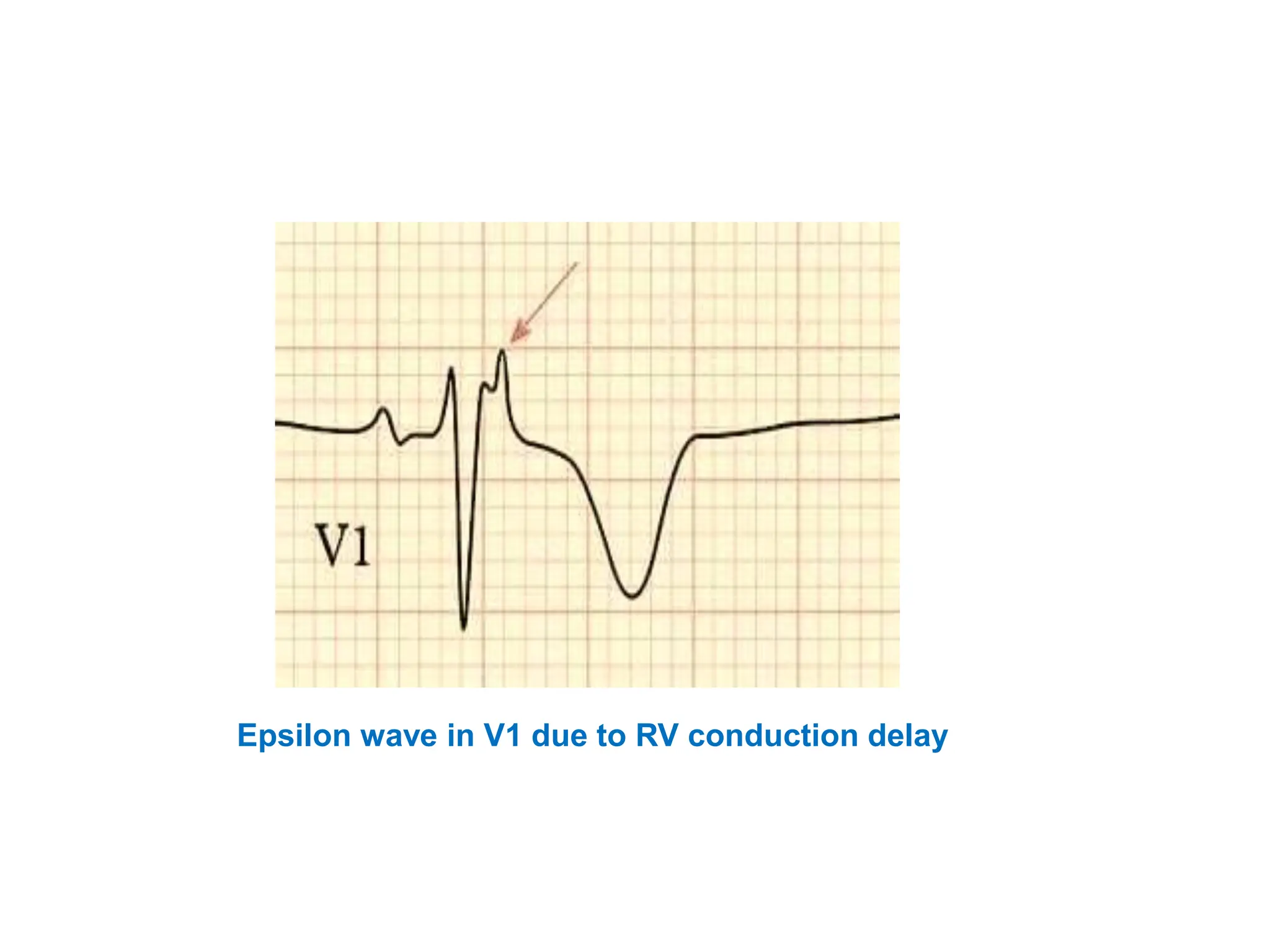
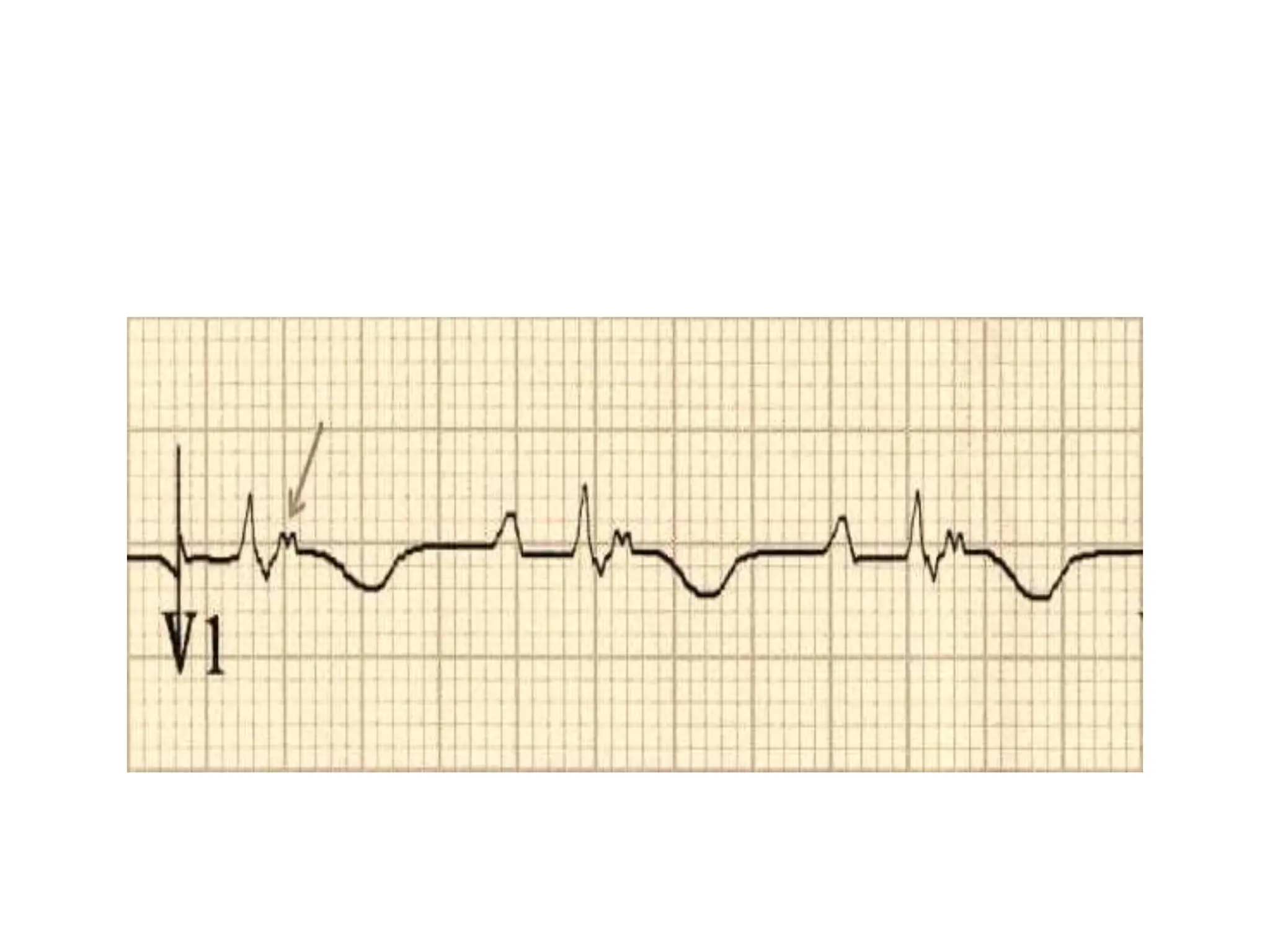
Epsilon wave in V1 due to RV conduction delay
• Epsilon waves are the most specific and characteristic
finding in arrhythmogenic right ventricular
dysplasia (ARVD)
• In ARVD, myocytes are replaced by fat, producing
islands of viable myocytes in a sea of fat
• This causes a delay in excitation of some of the
myocytes of the right ventricle, producing a small “blip”
seen during the ST segment of the ECG
• Epsilon waves have also been described in patients
with:
• Posterior myocardial infarction
• Right ventricular infarction
• Infiltrative disease
• Sarcoidosis
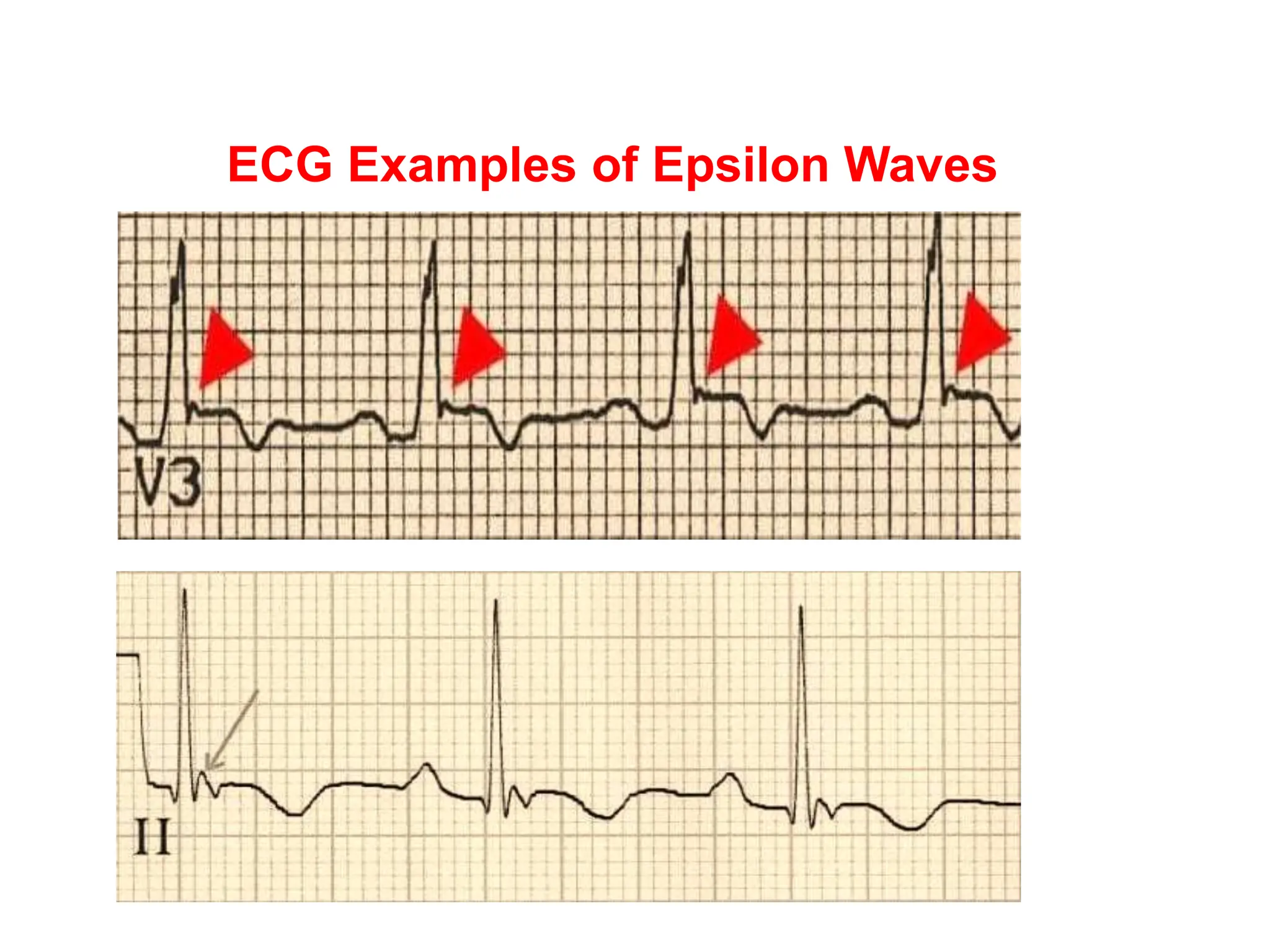
ECG Examples of Epsilon Waves
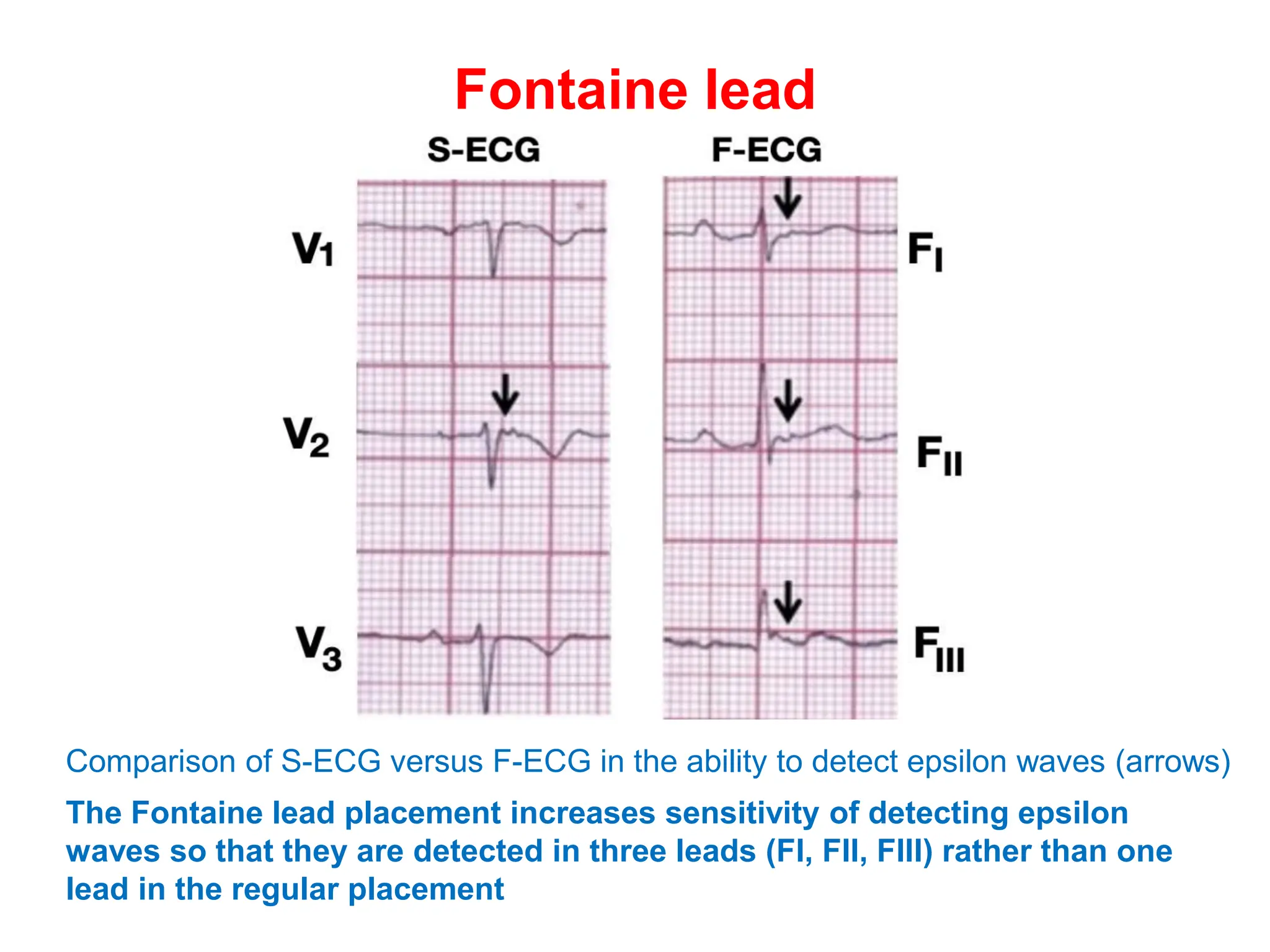
Fontaine lead
Comparison of S-ECG versus F-ECG in the ability to detect epsilon waves (arrows)
The Fontaine lead placement increases sensitivity of detecting epsilon
waves so that they are detected in three leads (FI, FII, FIII) rather than one
lead in the regular placement

EPSILON WAVE IN ECG AND ITS INTERPRETATION

  • 1.
  • 2.
    DEFINITION • Small deflection(“blip” or “wiggle”) buried in the end of the QRS complex • On Standard 12-lead ECG (S-ECG), best seen in ST segment of V1 and V2, they are usually present in leads V1 through V4 • Caused by post-excitation of myocytes in the right ventricle • Characteristic finding in patients with arrhythmogenic right ventricular dysplasia (ARVD)
  • 3.
    Epsilon wave inV1 due to RV conduction delay
  • 4.
    • Epsilon wavesare the most specific and characteristic finding in arrhythmogenic right ventricular dysplasia (ARVD) • In ARVD, myocytes are replaced by fat, producing islands of viable myocytes in a sea of fat • This causes a delay in excitation of some of the myocytes of the right ventricle, producing a small “blip” seen during the ST segment of the ECG • Epsilon waves have also been described in patients with: • Posterior myocardial infarction • Right ventricular infarction • Infiltrative disease • Sarcoidosis
  • 5.
    ECG Examples ofEpsilon Waves
  • 8.
    Fontaine lead Comparison ofS-ECG versus F-ECG in the ability to detect epsilon waves (arrows) The Fontaine lead placement increases sensitivity of detecting epsilon waves so that they are detected in three leads (FI, FII, FIII) rather than one lead in the regular placement