Cancer Epigenetic
By
Dr. Abeer Elsayed Aly
Lecturer of medical oncology and hematological Malignancy
4/2/2013
South Egypt Cancer Institute
Assiut . Egypt
Definition
• Epigenetics represents the science for the
studying heritable changes of DNA, not
involving changes in DNA sequence that
regulate gene expression.
• There are at least two forms of
information in the genome of the cell.
• A- Genetic information
• B- Epigenetic information
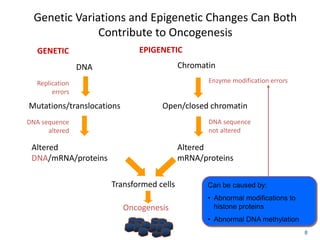
Genetic Variations and Epigenetic Changes Can Both
Contribute to Oncogenesis
8
DNA
Mutations/translocations
Replication
errors
GENETIC
Chromatin
EPIGENETIC
Transformed cells
Open/closed chromatin
Enzyme modification errors
Altered
DNA/mRNA/proteins
DNA sequence
altered
Altered
mRNA/proteins
DNA sequence
not altered
Oncogenesis
Can be caused by:
• Abnormal modifications to
histone proteins
• Abnormal DNA methylation
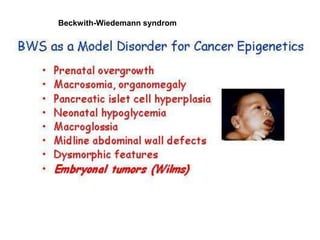
Beckwith-Wiedemann syndrom
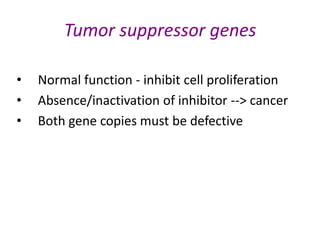
Tumor suppressor genes
• Normal function - inhibit cell proliferation
• Absence/inactivation of inhibitor --> cancer
• Both gene copies must be defective
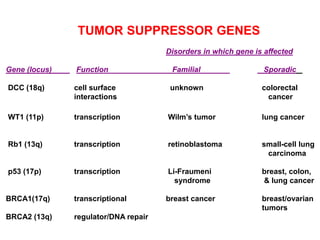
TUMOR SUPPRESSOR GENES
Disorders in which gene is affected
Gene (locus) Function Familial Sporadic
DCC (18q) cell surface unknown colorectal
interactions cancer
WT1 (11p) transcription Wilm’s tumor lung cancer
Rb1 (13q) transcription retinoblastoma small-cell lung
carcinoma
p53 (17p) transcription Li-Fraumeni breast, colon,
syndrome & lung cancer
BRCA1(17q) transcriptional breast cancer breast/ovarian
tumors
BRCA2 (13q) regulator/DNA repair
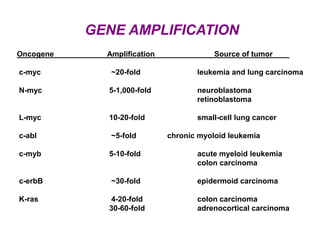
GENE AMPLIFICATION
Oncogene Amplification Source of tumor
c-myc ~20-fold leukemia and lung carcinoma
N-myc 5-1,000-fold neuroblastoma
retinoblastoma
L-myc 10-20-fold small-cell lung cancer
c-abl ~5-fold chronic myoloid leukemia
c-myb 5-10-fold acute myeloid leukemia
colon carcinoma
c-erbB ~30-fold epidermoid carcinoma
K-ras 4-20-fold colon carcinoma
30-60-fold adrenocortical carcinoma
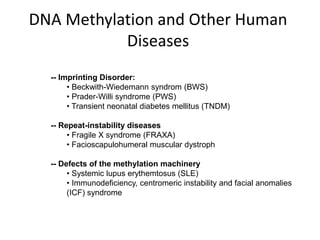
DNA Methylation and Other Human
Diseases
-- Imprinting Disorder:
• Beckwith-Wiedemann syndrom (BWS)
• Prader-Willi syndrome (PWS)
• Transient neonatal diabetes mellitus (TNDM)
-- Repeat-instability diseases
• Fragile X syndrome (FRAXA)
• Facioscapulohumeral muscular dystroph
-- Defects of the methylation machinery
• Systemic lupus erythemtosus (SLE)
• Immunodeficiency, centromeric instability and facial anomalies
(ICF) syndrome
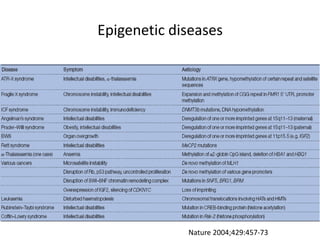
Epigenetic diseases
Nature 2004;429:457-73
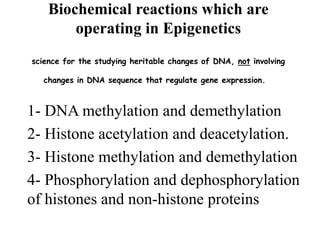
Biochemical reactions which are
operating in Epigenetics
science for the studying heritable changes of DNA, not involving
changes in DNA sequence that regulate gene expression.
1- DNA methylation and demethylation
2- Histone acetylation and deacetylation.
3- Histone methylation and demethylation
4- Phosphorylation and dephosphorylation
of histones and non-histone proteins
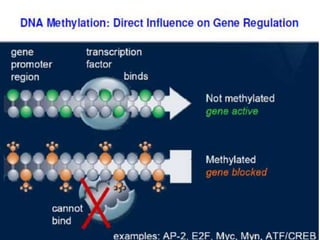
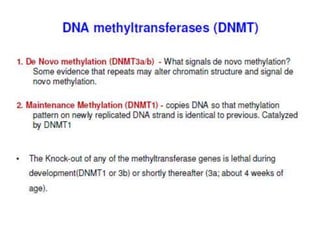
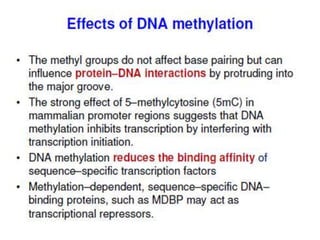
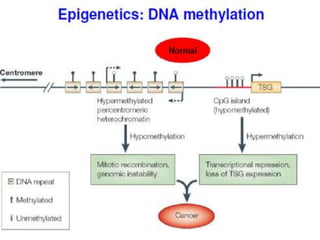
DNA methylation
Methylation in Haematological
Malignancies-MDS
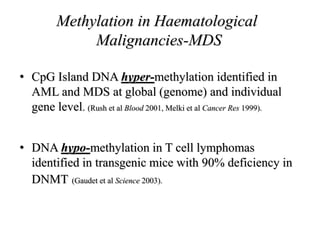
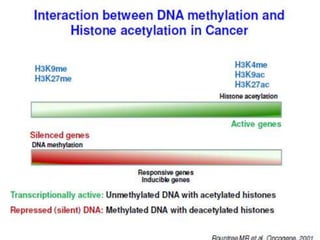
• CpG Island DNA hyper-methylation identified in
AML and MDS at global (genome) and individual
gene level. (Rush et al Blood 2001, Melki et al Cancer Res 1999).
• DNA hypo-methylation in T cell lymphomas
identified in transgenic mice with 90% deficiency in
DNMT (Gaudet et al Science 2003).
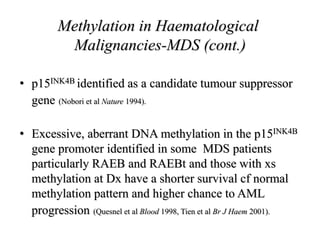
• p15INK4B identified as a candidate tumour suppressor
gene (Nobori et al Nature 1994).
• Excessive, aberrant DNA methylation in the p15INK4B
gene promoter identified in some MDS patients
particularly RAEB and RAEBt and those with xs
methylation at Dx have a shorter survival cf normal
methylation pattern and higher chance to AML
progression (Quesnel et al Blood 1998, Tien et al Br J Haem 2001).
Methylation in Haematological
Malignancies-MDS (cont.)
Methylation in Haematological
Malignancies-MDS (cont.)
• Aberrant p15INK4B hypermethylation also identified in
de-novo AML and CML.
• Hyper-methylation may be a consequence of excessive
DNMT activity in these malignancies (Mizuno et al Blood 2001).
• Inhibition of DNMT results in reactivation of silenced
genes (Bender et al Pharm Res 1998).
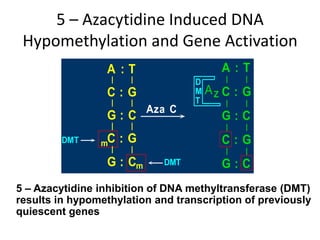
5 – Azacytidine Induced DNA
Hypomethylation and Gene Activation
5 – Azacytidine inhibition of DNA methyltransferase (DMT)
results in hypomethylation and transcription of previously
quiescent genes
A : T
C : G
G : C
C : G
G : C
A : T
C : G
G : C
C : G
G : C
m
m DMT
DMT
AZ
D
M
T
Aza C
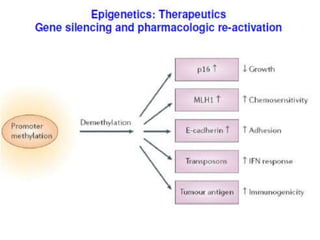
Therapeutic Demethylating Agents
• 5-Azacytidine and 5-aza-2’-deoxycytidine
(Decitabine) restore normal methylation pattern in
vitro and in vivo to several genes including p15INK4B
in multiple haematological malignancies (Daskalakis et al
Blood 2002).
Clinical Trials with Azacytidine
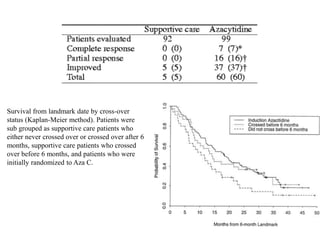
• CALGB phase III trial 191 patients with MDS treated
with 75mg/m2/day AZA s.c for 7 days, no pre-
treatment vs. supportive care only (Silverman et al 2002
J Clin Oncol).
• Supportive arm able to cross over to Aza arm in the
case of disease progression.
• Median time to leukemic transformation or death was
21 months for Aza vs. 13 months for supportive care
p<0.007.
Survival from landmark date by cross-over
status (Kaplan-Meier method). Patients were
sub grouped as supportive care patients who
either never crossed over or crossed over after 6
months, supportive care patients who crossed
over before 6 months, and patients who were
initially randomized to Aza C.
Histone acetylation (HDAC)
•Deacetylases are enzymes that remove the
acetyl groups from target proteins (histones and
non-histones ) leading to regulation of gene
transcription and other cellular processes.
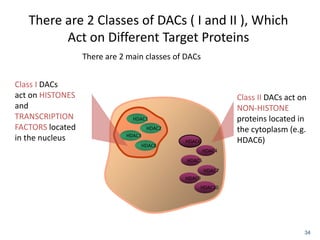
There are 2 Classes of DACs ( I and II ), Which
Act on Different Target Proteins
34
HDAC4
Class II DACs act on
NON-HISTONE
proteins located in
the cytoplasm (e.g.
HDAC6)
Class I DACs
act on HISTONES
and
TRANSCRIPTION
FACTORS located
in the nucleus
There are 2 main classes of DACs
HDAC1
HDAC2
HDAC3
HDAC8
HDAC5
HDAC7
HDAC9
HDAC6
HDAC10
HDAC7
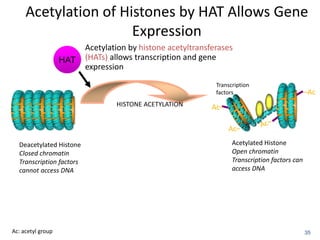
Acetylation of Histones by HAT Allows Gene
Expression
35
Acetylation by histone acetyltransferases
(HATs) allows transcription and gene
expression
Acetylated Histone
Open chromatin
Transcription factors can
access DNA
Deacetylated Histone
Closed chromatin
Transcription factors
cannot access DNA
HAT
HISTONE ACETYLATION
Ac: acetyl group
Transcription
factors –Ac
Ac–
Ac–
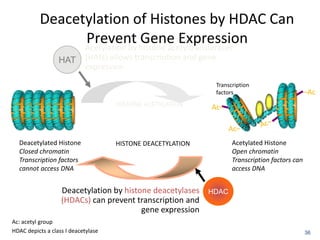
Deacetylation of Histones by HDAC Can
Prevent Gene Expression
36
Acetylation by histone acetyltransferases
(HATs) allows transcription and gene
expression
Deacetylation by histone deacetylases
(HDACs) can prevent transcription and
gene expression
HAT
HISTONE ACETYLATION
HISTONE DEACETYLATION
HDAC
Acetylated Histone
Open chromatin
Transcription factors can
access DNA
Deacetylated Histone
Closed chromatin
Transcription factors
cannot access DNA
Ac: acetyl group
HDAC depicts a class I deacetylase
Transcription
factors –Ac
Ac–
Ac–
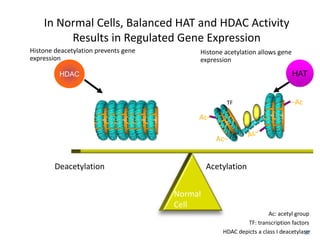
In Normal Cells, Balanced HAT and HDAC Activity
Results in Regulated Gene Expression
37
Normal
Cell
Deacetylation Acetylation
Histone deacetylation prevents gene
expression
Histone acetylation allows gene
expression
HDAC HAT
Ac: acetyl group
TF: transcription factors
HDAC depicts a class I deacetylase
–Ac
Ac–
Ac–
TF
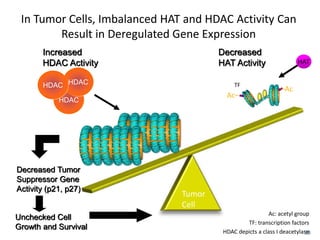
In Tumor Cells, Imbalanced HAT and HDAC Activity Can
Result in Deregulated Gene Expression
38
Tumor
Cell
Unchecked Cell
Growth and Survival
Decreased Tumor
Suppressor Gene
Activity (p21, p27)
Increased
HDAC Activity
Decreased
HAT Activity
HDAC
HDACHDAC
HAT
Ac: acetyl group
TF: transcription factors
HDAC depicts a class I deacetylase
TF
–Ac
Ac–
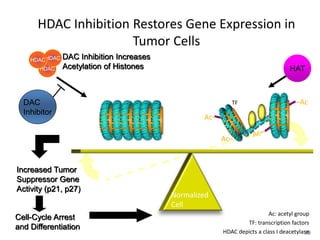
HDAC Inhibition Restores Gene Expression in
Tumor Cells
39
HDAC
HDACHDAC DAC Inhibition Increases
Acetylation of Histones HAT
DAC
Inhibitor
Increased Tumor
Suppressor Gene
Activity (p21, p27)
Cell-Cycle Arrest
and Differentiation
Normalized
Cell
Ac: acetyl group
TF: transcription factors
HDAC depicts a class I deacetylase
–Ac
Ac–
Ac–
TF
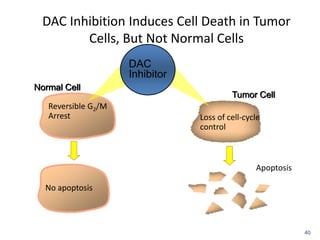
DAC Inhibition Induces Cell Death in Tumor
Cells, But Not Normal Cells
40
Normal Cell
Tumor Cell
Reversible G2/M
Arrest
Apoptosis
Loss of cell-cycle
control
No apoptosis
DAC
Inhibitor
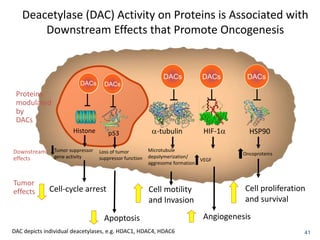
Deacetylase (DAC) Activity on Proteins is Associated with
Downstream Effects that Promote Oncogenesis
41
Proteins
modulated
by
DACs
DAC depicts individual deacetylases, e.g. HDAC1, HDAC4, HDAC6
Histone
DACs DACs
-tubulin HSP90HIF-1
DACs DACs DACs
Tumor suppressor
gene activity
Loss of tumor
suppressor function
Microtubule
depolymerization/
aggresome formation
VEGF
OncoproteinsDownstream
effects
Cell-cycle arrest
Apoptosis
Cell motility
and Invasion
Cell proliferation
and survival
Angiogenesis
Tumor
effects
p53
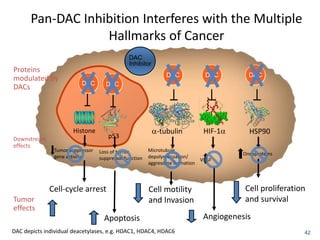
Pan-DAC Inhibition Interferes with the Multiple
Hallmarks of Cancer
42
DAC DAC DAC
Proteins
modulated by
DACs
DAC depicts individual deacetylases, e.g. HDAC1, HDAC4, HDAC6
Histone
DAC DAC
-tubulin HSP90HIF-1
Cell-cycle arrest
Apoptosis
Cell motility
and Invasion
Cell proliferation
and survival
Angiogenesis
Tumor
effects
DAC
Inhibitor
Tumor suppressor
gene activity
Loss of tumor
suppressor function
Microtubule
depolymerization/
aggresome formation
VEGF
Oncoproteins
Downstream
effects
p53
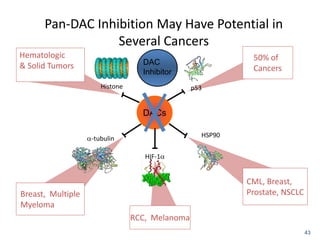
Pan-DAC Inhibition May Have Potential in
Several Cancers
43
Histone
-tubulin HSP90
HIF-1
DACs
Hematologic
& Solid Tumors
Breast, Multiple
Myeloma
RCC, Melanoma
CML, Breast,
Prostate, NSCLC
50% of
Cancers
DAC
Inhibitor
p53
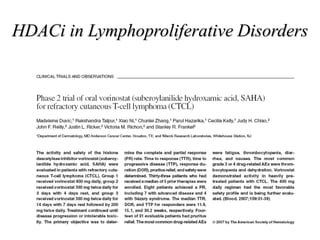
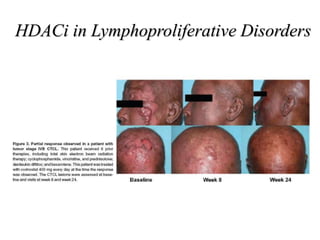
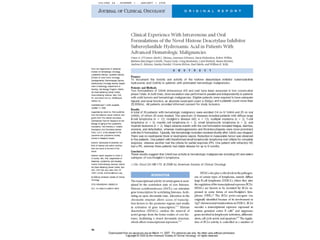
HDACi in Lymphoproliferative Disorders
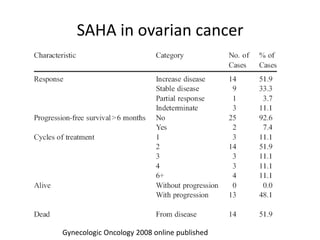
SAHA in ovarian cancer
Gynecologic Oncology 2008 online published
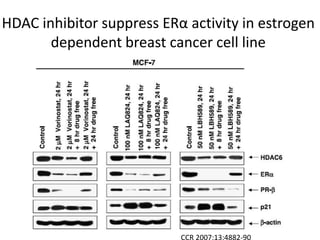
HDAC inhibitor suppress ERα activity in estrogen
dependent breast cancer cell line
CCR 2007;13:4882-90
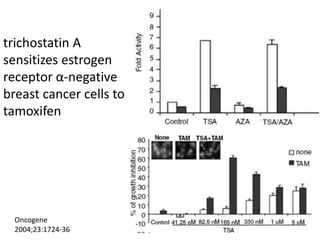
trichostatin A
sensitizes estrogen
receptor α-negative
breast cancer cells to
tamoxifen
Oncogene
2004;23:1724-36
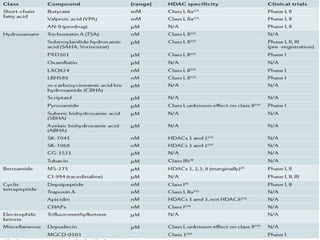
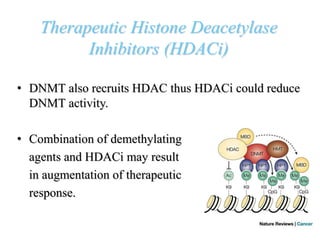
Therapeutic Histone Deacetylase
Inhibitors (HDACi)
• DNMT also recruits HDAC thus HDACi could reduce
DNMT activity.
• Combination of demethylating
agents and HDACi may result
in augmentation of therapeutic
response.
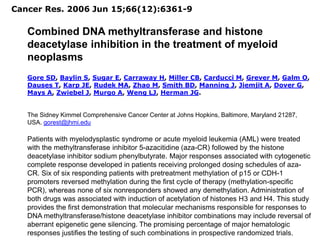
Cancer Res. 2006 Jun 15;66(12):6361-9
Combined DNA methyltransferase and histone
deacetylase inhibition in the treatment of myeloid
neoplasms
Gore SD, Baylin S, Sugar E, Carraway H, Miller CB, Carducci M, Grever M, Galm O,
Dauses T, Karp JE, Rudek MA, Zhao M, Smith BD, Manning J, Jiemjit A, Dover G,
Mays A, Zwiebel J, Murgo A, Weng LJ, Herman JG.
The Sidney Kimmel Comprehensive Cancer Center at Johns Hopkins, Baltimore, Maryland 21287,
USA. gorest@jhmi.edu
Patients with myelodysplastic syndrome or acute myeloid leukemia (AML) were treated
with the methyltransferase inhibitor 5-azacitidine (aza-CR) followed by the histone
deacetylase inhibitor sodium phenylbutyrate. Major responses associated with cytogenetic
complete response developed in patients receiving prolonged dosing schedules of aza-
CR. Six of six responding patients with pretreatment methylation of p15 or CDH-1
promoters reversed methylation during the first cycle of therapy (methylation-specific
PCR), whereas none of six nonresponders showed any demethylation. Administration of
both drugs was associated with induction of acetylation of histones H3 and H4. This study
provides the first demonstration that molecular mechanisms responsible for responses to
DNA methyltransferase/histone deacetylase inhibitor combinations may include reversal of
aberrant epigenetic gene silencing. The promising percentage of major hematologic
responses justifies the testing of such combinations in prospective randomized trials.
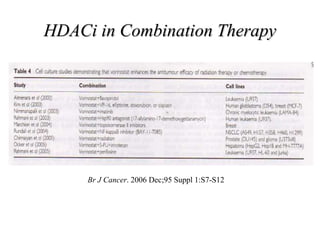
HDACi in Combination Therapy
Br J Cancer. 2006 Dec;95 Suppl 1:S7-S12
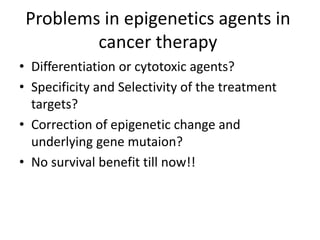
Problems in epigenetics agents in
cancer therapy
• Differentiation or cytotoxic agents?
• Specificity and Selectivity of the treatment
targets?
• Correction of epigenetic change and
underlying gene mutaion?
• No survival benefit till now!!
Summary
• Methylation and HDAC
– control of transcription through electric change or
3-D conformational change of chromatin
– Control the phenotype
– Use as cancer therapy
Thank you

Epigenetic in Cancer

  • 1.
    Cancer Epigenetic By Dr. AbeerElsayed Aly Lecturer of medical oncology and hematological Malignancy 4/2/2013 South Egypt Cancer Institute Assiut . Egypt
  • 2.
    Definition • Epigenetics representsthe science for the studying heritable changes of DNA, not involving changes in DNA sequence that regulate gene expression. • There are at least two forms of information in the genome of the cell. • A- Genetic information • B- Epigenetic information
  • 8.
    Genetic Variations andEpigenetic Changes Can Both Contribute to Oncogenesis 8 DNA Mutations/translocations Replication errors GENETIC Chromatin EPIGENETIC Transformed cells Open/closed chromatin Enzyme modification errors Altered DNA/mRNA/proteins DNA sequence altered Altered mRNA/proteins DNA sequence not altered Oncogenesis Can be caused by: • Abnormal modifications to histone proteins • Abnormal DNA methylation
  • 9.
  • 10.
    Tumor suppressor genes •Normal function - inhibit cell proliferation • Absence/inactivation of inhibitor --> cancer • Both gene copies must be defective
  • 11.
    TUMOR SUPPRESSOR GENES Disordersin which gene is affected Gene (locus) Function Familial Sporadic DCC (18q) cell surface unknown colorectal interactions cancer WT1 (11p) transcription Wilm’s tumor lung cancer Rb1 (13q) transcription retinoblastoma small-cell lung carcinoma p53 (17p) transcription Li-Fraumeni breast, colon, syndrome & lung cancer BRCA1(17q) transcriptional breast cancer breast/ovarian tumors BRCA2 (13q) regulator/DNA repair
  • 12.
    GENE AMPLIFICATION Oncogene AmplificationSource of tumor c-myc ~20-fold leukemia and lung carcinoma N-myc 5-1,000-fold neuroblastoma retinoblastoma L-myc 10-20-fold small-cell lung cancer c-abl ~5-fold chronic myoloid leukemia c-myb 5-10-fold acute myeloid leukemia colon carcinoma c-erbB ~30-fold epidermoid carcinoma K-ras 4-20-fold colon carcinoma 30-60-fold adrenocortical carcinoma
  • 14.
    DNA Methylation andOther Human Diseases -- Imprinting Disorder: • Beckwith-Wiedemann syndrom (BWS) • Prader-Willi syndrome (PWS) • Transient neonatal diabetes mellitus (TNDM) -- Repeat-instability diseases • Fragile X syndrome (FRAXA) • Facioscapulohumeral muscular dystroph -- Defects of the methylation machinery • Systemic lupus erythemtosus (SLE) • Immunodeficiency, centromeric instability and facial anomalies (ICF) syndrome
  • 15.
  • 16.
    Biochemical reactions whichare operating in Epigenetics science for the studying heritable changes of DNA, not involving changes in DNA sequence that regulate gene expression. 1- DNA methylation and demethylation 2- Histone acetylation and deacetylation. 3- Histone methylation and demethylation 4- Phosphorylation and dephosphorylation of histones and non-histone proteins
  • 18.
  • 24.
    Methylation in Haematological Malignancies-MDS •CpG Island DNA hyper-methylation identified in AML and MDS at global (genome) and individual gene level. (Rush et al Blood 2001, Melki et al Cancer Res 1999). • DNA hypo-methylation in T cell lymphomas identified in transgenic mice with 90% deficiency in DNMT (Gaudet et al Science 2003).
  • 25.
    • p15INK4B identifiedas a candidate tumour suppressor gene (Nobori et al Nature 1994). • Excessive, aberrant DNA methylation in the p15INK4B gene promoter identified in some MDS patients particularly RAEB and RAEBt and those with xs methylation at Dx have a shorter survival cf normal methylation pattern and higher chance to AML progression (Quesnel et al Blood 1998, Tien et al Br J Haem 2001). Methylation in Haematological Malignancies-MDS (cont.)
  • 26.
    Methylation in Haematological Malignancies-MDS(cont.) • Aberrant p15INK4B hypermethylation also identified in de-novo AML and CML. • Hyper-methylation may be a consequence of excessive DNMT activity in these malignancies (Mizuno et al Blood 2001). • Inhibition of DNMT results in reactivation of silenced genes (Bender et al Pharm Res 1998).
  • 27.
    5 – AzacytidineInduced DNA Hypomethylation and Gene Activation 5 – Azacytidine inhibition of DNA methyltransferase (DMT) results in hypomethylation and transcription of previously quiescent genes A : T C : G G : C C : G G : C A : T C : G G : C C : G G : C m m DMT DMT AZ D M T Aza C
  • 28.
    Therapeutic Demethylating Agents •5-Azacytidine and 5-aza-2’-deoxycytidine (Decitabine) restore normal methylation pattern in vitro and in vivo to several genes including p15INK4B in multiple haematological malignancies (Daskalakis et al Blood 2002).
  • 29.
    Clinical Trials withAzacytidine • CALGB phase III trial 191 patients with MDS treated with 75mg/m2/day AZA s.c for 7 days, no pre- treatment vs. supportive care only (Silverman et al 2002 J Clin Oncol). • Supportive arm able to cross over to Aza arm in the case of disease progression. • Median time to leukemic transformation or death was 21 months for Aza vs. 13 months for supportive care p<0.007.
  • 30.
    Survival from landmarkdate by cross-over status (Kaplan-Meier method). Patients were sub grouped as supportive care patients who either never crossed over or crossed over after 6 months, supportive care patients who crossed over before 6 months, and patients who were initially randomized to Aza C.
  • 31.
  • 33.
    •Deacetylases are enzymesthat remove the acetyl groups from target proteins (histones and non-histones ) leading to regulation of gene transcription and other cellular processes.
  • 34.
    There are 2Classes of DACs ( I and II ), Which Act on Different Target Proteins 34 HDAC4 Class II DACs act on NON-HISTONE proteins located in the cytoplasm (e.g. HDAC6) Class I DACs act on HISTONES and TRANSCRIPTION FACTORS located in the nucleus There are 2 main classes of DACs HDAC1 HDAC2 HDAC3 HDAC8 HDAC5 HDAC7 HDAC9 HDAC6 HDAC10 HDAC7
  • 35.
    Acetylation of Histonesby HAT Allows Gene Expression 35 Acetylation by histone acetyltransferases (HATs) allows transcription and gene expression Acetylated Histone Open chromatin Transcription factors can access DNA Deacetylated Histone Closed chromatin Transcription factors cannot access DNA HAT HISTONE ACETYLATION Ac: acetyl group Transcription factors –Ac Ac– Ac–
  • 36.
    Deacetylation of Histonesby HDAC Can Prevent Gene Expression 36 Acetylation by histone acetyltransferases (HATs) allows transcription and gene expression Deacetylation by histone deacetylases (HDACs) can prevent transcription and gene expression HAT HISTONE ACETYLATION HISTONE DEACETYLATION HDAC Acetylated Histone Open chromatin Transcription factors can access DNA Deacetylated Histone Closed chromatin Transcription factors cannot access DNA Ac: acetyl group HDAC depicts a class I deacetylase Transcription factors –Ac Ac– Ac–
  • 37.
    In Normal Cells,Balanced HAT and HDAC Activity Results in Regulated Gene Expression 37 Normal Cell Deacetylation Acetylation Histone deacetylation prevents gene expression Histone acetylation allows gene expression HDAC HAT Ac: acetyl group TF: transcription factors HDAC depicts a class I deacetylase –Ac Ac– Ac– TF
  • 38.
    In Tumor Cells,Imbalanced HAT and HDAC Activity Can Result in Deregulated Gene Expression 38 Tumor Cell Unchecked Cell Growth and Survival Decreased Tumor Suppressor Gene Activity (p21, p27) Increased HDAC Activity Decreased HAT Activity HDAC HDACHDAC HAT Ac: acetyl group TF: transcription factors HDAC depicts a class I deacetylase TF –Ac Ac–
  • 39.
    HDAC Inhibition RestoresGene Expression in Tumor Cells 39 HDAC HDACHDAC DAC Inhibition Increases Acetylation of Histones HAT DAC Inhibitor Increased Tumor Suppressor Gene Activity (p21, p27) Cell-Cycle Arrest and Differentiation Normalized Cell Ac: acetyl group TF: transcription factors HDAC depicts a class I deacetylase –Ac Ac– Ac– TF
  • 40.
    DAC Inhibition InducesCell Death in Tumor Cells, But Not Normal Cells 40 Normal Cell Tumor Cell Reversible G2/M Arrest Apoptosis Loss of cell-cycle control No apoptosis DAC Inhibitor
  • 41.
    Deacetylase (DAC) Activityon Proteins is Associated with Downstream Effects that Promote Oncogenesis 41 Proteins modulated by DACs DAC depicts individual deacetylases, e.g. HDAC1, HDAC4, HDAC6 Histone DACs DACs -tubulin HSP90HIF-1 DACs DACs DACs Tumor suppressor gene activity Loss of tumor suppressor function Microtubule depolymerization/ aggresome formation VEGF OncoproteinsDownstream effects Cell-cycle arrest Apoptosis Cell motility and Invasion Cell proliferation and survival Angiogenesis Tumor effects p53
  • 42.
    Pan-DAC Inhibition Interfereswith the Multiple Hallmarks of Cancer 42 DAC DAC DAC Proteins modulated by DACs DAC depicts individual deacetylases, e.g. HDAC1, HDAC4, HDAC6 Histone DAC DAC -tubulin HSP90HIF-1 Cell-cycle arrest Apoptosis Cell motility and Invasion Cell proliferation and survival Angiogenesis Tumor effects DAC Inhibitor Tumor suppressor gene activity Loss of tumor suppressor function Microtubule depolymerization/ aggresome formation VEGF Oncoproteins Downstream effects p53
  • 43.
    Pan-DAC Inhibition MayHave Potential in Several Cancers 43 Histone -tubulin HSP90 HIF-1 DACs Hematologic & Solid Tumors Breast, Multiple Myeloma RCC, Melanoma CML, Breast, Prostate, NSCLC 50% of Cancers DAC Inhibitor p53
  • 44.
  • 45.
  • 48.
    SAHA in ovariancancer Gynecologic Oncology 2008 online published
  • 49.
    HDAC inhibitor suppressERα activity in estrogen dependent breast cancer cell line CCR 2007;13:4882-90
  • 50.
    trichostatin A sensitizes estrogen receptorα-negative breast cancer cells to tamoxifen Oncogene 2004;23:1724-36
  • 52.
    Therapeutic Histone Deacetylase Inhibitors(HDACi) • DNMT also recruits HDAC thus HDACi could reduce DNMT activity. • Combination of demethylating agents and HDACi may result in augmentation of therapeutic response.
  • 56.
    Cancer Res. 2006Jun 15;66(12):6361-9 Combined DNA methyltransferase and histone deacetylase inhibition in the treatment of myeloid neoplasms Gore SD, Baylin S, Sugar E, Carraway H, Miller CB, Carducci M, Grever M, Galm O, Dauses T, Karp JE, Rudek MA, Zhao M, Smith BD, Manning J, Jiemjit A, Dover G, Mays A, Zwiebel J, Murgo A, Weng LJ, Herman JG. The Sidney Kimmel Comprehensive Cancer Center at Johns Hopkins, Baltimore, Maryland 21287, USA. gorest@jhmi.edu Patients with myelodysplastic syndrome or acute myeloid leukemia (AML) were treated with the methyltransferase inhibitor 5-azacitidine (aza-CR) followed by the histone deacetylase inhibitor sodium phenylbutyrate. Major responses associated with cytogenetic complete response developed in patients receiving prolonged dosing schedules of aza- CR. Six of six responding patients with pretreatment methylation of p15 or CDH-1 promoters reversed methylation during the first cycle of therapy (methylation-specific PCR), whereas none of six nonresponders showed any demethylation. Administration of both drugs was associated with induction of acetylation of histones H3 and H4. This study provides the first demonstration that molecular mechanisms responsible for responses to DNA methyltransferase/histone deacetylase inhibitor combinations may include reversal of aberrant epigenetic gene silencing. The promising percentage of major hematologic responses justifies the testing of such combinations in prospective randomized trials.
  • 57.
    HDACi in CombinationTherapy Br J Cancer. 2006 Dec;95 Suppl 1:S7-S12
  • 59.
    Problems in epigeneticsagents in cancer therapy • Differentiation or cytotoxic agents? • Specificity and Selectivity of the treatment targets? • Correction of epigenetic change and underlying gene mutaion? • No survival benefit till now!!
  • 60.
    Summary • Methylation andHDAC – control of transcription through electric change or 3-D conformational change of chromatin – Control the phenotype – Use as cancer therapy
  • 61.