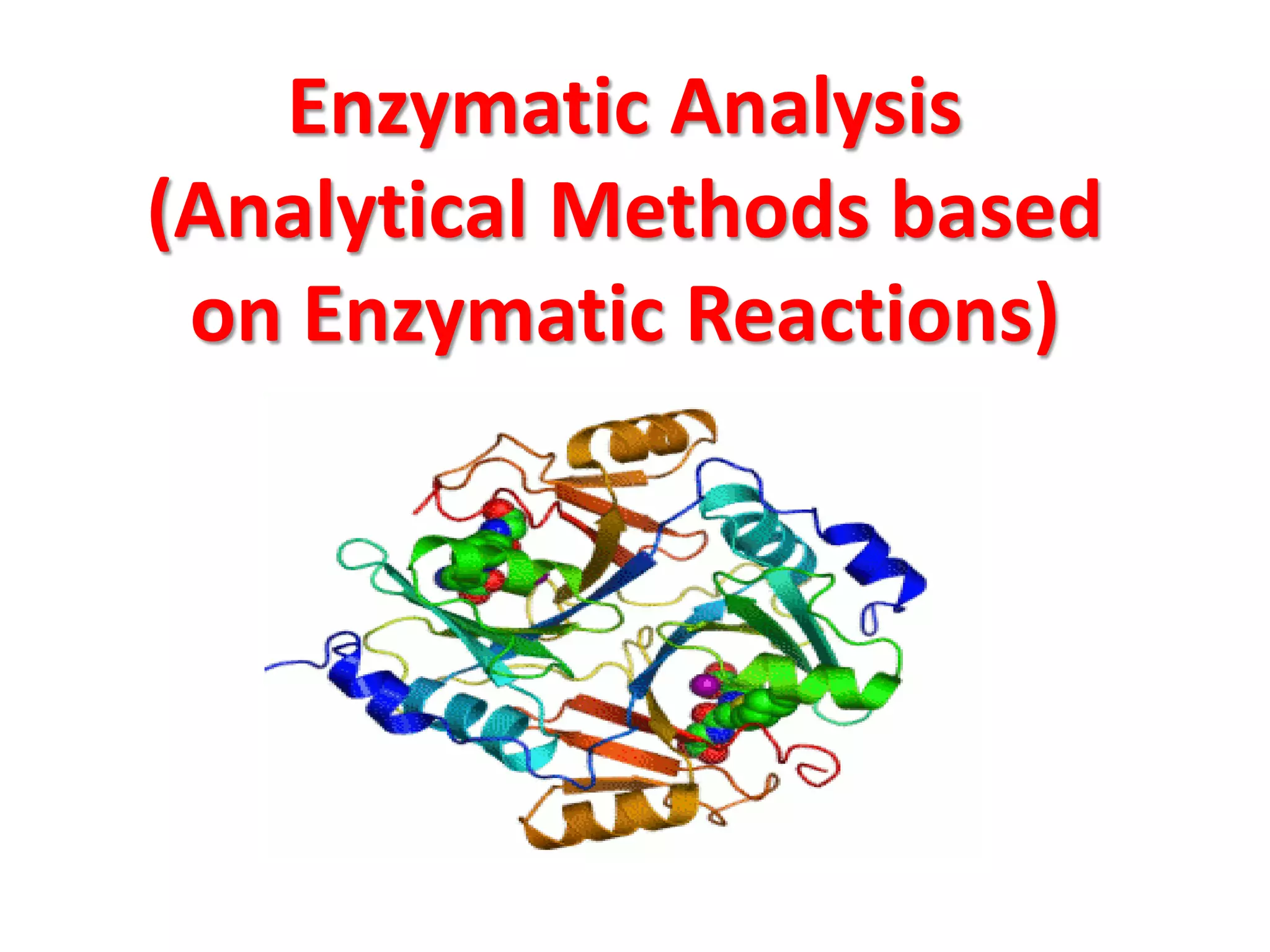
Enzymatic Analysis
(Analytical Methods based
on Enzymatic Reactions)
1-Substrate Determination
A-Principles
B- End-Point Method
2- Determination of Enzyme Activity
3- Enzyme Immunoassay

4- Polymerase Chain Reaction
-Enzymatic food analysis involves
-The
determination
of
food
constituents, which can be both
substrates or inhibitors of enzymes, and
-The determination of enzyme activity
in food.
1 Substrate Determination
A-Principles
-Qualitative

and quantitative analysis of
food constituents using enzymes can be
rapid, highly sensitive,
selective
and
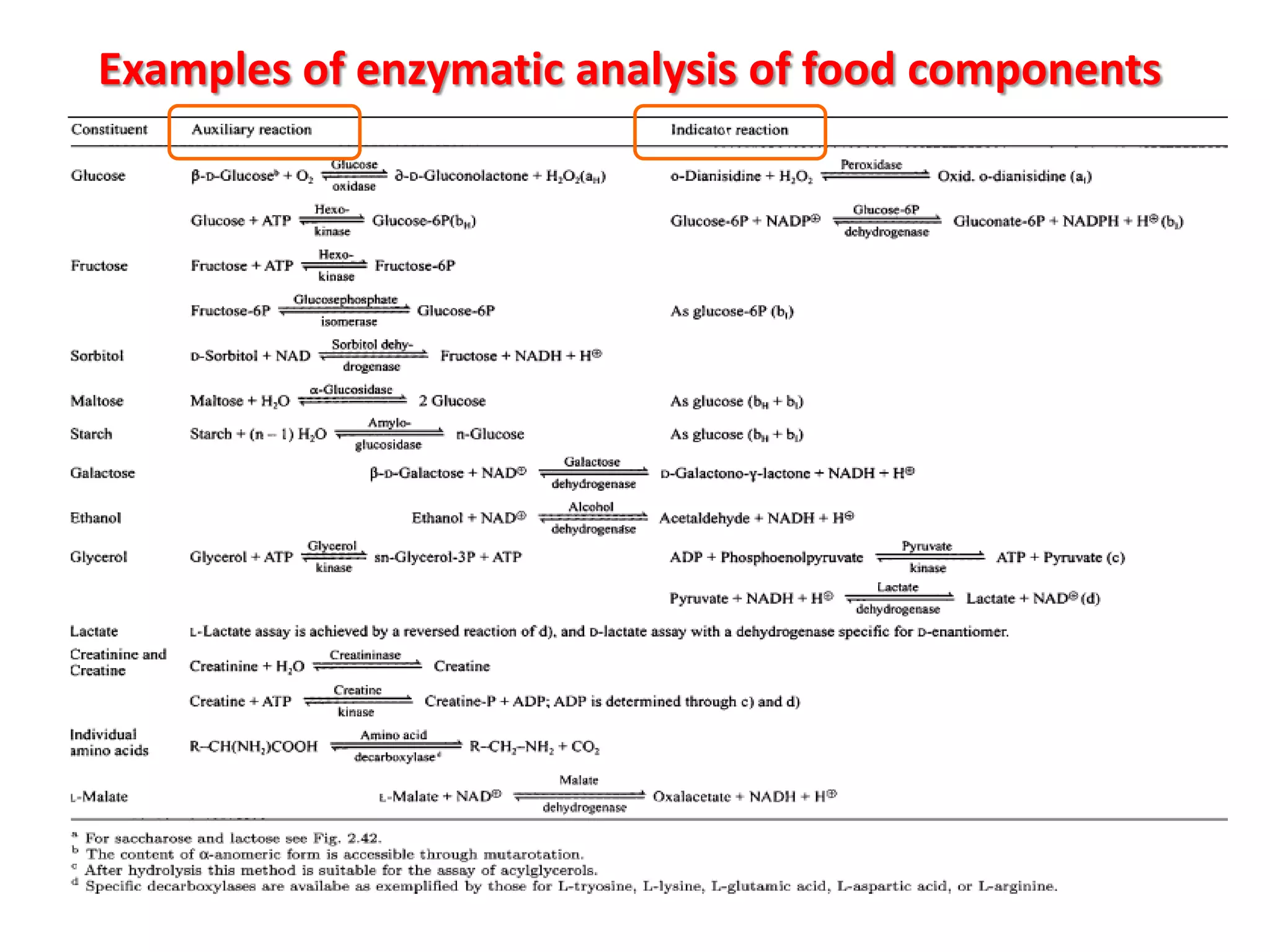
accurate (examples in the following Table).
Examples of enzymatic analysis of food components
v
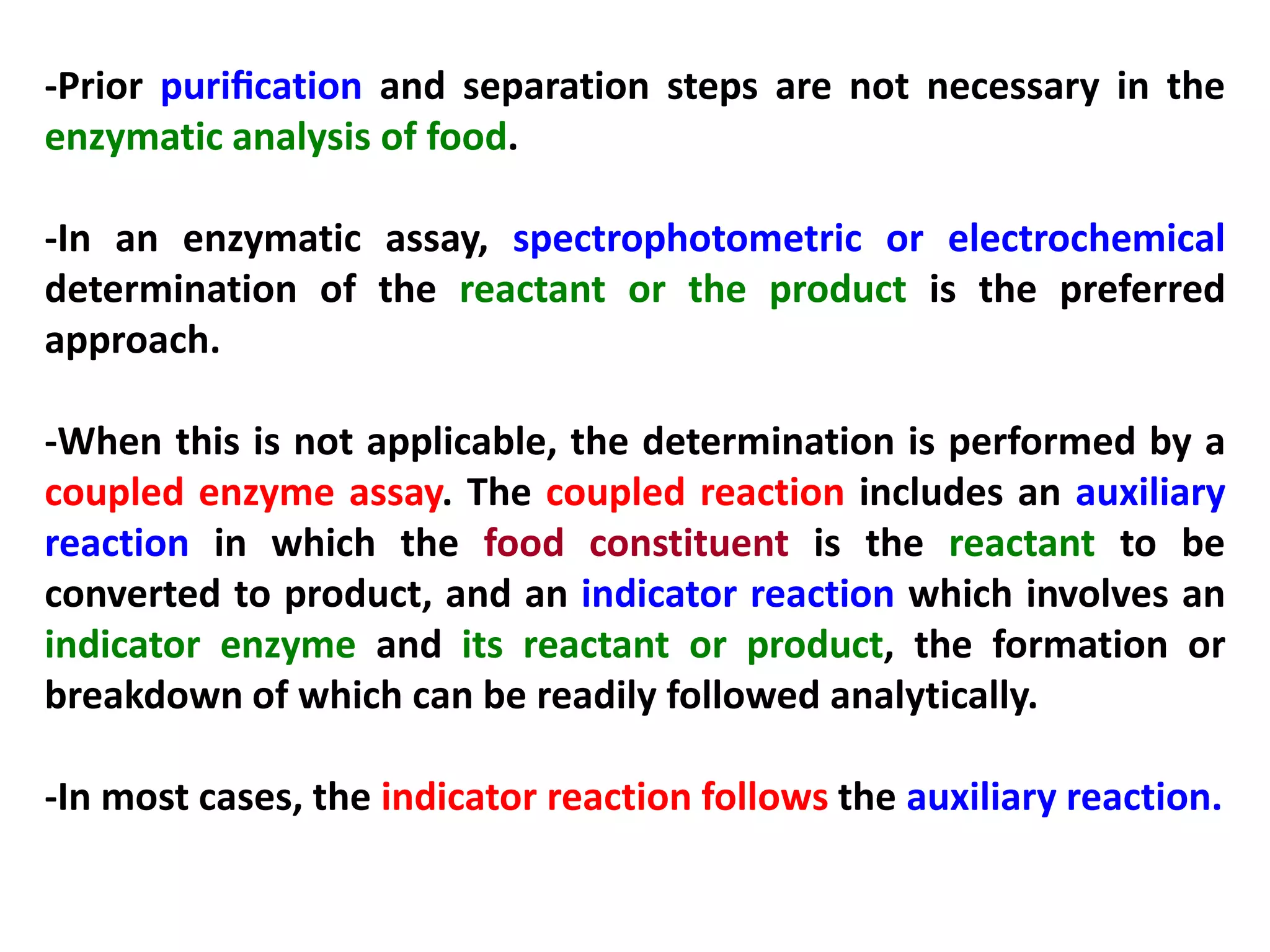
-Prior purification and separation steps are not necessary in the
enzymatic analysis of food.
-In an enzymatic assay, spectrophotometric or electrochemical
determination of the reactant or the product is the preferred
approach.
-When this is not applicable, the determination is performed by a
coupled enzyme assay. The coupled reaction includes an auxiliary
reaction in which the food constituent is the reactant to be
converted to product, and an indicator reaction which involves an
indicator enzyme and its reactant or product, the formation or
breakdown of which can be readily followed analytically.
-In most cases, the indicator reaction follows the auxiliary reaction.
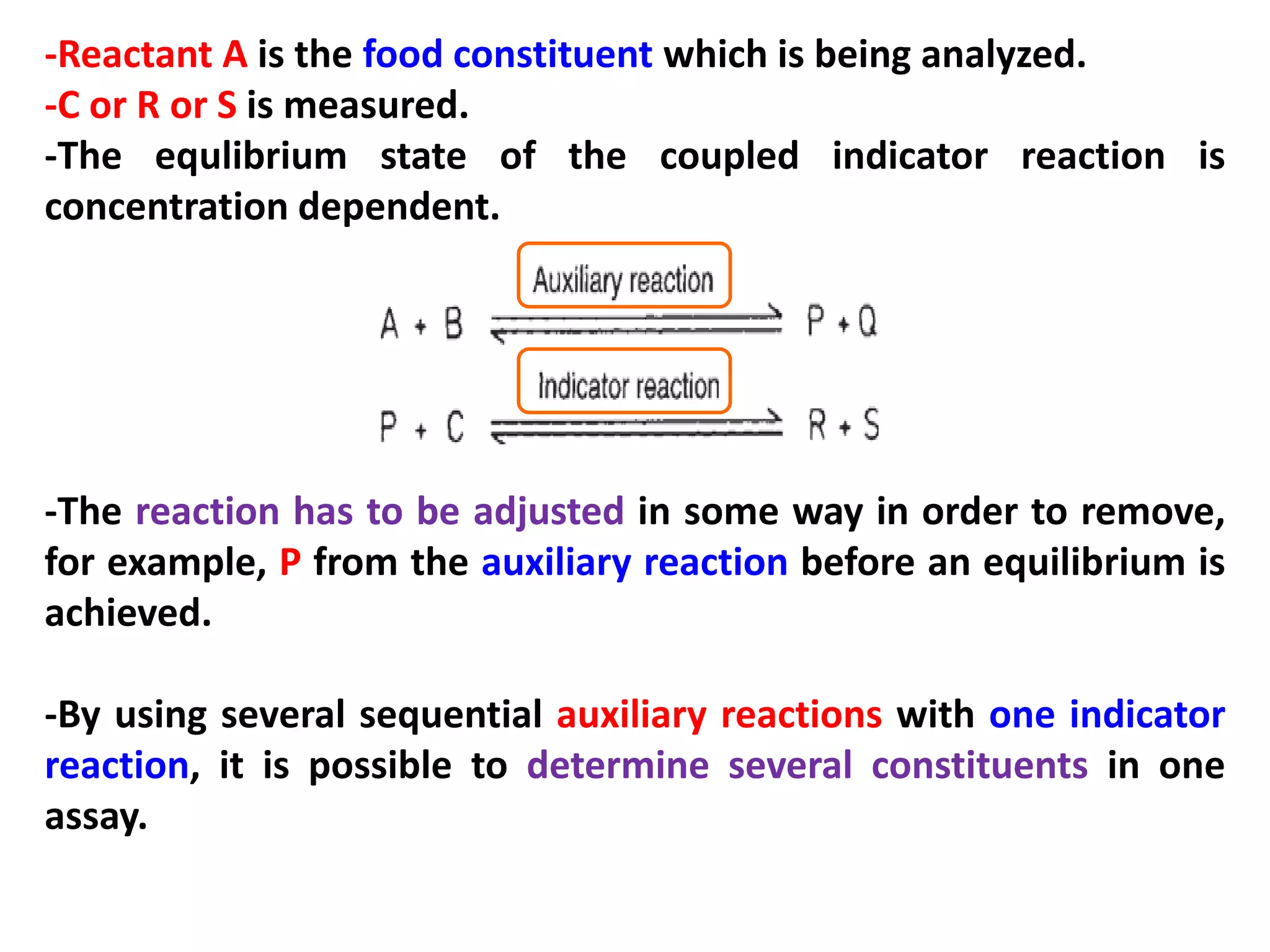
-Reactant A is the food constituent which is being analyzed.
-C or R or S is measured.
-The equlibrium state of the coupled indicator reaction is
concentration dependent.

-The reaction has to be adjusted in some way in order to remove,
for example, P from the auxiliary reaction before an equilibrium is
achieved.
-By using several sequential auxiliary reactions with one indicator
reaction, it is possible to determine several constituents in one
assay.
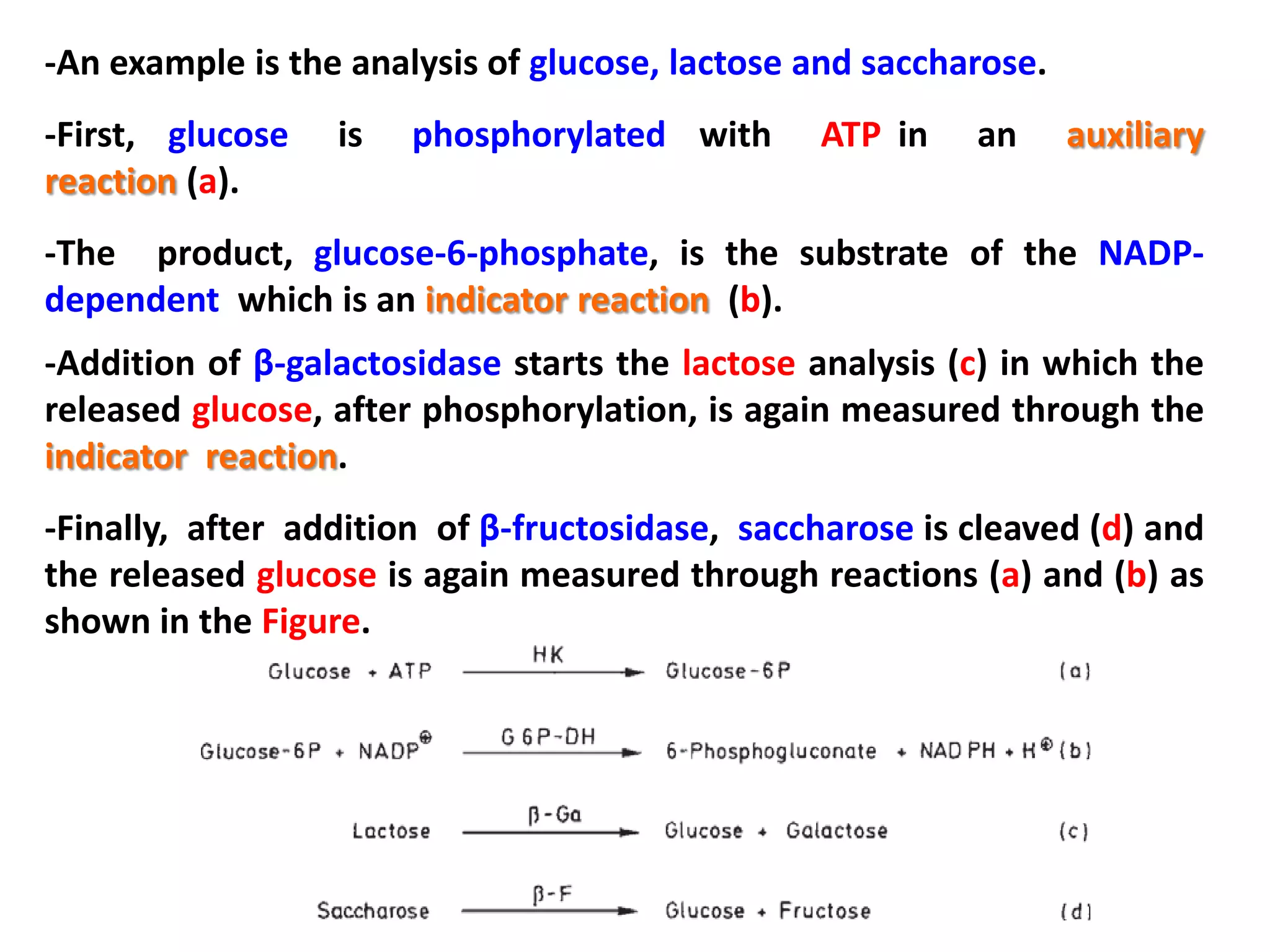
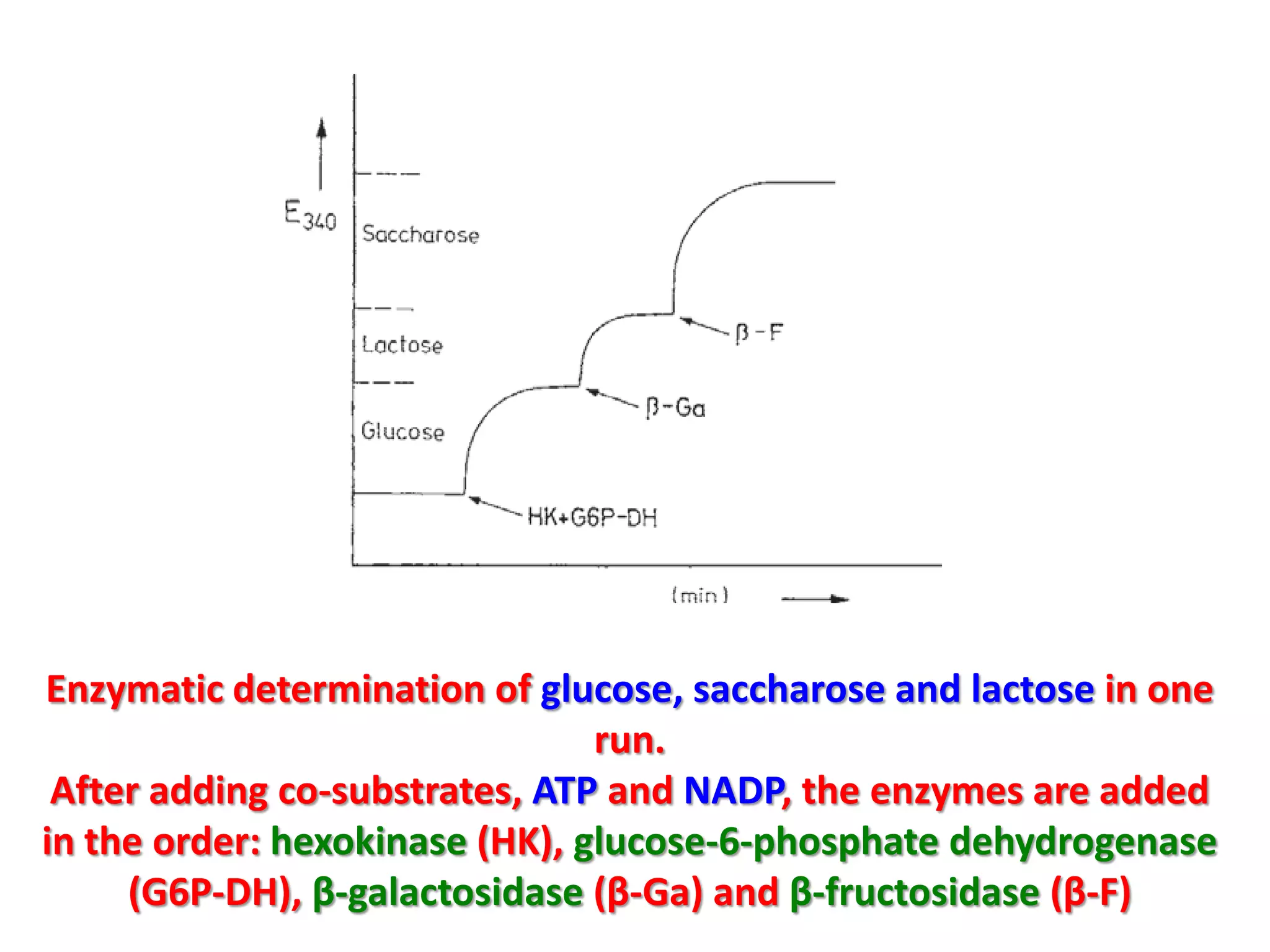
-An example is the analysis of glucose, lactose and saccharose.
-First, glucose
reaction (a).

is

phosphorylated with

ATP in

an

auxiliary

-The product, glucose-6-phosphate, is the substrate of the NADPdependent which is an indicator reaction (b).
-Addition of β-galactosidase starts the lactose analysis (c) in which the
released glucose, after phosphorylation, is again measured through the
indicator reaction.

-Finally, after addition of β-fructosidase, saccharose is cleaved (d) and
the released glucose is again measured through reactions (a) and (b) as
shown in the Figure.
Enzymatic determination of glucose, saccharose and lactose in one
run.
After adding co-substrates, ATP and NADP, the enzymes are added
in the order: hexokinase (HK), glucose-6-phosphate dehydrogenase
(G6P-DH), β-galactosidase (β-Ga) and β-fructosidase (β-F)
B- End-Point Method
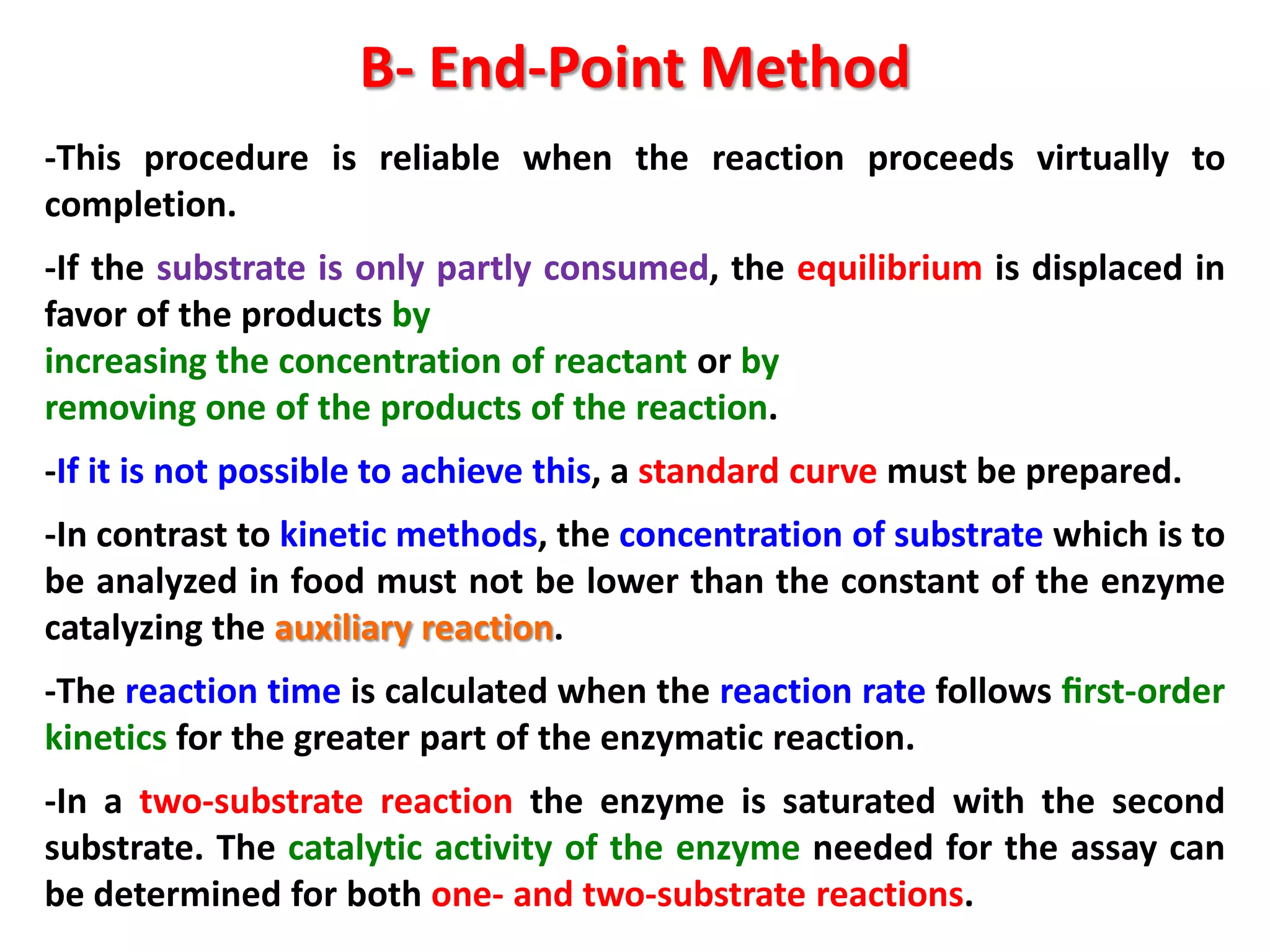
-This procedure is reliable when the reaction proceeds virtually to
completion.
-If the substrate is only partly consumed, the equilibrium is displaced in
favor of the products by
increasing the concentration of reactant or by
removing one of the products of the reaction.
-If it is not possible to achieve this, a standard curve must be prepared.

-In contrast to kinetic methods, the concentration of substrate which is to
be analyzed in food must not be lower than the constant of the enzyme
catalyzing the auxiliary reaction.
-The reaction time is calculated when the reaction rate follows first-order
kinetics for the greater part of the enzymatic reaction.
-In a two-substrate reaction the enzyme is saturated with the second
substrate. The catalytic activity of the enzyme needed for the assay can
be determined for both one- and two-substrate reactions.
B- End-Point Method
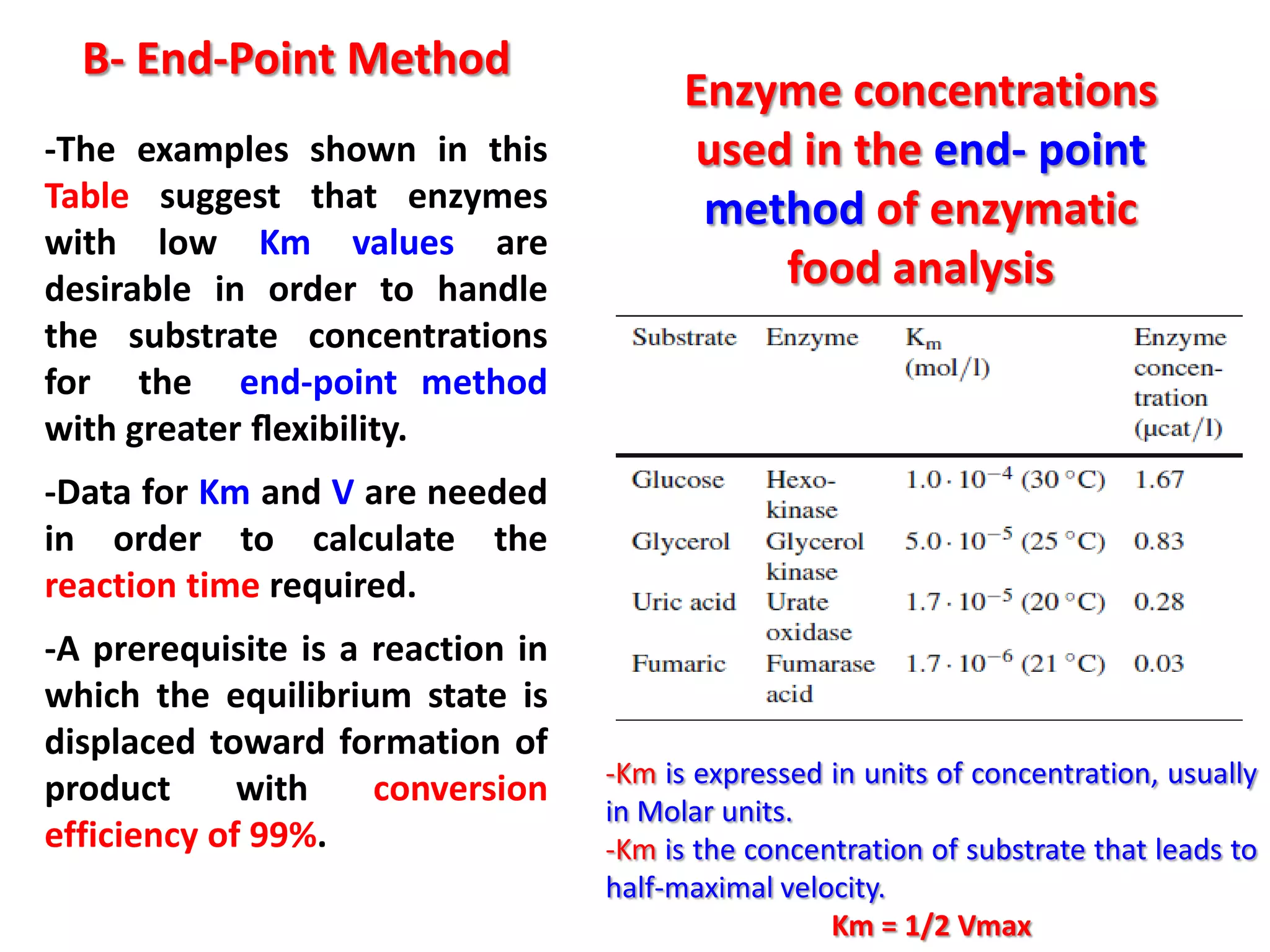
-The examples shown in this
Table suggest that enzymes
with low Km values are
desirable in order to handle
the substrate concentrations
for the end-point method
with greater flexibility.

Enzyme concentrations
used in the end- point
method of enzymatic
food analysis

-Data for Km and V are needed
in order to calculate the
reaction time required.
-A prerequisite is a reaction in
which the equilibrium state is
displaced toward formation of
product
with
conversion
efficiency of 99%.

-Km is expressed in units of concentration, usually
in Molar units.
-Km is the concentration of substrate that leads to
half-maximal velocity.
Km = 1/2 Vmax
2- Determination of Enzyme Activity
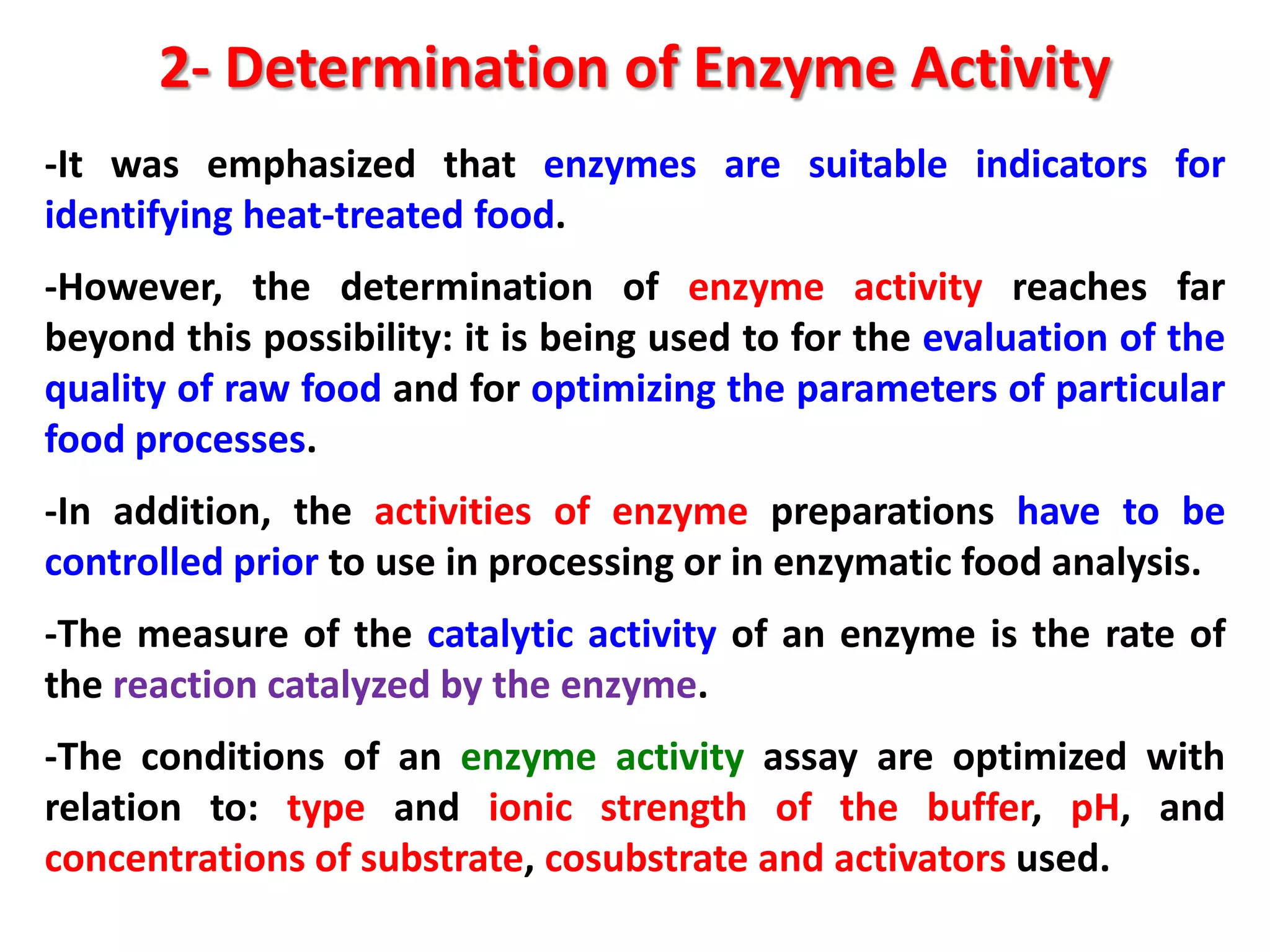
-It was emphasized that enzymes are suitable indicators for
identifying heat-treated food.
-However, the determination of enzyme activity reaches far
beyond this possibility: it is being used to for the evaluation of the
quality of raw food and for optimizing the parameters of particular
food processes.

-In addition, the activities of enzyme preparations have to be
controlled prior to use in processing or in enzymatic food analysis.
-The measure of the catalytic activity of an enzyme is the rate of
the reaction catalyzed by the enzyme.
-The conditions of an enzyme activity assay are optimized with
relation to: type and ionic strength of the buffer, pH, and
concentrations of substrate, cosubstrate and activators used.
2- Determination of Enzyme Activity
-The closely controlled assay conditions, including the
temperature, are critical because, in contrast to substrate
analysis, the reliability of the results in this case often
can not be verified by using a weighed standard sample.
-Temperature is a particularly important parameter
which strongly influences the enzyme assay.
-Temperature significantly affect the reaction rate; e.g., a
1 ◦C increase in temperature results in about a 10%
increase in activity.
-Whenever possible, the incubation temperature should
by maintained at 25 ◦C.
2- Determination of Enzyme Activity
-Difficulties often arise while trying to achieve this
condition:
-the substrate’s solubility is limited;
-spectrophotometric readings become unreliable because
of high light absorbance by the substrate; or
-the high concentration of the substrate inhibits enzyme
activity.
-For such cases procedures exist to assess the optimum
substrate concentration which will support a reliable
activity assay.
3- Enzyme Immunoassay
-Food compounds can be determined specifically and sensitively by
immunological methods.

-Immunological methods are based on the specific reaction of an
antibody containing antiserum with the antigen, the substance to
be determined.
-The antiserum is produced by immunization of rabbits for
example.
-Because only compounds with a high molecular weight (Mr >
5000) display immunological activity, for low molecular
compounds (haptens) covalent coupling to a protein is necessary.
-The antiserum produced with the “conjugate” contains antibodies
with activities against the protein as well as the hapten.
3- Enzyme Immunoassay
-Prior to the application, the antiserum is tested for its specificity
against all proteins present in the food to be analyzed.

-As far as possible all un-specificities are removed. For example, it
is possible to treat an antiserum intended to be used for the
determination of peanut protein with proteins from other nuts in
such a way that it specifically reacts with peanut protein only.
-However, there are also cases in which the specificity could not be
increased because of the close immunochemical relationship
between the proteins.
-This happens, for example, with proteins from almonds, peach
and apricot kernels.
3- Enzyme Immunoassay
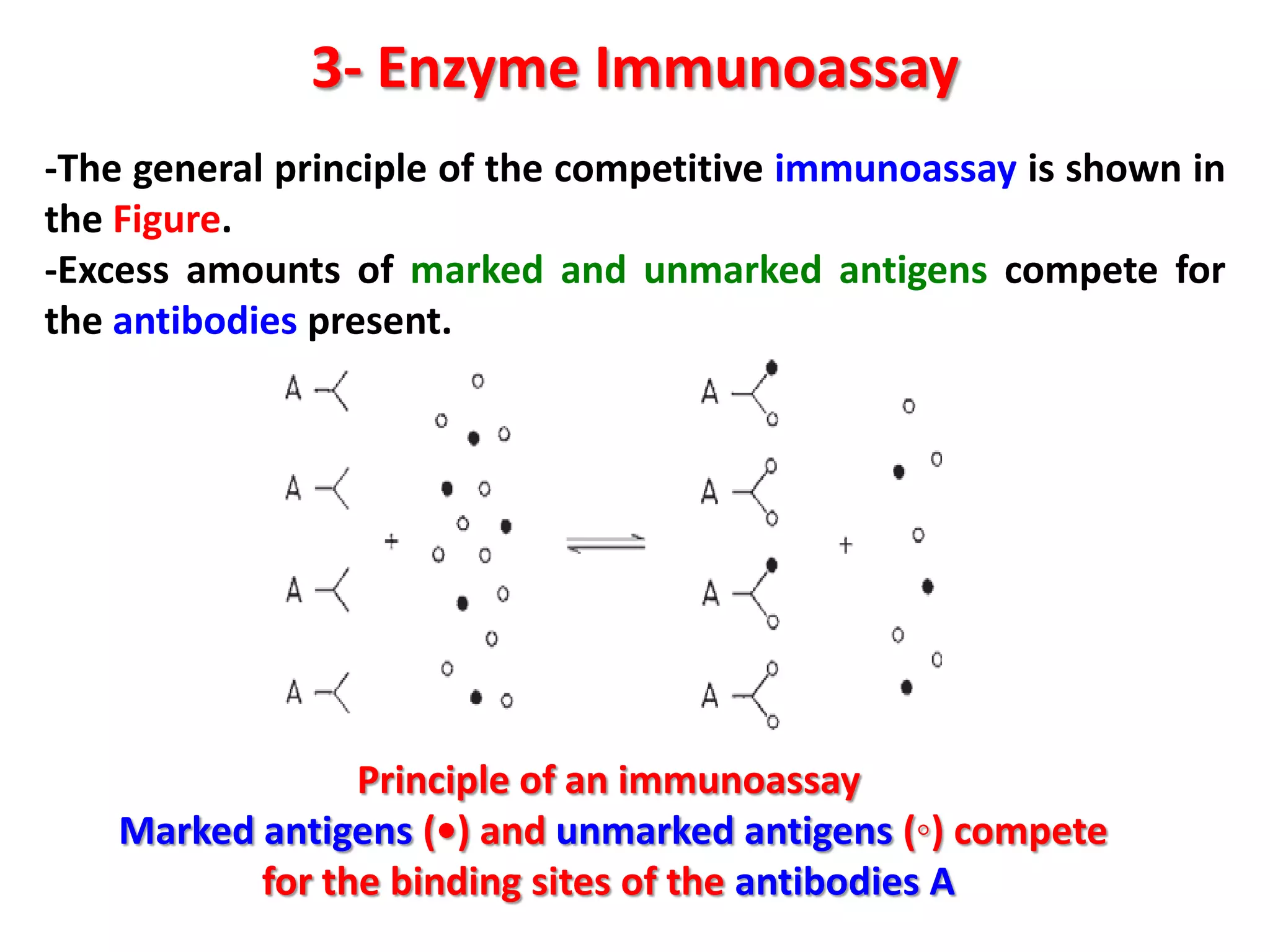
-The general principle of the competitive immunoassay is shown in
the Figure.
-Excess amounts of marked and unmarked antigens compete for
the antibodies present.

Principle of an immunoassay
Marked antigens (•) and unmarked antigens (◦) compete
for the binding sites of the antibodies A
3- Enzyme Immunoassay
-The concentration of the unmarked antigen to be
determined is the only variable if the concentration of
the marked antigen and the antibody concentration are
kept on a constant level during the examination.
-Following the principle of mass action, the unknown
antigen concentration can be calculated indirectly based
on the proportion of free marked antigen.
-Older methods still require the formation of a
precipitate for the detection of an antibody-antigen
reaction. Immunoassays are much faster and more
sensitive.
3- Enzyme Immunoassay
-Radioisotopes (3H,
antigens.

14C)

and enzymes are used to mark

-Furthermore, fluorescent and luminescent dyes as well
as stable radicals are important.
-Alkaline phosphatase from calf stomach, and β-Dgalactosidase from E. coli are often used as indicator
enzymes because they are available in high purity, are
very stable and their activity can be determined
sensitively.
3- Enzyme Immunoassay
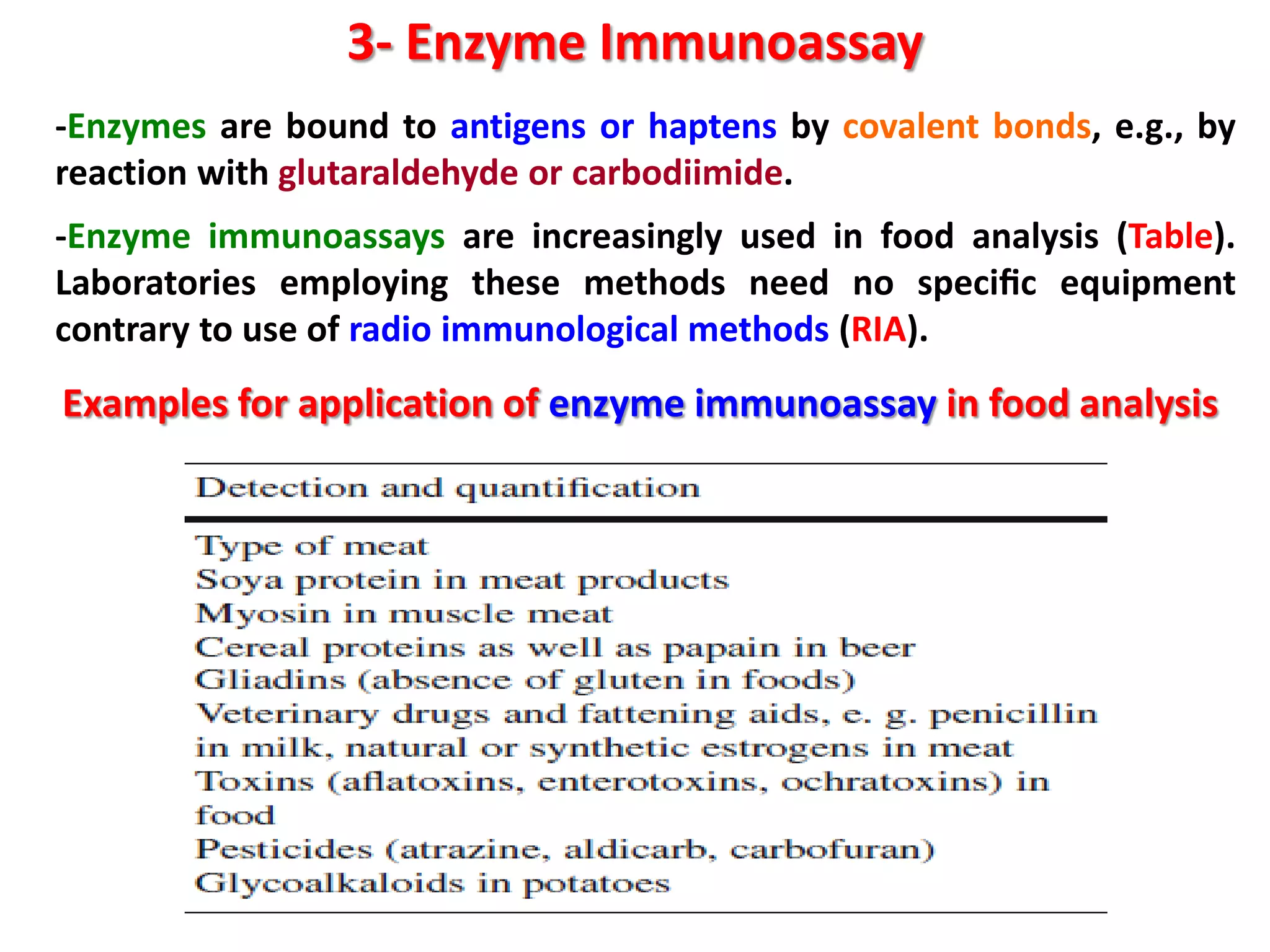
-Enzymes are bound to antigens or haptens by covalent bonds, e.g., by
reaction with glutaraldehyde or carbodiimide.
-Enzyme immunoassays are increasingly used in food analysis (Table).
Laboratories employing these methods need no specific equipment
contrary to use of radio immunological methods (RIA).

Examples for application of enzyme immunoassay in food analysis
3- Enzyme Immunoassay
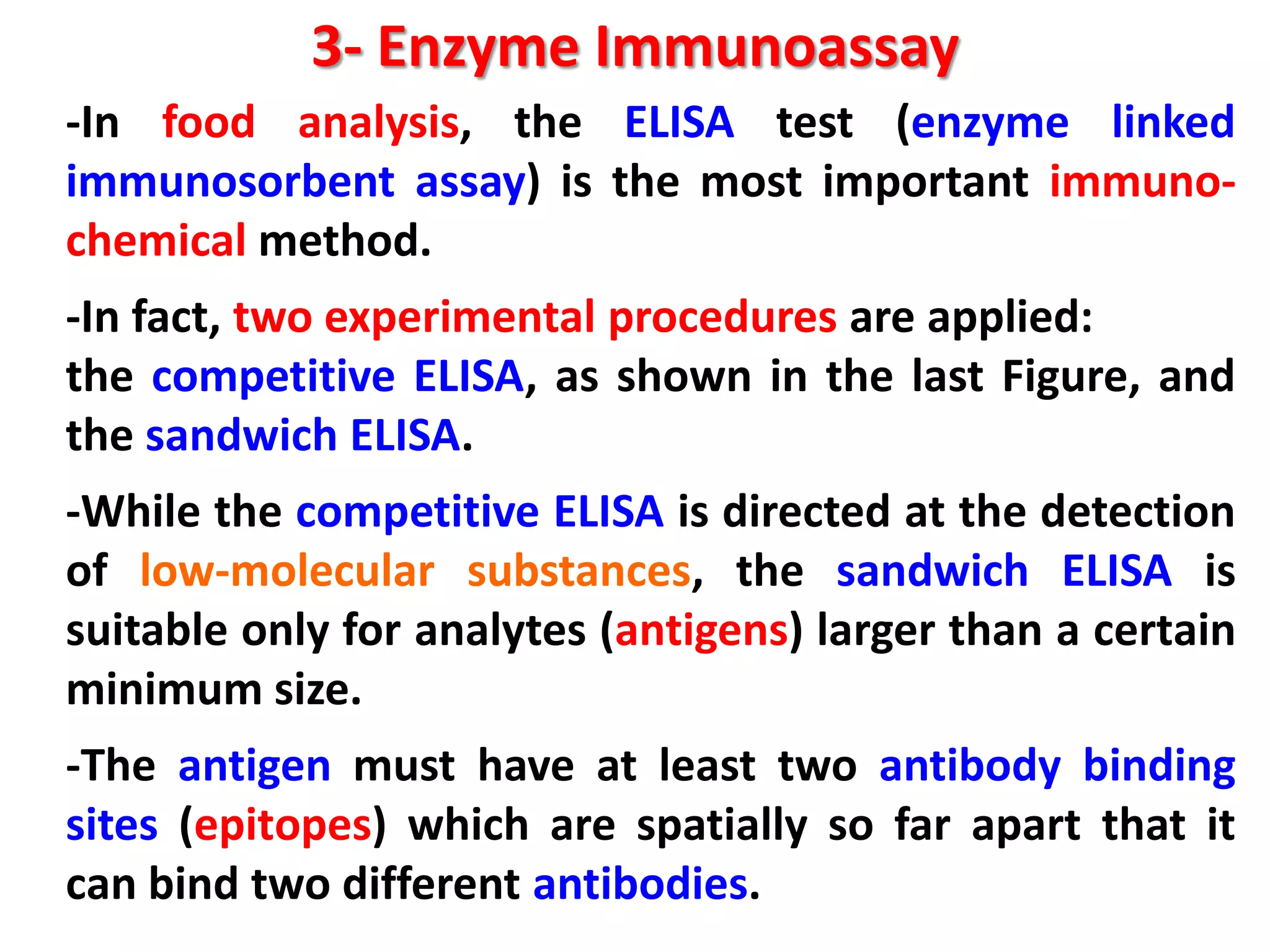
-In food analysis, the ELISA test (enzyme linked
immunosorbent assay) is the most important immunochemical method.
-In fact, two experimental procedures are applied:
the competitive ELISA, as shown in the last Figure, and
the sandwich ELISA.
-While the competitive ELISA is directed at the detection
of low-molecular substances, the sandwich ELISA is
suitable only for analytes (antigens) larger than a certain
minimum size.
-The antigen must have at least two antibody binding
sites (epitopes) which are spatially so far apart that it
can bind two different antibodies.
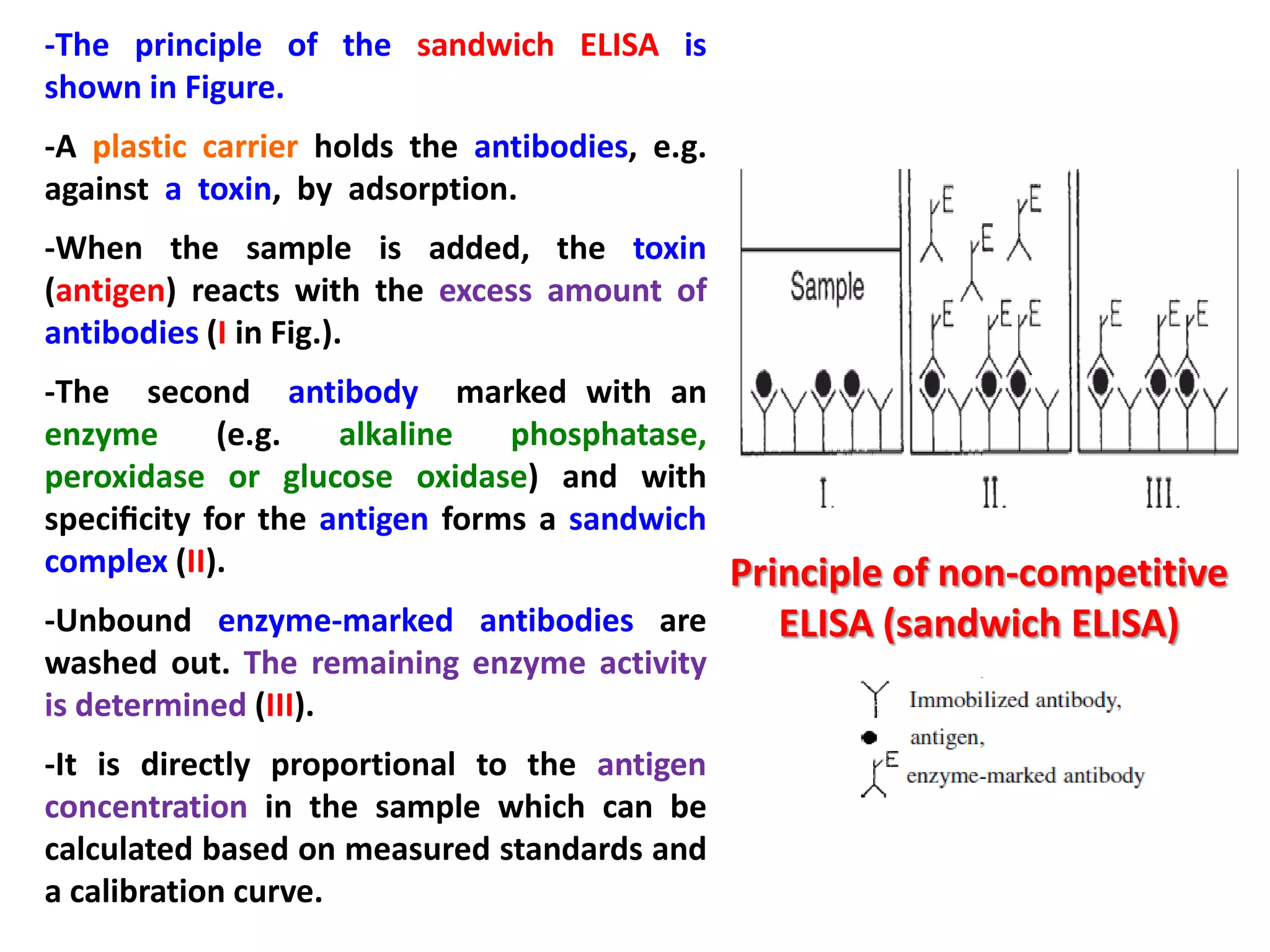
-The principle of the sandwich ELISA is
shown in Figure.
-A plastic carrier holds the antibodies, e.g.
against a toxin, by adsorption.
-When the sample is added, the toxin
(antigen) reacts with the excess amount of
antibodies (I in Fig.).
-The second antibody marked with an
enzyme
(e.g.
alkaline
phosphatase,
peroxidase or glucose oxidase) and with
specificity for the antigen forms a sandwich
complex (II).
Principle of non-competitive
-Unbound enzyme-marked antibodies are
ELISA (sandwich ELISA)
washed out. The remaining enzyme activity
is determined (III).
-It is directly proportional to the antigen
concentration in the sample which can be
calculated based on measured standards and
a calibration curve.
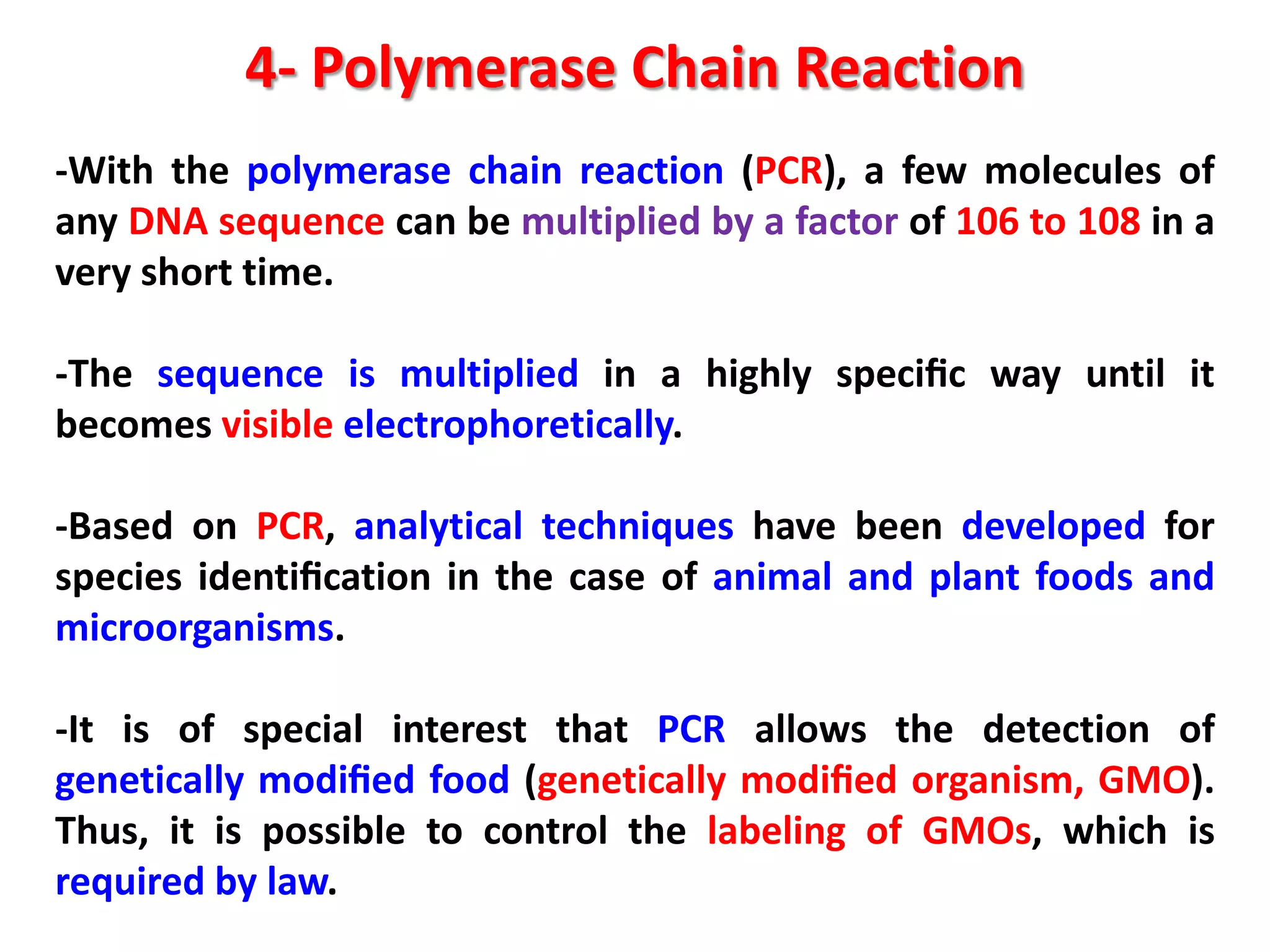
4- Polymerase Chain Reaction
-With the polymerase chain reaction (PCR), a few molecules of
any DNA sequence can be multiplied by a factor of 106 to 108 in a
very short time.
-The sequence is multiplied in a highly specific way until it
becomes visible electrophoretically.

-Based on PCR, analytical techniques have been developed for
species identification in the case of animal and plant foods and
microorganisms.
-It is of special interest that PCR allows the detection of
genetically modified food (genetically modified organism, GMO).
Thus, it is possible to control the labeling of GMOs, which is
required by law.
4- Polymerase Chain Reaction
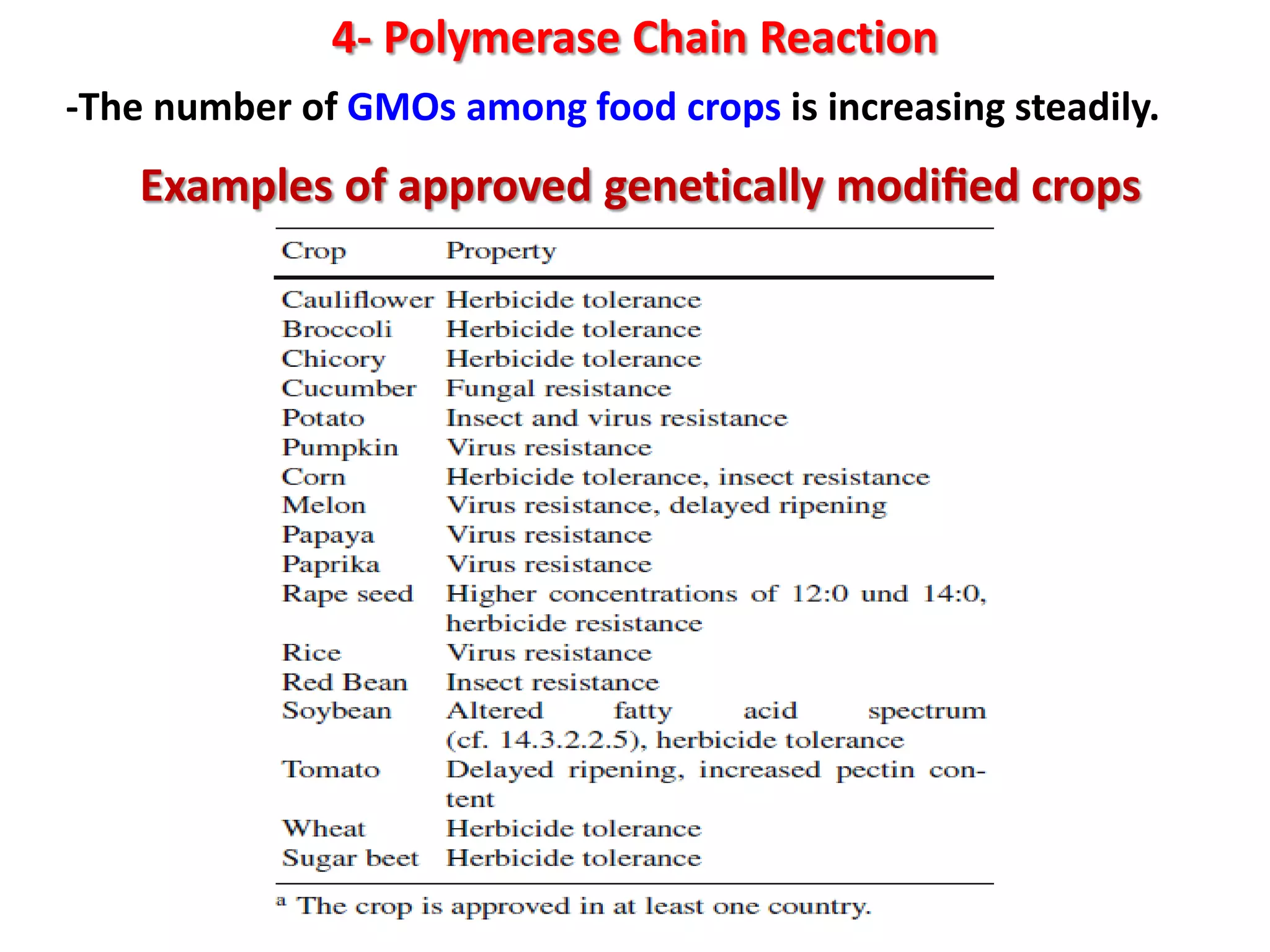
-The number of GMOs among food crops is increasing steadily.

Examples of approved genetically modified crops
4- Polymerase Chain Reaction
Principle of PCR
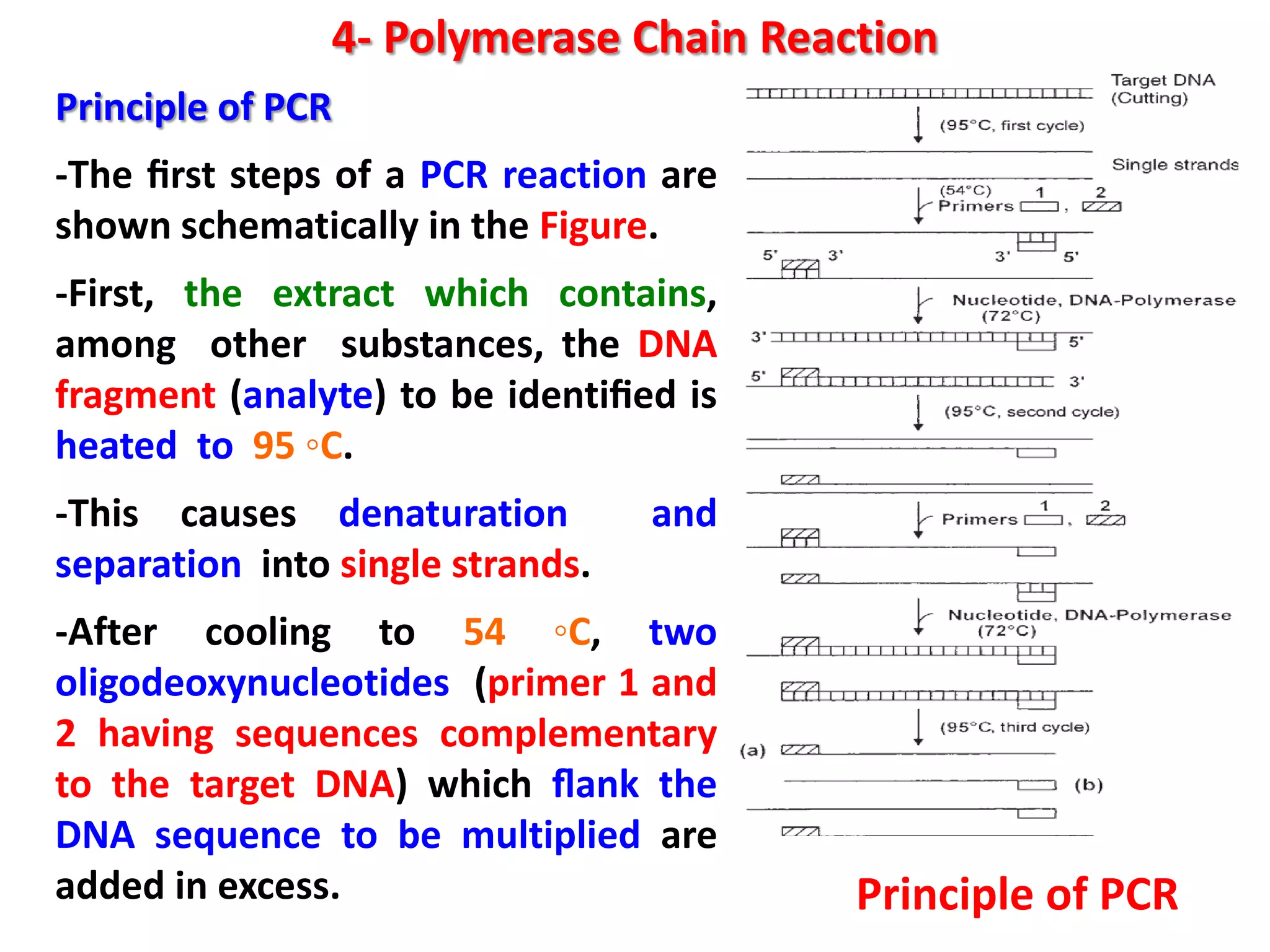
-The first steps of a PCR reaction are
shown schematically in the Figure.

-First, the extract which contains,
among other substances, the DNA
fragment (analyte) to be identified is
heated to 95 ◦C.
-This causes denaturation
separation into single strands.

and

-After cooling to 54 ◦C, two
oligodeoxynucleotides (primer 1 and
2 having sequences complementary
to the target DNA) which flank the
DNA sequence to be multiplied are
added in excess.

Principle of PCR
4- Polymerase Chain Reaction
Principle of PCR
-These primers, which are 15–30
nucleotides long and made with a
synthesizer,
hybridize
with
the
complementary segments on the single
strands.
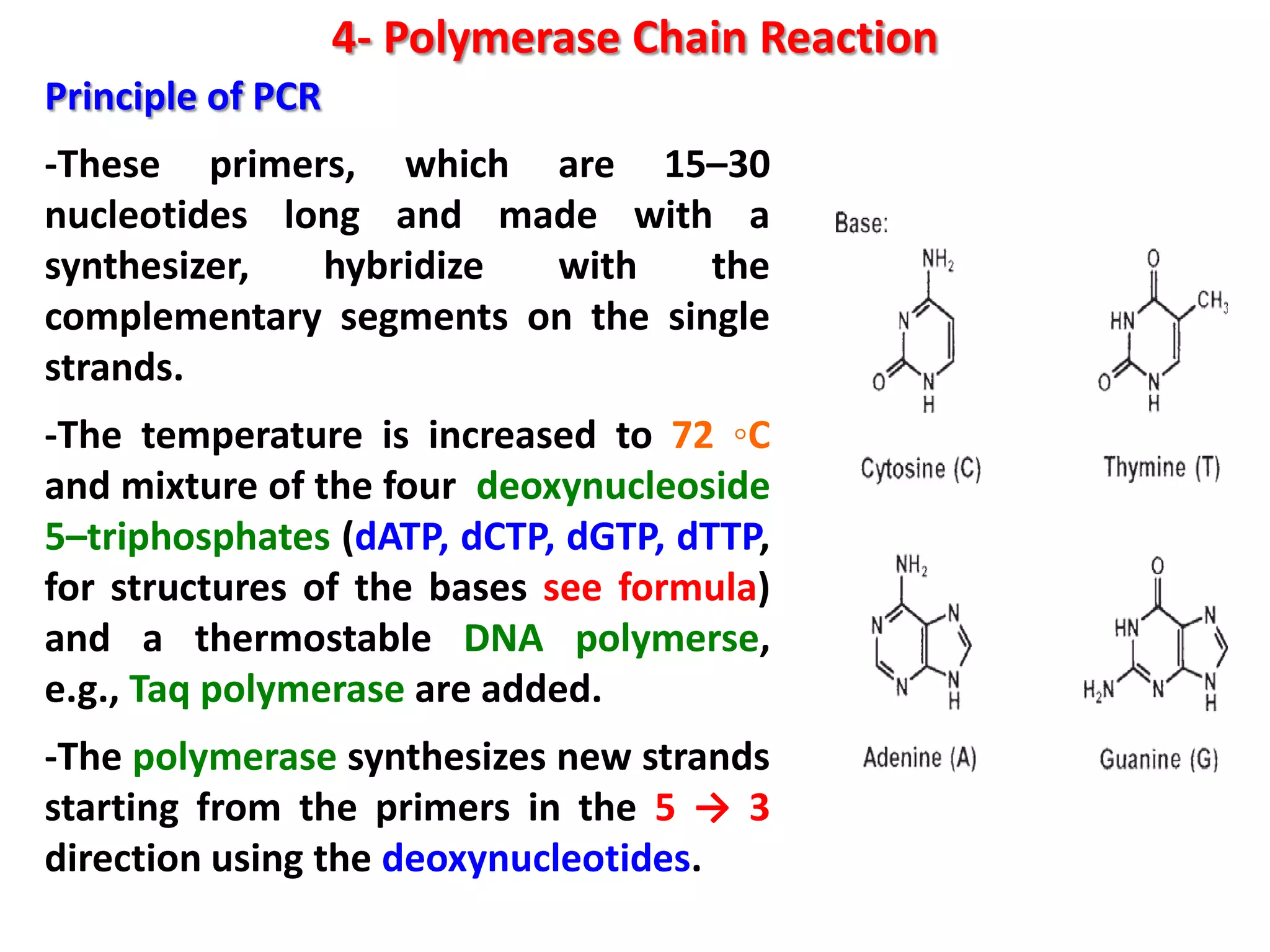
-The temperature is increased to 72 ◦C
and mixture of the four deoxynucleoside
5–triphosphates (dATP, dCTP, dGTP, dTTP,
for structures of the bases see formula)
and a thermostable DNA polymerse,
e.g., Taq polymerase are added.
-The polymerase synthesizes new strands
starting from the primers in the 5 → 3
direction using the deoxynucleotides.
4- Polymerase Chain Reaction
Principle of PCR
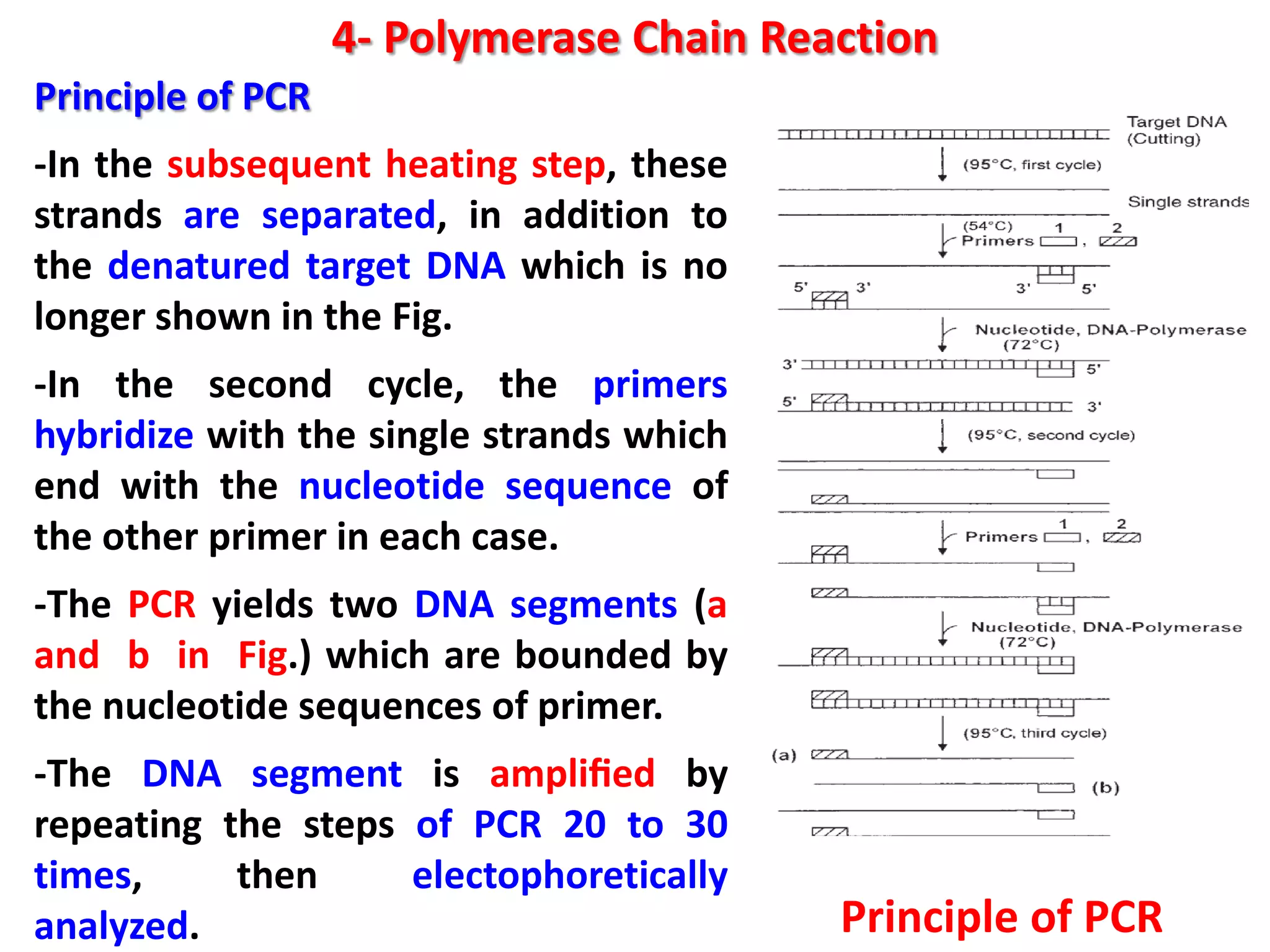
-In the subsequent heating step, these
strands are separated, in addition to
the denatured target DNA which is no
longer shown in the Fig.
-In the second cycle, the primers
hybridize with the single strands which
end with the nucleotide sequence of
the other primer in each case.
-The PCR yields two DNA segments (a
and b in Fig.) which are bounded by
the nucleotide sequences of primer.
-The DNA segment is amplified by
repeating the steps of PCR 20 to 30
times,
then
electophoretically
analyzed.

Principle of PCR
4- Polymerase Chain Reaction
-In comparison with protein analysis, DNA analysis is more sensitive
by several orders of magnitude due to amplification which is
millionfold after 20 cycles and billionfold after 30 cycles.

-Heated food can be analyzed because DNA is more stable than
proteins.
-It is also possible to detect GMOs which do not contain altered or
added proteins identifiable by chemical methods.

-Acidic foods can cause problems when they are strongly heated, e.
g., tomato products. In this case, the DNA is hydrolyzed to such an
extent that the characteristic sequences are lost. The exceptional
sensitivity of this method can give incorrect results.
-For this reason, it is important that the PCR is quantitatively
evaluated. A known amount of a synthetic DNA is added to the
sample and amplified with the analyte. For calibration, mixtures of
the target and competing DNA are subjected to PCR analysis.
4- Polymerase Chain Reaction
Examples in Food Analysis
1- Addition of Soybean
-The addition of soybean protein to meat and
other foods can be detected with the help of the
primers GMO3 (5-GCCCTCTACTCCA-CCCCCATCC-3)
and GMO4 (5 –GCCCATC-TGCAAGCCTTTTTGTG-3).
-They label a small but still sufficiently specific
sequence of 118 base pairs (bp) of the gene for a
lectin found in soybean.
-A small amplicon is of advantage since the DNA gets
partially fragmented when meat preparations are
heated.
4- Polymerase Chain Reaction
Examples in Food Analysis
2- Genetically Modified Soybeans
-Genetically modified soybeans are resistant to the herbicide

glyphosphate, which inhibits the key enzyme, 5enolpyruvylshikimi-3-phosphate synthase (EPSPS), in the
metabolism of aromatic amino acids in plants.

-However, glyphosphate is inactive against the EPSPS of bacteria.
-Hence transgenic soybeans contain a genetic segment which
codes for an EPSPS and a peptide for the transport of this
enzyme.
-To detect this segment and, consequently, genetically modified
soybeans, primers are used which induce the amplification of a
segment of 172 (base pairs, bp) in the PCR.
4- Polymerase Chain Reaction
Examples in Food Analysis
3- Genetically Modified Tomatoes

-During ripening and storage, tomatoes soften due to
the
activity
of
an
endogenous
enzyme
polygalacturonase (PG).
-The expression of the gene for PG is specifically
inhibited in a particular tomato, resulting in extended
storage life and better aroma.
-PCR methods have been developed to detect these
transgenic tomatoes. However, this detection can fail if
the DNA is too strongly hydrolyzed on heating the
tomato products.
4- Polymerase Chain Reaction
Examples in Food Analysis
4- Species Differentiation
-If specific primers fail, a PCR with universal primers can be applied in
certain cases, followed by RFLP analysis (restriction fragment length
polymorphism).
-The DNA of a meat sample is first determined with a primer pair which
exhibits a high degree of correspondence in its binding sites to the DNA
of many animal species.
-In the case of various animal species, the PCR yields equally long
products which should be relatively large.
-After electrophoretic separation, the pattern of the resulting DNA
fragments can be assigned to individual animal species. This method is
suitable for samples of one type of meat.
-Preparations containing meat of several animal species or DNA which is
more strongly fragmented on heating can be analyzed only with animal
species-specific primers.

Enzymetic Analysis

  • 1.
    Enzymatic Analysis (Analytical Methodsbased on Enzymatic Reactions)
  • 2.
    1-Substrate Determination A-Principles B- End-PointMethod 2- Determination of Enzyme Activity 3- Enzyme Immunoassay 4- Polymerase Chain Reaction
  • 3.
    -Enzymatic food analysisinvolves -The determination of food constituents, which can be both substrates or inhibitors of enzymes, and -The determination of enzyme activity in food.
  • 4.
    1 Substrate Determination A-Principles -Qualitative andquantitative analysis of food constituents using enzymes can be rapid, highly sensitive, selective and accurate (examples in the following Table).
  • 5.
    Examples of enzymaticanalysis of food components v
  • 6.
    -Prior purification andseparation steps are not necessary in the enzymatic analysis of food. -In an enzymatic assay, spectrophotometric or electrochemical determination of the reactant or the product is the preferred approach. -When this is not applicable, the determination is performed by a coupled enzyme assay. The coupled reaction includes an auxiliary reaction in which the food constituent is the reactant to be converted to product, and an indicator reaction which involves an indicator enzyme and its reactant or product, the formation or breakdown of which can be readily followed analytically. -In most cases, the indicator reaction follows the auxiliary reaction.
  • 7.
    -Reactant A isthe food constituent which is being analyzed. -C or R or S is measured. -The equlibrium state of the coupled indicator reaction is concentration dependent. -The reaction has to be adjusted in some way in order to remove, for example, P from the auxiliary reaction before an equilibrium is achieved. -By using several sequential auxiliary reactions with one indicator reaction, it is possible to determine several constituents in one assay.
  • 8.
    -An example isthe analysis of glucose, lactose and saccharose. -First, glucose reaction (a). is phosphorylated with ATP in an auxiliary -The product, glucose-6-phosphate, is the substrate of the NADPdependent which is an indicator reaction (b). -Addition of β-galactosidase starts the lactose analysis (c) in which the released glucose, after phosphorylation, is again measured through the indicator reaction. -Finally, after addition of β-fructosidase, saccharose is cleaved (d) and the released glucose is again measured through reactions (a) and (b) as shown in the Figure.
  • 9.
    Enzymatic determination ofglucose, saccharose and lactose in one run. After adding co-substrates, ATP and NADP, the enzymes are added in the order: hexokinase (HK), glucose-6-phosphate dehydrogenase (G6P-DH), β-galactosidase (β-Ga) and β-fructosidase (β-F)
  • 10.
    B- End-Point Method -Thisprocedure is reliable when the reaction proceeds virtually to completion. -If the substrate is only partly consumed, the equilibrium is displaced in favor of the products by increasing the concentration of reactant or by removing one of the products of the reaction. -If it is not possible to achieve this, a standard curve must be prepared. -In contrast to kinetic methods, the concentration of substrate which is to be analyzed in food must not be lower than the constant of the enzyme catalyzing the auxiliary reaction. -The reaction time is calculated when the reaction rate follows first-order kinetics for the greater part of the enzymatic reaction. -In a two-substrate reaction the enzyme is saturated with the second substrate. The catalytic activity of the enzyme needed for the assay can be determined for both one- and two-substrate reactions.
  • 11.
    B- End-Point Method -Theexamples shown in this Table suggest that enzymes with low Km values are desirable in order to handle the substrate concentrations for the end-point method with greater flexibility. Enzyme concentrations used in the end- point method of enzymatic food analysis -Data for Km and V are needed in order to calculate the reaction time required. -A prerequisite is a reaction in which the equilibrium state is displaced toward formation of product with conversion efficiency of 99%. -Km is expressed in units of concentration, usually in Molar units. -Km is the concentration of substrate that leads to half-maximal velocity. Km = 1/2 Vmax
  • 12.
    2- Determination ofEnzyme Activity -It was emphasized that enzymes are suitable indicators for identifying heat-treated food. -However, the determination of enzyme activity reaches far beyond this possibility: it is being used to for the evaluation of the quality of raw food and for optimizing the parameters of particular food processes. -In addition, the activities of enzyme preparations have to be controlled prior to use in processing or in enzymatic food analysis. -The measure of the catalytic activity of an enzyme is the rate of the reaction catalyzed by the enzyme. -The conditions of an enzyme activity assay are optimized with relation to: type and ionic strength of the buffer, pH, and concentrations of substrate, cosubstrate and activators used.
  • 13.
    2- Determination ofEnzyme Activity -The closely controlled assay conditions, including the temperature, are critical because, in contrast to substrate analysis, the reliability of the results in this case often can not be verified by using a weighed standard sample. -Temperature is a particularly important parameter which strongly influences the enzyme assay. -Temperature significantly affect the reaction rate; e.g., a 1 ◦C increase in temperature results in about a 10% increase in activity. -Whenever possible, the incubation temperature should by maintained at 25 ◦C.
  • 14.
    2- Determination ofEnzyme Activity -Difficulties often arise while trying to achieve this condition: -the substrate’s solubility is limited; -spectrophotometric readings become unreliable because of high light absorbance by the substrate; or -the high concentration of the substrate inhibits enzyme activity. -For such cases procedures exist to assess the optimum substrate concentration which will support a reliable activity assay.
  • 15.
    3- Enzyme Immunoassay -Foodcompounds can be determined specifically and sensitively by immunological methods. -Immunological methods are based on the specific reaction of an antibody containing antiserum with the antigen, the substance to be determined. -The antiserum is produced by immunization of rabbits for example. -Because only compounds with a high molecular weight (Mr > 5000) display immunological activity, for low molecular compounds (haptens) covalent coupling to a protein is necessary. -The antiserum produced with the “conjugate” contains antibodies with activities against the protein as well as the hapten.
  • 16.
    3- Enzyme Immunoassay -Priorto the application, the antiserum is tested for its specificity against all proteins present in the food to be analyzed. -As far as possible all un-specificities are removed. For example, it is possible to treat an antiserum intended to be used for the determination of peanut protein with proteins from other nuts in such a way that it specifically reacts with peanut protein only. -However, there are also cases in which the specificity could not be increased because of the close immunochemical relationship between the proteins. -This happens, for example, with proteins from almonds, peach and apricot kernels.
  • 17.
    3- Enzyme Immunoassay -Thegeneral principle of the competitive immunoassay is shown in the Figure. -Excess amounts of marked and unmarked antigens compete for the antibodies present. Principle of an immunoassay Marked antigens (•) and unmarked antigens (◦) compete for the binding sites of the antibodies A
  • 18.
    3- Enzyme Immunoassay -Theconcentration of the unmarked antigen to be determined is the only variable if the concentration of the marked antigen and the antibody concentration are kept on a constant level during the examination. -Following the principle of mass action, the unknown antigen concentration can be calculated indirectly based on the proportion of free marked antigen. -Older methods still require the formation of a precipitate for the detection of an antibody-antigen reaction. Immunoassays are much faster and more sensitive.
  • 19.
    3- Enzyme Immunoassay -Radioisotopes(3H, antigens. 14C) and enzymes are used to mark -Furthermore, fluorescent and luminescent dyes as well as stable radicals are important. -Alkaline phosphatase from calf stomach, and β-Dgalactosidase from E. coli are often used as indicator enzymes because they are available in high purity, are very stable and their activity can be determined sensitively.
  • 20.
    3- Enzyme Immunoassay -Enzymesare bound to antigens or haptens by covalent bonds, e.g., by reaction with glutaraldehyde or carbodiimide. -Enzyme immunoassays are increasingly used in food analysis (Table). Laboratories employing these methods need no specific equipment contrary to use of radio immunological methods (RIA). Examples for application of enzyme immunoassay in food analysis
  • 21.
    3- Enzyme Immunoassay -Infood analysis, the ELISA test (enzyme linked immunosorbent assay) is the most important immunochemical method. -In fact, two experimental procedures are applied: the competitive ELISA, as shown in the last Figure, and the sandwich ELISA. -While the competitive ELISA is directed at the detection of low-molecular substances, the sandwich ELISA is suitable only for analytes (antigens) larger than a certain minimum size. -The antigen must have at least two antibody binding sites (epitopes) which are spatially so far apart that it can bind two different antibodies.
  • 22.
    -The principle ofthe sandwich ELISA is shown in Figure. -A plastic carrier holds the antibodies, e.g. against a toxin, by adsorption. -When the sample is added, the toxin (antigen) reacts with the excess amount of antibodies (I in Fig.). -The second antibody marked with an enzyme (e.g. alkaline phosphatase, peroxidase or glucose oxidase) and with specificity for the antigen forms a sandwich complex (II). Principle of non-competitive -Unbound enzyme-marked antibodies are ELISA (sandwich ELISA) washed out. The remaining enzyme activity is determined (III). -It is directly proportional to the antigen concentration in the sample which can be calculated based on measured standards and a calibration curve.
  • 23.
    4- Polymerase ChainReaction -With the polymerase chain reaction (PCR), a few molecules of any DNA sequence can be multiplied by a factor of 106 to 108 in a very short time. -The sequence is multiplied in a highly specific way until it becomes visible electrophoretically. -Based on PCR, analytical techniques have been developed for species identification in the case of animal and plant foods and microorganisms. -It is of special interest that PCR allows the detection of genetically modified food (genetically modified organism, GMO). Thus, it is possible to control the labeling of GMOs, which is required by law.
  • 24.
    4- Polymerase ChainReaction -The number of GMOs among food crops is increasing steadily. Examples of approved genetically modified crops
  • 25.
    4- Polymerase ChainReaction Principle of PCR -The first steps of a PCR reaction are shown schematically in the Figure. -First, the extract which contains, among other substances, the DNA fragment (analyte) to be identified is heated to 95 ◦C. -This causes denaturation separation into single strands. and -After cooling to 54 ◦C, two oligodeoxynucleotides (primer 1 and 2 having sequences complementary to the target DNA) which flank the DNA sequence to be multiplied are added in excess. Principle of PCR
  • 26.
    4- Polymerase ChainReaction Principle of PCR -These primers, which are 15–30 nucleotides long and made with a synthesizer, hybridize with the complementary segments on the single strands. -The temperature is increased to 72 ◦C and mixture of the four deoxynucleoside 5–triphosphates (dATP, dCTP, dGTP, dTTP, for structures of the bases see formula) and a thermostable DNA polymerse, e.g., Taq polymerase are added. -The polymerase synthesizes new strands starting from the primers in the 5 → 3 direction using the deoxynucleotides.
  • 27.
    4- Polymerase ChainReaction Principle of PCR -In the subsequent heating step, these strands are separated, in addition to the denatured target DNA which is no longer shown in the Fig. -In the second cycle, the primers hybridize with the single strands which end with the nucleotide sequence of the other primer in each case. -The PCR yields two DNA segments (a and b in Fig.) which are bounded by the nucleotide sequences of primer. -The DNA segment is amplified by repeating the steps of PCR 20 to 30 times, then electophoretically analyzed. Principle of PCR
  • 28.
    4- Polymerase ChainReaction -In comparison with protein analysis, DNA analysis is more sensitive by several orders of magnitude due to amplification which is millionfold after 20 cycles and billionfold after 30 cycles. -Heated food can be analyzed because DNA is more stable than proteins. -It is also possible to detect GMOs which do not contain altered or added proteins identifiable by chemical methods. -Acidic foods can cause problems when they are strongly heated, e. g., tomato products. In this case, the DNA is hydrolyzed to such an extent that the characteristic sequences are lost. The exceptional sensitivity of this method can give incorrect results. -For this reason, it is important that the PCR is quantitatively evaluated. A known amount of a synthetic DNA is added to the sample and amplified with the analyte. For calibration, mixtures of the target and competing DNA are subjected to PCR analysis.
  • 29.
    4- Polymerase ChainReaction Examples in Food Analysis 1- Addition of Soybean -The addition of soybean protein to meat and other foods can be detected with the help of the primers GMO3 (5-GCCCTCTACTCCA-CCCCCATCC-3) and GMO4 (5 –GCCCATC-TGCAAGCCTTTTTGTG-3). -They label a small but still sufficiently specific sequence of 118 base pairs (bp) of the gene for a lectin found in soybean. -A small amplicon is of advantage since the DNA gets partially fragmented when meat preparations are heated.
  • 30.
    4- Polymerase ChainReaction Examples in Food Analysis 2- Genetically Modified Soybeans -Genetically modified soybeans are resistant to the herbicide glyphosphate, which inhibits the key enzyme, 5enolpyruvylshikimi-3-phosphate synthase (EPSPS), in the metabolism of aromatic amino acids in plants. -However, glyphosphate is inactive against the EPSPS of bacteria. -Hence transgenic soybeans contain a genetic segment which codes for an EPSPS and a peptide for the transport of this enzyme. -To detect this segment and, consequently, genetically modified soybeans, primers are used which induce the amplification of a segment of 172 (base pairs, bp) in the PCR.
  • 31.
    4- Polymerase ChainReaction Examples in Food Analysis 3- Genetically Modified Tomatoes -During ripening and storage, tomatoes soften due to the activity of an endogenous enzyme polygalacturonase (PG). -The expression of the gene for PG is specifically inhibited in a particular tomato, resulting in extended storage life and better aroma. -PCR methods have been developed to detect these transgenic tomatoes. However, this detection can fail if the DNA is too strongly hydrolyzed on heating the tomato products.
  • 32.
    4- Polymerase ChainReaction Examples in Food Analysis 4- Species Differentiation -If specific primers fail, a PCR with universal primers can be applied in certain cases, followed by RFLP analysis (restriction fragment length polymorphism). -The DNA of a meat sample is first determined with a primer pair which exhibits a high degree of correspondence in its binding sites to the DNA of many animal species. -In the case of various animal species, the PCR yields equally long products which should be relatively large. -After electrophoretic separation, the pattern of the resulting DNA fragments can be assigned to individual animal species. This method is suitable for samples of one type of meat. -Preparations containing meat of several animal species or DNA which is more strongly fragmented on heating can be analyzed only with animal species-specific primers.