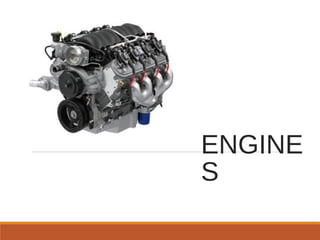
ENGINE
S
• Four-Stroke Gasoline Engine
•Two-Stroke Gasoline Engines
•Diesel Engine
•Rotary Engine
•Steam Engine
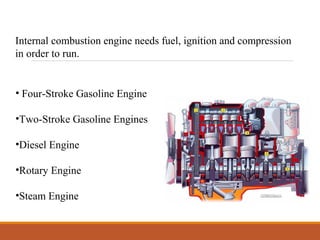
Internal combustion engine needs fuel, ignition and compression
in order to run.
Configuration
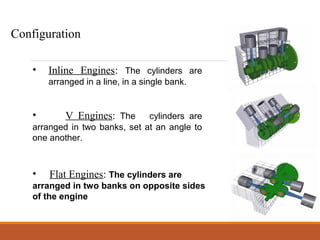
• Inline Engines: The cylinders are
arranged in a line, in a single bank.
• V Engines: The cylinders are
arranged in two banks, set at an angle to
one another.
• Flat Engines: The cylinders are
arranged in two banks on opposite sides
of the engine
Parts
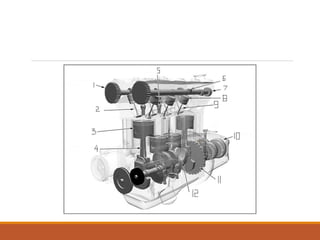
•Exhaust Valve lets the exhaust gases escape the combustion
Chamber. (Diameter is smaller then Intake valve)
•Intake Valve lets the air or air fuel mixture to enter the combustion
chamber. (Diameter is larger than the exhaust valve)
Valves: Minimum Two Valves
pre Cylinder
Valve Springs: Keeps the valves
Closed.
Valve Lifters: Rides the cam lobe
and helps in opening the valves.
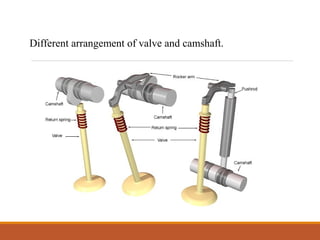
Different arrangement of valve and camshaft.
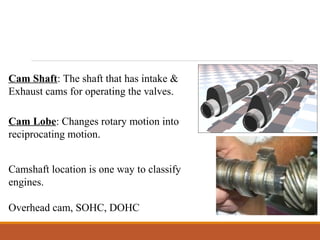
Cam Shaft: The shaft that has intake &
Exhaust cams for operating the valves.
Cam Lobe: Changes rotary motion into
reciprocating motion.
Camshaft location is one way to classify
engines.
Overhead cam, SOHC, DOHC
It provides the means of ignition when the gasoline
engine’s piston is at the end of compression stroke,
close to Top Dead Center(TDC)
Spark Plug
The difference between a
"hot" and a "cold" spark plug
is that the ceramic tip is
longer on the hotter plug.
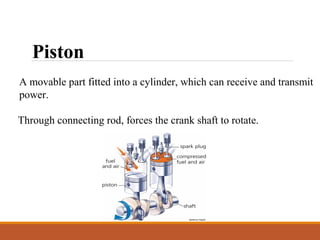
Piston
A movable part fitted into a cylinder, which can receive and transmit
power.
Through connecting rod, forces the crank shaft to rotate.
Cylinder head
Part that covers and encloses the Cylinder.
It contains cooling fins or water jackets and the valves.
Some engines contains the cam shaft
in the cylinder head.
Engine Block
Foundation of the engine and contains pistons, crank shaft,
cylinders, timing sprockets and sometimes the cam shaft. Also
called short block.
Engine without cylinder heads, exhaust manifold, or intake manifold
attached to it is called bare block.
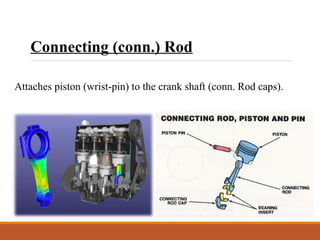
Connecting (conn.) Rod
Attaches piston (wrist-pin) to the crank shaft (conn. Rod caps).
Crank Shaft
Converts up and down motion
into circular motion. Transmits the
power to transmission.
DAMPNER PULLEY
Controls Vibration
Crank Shaft main bearings
Main bearings are fitted between crank shaft and the main journals.
Piston Rings
Four stroke: Three rings Top two are
compression rings (sealing the compression
pressure in the cylinder) and the third is an oil
ring (scrapes excessive oil from the cylinder
walls)
Two Stroke: Two Rings Both the rings are Compression rings.
Blow-by from Piston Rings
Engine blow-by will cause oil burning in the combustion chamber,
producing blue(grey) smoke.
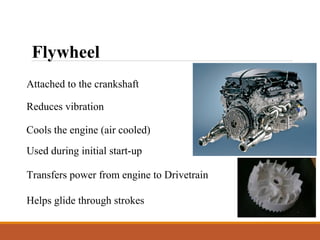
Flywheel
Attached to the crankshaft
Reduces vibration
Cools the engine (air cooled)
Used during initial start-up
Transfers power from engine to Drivetrain
Helps glide through strokes
Thank You

Engines

  • 1.
  • 2.
    • Four-Stroke GasolineEngine •Two-Stroke Gasoline Engines •Diesel Engine •Rotary Engine •Steam Engine Internal combustion engine needs fuel, ignition and compression in order to run.
  • 3.
    Configuration • Inline Engines:The cylinders are arranged in a line, in a single bank. • V Engines: The cylinders are arranged in two banks, set at an angle to one another. • Flat Engines: The cylinders are arranged in two banks on opposite sides of the engine
  • 4.
    Parts •Exhaust Valve letsthe exhaust gases escape the combustion Chamber. (Diameter is smaller then Intake valve) •Intake Valve lets the air or air fuel mixture to enter the combustion chamber. (Diameter is larger than the exhaust valve) Valves: Minimum Two Valves pre Cylinder
  • 5.
    Valve Springs: Keepsthe valves Closed. Valve Lifters: Rides the cam lobe and helps in opening the valves.
  • 6.
    Different arrangement ofvalve and camshaft.
  • 7.
    Cam Shaft: Theshaft that has intake & Exhaust cams for operating the valves. Cam Lobe: Changes rotary motion into reciprocating motion. Camshaft location is one way to classify engines. Overhead cam, SOHC, DOHC
  • 8.
    It provides themeans of ignition when the gasoline engine’s piston is at the end of compression stroke, close to Top Dead Center(TDC) Spark Plug The difference between a "hot" and a "cold" spark plug is that the ceramic tip is longer on the hotter plug.
  • 9.
    Piston A movable partfitted into a cylinder, which can receive and transmit power. Through connecting rod, forces the crank shaft to rotate.
  • 10.
    Cylinder head Part thatcovers and encloses the Cylinder. It contains cooling fins or water jackets and the valves. Some engines contains the cam shaft in the cylinder head.
  • 11.
    Engine Block Foundation ofthe engine and contains pistons, crank shaft, cylinders, timing sprockets and sometimes the cam shaft. Also called short block. Engine without cylinder heads, exhaust manifold, or intake manifold attached to it is called bare block.
  • 12.
    Connecting (conn.) Rod Attachespiston (wrist-pin) to the crank shaft (conn. Rod caps).
  • 13.
    Crank Shaft Converts upand down motion into circular motion. Transmits the power to transmission. DAMPNER PULLEY Controls Vibration
  • 14.
    Crank Shaft mainbearings Main bearings are fitted between crank shaft and the main journals.
  • 15.
    Piston Rings Four stroke:Three rings Top two are compression rings (sealing the compression pressure in the cylinder) and the third is an oil ring (scrapes excessive oil from the cylinder walls) Two Stroke: Two Rings Both the rings are Compression rings.
  • 16.
    Blow-by from PistonRings Engine blow-by will cause oil burning in the combustion chamber, producing blue(grey) smoke.
  • 17.
    Flywheel Attached to thecrankshaft Reduces vibration Cools the engine (air cooled) Used during initial start-up Transfers power from engine to Drivetrain Helps glide through strokes
  • 19.