AUTOMOBILE
Introduction
AUTOMOBILE
An Automobile is a self-propelled vehicle
driven by an IC engine and is used for
transportation of passengers and goods on
grounds.
Examples: Bus, Car, Jeep, Truck, Scooter
etc
Component of Automobile
 The Power plant
 The Transmission system
 The Auxiliaries
 The Control
 The Suspension
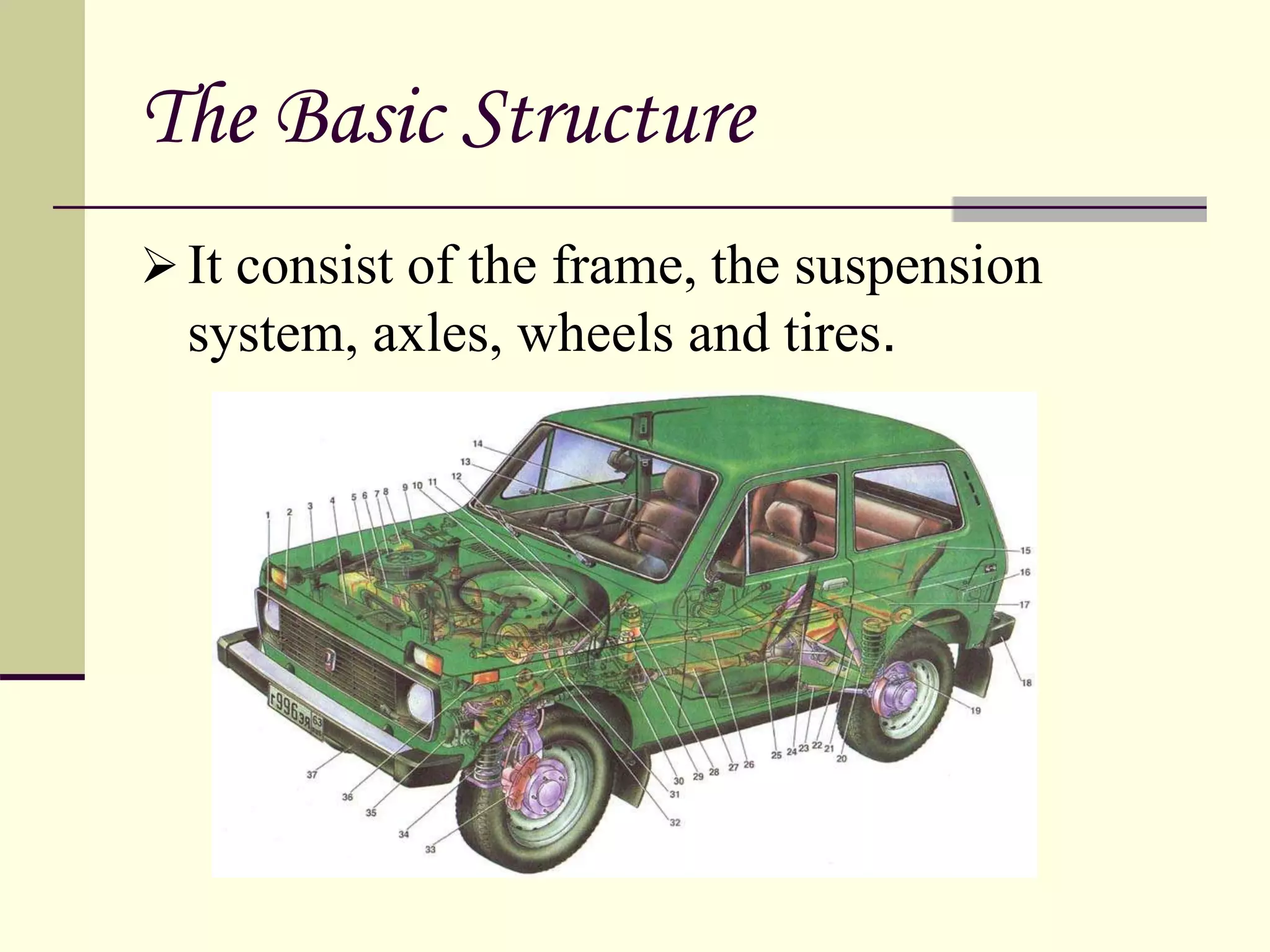
The Basic Structure
It consist of the frame, the suspension
system, axles, wheels and tires.
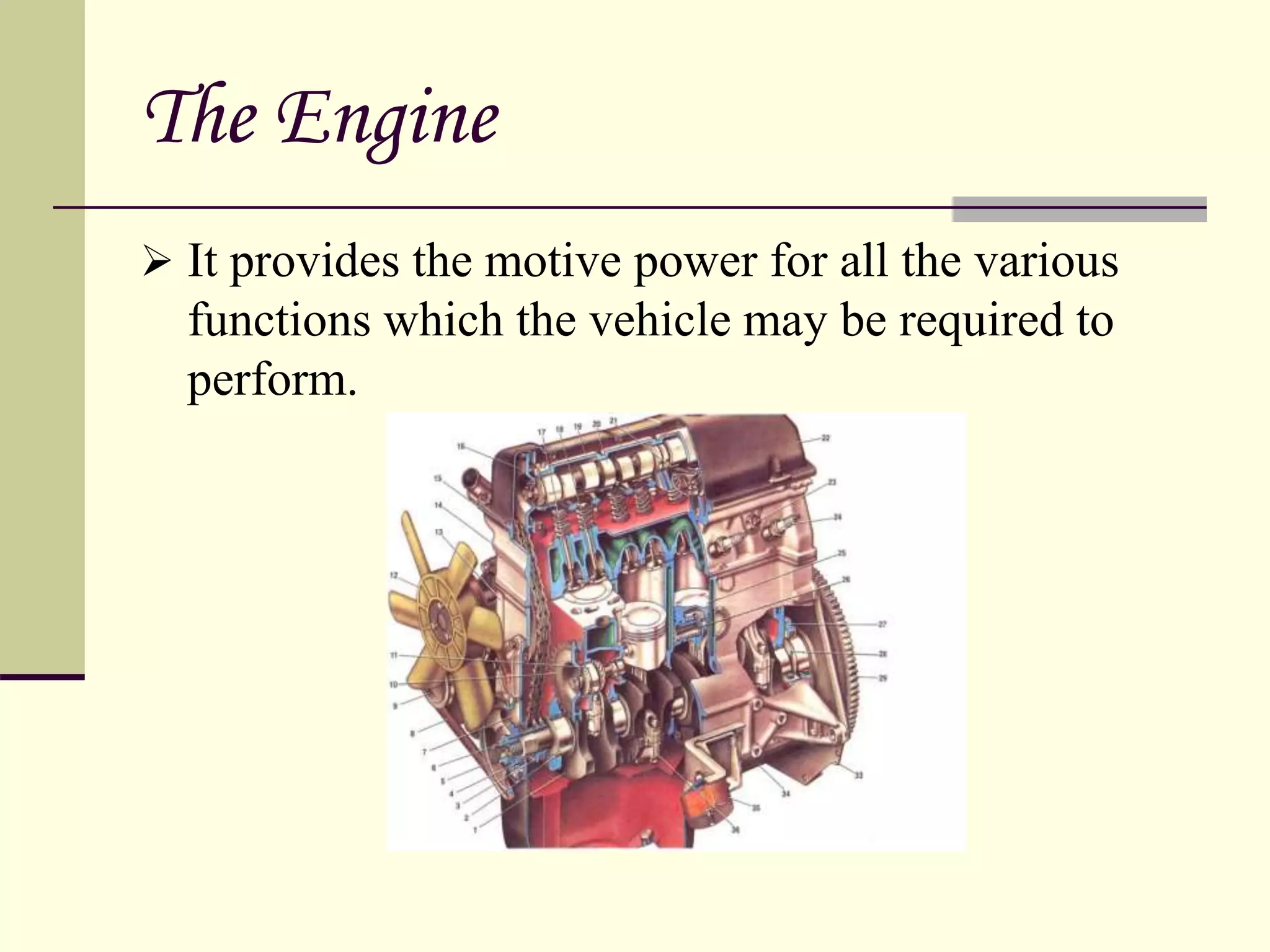
The Engine
 It provides the motive power for all the various
functions which the vehicle may be required to
perform.
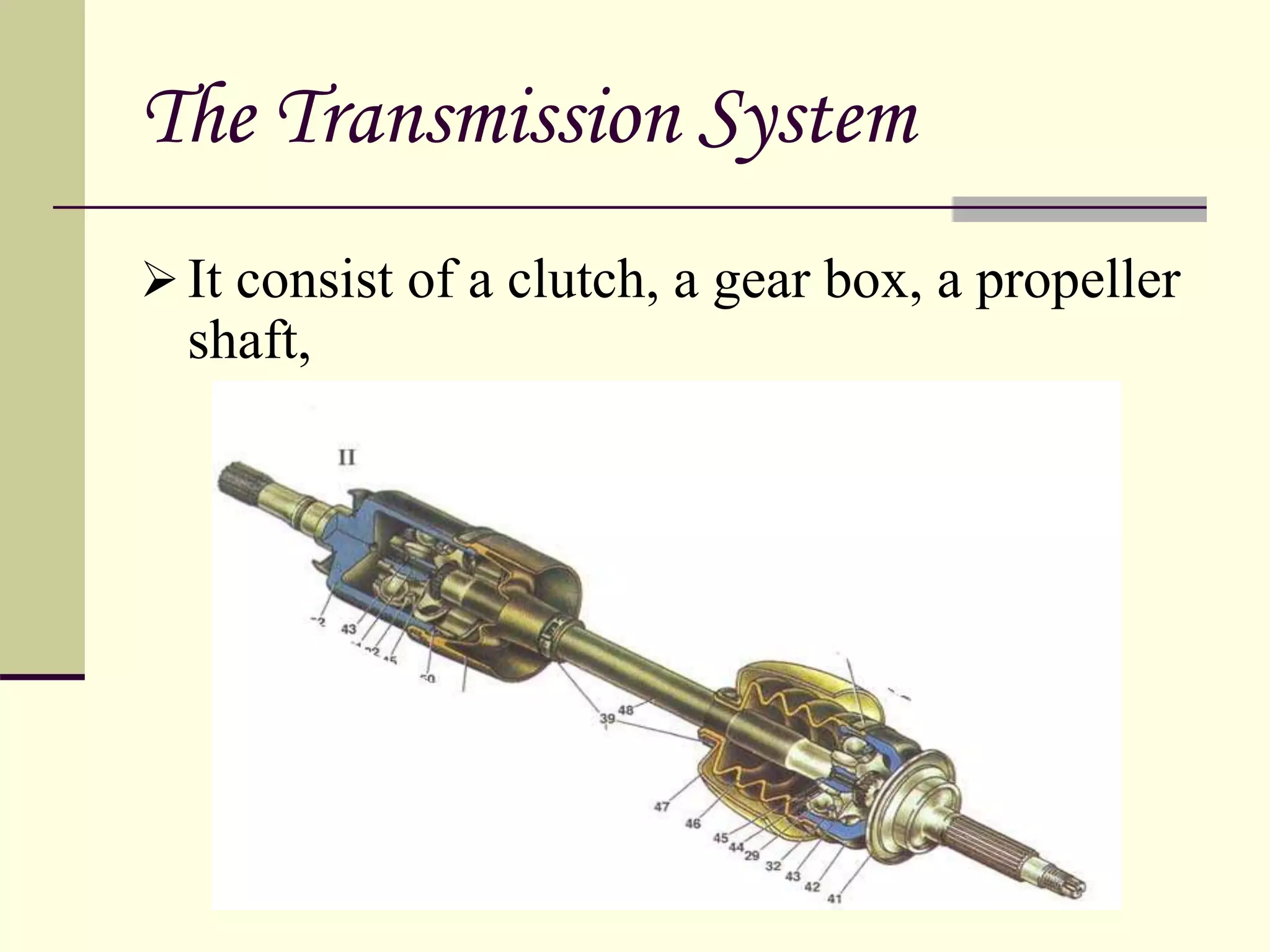
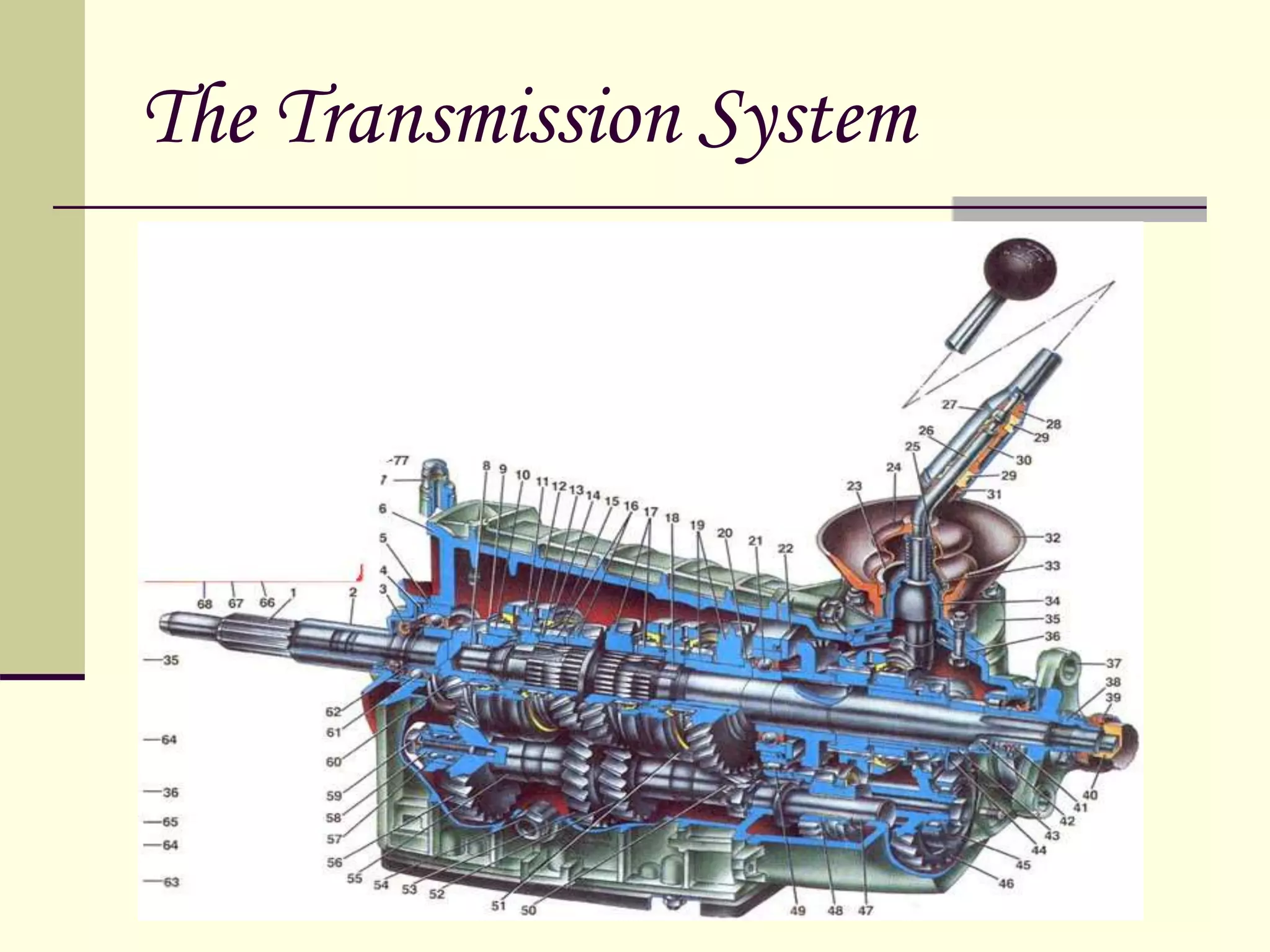
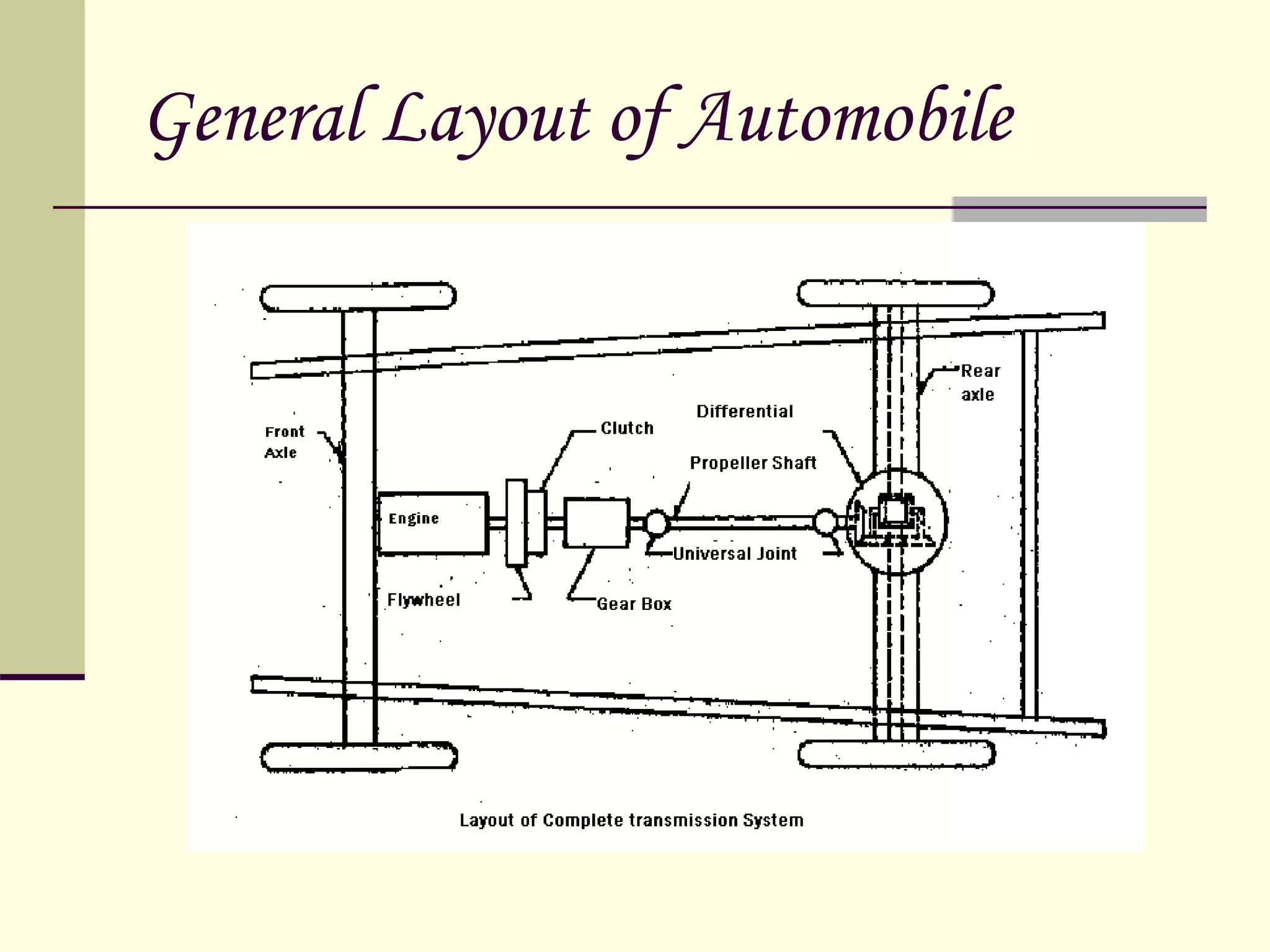
The Transmission System
It consist of a clutch, a gear box, a propeller
shaft,
The Transmission System
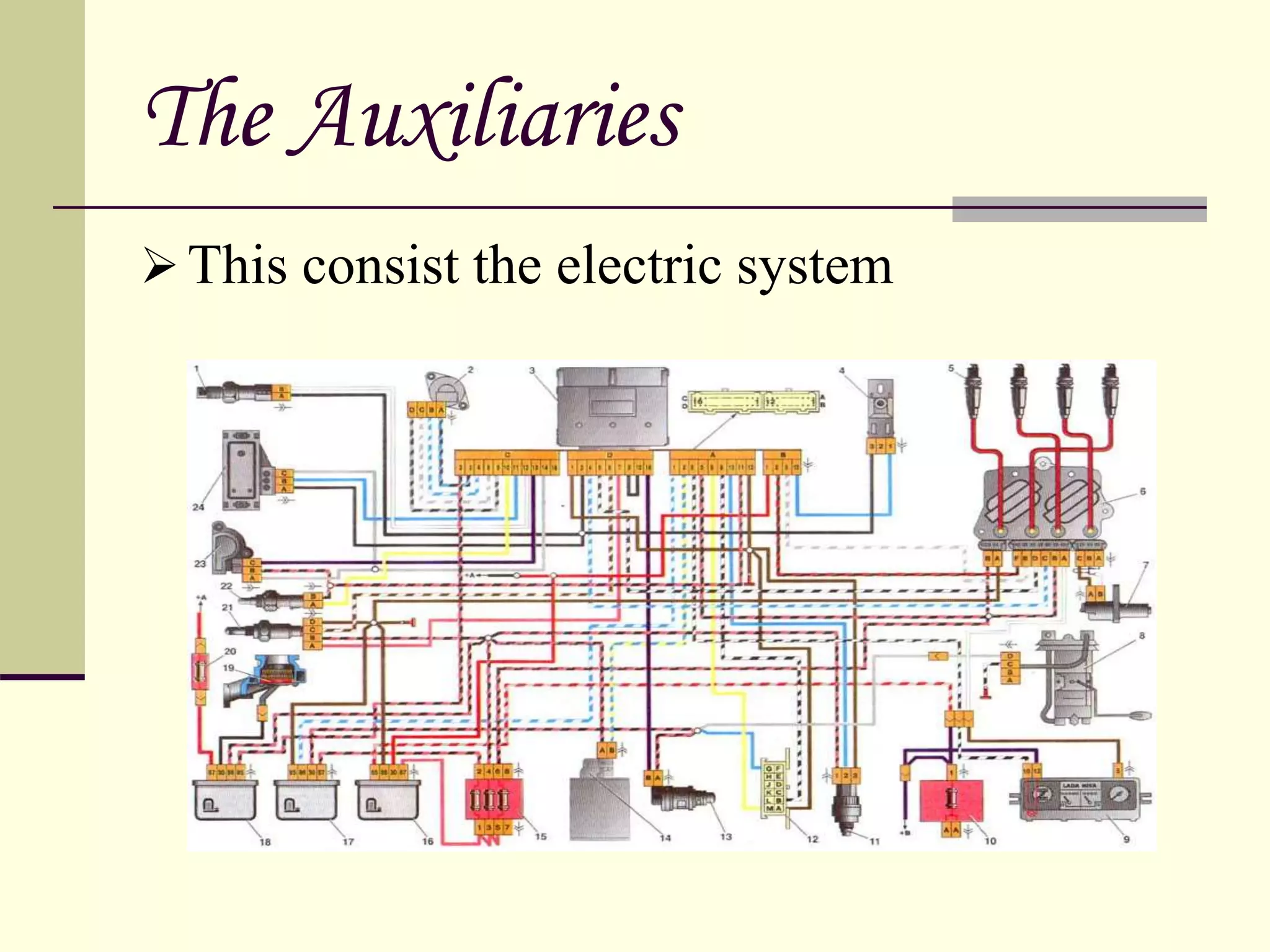
The Auxiliaries
This consist the electric system
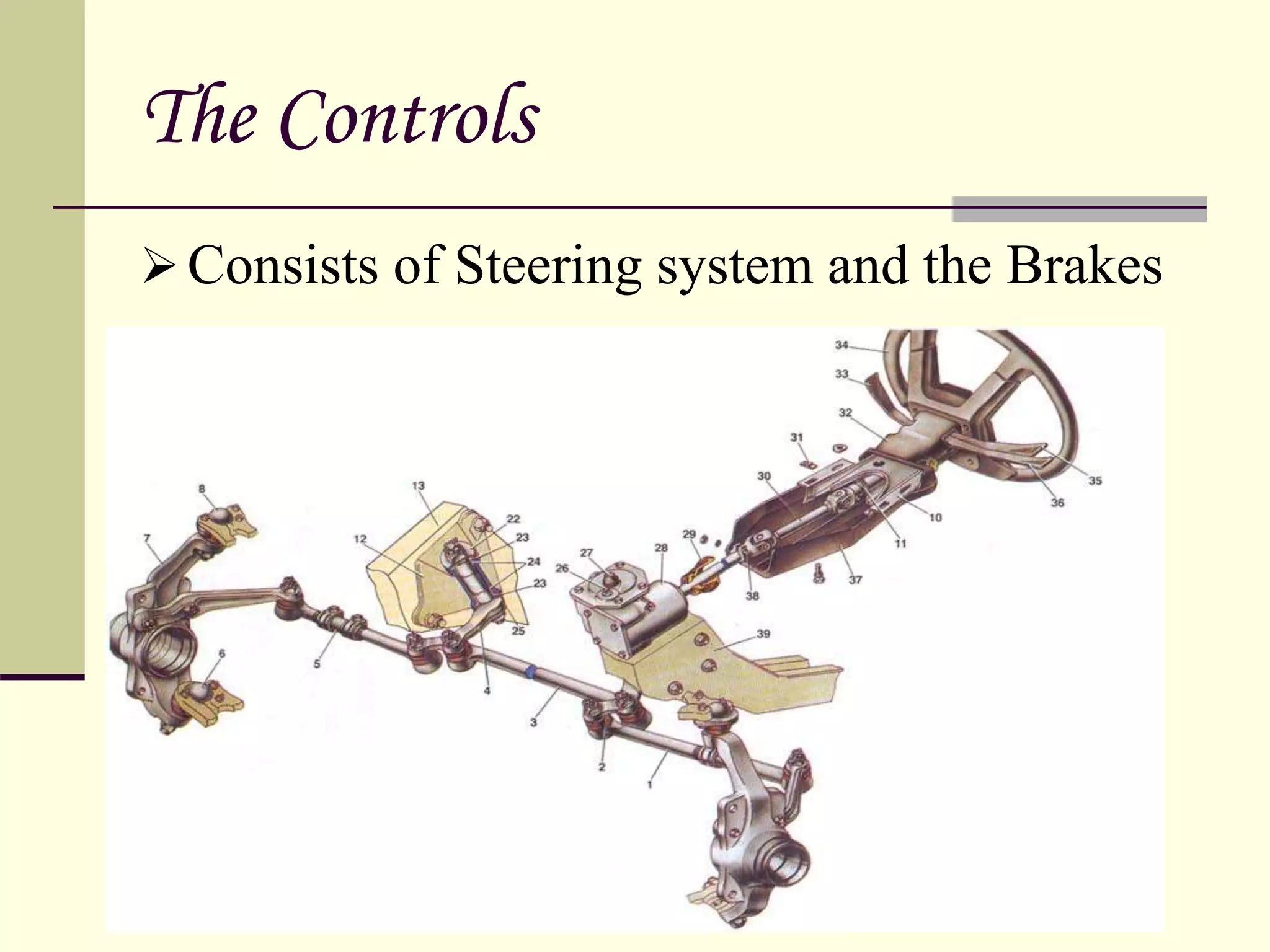
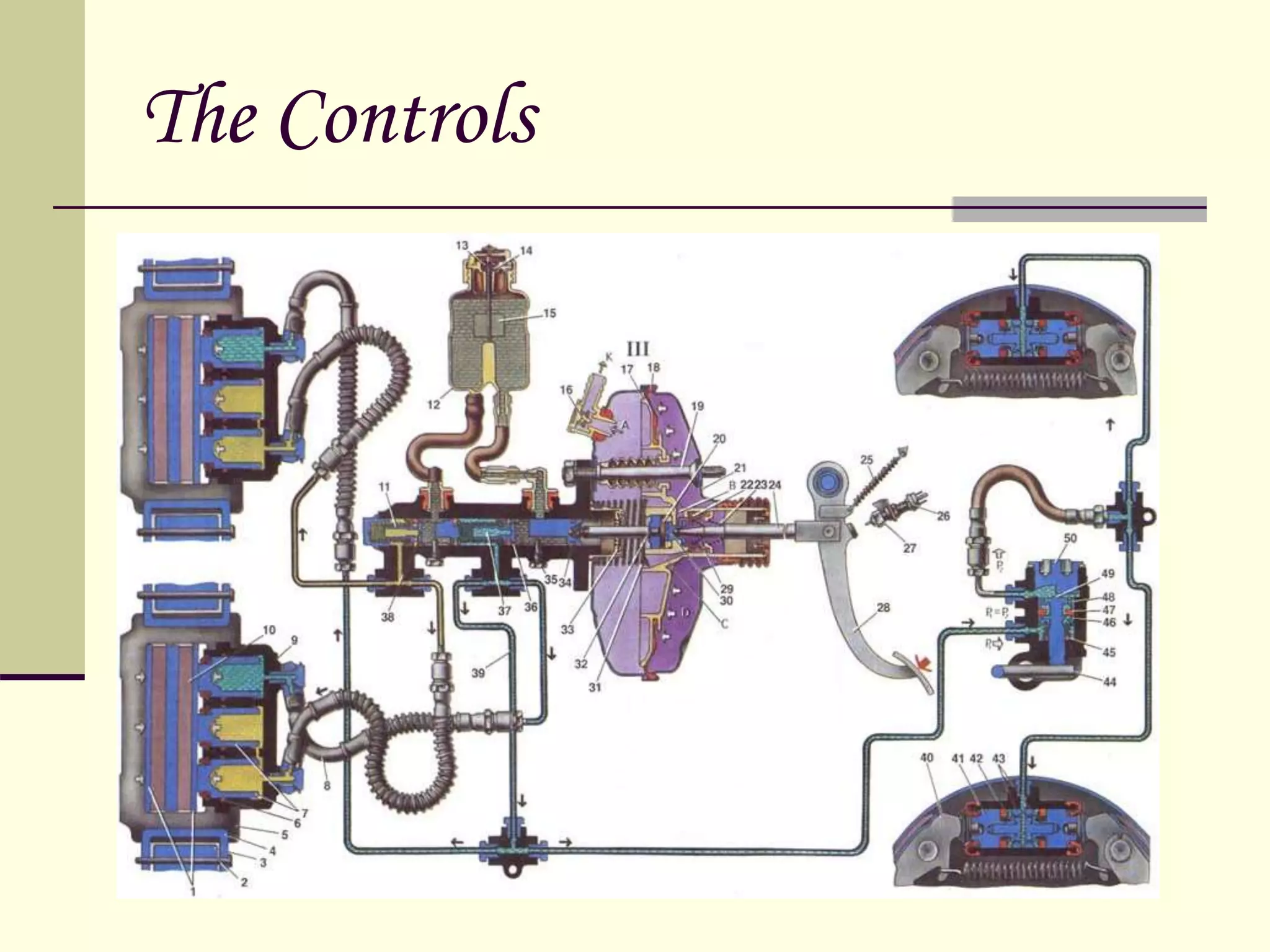
The Controls
Consists of Steering system and the Brakes
The Controls
General Layout of Automobile
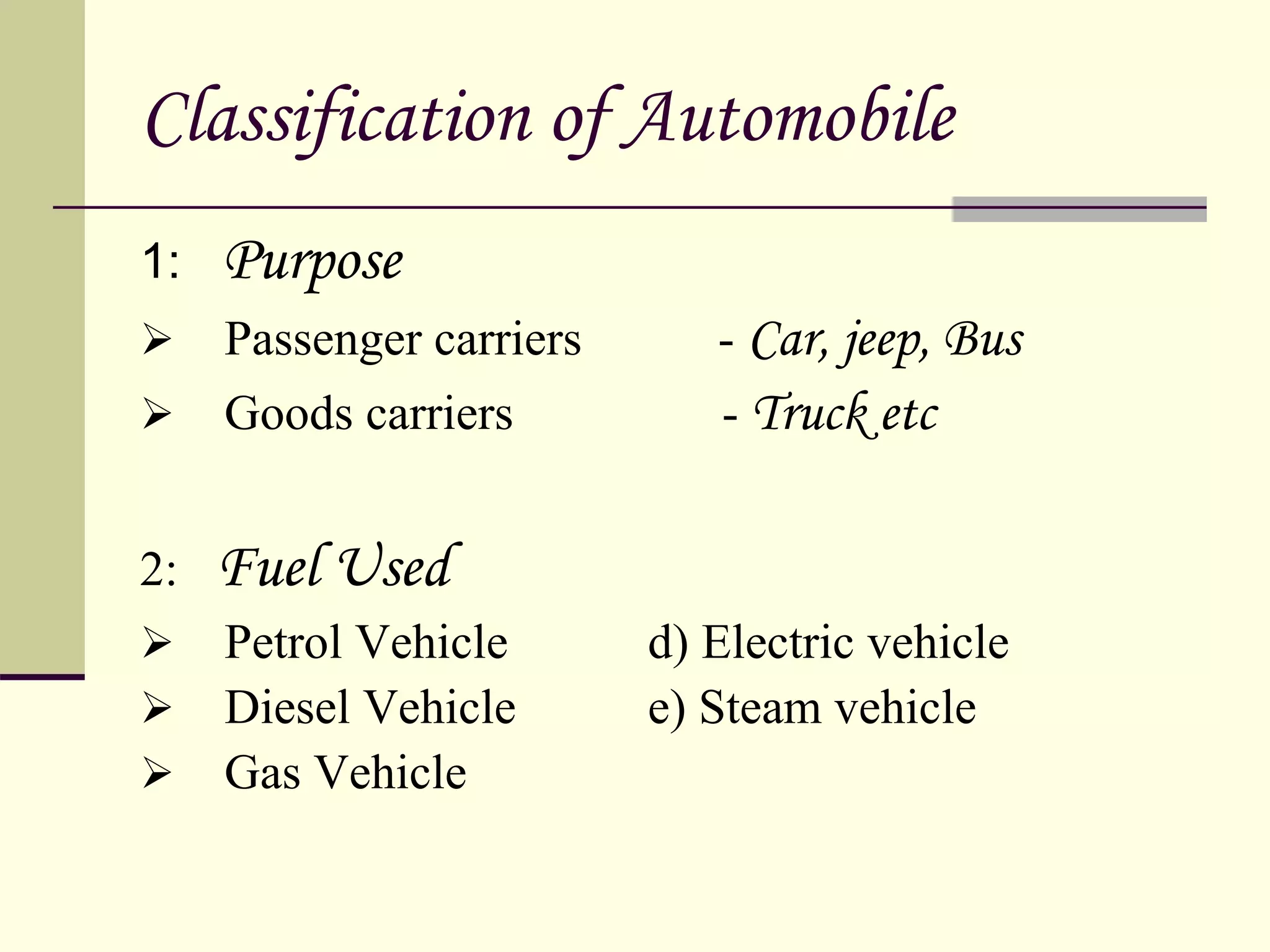
Classification of Automobile
1: Purpose
 Passenger carriers - Car, jeep, Bus
 Goods carriers - Truck etc
2: Fuel Used
 Petrol Vehicle d) Electric vehicle
 Diesel Vehicle e) Steam vehicle
 Gas Vehicle
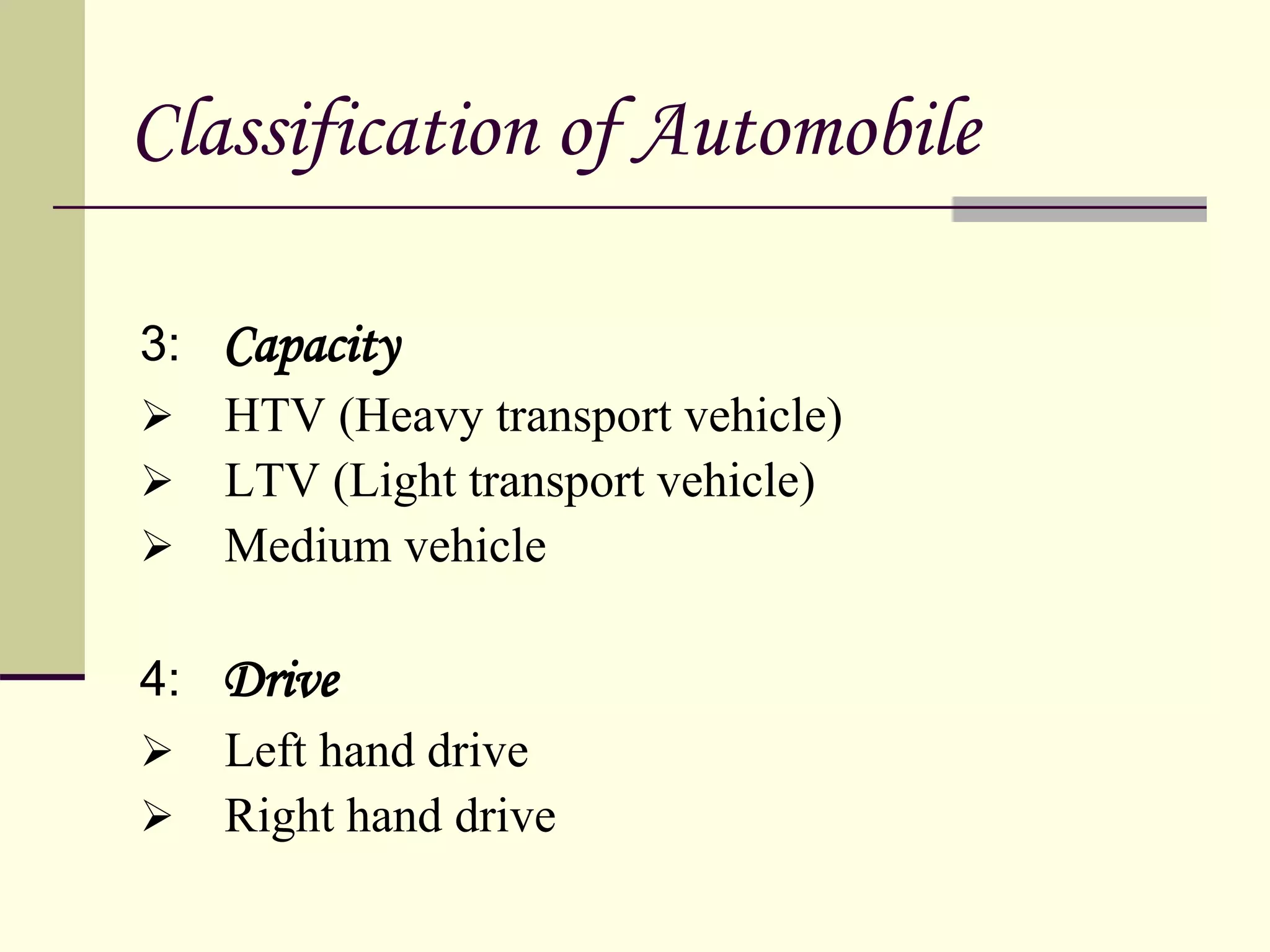
3: Capacity
 HTV (Heavy transport vehicle)
 LTV (Light transport vehicle)
 Medium vehicle
4: Drive
 Left hand drive
 Right hand drive
Classification of Automobile
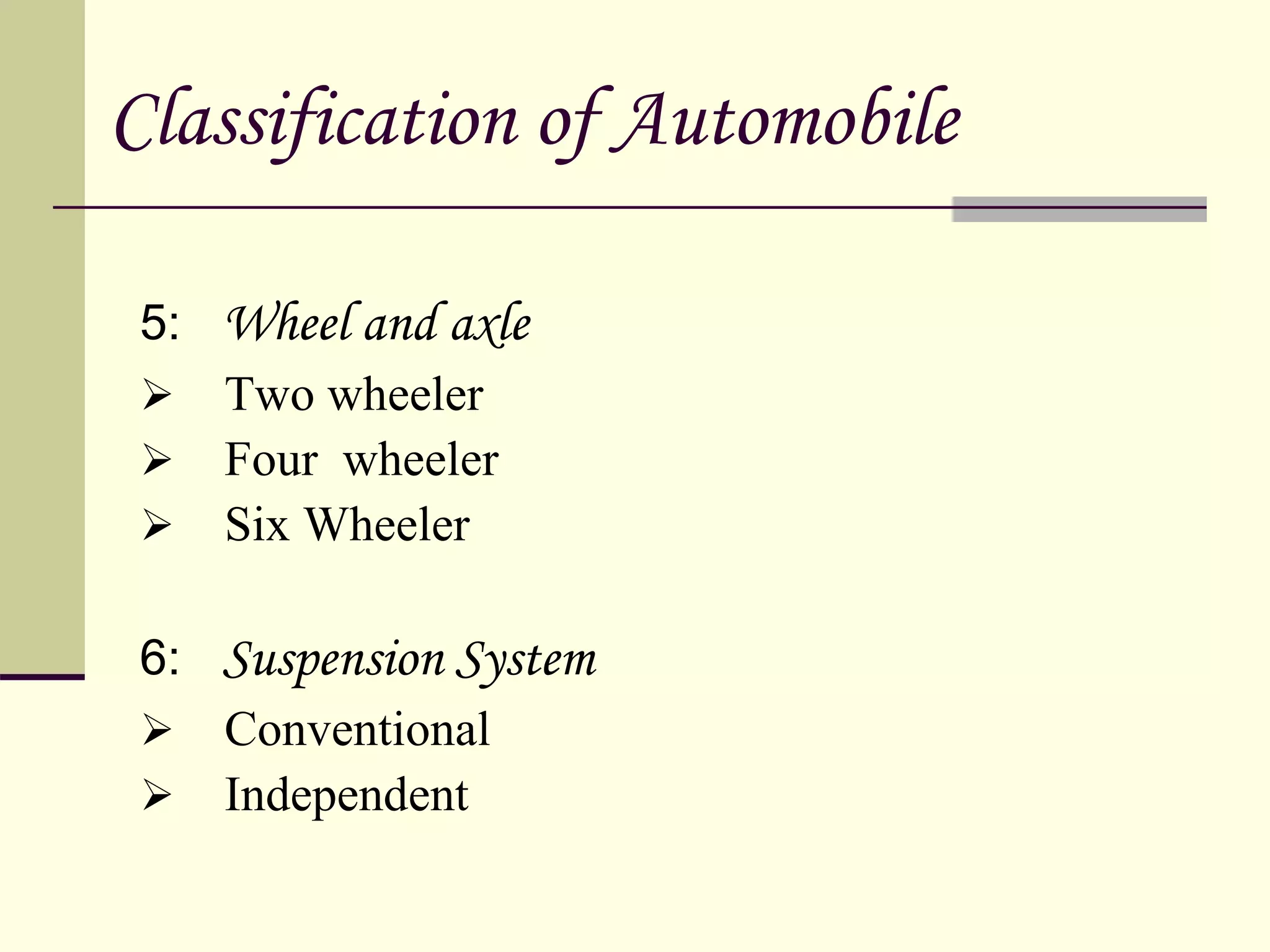
5: Wheel and axle
 Two wheeler
 Four wheeler
 Six Wheeler
6: Suspension System
 Conventional
 Independent
Classification of Automobile
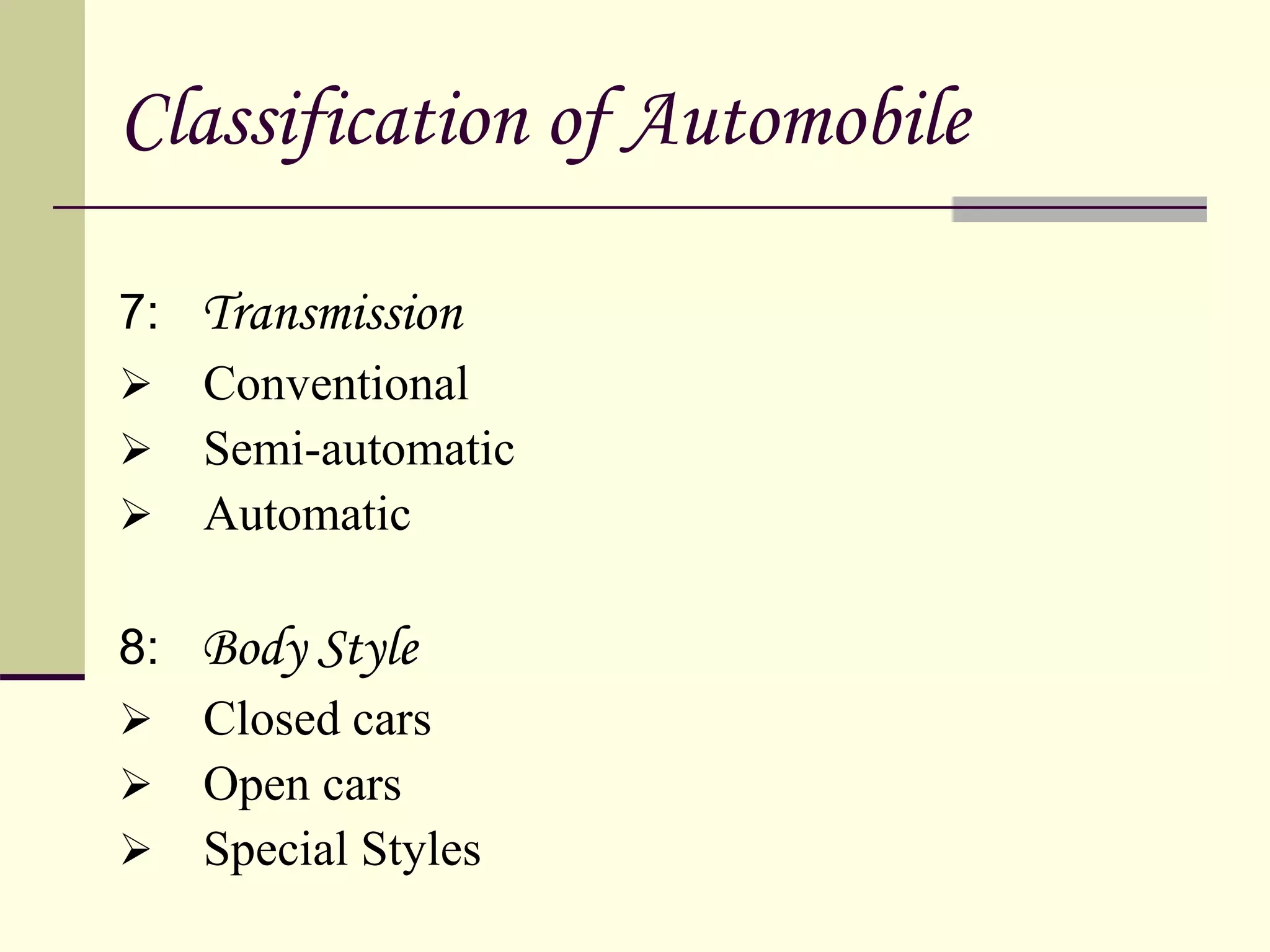
7: Transmission
 Conventional
 Semi-automatic
 Automatic
8: Body Style
 Closed cars
 Open cars
 Special Styles
Classification of Automobile
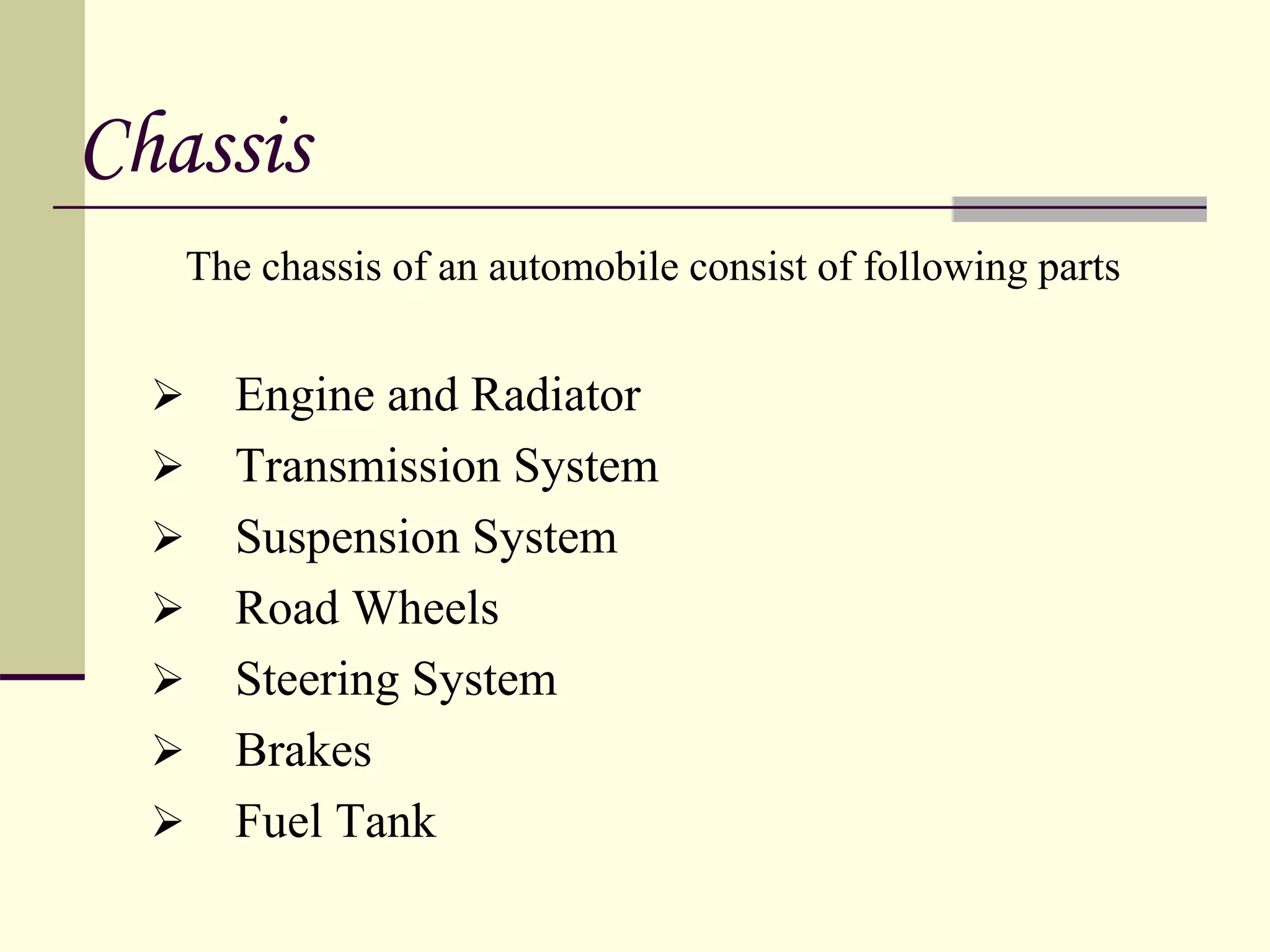
Chassis
The chassis of an automobile consist of following parts
 Engine and Radiator
 Transmission System
 Suspension System
 Road Wheels
 Steering System
 Brakes
 Fuel Tank
There are 2 types of construction to mount all
the component of automobile.
 Conventional Construction
(In which the separate frame is used)
 Frameless or unitary construction
(In which no separate frame is used)
1`
Construction
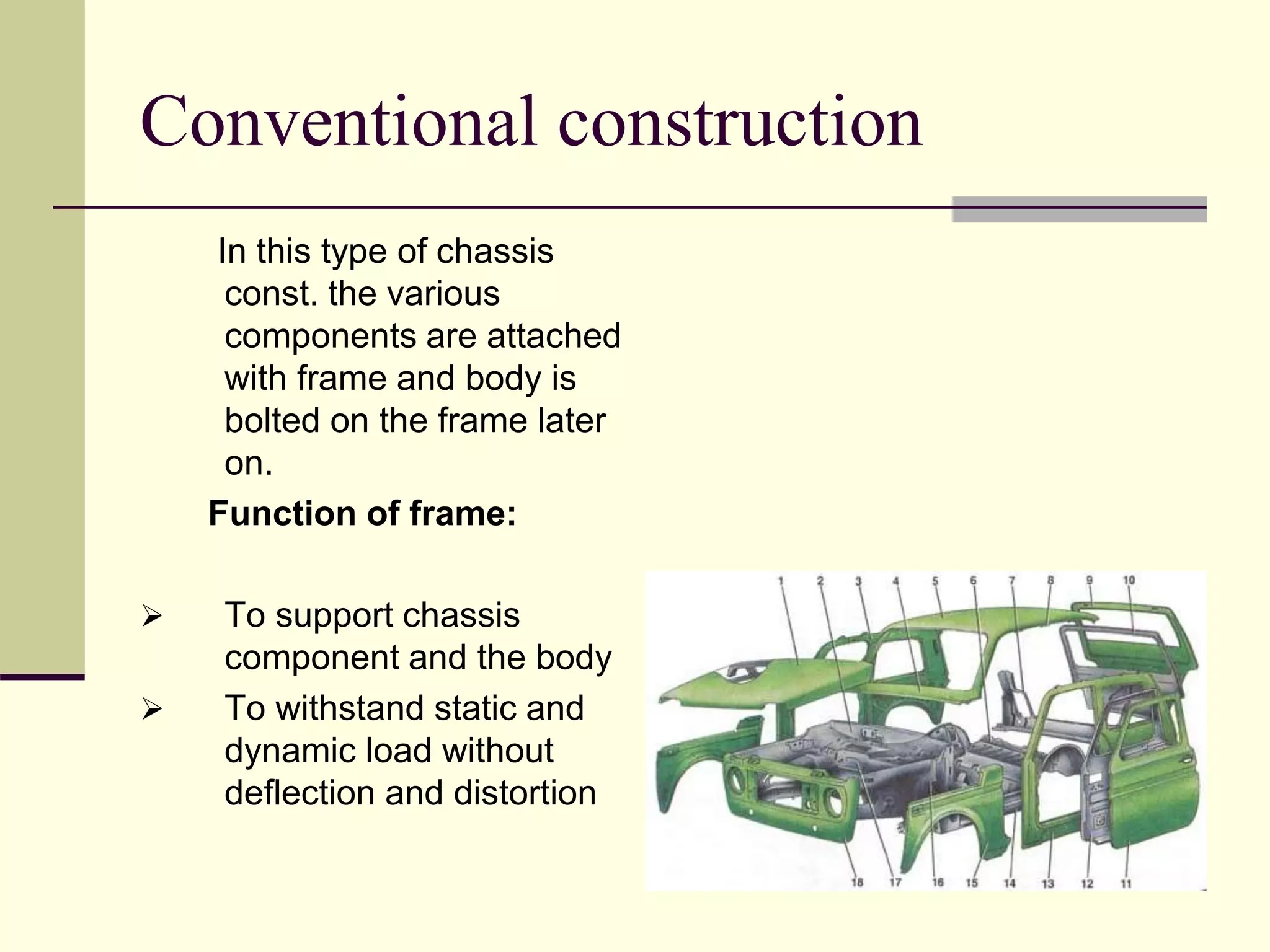
Conventional construction
In this type of chassis
const. the various
components are attached
with frame and body is
bolted on the frame later
on.
Function of frame:
 To support chassis
component and the body
 To withstand static and
dynamic load without
deflection and distortion
Frameless construction
 In this type of
construction the floor
is strengthened by
cross-member and the
body, all welded
together.
Position of power unit.
1. Engine at front
a) In this the engines are fitted at front and the drive is given
to the wheels from the “rear”
Advantage
 Enough space behind the rear seat
 Weight of vehicle is well balanced on the wheels
 Easier to inspect, repair and adjust the engine clutch
and gear box
 Increased efficiency of cooling system
b) The engine is fitted in front and drive is also given to
front wheels only as in Matador vehicles
Position of power unit
2. Engine fitted in front but crosswise
In this the engine fitted in front but crosswise as
in Maruti and drive is given to front wheels only
Position of power unit
3. Engine fitted at centre of the chassis
In this case the Engine fitted at centre of the
chassis i.e under the chassis as in Royal Tiger
World master buses previously piled by Delhi
Transport Corporation.
This arrangement provides full space of chassis
floor for use.
Engine fitted at the back
4. Engine fitted at the back
The popular vehicles, employing this system are
Renault, Dolphin and Volkswagon
Advantage
 Better adhesion on road
 It helps quick stopping when more load is placed at rear
 Elimination of propeller shaft, with this centre of gravity
is lowered giving stability
THANKS

Basic of automobile.ppt

  • 1.
  • 2.
    AUTOMOBILE An Automobile isa self-propelled vehicle driven by an IC engine and is used for transportation of passengers and goods on grounds. Examples: Bus, Car, Jeep, Truck, Scooter etc
  • 3.
    Component of Automobile The Power plant  The Transmission system  The Auxiliaries  The Control  The Suspension
  • 4.
    The Basic Structure Itconsist of the frame, the suspension system, axles, wheels and tires.
  • 5.
    The Engine  Itprovides the motive power for all the various functions which the vehicle may be required to perform.
  • 6.
    The Transmission System Itconsist of a clutch, a gear box, a propeller shaft,
  • 7.
  • 8.
  • 9.
    The Controls Consists ofSteering system and the Brakes
  • 10.
  • 11.
  • 12.
    Classification of Automobile 1:Purpose  Passenger carriers - Car, jeep, Bus  Goods carriers - Truck etc 2: Fuel Used  Petrol Vehicle d) Electric vehicle  Diesel Vehicle e) Steam vehicle  Gas Vehicle
  • 13.
    3: Capacity  HTV(Heavy transport vehicle)  LTV (Light transport vehicle)  Medium vehicle 4: Drive  Left hand drive  Right hand drive Classification of Automobile
  • 14.
    5: Wheel andaxle  Two wheeler  Four wheeler  Six Wheeler 6: Suspension System  Conventional  Independent Classification of Automobile
  • 15.
    7: Transmission  Conventional Semi-automatic  Automatic 8: Body Style  Closed cars  Open cars  Special Styles Classification of Automobile
  • 16.
    Chassis The chassis ofan automobile consist of following parts  Engine and Radiator  Transmission System  Suspension System  Road Wheels  Steering System  Brakes  Fuel Tank
  • 17.
    There are 2types of construction to mount all the component of automobile.  Conventional Construction (In which the separate frame is used)  Frameless or unitary construction (In which no separate frame is used) 1` Construction
  • 18.
    Conventional construction In thistype of chassis const. the various components are attached with frame and body is bolted on the frame later on. Function of frame:  To support chassis component and the body  To withstand static and dynamic load without deflection and distortion
  • 19.
    Frameless construction  Inthis type of construction the floor is strengthened by cross-member and the body, all welded together.
  • 20.
    Position of powerunit. 1. Engine at front a) In this the engines are fitted at front and the drive is given to the wheels from the “rear” Advantage  Enough space behind the rear seat  Weight of vehicle is well balanced on the wheels
  • 21.
     Easier toinspect, repair and adjust the engine clutch and gear box  Increased efficiency of cooling system b) The engine is fitted in front and drive is also given to front wheels only as in Matador vehicles Position of power unit
  • 22.
    Position of powerunit 2. Engine fitted in front but crosswise In this the engine fitted in front but crosswise as in Maruti and drive is given to front wheels only
  • 23.
    Position of powerunit 3. Engine fitted at centre of the chassis In this case the Engine fitted at centre of the chassis i.e under the chassis as in Royal Tiger World master buses previously piled by Delhi Transport Corporation. This arrangement provides full space of chassis floor for use.
  • 24.
    Engine fitted atthe back 4. Engine fitted at the back The popular vehicles, employing this system are Renault, Dolphin and Volkswagon Advantage  Better adhesion on road  It helps quick stopping when more load is placed at rear  Elimination of propeller shaft, with this centre of gravity is lowered giving stability
  • 25.