Energy and Enzymes
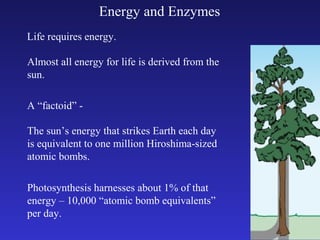
Life requires energy.

Almost all energy for life is derived from the
sun.

A “factoid” -

The sun’s energy that strikes Earth each day
is equivalent to one million Hiroshima-sized
atomic bombs.

Photosynthesis harnesses about 1% of that
energy – 10,000 “atomic bomb equivalents”
per day.
Chemistry and Life


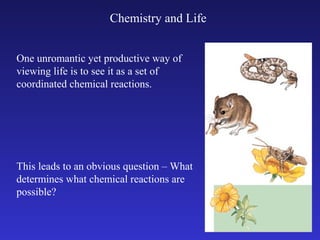
One unromantic yet productive way of
viewing life is to see it as a set of
coordinated chemical reactions.


This leads to an obvious question – What
determines what chemical reactions are
possible?
Chemical Reactions

Whether a chemical reaction will or won’t occur under particular
conditions is determined by the laws of thermodynamics.

  Keeping it simple -

       If the overall amount of order is decreased by a reaction, the
       reaction is favored.

       If the overall amount of order is increased by a reaction, the
       reaction is not favored.
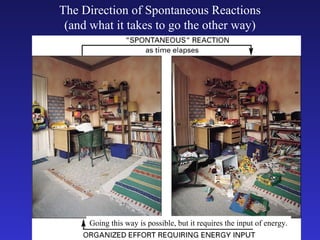
The Direction of Spontaneous Reactions
 (and what it takes to go the other way)


      Going this way is possible, but it requires the input of energy.
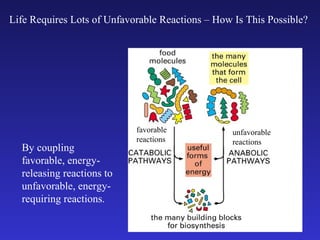
Life Requires Lots of Unfavorable Reactions – How Is This Possible?


                            favorable             unfavorable
                            reactions             reactions
  By coupling
  favorable, energy-
  releasing reactions to
  unfavorable, energy-
  requiring reactions.
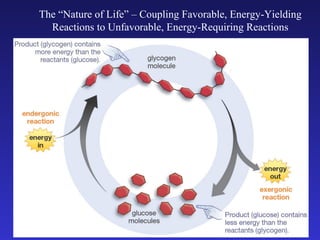
The “Nature of Life” – Coupling Favorable, Energy-Yielding
  Reactions to Unfavorable, Energy-Requiring Reactions
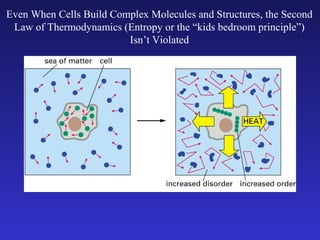
Even When Cells Build Complex Molecules and Structures, the Second
 Law of Thermodynamics (Entropy or the “kids bedroom principle”)
                         Isn’t Violated
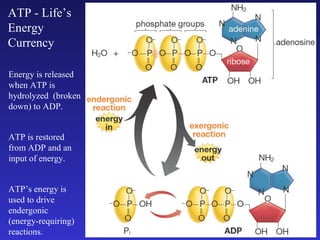
ATP - Life’s
Energy
Currency

Energy is released
when ATP is
hydrolyzed (broken
down) to ADP.


ATP is restored
from ADP and an
input of energy.


ATP’s energy is
used to drive
endergonic
(energy-requiring)
reactions.
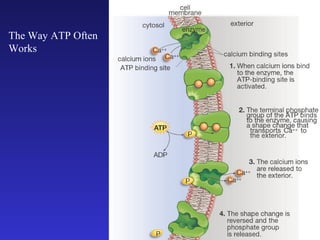
The Way ATP Often
Works
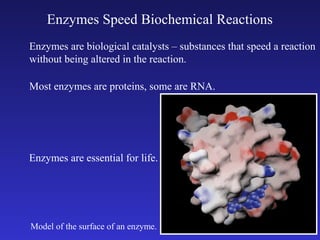
Enzymes Speed Biochemical Reactions
Enzymes are biological catalysts – substances that speed a reaction
without being altered in the reaction.

Most enzymes are proteins, some are RNA.


Enzymes are essential for life.


Model of the surface of an enzyme.
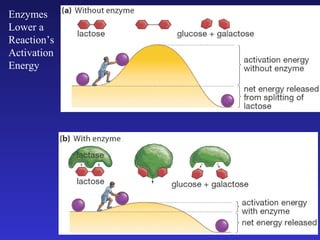
Enzymes
Lower a
Reaction’s
Activation
Energy
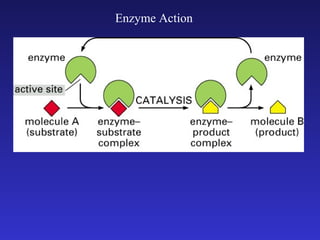
Enzyme Action
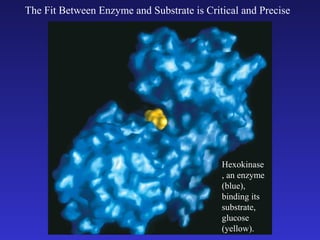
The Fit Between Enzyme and Substrate is Critical and Precise


                                            Hexokinase
                                            , an enzyme
                                            (blue),
                                            binding its
                                            substrate,
                                            glucose
                                            (yellow).
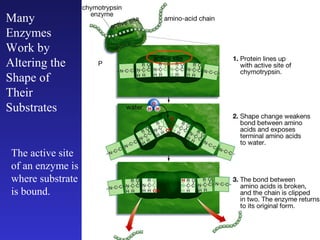
Many
Enzymes
Work by
Altering the
Shape of
Their
Substrates


 The active site
 of an enzyme is
 where substrate
 is bound.
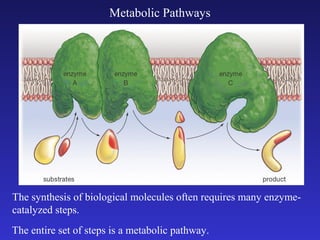
Metabolic Pathways


The synthesis of biological molecules often requires many enzyme-
catalyzed steps.
The entire set of steps is a metabolic pathway.
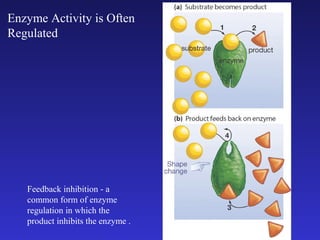
Enzyme Activity is Often
Regulated


   Feedback inhibition - a
   common form of enzyme
   regulation in which the
   product inhibits the enzyme .

Energetics and enzymes 1

  • 1.
    Energy and Enzymes Liferequires energy. Almost all energy for life is derived from the sun. A “factoid” - The sun’s energy that strikes Earth each day is equivalent to one million Hiroshima-sized atomic bombs. Photosynthesis harnesses about 1% of that energy – 10,000 “atomic bomb equivalents” per day.
  • 2.
    Chemistry and Life Oneunromantic yet productive way of viewing life is to see it as a set of coordinated chemical reactions. This leads to an obvious question – What determines what chemical reactions are possible?
  • 3.
    Chemical Reactions Whether achemical reaction will or won’t occur under particular conditions is determined by the laws of thermodynamics. Keeping it simple - If the overall amount of order is decreased by a reaction, the reaction is favored. If the overall amount of order is increased by a reaction, the reaction is not favored.
  • 4.
    The Direction ofSpontaneous Reactions (and what it takes to go the other way) Going this way is possible, but it requires the input of energy.
  • 5.
    Life Requires Lotsof Unfavorable Reactions – How Is This Possible? favorable unfavorable reactions reactions By coupling favorable, energy- releasing reactions to unfavorable, energy- requiring reactions.
  • 6.
    The “Nature ofLife” – Coupling Favorable, Energy-Yielding Reactions to Unfavorable, Energy-Requiring Reactions
  • 7.
    Even When CellsBuild Complex Molecules and Structures, the Second Law of Thermodynamics (Entropy or the “kids bedroom principle”) Isn’t Violated
  • 8.
    ATP - Life’s Energy Currency Energyis released when ATP is hydrolyzed (broken down) to ADP. ATP is restored from ADP and an input of energy. ATP’s energy is used to drive endergonic (energy-requiring) reactions.
  • 9.
    The Way ATPOften Works
  • 10.
    Enzymes Speed BiochemicalReactions Enzymes are biological catalysts – substances that speed a reaction without being altered in the reaction. Most enzymes are proteins, some are RNA. Enzymes are essential for life. Model of the surface of an enzyme.
  • 11.
  • 12.
  • 13.
    The Fit BetweenEnzyme and Substrate is Critical and Precise Hexokinase , an enzyme (blue), binding its substrate, glucose (yellow).
  • 14.
    Many Enzymes Work by Altering the Shapeof Their Substrates The active site of an enzyme is where substrate is bound.
  • 15.
    Metabolic Pathways The synthesisof biological molecules often requires many enzyme- catalyzed steps. The entire set of steps is a metabolic pathway.
  • 16.
    Enzyme Activity isOften Regulated Feedback inhibition - a common form of enzyme regulation in which the product inhibits the enzyme .