Energy and Organisms
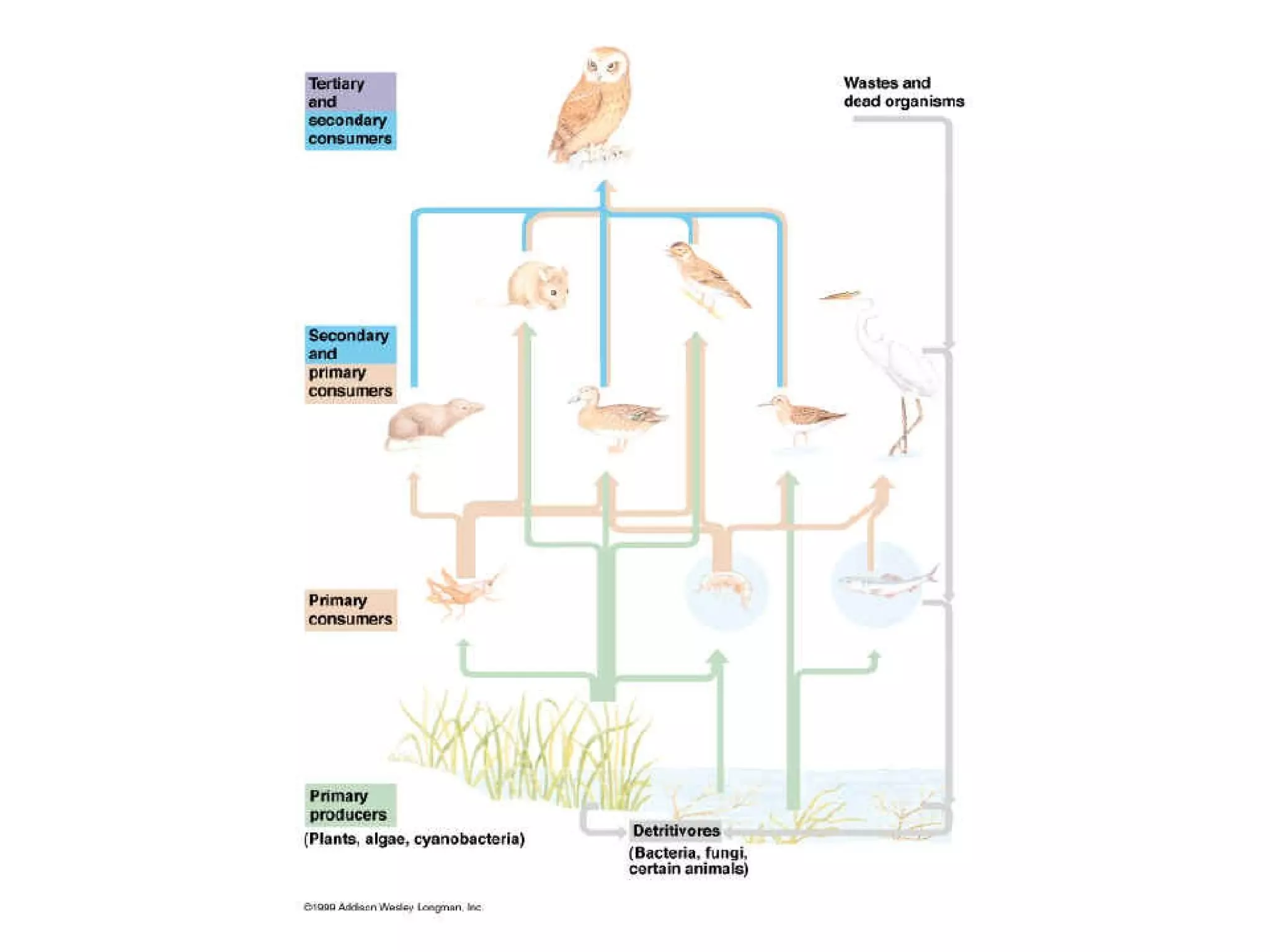
Energy and Nutrients Energy  is the capacity to do work or cause change Organisms store energy in organic molecules as  chemical energy Free energy  is the portion of energy released during chemical reactions that is available to do work Organisms obtain their energy through  Heterotrophy  or  Autotrophy
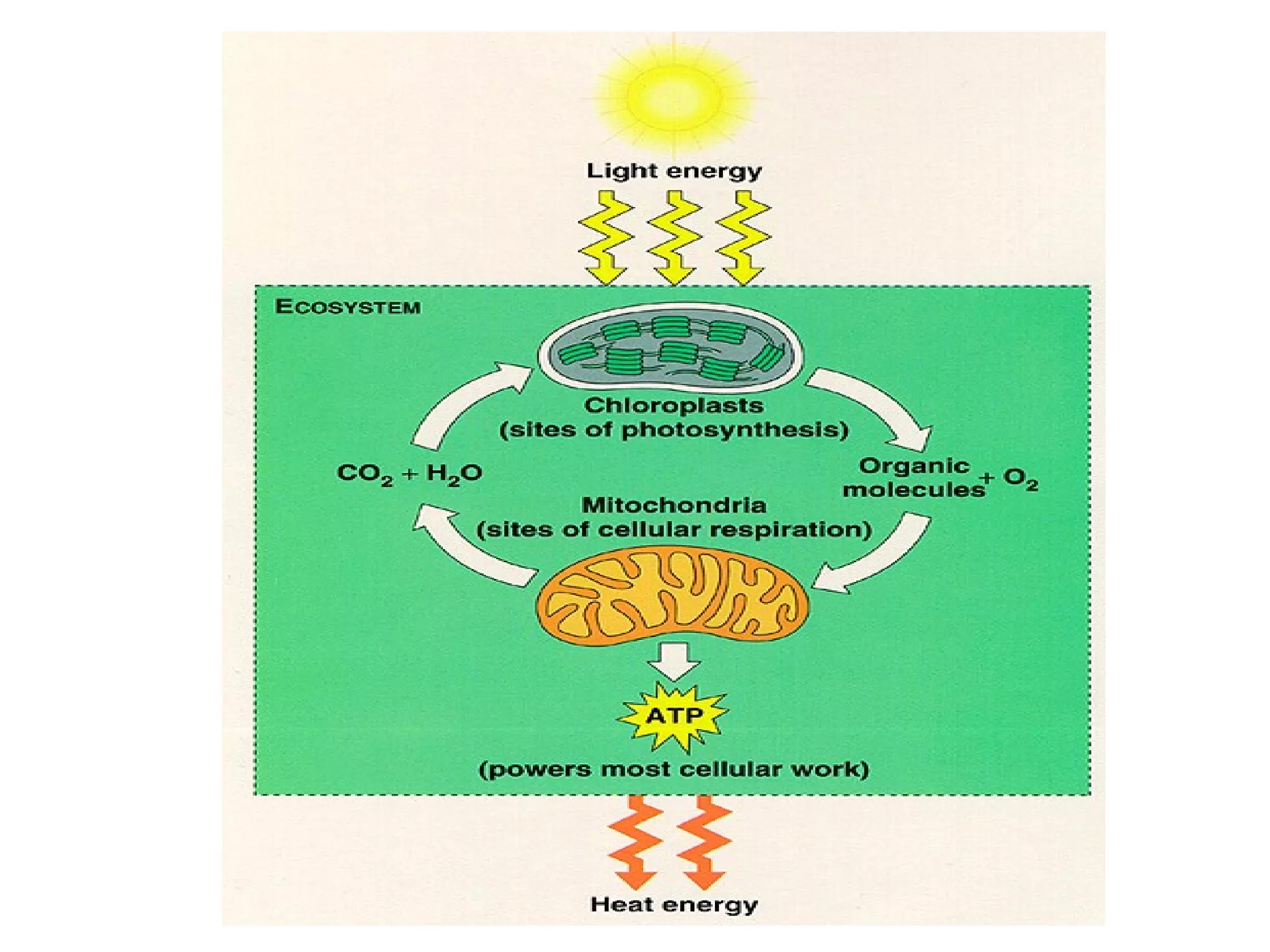
Chemical Reactions Make Life Possible! Autotrophs Heterotrophs and Autotrophs Photosynthesis Cellular Respiration
 
 
Energy Flow and Conversions The Law of Conservation of Energy Energy cannot be created or destroyed, but it can change form The total energy of the universe is constant Organisms cannot create their own energy but must obtain it from an outside source The Second Law of Thermodynamics There is a natural tendency towards disorder “entropy” Energy is required to resist entropy An organism must be well organized to remain alive and grow (Organization requires energy)
Chemical Reactions Proceed as Follows: Reactants Products Metabolism and Energy Transfer Energy  must be added to “ activate ” the reaction and break the bonds between atoms
Under Normal Conditions, a High Amount of Energy is Needed to Start a Reaction Activation Energy In cases like this ( High AE ), reactions would occur too slowly to support life!!! Energy of Reactants Energy of Products
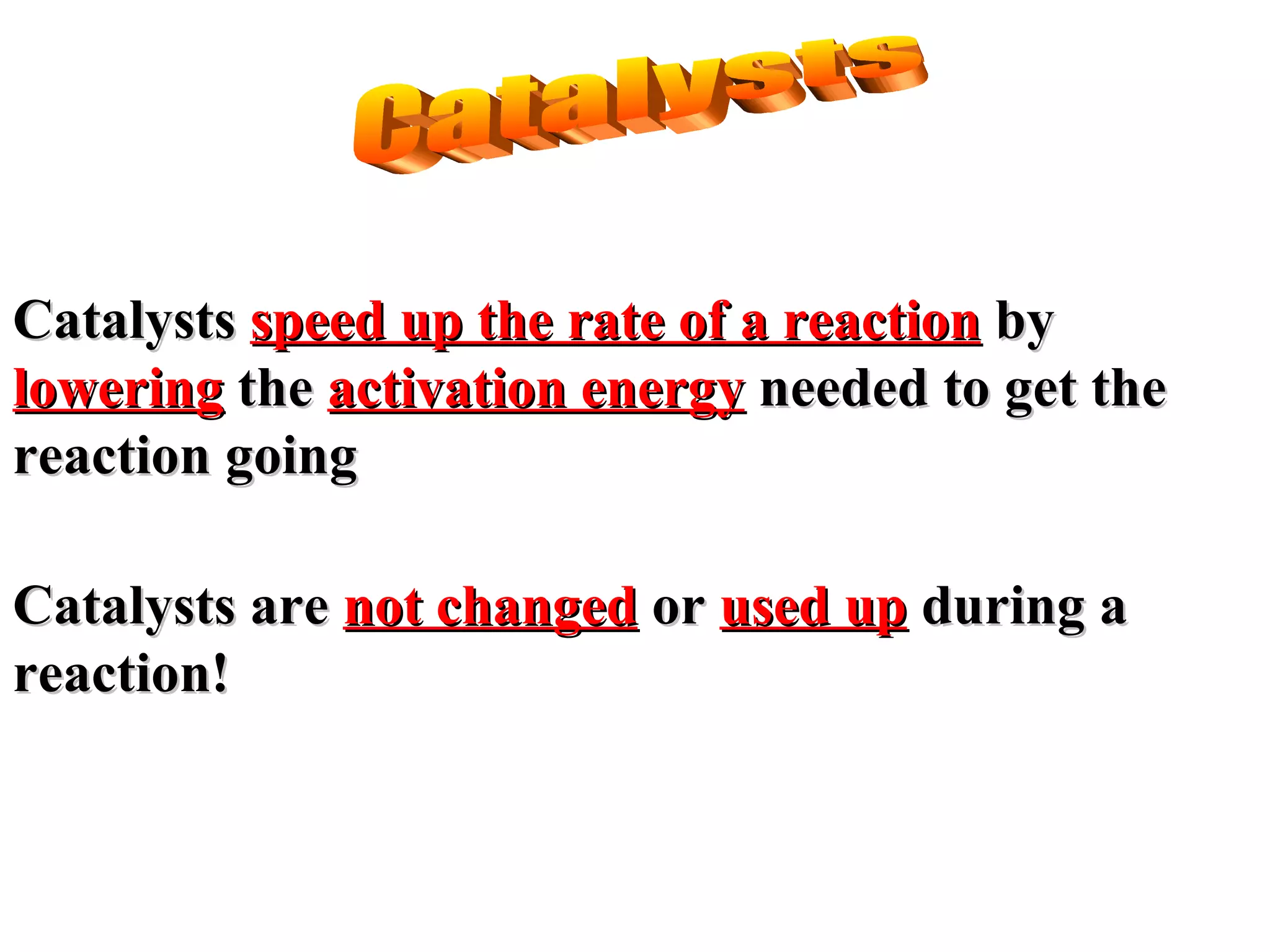
Catalysts Catalysts  speed up the rate of a reaction  by  lowering  the  activation energy  needed to get the reaction going Catalysts are  not changed  or   used up  during a reaction!
A Catalyzed Reaction… Requires less energy to get started!!! Energy of Reactants Energy of Products Activation Energy
The Living Cell has Special Molecules Which Act as Catalysts……. Enzymes Protein Biomolecules Specific to a Substance or Reaction Speeds up Biological Reactions to  10,000,000,000 Times Faster
How do Enzymes Work? Bind to Specific Reactants to Form a  Complex Reactants called  Substrates Substrate Binds to the Enzyme at the  Active Site
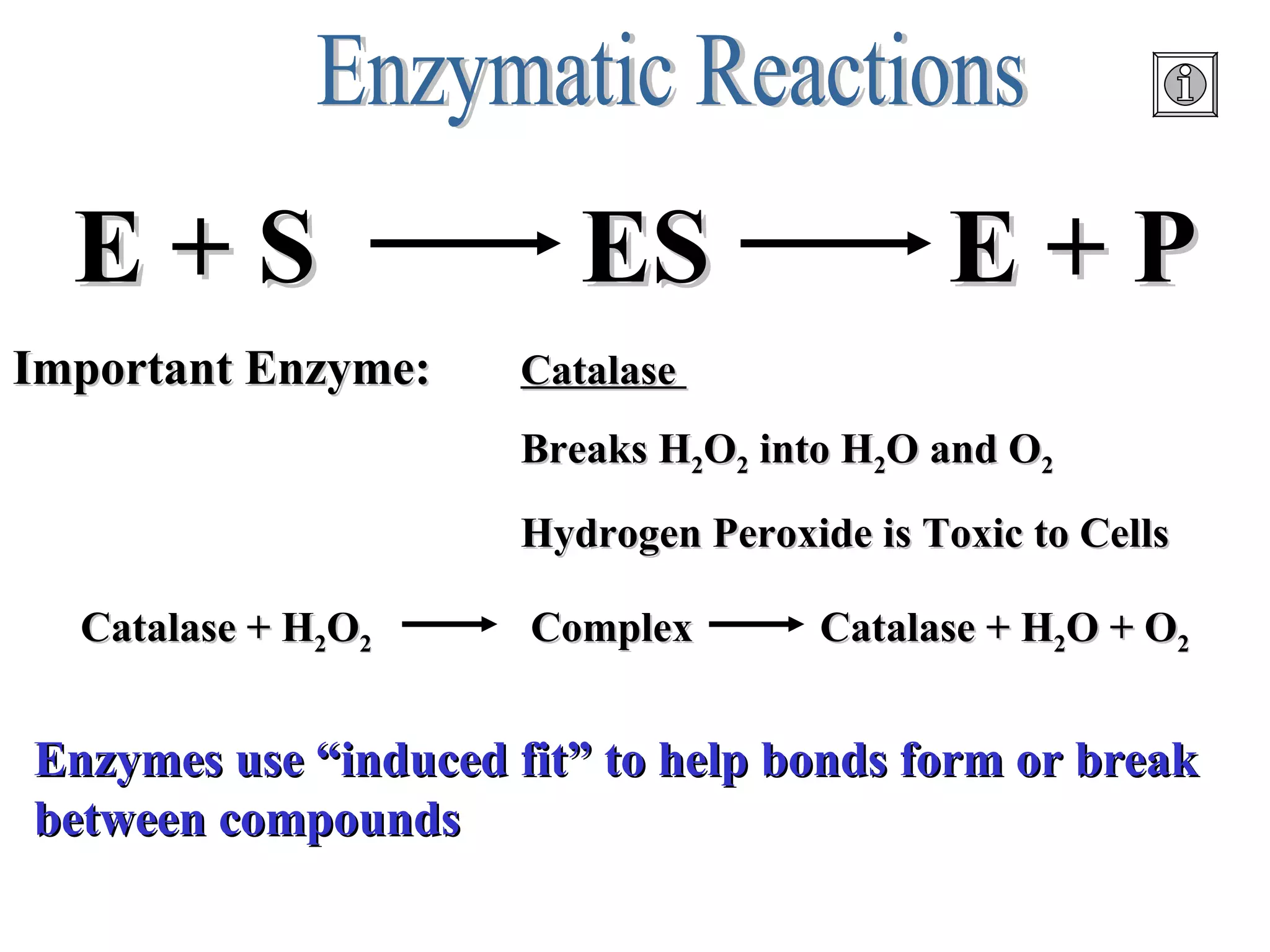
Enzymatic Reactions Important Enzyme: Catalase  Breaks H 2 O 2  into H 2 O and O 2 Hydrogen Peroxide is Toxic to Cells Enzymes use “induced fit” to help bonds form or break between compounds E + S  ES  E + P Catalase + H 2 O 2   Complex  Catalase + H 2 O + O 2
Naming Enzymes Enzymes are named by taking either the name of the substrate or the action performed and adding the ending “ ase ” DNA Polymerase  Lactase Ligase
Factors Effecting Enzyme Action pH: Measure of Solution (0-14)   Neutral (pure water) = 7   Acids are less than 7, bases more than 7 ***Each enzyme has its own range of optimal pH Temperature:  temp  =  rate   temp =  rate ***Temperatures too high or low will denature the enzyme!
Chemical Reactions in Organisms Metabolism : All the chemical activities in a cell or organism Synthesis:  “building-up” reactions   biosynthesis, photosynthesis   dehydration synthesis Decomposition:   “breaking down” reactions   cellular respiration, digestion   hydrolysis
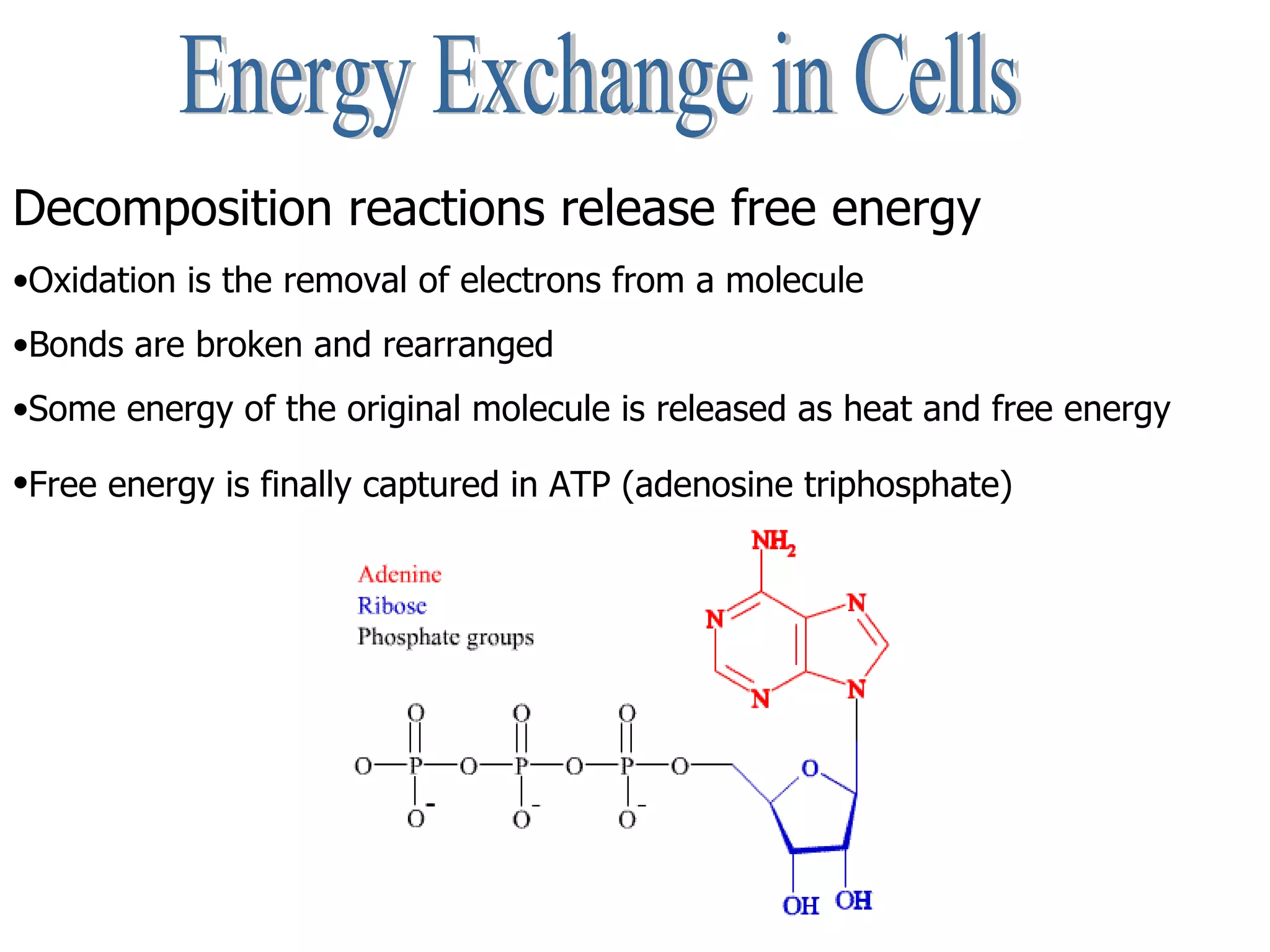
Energy Exchange in Cells Decomposition reactions release free energy Oxidation is the removal of electrons from a molecule Bonds are broken and rearranged Some energy of the original molecule is released as heat and free energy Free energy is finally captured in ATP (adenosine triphosphate)

Energy and Organisms

  • 1.
  • 2.
    Energy and NutrientsEnergy is the capacity to do work or cause change Organisms store energy in organic molecules as chemical energy Free energy is the portion of energy released during chemical reactions that is available to do work Organisms obtain their energy through Heterotrophy or Autotrophy
  • 3.
    Chemical Reactions MakeLife Possible! Autotrophs Heterotrophs and Autotrophs Photosynthesis Cellular Respiration
  • 4.
  • 5.
  • 6.
    Energy Flow andConversions The Law of Conservation of Energy Energy cannot be created or destroyed, but it can change form The total energy of the universe is constant Organisms cannot create their own energy but must obtain it from an outside source The Second Law of Thermodynamics There is a natural tendency towards disorder “entropy” Energy is required to resist entropy An organism must be well organized to remain alive and grow (Organization requires energy)
  • 7.
    Chemical Reactions Proceedas Follows: Reactants Products Metabolism and Energy Transfer Energy must be added to “ activate ” the reaction and break the bonds between atoms
  • 8.
    Under Normal Conditions,a High Amount of Energy is Needed to Start a Reaction Activation Energy In cases like this ( High AE ), reactions would occur too slowly to support life!!! Energy of Reactants Energy of Products
  • 9.
    Catalysts Catalysts speed up the rate of a reaction by lowering the activation energy needed to get the reaction going Catalysts are not changed or used up during a reaction!
  • 10.
    A Catalyzed Reaction…Requires less energy to get started!!! Energy of Reactants Energy of Products Activation Energy
  • 11.
    The Living Cellhas Special Molecules Which Act as Catalysts……. Enzymes Protein Biomolecules Specific to a Substance or Reaction Speeds up Biological Reactions to 10,000,000,000 Times Faster
  • 12.
    How do EnzymesWork? Bind to Specific Reactants to Form a Complex Reactants called Substrates Substrate Binds to the Enzyme at the Active Site
  • 13.
    Enzymatic Reactions ImportantEnzyme: Catalase Breaks H 2 O 2 into H 2 O and O 2 Hydrogen Peroxide is Toxic to Cells Enzymes use “induced fit” to help bonds form or break between compounds E + S ES E + P Catalase + H 2 O 2 Complex Catalase + H 2 O + O 2
  • 14.
    Naming Enzymes Enzymesare named by taking either the name of the substrate or the action performed and adding the ending “ ase ” DNA Polymerase Lactase Ligase
  • 15.
    Factors Effecting EnzymeAction pH: Measure of Solution (0-14) Neutral (pure water) = 7 Acids are less than 7, bases more than 7 ***Each enzyme has its own range of optimal pH Temperature: temp = rate temp = rate ***Temperatures too high or low will denature the enzyme!
  • 16.
    Chemical Reactions inOrganisms Metabolism : All the chemical activities in a cell or organism Synthesis: “building-up” reactions biosynthesis, photosynthesis dehydration synthesis Decomposition: “breaking down” reactions cellular respiration, digestion hydrolysis
  • 17.
    Energy Exchange inCells Decomposition reactions release free energy Oxidation is the removal of electrons from a molecule Bonds are broken and rearranged Some energy of the original molecule is released as heat and free energy Free energy is finally captured in ATP (adenosine triphosphate)