Nervous and
Endocrine SystemBy: Mr. Nikko Lorenz Lawsin
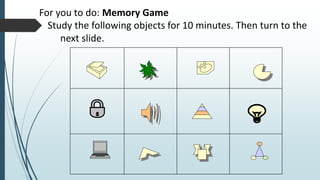
For you to do: Memory Game
Study the following objects for 10 minutes. Then turn to the
next slide.
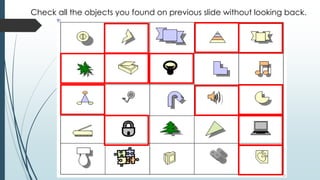
Check all the objects you found on previous slide without looking back.
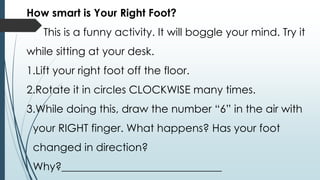
How smart is Your Right Foot?
This is a funny activity. It will boggle your mind. Try it
while sitting at your desk.
1.Lift your right foot off the floor.
2.Rotate it in circles CLOCKWISE many times.
3.While doing this, draw the number “6” in the air with
your RIGHT finger. What happens? Has your foot
changed in direction?
Why?______________________________
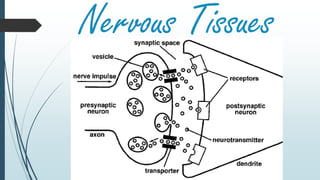
Nervous Tissues
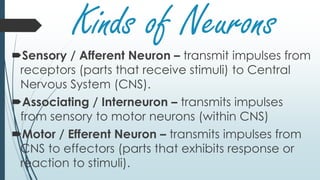
Kinds of Neurons
Sensory / Afferent Neuron – transmit impulses from
receptors (parts that receive stimuli) to Central
Nervous System (CNS).
Associating / Interneuron – transmits impulses
from sensory to motor neurons (within CNS)
Motor / Efferent Neuron – transmits impulses from
CNS to effectors (parts that exhibits response or
reaction to stimuli).
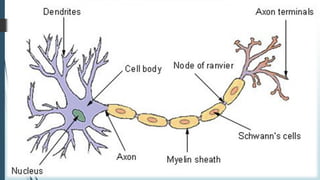
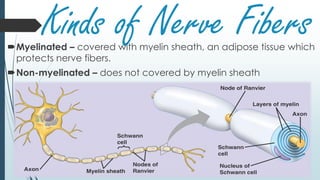
Kinds of Nerve FibersMyelinated – covered with myelin sheath, an adipose tissue which
protects nerve fibers.
Non-myelinated – does not covered by myelin sheath
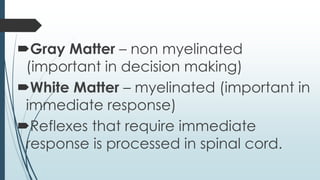
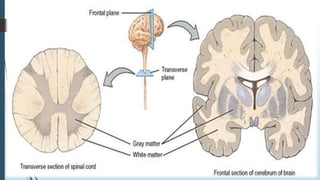
Gray Matter – non myelinated
(important in decision making)
White Matter – myelinated (important in
immediate response)
Reflexes that require immediate
response is processed in spinal cord.
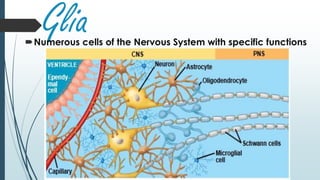
GliaNumerous cells of the Nervous System with specific functions
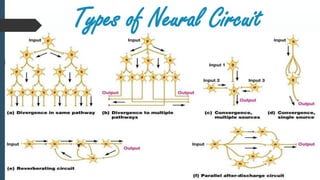
Types of Neural Circuit
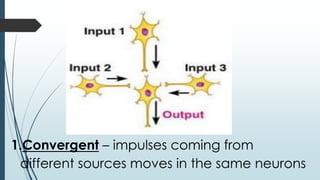
1.Convergent – impulses coming from
different sources moves in the same neurons
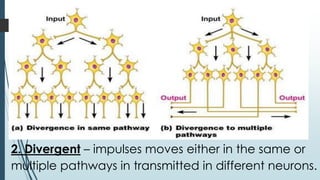
2. Divergent – impulses moves either in the same or
multiple pathways in transmitted in different neurons.
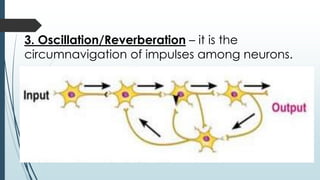
3. Oscillation/Reverberation – it is the
circumnavigation of impulses among neurons.
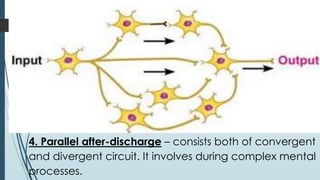
4. Parallel after-discharge – consists both of convergent
and divergent circuit. It involves during complex mental
processes.
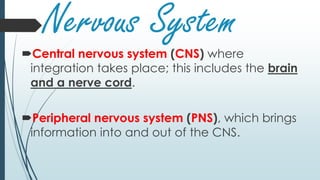
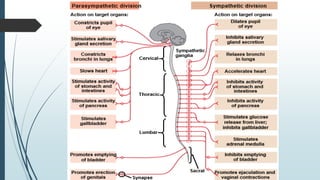
Nervous System
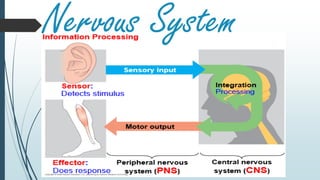
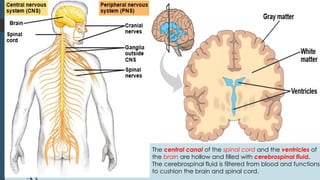
Central nervous system (CNS) where
integration takes place; this includes the brain
and a nerve cord.
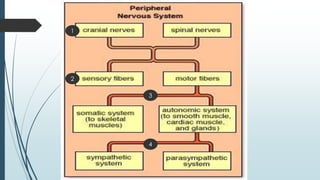
Peripheral nervous system (PNS), which brings
information into and out of the CNS.
Nervous System
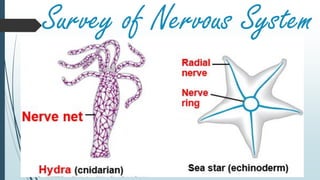
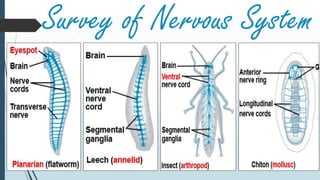
Survey of Nervous System
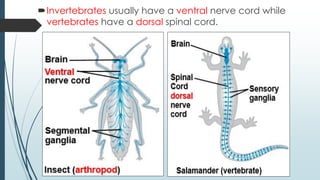
Invertebrates usually have a ventral nerve cord while
vertebrates have a dorsal spinal cord.
The central canal of the spinal cord and the ventricles of
the brain are hollow and filled with cerebrospinal fluid.
The cerebrospinal fluid is filtered from blood and functions
to cushion the brain and spinal cord.
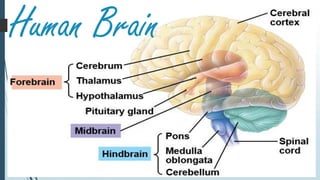
Human Brain
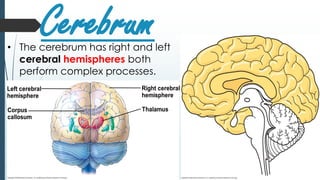
Cerebrum• The cerebrum has right and left
cerebral hemispheres both
perform complex processes.
Generating
words
Max
Speaking
words
Hearing
words
Seeing
words
Min
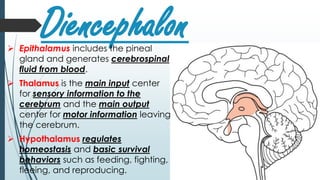
Diencephalon Epithalamus includes the pineal
gland and generates cerebrospinal
fluid from blood.
 Thalamus is the main input center
for sensory information to the
cerebrum and the main output
center for motor information leaving
the cerebrum.
 Hypothalamus regulates
homeostasis and basic survival
behaviors such as feeding, fighting,
fleeing, and reproducing.
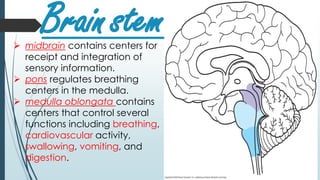
Brainstem midbrain contains centers for
receipt and integration of
sensory information.
 pons regulates breathing
centers in the medulla.
 medulla oblongata contains
centers that control several
functions including breathing,
cardiovascular activity,
swallowing, vomiting, and
digestion.
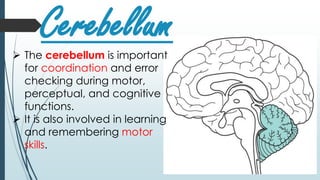
Cerebellum The cerebellum is important
for coordination and error
checking during motor,
perceptual, and cognitive
functions.
 It is also involved in learning
and remembering motor
skills.
1
2
3
4
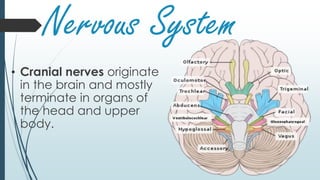
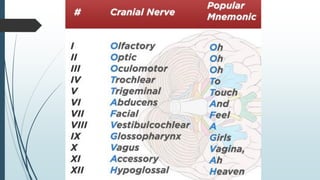
Nervous System
• Cranial nerves originate
in the brain and mostly
terminate in organs of
the head and upper
body.
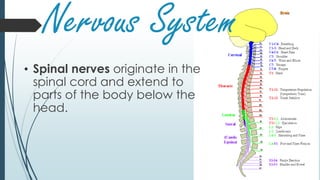
Nervous System
• Spinal nerves originate in the
spinal cord and extend to
parts of the body below the
head.
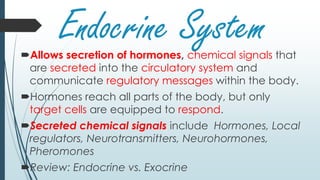
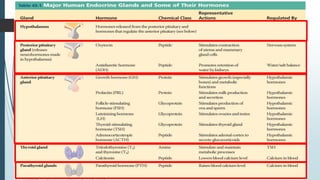
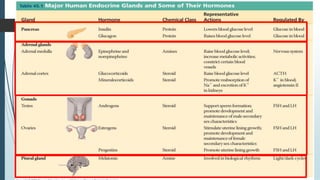
Endocrine SystemAllows secretion of hormones, chemical signals that
are secreted into the circulatory system and
communicate regulatory messages within the body.
Hormones reach all parts of the body, but only
target cells are equipped to respond.
Secreted chemical signals include Hormones, Local
regulators, Neurotransmitters, Neurohormones,
Pheromones
Review: Endocrine vs. Exocrine
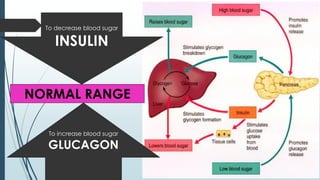
To decrease blood sugar
INSULIN
To increase blood sugar
GLUCAGON
NORMAL RANGE
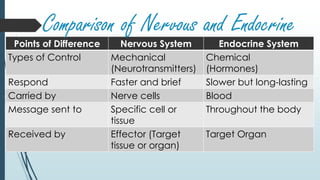
Points of Difference Nervous System Endocrine System
Types of Control Mechanical
(Neurotransmitters)
Chemical
(Hormones)
Respond Faster and brief Slower but long-lasting
Carried by Nerve cells Blood
Message sent to Specific cell or
tissue
Throughout the body
Received by Effector (Target
tissue or organ)
Target Organ
Comparison of Nervous and Endocrine
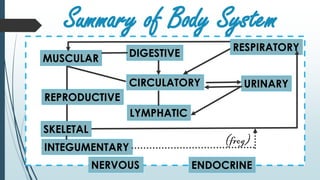
Summary of Body System
ENDOCRINE
DIGESTIVE
CIRCULATORY
NERVOUS
RESPIRATORY
URINARY
LYMPHATIC
REPRODUCTIVE
MUSCULAR
SKELETAL
INTEGUMENTARY
(frog)

Lesson 17 nervous and endocrine system

  • 1.
    Nervous and Endocrine SystemBy:Mr. Nikko Lorenz Lawsin
  • 2.
    For you todo: Memory Game Study the following objects for 10 minutes. Then turn to the next slide.
  • 3.
    Check all theobjects you found on previous slide without looking back.
  • 4.
    How smart isYour Right Foot? This is a funny activity. It will boggle your mind. Try it while sitting at your desk. 1.Lift your right foot off the floor. 2.Rotate it in circles CLOCKWISE many times. 3.While doing this, draw the number “6” in the air with your RIGHT finger. What happens? Has your foot changed in direction? Why?______________________________
  • 6.
  • 7.
    Kinds of Neurons Sensory/ Afferent Neuron – transmit impulses from receptors (parts that receive stimuli) to Central Nervous System (CNS). Associating / Interneuron – transmits impulses from sensory to motor neurons (within CNS) Motor / Efferent Neuron – transmits impulses from CNS to effectors (parts that exhibits response or reaction to stimuli).
  • 8.
    Kinds of NerveFibersMyelinated – covered with myelin sheath, an adipose tissue which protects nerve fibers. Non-myelinated – does not covered by myelin sheath
  • 9.
    Gray Matter –non myelinated (important in decision making) White Matter – myelinated (important in immediate response) Reflexes that require immediate response is processed in spinal cord.
  • 11.
    GliaNumerous cells ofthe Nervous System with specific functions
  • 12.
  • 13.
    1.Convergent – impulsescoming from different sources moves in the same neurons
  • 14.
    2. Divergent –impulses moves either in the same or multiple pathways in transmitted in different neurons.
  • 15.
    3. Oscillation/Reverberation –it is the circumnavigation of impulses among neurons.
  • 16.
    4. Parallel after-discharge– consists both of convergent and divergent circuit. It involves during complex mental processes.
  • 17.
    Nervous System Central nervoussystem (CNS) where integration takes place; this includes the brain and a nerve cord. Peripheral nervous system (PNS), which brings information into and out of the CNS.
  • 18.
  • 19.
  • 20.
  • 21.
    Invertebrates usually havea ventral nerve cord while vertebrates have a dorsal spinal cord.
  • 22.
    The central canalof the spinal cord and the ventricles of the brain are hollow and filled with cerebrospinal fluid. The cerebrospinal fluid is filtered from blood and functions to cushion the brain and spinal cord.
  • 23.
  • 24.
    Cerebrum• The cerebrumhas right and left cerebral hemispheres both perform complex processes.
  • 26.
  • 27.
    Diencephalon Epithalamus includesthe pineal gland and generates cerebrospinal fluid from blood.  Thalamus is the main input center for sensory information to the cerebrum and the main output center for motor information leaving the cerebrum.  Hypothalamus regulates homeostasis and basic survival behaviors such as feeding, fighting, fleeing, and reproducing.
  • 28.
    Brainstem midbrain containscenters for receipt and integration of sensory information.  pons regulates breathing centers in the medulla.  medulla oblongata contains centers that control several functions including breathing, cardiovascular activity, swallowing, vomiting, and digestion.
  • 30.
    Cerebellum The cerebellumis important for coordination and error checking during motor, perceptual, and cognitive functions.  It is also involved in learning and remembering motor skills.
  • 31.
  • 33.
    Nervous System • Cranialnerves originate in the brain and mostly terminate in organs of the head and upper body.
  • 35.
    Nervous System • Spinalnerves originate in the spinal cord and extend to parts of the body below the head.
  • 36.
    Endocrine SystemAllows secretionof hormones, chemical signals that are secreted into the circulatory system and communicate regulatory messages within the body. Hormones reach all parts of the body, but only target cells are equipped to respond. Secreted chemical signals include Hormones, Local regulators, Neurotransmitters, Neurohormones, Pheromones Review: Endocrine vs. Exocrine
  • 39.
    To decrease bloodsugar INSULIN To increase blood sugar GLUCAGON NORMAL RANGE
  • 40.
    Points of DifferenceNervous System Endocrine System Types of Control Mechanical (Neurotransmitters) Chemical (Hormones) Respond Faster and brief Slower but long-lasting Carried by Nerve cells Blood Message sent to Specific cell or tissue Throughout the body Received by Effector (Target tissue or organ) Target Organ Comparison of Nervous and Endocrine
  • 41.
    Summary of BodySystem ENDOCRINE DIGESTIVE CIRCULATORY NERVOUS RESPIRATORY URINARY LYMPHATIC REPRODUCTIVE MUSCULAR SKELETAL INTEGUMENTARY (frog)