Introduction to the Nervous System Chapter 9: Nervous System Unit 3: Integration and Coordination
Nervous System Function The nervous system performs three primary functions in the human body 1. The most obvious is that it coordinates our movements using electrochemical signals to control muscle contraction. 2. Also used to  sense  the  internal  &  external  environment  3. Finally, it  integrates  senses to form emotions and sensations
Nervous System Function Overall the Nervous system is one of two systems that helps to maintain that all important  homeostasis Uses sensors and effectors to maintain important physiological set points. *the other system that helps maintain homeostasis would be the  endocrine system
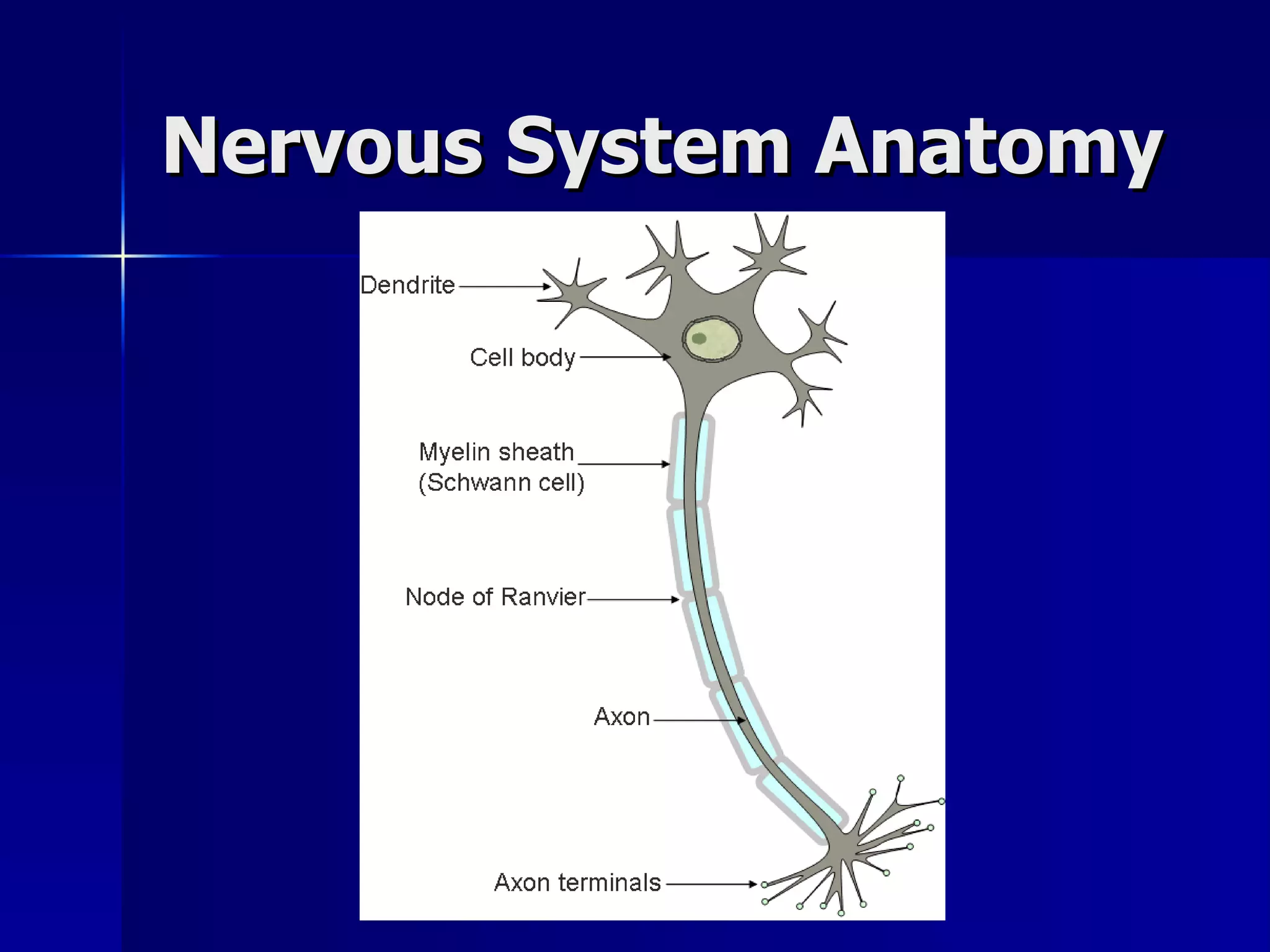
Nervous System Anatomy The structural basis of the nervous system is a special cell called the  neuron There are additional cells in the nervous system called  neuroglial cells Perform support roles such as absorbing nutrients and phagocitizing pathogens in the nervous system
Nervous System Anatomy Neurons are specialized cells that are capable of carrying electrochemical signals long distances Specialized ion channels Specialized ion pumps Lots of ATPase
Nervous System Anatomy
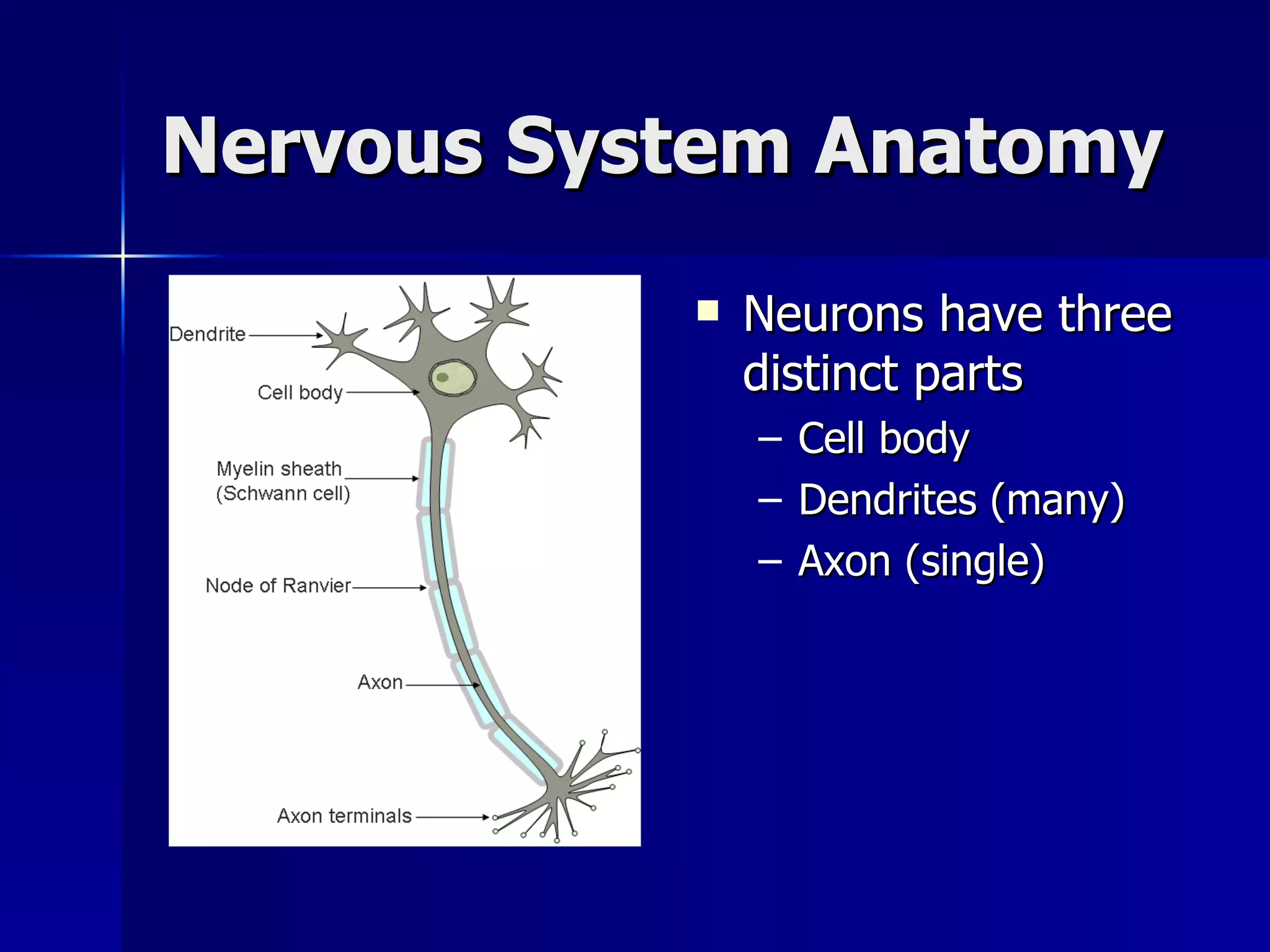
Nervous System Anatomy Neurons have three distinct parts Cell body Dendrites (many) Axon (single)
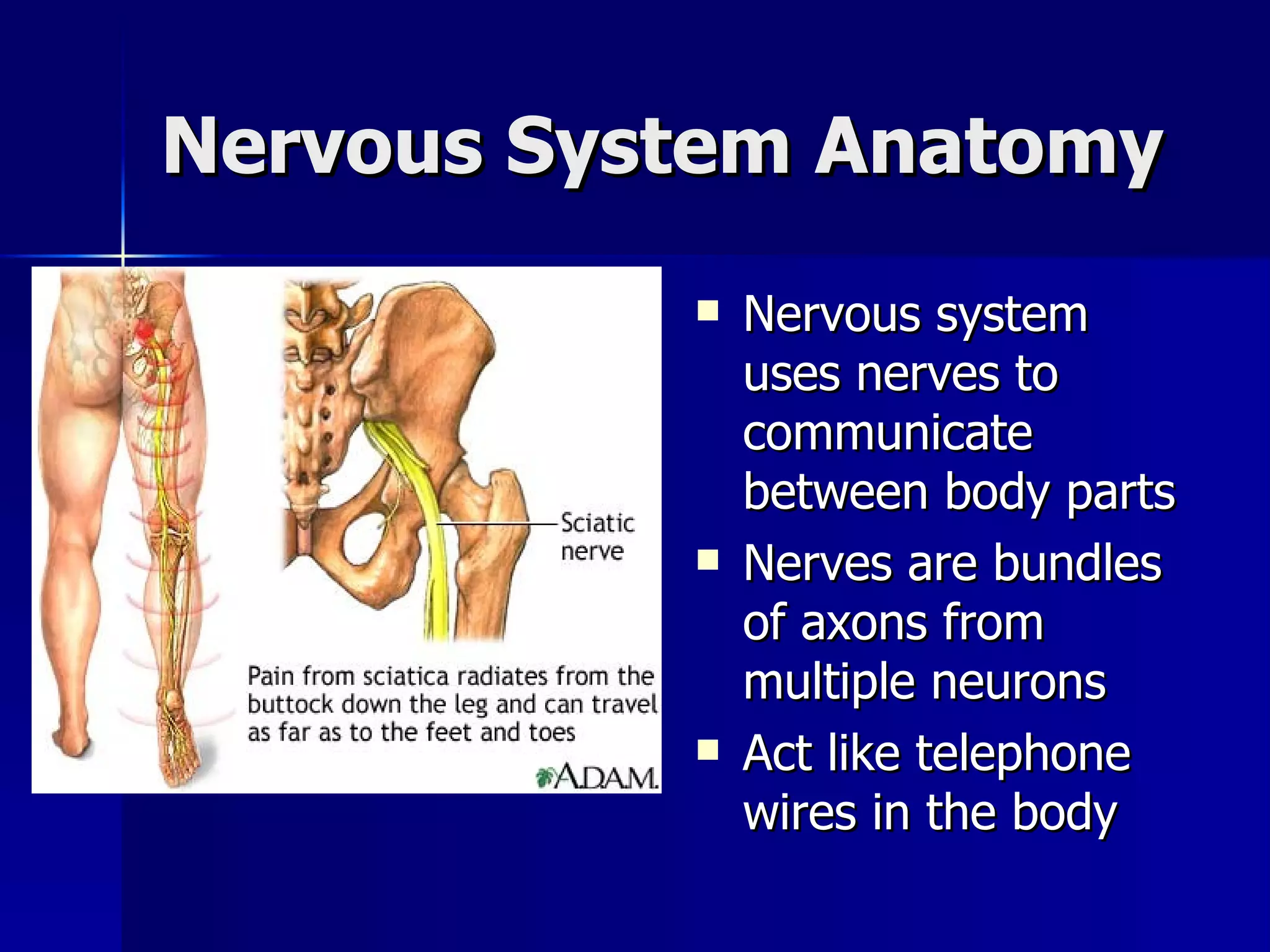
Nervous System Anatomy Nervous system uses nerves to communicate between body parts Nerves are bundles of axons from multiple neurons Act like telephone wires in the body
Divisions of the NS The nervous system and its organs can be divided into two major groups: Central Nervous System ( CNS ) Includes the brain & spinal cord Peripheral Nervous System ( PNS ) Includes the nerves and ganglia that connect the CNS to the rest of the body
Divisions of the NS CNS Responsible for integration of senses Development of emotions Coordinates movements
Divisions of the NS PNS Responsible for  sensory functions The five senses Can use free nerve ends such as those used to sense heat/cold OR… Be connected to specialized sense organs such as the cones/rods of the retina (eye), the taste buds, or the special organs that sense touch and pressure in the skin
Divisions of the NS PNS Also responsible for  motor functions Telling muscles when to contract Controlling heart rate Controlling blood pressure by making vessels constrict/dilate (also controls temperature homeostasis) Controlling breathing
Divisions of the NS The  motor part  of the peripheral nervous system can be further divided into two categories based on responsiveness: The  Autonomic Nervous System   The  Somatic Nervous System
Divisions of the NS Autonomic Nervous System Controls and coordinates parts of the body that are not under voluntary control Called  involuntary actions Heart rate Blood Pressure Digestion
Divisions of the NS Somatic Nervous System Responsible for all actions that are preformed  voluntarily Skeletal muscle contractions
Divisions of the NS The Autonomic Nervous System can be divided still farther into two groups that affect the human body in opposite ways Sympathetic Nervous System Parasympathetic Nervous System
Divisions of the NS The  Sympathetic Nervous System Part of the autonomic nervous system Responds  involuntarily  to danger/stress Results in the  fight or flight  response Heart rate??? Blood pressure??? Pupils??? Digestion???
Divisions of the NS The  Parasympathetic Nervous System Responds  involuntarily   Results in a soothing/calming response Usually responds once a stressful/fearful stimulus is removed

Nervous system intro

  • 1.
    Introduction to theNervous System Chapter 9: Nervous System Unit 3: Integration and Coordination
  • 2.
    Nervous System FunctionThe nervous system performs three primary functions in the human body 1. The most obvious is that it coordinates our movements using electrochemical signals to control muscle contraction. 2. Also used to sense the internal & external environment 3. Finally, it integrates senses to form emotions and sensations
  • 3.
    Nervous System FunctionOverall the Nervous system is one of two systems that helps to maintain that all important homeostasis Uses sensors and effectors to maintain important physiological set points. *the other system that helps maintain homeostasis would be the endocrine system
  • 4.
    Nervous System AnatomyThe structural basis of the nervous system is a special cell called the neuron There are additional cells in the nervous system called neuroglial cells Perform support roles such as absorbing nutrients and phagocitizing pathogens in the nervous system
  • 5.
    Nervous System AnatomyNeurons are specialized cells that are capable of carrying electrochemical signals long distances Specialized ion channels Specialized ion pumps Lots of ATPase
  • 6.
  • 7.
    Nervous System AnatomyNeurons have three distinct parts Cell body Dendrites (many) Axon (single)
  • 8.
    Nervous System AnatomyNervous system uses nerves to communicate between body parts Nerves are bundles of axons from multiple neurons Act like telephone wires in the body
  • 9.
    Divisions of theNS The nervous system and its organs can be divided into two major groups: Central Nervous System ( CNS ) Includes the brain & spinal cord Peripheral Nervous System ( PNS ) Includes the nerves and ganglia that connect the CNS to the rest of the body
  • 10.
    Divisions of theNS CNS Responsible for integration of senses Development of emotions Coordinates movements
  • 11.
    Divisions of theNS PNS Responsible for sensory functions The five senses Can use free nerve ends such as those used to sense heat/cold OR… Be connected to specialized sense organs such as the cones/rods of the retina (eye), the taste buds, or the special organs that sense touch and pressure in the skin
  • 12.
    Divisions of theNS PNS Also responsible for motor functions Telling muscles when to contract Controlling heart rate Controlling blood pressure by making vessels constrict/dilate (also controls temperature homeostasis) Controlling breathing
  • 13.
    Divisions of theNS The motor part of the peripheral nervous system can be further divided into two categories based on responsiveness: The Autonomic Nervous System The Somatic Nervous System
  • 14.
    Divisions of theNS Autonomic Nervous System Controls and coordinates parts of the body that are not under voluntary control Called involuntary actions Heart rate Blood Pressure Digestion
  • 15.
    Divisions of theNS Somatic Nervous System Responsible for all actions that are preformed voluntarily Skeletal muscle contractions
  • 16.
    Divisions of theNS The Autonomic Nervous System can be divided still farther into two groups that affect the human body in opposite ways Sympathetic Nervous System Parasympathetic Nervous System
  • 17.
    Divisions of theNS The Sympathetic Nervous System Part of the autonomic nervous system Responds involuntarily to danger/stress Results in the fight or flight response Heart rate??? Blood pressure??? Pupils??? Digestion???
  • 18.
    Divisions of theNS The Parasympathetic Nervous System Responds involuntarily Results in a soothing/calming response Usually responds once a stressful/fearful stimulus is removed