Encephalitis is the acute inflammation of the brain
resulting either from a viral infection or when the
body own immune system mistakenly attacks
brain tissue.The most common cause is viral
infection.
There are two main types of encephalitis:
1. primary and
2.secondary.
 Primary encephalitis occurs when a virus
directly infects the brain and spinal cord.
 Arbovirus (e,g. Japanese encephalitis)
 Enterovirus (e.g poliovirus)
 Herpes simplex
 Mumps, measles
 HIV
 Cytomegalovvirus (CMV)
 Epstein-BarrVirus (EBV)
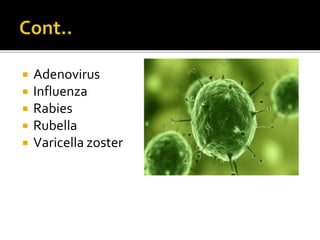
 Adenovirus
 Influenza
 Rabies
 Rubella
 Varicella zoster
 Secondary encephalitis:
 The patients immune system treat healthy
brain cells as foreign organism and destroy
them
 Age. Some types of encephalitis are more common or more
severe in certain age groups. In general, young children and
older adults are at greater risk of most types of viral
encephalitis.
 Weakened immune system. People who have HIV/AIDS,
take immune-suppressing drugs or have another condition
causing a weakened immune system are at increased risk of
encephalitis.
 Geographical regions. Mosquito- or tick-borne viruses are
common in particular geographical regions.
 Season of the year. Mosquito- and tick-borne diseases tend
to be more common.
 Mild symptoms include:
 fever
 headache
 vomiting
 stiff neck
 lethargy (exhaustion)
 Sore throat
Severe symptoms include:
 fever of 103°F (39.4°C) or higher
 confusion
 drowsiness
 hallucinations
 slower movements
 coma
 seizures
 irritability
 sensitivity to light
 unconsciousness
 Histroy collection, physical examination
 CSF examination
 Brain imaging with CT scan or MRI
 Electroencephalograph (EEG)
 Blood tests
 Brain biopsy
 loss of memory
 behavioral/personality changes
 epilepsy
 fatigue
 physical weakness
 intellectual disability
 lack of muscle coordination
 vision problems
 hearing problems
 speaking issues
 coma
 difficulty breathing
 death
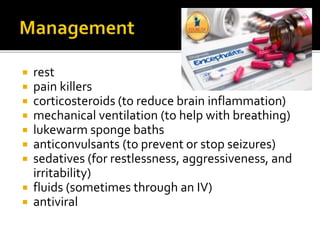
 rest
 pain killers
 corticosteroids (to reduce brain inflammation)
 mechanical ventilation (to help with breathing)
 lukewarm sponge baths
 anticonvulsants (to prevent or stop seizures)
 sedatives (for restlessness, aggressiveness, and
irritability)
 fluids (sometimes through an IV)
 antiviral
 Maintain adequate oxygenation
-administer oxygen therapy
-assess frequently for sign of dyspnea and
cyanosis
 Protect patient from injury
-putting the cot’s side rail up
-observing frequently
 administer basic hygiene care
 Control high temperature
 Remove excess body cloth
 Give tepid bath, if temperature is high
 Administer antipyretic drugs
 Maintain a cool room temperature
 Lessen headache
 Elevate the head to 30 degrees
 Apply ice pack
 Maintain quite dark environment
 Administer analgesics, if ordered

encephalitis.pptx

  • 2.
    Encephalitis is theacute inflammation of the brain resulting either from a viral infection or when the body own immune system mistakenly attacks brain tissue.The most common cause is viral infection. There are two main types of encephalitis: 1. primary and 2.secondary.
  • 3.
     Primary encephalitisoccurs when a virus directly infects the brain and spinal cord.  Arbovirus (e,g. Japanese encephalitis)  Enterovirus (e.g poliovirus)  Herpes simplex  Mumps, measles  HIV  Cytomegalovvirus (CMV)  Epstein-BarrVirus (EBV)
  • 4.
     Adenovirus  Influenza Rabies  Rubella  Varicella zoster
  • 5.
     Secondary encephalitis: The patients immune system treat healthy brain cells as foreign organism and destroy them
  • 6.
     Age. Sometypes of encephalitis are more common or more severe in certain age groups. In general, young children and older adults are at greater risk of most types of viral encephalitis.  Weakened immune system. People who have HIV/AIDS, take immune-suppressing drugs or have another condition causing a weakened immune system are at increased risk of encephalitis.  Geographical regions. Mosquito- or tick-borne viruses are common in particular geographical regions.  Season of the year. Mosquito- and tick-borne diseases tend to be more common.
  • 7.
     Mild symptomsinclude:  fever  headache  vomiting  stiff neck  lethargy (exhaustion)  Sore throat
  • 8.
    Severe symptoms include: fever of 103°F (39.4°C) or higher  confusion  drowsiness  hallucinations  slower movements  coma  seizures  irritability  sensitivity to light  unconsciousness
  • 9.
     Histroy collection,physical examination  CSF examination  Brain imaging with CT scan or MRI  Electroencephalograph (EEG)  Blood tests  Brain biopsy
  • 10.
     loss ofmemory  behavioral/personality changes  epilepsy  fatigue  physical weakness  intellectual disability  lack of muscle coordination  vision problems  hearing problems  speaking issues  coma  difficulty breathing  death
  • 11.
     rest  painkillers  corticosteroids (to reduce brain inflammation)  mechanical ventilation (to help with breathing)  lukewarm sponge baths  anticonvulsants (to prevent or stop seizures)  sedatives (for restlessness, aggressiveness, and irritability)  fluids (sometimes through an IV)  antiviral
  • 12.
     Maintain adequateoxygenation -administer oxygen therapy -assess frequently for sign of dyspnea and cyanosis  Protect patient from injury -putting the cot’s side rail up -observing frequently  administer basic hygiene care
  • 13.
     Control hightemperature  Remove excess body cloth  Give tepid bath, if temperature is high  Administer antipyretic drugs  Maintain a cool room temperature  Lessen headache  Elevate the head to 30 degrees  Apply ice pack  Maintain quite dark environment  Administer analgesics, if ordered