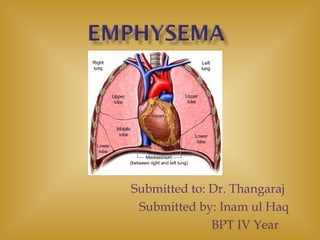
Submitted to: Dr. Thangaraj
Submitted by: Inam ul Haq
BPT IV Year
 Emphysema is a greek word ,
em-physema
em - without
physema – blowing
 Or literally meaning excess air
in the lungs.
 It is the most 4th
common cause
of death in the world.
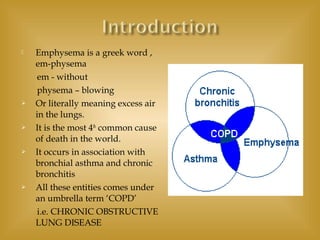
 It occurs in association with
bronchial asthma and chronic
bronchitis
 All these entities comes under
an umbrella term ‘COPD’
i.e. CHRONIC OBSTRUCTIVE
LUNG DISEASE
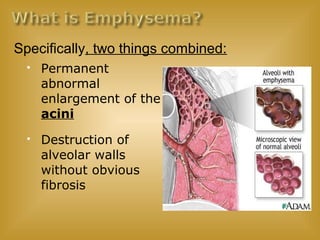
 Permanent
abnormal
enlargement of the
acini
 Destruction of
alveolar walls
without obvious
fibrosis
Specifically, two things combined:
 Emphysema is a chronic respiratory disease due to
over-inflation or abnormal increase in the size of the
air-sacs (alveoli) in the lungs, causing a decrease in
lung function, or breathlessness.
 Emphysema is a long-term, progressive disease of the
lungs that primarily causes shortness of breath.
 Emphysema is called an obstructive lung disease because
the destruction of lung tissue around smaller sacs,
called alveoli, makes these air sacs unable to hold their
functional shape upon exhalation. It is often caused by
smoking.
 Smoking- more common about in 80-90% of all
the cases.
 Occupational exposure to chemical fumes
 Hereditary-deficiency of AAT
 HIV infection
 Severe respiratory
efforts
 Use of intravenous
drugs -rare
 Occurs more in males than females due to more
percentage of male smokers
 As the number of female smokers increase,
emphysema also develops in them rapidly
 Death rate increases yearly
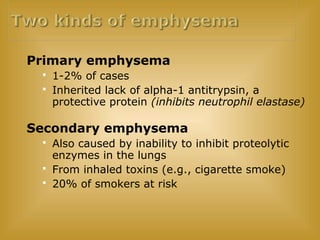
Primary emphysema
 1-2% of cases
 Inherited lack of alpha-1 antitrypsin, a
protective protein (inhibits neutrophil elastase)
Secondary emphysema
 Also caused by inability to inhibit proteolytic
enzymes in the lungs
 From inhaled toxins (e.g., cigarette smoke)
 20% of smokers at risk
 Toxins (smoke) cause inflammation
 Infiltration of neutrophils, macrophages
and lymphocytes
 Inflammatory cytokines increase
protease activity, inhibiting normal anti-
protease activity (antitrypsin)
 Alveoli are destroyed because elastin is
being broken down by proteases
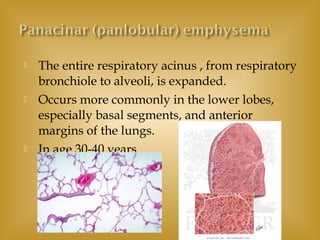
 The entire respiratory acinus , from respiratory
bronchiole to alveoli, is expanded.
 Occurs more commonly in the lower lobes,
especially basal segments, and anterior
margins of the lungs.
 In age 30-40 years
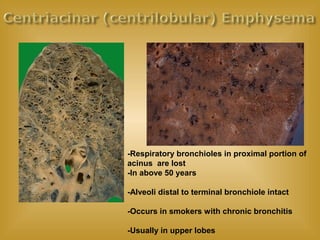
-Respiratory bronchioles in proximal portion of
acinus are lost
-In above 50 years
-Alveoli distal to terminal bronchiole intact
-Occurs in smokers with chronic bronchitis
-Usually in upper lobes
Person inhales cigarette smoke or other irritants
Immune system of body respond
Substances release to defend lungs against smoke
Substances also attack the cells of the lungs
But normally body inhibit that action by releasing other
substances
If no prevention occurs
Lung tissue damage and loss their elasticity
Bronchioles leading to alveolar collapse
Air trapped within alveoli(difficulty in expiration)
Finally lungs cannot supply enough oxygen to
blood
EMPHYSEMA occurs
 Dyspnoea
 Shortness of breath/Breathlessness
 Wheezing is minimal
 Barrel chest, often thin
 Tachypnoea with prolonged expiration
 Pursed lip breathing
 Loss of appetite and weight loss
 Hypoxemia &/or hypercapnia
 Chronic hypoventilation (later stage)
 Not much coughing with little sputum
(Productive cough with infection)
 Chest X-Ray
- shows translucent lung.
- emphysematous bullae.
 ABG analysis
- measures how well your lungs transfer oxygen to your
bloodstream.
 PFT
- decreased CO diffusion factor.
 Sputum examination
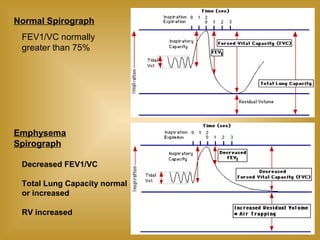
 Spirometry
Normal Spirograph
Emphysema
Spirograph
FEV1/VC normally
greater than 75%
Decreased FEV1/VC
Total Lung Capacity normal
or increased
RV increased
Non Pharmacological Treatment
- General treatment
 By quit smoking
 By oxygen therapy
 By taking precautions
 Avoid dust
 Avoid extremes of temperature and humidity
 Avoid high altitude
 Improved nutrition, hygiene and exercise
 Special breathing patterns and positions
Pharmacological Treatment
- Medicinal Treatment
 Bronchodilators
 albuterol
 ipratropium bromide
 Methylxanthines
 Corticosteroids
 Antibiotics
- Surgical Treatment
 Lung volume reduction surgery(LVRS)
 Lung transplantation
Emphysema (C.O.P.D.)

Emphysema (C.O.P.D.)

  • 1.
    Submitted to: Dr.Thangaraj Submitted by: Inam ul Haq BPT IV Year
  • 2.
     Emphysema isa greek word , em-physema em - without physema – blowing  Or literally meaning excess air in the lungs.  It is the most 4th common cause of death in the world.  It occurs in association with bronchial asthma and chronic bronchitis  All these entities comes under an umbrella term ‘COPD’ i.e. CHRONIC OBSTRUCTIVE LUNG DISEASE
  • 3.
     Permanent abnormal enlargement ofthe acini  Destruction of alveolar walls without obvious fibrosis Specifically, two things combined:
  • 4.
     Emphysema isa chronic respiratory disease due to over-inflation or abnormal increase in the size of the air-sacs (alveoli) in the lungs, causing a decrease in lung function, or breathlessness.  Emphysema is a long-term, progressive disease of the lungs that primarily causes shortness of breath.  Emphysema is called an obstructive lung disease because the destruction of lung tissue around smaller sacs, called alveoli, makes these air sacs unable to hold their functional shape upon exhalation. It is often caused by smoking.
  • 6.
     Smoking- morecommon about in 80-90% of all the cases.  Occupational exposure to chemical fumes  Hereditary-deficiency of AAT
  • 7.
     HIV infection Severe respiratory efforts  Use of intravenous drugs -rare
  • 8.
     Occurs morein males than females due to more percentage of male smokers  As the number of female smokers increase, emphysema also develops in them rapidly  Death rate increases yearly
  • 9.
    Primary emphysema  1-2%of cases  Inherited lack of alpha-1 antitrypsin, a protective protein (inhibits neutrophil elastase) Secondary emphysema  Also caused by inability to inhibit proteolytic enzymes in the lungs  From inhaled toxins (e.g., cigarette smoke)  20% of smokers at risk
  • 10.
     Toxins (smoke)cause inflammation  Infiltration of neutrophils, macrophages and lymphocytes  Inflammatory cytokines increase protease activity, inhibiting normal anti- protease activity (antitrypsin)  Alveoli are destroyed because elastin is being broken down by proteases
  • 11.
     The entirerespiratory acinus , from respiratory bronchiole to alveoli, is expanded.  Occurs more commonly in the lower lobes, especially basal segments, and anterior margins of the lungs.  In age 30-40 years
  • 12.
    -Respiratory bronchioles inproximal portion of acinus are lost -In above 50 years -Alveoli distal to terminal bronchiole intact -Occurs in smokers with chronic bronchitis -Usually in upper lobes
  • 13.
    Person inhales cigarettesmoke or other irritants Immune system of body respond Substances release to defend lungs against smoke Substances also attack the cells of the lungs But normally body inhibit that action by releasing other substances If no prevention occurs
  • 14.
    Lung tissue damageand loss their elasticity Bronchioles leading to alveolar collapse Air trapped within alveoli(difficulty in expiration) Finally lungs cannot supply enough oxygen to blood EMPHYSEMA occurs
  • 16.
     Dyspnoea  Shortnessof breath/Breathlessness  Wheezing is minimal  Barrel chest, often thin  Tachypnoea with prolonged expiration  Pursed lip breathing  Loss of appetite and weight loss  Hypoxemia &/or hypercapnia  Chronic hypoventilation (later stage)  Not much coughing with little sputum (Productive cough with infection)
  • 18.
     Chest X-Ray -shows translucent lung. - emphysematous bullae.  ABG analysis - measures how well your lungs transfer oxygen to your bloodstream.  PFT - decreased CO diffusion factor.  Sputum examination  Spirometry
  • 22.
    Normal Spirograph Emphysema Spirograph FEV1/VC normally greaterthan 75% Decreased FEV1/VC Total Lung Capacity normal or increased RV increased
  • 24.
    Non Pharmacological Treatment -General treatment  By quit smoking  By oxygen therapy  By taking precautions  Avoid dust  Avoid extremes of temperature and humidity  Avoid high altitude  Improved nutrition, hygiene and exercise  Special breathing patterns and positions
  • 25.
    Pharmacological Treatment - MedicinalTreatment  Bronchodilators  albuterol  ipratropium bromide  Methylxanthines  Corticosteroids  Antibiotics
  • 26.
    - Surgical Treatment Lung volume reduction surgery(LVRS)  Lung transplantation

Editor's Notes

  • #4 Now, one thing that should be noted about Emphysema is that it is not, in itself, COPD or Chronic Obstructive Pulmonary Disorder. Emphysema is also not Chronic Bronchitis, but frequently these two diseases are present together. What is Emphysema then? It is, specifically, two things together: Permanent abnormal enlargement of the acini, which are the berry-shaped gas exchange structures found at the distal end of the bronchiole. Acinius, by the way, is Latin for berry. Destruction of the alveolar walls without obvious fibrosis. This criteria of obvious fibrosis is an important point while performing differential diagnosis between things like Emphysema and Asbestosis, another lung disease that caused by long-term heavy exposure to asbestos. In this case, the key difference here is that while Emphysema does not have obvious fibrosis, those who suffer from Asbestosis have signs of extensive interstitial scar tissue formation. Before we go any further, I’d like to mention that there are two main classifications of Emphysema, both with different etiologies or causes.
  • #10 There are two kinds of emphysema, Primary and Secondary, and I think a brief summary of both would be useful here. McCance and Huether’s Pathophysiology text notes that the Primary type makes up 1-2% of the cases of emphysema (other sources say about 3%). This Primary Emphysema is notable in that it is caused by an inherited lack of alpha-1 antitrypsin, a protective protein which inhibits neutrophil elastase. The AlphaOne website notes that approximately 100,000 Americans have this difficiency, with McCance notes that homozygous individuals have a 70-80% chance of having this disorder. Secondary Emphysema, on the other hand, shares similarity in that similar destructive mechanisms are working, namely the decrease in inhibition of proteolytic enzymes. However, this Secondary is different in that it is caused by inhaled toxins, most commonly cigarette smoke. It is estimated that 20% of smokers are at risk from this type of emphysema, and this presentation will focus on this Secondary type.
  • #11 In sum, the basic pathophysiology of emphysema follows this pathway: Toxins such as cigarette smoke, cause inflammation of the acini. This causes the infiltration of neutrophils, macrophages and lymphocytes. Inflammatory cytokines that are released trigger increased protease activity, and inhibit normal antiprotease activity from antitrypsin. The end result is alveolar destruction. It should be noted that in healthy people, protease activity in the lungs is part of healthy function, repairing damage to the lungs caused by illness. However, when the balance between the proteases and the antiproteases is upset, you have a serious problem. In the presence of increased proteases, both healthy and unhealthy lung tissue is destroyed, and the elastin necessary for proper alveolar function is broken down.