Layla Abd Alaziz
Dr: Norjihan
Emphysema
Case summary
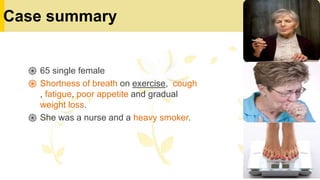
֍ 65 single female
֍ Shortness of breath on exercise, cough
, fatigue, poor appetite and gradual
weight loss.
֍ She was a nurse and a heavy smoker.
Learning Objectives:
1. Introduction to emphysema.
2. How flow volume curve is expected to be in this case.
3. What cause weight loss in this case.
4. Pharmacological and non-pharmacological treatment.
Learning Objectives:
Introduction to emphysema.
How flow volume curve is expected to be in this case.
What cause weight loss in this case.
Pharmacological and non-pharmacological treatment.
Introduction
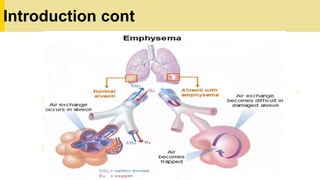
Emphysema
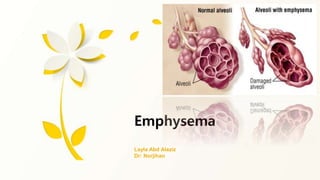
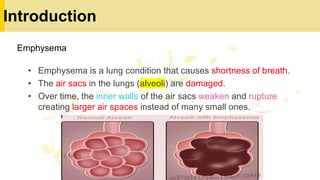
• Emphysema is a lung condition that causes shortness of breath.
• The air sacs in the lungs (alveoli) are damaged.
• Over time, the inner walls of the air sacs weaken and rupture
creating larger air spaces instead of many small ones.
Introduction cont
Emphysema
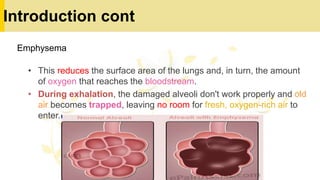
• This reduces the surface area of the lungs and, in turn, the amount
of oxygen that reaches the bloodstream.
• During exhalation, the damaged alveoli don't work properly and old
air becomes trapped, leaving no room for fresh, oxygen-rich air to
enter.
Introduction cont
Learning Objectives:
1. Introduction to emphysema.
2. How flow volume curve is expected to be in this case.
3. What cause weight loss in this case.
4. Pharmacological and non-pharmacological treatment.
Flow volume loops
Peak Expiratory
Flow Rate
(PEFR)
Flow volume loops cont
Learning Objectives:
1. Introduction to emphysema.
2. How flow volume curve is expected to be in this case.
3. What cause weight loss in this case.
4. Pharmacological and non-pharmacological treatment.
Reasons of weight loss in emphysema patient cont
Learning Objectives:
1. Introduction to emphysema.
2. How flow volume curve is expected to be in this case.
3. What cause weight loss in this case.
4. Pharmacological and non-pharmacological treatment.
Non- Pharmacological Treatment
Patient
Education
Smoking
Cessation
Healthy
Lifestyle
Changes
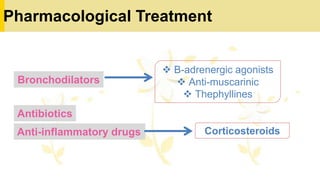
Pharmacological Treatment
Bronchodilators
 B-adrenergic agonists
 Anti-muscarinic
 Thephyllines
Anti-inflammatory drugs
Antibiotics
Corticosteroids
Other therapeutic measures
Summary
 Anorexia, dyspnea and protein breakdown are factors
participate in the weight lost in case of emphysema.
References:
Questions?
Thank you 


Emphysema

Editor's Notes

  • #6 The lung become obstructive== prevent the air from going outside your lung >>there will be remaingng air inside the lungs For that you will suffer rfom dyspnea
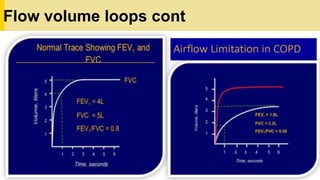
  • #10 Maximum volume the lung can reach after inspiration is BW: 6-7 L And the expiration start and reach the PEFR which is = 8 = mean the top flow during expiration the maximum air move from the lungs to atmosphere And then the curve will decrease to start the inspiration We have point which is RV = means that the is air will remain inside the lung = 2L and it normal the lung should contain air remain inside it As we said in the obstructive = blocking = prevent the air from going outside BC of tumor for example So BC there is air inside the lungs the volume of the lung will be more For Example: 9L And even the PEFR will decrease which means that the air will not exhale properly ~~> and the renaming air also will increase ! 
  • #11 Forced vital capacity, or FVC, is the amount of air which can be forcibly exhaled from the lungs after taking the deepest breath possible. Forced expiratory volume = in the first second how match you can exhale !!!!!!!
  • #16 Bronchodilators. These drugs can help relieve coughing, shortness of breath and breathing problems by relaxing constricted airways. Inhaled steroids. Corticosteroid drugs inhaled as aerosol sprays reduce inflammation and may help relieve shortness of breath. Antibiotics. BC the PT more susptible to have bacterial infection--- we will give the PT antibio and tell him to use them as soon as he notes any yellow or green sputam
  • #17 Pulmonary rehabilitation. A pulmonary rehabilitation program can teach you breathing exercises and techniques that may help reduce your breathlessness and improve your ability to exercise. Nutrition therapy. You'll also receive advice about proper nutrition. In the early stages of emphysema, many people need to lose weight, while people with late-stage emphysema often need to gain weight. Supplemental oxygen. If you have severe emphysema with low blood oxygen levels, using oxygen regularly at home and when you exercise may provide some relief. Many people use oxygen 24 hours a day. It's usually administered via narrow tubing that fits into your nostrils.