What is Emotional Intelligence
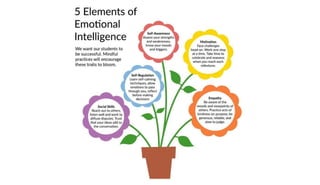
• Emotional intelligence is your ability to recognize and
understand emotions and your skill at using this awareness to
manage yourself and your relationship with others.
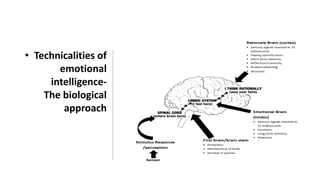
• Technicalities of
emotional
intelligence-
The biological
approach
Emotional
intelligence skills
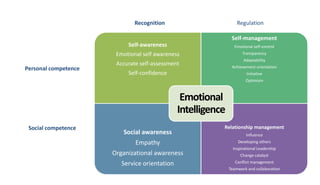
Self-awareness
Emotional self awareness
Accurate self-assessment
Self-confidence
Self-management
Emotional self-control
Transparency
Adaptability
Achievement orientation
Initiative
Optimism
Social awareness
Empathy
Organizational awareness
Service orientation
Relationship management
Influence
Developing others
Inspirational Leadership
Change catalyst
Conflict management
Teamwork and collaboration
Emotional
Intelligence
Recognition Regulation
Personal competence
Social competence
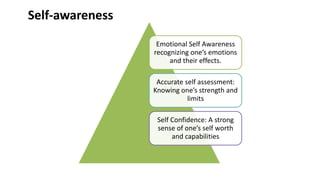
Emotional Self Awareness
recognizing one’s emotions
and their effects.
Accurate self assessment:
Knowing one’s strength and
limits
Self Confidence: A strong
sense of one’s self worth
and capabilities
Self-awareness
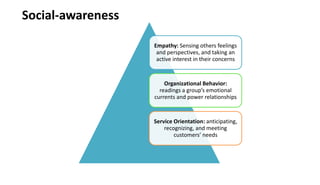
Empathy: Sensing others feelings
and perspectives, and taking an
active interest in their concerns
Organizational Behavior:
readings a group’s emotional
currents and power relationships
Service Orientation: anticipating,
recognizing, and meeting
customers’ needs
Social-awareness
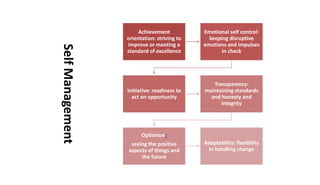
SelfManagement
Achievement
orientation: striving to
improve or meeting a
standard of excellence
Emotional self control:
keeping disruptive
emotions and impulses
in check
Initiative: readiness to
act on opportunity
Transparency:
maintaining standards
and honesty and
integrity
Optimism:
seeing the positive
aspects of things and
the future
Adaptability: flexibility
in handling change
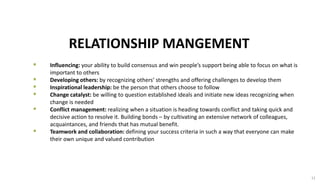
RELATIONSHIP MANGEMENT
 Influencing: your ability to build consensus and win people’s support being able to focus on what is
important to others
 Developing others: by recognizing others’ strengths and offering challenges to develop them
 Inspirational leadership: be the person that others choose to follow
 Change catalyst: be willing to question established ideals and initiate new ideas recognizing when
change is needed
 Conflict management: realizing when a situation is heading towards conflict and taking quick and
decisive action to resolve it. Building bonds – by cultivating an extensive network of colleagues,
acquaintances, and friends that has mutual benefit.
 Teamwork and collaboration: defining your success criteria in such a way that everyone can make
their own unique and valued contribution
11
Thanks

Emotional intelligence _ M.Mujeeb Riaz

  • 3.
    What is EmotionalIntelligence • Emotional intelligence is your ability to recognize and understand emotions and your skill at using this awareness to manage yourself and your relationship with others.
  • 4.
  • 5.
  • 7.
    Self-awareness Emotional self awareness Accurateself-assessment Self-confidence Self-management Emotional self-control Transparency Adaptability Achievement orientation Initiative Optimism Social awareness Empathy Organizational awareness Service orientation Relationship management Influence Developing others Inspirational Leadership Change catalyst Conflict management Teamwork and collaboration Emotional Intelligence Recognition Regulation Personal competence Social competence
  • 8.
    Emotional Self Awareness recognizingone’s emotions and their effects. Accurate self assessment: Knowing one’s strength and limits Self Confidence: A strong sense of one’s self worth and capabilities Self-awareness
  • 9.
    Empathy: Sensing othersfeelings and perspectives, and taking an active interest in their concerns Organizational Behavior: readings a group’s emotional currents and power relationships Service Orientation: anticipating, recognizing, and meeting customers’ needs Social-awareness
  • 10.
    SelfManagement Achievement orientation: striving to improveor meeting a standard of excellence Emotional self control: keeping disruptive emotions and impulses in check Initiative: readiness to act on opportunity Transparency: maintaining standards and honesty and integrity Optimism: seeing the positive aspects of things and the future Adaptability: flexibility in handling change
  • 11.
    RELATIONSHIP MANGEMENT  Influencing:your ability to build consensus and win people’s support being able to focus on what is important to others  Developing others: by recognizing others’ strengths and offering challenges to develop them  Inspirational leadership: be the person that others choose to follow  Change catalyst: be willing to question established ideals and initiate new ideas recognizing when change is needed  Conflict management: realizing when a situation is heading towards conflict and taking quick and decisive action to resolve it. Building bonds – by cultivating an extensive network of colleagues, acquaintances, and friends that has mutual benefit.  Teamwork and collaboration: defining your success criteria in such a way that everyone can make their own unique and valued contribution 11
  • 12.