Emotional Intelligence
(EI)
“Building EI Skills is
Fundamental
to Being the Best
Leader Professionally
and Personally”
Wajiha Muhammad Ismail
What is Emotional
Intelligence?
Emotional intelligence (EI) is the ability to:
 Recognize, understand and manage our
own emotions and,
 Recognize, understand and influence the
other’s emotions.
Why Emotional Intelligence is
Important?
• At a personal level, emotional intelligence help us:
 Have uncomfortable conversations without
hurting feelings
 Manage our emotions when stressed or
feeling overwhelmed
 Improve relationships with the people we
care about
• At work, emotional intelligence can help us:
 Resolve conflicts
 Coach and motivate others
 Create a culture of collaboration
 Build psychological safety within teams
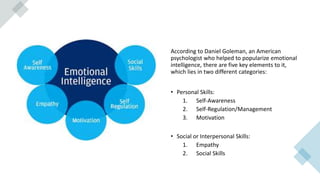
According to Daniel Goleman, an American
psychologist who helped to popularize emotional
intelligence, there are five key elements to it,
which lies in two different categories:
• Personal Skills:
1. Self-Awareness
2. Self-Regulation/Management
3. Motivation
• Social or Interpersonal Skills:
1. Empathy
2. Social Skills
Self-Awareness
Self-Awareness encompasses:
• Emotional Awareness
• Accurate Self-Assessment
• Self-Confidence
Self-awareness is the skill of being aware of and understanding your
emotions as they occur and as they evolve. It is wrong to think of
emotions as either positive or negative. Instead, you should think of
them as appropriate or inappropriate.
Effective self-assessment of feelings and emotions will help to
improve your confidence and self-esteem.
Self-Regulation or Self-Management
Self-Regulation includes:
• Self-control
• Trustworthiness
• Conscientiousness
• Adaptability
• Innovation
Self-management skills relate to the emotions you are feeling at
any given time or in any given circumstance and how well you
manage them. Self-control is a fundamental part of this, but
other aspects relate to what you then do: whether you behave in
a way which is recognised as good or not.
Motivation
• Self-motivation includes our personal dInrive to improve and
achieve, commitment to our goals, initiative, or readiness to
act on opportunities, and optimism and resilience.
• Self-motivation and personal time management are key skills
in this area. Do not make unreasonable demands on yourself,
learn to be assertive rather than just saying, ‘Yes’ to the
demands of others
Empathy
• Empathy is an awareness of the needs and
feelings of others both individually and in
groups, and being able to see things from
the point of view of others.
• Empathy helps us to develop a stronger
understanding of other people’s situations.
• It includes understanding others, developing
others, and political awareness.
Social Skills or
Interpersonal Skills
• Social skills encompasses a wide range of relationship
and interpersonal skills. These range from leadership
through to influencing and persuading, and managing
conflict, as well as working in a team.
• The term ‘social skills’ covers a wide variety of skills and
competencies, many of which are rooted in self-esteem
and personal confidence. By developing your social
skills, being easy to talk to, being a good listener, being
sharing and trustworthy, you also become more
charismatic and attractive to others.
Benefits of Higher Emotional Intelligence
People with a high degree of emotional intelligence know what they're
feeling, what their emotions mean, and how these emotions can affect
other people.
People with higher emotional intelligence find it easier to form and
maintain interpersonal relationships and to ‘fit in’ to group situations.
People with higher emotional intelligence are also better at
understanding their own psychological state, which can include managing
stress effectively and being less likely to suffer from depression.
Key Points
To be effective, leaders must have a solid understanding of how
their emotions and actions affect the people around them. The
better a leader relates to and works with others, the more
successful he or she will be.
Take the time to work on self-awareness, self-regulation,
motivation, empathy, and social skills. Working on these areas
will help you excel in the future.

Emotional intelligence

  • 1.
    Emotional Intelligence (EI) “Building EISkills is Fundamental to Being the Best Leader Professionally and Personally” Wajiha Muhammad Ismail
  • 2.
    What is Emotional Intelligence? Emotionalintelligence (EI) is the ability to:  Recognize, understand and manage our own emotions and,  Recognize, understand and influence the other’s emotions.
  • 4.
    Why Emotional Intelligenceis Important? • At a personal level, emotional intelligence help us:  Have uncomfortable conversations without hurting feelings  Manage our emotions when stressed or feeling overwhelmed  Improve relationships with the people we care about • At work, emotional intelligence can help us:  Resolve conflicts  Coach and motivate others  Create a culture of collaboration  Build psychological safety within teams
  • 5.
    According to DanielGoleman, an American psychologist who helped to popularize emotional intelligence, there are five key elements to it, which lies in two different categories: • Personal Skills: 1. Self-Awareness 2. Self-Regulation/Management 3. Motivation • Social or Interpersonal Skills: 1. Empathy 2. Social Skills
  • 6.
    Self-Awareness Self-Awareness encompasses: • EmotionalAwareness • Accurate Self-Assessment • Self-Confidence Self-awareness is the skill of being aware of and understanding your emotions as they occur and as they evolve. It is wrong to think of emotions as either positive or negative. Instead, you should think of them as appropriate or inappropriate. Effective self-assessment of feelings and emotions will help to improve your confidence and self-esteem.
  • 7.
    Self-Regulation or Self-Management Self-Regulationincludes: • Self-control • Trustworthiness • Conscientiousness • Adaptability • Innovation Self-management skills relate to the emotions you are feeling at any given time or in any given circumstance and how well you manage them. Self-control is a fundamental part of this, but other aspects relate to what you then do: whether you behave in a way which is recognised as good or not.
  • 8.
    Motivation • Self-motivation includesour personal dInrive to improve and achieve, commitment to our goals, initiative, or readiness to act on opportunities, and optimism and resilience. • Self-motivation and personal time management are key skills in this area. Do not make unreasonable demands on yourself, learn to be assertive rather than just saying, ‘Yes’ to the demands of others
  • 9.
    Empathy • Empathy isan awareness of the needs and feelings of others both individually and in groups, and being able to see things from the point of view of others. • Empathy helps us to develop a stronger understanding of other people’s situations. • It includes understanding others, developing others, and political awareness.
  • 10.
    Social Skills or InterpersonalSkills • Social skills encompasses a wide range of relationship and interpersonal skills. These range from leadership through to influencing and persuading, and managing conflict, as well as working in a team. • The term ‘social skills’ covers a wide variety of skills and competencies, many of which are rooted in self-esteem and personal confidence. By developing your social skills, being easy to talk to, being a good listener, being sharing and trustworthy, you also become more charismatic and attractive to others.
  • 11.
    Benefits of HigherEmotional Intelligence People with a high degree of emotional intelligence know what they're feeling, what their emotions mean, and how these emotions can affect other people. People with higher emotional intelligence find it easier to form and maintain interpersonal relationships and to ‘fit in’ to group situations. People with higher emotional intelligence are also better at understanding their own psychological state, which can include managing stress effectively and being less likely to suffer from depression.
  • 12.
    Key Points To beeffective, leaders must have a solid understanding of how their emotions and actions affect the people around them. The better a leader relates to and works with others, the more successful he or she will be. Take the time to work on self-awareness, self-regulation, motivation, empathy, and social skills. Working on these areas will help you excel in the future.