Logo
• a symbol or other small design adopted by an organization to
identify its products, uniform, vehicles, etc.
• Logos serve to represent a given organization or company
through a visual image that can be easily understood and
recognized. A logo generally involves symbols, stylized text or
both. Logos are often created by a graphic artist in
consultation with a company and marketing experts.
Why is a logo important
• A logo is an important part of your company's brand, and
makes a significant impact on a company's public perception.
In fact, a logo is one of the most important branding
investments a business can make. A logo can be described as
the face of a company.
What a logo should represent?
• A logo is a combination of text and visual imagery that serves
two purposes:
• It tells people the name of the company
• It creates a visual symbol that represents your business.
How to Design a Logo
• Get inspired
• Develop your own creative process.
• Design brief - interviewing the client and making sure you get all the information you
need.
• Research - learning more about the industry/niche, as well as the client's history and
competition.
• Reference - checking out design inspiration related to what the client needs, as well as
looking at the current design trends.
• Conceptualization - sketching and developing the logo around the given brief and the
research you've made.
• Reflection - letting the idea mature following a quick design break.
• Presentation - choosing a couple of design options to show the client, as well as getting
feedback and doing some edits until the design is complete.
• Learn from others.
• Research your audience
• Throw yourself into the brand
• Save all your sketches
• Use pen and paper
It doesn't really matter if your sketching skills are poor. As long as they deliver your ideas correctly, you’re on
the right track.
• Decide on your fonts carefully
Typography is certainly a key element to an effective logo. There are two main options for this:
create a customized typeface or use a pre-set one. If you create your own typeface, avoid
making it too trendy. Instead, keep it simple, readable, and classy.
• Use a maximum of two fonts
Naturally, there will be exceptions to this rule. But, as a common principle, using just two fonts is
smart if you want your design to be distinct, sharp, and clean.
• Tell a story
Every design has a story to tell, and logos are not an exception. If you see a logo as just an
artwork or a structure of lines and texts, you won't be able to express the meaning
behind it. Ideally, a powerful logo features two stories: one that is obvious and another
that is hidden.
Mistakes to Avoid
• Underestimate the importance of a proper color scheme
• Undervalue custom typography
• Be easy to predict
Your design won't stand out from the crowd if it looks the same as what's already out there. Aim
to design a logo that is somewhat unfamiliar yet still relatable. It should suggest something: a
story, a feeling, or an action.
Which logo colors mean what?
• Red
The universal sign of excitement, passion and anger. Is your brand loud, playful, youthful
or modern? Think red. More mature, classic or serious? Red may not be for you.
• Orange
An invigorating, playful color. Go orange to stand out from the crowd. It’s used less often
than red, but still packs an energetic punch.
• Yellow
Accessible, sunshiney friendliness. Yellow exudes cheer, and your brand will radiate an
affordable, youthful energy. Nobody puts yellow in a corner!
• Green
The ultimate in versatility, green isn’t linked with many brand personality traits, but it has
strong cultural associations. Are you in finance? Gardening? Consider going green.
• Blue
The classic king of colors, blue appears in over half of all logos. As it
symbolizes trustworthiness and maturity, true blue will make sure you’re
taken seriously.
• Purple
Where the rainbow gets luxurious. Paint with purple to appear
simultaneously cutting-edge and wise. There’s just a hint of femininity in
there too.
• Gray
Not quite dark, not quite light. Gray is the middleground of mature,
classic and serious. Go darker to add mystery. Go lighter to be more
accessible.
• Pink
Nothing says “girly” quite like pink. But it’s more versatile than that. From
pastel rose to neon magenta, pick pink for a modern, youthful, luxurious look.
• Brown
What can brown do for you? Make your brand appear rugged, masculine and
serious. Brown is very underutilized, so you’ll stand out from the competition.
• Black
Black is the new black. Want to look slick, modern and luxurious? Time to go
black. Rather be economical and affordable? Stay away from the dark side.
• White
The absence of color. White is youthful and economical, but can work for
almost any brand. As a neutral color, consider white as a secondary accent.
Types of Logo
• Lettermarks (or monogram logos)
• Wordmarks (or logotypes)
• Pictorial marks (or logo symbols)
• Abstract logo marks
• Mascots
• Combination Mark
• Emblem
LetterMarks (or monogram logos)
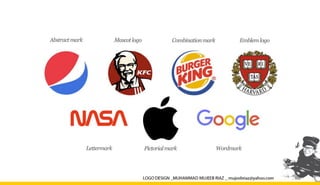
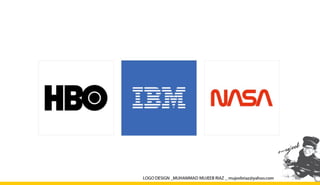
• A lettermark is a typography-based logo that’s comprised of a
few letters, usually a company’s initials. The lettermark is all
about simplicity. By utilizing just a few letters lettermark
logos are effective at streamlining any company brand if they
have a long name. For example, how much easier is it to
say—and remember NASA versus the National Aeronautics
and Space Administration?
Wordmarks (or logotypes)
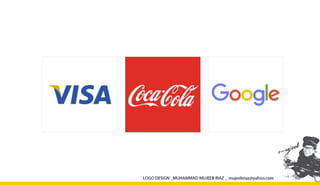
• Similar to a lettermark, a wordmark logo is a font-based logo
that focuses on a business’ name alone. Think Visa and Coca-
Cola. Wordmark logos work really well when a company has a
unique name. Google’s logo is a great example of this. The
name itself is catchy and memorable so, when combined
with strong typography, the logo helps create strong brand
recognition.
Pictorial marks (or logo symbols)
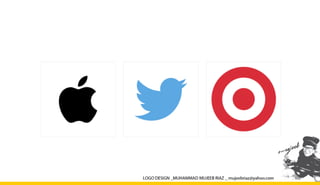
• A pictorial mark (sometimes called a brand marks or logo
symbol) is an icon—or graphic-based design. It’s probably the
image that comes to mind when you think “logo”: the iconic
Apple logo, the Twitter bird, the Target bullseye.
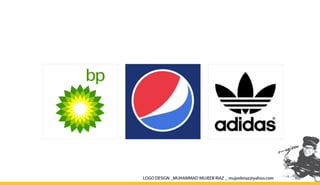
Abstract logo Marks
• An abstract mark is a specific type of pictorial logo. Instead of
being a recognizable image—like an apple or a bird—it’s an
abstract geometric form that represents your business.
• The benefit of an abstract mark is that you’re able to convey
what your company does symbolically.
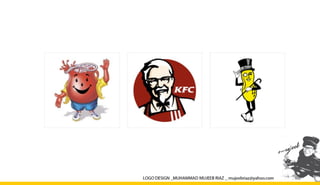
Mascots
• Often colorful, sometimes cartoonish, and most always fun,
the mascot logo is a great way to create your very own brand
spokesperson, spokes-character(?).
• A mascot is simply an illustrated character that represents
your company. Think of them as the ambassador for your
business.
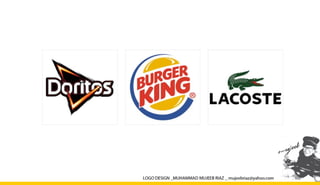
The combination mark
• It’s in the name! A combination mark is a logo comprised of a
combined wordmark or lettermark and a pictorial mark,
abstract mark, or mascot.
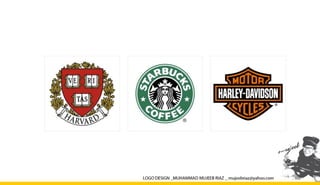
Emblem
• The last major type of logo is the emblem. An emblem logo
consists of font inside a symbol or an icon; think badges, seals
and crests. These logos tend to have a traditional appearance
about them that can make a striking impact, thus they are
often the go-to choice for many schools, organizations or
government agencies. The auto industry is also very fond of
emblem logos.
Thank U !

Logo Design _From Concept to Creation

  • 2.
    Logo • a symbolor other small design adopted by an organization to identify its products, uniform, vehicles, etc. • Logos serve to represent a given organization or company through a visual image that can be easily understood and recognized. A logo generally involves symbols, stylized text or both. Logos are often created by a graphic artist in consultation with a company and marketing experts.
  • 3.
    Why is alogo important • A logo is an important part of your company's brand, and makes a significant impact on a company's public perception. In fact, a logo is one of the most important branding investments a business can make. A logo can be described as the face of a company.
  • 4.
    What a logoshould represent? • A logo is a combination of text and visual imagery that serves two purposes: • It tells people the name of the company • It creates a visual symbol that represents your business.
  • 5.
    How to Designa Logo • Get inspired • Develop your own creative process. • Design brief - interviewing the client and making sure you get all the information you need. • Research - learning more about the industry/niche, as well as the client's history and competition. • Reference - checking out design inspiration related to what the client needs, as well as looking at the current design trends. • Conceptualization - sketching and developing the logo around the given brief and the research you've made. • Reflection - letting the idea mature following a quick design break. • Presentation - choosing a couple of design options to show the client, as well as getting feedback and doing some edits until the design is complete.
  • 6.
    • Learn fromothers. • Research your audience • Throw yourself into the brand • Save all your sketches • Use pen and paper It doesn't really matter if your sketching skills are poor. As long as they deliver your ideas correctly, you’re on the right track.
  • 7.
    • Decide onyour fonts carefully Typography is certainly a key element to an effective logo. There are two main options for this: create a customized typeface or use a pre-set one. If you create your own typeface, avoid making it too trendy. Instead, keep it simple, readable, and classy. • Use a maximum of two fonts Naturally, there will be exceptions to this rule. But, as a common principle, using just two fonts is smart if you want your design to be distinct, sharp, and clean. • Tell a story Every design has a story to tell, and logos are not an exception. If you see a logo as just an artwork or a structure of lines and texts, you won't be able to express the meaning behind it. Ideally, a powerful logo features two stories: one that is obvious and another that is hidden.
  • 8.
  • 9.
    • Underestimate theimportance of a proper color scheme • Undervalue custom typography • Be easy to predict Your design won't stand out from the crowd if it looks the same as what's already out there. Aim to design a logo that is somewhat unfamiliar yet still relatable. It should suggest something: a story, a feeling, or an action.
  • 10.
    Which logo colorsmean what? • Red The universal sign of excitement, passion and anger. Is your brand loud, playful, youthful or modern? Think red. More mature, classic or serious? Red may not be for you. • Orange An invigorating, playful color. Go orange to stand out from the crowd. It’s used less often than red, but still packs an energetic punch. • Yellow Accessible, sunshiney friendliness. Yellow exudes cheer, and your brand will radiate an affordable, youthful energy. Nobody puts yellow in a corner! • Green The ultimate in versatility, green isn’t linked with many brand personality traits, but it has strong cultural associations. Are you in finance? Gardening? Consider going green.
  • 11.
    • Blue The classicking of colors, blue appears in over half of all logos. As it symbolizes trustworthiness and maturity, true blue will make sure you’re taken seriously. • Purple Where the rainbow gets luxurious. Paint with purple to appear simultaneously cutting-edge and wise. There’s just a hint of femininity in there too. • Gray Not quite dark, not quite light. Gray is the middleground of mature, classic and serious. Go darker to add mystery. Go lighter to be more accessible.
  • 12.
    • Pink Nothing says“girly” quite like pink. But it’s more versatile than that. From pastel rose to neon magenta, pick pink for a modern, youthful, luxurious look. • Brown What can brown do for you? Make your brand appear rugged, masculine and serious. Brown is very underutilized, so you’ll stand out from the competition. • Black Black is the new black. Want to look slick, modern and luxurious? Time to go black. Rather be economical and affordable? Stay away from the dark side. • White The absence of color. White is youthful and economical, but can work for almost any brand. As a neutral color, consider white as a secondary accent.
  • 13.
    Types of Logo •Lettermarks (or monogram logos) • Wordmarks (or logotypes) • Pictorial marks (or logo symbols) • Abstract logo marks • Mascots • Combination Mark • Emblem
  • 15.
    LetterMarks (or monogramlogos) • A lettermark is a typography-based logo that’s comprised of a few letters, usually a company’s initials. The lettermark is all about simplicity. By utilizing just a few letters lettermark logos are effective at streamlining any company brand if they have a long name. For example, how much easier is it to say—and remember NASA versus the National Aeronautics and Space Administration?
  • 17.
    Wordmarks (or logotypes) •Similar to a lettermark, a wordmark logo is a font-based logo that focuses on a business’ name alone. Think Visa and Coca- Cola. Wordmark logos work really well when a company has a unique name. Google’s logo is a great example of this. The name itself is catchy and memorable so, when combined with strong typography, the logo helps create strong brand recognition.
  • 19.
    Pictorial marks (orlogo symbols) • A pictorial mark (sometimes called a brand marks or logo symbol) is an icon—or graphic-based design. It’s probably the image that comes to mind when you think “logo”: the iconic Apple logo, the Twitter bird, the Target bullseye.
  • 21.
    Abstract logo Marks •An abstract mark is a specific type of pictorial logo. Instead of being a recognizable image—like an apple or a bird—it’s an abstract geometric form that represents your business. • The benefit of an abstract mark is that you’re able to convey what your company does symbolically.
  • 23.
    Mascots • Often colorful,sometimes cartoonish, and most always fun, the mascot logo is a great way to create your very own brand spokesperson, spokes-character(?). • A mascot is simply an illustrated character that represents your company. Think of them as the ambassador for your business.
  • 25.
    The combination mark •It’s in the name! A combination mark is a logo comprised of a combined wordmark or lettermark and a pictorial mark, abstract mark, or mascot.
  • 27.
    Emblem • The lastmajor type of logo is the emblem. An emblem logo consists of font inside a symbol or an icon; think badges, seals and crests. These logos tend to have a traditional appearance about them that can make a striking impact, thus they are often the go-to choice for many schools, organizations or government agencies. The auto industry is also very fond of emblem logos.
  • 29.