Unit 2.1
Embryonic Development
General Objective
At the end of the session,all participants will be
able to explain about embryonic development.
Specific Objectives
At the end of this session, all participants will be
able to:
define embryonic period
state derivatives of germ layers
explain various events during embryonic period
define fetal period
define embryonic disorders
list the embryonic disorders
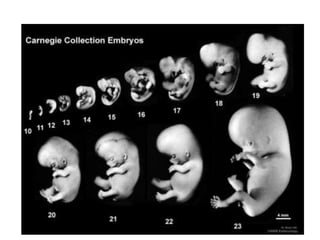
Embryonic Period
Definition:
It is the period of organogenesis which
occurs from 3rd to 8th weeks of development of
product of conception during which each of the
three germ layers give rise to its own tissues and
organ systems.
Germ Layer Derivatives
Ectoderm derivatives
1. Surface Ectoderm: gives rise to
 Skin
 Hair
 Nails
 Enamel of teeth
 Oral epithelium including cheeks, lips, gums
 Lens of eyes
Epithelium of conjunctiva,cornea, ciliary body,
iris
Exocrine glands: Sweat,
sebaceous,mammary,lacrimal glands
2. Neuro-ectoderm:
 Central nervous system
Retina and optic nerve
Pineal gland
Glial cells of CNS like astrocytes,
oligodendrocytes,ependymal cells.
3. Neural crest:
 Peripheral Nervous System
Adrenal medulla
Melanocytes
Cranial nerves
Ganglions such as sensory,cranial,autonomic
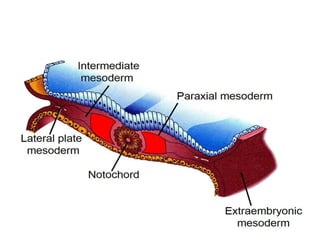
Mesoderm derivatives
Intermediate mesoderm
 develops between paraxial and lateral plate
mesoderm.
 Gives rise to urogenital and reproductive system
such as kidneys,testis, ovaries,genital
ducts,accessory sex glands.
 Paraxial mesoderm
 It is the area of mesoderm which forms
simultaneously with the neural tube.
 Gives somitomeres which further forms somites.
 Usually appears towards the end of 3rd
gestational week
 Somites further gives rise to:
a. Myotome:muscle tissue
b. Sclerotome:bones and cartilage
c. Dermatome:dermis of skin
d. Duramater
 Lateral plate mesoderm:
 Located lateral to the intermediate mesoderm.
 Forms:
a. Splanchnic mesoderm:
I. Heart and visceral layer of serous pericardium and blood
vessels
II. Smooth muscle and connective tissues of respiratory and digestive
organs.
b. Somatic mesoderm
I. Bones, ligaments
II. Blood vessels and connective tissue of limbs
It also gives rise to pulmonary system
components, lymphatic system,adipose tissue,
etc.
Endoderm derivatives
 Epithelial lining of:
 GI tract
 Respiratory tract
 Urinary bladder
 Parenchyma of:
 Thyroid, parathyroid
 Liver, Pancreas
Key Events During Embryonic Period
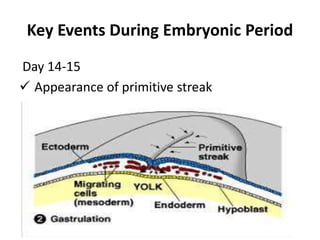
Day 14-15
 Appearance of primitive streak
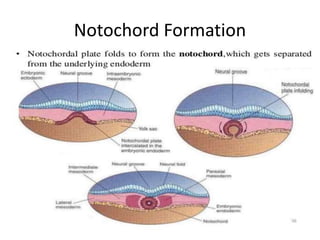
Day 16-18
 Notochordal process appears
Notochord Formation
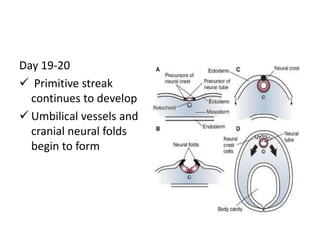
Day 19-20
 Primitive streak
continues to develop
 Umbilical vessels and
cranial neural folds
begin to form
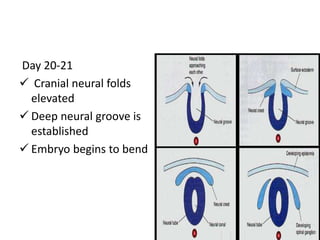
Day 20-21
 Cranial neural folds
elevated
 Deep neural groove is
established
 Embryo begins to bend
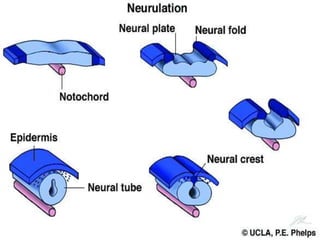
Day 22-23
 Fusion of neural folds begin in cervical region
Caudal neuropores open widely
Heart tube begins to fold
Beginning of neurulation occurs
Neurulation
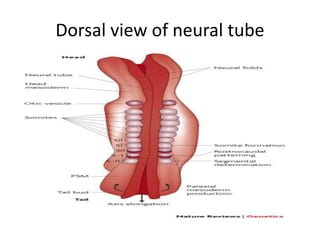
Dorsal view of neural tube
Day 24-25
 Cranial neuropore is closed
Optical vessels are formed
Day 26-27
 Upper limb buds appear
Day 28-30
 Hind limb buds appear
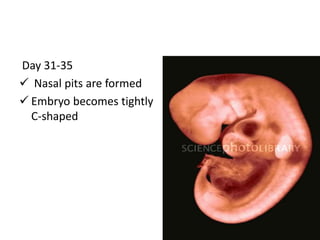
Day 31-35
 Nasal pits are formed
 Embryo becomes tightly

C-shaped
Day 36-42
 Brain vesicles become prominent
External auricle is formed
Umbilical herniation is initiated
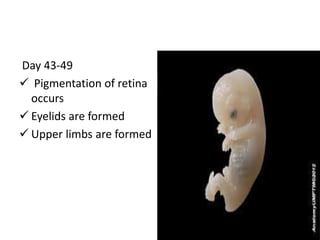
Day 43-49
 Pigmentation of retina
occurs
 Eyelids are formed
 Upper limbs are formed
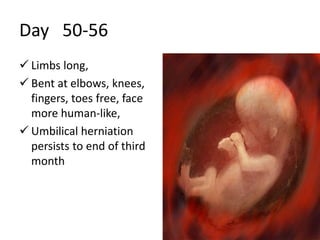
Day 50-56
 Limbs long,
 Bent at elbows, knees,
fingers, toes free, face
more human-like,
 Umbilical herniation
persists to end of third
month
Fetal Period
It is the period from beginning of 9th week to
birth in which maturation of organs, tissues and
rapid growth of body occurs.
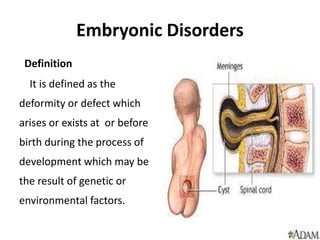
Embryonic Disorders
Definition
It is defined as the
deformity or defect which
arises or exists at or before
birth during the process of
development which may be
the result of genetic or
environmental factors.
Embryonic Disorders
1. Neural tube defects
2. Congenital Heart defect
3. Cleft lip/cleft palate
4. Chromosomal abnormalities
5. Esophageal atresia
6. Renal agenesis
7. Undescended testis
8. Syndactyly ,Polydactyly
SUMMARY
Post- test
Fill in the blanks using appropriate words:
• Mesoderm between paraxial and lateral plate
is called…………..
• Neural crest gives rise to………….
• …………..is the process of formation of neural
tube from neural plate.
Write “T”for true and “F” for false: (1*3=3)
• Neuro ectoderm gives rise to Peripheral
Nervous system ( )
• Notogenesis is the process of formation of
neural tube ( )
• Fetal period is the period from 9th week to
birth ( )
Answer the following question: (5*1=5)
What are the derivatives of ectodermal layer?
References:
• 1. T.W.saddler ,langman’s textbook of embryology
, 12th edition,Lippincott Williams and wilkins,
south asian edition published by wolters kluwer.
• 2. D.C. Dutta, textbook of obstetrics, 5th edition,
new central book agency Pvt ltd, India.
• Subedi durga , Gautam saraswoti, midwifery
nuring part-1, 2nd edition, medhabi publication.
• Indrani T.K(2003) Textbook of midwifery, New
Delhi:Jaypee brothers,medical publishers(P).ltd
• Jacob.A(2005) A Comprehensive Textbook of
Midwifery, Jaypee Brothers , New Delhi
• BennettV.R, Brown L.k(2003)Myles textbook for
midwives, 14th edition,churchill,livingstone.
• http:/www.embryology.med.unsw.edu.aw
• 6. Tuitui roshani, manual of midwifery A,
vidyarthi pustak bhandar, Kathmandu.

Embryonic period

  • 1.
  • 3.
    General Objective At theend of the session,all participants will be able to explain about embryonic development.
  • 4.
    Specific Objectives At theend of this session, all participants will be able to: define embryonic period state derivatives of germ layers explain various events during embryonic period define fetal period define embryonic disorders list the embryonic disorders
  • 5.
    Embryonic Period Definition: It isthe period of organogenesis which occurs from 3rd to 8th weeks of development of product of conception during which each of the three germ layers give rise to its own tissues and organ systems.
  • 6.
    Germ Layer Derivatives Ectodermderivatives 1. Surface Ectoderm: gives rise to  Skin  Hair  Nails  Enamel of teeth  Oral epithelium including cheeks, lips, gums  Lens of eyes
  • 7.
    Epithelium of conjunctiva,cornea,ciliary body, iris Exocrine glands: Sweat, sebaceous,mammary,lacrimal glands
  • 8.
    2. Neuro-ectoderm:  Centralnervous system Retina and optic nerve Pineal gland Glial cells of CNS like astrocytes, oligodendrocytes,ependymal cells.
  • 9.
    3. Neural crest: Peripheral Nervous System Adrenal medulla Melanocytes Cranial nerves Ganglions such as sensory,cranial,autonomic
  • 11.
    Mesoderm derivatives Intermediate mesoderm develops between paraxial and lateral plate mesoderm.  Gives rise to urogenital and reproductive system such as kidneys,testis, ovaries,genital ducts,accessory sex glands.
  • 12.
     Paraxial mesoderm It is the area of mesoderm which forms simultaneously with the neural tube.  Gives somitomeres which further forms somites.  Usually appears towards the end of 3rd gestational week
  • 13.
     Somites furthergives rise to: a. Myotome:muscle tissue b. Sclerotome:bones and cartilage c. Dermatome:dermis of skin d. Duramater
  • 14.
     Lateral platemesoderm:  Located lateral to the intermediate mesoderm.  Forms: a. Splanchnic mesoderm: I. Heart and visceral layer of serous pericardium and blood vessels
  • 15.
    II. Smooth muscleand connective tissues of respiratory and digestive organs. b. Somatic mesoderm I. Bones, ligaments II. Blood vessels and connective tissue of limbs
  • 16.
    It also givesrise to pulmonary system components, lymphatic system,adipose tissue, etc.
  • 17.
    Endoderm derivatives  Epitheliallining of:  GI tract  Respiratory tract  Urinary bladder  Parenchyma of:  Thyroid, parathyroid  Liver, Pancreas
  • 18.
    Key Events DuringEmbryonic Period Day 14-15  Appearance of primitive streak
  • 19.
  • 20.
  • 21.
    Day 19-20  Primitivestreak continues to develop  Umbilical vessels and cranial neural folds begin to form
  • 22.
    Day 20-21  Cranialneural folds elevated  Deep neural groove is established  Embryo begins to bend
  • 23.
    Day 22-23  Fusionof neural folds begin in cervical region Caudal neuropores open widely Heart tube begins to fold Beginning of neurulation occurs
  • 24.
  • 25.
    Dorsal view ofneural tube
  • 26.
    Day 24-25  Cranialneuropore is closed Optical vessels are formed
  • 27.
    Day 26-27  Upperlimb buds appear
  • 28.
    Day 28-30  Hindlimb buds appear
  • 29.
    Day 31-35  Nasalpits are formed  Embryo becomes tightly C-shaped
  • 30.
    Day 36-42  Brainvesicles become prominent External auricle is formed Umbilical herniation is initiated
  • 31.
    Day 43-49  Pigmentationof retina occurs  Eyelids are formed  Upper limbs are formed
  • 32.
    Day 50-56  Limbslong,  Bent at elbows, knees, fingers, toes free, face more human-like,  Umbilical herniation persists to end of third month
  • 33.
    Fetal Period It isthe period from beginning of 9th week to birth in which maturation of organs, tissues and rapid growth of body occurs.
  • 34.
    Embryonic Disorders Definition It isdefined as the deformity or defect which arises or exists at or before birth during the process of development which may be the result of genetic or environmental factors.
  • 35.
    Embryonic Disorders 1. Neuraltube defects 2. Congenital Heart defect 3. Cleft lip/cleft palate 4. Chromosomal abnormalities 5. Esophageal atresia 6. Renal agenesis 7. Undescended testis 8. Syndactyly ,Polydactyly
  • 36.
  • 37.
    Post- test Fill inthe blanks using appropriate words: • Mesoderm between paraxial and lateral plate is called………….. • Neural crest gives rise to…………. • …………..is the process of formation of neural tube from neural plate.
  • 38.
    Write “T”for trueand “F” for false: (1*3=3) • Neuro ectoderm gives rise to Peripheral Nervous system ( ) • Notogenesis is the process of formation of neural tube ( ) • Fetal period is the period from 9th week to birth ( )
  • 39.
    Answer the followingquestion: (5*1=5) What are the derivatives of ectodermal layer?
  • 41.
    References: • 1. T.W.saddler,langman’s textbook of embryology , 12th edition,Lippincott Williams and wilkins, south asian edition published by wolters kluwer. • 2. D.C. Dutta, textbook of obstetrics, 5th edition, new central book agency Pvt ltd, India.
  • 42.
    • Subedi durga, Gautam saraswoti, midwifery nuring part-1, 2nd edition, medhabi publication. • Indrani T.K(2003) Textbook of midwifery, New Delhi:Jaypee brothers,medical publishers(P).ltd • Jacob.A(2005) A Comprehensive Textbook of Midwifery, Jaypee Brothers , New Delhi
  • 43.
    • BennettV.R, BrownL.k(2003)Myles textbook for midwives, 14th edition,churchill,livingstone. • http:/www.embryology.med.unsw.edu.aw • 6. Tuitui roshani, manual of midwifery A, vidyarthi pustak bhandar, Kathmandu.