Sadaqat ali
 Definition
 Differences between syrups and elixirs
 Why do we need elixirs
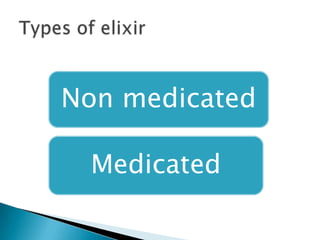
 Types of elixirs
 Method of preparation
 Advantages and disadvantages
 Storage
 Elixirs are clear sweetened, hydroalcohlic
preparations intended for oral use and
usually flavored for palatability.
 Alcoholic content vary from 10% to 12% and
up to 40%.
 An elixir must always contain alcohol, whereas a
syrup may or may not use an alcohol for solubility
purposes.
 Elixirs are meant to always be a clear liquid, whereas
syrups can contain various natural or artificial dyes.
 In general, elixirs are less viscous than syrups due to
their higher alcohol content and their minimal use
of sucrose and other viscosity-improving agents.
 When used as a pharmaceutical preparation, it
contains an active ingredient that is dissolved in a
solution that contains some percentage (usually 10-
12%) of ethyl alcohol and is designed to be taken
orally.
 Some drug are insoluble in water so in this
case we can’t use syrups & suspension.
 So we have to make a dosage form which
could dissolve non polar compounds
 Aid in masking the unpleasant taste of the
active ingredients.
These are simple elixirs that do not contain
medicated agents.
These only contain
alcohol
sweetening agent
coloring agent
they are self preserving
Use as diluent or vehicle
 Medicated elixirs are a solution of the active
ingredient dissolved in water and
an alcohol often along with
other excipients such as preservatives.
Non medicated
Medicated
Medicated Elixirs
 Primarily used in the symptomatic relife of
allergies .
 Suppresses symptoms caused by histamine .
 Brand name: Promethazine Winthrop
 Sodium benzoate, sodium sulfate and sodium
metabisulfite.
Adverse affects:
 Dryness of nose ,mouth, throat
 Dizziness
 Disturbed concentration
 Sedation
 antihistaminic agents are basic amines
 The barbiturates are nonselective central
nervous system (CNS) depressants that are
primarily used as sedative-hypnotics.
 Phenobarbital is along lasting barbiturate
with a duration of action of 4-6 hours
 A usual dose as a sedative of about 30mg
and hypnotic dose of about 100mg .
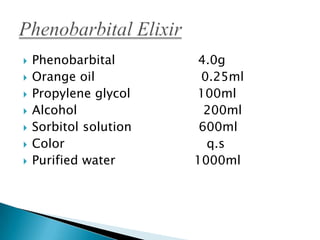
 Phenobarbital 4.0g
 Orange oil 0.25ml
 Propylene glycol 100ml
 Alcohol 200ml
 Sorbitol solution 600ml
 Color q.s
 Purified water 1000ml
 preventing and treating symptoms and
blockage of airway due to asthma or other
lung diseases (emphysema, bronchitis).
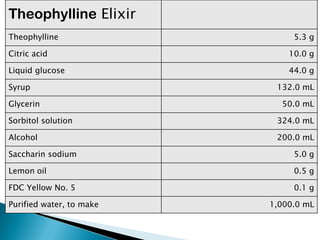
Theophylline Elixir
Theophylline 5.3 g
Citric acid 10.0 g
Liquid glucose 44.0 g
Syrup 132.0 mL
Glycerin 50.0 mL
Sorbitol solution 324.0 mL
Alcohol 200.0 mL
Saccharin sodium 5.0 g
Lemon oil 0.5 g
FDC Yellow No. 5 0.1 g
Purified water, to make 1,000.0 mL
Ingredients for elixirs
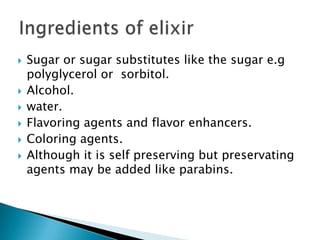
 Sugar or sugar substitutes like the sugar e.g
polyglycerol or sorbitol.
 Alcohol.
 water.
 Flavoring agents and flavor enhancers.
 Coloring agents.
 Although it is self preserving but preservating
agents may be added like parabins.
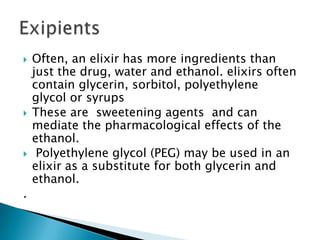
 Often, an elixir has more ingredients than
just the drug, water and ethanol. elixirs often
contain glycerin, sorbitol, polyethylene
glycol or syrups
 These are sweetening agents and can
mediate the pharmacological effects of the
ethanol.
 Polyethylene glycol (PEG) may be used in an
elixir as a substitute for both glycerin and
ethanol.
.
 Usually ethyl alcohol is used as the alcohol
 Concentration is about 10 to 12 percent
 Elixirs are always sweetened, but rarely
contain sucrose. This is because sucrose
makes a solution much more viscousor thick,
an undesirable property in an elixir. Many
other sweetners can be used,
including aspartame, carboxymethylcellulose
and its derivatives, saccharin, cyclamate,
and acesulfame potassium. However, none of
these sweetners are considered truly safe; in
fact, cyclamate and saccharin are banned in
several countries.
Viscosity modifier
Flavor enhancer
 Alcohol soluble and water soluble
components are generally dissolved
separately in alcohol and water
 Aqueous solution is added to the alcoholic
solution, so minimal separation of alcohol
soluble components occurs.
 Mixture is made up to the volume by the
specific solvent or vehicle.
 Talc to remove excess amount of oil
 Filter the preparation.
 Pour it in clean bottle
 Lable the bottle
 Taste masker
 Self preservative
 Addiction
 Liver sclerosis
 Sedation
 Dizziness
 Large amount of alcohol cause burning
sensation to the tongue
 Elixirs should be stored in a tightly closed
and light resistant container away from direct
heat and sunlight.
Elixirs

Elixirs

  • 1.
  • 2.
     Definition  Differencesbetween syrups and elixirs  Why do we need elixirs  Types of elixirs  Method of preparation  Advantages and disadvantages  Storage
  • 3.
     Elixirs areclear sweetened, hydroalcohlic preparations intended for oral use and usually flavored for palatability.  Alcoholic content vary from 10% to 12% and up to 40%.
  • 4.
     An elixirmust always contain alcohol, whereas a syrup may or may not use an alcohol for solubility purposes.  Elixirs are meant to always be a clear liquid, whereas syrups can contain various natural or artificial dyes.  In general, elixirs are less viscous than syrups due to their higher alcohol content and their minimal use of sucrose and other viscosity-improving agents.  When used as a pharmaceutical preparation, it contains an active ingredient that is dissolved in a solution that contains some percentage (usually 10- 12%) of ethyl alcohol and is designed to be taken orally.
  • 5.
     Some drugare insoluble in water so in this case we can’t use syrups & suspension.  So we have to make a dosage form which could dissolve non polar compounds  Aid in masking the unpleasant taste of the active ingredients.
  • 6.
    These are simpleelixirs that do not contain medicated agents. These only contain alcohol sweetening agent coloring agent they are self preserving Use as diluent or vehicle
  • 7.
     Medicated elixirsare a solution of the active ingredient dissolved in water and an alcohol often along with other excipients such as preservatives.
  • 8.
  • 9.
  • 10.
     Primarily usedin the symptomatic relife of allergies .  Suppresses symptoms caused by histamine .  Brand name: Promethazine Winthrop
  • 11.
     Sodium benzoate,sodium sulfate and sodium metabisulfite. Adverse affects:  Dryness of nose ,mouth, throat  Dizziness  Disturbed concentration  Sedation  antihistaminic agents are basic amines
  • 12.
     The barbituratesare nonselective central nervous system (CNS) depressants that are primarily used as sedative-hypnotics.  Phenobarbital is along lasting barbiturate with a duration of action of 4-6 hours  A usual dose as a sedative of about 30mg and hypnotic dose of about 100mg .
  • 13.
     Phenobarbital 4.0g Orange oil 0.25ml  Propylene glycol 100ml  Alcohol 200ml  Sorbitol solution 600ml  Color q.s  Purified water 1000ml
  • 15.
     preventing andtreating symptoms and blockage of airway due to asthma or other lung diseases (emphysema, bronchitis).
  • 16.
    Theophylline Elixir Theophylline 5.3g Citric acid 10.0 g Liquid glucose 44.0 g Syrup 132.0 mL Glycerin 50.0 mL Sorbitol solution 324.0 mL Alcohol 200.0 mL Saccharin sodium 5.0 g Lemon oil 0.5 g FDC Yellow No. 5 0.1 g Purified water, to make 1,000.0 mL
  • 17.
  • 18.
     Sugar orsugar substitutes like the sugar e.g polyglycerol or sorbitol.  Alcohol.  water.  Flavoring agents and flavor enhancers.  Coloring agents.  Although it is self preserving but preservating agents may be added like parabins.
  • 19.
     Often, anelixir has more ingredients than just the drug, water and ethanol. elixirs often contain glycerin, sorbitol, polyethylene glycol or syrups  These are sweetening agents and can mediate the pharmacological effects of the ethanol.  Polyethylene glycol (PEG) may be used in an elixir as a substitute for both glycerin and ethanol. .
  • 20.
     Usually ethylalcohol is used as the alcohol  Concentration is about 10 to 12 percent
  • 21.
     Elixirs arealways sweetened, but rarely contain sucrose. This is because sucrose makes a solution much more viscousor thick, an undesirable property in an elixir. Many other sweetners can be used, including aspartame, carboxymethylcellulose and its derivatives, saccharin, cyclamate, and acesulfame potassium. However, none of these sweetners are considered truly safe; in fact, cyclamate and saccharin are banned in several countries.
  • 22.
  • 23.
     Alcohol solubleand water soluble components are generally dissolved separately in alcohol and water  Aqueous solution is added to the alcoholic solution, so minimal separation of alcohol soluble components occurs.  Mixture is made up to the volume by the specific solvent or vehicle.  Talc to remove excess amount of oil  Filter the preparation.
  • 24.
     Pour itin clean bottle  Lable the bottle
  • 25.
     Taste masker Self preservative
  • 26.
     Addiction  Liversclerosis  Sedation  Dizziness  Large amount of alcohol cause burning sensation to the tongue
  • 27.
     Elixirs shouldbe stored in a tightly closed and light resistant container away from direct heat and sunlight.