COLCHICUMSPECIOSUM
Sadaqat Ali
Scientific classification
• Kingdom: Plantae
• Angiosperms
• Monocots
• Order: Liliales
• Family: Colchicaceae
• Genus: Colchicum
• Species: C. speciosum
Common name:
• Autumn Crocus
• Naked Lady
• Meadow Saffron
• Colchicum giganteum
Habitat
• Native to Central America.
• Colchicum is widely cultivated in Ukraine,
Moldova, Caucasus and Middle Asia.
Plant description
• Height :- This
perennial herb grows
to approximately 0.3
m long.
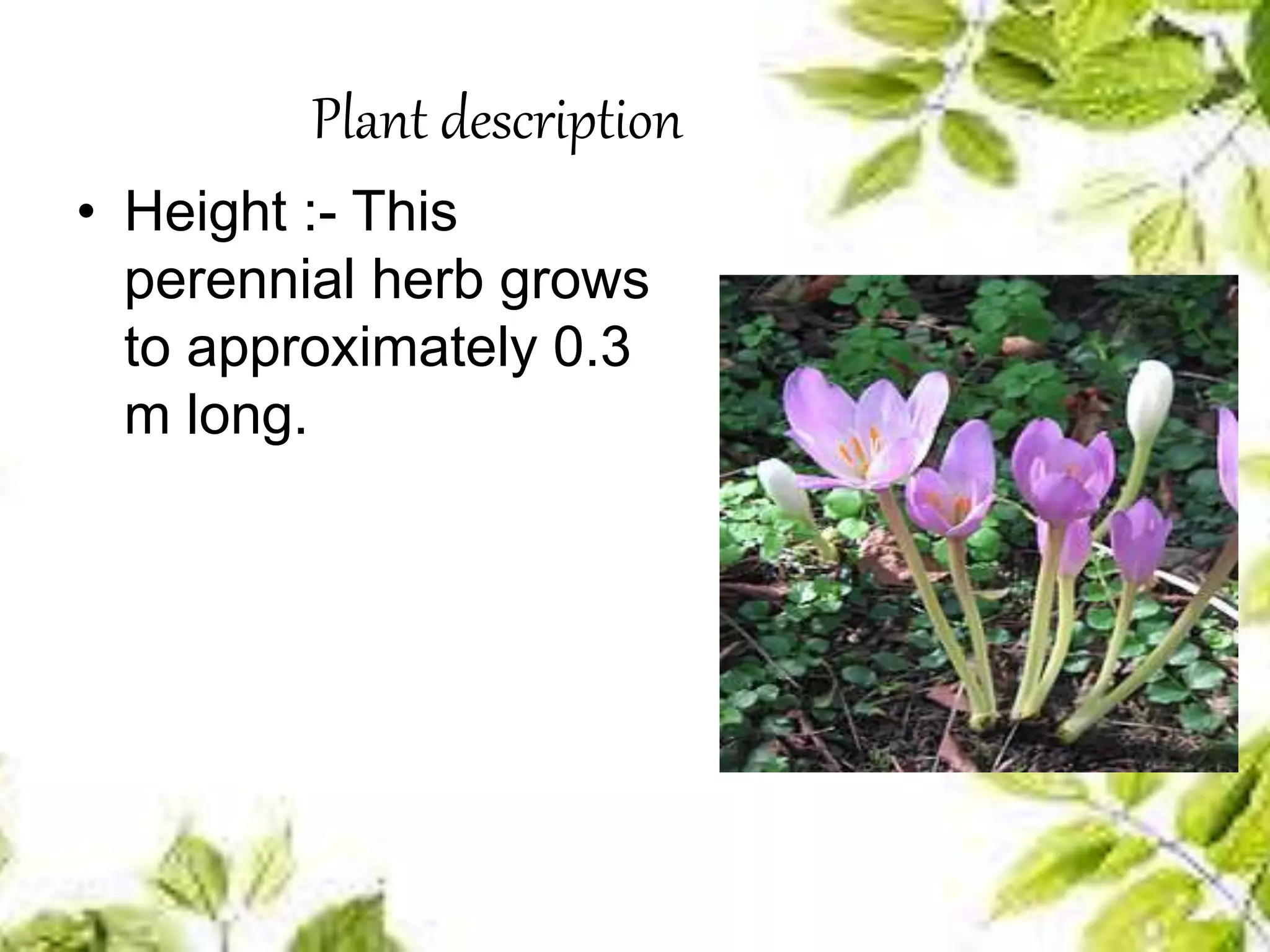
Flowers :-
• Has pale purple flowers
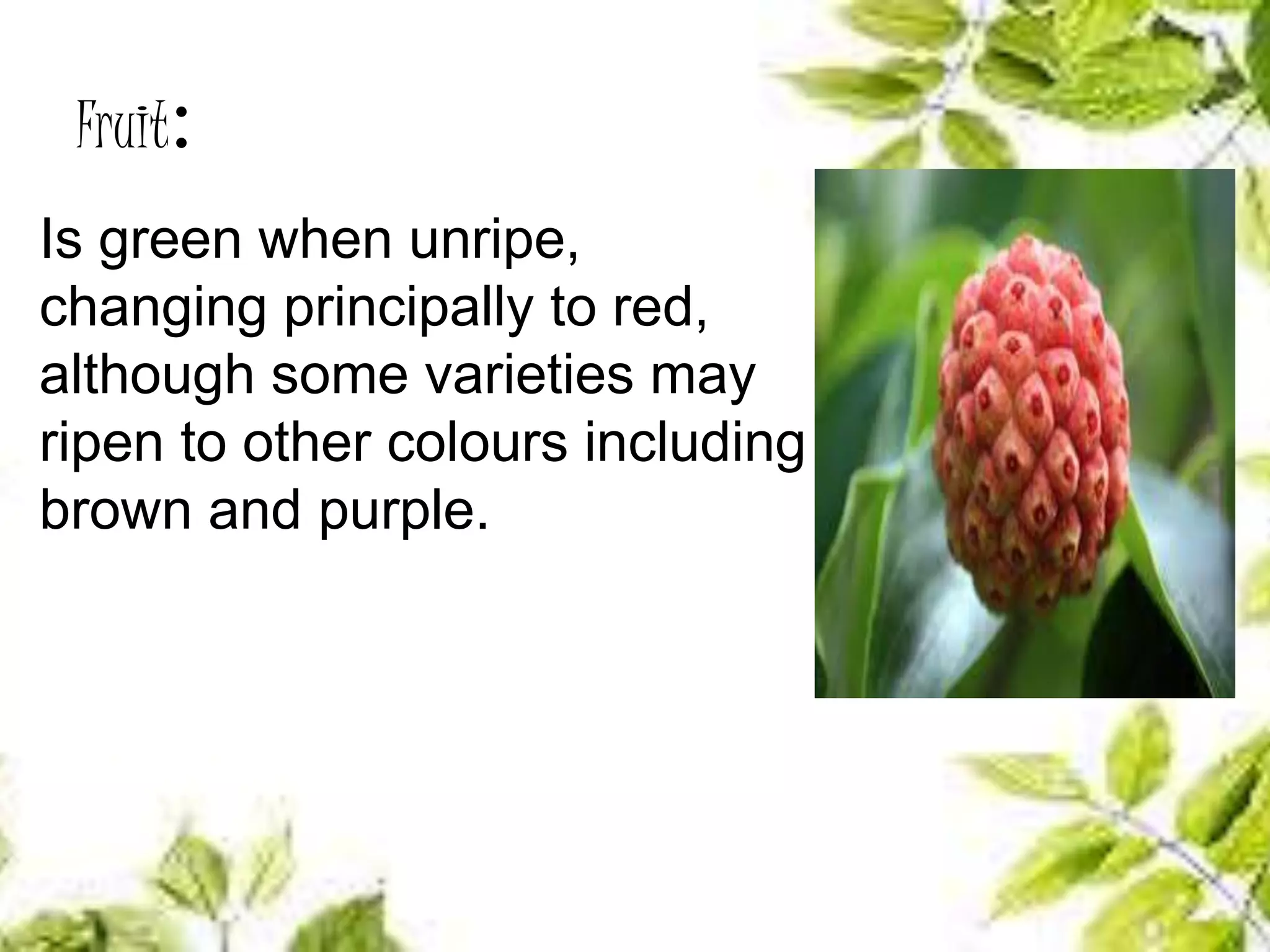
Fruit:
Is green when unripe,
changing principally to red,
although some varieties may
ripen to other colours including
brown and purple.
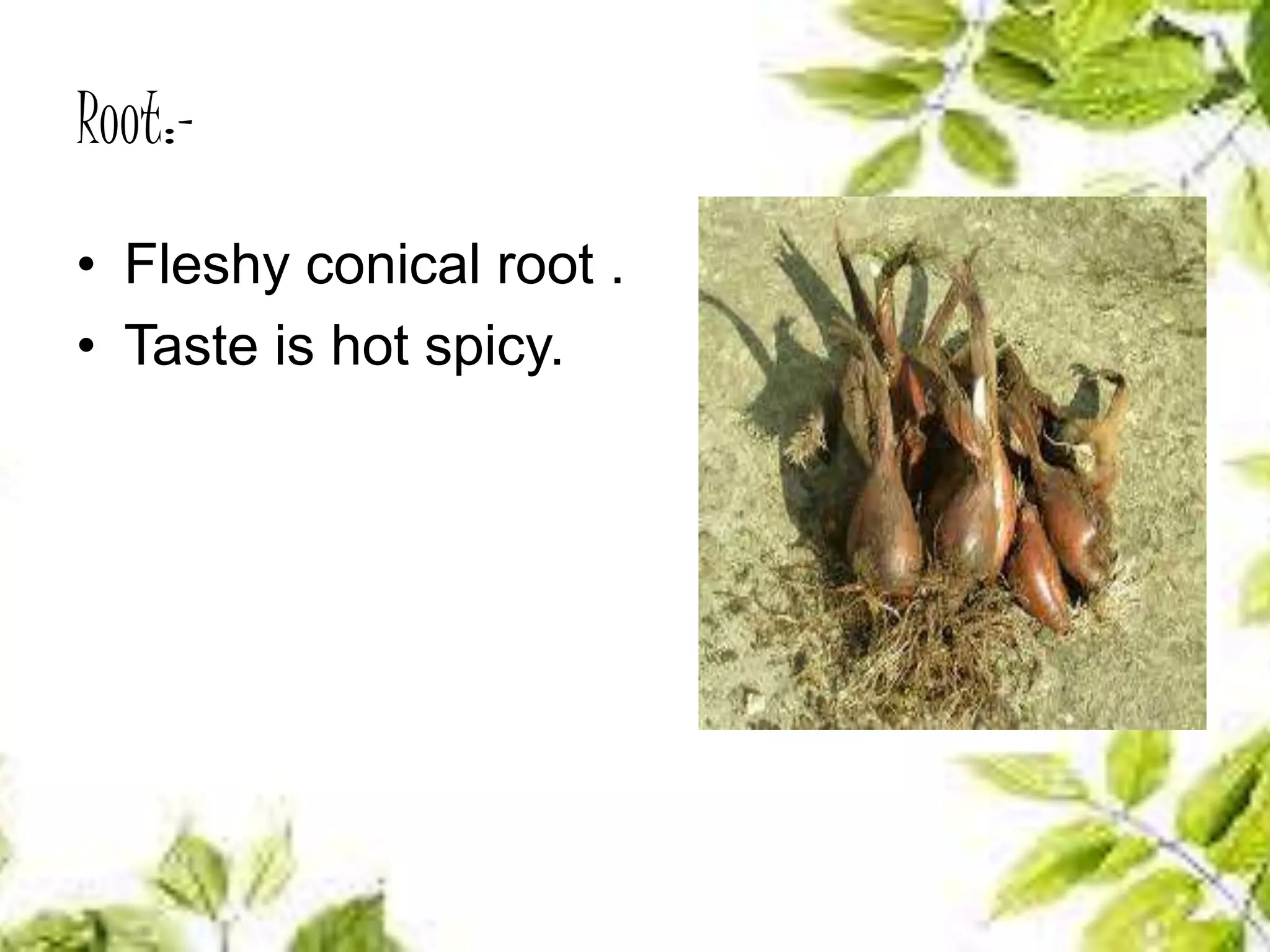
Root:-
• Fleshy conical root .
• Taste is hot spicy.
Part used
• Seeds
• Leaves
• corm
HOW TO GROW
• Cultivation
• Grow in moist but well-drained, deep, humus-
rich, fertile soil. Intolerant of water logging
• Propagation
• Propagate by seed, sowing in containers in an
open frame.
OR
• Separate corms when dormant in summer
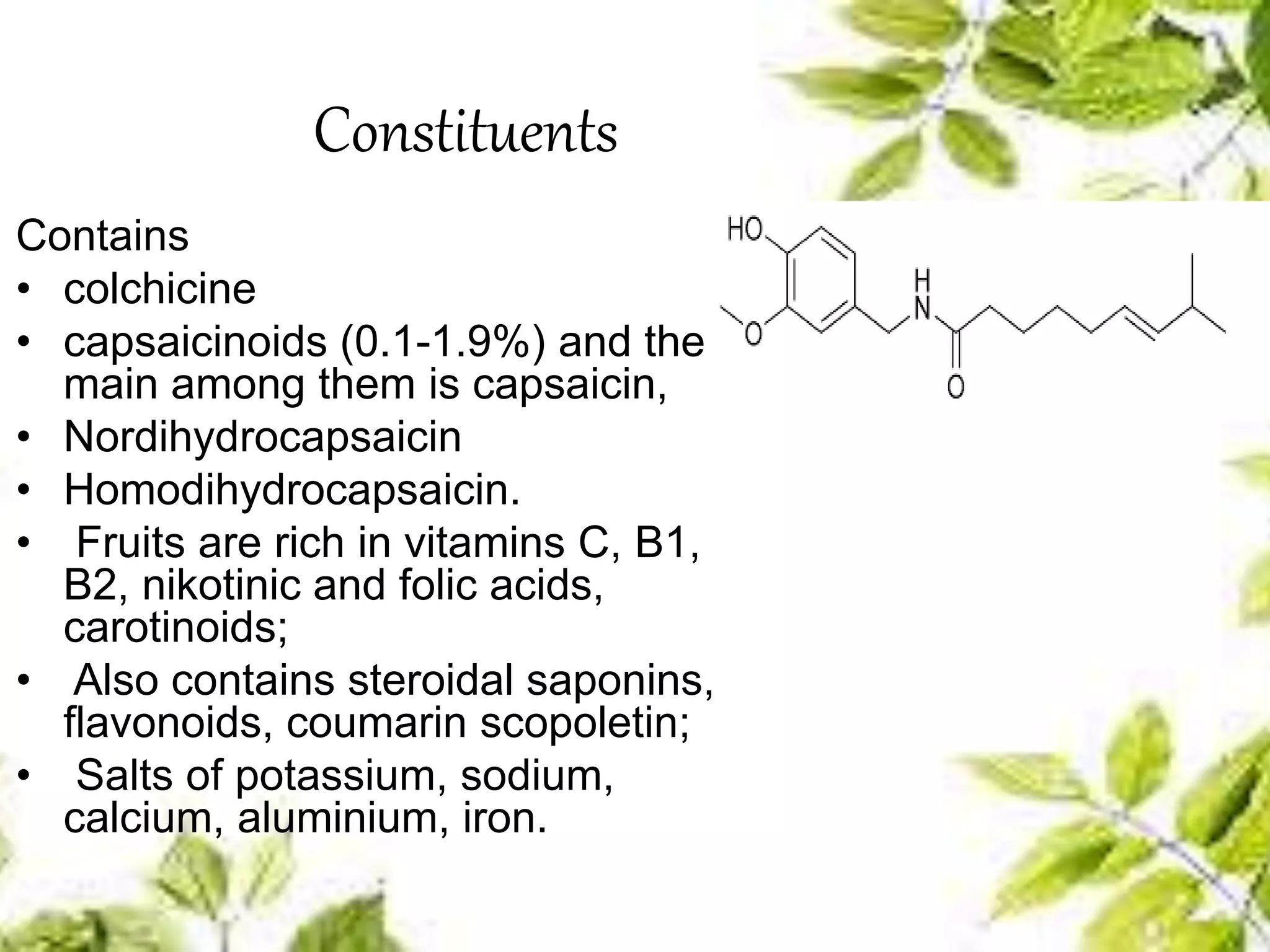
Constituents
Contains
• colchicine
• capsaicinoids (0.1-1.9%) and the
main among them is capsaicin,
• Nordihydrocapsaicin
• Homodihydrocapsaicin.
• Fruits are rich in vitamins C, B1,
B2, nikotinic and folic acids,
carotinoids;
• Also contains steroidal saponins,
flavonoids, coumarin scopoletin;
• Salts of potassium, sodium,
calcium, aluminium, iron.
Concentrations of A.Constituents in
different parts
• Seed :-
• concentrations of colchicine may exceed 1% in
the seeds.
Corms:-
• 0.6% colchicine in corm
Dried leaves:-
• dried flowers and seeds contain 15 times as
much colchicine as fresh leave
Uses
• Arthritis.
• Gout.
• Cancer
• Chronic hepatitis/cirrhosis
• Idiopathic pulmonary fibrosis
• Familial Mediterranean fever, an inherited disease.
Colchicim speciosum as
anti cancer agent
Anticancer agent
Because colchicine arrests mitosis
during metaphase, it was thought to be
useful as an anticancer agent.
Immunochemotherapy of multidrug
resistant renal cell carcinoma using a
combination of vinblastine, tamoxifen,
colchicine, and 5-flourouracil
demonstrated an overall response rate of
23.5% with limited toxicity
pharmacology
• Colchicine inhibits normal cell division,
specifically by interfering with microtubule
growth and mitosis during cell division. It
also may interfere with the normal function
of cyclic adenosine monophosphate
(cAMP) or the cellular membrane
Idiopathic pulmonary fibrosis
• A controlled, randomized, prospective trial of
26 patients treated with colchicine or
prednisone showed no improvement with
either agent.
• 20 A prospective, nonrandomized study using
colchicine and/or D-penicillamine with
prednisone did not halt progression of
idiopathic pulmonary fibrosis.
• 21 One retrospective study comparing
colchicine, oxygen, and prednisone with no
therapy demonstrated no differences in
survival
Dosing
• Colchicine 1 to 2 mg is a typical oral dose
for gout,
• Colchicine also has been studied for
osteoarthritis of the knee, refractory
constipation, at similar doses.
• Its narrow therapeutic index requires
medical supervision.
According to BBC News
• Researchers are poised to start clinical trials
with a new "smart bomb" treatment, derived
from the flower, targeted specifically at
tumours.
• The treatment, called colchicine, was able to
slow the growth of and even completely "kill"
a range of different cancers, in experiments
with mice.
• The research was highlighted at the British
Science Festival in Bradford.
According to Department of Life Science,
College of Natural Science, Daejin
University, Kyeonggido, Korea.
• The colchicine derivative CT20126 shows
a novel microtubule-modulating activity
with apoptosis
REFERENCES
• www.bbc.co.uk/news/science-environment
• www.rhs.org.uk/Plants/92234/Colchicum-
speciosum-Album/Details
• http://www.drugs.com/npp/autumn-crocus.html
• www.herbs2000.com

Colchicum speciosum

  • 1.
  • 2.
    Scientific classification • Kingdom:Plantae • Angiosperms • Monocots • Order: Liliales • Family: Colchicaceae • Genus: Colchicum • Species: C. speciosum
  • 3.
    Common name: • AutumnCrocus • Naked Lady • Meadow Saffron • Colchicum giganteum
  • 4.
    Habitat • Native toCentral America. • Colchicum is widely cultivated in Ukraine, Moldova, Caucasus and Middle Asia.
  • 5.
    Plant description • Height:- This perennial herb grows to approximately 0.3 m long.
  • 6.
    Flowers :- • Haspale purple flowers
  • 7.
    Fruit: Is green whenunripe, changing principally to red, although some varieties may ripen to other colours including brown and purple.
  • 8.
    Root:- • Fleshy conicalroot . • Taste is hot spicy.
  • 9.
    Part used • Seeds •Leaves • corm
  • 10.
    HOW TO GROW •Cultivation • Grow in moist but well-drained, deep, humus- rich, fertile soil. Intolerant of water logging • Propagation • Propagate by seed, sowing in containers in an open frame. OR • Separate corms when dormant in summer
  • 11.
    Constituents Contains • colchicine • capsaicinoids(0.1-1.9%) and the main among them is capsaicin, • Nordihydrocapsaicin • Homodihydrocapsaicin. • Fruits are rich in vitamins C, B1, B2, nikotinic and folic acids, carotinoids; • Also contains steroidal saponins, flavonoids, coumarin scopoletin; • Salts of potassium, sodium, calcium, aluminium, iron.
  • 12.
    Concentrations of A.Constituentsin different parts • Seed :- • concentrations of colchicine may exceed 1% in the seeds. Corms:- • 0.6% colchicine in corm Dried leaves:- • dried flowers and seeds contain 15 times as much colchicine as fresh leave
  • 13.
    Uses • Arthritis. • Gout. •Cancer • Chronic hepatitis/cirrhosis • Idiopathic pulmonary fibrosis • Familial Mediterranean fever, an inherited disease.
  • 14.
  • 15.
    Anticancer agent Because colchicinearrests mitosis during metaphase, it was thought to be useful as an anticancer agent. Immunochemotherapy of multidrug resistant renal cell carcinoma using a combination of vinblastine, tamoxifen, colchicine, and 5-flourouracil demonstrated an overall response rate of 23.5% with limited toxicity
  • 17.
    pharmacology • Colchicine inhibitsnormal cell division, specifically by interfering with microtubule growth and mitosis during cell division. It also may interfere with the normal function of cyclic adenosine monophosphate (cAMP) or the cellular membrane
  • 18.
    Idiopathic pulmonary fibrosis •A controlled, randomized, prospective trial of 26 patients treated with colchicine or prednisone showed no improvement with either agent. • 20 A prospective, nonrandomized study using colchicine and/or D-penicillamine with prednisone did not halt progression of idiopathic pulmonary fibrosis. • 21 One retrospective study comparing colchicine, oxygen, and prednisone with no therapy demonstrated no differences in survival
  • 19.
    Dosing • Colchicine 1to 2 mg is a typical oral dose for gout, • Colchicine also has been studied for osteoarthritis of the knee, refractory constipation, at similar doses. • Its narrow therapeutic index requires medical supervision.
  • 21.
    According to BBCNews • Researchers are poised to start clinical trials with a new "smart bomb" treatment, derived from the flower, targeted specifically at tumours. • The treatment, called colchicine, was able to slow the growth of and even completely "kill" a range of different cancers, in experiments with mice. • The research was highlighted at the British Science Festival in Bradford.
  • 22.
    According to Departmentof Life Science, College of Natural Science, Daejin University, Kyeonggido, Korea. • The colchicine derivative CT20126 shows a novel microtubule-modulating activity with apoptosis
  • 23.