IB BIOLOGY
Topics 3.1 & 3.2
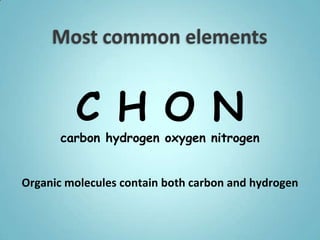
C H O N
       carbon hydrogen oxygen nitrogen


Organic molecules contain both carbon and hydrogen
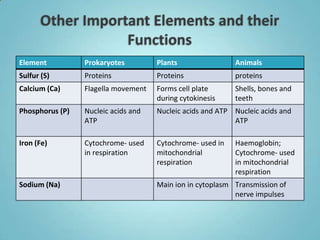
Element          Prokaryotes         Plants                Animals
Sulfur (S)       Proteins            Proteins              proteins
Calcium (Ca)     Flagella movement   Forms cell plate      Shells, bones and
                                     during cytokinesis    teeth
Phosphorus (P)   Nucleic acids and   Nucleic acids and ATP Nucleic acids and
                 ATP                                       ATP

Iron (Fe)        Cytochrome- used    Cytochrome- used in   Haemoglobin;
                 in respiration      mitochondrial         Cytochrome- used
                                     respiration           in mitochondrial
                                                           respiration
Sodium (Na)                          Main ion in cytoplasm Transmission of
                                                           nerve impulses
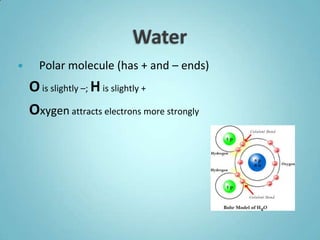
     Polar molecule (has + and – ends)
    O is slightly –; H is slightly +
    Oxygen attracts electrons more strongly
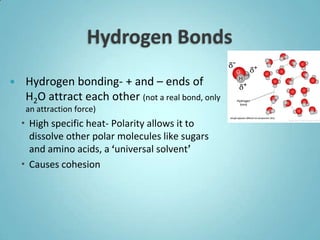
    Hydrogen bonding- + and – ends of
     H2O attract each other (not a real bond, only
     an attraction force)
     High specific heat- Polarity allows it to
      dissolve other polar molecules like sugars
      and amino acids, a ‘universal solvent’
     Causes cohesion
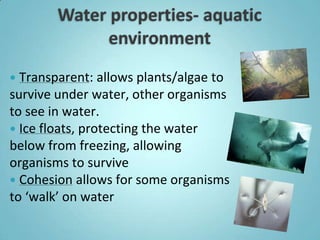
 Transparent: allows plants/algae to
survive under water, other organisms
to see in water.
 Ice floats, protecting the water
below from freezing, allowing
organisms to survive
 Cohesion allows for some organisms
to ‘walk’ on water
 Water has a high specific heat, heat of fusion /
heat of vaporization which allows it to store a lot of
heat.

Value to organisms:
 can absorb larger amounts of energy and still remain liquid. Ex:
 large body of water have a constant temperature
 coolant effect = water absorbs large amounts of heat and cools the
 body (sweat)
   water requires high input of water to break the H
  bonds to go from liquid to gas (high specific heat)
   Evaporation off the surface of organism allows it to
  lose heat.
   Value to organism:
     Desert plants increase transpiration when in danger of over-
      heating
     Mammals sweat for thermo-regulation
  Good for allowing metabolic reactions
 Water is a good solvent due to polarity
 Liquid between the temperatures in most
 regions of the Earth
 Value to organism:
     Watery habitat dissolves substances that can be
      absorbed by organisms
     Watery cytoplasm dissolves substances
     Easy for metabolic reactions to take place between
      dissolved substances.
     High specific heat
     Heat transport- blood can transfer heat from hot regions of
      the body to cooler areas for thermoregulation.
     Water is dense
     Allows it to support large particles like blood cells, fat and
      transport by flowing
     Polarity
     allows substances to be dissolved and therefore transported
      to all parts of organism.
     Cohesion
     As water evaporates off of leaves, other water molecules are
      pulled from below in the xylem of plants
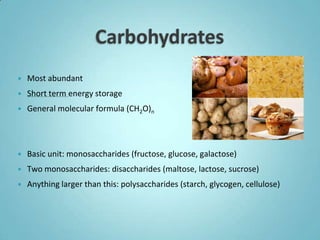
   Most abundant
   Short term energy storage
   General molecular formula (CH2O)n


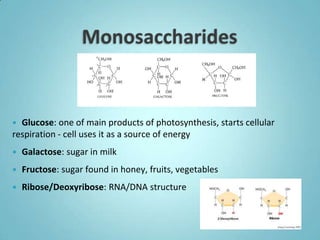
   Basic unit: monosaccharides (fructose, glucose, galactose)
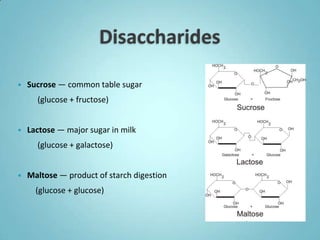
   Two monosaccharides: disaccharides (maltose, lactose, sucrose)
   Anything larger than this: polysaccharides (starch, glycogen, cellulose)
 Glucose: one of main products of photosynthesis, starts cellular
respiration - cell uses it as a source of energy
   Galactose: sugar in milk
   Fructose: sugar found in honey, fruits, vegetables
   Ribose/Deoxyribose: RNA/DNA structure
   Sucrose — common table sugar
      (glucose + fructose)


   Lactose — major sugar in milk
      (glucose + galactose)


   Maltose — product of starch digestion
      (glucose + glucose)
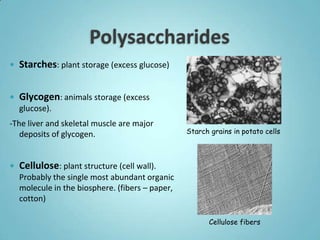
   Starches: plant storage (excess glucose)


   Glycogen: animals storage (excess
    glucose).
-The liver and skeletal muscle are major
   deposits of glycogen.                          Starch grains in potato cells


   Cellulose: plant structure (cell wall).
    Probably the single most abundant organic
    molecule in the biosphere. (fibers – paper,
    cotton)

                                                        Cellulose fibers
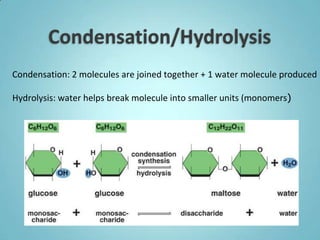
Condensation: 2 molecules are joined together + 1 water molecule produced

Hydrolysis: water helps break molecule into smaller units (monomers)
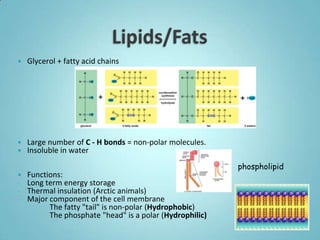
   Glycerol + fatty acid chains


   Large number of C - H bonds = non-polar molecules.
   Insoluble in water
                                                          phospholipid
   Functions:
-   Long term energy storage
-   Thermal insulation (Arctic animals)
-   Major component of the cell membrane
          The fatty "tail" is non-polar (Hydrophobic)
          The phosphate "head" is a polar (Hydrophilic)
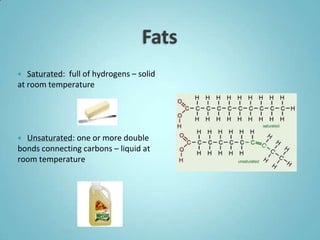
  Saturated: full of hydrogens – solid
at room temperature


 Unsaturated: one or more double
bonds connecting carbons – liquid at
room temperature
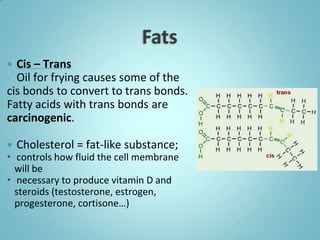
 Cis – Trans
- Oil for frying causes some of the
cis bonds to convert to trans bonds.
Fatty acids with trans bonds are
carcinogenic.

   Cholesterol = fat-like substance;
 controls how fluid the cell membrane
  will be
 necessary to produce vitamin D and
  steroids (testosterone, estrogen,
  progesterone, cortisone…)
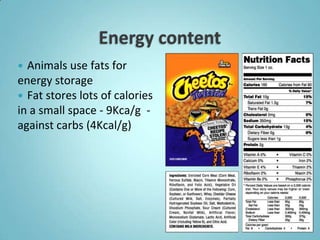
 Animals use fats for
energy storage
 Fat stores lots of calories
in a small space - 9Kca/g -
against carbs (4Kcal/g)
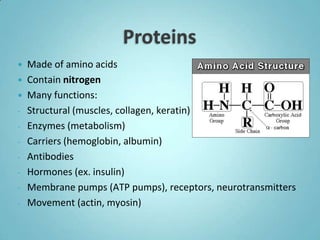
 Made of amino acids
 Contain nitrogen
 Many functions:
- Structural (muscles, collagen, keratin)
- Enzymes (metabolism)
- Carriers (hemoglobin, albumin)
- Antibodies
- Hormones (ex. insulin)
- Membrane pumps (ATP pumps), receptors, neurotransmitters
- Movement (actin, myosin)
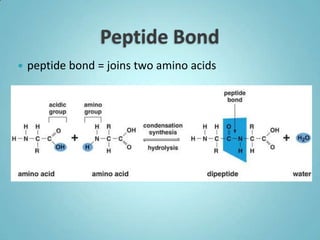
   peptide bond = joins two amino acids

Elements water macromolecules

  • 1.
  • 2.
    C H ON carbon hydrogen oxygen nitrogen Organic molecules contain both carbon and hydrogen
  • 3.
    Element Prokaryotes Plants Animals Sulfur (S) Proteins Proteins proteins Calcium (Ca) Flagella movement Forms cell plate Shells, bones and during cytokinesis teeth Phosphorus (P) Nucleic acids and Nucleic acids and ATP Nucleic acids and ATP ATP Iron (Fe) Cytochrome- used Cytochrome- used in Haemoglobin; in respiration mitochondrial Cytochrome- used respiration in mitochondrial respiration Sodium (Na) Main ion in cytoplasm Transmission of nerve impulses
  • 4.
    Polar molecule (has + and – ends) O is slightly –; H is slightly + Oxygen attracts electrons more strongly
  • 5.
    Hydrogen bonding- + and – ends of H2O attract each other (not a real bond, only an attraction force)  High specific heat- Polarity allows it to dissolve other polar molecules like sugars and amino acids, a ‘universal solvent’  Causes cohesion
  • 6.
     Transparent: allowsplants/algae to survive under water, other organisms to see in water.  Ice floats, protecting the water below from freezing, allowing organisms to survive  Cohesion allows for some organisms to ‘walk’ on water
  • 7.
     Water hasa high specific heat, heat of fusion / heat of vaporization which allows it to store a lot of heat. Value to organisms:  can absorb larger amounts of energy and still remain liquid. Ex: large body of water have a constant temperature  coolant effect = water absorbs large amounts of heat and cools the body (sweat)
  • 8.
    water requires high input of water to break the H bonds to go from liquid to gas (high specific heat)  Evaporation off the surface of organism allows it to lose heat.  Value to organism:  Desert plants increase transpiration when in danger of over- heating  Mammals sweat for thermo-regulation
  • 9.
     Goodfor allowing metabolic reactions  Water is a good solvent due to polarity  Liquid between the temperatures in most regions of the Earth  Value to organism:  Watery habitat dissolves substances that can be absorbed by organisms  Watery cytoplasm dissolves substances  Easy for metabolic reactions to take place between dissolved substances.
  • 10.
    High specific heat  Heat transport- blood can transfer heat from hot regions of the body to cooler areas for thermoregulation.  Water is dense  Allows it to support large particles like blood cells, fat and transport by flowing  Polarity  allows substances to be dissolved and therefore transported to all parts of organism.  Cohesion  As water evaporates off of leaves, other water molecules are pulled from below in the xylem of plants
  • 11.
    Most abundant  Short term energy storage  General molecular formula (CH2O)n  Basic unit: monosaccharides (fructose, glucose, galactose)  Two monosaccharides: disaccharides (maltose, lactose, sucrose)  Anything larger than this: polysaccharides (starch, glycogen, cellulose)
  • 12.
     Glucose: oneof main products of photosynthesis, starts cellular respiration - cell uses it as a source of energy  Galactose: sugar in milk  Fructose: sugar found in honey, fruits, vegetables  Ribose/Deoxyribose: RNA/DNA structure
  • 13.
    Sucrose — common table sugar (glucose + fructose)  Lactose — major sugar in milk (glucose + galactose)  Maltose — product of starch digestion (glucose + glucose)
  • 14.
    Starches: plant storage (excess glucose)  Glycogen: animals storage (excess glucose). -The liver and skeletal muscle are major deposits of glycogen. Starch grains in potato cells  Cellulose: plant structure (cell wall). Probably the single most abundant organic molecule in the biosphere. (fibers – paper, cotton) Cellulose fibers
  • 15.
    Condensation: 2 moleculesare joined together + 1 water molecule produced Hydrolysis: water helps break molecule into smaller units (monomers)
  • 16.
    Glycerol + fatty acid chains  Large number of C - H bonds = non-polar molecules.  Insoluble in water phospholipid  Functions: - Long term energy storage - Thermal insulation (Arctic animals) - Major component of the cell membrane The fatty "tail" is non-polar (Hydrophobic) The phosphate "head" is a polar (Hydrophilic)
  • 17.
     Saturated:full of hydrogens – solid at room temperature  Unsaturated: one or more double bonds connecting carbons – liquid at room temperature
  • 18.
     Cis –Trans - Oil for frying causes some of the cis bonds to convert to trans bonds. Fatty acids with trans bonds are carcinogenic.  Cholesterol = fat-like substance;  controls how fluid the cell membrane will be  necessary to produce vitamin D and steroids (testosterone, estrogen, progesterone, cortisone…)
  • 19.
     Animals usefats for energy storage  Fat stores lots of calories in a small space - 9Kca/g - against carbs (4Kcal/g)
  • 20.
     Made ofamino acids  Contain nitrogen  Many functions: - Structural (muscles, collagen, keratin) - Enzymes (metabolism) - Carriers (hemoglobin, albumin) - Antibodies - Hormones (ex. insulin) - Membrane pumps (ATP pumps), receptors, neurotransmitters - Movement (actin, myosin)
  • 21.
    peptide bond = joins two amino acids