Chapter 4
Chemical Composition In a Cell
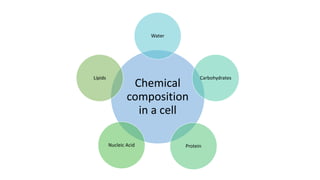
Chemical
composition
in a cell
Water
Carbohydrates
ProteinNucleic Acid
Lipids
4.1 Water
• 65-95% of the mass of most plants
• 80% of human cells consist of water
• Adapted to the physical and chemical properties of water
• H2O
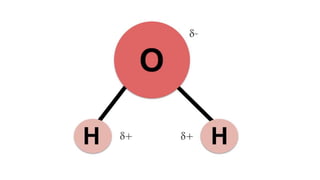
• 2 hydrogen atoms and 1 oxygen atom
• Oxygen attracts electrons stronger than hydrogen causes irregular
distribution of electrons
• This causes partial charges at both ends of hydrogen and oxygen
atoms
• Hence, end of hydrogen is attracted to end of oxygen and form a
weak hydrogen bond.
Specific Heat Capacity of Water
• High specific heat capacity among all types of liquids.
• Caused by the presence of a weak hydrogen bond
• If water is heated hydrogen bond will be broken down and water
molecules can move freely.
• This enables water to absorb a large quantity of heat with a minimum
temperature rise
Cohesive Force of Water
• Water molecules attract to one another.
• Causes by hydrogen bond between the water molecules
Adhesive Force of Water
• Attractive forces between water and the molecules of other
subtances.
• Parts of the water molecule that are partially positive and negatively
charged are attracted respectively to ions and the molecules of other
subtances that are negative and positively charged.
Importance of water in cells
• Maintains the stability of temperature in cells
• Water as a solvent
• Transportation of water and minerals in cells
4.2 Carbohydrates
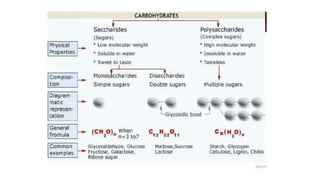
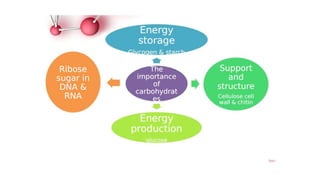
• Formed from elements of carbon (C), hydrogen (H) and oxygen (O).
• C:H:O 1:2:1
• Main source of energy
Reducing Sugar
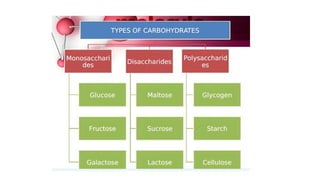
• All monosaccharides
• Maltose, lactose
• Benedict solution
Non-reducing sugar
• All polysaccharides
• Sucrose
The formation and breaking down of
disaccharides
• Condensation ( formation )
• Glucose + Glucose = Maltose + water
• Glucose + Fructose = Sucrose + water
• Glucose + Galactose = Lactose + water
• Hydrolysis (breaking down)
Polysaccharides
• Polymerisation is a condensation process of monosaccharide
molecules to form a large molecule of polysaccharide.
• In polymerisation, monosaccharide molecules are called monomers
• Starch
• Glycogen
• Cellulose
4.3 Protein
• Carbon
• Hydrogen
• Oxygen
• Nitrogen
• Sulphur
• Phosphorus
• Essential amino acids cannot be synthesised by vertebrate cells
• Non-essential amino acids can b e synthesised.
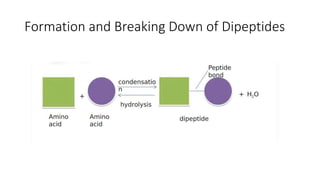
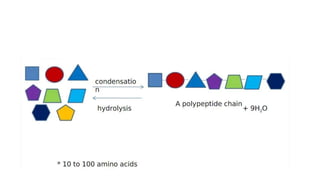
• Amino acid are the monomers to polypeptides / protein
• Amino acid joined together through condensation process
Formation and Breaking Down of Dipeptides
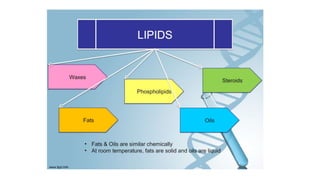
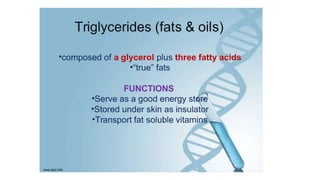
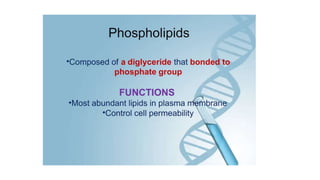
4.4 Lipids
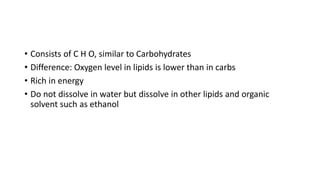
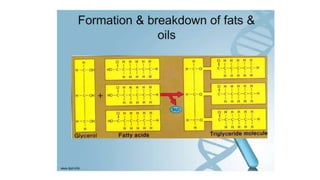
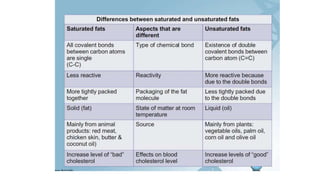
• Consists of C H O, similar to Carbohydrates
• Difference: Oxygen level in lipids is lower than in carbs
• Rich in energy
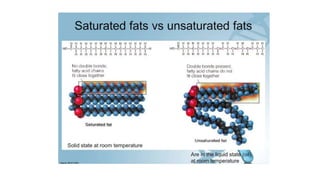
• Do not dissolve in water but dissolve in other lipids and organic
solvent such as ethanol
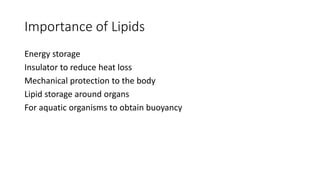
Importance of Lipids
Energy storage
Insulator to reduce heat loss
Mechanical protection to the body
Lipid storage around organs
For aquatic organisms to obtain buoyancy
4.5 Nucleic Acid
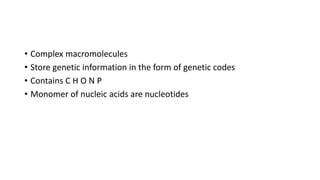
• Complex macromolecules
• Store genetic information in the form of genetic codes
• Contains C H O N P
• Monomer of nucleic acids are nucleotides
2 types of nucleic acid
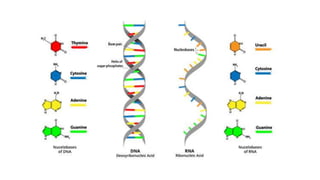
• Deoxyribonucleic acid DNA foundn in chromosome of the nucleus
• Ribonucleic acid RNA found in cytoplasm, ribosome, nucles
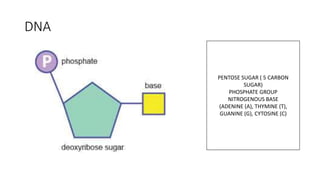
DNA
PENTOSE SUGAR ( 5 CARBON
SUGAR)
PHOSPHATE GROUP
NITROGENOUS BASE
(ADENINE (A), THYMINE (T),
GUANINE (G), CYTOSINE (C)
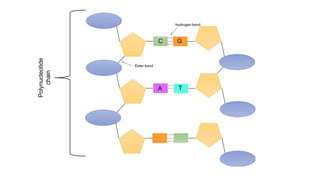
• Phosphate group of a nucleotide can form a chemical bond with other
nucleotide sugar to form a long nucleotide chain, known as nucleic
acid molecule / polynucleotides
• Complementary base pairs:
• AT
• GC
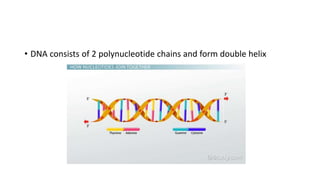
• DNA consists of 2 polynucleotide chains and form double helix
RNA
• Consists a polynucleotide chain
• Shorter than a DNA chain
• Consists of Ribose sugar
• 4 nitrogeneous base AG, cytosine (S) and Uracil (C)
• Phosphate group
Types of RNA
Mrna (messengers)
Trna (transfer)
Rrna (ribosomal) (involved in protein synthesis)
Importance of Nucleic Acids in a Cell
• DNA and RNA carrying genetic information
• The production of protein
• DNA carries genetic information in the form of genetic codes on a
polypeptide chain
• Production of protein:
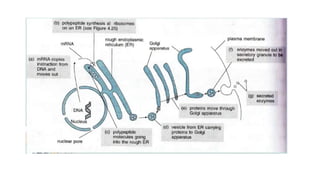
• Both types of nucleic acids complement each other to produce proteins
• DNA is in the nucleus, but the synthesis of protein occurs in the ribosome in
the cell cytoplasm
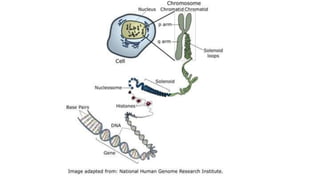
Formation of Chromosomes from DNA and
Proteins
• Each chromosome consists of a continuous thread of DNA molecule that
spiral closely around histone molecules
• Histone is the form of protein molecules functions as a spindle for DNA
thread loop, acts to strengthen the structure of chromosomes
• Histone does not carry genetic information
• DNA spirals around 8 histone molecules
• The combination of DNA loop and 8 histones is called nucleosome
• Nucleosome spiral again to form solenoid
• Solenoid spirals to form chromatin threads
• One chromosome consists of 2 chromatids with centromere.
Chapter 4

Chapter 4

  • 1.
  • 2.
  • 3.
    4.1 Water • 65-95%of the mass of most plants • 80% of human cells consist of water • Adapted to the physical and chemical properties of water
  • 4.
    • H2O • 2hydrogen atoms and 1 oxygen atom • Oxygen attracts electrons stronger than hydrogen causes irregular distribution of electrons • This causes partial charges at both ends of hydrogen and oxygen atoms • Hence, end of hydrogen is attracted to end of oxygen and form a weak hydrogen bond.
  • 6.
    Specific Heat Capacityof Water • High specific heat capacity among all types of liquids. • Caused by the presence of a weak hydrogen bond • If water is heated hydrogen bond will be broken down and water molecules can move freely. • This enables water to absorb a large quantity of heat with a minimum temperature rise
  • 7.
    Cohesive Force ofWater • Water molecules attract to one another. • Causes by hydrogen bond between the water molecules
  • 8.
    Adhesive Force ofWater • Attractive forces between water and the molecules of other subtances. • Parts of the water molecule that are partially positive and negatively charged are attracted respectively to ions and the molecules of other subtances that are negative and positively charged.
  • 9.
    Importance of waterin cells • Maintains the stability of temperature in cells • Water as a solvent • Transportation of water and minerals in cells
  • 10.
    4.2 Carbohydrates • Formedfrom elements of carbon (C), hydrogen (H) and oxygen (O). • C:H:O 1:2:1 • Main source of energy
  • 13.
    Reducing Sugar • Allmonosaccharides • Maltose, lactose • Benedict solution
  • 14.
    Non-reducing sugar • Allpolysaccharides • Sucrose
  • 15.
    The formation andbreaking down of disaccharides • Condensation ( formation ) • Glucose + Glucose = Maltose + water • Glucose + Fructose = Sucrose + water • Glucose + Galactose = Lactose + water • Hydrolysis (breaking down)
  • 16.
    Polysaccharides • Polymerisation isa condensation process of monosaccharide molecules to form a large molecule of polysaccharide. • In polymerisation, monosaccharide molecules are called monomers • Starch • Glycogen • Cellulose
  • 18.
    4.3 Protein • Carbon •Hydrogen • Oxygen • Nitrogen • Sulphur • Phosphorus
  • 19.
    • Essential aminoacids cannot be synthesised by vertebrate cells • Non-essential amino acids can b e synthesised.
  • 20.
    • Amino acidare the monomers to polypeptides / protein • Amino acid joined together through condensation process
  • 21.
    Formation and BreakingDown of Dipeptides
  • 24.
  • 25.
    • Consists ofC H O, similar to Carbohydrates • Difference: Oxygen level in lipids is lower than in carbs • Rich in energy • Do not dissolve in water but dissolve in other lipids and organic solvent such as ethanol
  • 35.
    Importance of Lipids Energystorage Insulator to reduce heat loss Mechanical protection to the body Lipid storage around organs For aquatic organisms to obtain buoyancy
  • 36.
  • 37.
    • Complex macromolecules •Store genetic information in the form of genetic codes • Contains C H O N P • Monomer of nucleic acids are nucleotides
  • 38.
    2 types ofnucleic acid • Deoxyribonucleic acid DNA foundn in chromosome of the nucleus • Ribonucleic acid RNA found in cytoplasm, ribosome, nucles
  • 39.
    DNA PENTOSE SUGAR (5 CARBON SUGAR) PHOSPHATE GROUP NITROGENOUS BASE (ADENINE (A), THYMINE (T), GUANINE (G), CYTOSINE (C)
  • 40.
    • Phosphate groupof a nucleotide can form a chemical bond with other nucleotide sugar to form a long nucleotide chain, known as nucleic acid molecule / polynucleotides • Complementary base pairs: • AT • GC
  • 42.
    • DNA consistsof 2 polynucleotide chains and form double helix
  • 43.
    RNA • Consists apolynucleotide chain • Shorter than a DNA chain • Consists of Ribose sugar • 4 nitrogeneous base AG, cytosine (S) and Uracil (C) • Phosphate group
  • 44.
    Types of RNA Mrna(messengers) Trna (transfer) Rrna (ribosomal) (involved in protein synthesis)
  • 46.
    Importance of NucleicAcids in a Cell • DNA and RNA carrying genetic information • The production of protein • DNA carries genetic information in the form of genetic codes on a polypeptide chain • Production of protein: • Both types of nucleic acids complement each other to produce proteins • DNA is in the nucleus, but the synthesis of protein occurs in the ribosome in the cell cytoplasm
  • 48.
    Formation of Chromosomesfrom DNA and Proteins • Each chromosome consists of a continuous thread of DNA molecule that spiral closely around histone molecules • Histone is the form of protein molecules functions as a spindle for DNA thread loop, acts to strengthen the structure of chromosomes • Histone does not carry genetic information • DNA spirals around 8 histone molecules • The combination of DNA loop and 8 histones is called nucleosome • Nucleosome spiral again to form solenoid • Solenoid spirals to form chromatin threads • One chromosome consists of 2 chromatids with centromere.