Electro- Diagnostic approach to
peripheral neuropathy
-Dr. Sachin Adukia
Content
 Anatomy of peripheral nerve
 Physiology of peripheral nerve
 Clinical clues in diagnosis of peripheral neuropathy
 Electrodiagnostic principles in NCS
 NCS in various pathologies
 References
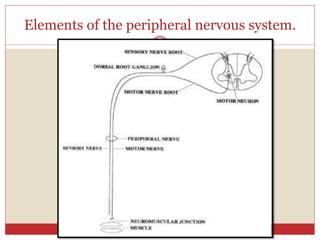
Elements of the peripheral nervous system.
ANATOMY
 Neuropathic disorders encompass diseases of:
-Neuron cell body (neuronopathy)
-anterior horn cell disorders(MND)
-dorsal root ganglion disorders (sensory neuronopathy / ganglionopathy)
-Peripheral neuropathy
-axonal
-demyelinating
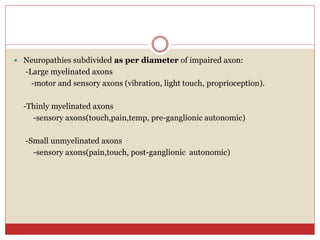
 Neuropathies subdivided as per diameter of impaired axon:
-Large myelinated axons
-motor and sensory axons (vibration, light touch, proprioception).
-Thinly myelinated axons
-sensory axons(touch,pain,temp, pre-ganglionic autonomic)
-Small unmyelinated axons
-sensory axons(pain,touch, post-ganglionic autonomic)
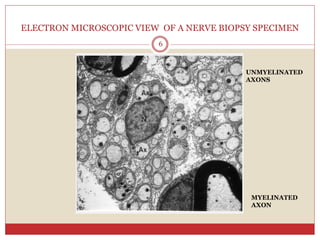
ELECTRON MICROSCOPIC VIEW OF A NERVE BIOPSY SPECIMEN
6
UNMYELINATED
AXONS
MYELINATED
AXON
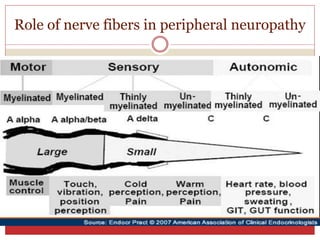
Role of nerve fibers in peripheral neuropathy
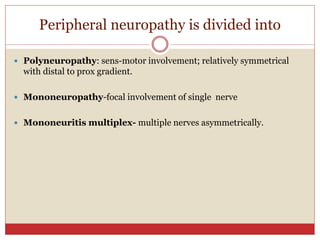
Peripheral neuropathy is divided into
 Polyneuropathy: sens-motor involvement; relatively symmetrical
with distal to prox gradient.
 Mononeuropathy-focal involvement of single nerve
 Mononeuritis multiplex- multiple nerves asymmetrically.
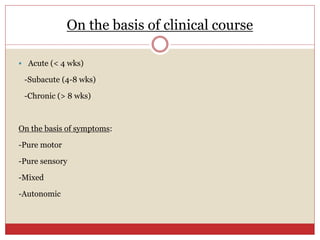
On the basis of clinical course
 Acute (< 4 wks)
-Subacute (4-8 wks)
-Chronic (> 8 wks)
On the basis of symptoms:
-Pure motor
-Pure sensory
-Mixed
-Autonomic
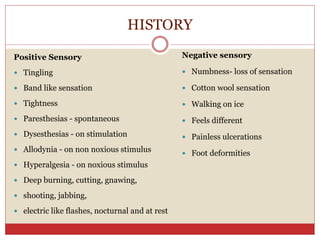
HISTORY
Positive Sensory
 Tingling
 Band like sensation
 Tightness
 Paresthesias - spontaneous
 Dysesthesias - on stimulation
 Allodynia - on non noxious stimulus
 Hyperalgesia - on noxious stimulus
 Deep burning, cutting, gnawing,
 shooting, jabbing,
 electric like flashes, nocturnal and at rest
Negative sensory
 Numbness- loss of sensation
 Cotton wool sensation
 Walking on ice
 Feels different
 Painless ulcerations
 Foot deformities
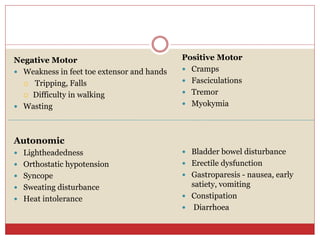
Negative Motor
 Weakness in feet toe extensor and hands
 Tripping, Falls
 Difficulty in walking
 Wasting
Positive Motor
 Cramps
 Fasciculations
 Tremor
 Myokymia
Autonomic
 Lightheadedness
 Orthostatic hypotension
 Syncope
 Sweating disturbance
 Heat intolerance
 Bladder bowel disturbance
 Erectile dysfunction
 Gastroparesis - nausea, early
satiety, vomiting
 Constipation
 Diarrhoea
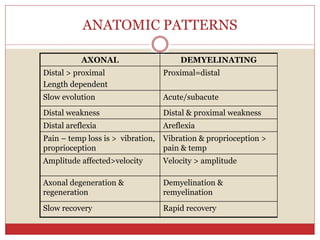
ANATOMIC PATTERNS
AXONAL DEMYELINATING
Distal > proximal
Length dependent
Proximal=distal
Slow evolution Acute/subacute
Distal weakness Distal & proximal weakness
Distal areflexia Areflexia
Pain – temp loss is > vibration,
proprioception
Vibration & proprioception >
pain & temp
Amplitude affected>velocity Velocity > amplitude
Axonal degeneration &
regeneration
Demyelination &
remyelination
Slow recovery Rapid recovery
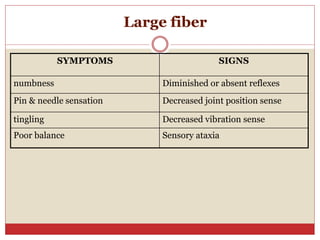
SYMPTOMS SIGNS
numbness Diminished or absent reflexes
Pin & needle sensation Decreased joint position sense
tingling Decreased vibration sense
Poor balance Sensory ataxia
Large fiber
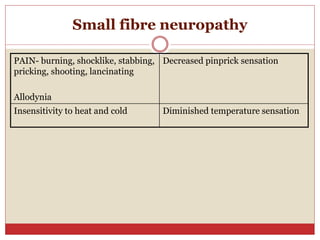
Small fibre neuropathy
PAIN- burning, shocklike, stabbing,
pricking, shooting, lancinating
Allodynia
Decreased pinprick sensation
Insensitivity to heat and cold Diminished temperature sensation
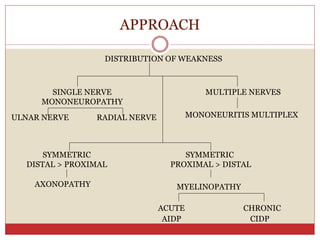
APPROACH
DISTRIBUTION OF WEAKNESS
SINGLE NERVE
MONONEUROPATHY
ULNAR NERVE RADIAL NERVE
MULTIPLE NERVES
MONONEURITIS MULTIPLEX
SYMMETRIC
DISTAL > PROXIMAL
AXONOPATHY
SYMMETRIC
PROXIMAL > DISTAL
MYELINOPATHY
ACUTE CHRONIC
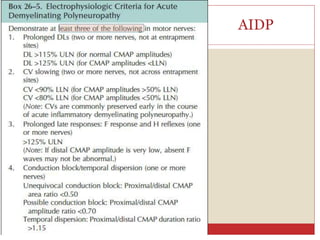
AIDP CIDP
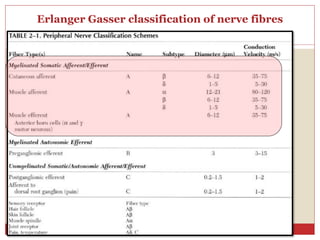
Erlanger Gasser classification of nerve fibres
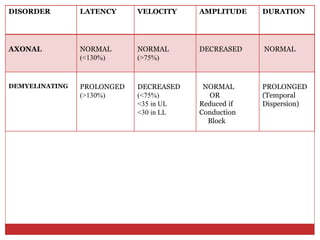
DISORDER LATENCY VELOCITY AMPLITUDE DURATION
AXONAL NORMAL
(<130%)
NORMAL
(>75%)
DECREASED NORMAL
DEMYELINATING PROLONGED
(>130%)
DECREASED
(<75%)
<35 in UL
<30 in LL
NORMAL
OR
Reduced if
Conduction
Block
PROLONGED
(Temporal
Dispersion)
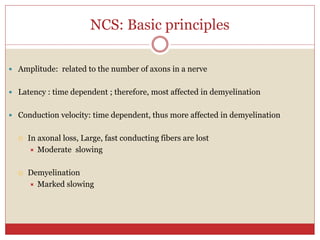
NCS: Basic principles
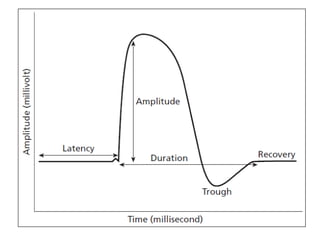
 Amplitude: related to the number of axons in a nerve
 Latency : time dependent ; therefore, most affected in demyelination
 Conduction velocity: time dependent, thus more affected in demyelination
 In axonal loss, Large, fast conducting fibers are lost
 Moderate slowing
 Demyelination
 Marked slowing
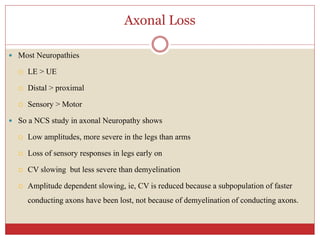
Axonal Loss
 Most Neuropathies
 LE > UE
 Distal > proximal
 Sensory > Motor
 So a NCS study in axonal Neuropathy shows
 Low amplitudes, more severe in the legs than arms
 Loss of sensory responses in legs early on
 CV slowing but less severe than demyelination
 Amplitude dependent slowing, ie, CV is reduced because a subpopulation of faster
conducting axons have been lost, not because of demyelination of conducting axons.
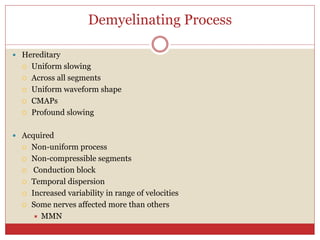
Demyelinating Process
 Hereditary
 Uniform slowing
 Across all segments
 Uniform waveform shape
 CMAPs
 Profound slowing
 Acquired
 Non-uniform process
 Non-compressible segments
 Conduction block
 Temporal dispersion
 Increased variability in range of velocities
 Some nerves affected more than others
 MMN
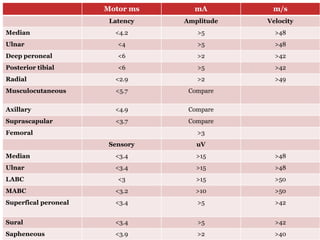
Motor ms mA m/s
Latency Amplitude Velocity
Median <4.2 >5 >48
Ulnar <4 >5 >48
Deep peroneal <6 >2 >42
Posterior tibial <6 >5 >42
Radial <2.9 >2 >49
Musculocutaneous <5.7 Compare
Axillary <4.9 Compare
Suprascapular <3.7 Compare
Femoral >3
Sensory uV
Median <3.4 >15 >48
Ulnar <3.4 >15 >48
LABC <3 >15 >50
MABC <3.2 >10 >50
Superfical peroneal <3.4 >5 >42
Sural <3.4 >5 >42
Sapheneous <3.9 >2 >40
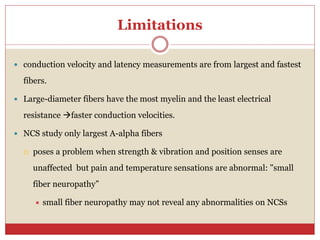
Limitations
 conduction velocity and latency measurements are from largest and fastest
fibers.
 Large-diameter fibers have the most myelin and the least electrical
resistance faster conduction velocities.
 NCS study only largest A-alpha fibers
 poses a problem when strength & vibration and position senses are
unaffected but pain and temperature sensations are abnormal: "small
fiber neuropathy”
 small fiber neuropathy may not reveal any abnormalities on NCSs
Clinical examples
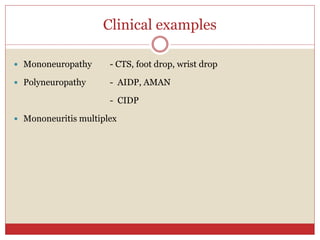
 Mononeuropathy - CTS, foot drop, wrist drop
 Polyneuropathy - AIDP, AMAN
- CIDP
 Mononeuritis multiplex
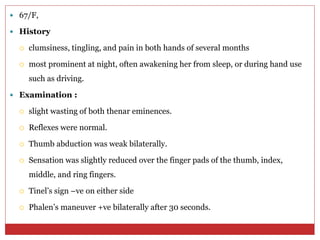
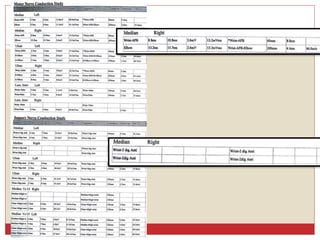
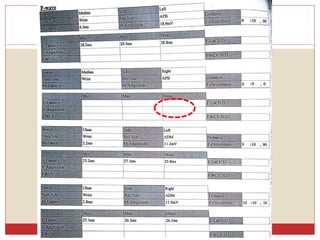
 67/F,
 History
 clumsiness, tingling, and pain in both hands of several months
 most prominent at night, often awakening her from sleep, or during hand use
such as driving.
 Examination :
 slight wasting of both thenar eminences.
 Reflexes were normal.
 Thumb abduction was weak bilaterally.
 Sensation was slightly reduced over the finger pads of the thumb, index,
middle, and ring fingers.
 Tinel’s sign –ve on either side
 Phalen’s maneuver +ve bilaterally after 30 seconds.
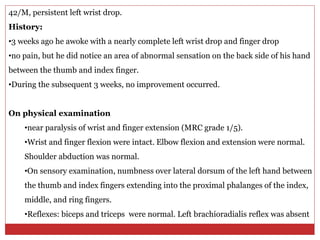
42/M, persistent left wrist drop.
History:
•3 weeks ago he awoke with a nearly complete left wrist drop and finger drop
•no pain, but he did notice an area of abnormal sensation on the back side of his hand
between the thumb and index finger.
•During the subsequent 3 weeks, no improvement occurred.
On physical examination
•near paralysis of wrist and finger extension (MRC grade 1/5).
•Wrist and finger flexion were intact. Elbow flexion and extension were normal.
Shoulder abduction was normal.
•On sensory examination, numbness over lateral dorsum of the left hand between
the thumb and index fingers extending into the proximal phalanges of the index,
middle, and ring fingers.
•Reflexes: biceps and triceps were normal. Left brachioradialis reflex was absent
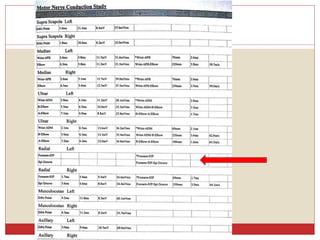
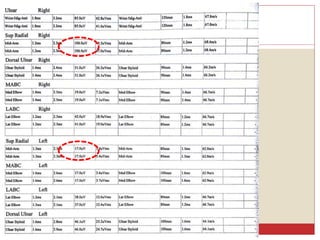
NCS
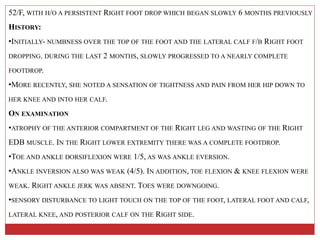
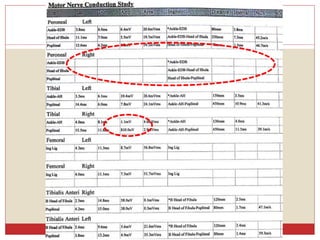
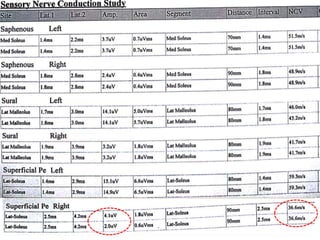
52/F, WITH H/O A PERSISTENT RIGHT FOOT DROP WHICH BEGAN SLOWLY 6 MONTHS PREVIOUSLY
HISTORY:
•INITIALLY- NUMBNESS OVER THE TOP OF THE FOOT AND THE LATERAL CALF F/B RIGHT FOOT
DROPPING. DURING THE LAST 2 MONTHS, SLOWLY PROGRESSED TO A NEARLY COMPLETE
FOOTDROP.
•MORE RECENTLY, SHE NOTED A SENSATION OF TIGHTNESS AND PAIN FROM HER HIP DOWN TO
HER KNEE AND INTO HER CALF.
ON EXAMINATION
•ATROPHY OF THE ANTERIOR COMPARTMENT OF THE RIGHT LEG AND WASTING OF THE RIGHT
EDB MUSCLE. IN THE RIGHT LOWER EXTREMITY THERE WAS A COMPLETE FOOTDROP.
•TOE AND ANKLE DORSIFLEXION WERE 1/5, AS WAS ANKLE EVERSION.
•ANKLE INVERSION ALSO WAS WEAK (4/5). IN ADDITION, TOE FLEXION & KNEE FLEXION WERE
WEAK. RIGHT ANKLE JERK WAS ABSENT. TOES WERE DOWNGOING.
•SENSORY DISTURBANCE TO LIGHT TOUCH ON THE TOP OF THE FOOT, LATERAL FOOT AND CALF,
LATERAL KNEE, AND POSTERIOR CALF ON THE RIGHT SIDE.
NCS
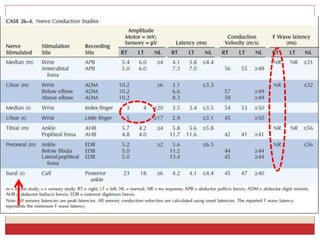
AIDP
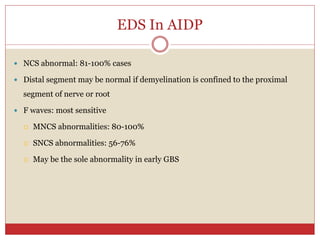
EDS In AIDP
 NCS abnormal: 81-100% cases
 Distal segment may be normal if demyelination is confined to the proximal
segment of nerve or root
 F waves: most sensitive
 MNCS abnormalities: 80-100%
 SNCS abnormalities: 56-76%
 May be the sole abnormality in early GBS
32/F, progressive weakness and numbness.
History
 diarrhea and fever that persisted for several days, and remitted.
 Ten days ago, she developed pins-and-needles paresthesias in both feet and
both hands.
 Those symptoms were followed by clumsiness of gait and progressive
weakness of both arms and legs.
 Examination
 bifacial weakness and a mild, diffuse quadriparesis.
 Depressed Reflexes in arms and absent reflexes in the legs.
 mild distal sensory loss to pinprick, light touch, and vibration was present in
both upper and lower extremities.
SLOWING OF NCV & PROLONGED DL
Slowing of NCV and prolonged DL:
Synchronized slowing (all faster conducting axons are affected to same degree)
EMG correlate: none
AMPLITUDE
 Normal to reduced CMAP amplitudes
 Normal, reduced or absent SNAP amplitudes
 Decrease in amplitude in DM is because of:
 Conduction block
 Temporal dispersion
AIDP – MNCS
 Diffuse slowing of CV (<35 m/sec in UL and <30 m/sec in LL nerves) with
variable TD and CB .
 Generally slowing can be seen in both distal and proximal segments of a nerve.
 More characteristic of GBS is nonuniform slowing - proximal greater than distal
AIDP - SENSORY NCS
 Abnormalities less frequent compared to motor NCS, especially early (<2 weeks)
 Most frequently seen as reduced/absent SNAP amp.
 Amp. are relatively preserved in demyelination vs. axonal forms
 Sensory velocities are less often affected
SURAL SPARING
 Normal sural SNAP OR
 Relatively preserved sural SNAP amp. compared with at least 2 abnormal SNAPs
in UL (median, ulnar and radial) nerves.
 Characteristic of Demyelinaiton : specific (96%) but modestly sensitive (~50%)
EARLY EDX. FINDINGS IN AIDP
 Non diagnostic EDX. findings if symptom duration is < 4-5 days
 Maximum motor NCS abnormalities observed during the 3rd week and for sensory during
4th week
 Number of abnormalities found will increase with no. of nerves studied
 Abnormal H reflex (absent or low amplitude) may be the sole EDX. finding in first 5 days
 Abnormal F wave* ( prolonged latency or absent) may be the sole EDX. finding in first
5-7 days
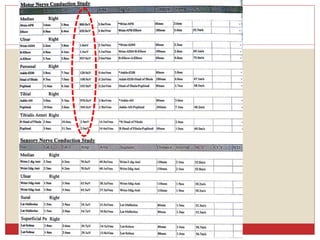
Case
 38/M, presented with acute onset ascending symmetrical flaccid areflexic
quadriparesis alongwith bulbar involvement reaching maximal deficit within 2
days of onset.
 No preceding AFI or diarrhea
NCS
F and H are absent
AMAN
 selective involvement of motor nerves
 electrophysiologic pattern of axonal involvement
 distal motor amplitudes are low initially but may increase rapidly with recovery
of function; these findings may reflect reversible conduction failure
 F waves may be absent but not significantly prolonged
 There is no sensory nerve involvement
 no peripheral nerve demyelination.
 no significant slowing of CV or increase in DL.
 no temporal dispersion.
Kokubun N, Nishibayashi M, Uncini A, et al. Conduction block in acute motor axonal neuropathy. Brain 2010; 133:2897.
AMAN
 No features of DM as defined in AIDP
criteria
 Decreased CMAP amplitudes <80%
of the lower limit of normal (2 or more
nerves)
 Normal sensory conduction
AMSAN
 --do--
 --do—
 Decreased SNAP amplitudes <80% of
the lower limit of normal (2 or more
nerves)
(Ho et al. Neurology 1997;48:695-700)
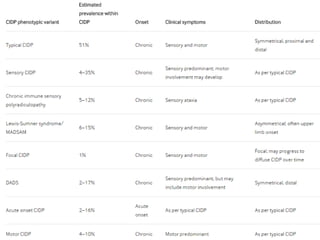
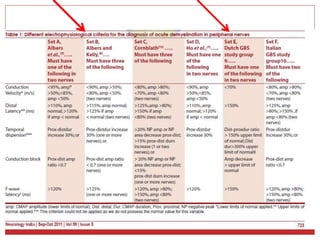
CIDP
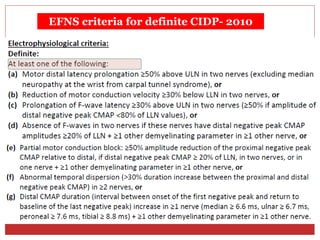
EFNS criteria for definite CIDP- 2010
Case
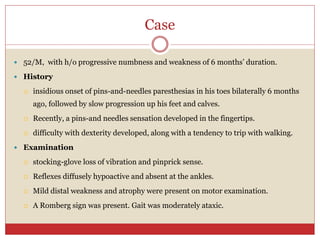
 52/M, with h/o progressive numbness and weakness of 6 months’ duration.
 History
 insidious onset of pins-and-needles paresthesias in his toes bilaterally 6 months
ago, followed by slow progression up his feet and calves.
 Recently, a pins-and needles sensation developed in the fingertips.
 difficulty with dexterity developed, along with a tendency to trip with walking.
 Examination
 stocking-glove loss of vibration and pinprick sense.
 Reflexes diffusely hypoactive and absent at the ankles.
 Mild distal weakness and atrophy were present on motor examination.
 A Romberg sign was present. Gait was moderately ataxic.
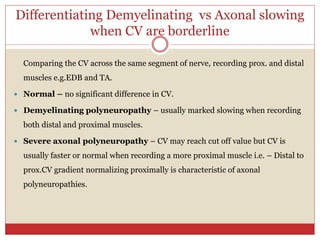
Differentiating Demyelinating vs Axonal slowing
when CV are borderline
Comparing the CV across the same segment of nerve, recording prox. and distal
muscles e.g.EDB and TA.
 Normal – no significant difference in CV.
 Demyelinating polyneuropathy – usually marked slowing when recording
both distal and proximal muscles.
 Severe axonal polyneuropathy – CV may reach cut off value but CV is
usually faster or normal when recording a more proximal muscle i.e. – Distal to
prox.CV gradient normalizing proximally is characteristic of axonal
polyneuropathies.
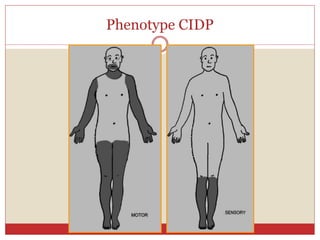
Phenotype CIDP
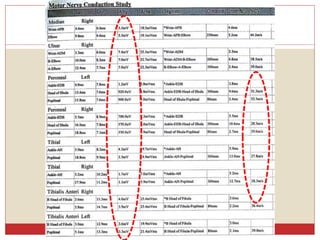
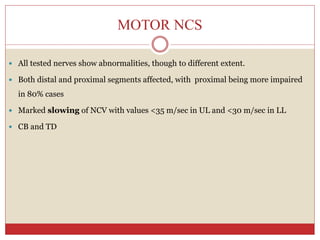
MOTOR NCS
 All tested nerves show abnormalities, though to different extent.
 Both distal and proximal segments affected, with proximal being more impaired
in 80% cases
 Marked slowing of NCV with values <35 m/sec in UL and <30 m/sec in LL
 CB and TD
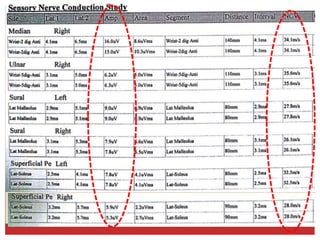
SENSORY NCS
 Symmetric
 Low or absent SNAPs are a consistent findings.
 There may be dissociation between SNCS & MNCS findings
 Sensory sparing patterns.
 Velocity reductions are less in SNCS compared to MNCS
F-wave & H-reflex
 Typically abnormal
 Absent to markedly prolonged latencies (>150%)
 F wave chronodispersion (CD):
 F wave counterpart of TD - measures conduction across large motor fibers.
 High sensitivity in chronic demyelination CD >9 msec.
 observed only in CIDP or AIDP
 But at least 60 F waves must be recorded
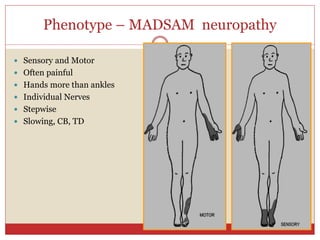
Phenotype – MADSAM neuropathy
 Sensory and Motor
 Often painful
 Hands more than ankles
 Individual Nerves
 Stepwise
 Slowing, CB, TD
Multifocal acquired demyelinating sensory and motor
neuropathy (MADSAM)
 CB
 TD
 Prolonged DL
 Slow NCVs
 Delayed or absent F waves
 Asymmetric (multifocal) SNAP abnormalities
 Sensory abnormalities should be carefully looked for to differentiate from
MMN CB
•Closely resemble MMN CB
•Asymmetric (multifocal)
References
 Mathey EK, Park SB, Hughes RAC, et alChronic inflammatory demyelinating
polyradiculoneuropathy: from pathology to phenotype J Neurol Neurosurg
Psychiatry Published Online First: 12 February 2015
 Preston DC, Shapiro BE. Electromyography and Neuromuscular Disorders E-Book: Clinical-
Electrophysiologic Correlations (Expert Consult-Online). Elsevier Health Sciences; 2012 Nov 1
 Daroff RB, Jankovic J, Mazziotta JC, Pomeroy SL. Bradley's Neurology in Clinical Practice E-
Book. Elsevier Health Sciences; 2015 Oct 25.
 Joint Task Force of the EFNS and the PNS. European Federation of Neurological
Societies/Peripheral Nerve Society Guideline on management of chronic inflammatory
demyelinating polyradiculoneuropathy: report of a joint task force of the European Federation
of Neurological Societies and the Peripheral Nerve Society--First Revision. J Peripher Nerv
Syst 2010; 15:1.
 Uncini A, Kuwabara S. Electrodiagnostic criteria for Guillain–Barré syndrome: a critical
revision and the need for an update. Clinical neurophysiology. 2012 Aug 1;123(8):1487-95.
Thank You
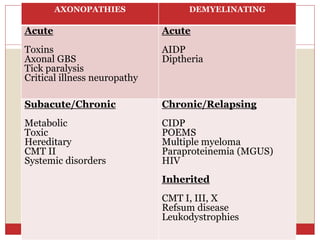
AXONOPATHIES DEMYELINATING
Acute
Toxins
Axonal GBS
Tick paralysis
Critical illness neuropathy
Acute
AIDP
Diptheria
Subacute/Chronic
Metabolic
Toxic
Hereditary
CMT II
Systemic disorders
Chronic/Relapsing
CIDP
POEMS
Multiple myeloma
Paraproteinemia (MGUS)
HIV
Inherited
CMT I, III, X
Refsum disease
Leukodystrophies
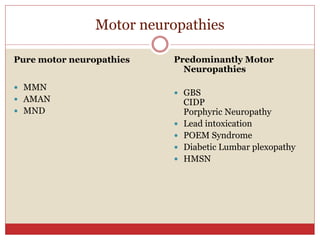
Motor neuropathies
Pure motor neuropathies
 MMN
 AMAN
 MND
Predominantly Motor
Neuropathies
 GBS
CIDP
Porphyric Neuropathy
 Lead intoxication
 POEM Syndrome
 Diabetic Lumbar plexopathy
 HMSN
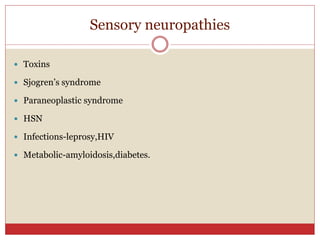
Sensory neuropathies
 Toxins
 Sjogren’s syndrome
 Paraneoplastic syndrome
 HSN
 Infections-leprosy,HIV
 Metabolic-amyloidosis,diabetes.
Autonomic Neuropathies
 GBS/AIDP
 Diabetes Mellitus
 Porphyria
 Idiopathic acute panautonomic neuropathy
 Paraneoplastic
 HSAN
 Amyloidosis
 HIV related
 Vincristine, amiodarone, cisplatin, organic solvents, metals
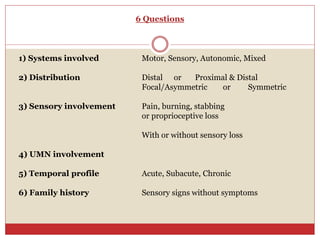
6 Questions
1) Systems involved Motor, Sensory, Autonomic, Mixed
2) Distribution Distal or Proximal & Distal
Focal/Asymmetric or Symmetric
3) Sensory involvement Pain, burning, stabbing
or proprioceptive loss
With or without sensory loss
4) UMN involvement
5) Temporal profile Acute, Subacute, Chronic
6) Family history Sensory signs without symptoms
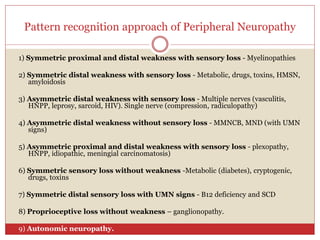
Pattern recognition approach of Peripheral Neuropathy
1) Symmetric proximal and distal weakness with sensory loss - Myelinopathies
2) Symmetric distal weakness with sensory loss - Metabolic, drugs, toxins, HMSN,
amyloidosis
3) Asymmetric distal weakness with sensory loss - Multiple nerves (vasculitis,
HNPP, leprosy, sarcoid, HIV). Single nerve (compression, radiculopathy)
4) Asymmetric distal weakness without sensory loss - MMNCB, MND (with UMN
signs)
5) Asymmetric proximal and distal weakness with sensory loss - plexopathy,
HNPP, idiopathic, meningial carcinomatosis)
6) Symmetric sensory loss without weakness -Metabolic (diabetes), cryptogenic,
drugs, toxins
7) Symmetric distal sensory loss with UMN signs - B12 deficiency and SCD
8) Proprioceptive loss without weakness – ganglionopathy.
9) Autonomic neuropathy.
Electrodiagnostic approach to peripheral neuropathy

Electrodiagnostic approach to peripheral neuropathy

  • 1.
    Electro- Diagnostic approachto peripheral neuropathy -Dr. Sachin Adukia
  • 2.
    Content  Anatomy ofperipheral nerve  Physiology of peripheral nerve  Clinical clues in diagnosis of peripheral neuropathy  Electrodiagnostic principles in NCS  NCS in various pathologies  References
  • 3.
    Elements of theperipheral nervous system.
  • 4.
    ANATOMY  Neuropathic disordersencompass diseases of: -Neuron cell body (neuronopathy) -anterior horn cell disorders(MND) -dorsal root ganglion disorders (sensory neuronopathy / ganglionopathy) -Peripheral neuropathy -axonal -demyelinating
  • 5.
     Neuropathies subdividedas per diameter of impaired axon: -Large myelinated axons -motor and sensory axons (vibration, light touch, proprioception). -Thinly myelinated axons -sensory axons(touch,pain,temp, pre-ganglionic autonomic) -Small unmyelinated axons -sensory axons(pain,touch, post-ganglionic autonomic)
  • 6.
    ELECTRON MICROSCOPIC VIEWOF A NERVE BIOPSY SPECIMEN 6 UNMYELINATED AXONS MYELINATED AXON
  • 7.
    Role of nervefibers in peripheral neuropathy
  • 8.
    Peripheral neuropathy isdivided into  Polyneuropathy: sens-motor involvement; relatively symmetrical with distal to prox gradient.  Mononeuropathy-focal involvement of single nerve  Mononeuritis multiplex- multiple nerves asymmetrically.
  • 9.
    On the basisof clinical course  Acute (< 4 wks) -Subacute (4-8 wks) -Chronic (> 8 wks) On the basis of symptoms: -Pure motor -Pure sensory -Mixed -Autonomic
  • 10.
    HISTORY Positive Sensory  Tingling Band like sensation  Tightness  Paresthesias - spontaneous  Dysesthesias - on stimulation  Allodynia - on non noxious stimulus  Hyperalgesia - on noxious stimulus  Deep burning, cutting, gnawing,  shooting, jabbing,  electric like flashes, nocturnal and at rest Negative sensory  Numbness- loss of sensation  Cotton wool sensation  Walking on ice  Feels different  Painless ulcerations  Foot deformities
  • 11.
    Negative Motor  Weaknessin feet toe extensor and hands  Tripping, Falls  Difficulty in walking  Wasting Positive Motor  Cramps  Fasciculations  Tremor  Myokymia Autonomic  Lightheadedness  Orthostatic hypotension  Syncope  Sweating disturbance  Heat intolerance  Bladder bowel disturbance  Erectile dysfunction  Gastroparesis - nausea, early satiety, vomiting  Constipation  Diarrhoea
  • 12.
    ANATOMIC PATTERNS AXONAL DEMYELINATING Distal> proximal Length dependent Proximal=distal Slow evolution Acute/subacute Distal weakness Distal & proximal weakness Distal areflexia Areflexia Pain – temp loss is > vibration, proprioception Vibration & proprioception > pain & temp Amplitude affected>velocity Velocity > amplitude Axonal degeneration & regeneration Demyelination & remyelination Slow recovery Rapid recovery
  • 13.
    SYMPTOMS SIGNS numbness Diminishedor absent reflexes Pin & needle sensation Decreased joint position sense tingling Decreased vibration sense Poor balance Sensory ataxia Large fiber
  • 14.
    Small fibre neuropathy PAIN-burning, shocklike, stabbing, pricking, shooting, lancinating Allodynia Decreased pinprick sensation Insensitivity to heat and cold Diminished temperature sensation
  • 15.
    APPROACH DISTRIBUTION OF WEAKNESS SINGLENERVE MONONEUROPATHY ULNAR NERVE RADIAL NERVE MULTIPLE NERVES MONONEURITIS MULTIPLEX SYMMETRIC DISTAL > PROXIMAL AXONOPATHY SYMMETRIC PROXIMAL > DISTAL MYELINOPATHY ACUTE CHRONIC AIDP CIDP
  • 16.
  • 17.
    DISORDER LATENCY VELOCITYAMPLITUDE DURATION AXONAL NORMAL (<130%) NORMAL (>75%) DECREASED NORMAL DEMYELINATING PROLONGED (>130%) DECREASED (<75%) <35 in UL <30 in LL NORMAL OR Reduced if Conduction Block PROLONGED (Temporal Dispersion)
  • 18.
    NCS: Basic principles Amplitude: related to the number of axons in a nerve  Latency : time dependent ; therefore, most affected in demyelination  Conduction velocity: time dependent, thus more affected in demyelination  In axonal loss, Large, fast conducting fibers are lost  Moderate slowing  Demyelination  Marked slowing
  • 20.
    Axonal Loss  MostNeuropathies  LE > UE  Distal > proximal  Sensory > Motor  So a NCS study in axonal Neuropathy shows  Low amplitudes, more severe in the legs than arms  Loss of sensory responses in legs early on  CV slowing but less severe than demyelination  Amplitude dependent slowing, ie, CV is reduced because a subpopulation of faster conducting axons have been lost, not because of demyelination of conducting axons.
  • 21.
    Demyelinating Process  Hereditary Uniform slowing  Across all segments  Uniform waveform shape  CMAPs  Profound slowing  Acquired  Non-uniform process  Non-compressible segments  Conduction block  Temporal dispersion  Increased variability in range of velocities  Some nerves affected more than others  MMN
  • 22.
    Motor ms mAm/s Latency Amplitude Velocity Median <4.2 >5 >48 Ulnar <4 >5 >48 Deep peroneal <6 >2 >42 Posterior tibial <6 >5 >42 Radial <2.9 >2 >49 Musculocutaneous <5.7 Compare Axillary <4.9 Compare Suprascapular <3.7 Compare Femoral >3 Sensory uV Median <3.4 >15 >48 Ulnar <3.4 >15 >48 LABC <3 >15 >50 MABC <3.2 >10 >50 Superfical peroneal <3.4 >5 >42 Sural <3.4 >5 >42 Sapheneous <3.9 >2 >40
  • 23.
    Limitations  conduction velocityand latency measurements are from largest and fastest fibers.  Large-diameter fibers have the most myelin and the least electrical resistance faster conduction velocities.  NCS study only largest A-alpha fibers  poses a problem when strength & vibration and position senses are unaffected but pain and temperature sensations are abnormal: "small fiber neuropathy”  small fiber neuropathy may not reveal any abnormalities on NCSs
  • 25.
    Clinical examples  Mononeuropathy- CTS, foot drop, wrist drop  Polyneuropathy - AIDP, AMAN - CIDP  Mononeuritis multiplex
  • 26.
     67/F,  History clumsiness, tingling, and pain in both hands of several months  most prominent at night, often awakening her from sleep, or during hand use such as driving.  Examination :  slight wasting of both thenar eminences.  Reflexes were normal.  Thumb abduction was weak bilaterally.  Sensation was slightly reduced over the finger pads of the thumb, index, middle, and ring fingers.  Tinel’s sign –ve on either side  Phalen’s maneuver +ve bilaterally after 30 seconds.
  • 29.
    42/M, persistent leftwrist drop. History: •3 weeks ago he awoke with a nearly complete left wrist drop and finger drop •no pain, but he did notice an area of abnormal sensation on the back side of his hand between the thumb and index finger. •During the subsequent 3 weeks, no improvement occurred. On physical examination •near paralysis of wrist and finger extension (MRC grade 1/5). •Wrist and finger flexion were intact. Elbow flexion and extension were normal. Shoulder abduction was normal. •On sensory examination, numbness over lateral dorsum of the left hand between the thumb and index fingers extending into the proximal phalanges of the index, middle, and ring fingers. •Reflexes: biceps and triceps were normal. Left brachioradialis reflex was absent
  • 30.
  • 33.
    52/F, WITH H/OA PERSISTENT RIGHT FOOT DROP WHICH BEGAN SLOWLY 6 MONTHS PREVIOUSLY HISTORY: •INITIALLY- NUMBNESS OVER THE TOP OF THE FOOT AND THE LATERAL CALF F/B RIGHT FOOT DROPPING. DURING THE LAST 2 MONTHS, SLOWLY PROGRESSED TO A NEARLY COMPLETE FOOTDROP. •MORE RECENTLY, SHE NOTED A SENSATION OF TIGHTNESS AND PAIN FROM HER HIP DOWN TO HER KNEE AND INTO HER CALF. ON EXAMINATION •ATROPHY OF THE ANTERIOR COMPARTMENT OF THE RIGHT LEG AND WASTING OF THE RIGHT EDB MUSCLE. IN THE RIGHT LOWER EXTREMITY THERE WAS A COMPLETE FOOTDROP. •TOE AND ANKLE DORSIFLEXION WERE 1/5, AS WAS ANKLE EVERSION. •ANKLE INVERSION ALSO WAS WEAK (4/5). IN ADDITION, TOE FLEXION & KNEE FLEXION WERE WEAK. RIGHT ANKLE JERK WAS ABSENT. TOES WERE DOWNGOING. •SENSORY DISTURBANCE TO LIGHT TOUCH ON THE TOP OF THE FOOT, LATERAL FOOT AND CALF, LATERAL KNEE, AND POSTERIOR CALF ON THE RIGHT SIDE.
  • 34.
  • 37.
  • 39.
    EDS In AIDP NCS abnormal: 81-100% cases  Distal segment may be normal if demyelination is confined to the proximal segment of nerve or root  F waves: most sensitive  MNCS abnormalities: 80-100%  SNCS abnormalities: 56-76%  May be the sole abnormality in early GBS
  • 40.
    32/F, progressive weaknessand numbness. History  diarrhea and fever that persisted for several days, and remitted.  Ten days ago, she developed pins-and-needles paresthesias in both feet and both hands.  Those symptoms were followed by clumsiness of gait and progressive weakness of both arms and legs.  Examination  bifacial weakness and a mild, diffuse quadriparesis.  Depressed Reflexes in arms and absent reflexes in the legs.  mild distal sensory loss to pinprick, light touch, and vibration was present in both upper and lower extremities.
  • 42.
    SLOWING OF NCV& PROLONGED DL Slowing of NCV and prolonged DL: Synchronized slowing (all faster conducting axons are affected to same degree) EMG correlate: none
  • 43.
    AMPLITUDE  Normal toreduced CMAP amplitudes  Normal, reduced or absent SNAP amplitudes  Decrease in amplitude in DM is because of:  Conduction block  Temporal dispersion
  • 44.
    AIDP – MNCS Diffuse slowing of CV (<35 m/sec in UL and <30 m/sec in LL nerves) with variable TD and CB .  Generally slowing can be seen in both distal and proximal segments of a nerve.  More characteristic of GBS is nonuniform slowing - proximal greater than distal
  • 45.
    AIDP - SENSORYNCS  Abnormalities less frequent compared to motor NCS, especially early (<2 weeks)  Most frequently seen as reduced/absent SNAP amp.  Amp. are relatively preserved in demyelination vs. axonal forms  Sensory velocities are less often affected SURAL SPARING  Normal sural SNAP OR  Relatively preserved sural SNAP amp. compared with at least 2 abnormal SNAPs in UL (median, ulnar and radial) nerves.  Characteristic of Demyelinaiton : specific (96%) but modestly sensitive (~50%)
  • 46.
    EARLY EDX. FINDINGSIN AIDP  Non diagnostic EDX. findings if symptom duration is < 4-5 days  Maximum motor NCS abnormalities observed during the 3rd week and for sensory during 4th week  Number of abnormalities found will increase with no. of nerves studied  Abnormal H reflex (absent or low amplitude) may be the sole EDX. finding in first 5 days  Abnormal F wave* ( prolonged latency or absent) may be the sole EDX. finding in first 5-7 days
  • 47.
    Case  38/M, presentedwith acute onset ascending symmetrical flaccid areflexic quadriparesis alongwith bulbar involvement reaching maximal deficit within 2 days of onset.  No preceding AFI or diarrhea
  • 49.
    NCS F and Hare absent
  • 50.
    AMAN  selective involvementof motor nerves  electrophysiologic pattern of axonal involvement  distal motor amplitudes are low initially but may increase rapidly with recovery of function; these findings may reflect reversible conduction failure  F waves may be absent but not significantly prolonged  There is no sensory nerve involvement  no peripheral nerve demyelination.  no significant slowing of CV or increase in DL.  no temporal dispersion. Kokubun N, Nishibayashi M, Uncini A, et al. Conduction block in acute motor axonal neuropathy. Brain 2010; 133:2897.
  • 51.
    AMAN  No featuresof DM as defined in AIDP criteria  Decreased CMAP amplitudes <80% of the lower limit of normal (2 or more nerves)  Normal sensory conduction AMSAN  --do--  --do—  Decreased SNAP amplitudes <80% of the lower limit of normal (2 or more nerves) (Ho et al. Neurology 1997;48:695-700)
  • 53.
  • 54.
    EFNS criteria fordefinite CIDP- 2010
  • 55.
    Case  52/M, withh/o progressive numbness and weakness of 6 months’ duration.  History  insidious onset of pins-and-needles paresthesias in his toes bilaterally 6 months ago, followed by slow progression up his feet and calves.  Recently, a pins-and needles sensation developed in the fingertips.  difficulty with dexterity developed, along with a tendency to trip with walking.  Examination  stocking-glove loss of vibration and pinprick sense.  Reflexes diffusely hypoactive and absent at the ankles.  Mild distal weakness and atrophy were present on motor examination.  A Romberg sign was present. Gait was moderately ataxic.
  • 59.
    Differentiating Demyelinating vsAxonal slowing when CV are borderline Comparing the CV across the same segment of nerve, recording prox. and distal muscles e.g.EDB and TA.  Normal – no significant difference in CV.  Demyelinating polyneuropathy – usually marked slowing when recording both distal and proximal muscles.  Severe axonal polyneuropathy – CV may reach cut off value but CV is usually faster or normal when recording a more proximal muscle i.e. – Distal to prox.CV gradient normalizing proximally is characteristic of axonal polyneuropathies.
  • 61.
  • 62.
    MOTOR NCS  Alltested nerves show abnormalities, though to different extent.  Both distal and proximal segments affected, with proximal being more impaired in 80% cases  Marked slowing of NCV with values <35 m/sec in UL and <30 m/sec in LL  CB and TD
  • 63.
    SENSORY NCS  Symmetric Low or absent SNAPs are a consistent findings.  There may be dissociation between SNCS & MNCS findings  Sensory sparing patterns.  Velocity reductions are less in SNCS compared to MNCS
  • 64.
    F-wave & H-reflex Typically abnormal  Absent to markedly prolonged latencies (>150%)  F wave chronodispersion (CD):  F wave counterpart of TD - measures conduction across large motor fibers.  High sensitivity in chronic demyelination CD >9 msec.  observed only in CIDP or AIDP  But at least 60 F waves must be recorded
  • 65.
    Phenotype – MADSAMneuropathy  Sensory and Motor  Often painful  Hands more than ankles  Individual Nerves  Stepwise  Slowing, CB, TD
  • 66.
    Multifocal acquired demyelinatingsensory and motor neuropathy (MADSAM)  CB  TD  Prolonged DL  Slow NCVs  Delayed or absent F waves  Asymmetric (multifocal) SNAP abnormalities  Sensory abnormalities should be carefully looked for to differentiate from MMN CB •Closely resemble MMN CB •Asymmetric (multifocal)
  • 67.
    References  Mathey EK,Park SB, Hughes RAC, et alChronic inflammatory demyelinating polyradiculoneuropathy: from pathology to phenotype J Neurol Neurosurg Psychiatry Published Online First: 12 February 2015  Preston DC, Shapiro BE. Electromyography and Neuromuscular Disorders E-Book: Clinical- Electrophysiologic Correlations (Expert Consult-Online). Elsevier Health Sciences; 2012 Nov 1  Daroff RB, Jankovic J, Mazziotta JC, Pomeroy SL. Bradley's Neurology in Clinical Practice E- Book. Elsevier Health Sciences; 2015 Oct 25.  Joint Task Force of the EFNS and the PNS. European Federation of Neurological Societies/Peripheral Nerve Society Guideline on management of chronic inflammatory demyelinating polyradiculoneuropathy: report of a joint task force of the European Federation of Neurological Societies and the Peripheral Nerve Society--First Revision. J Peripher Nerv Syst 2010; 15:1.  Uncini A, Kuwabara S. Electrodiagnostic criteria for Guillain–Barré syndrome: a critical revision and the need for an update. Clinical neurophysiology. 2012 Aug 1;123(8):1487-95.
  • 68.
  • 69.
    AXONOPATHIES DEMYELINATING Acute Toxins Axonal GBS Tickparalysis Critical illness neuropathy Acute AIDP Diptheria Subacute/Chronic Metabolic Toxic Hereditary CMT II Systemic disorders Chronic/Relapsing CIDP POEMS Multiple myeloma Paraproteinemia (MGUS) HIV Inherited CMT I, III, X Refsum disease Leukodystrophies
  • 70.
    Motor neuropathies Pure motorneuropathies  MMN  AMAN  MND Predominantly Motor Neuropathies  GBS CIDP Porphyric Neuropathy  Lead intoxication  POEM Syndrome  Diabetic Lumbar plexopathy  HMSN
  • 71.
    Sensory neuropathies  Toxins Sjogren’s syndrome  Paraneoplastic syndrome  HSN  Infections-leprosy,HIV  Metabolic-amyloidosis,diabetes.
  • 72.
    Autonomic Neuropathies  GBS/AIDP Diabetes Mellitus  Porphyria  Idiopathic acute panautonomic neuropathy  Paraneoplastic  HSAN  Amyloidosis  HIV related  Vincristine, amiodarone, cisplatin, organic solvents, metals
  • 73.
    6 Questions 1) Systemsinvolved Motor, Sensory, Autonomic, Mixed 2) Distribution Distal or Proximal & Distal Focal/Asymmetric or Symmetric 3) Sensory involvement Pain, burning, stabbing or proprioceptive loss With or without sensory loss 4) UMN involvement 5) Temporal profile Acute, Subacute, Chronic 6) Family history Sensory signs without symptoms
  • 74.
    Pattern recognition approachof Peripheral Neuropathy 1) Symmetric proximal and distal weakness with sensory loss - Myelinopathies 2) Symmetric distal weakness with sensory loss - Metabolic, drugs, toxins, HMSN, amyloidosis 3) Asymmetric distal weakness with sensory loss - Multiple nerves (vasculitis, HNPP, leprosy, sarcoid, HIV). Single nerve (compression, radiculopathy) 4) Asymmetric distal weakness without sensory loss - MMNCB, MND (with UMN signs) 5) Asymmetric proximal and distal weakness with sensory loss - plexopathy, HNPP, idiopathic, meningial carcinomatosis) 6) Symmetric sensory loss without weakness -Metabolic (diabetes), cryptogenic, drugs, toxins 7) Symmetric distal sensory loss with UMN signs - B12 deficiency and SCD 8) Proprioceptive loss without weakness – ganglionopathy. 9) Autonomic neuropathy.