HIGHER
THINKING
SKILLS THROUGH
  IT-BASED PROJECTS
  Roselle R. Manansala
         Reporter
RESOURCE
  BASED
PROJECTS
Make the students
go beyond the
textbook and
curriculum
materials.
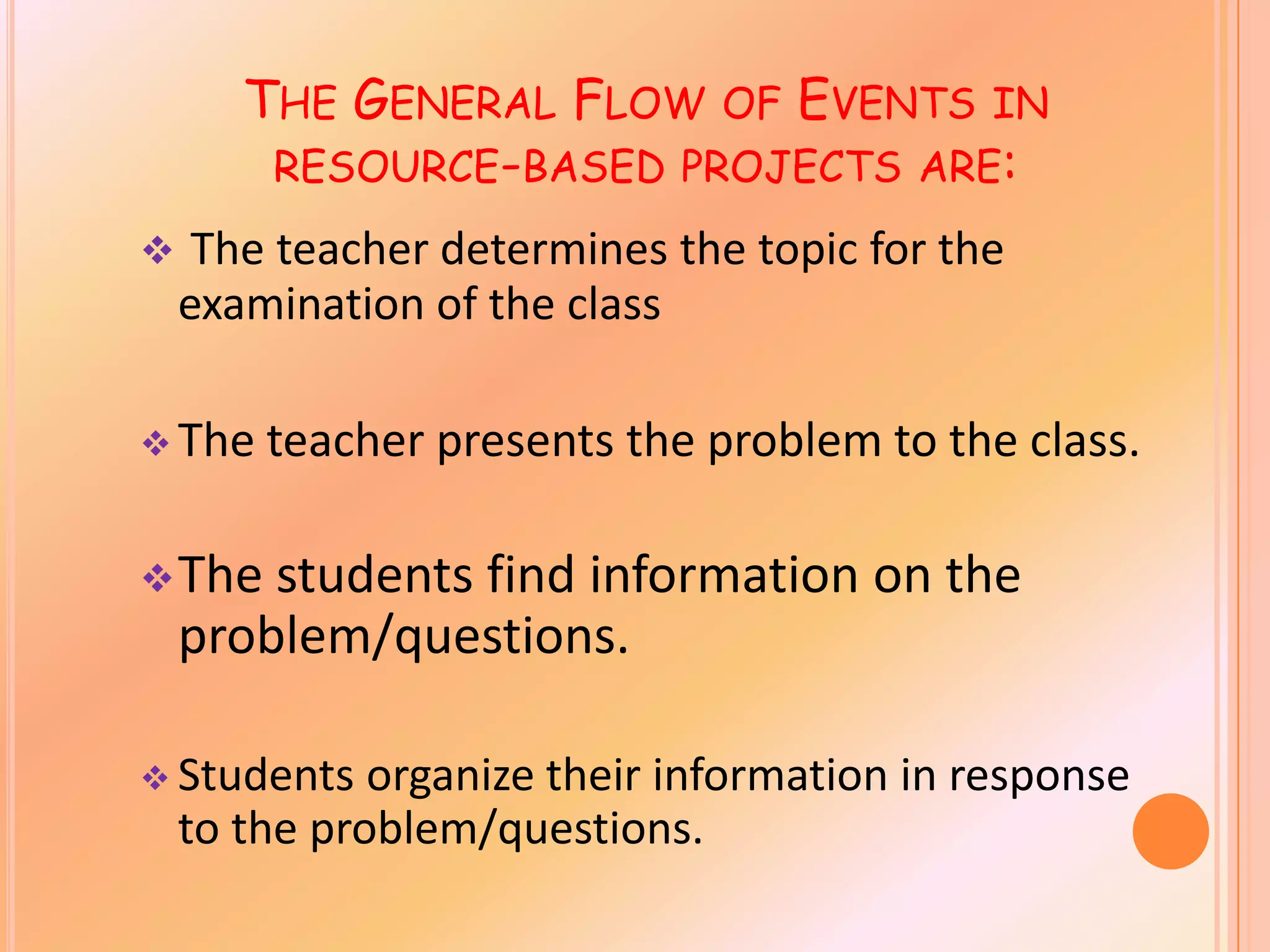
THE GENERAL FLOW OF EVENTS IN
        RESOURCE-BASED PROJECTS ARE:
    The teacher determines the topic for the
    examination of the class

 The   teacher presents the problem to the class.

 The   students find information on the
    problem/questions.

 Students    organize their information in response
    to the problem/questions.
Inquiry– based or
discovery approach
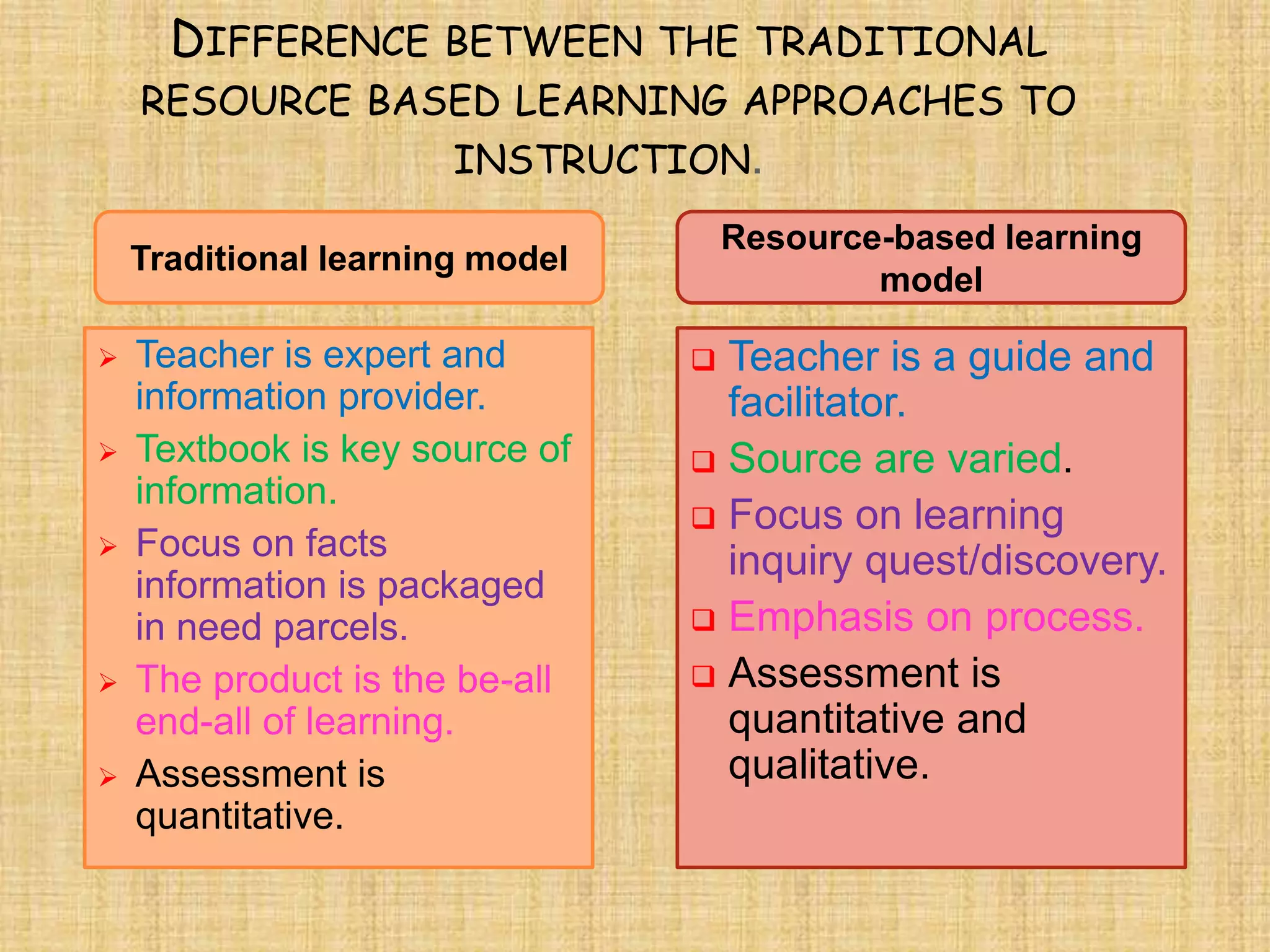
DIFFERENCE BETWEEN THE TRADITIONAL
    RESOURCE BASED LEARNING APPROACHES TO
                INSTRUCTION.
                                     Resource-based learning
    Traditional learning model
                                             model

   Teacher is expert and         Teacher is a guide and
    information provider.          facilitator.
   Textbook is key source of     Source are varied.
    information.
                                  Focus on learning
   Focus on facts                 inquiry quest/discovery.
    information is packaged
    in need parcels.              Emphasis on process.

   The product is the be-all     Assessment is
    end-all of learning.           quantitative and
   Assessment is                  qualitative.
    quantitative.

edtech-lesson 8- resource-based projects

  • 1.
    HIGHER THINKING SKILLS THROUGH IT-BASED PROJECTS Roselle R. Manansala Reporter
  • 2.
  • 3.
    Make the students gobeyond the textbook and curriculum materials.
  • 4.
    THE GENERAL FLOWOF EVENTS IN RESOURCE-BASED PROJECTS ARE:  The teacher determines the topic for the examination of the class  The teacher presents the problem to the class.  The students find information on the problem/questions.  Students organize their information in response to the problem/questions.
  • 5.
  • 6.
    DIFFERENCE BETWEEN THETRADITIONAL RESOURCE BASED LEARNING APPROACHES TO INSTRUCTION. Resource-based learning Traditional learning model model  Teacher is expert and  Teacher is a guide and information provider. facilitator.  Textbook is key source of  Source are varied. information.  Focus on learning  Focus on facts inquiry quest/discovery. information is packaged in need parcels.  Emphasis on process.  The product is the be-all  Assessment is end-all of learning. quantitative and  Assessment is qualitative. quantitative.