EDUCATIONAL TECHNOLOGY
RONALD M. SUPLIDO, JR.
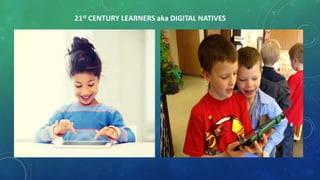
21st CENTURY LEARNERS aka DIGITAL NATIVES
?
It is the effective use of technological tools in learning. As a
concept, it concerns an array of tools such as media, machines
and networking hardware, as well as considering underlying
theoretical perspectives for their effective application.
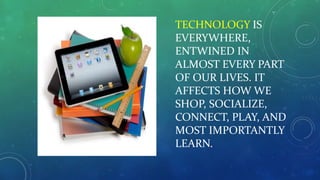
TECHNOLOGY IS
EVERYWHERE,
ENTWINED IN
ALMOST EVERY PART
OF OUR LIVES. IT
AFFECTS HOW WE
SHOP, SOCIALIZE,
CONNECT, PLAY, AND
MOST IMPORTANTLY
LEARN.
Richey defined educational technology as "the study and ethical
practice of facilitating learning and improving performance by
creating, using and managing appropriate technological processes
and resources“
The theory and practice of design,
development, utilization, management, and
evaluation of processes and resources for
learning.
Refers to all valid and reliable applied
education sciences, such as equipment, as
well as processes and procedures that are
derived from scientific research, and in a
given context may refer to theoretical,
algorithmic or heuristic processes: it does not
necessarily imply physical technology.
EDUCATIONAL TECHNOLOGY SCOPE
EDUCATIONAL TECHNOLOGY REFERS TO THE USE OF BOTH
PHYSICAL HARDWARE AND EDUCATIONAL THEORETICS. IT
ENCOMPASSES SEVERAL DOMAINS,
• educational technology as the theory and practice of educational approaches to learning
• educational technology as technological tools and media that assist in the communication of
knowledge, and its development and exchange
• educational technology for learning management systems (LMS), such as tools for student and
curriculum management, and education management information systems (EMIS)
• educational technology itself as an educational subject; such courses may be called "Computer Studies"
or "Information and Communication Technology (ICT)"
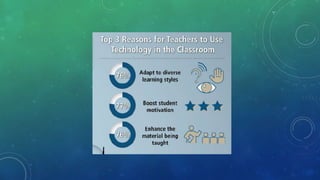
1) If used correctly, will help prepare
students for their future careers,
which will inevitably include the use
of wireless technology.
2) Integrating technology into the
classroom is definitely a great way to
reach diversity in learning styles
3) It gives students the chance to
interact with their classmates
more by encouraging
collaboration.
4) Technology helps the teachers
prepare students for the real world
environment. As our nation becomes
increasingly more technology-
dependent, it becomes even more
necessary that to be successful citizens,
students must learn to be tech-savvy.
7) When mobile technology is readily
available in the classroom, students are able
to access the most up-to-date information
quicker and easier than ever before.
8) The traditional passive learning mold is
broken. With technology in the classroom the
teacher becomes the encourager, adviser, and
coach.
9) Students become more responsible.
Technology helps students take more
control over their own learning. They
learn how to make their own decisions
and actually think for themselves.
10) Student can have access to digital
textbooks that are constantly updated
and often more vivid, helpful,
creative, and a lot cheaper than those
old heavy books.
Educational media and tools can be used for:
- task structuring support: help with how to do a task
(procedures and processes),
- access to knowledge bases (help user find information
needed)
- alternate forms of knowledge representation (multiple
representations of knowledge, e.g. video, audio, text,
image, data)
MEDIA
Audio and video
Computers, tablets and mobile devices
Social networks
Webcams
Whiteboards
Screencasting
Virtual classroom
E-learning authoring tools
Learning management system

Education Technology

  • 1.
  • 4.
    21st CENTURY LEARNERSaka DIGITAL NATIVES
  • 5.
    ? It is theeffective use of technological tools in learning. As a concept, it concerns an array of tools such as media, machines and networking hardware, as well as considering underlying theoretical perspectives for their effective application.
  • 7.
    TECHNOLOGY IS EVERYWHERE, ENTWINED IN ALMOSTEVERY PART OF OUR LIVES. IT AFFECTS HOW WE SHOP, SOCIALIZE, CONNECT, PLAY, AND MOST IMPORTANTLY LEARN.
  • 10.
    Richey defined educationaltechnology as "the study and ethical practice of facilitating learning and improving performance by creating, using and managing appropriate technological processes and resources“
  • 11.
    The theory andpractice of design, development, utilization, management, and evaluation of processes and resources for learning. Refers to all valid and reliable applied education sciences, such as equipment, as well as processes and procedures that are derived from scientific research, and in a given context may refer to theoretical, algorithmic or heuristic processes: it does not necessarily imply physical technology.
  • 12.
    EDUCATIONAL TECHNOLOGY SCOPE EDUCATIONALTECHNOLOGY REFERS TO THE USE OF BOTH PHYSICAL HARDWARE AND EDUCATIONAL THEORETICS. IT ENCOMPASSES SEVERAL DOMAINS, • educational technology as the theory and practice of educational approaches to learning • educational technology as technological tools and media that assist in the communication of knowledge, and its development and exchange • educational technology for learning management systems (LMS), such as tools for student and curriculum management, and education management information systems (EMIS) • educational technology itself as an educational subject; such courses may be called "Computer Studies" or "Information and Communication Technology (ICT)"
  • 14.
    1) If usedcorrectly, will help prepare students for their future careers, which will inevitably include the use of wireless technology. 2) Integrating technology into the classroom is definitely a great way to reach diversity in learning styles
  • 15.
    3) It givesstudents the chance to interact with their classmates more by encouraging collaboration.
  • 16.
    4) Technology helpsthe teachers prepare students for the real world environment. As our nation becomes increasingly more technology- dependent, it becomes even more necessary that to be successful citizens, students must learn to be tech-savvy.
  • 17.
    7) When mobiletechnology is readily available in the classroom, students are able to access the most up-to-date information quicker and easier than ever before. 8) The traditional passive learning mold is broken. With technology in the classroom the teacher becomes the encourager, adviser, and coach.
  • 18.
    9) Students becomemore responsible. Technology helps students take more control over their own learning. They learn how to make their own decisions and actually think for themselves.
  • 19.
    10) Student canhave access to digital textbooks that are constantly updated and often more vivid, helpful, creative, and a lot cheaper than those old heavy books.
  • 20.
    Educational media andtools can be used for: - task structuring support: help with how to do a task (procedures and processes), - access to knowledge bases (help user find information needed) - alternate forms of knowledge representation (multiple representations of knowledge, e.g. video, audio, text, image, data) MEDIA
  • 21.
    Audio and video Computers,tablets and mobile devices Social networks Webcams Whiteboards Screencasting Virtual classroom E-learning authoring tools Learning management system