1
The Economics of
Demand
 The Demand Curve
 Elasticity of Demand
 Changes in Demand
2
Demand
 Why are newspapers sold in vending
machines that allow you to take more than
one copy?
 How much do you eat when you can eat all
you want?
 What cures ‘spring fever’?
 What economic principle is behind the
saying, “Been there, done that”?
 Why do higher cigarette taxes cut smoking
by teens more than by other age groups?
Consider
3
The Demand Curve
 Explain the law of demand
 Interpret a demand schedule and
demand curve
Objectives
4
The Demand Curve
 demand
 law of demand
 marginal utility
 law of diminishing marginal utility
 demand curve
 quantity demanded
 individual demand
 market demand
Key Terms
5
Demand
Demand indicates how much of a
product consumers are both willing
and able to buy at each possible price
during a given period, other things
remaining constant.
6
Law of Demand
The law of demand says that quantity
demanded varies inversely with price, other
things constant. Thus, the higher the price,
the smaller the quantity demanded.
7
Law of Demand
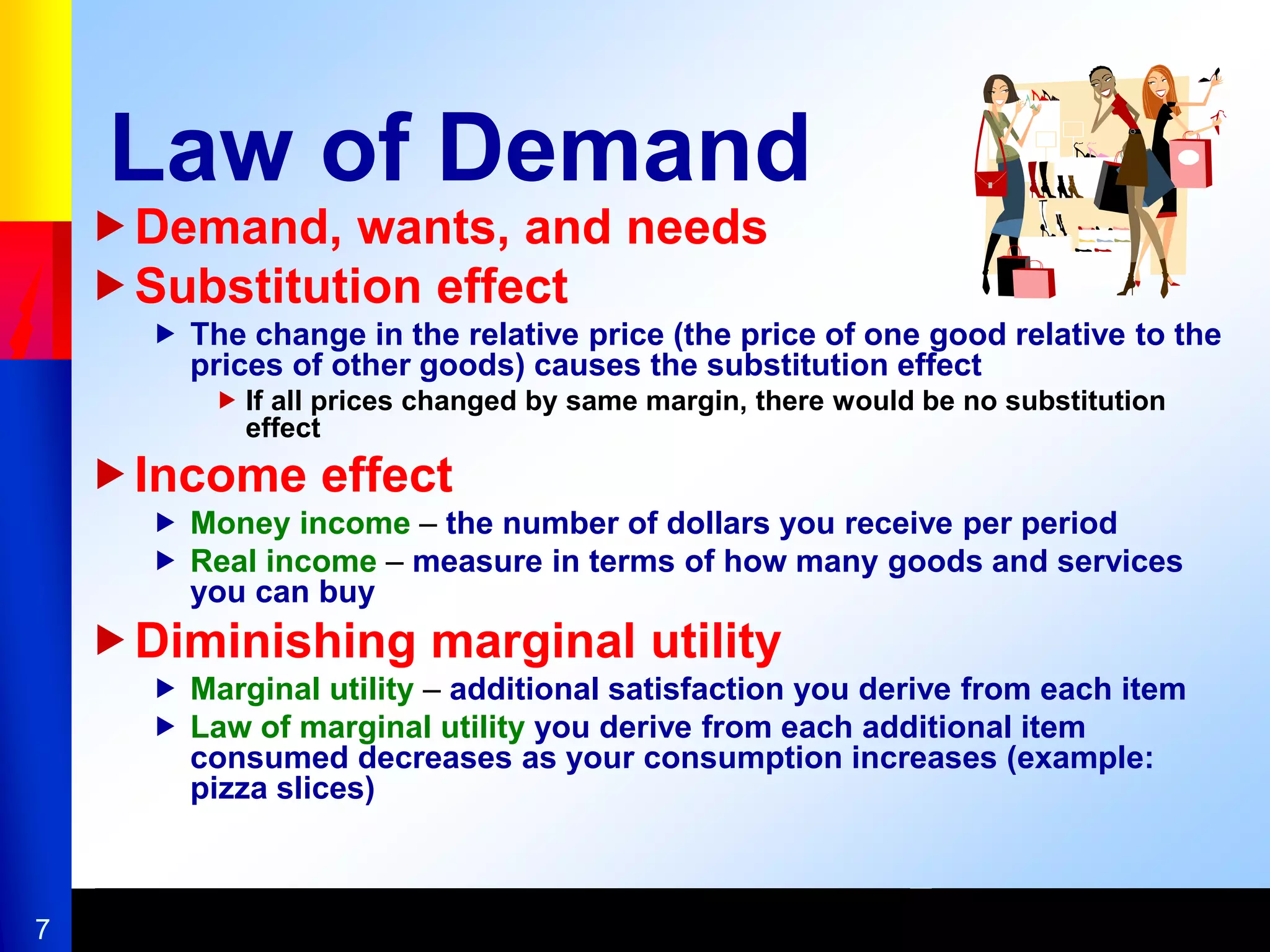
Demand, wants, and needs
Substitution effect
 The change in the relative price (the price of one good relative to the
prices of other goods) causes the substitution effect
 If all prices changed by same margin, there would be no substitution
effect
Income effect
 Money income – the number of dollars you receive per period
 Real income – measure in terms of how many goods and services
you can buy
Diminishing marginal utility
 Marginal utility – additional satisfaction you derive from each item
 Law of marginal utility you derive from each additional item
consumed decreases as your consumption increases (example:
pizza slices)
8
Demand Schedule
and Demand Curve
Demand versus quantity demanded
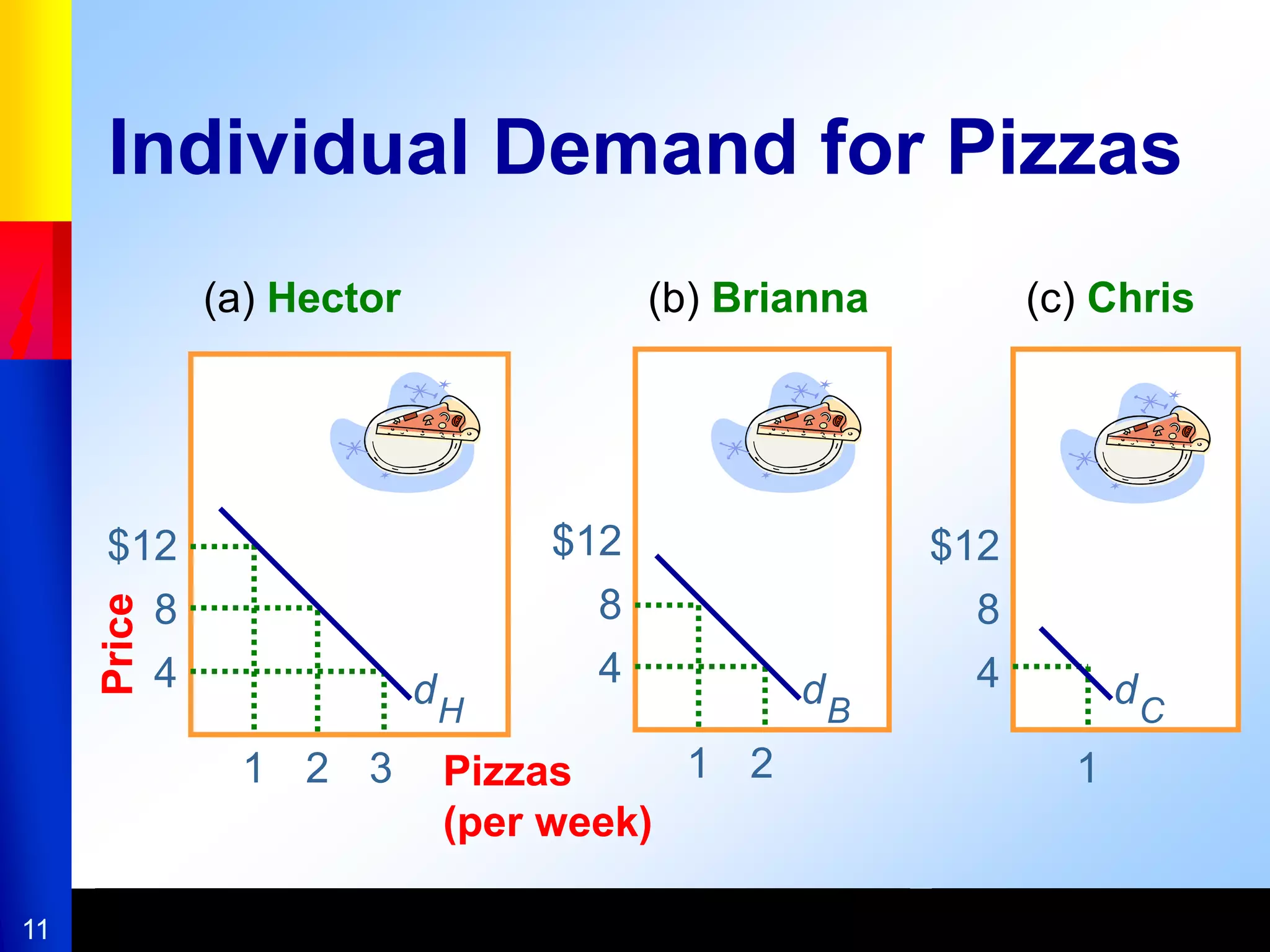
Individual demand
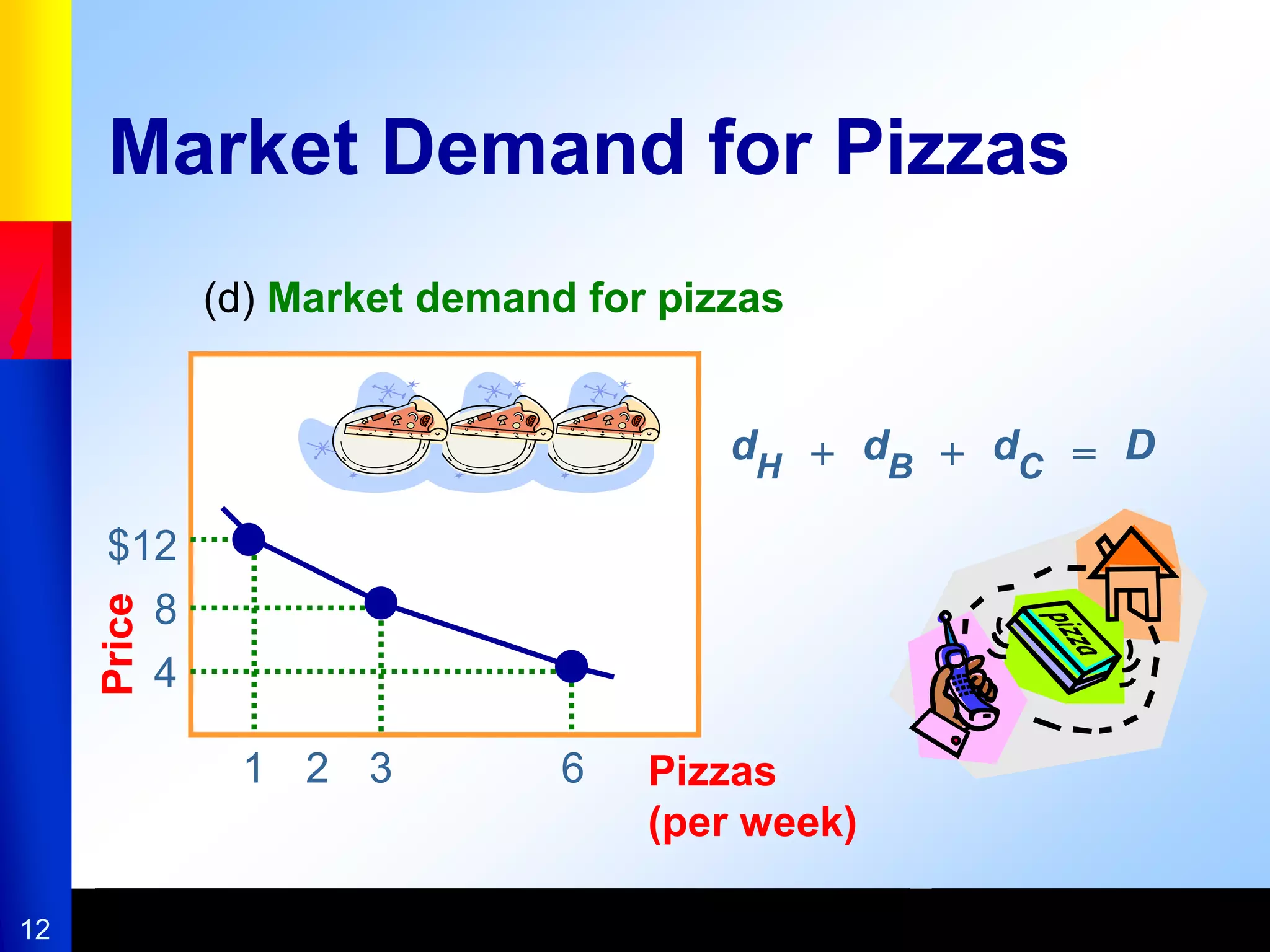
Market demand
9
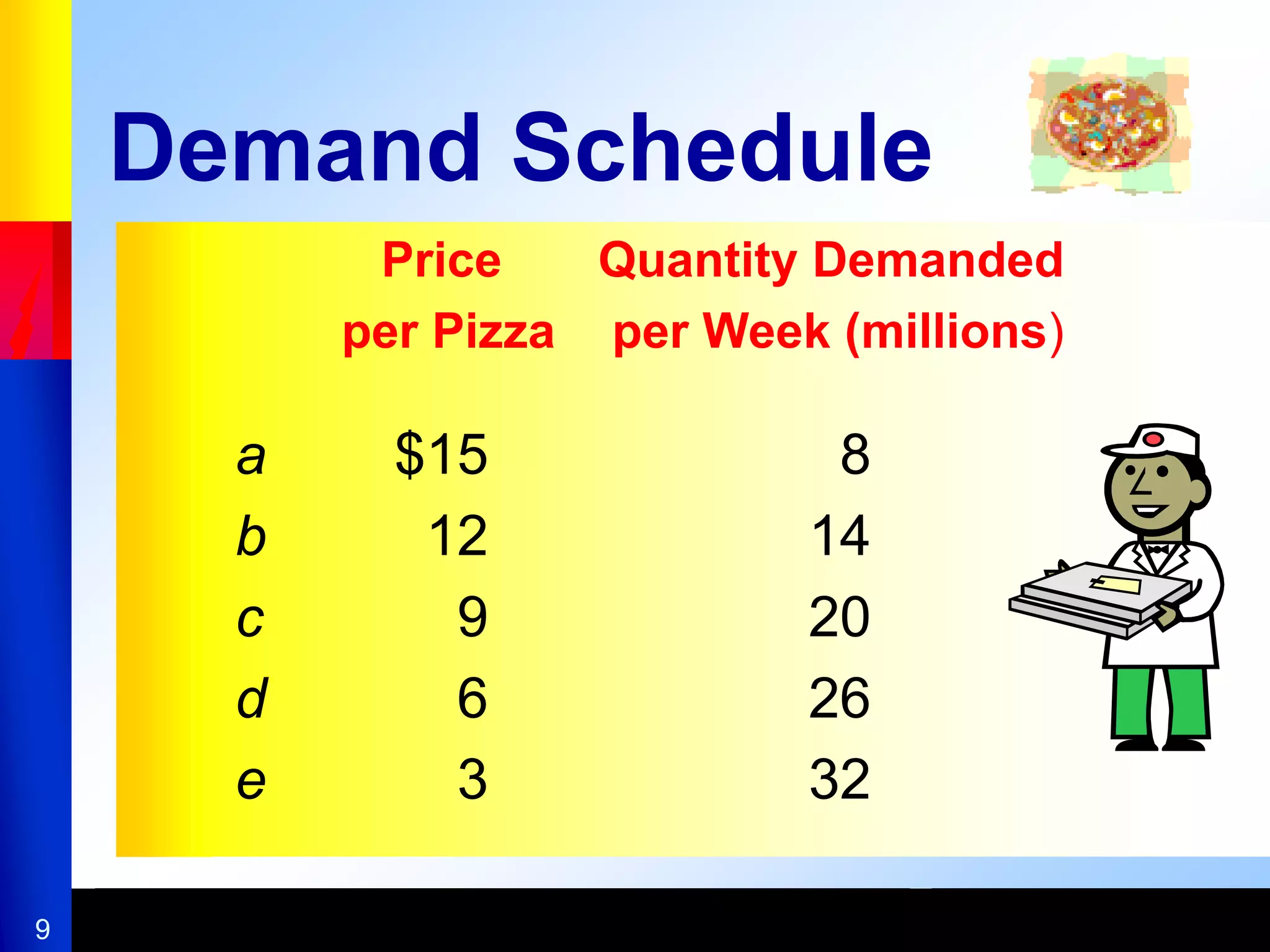
Demand Schedule
Price Quantity Demanded
per Pizza per Week (millions)
a $15 8
b 12 14
c 9 20
d 6 26
e 3 32
10
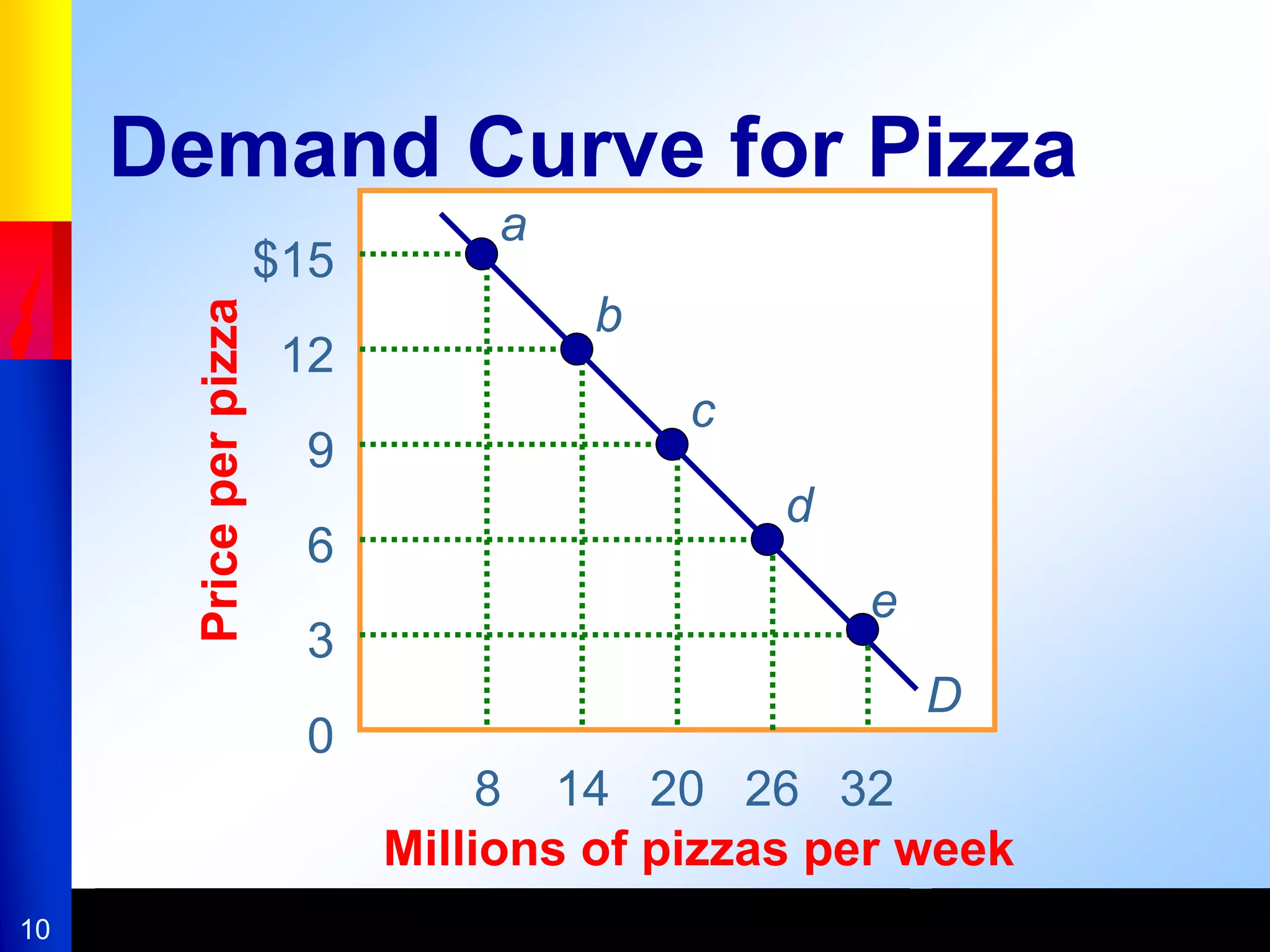
8 14 20 26 32
Millions of pizzas per week
$15
12
9
6
3
0
Price
per
pizza
Demand Curve for Pizza
a
b
c
d
e
D
11
$12
8
4
1
(c) Chris
$12
8
4
1 2
(b) Brianna
$12
8
4
Price
1 2 3 Pizzas
(per week)
(a) Hector
Individual Demand for Pizzas
dH
dB
dC
12
$12
8
4
Price
1 2 3 Pizzas
(per week)
(d) Market demand for pizzas
6
Market Demand for Pizzas
dH
dB
dC
D
+ + =
13
Elasticity of Demand
 Compute the elasticity of demand and
explain its relevance.
 Discuss factors that influence
elasticity of demand.
Objectives
14
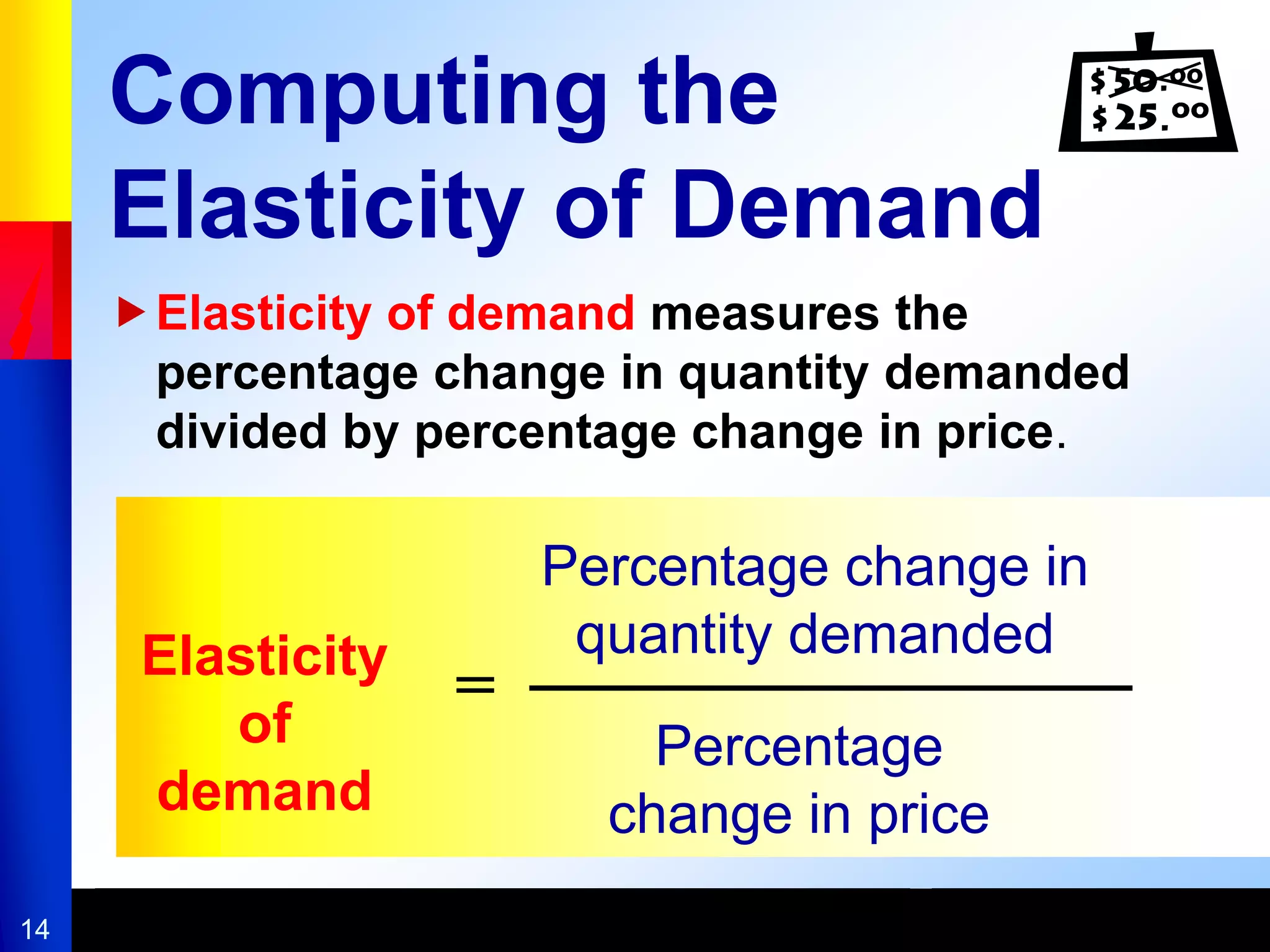
Computing the
Elasticity of Demand
Elasticity of demand measures the
percentage change in quantity demanded
divided by percentage change in price.
Elasticity
of
demand
=
Percentage change in
quantity demanded
Percentage
change in price
15
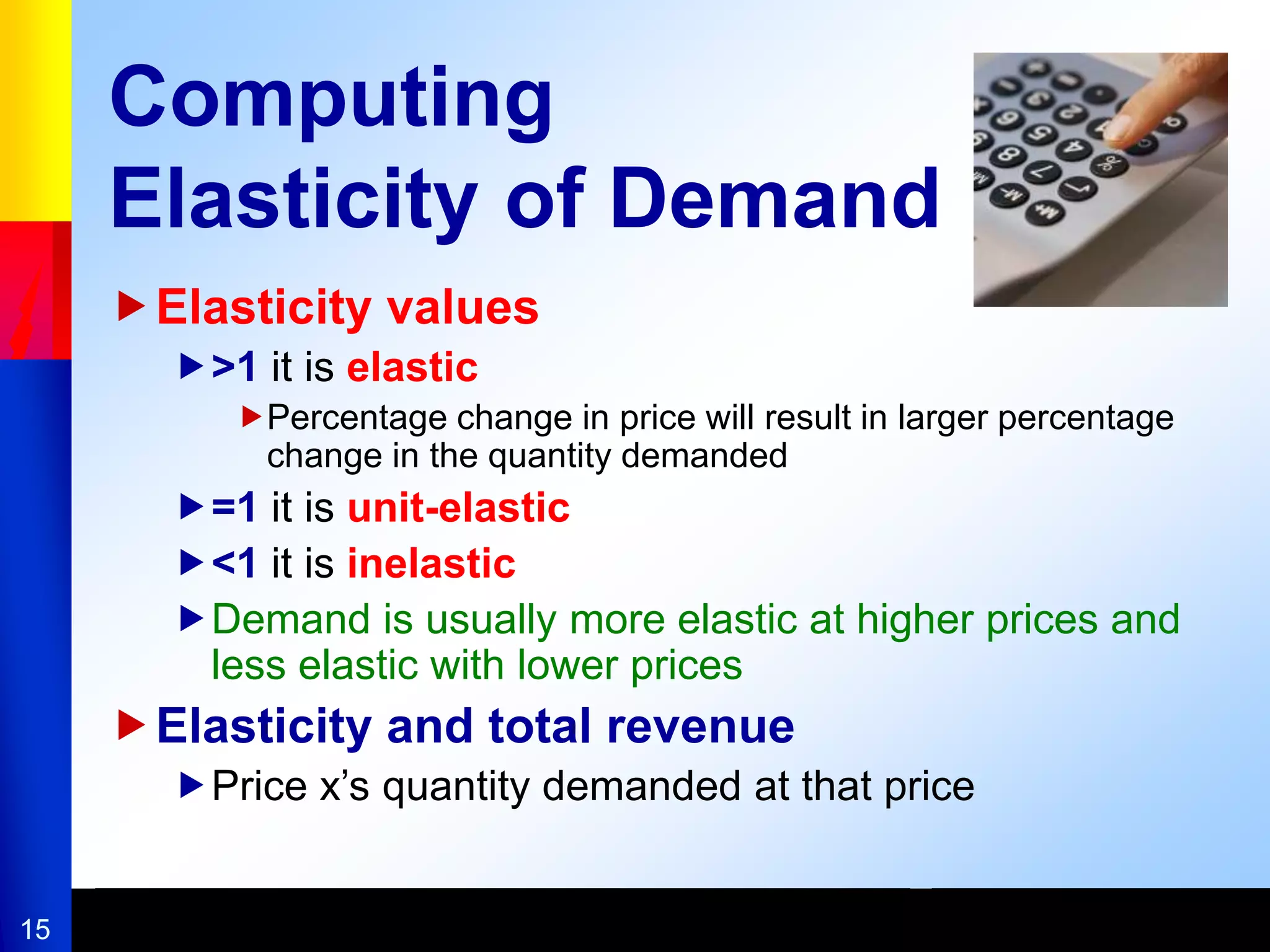
Computing
Elasticity of Demand
Elasticity values
>1 it is elastic
Percentage change in price will result in larger percentage
change in the quantity demanded
=1 it is unit-elastic
<1 it is inelastic
Demand is usually more elastic at higher prices and
less elastic with lower prices
Elasticity and total revenue
Price x’s quantity demanded at that price
16
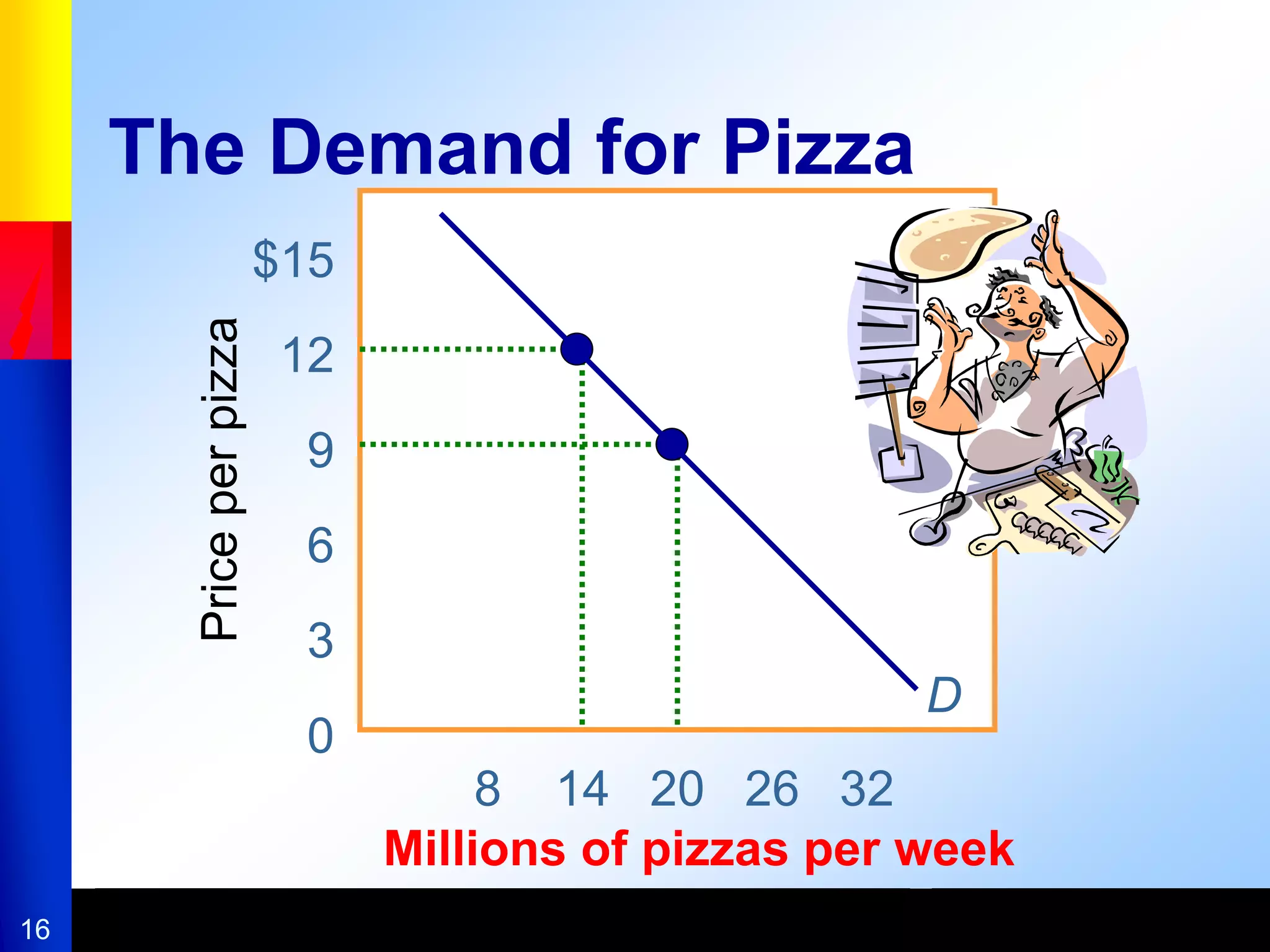
8 14 20 26 32
Millions of pizzas per week
$15
12
9
6
3
0
Price
per
pizza
The Demand for Pizza
D
17
Determinants of
Demand Elasticity
 Availability of substitutes
 The greater the availability of substitutes for a good, the greater
the good’s elasticity of demand
 Share of consumer’s budget spent on the good
 Increase in prices reduced the demand because people are not
both willing and able to purchase @ higher prices
 A matter of time
 The longer the adjustment period, the greater the consumer’s
ability to substitute
 Some elasticity estimates
 The elasticity of demand is greater in the long run because
consumers have more time to adjust
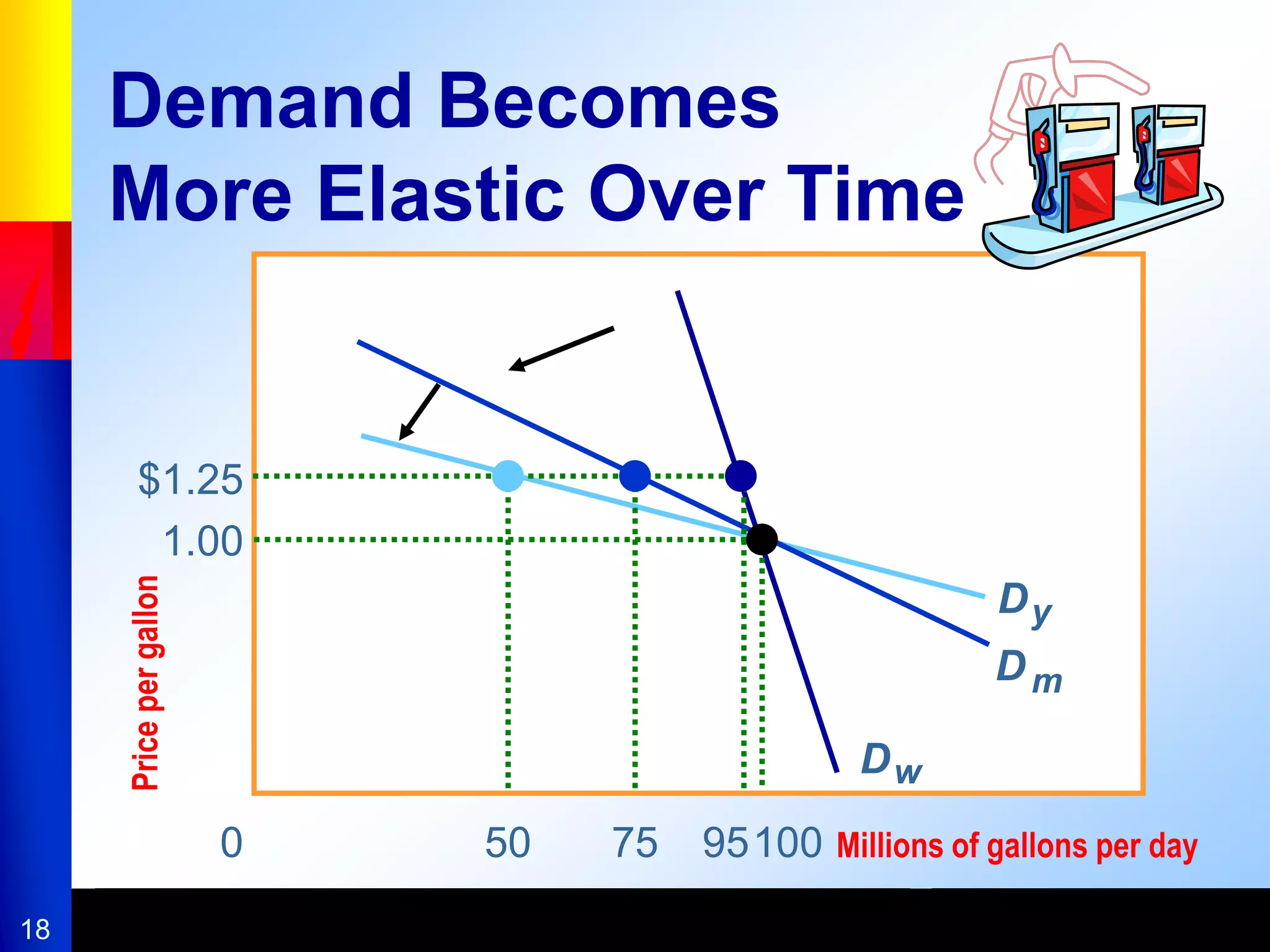
18
50 75 95100 Millions of gallons per day
0
$1.25
1.00
Price
per
gallon
Dy
Dm
Dw
Demand Becomes
More Elastic Over Time
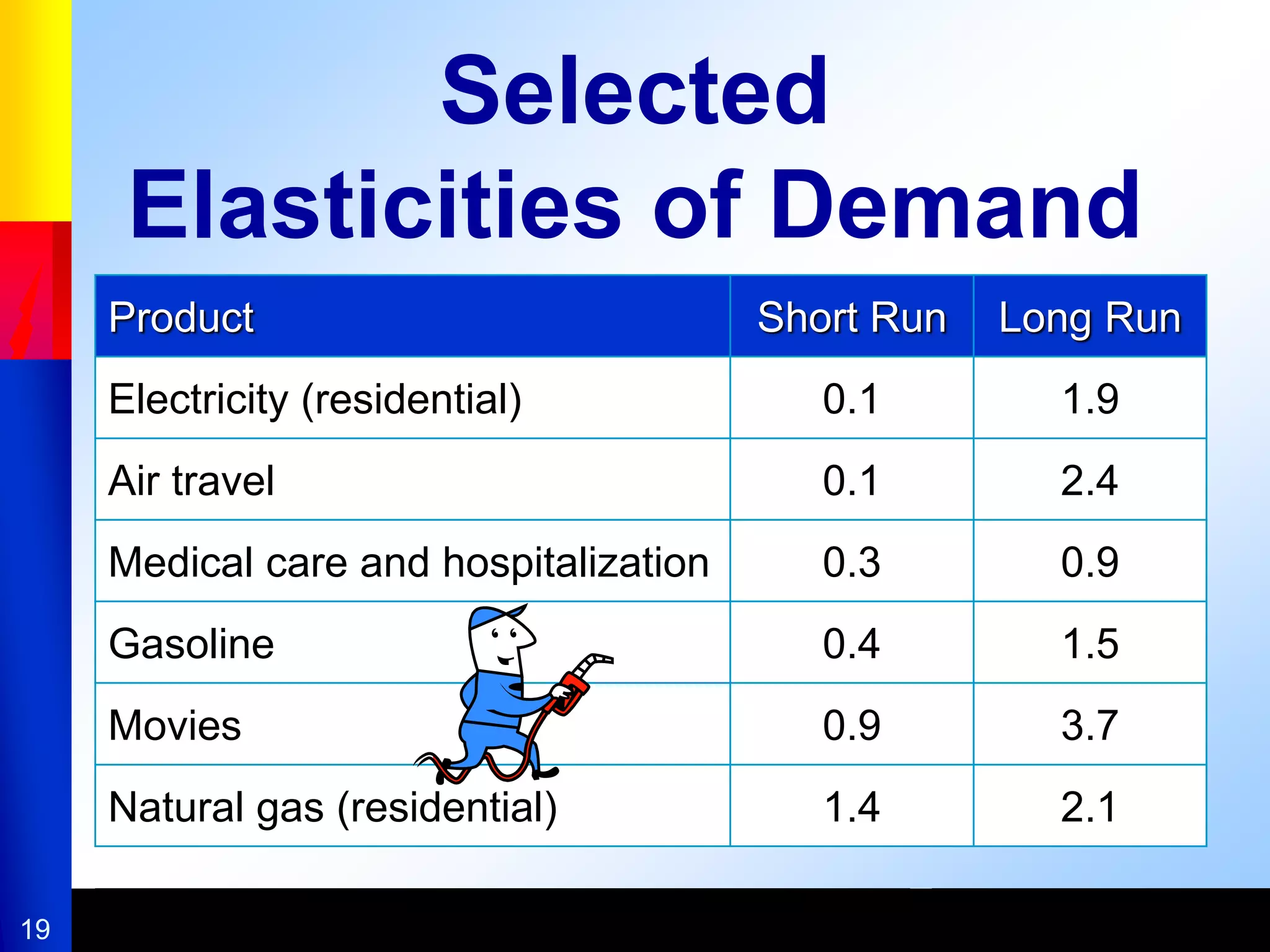
19
Selected
Elasticities of Demand
Product Short Run Long Run
Electricity (residential) 0.1 1.9
Air travel 0.1 2.4
Medical care and hospitalization 0.3 0.9
Gasoline 0.4 1.5
Movies 0.9 3.7
Natural gas (residential) 1.4 2.1
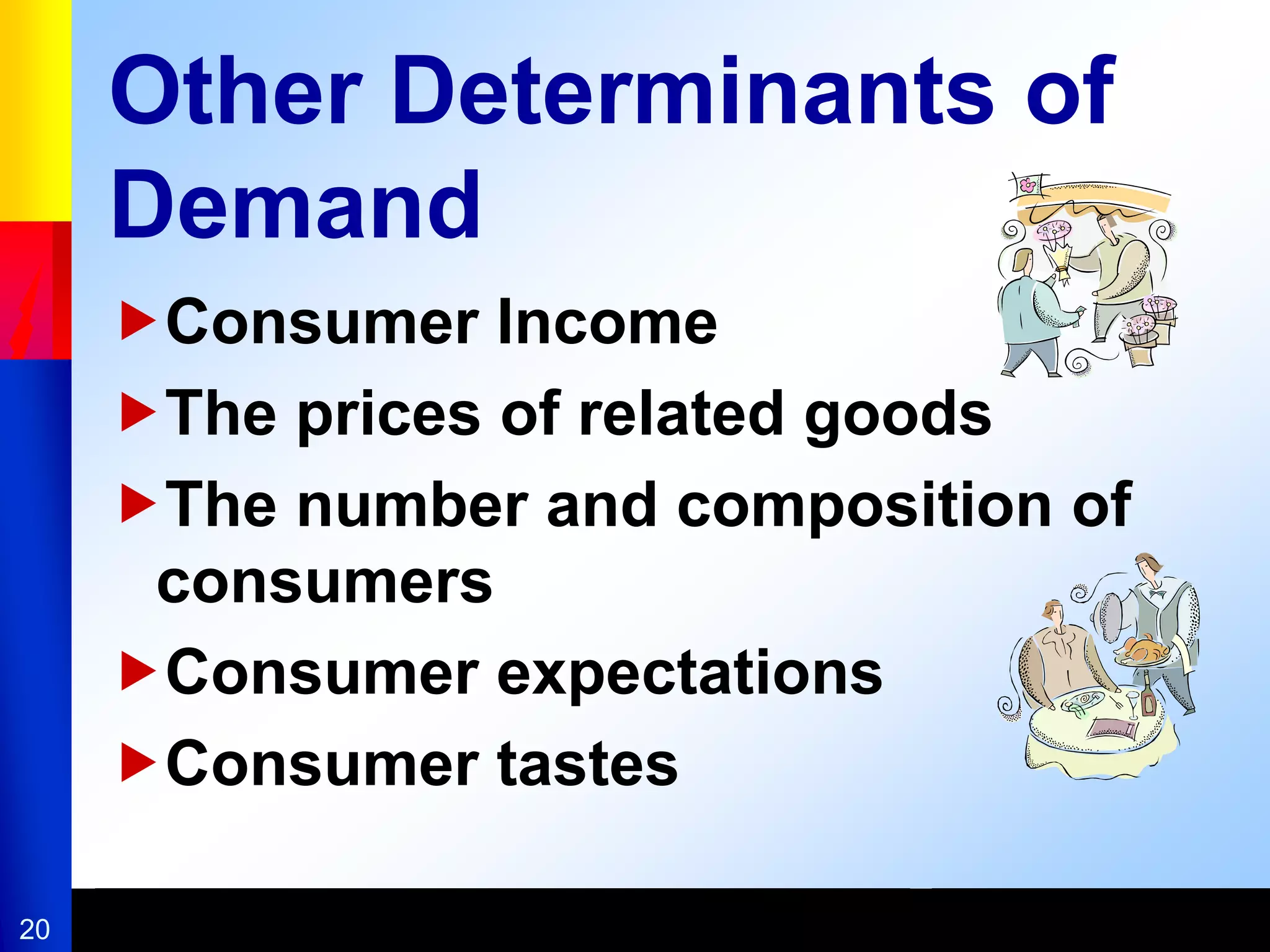
20
Other Determinants of
Demand
Consumer Income
The prices of related goods
The number and composition of
consumers
Consumer expectations
Consumer tastes
21
Changes in Consumer
Income
If income ↑, consumers willing and
able to buy more which ↑ demand
Demand curve shifts to the right
Two categories of goods:
Normal goods – demand increases as
money income increases
Inferior goods – demand decreases as
money income increases
Examples: used clothing, bus rides, etc.
22
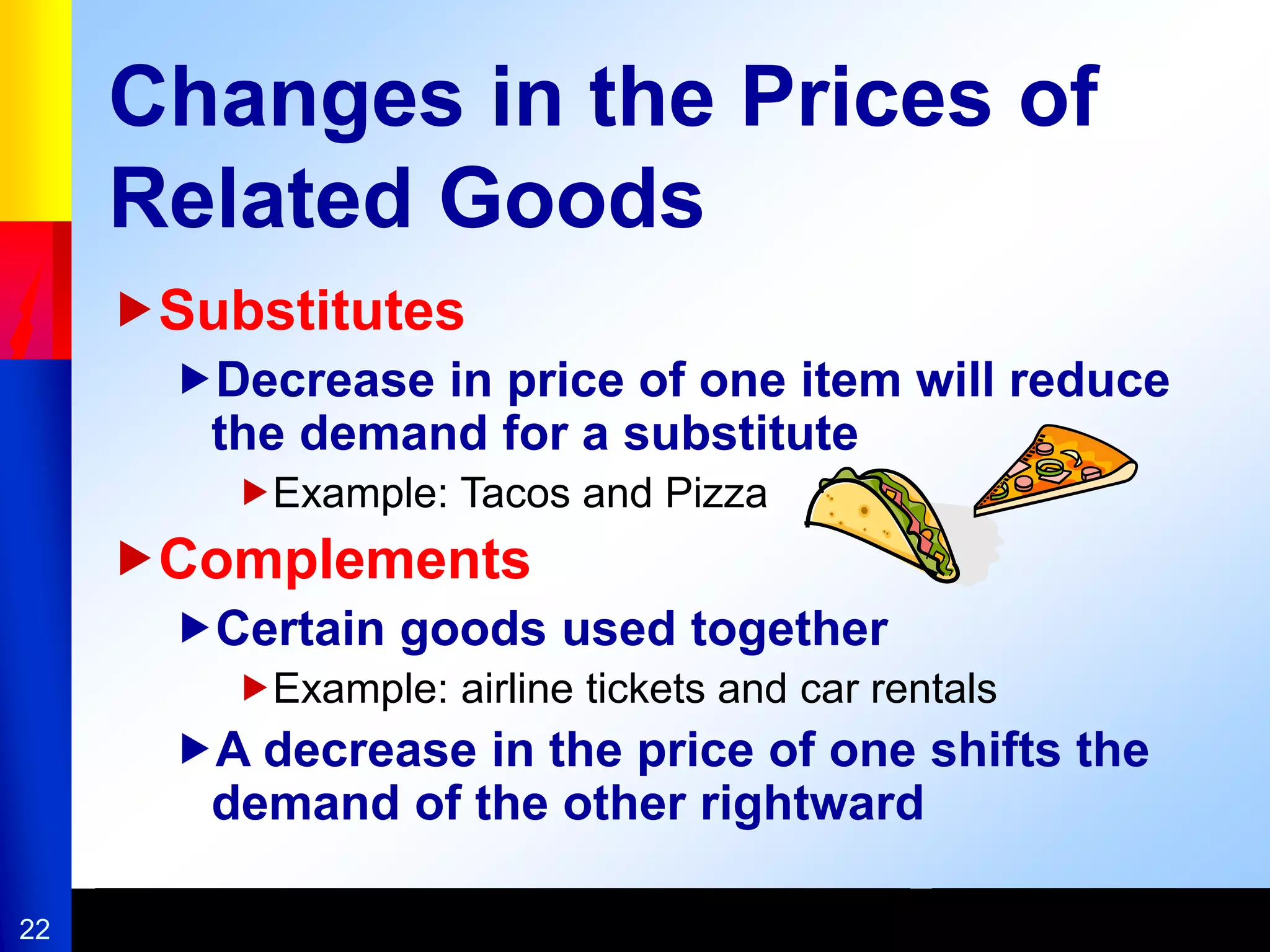
Changes in the Prices of
Related Goods
Substitutes
Decrease in price of one item will reduce
the demand for a substitute
Example: Tacos and Pizza
Complements
Certain goods used together
Example: airline tickets and car rentals
A decrease in the price of one shifts the
demand of the other rightward
23
Changes in Prices of
Related Goods (cont)
Changes in size or composition of the
population will increase demand and shift
the curve to the right
Changes in consumer expectations can
shift the demand curve to the left or the
right
Changes in consumer tastes
Tastes are your likes and dislikes as a consumer
24
Movement along
the Curve
Movement vs. Shift
A change in price, causes a movement
along the demand curve, changes the
quantity demanded
A change in one of the determinants of
demand other than price causes a shift of
a demand curve
25
Extensions of Demand
Analysis
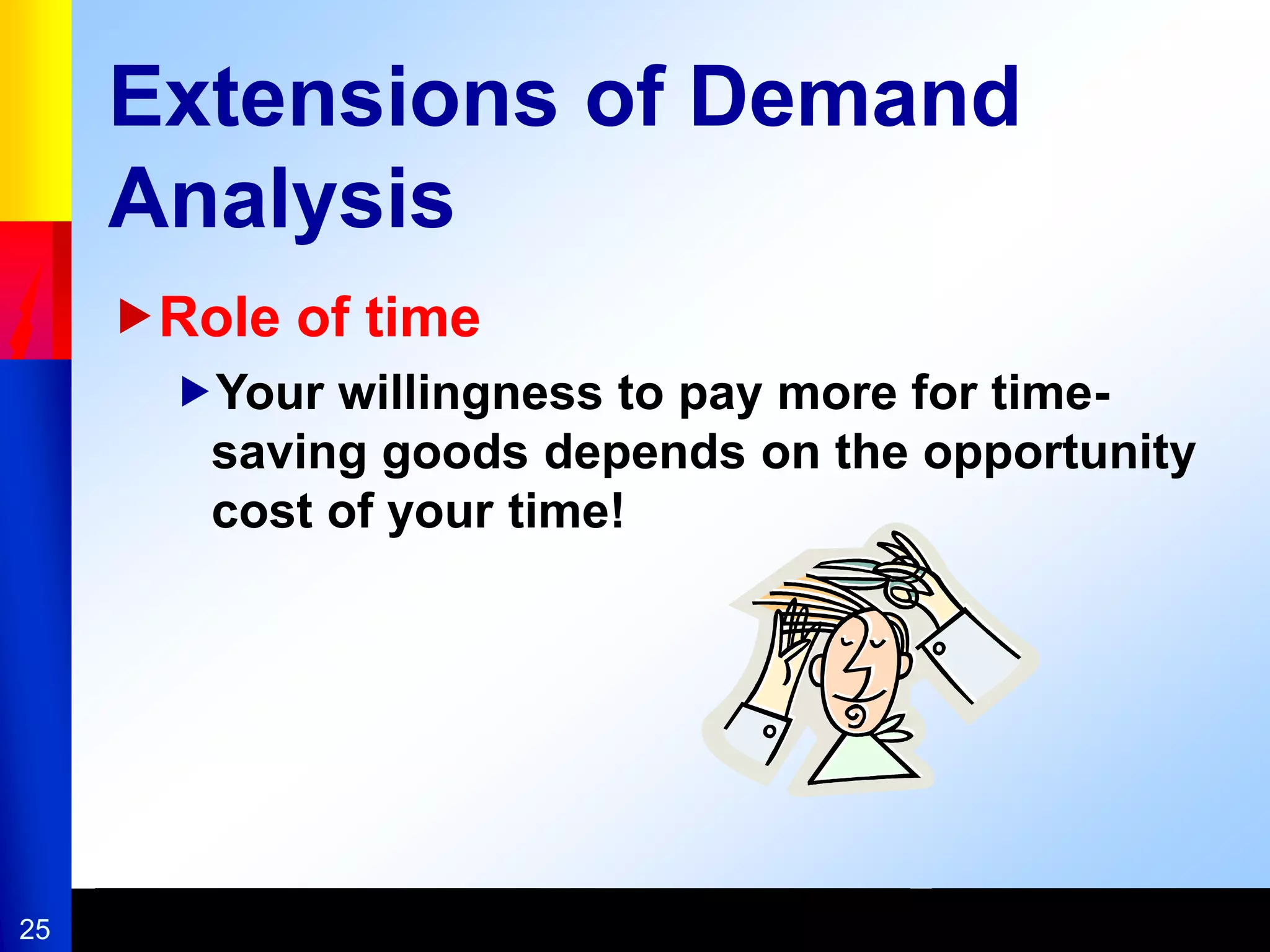
Role of time
Your willingness to pay more for time-
saving goods depends on the opportunity
cost of your time!

Economics class 11 theory of Demand.pptx

  • 1.
    1 The Economics of Demand The Demand Curve  Elasticity of Demand  Changes in Demand
  • 2.
    2 Demand  Why arenewspapers sold in vending machines that allow you to take more than one copy?  How much do you eat when you can eat all you want?  What cures ‘spring fever’?  What economic principle is behind the saying, “Been there, done that”?  Why do higher cigarette taxes cut smoking by teens more than by other age groups? Consider
  • 3.
    3 The Demand Curve Explain the law of demand  Interpret a demand schedule and demand curve Objectives
  • 4.
    4 The Demand Curve demand  law of demand  marginal utility  law of diminishing marginal utility  demand curve  quantity demanded  individual demand  market demand Key Terms
  • 5.
    5 Demand Demand indicates howmuch of a product consumers are both willing and able to buy at each possible price during a given period, other things remaining constant.
  • 6.
    6 Law of Demand Thelaw of demand says that quantity demanded varies inversely with price, other things constant. Thus, the higher the price, the smaller the quantity demanded.
  • 7.
    7 Law of Demand Demand,wants, and needs Substitution effect  The change in the relative price (the price of one good relative to the prices of other goods) causes the substitution effect  If all prices changed by same margin, there would be no substitution effect Income effect  Money income – the number of dollars you receive per period  Real income – measure in terms of how many goods and services you can buy Diminishing marginal utility  Marginal utility – additional satisfaction you derive from each item  Law of marginal utility you derive from each additional item consumed decreases as your consumption increases (example: pizza slices)
  • 8.
    8 Demand Schedule and DemandCurve Demand versus quantity demanded Individual demand Market demand
  • 9.
    9 Demand Schedule Price QuantityDemanded per Pizza per Week (millions) a $15 8 b 12 14 c 9 20 d 6 26 e 3 32
  • 10.
    10 8 14 2026 32 Millions of pizzas per week $15 12 9 6 3 0 Price per pizza Demand Curve for Pizza a b c d e D
  • 11.
    11 $12 8 4 1 (c) Chris $12 8 4 1 2 (b)Brianna $12 8 4 Price 1 2 3 Pizzas (per week) (a) Hector Individual Demand for Pizzas dH dB dC
  • 12.
    12 $12 8 4 Price 1 2 3Pizzas (per week) (d) Market demand for pizzas 6 Market Demand for Pizzas dH dB dC D + + =
  • 13.
    13 Elasticity of Demand Compute the elasticity of demand and explain its relevance.  Discuss factors that influence elasticity of demand. Objectives
  • 14.
    14 Computing the Elasticity ofDemand Elasticity of demand measures the percentage change in quantity demanded divided by percentage change in price. Elasticity of demand = Percentage change in quantity demanded Percentage change in price
  • 15.
    15 Computing Elasticity of Demand Elasticityvalues >1 it is elastic Percentage change in price will result in larger percentage change in the quantity demanded =1 it is unit-elastic <1 it is inelastic Demand is usually more elastic at higher prices and less elastic with lower prices Elasticity and total revenue Price x’s quantity demanded at that price
  • 16.
    16 8 14 2026 32 Millions of pizzas per week $15 12 9 6 3 0 Price per pizza The Demand for Pizza D
  • 17.
    17 Determinants of Demand Elasticity Availability of substitutes  The greater the availability of substitutes for a good, the greater the good’s elasticity of demand  Share of consumer’s budget spent on the good  Increase in prices reduced the demand because people are not both willing and able to purchase @ higher prices  A matter of time  The longer the adjustment period, the greater the consumer’s ability to substitute  Some elasticity estimates  The elasticity of demand is greater in the long run because consumers have more time to adjust
  • 18.
    18 50 75 95100Millions of gallons per day 0 $1.25 1.00 Price per gallon Dy Dm Dw Demand Becomes More Elastic Over Time
  • 19.
    19 Selected Elasticities of Demand ProductShort Run Long Run Electricity (residential) 0.1 1.9 Air travel 0.1 2.4 Medical care and hospitalization 0.3 0.9 Gasoline 0.4 1.5 Movies 0.9 3.7 Natural gas (residential) 1.4 2.1
  • 20.
    20 Other Determinants of Demand ConsumerIncome The prices of related goods The number and composition of consumers Consumer expectations Consumer tastes
  • 21.
    21 Changes in Consumer Income Ifincome ↑, consumers willing and able to buy more which ↑ demand Demand curve shifts to the right Two categories of goods: Normal goods – demand increases as money income increases Inferior goods – demand decreases as money income increases Examples: used clothing, bus rides, etc.
  • 22.
    22 Changes in thePrices of Related Goods Substitutes Decrease in price of one item will reduce the demand for a substitute Example: Tacos and Pizza Complements Certain goods used together Example: airline tickets and car rentals A decrease in the price of one shifts the demand of the other rightward
  • 23.
    23 Changes in Pricesof Related Goods (cont) Changes in size or composition of the population will increase demand and shift the curve to the right Changes in consumer expectations can shift the demand curve to the left or the right Changes in consumer tastes Tastes are your likes and dislikes as a consumer
  • 24.
    24 Movement along the Curve Movementvs. Shift A change in price, causes a movement along the demand curve, changes the quantity demanded A change in one of the determinants of demand other than price causes a shift of a demand curve
  • 25.
    25 Extensions of Demand Analysis Roleof time Your willingness to pay more for time- saving goods depends on the opportunity cost of your time!

Editor's Notes