PRESENTER: REKHA MARBATE
 Electric wiring of heart
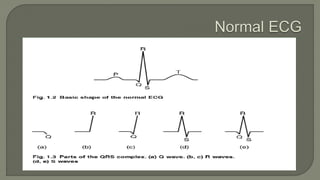
 Normal ECG
 PR interval
 QRS complex
 Cardiac axis
 Axial Deviation
 How to report ECG
 Example
What is an EKG/ECG?
• The electrocardiogram (ECG) is a representation of the electrical
events of the cardiac cycle.
• Each event has a distinctive waveform
• the study of waveform can lead to greater insight into a patient’s
cardiac patho-physiology.
With ECGs we can identify
 Arrhythmias
 Myocardial ischemia and infarction
 Pericarditis
 Chamber hypertrophy
 Electrolyte disturbances (i.e. hyperkalemia, hypokalemia)
 Drug toxicity (i.e. digoxin and drugs which prolong the QT interval)
Depolarization
• Contraction of any muscle is associated with electrical changes
called depolarization
• These changes can be detected by electrodes attached to the surface
of the body
Pacemakers of the Heart
• SA Node - Dominant pacemaker with an intrinsic rate of 60 - 100
beats/minute.
• AV Node - Back-up pacemaker with an intrinsic rate of 40 - 60
beats/minute.
• Ventricular cells - Back-up pacemaker with an intrinsic rate of 20 -
45 bpm.
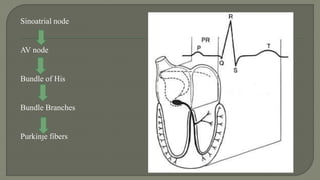
Sinoatrial node
AV node
Bundle of His
Bundle Branches
Purkinje fibers
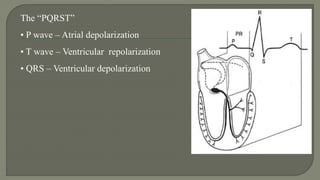
The “PQRST”
• P wave – Atrial depolarization
• T wave – Ventricular repolarization
• QRS – Ventricular depolarization
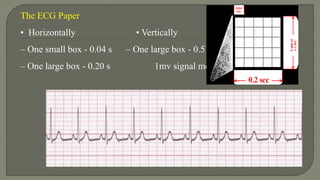
The ECG Paper
• Horizontally • Vertically
– One small box - 0.04 s – One large box - 0.5 cm
– One large box - 0.20 s 1mv signal moves stylus by 1cm
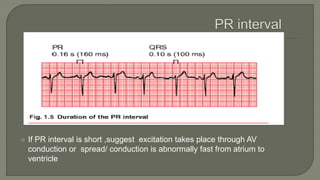
 If PR interval is short ,suggest excitation takes place through AV
conduction or spread/ conduction is abnormally fast from atrium to
ventricle
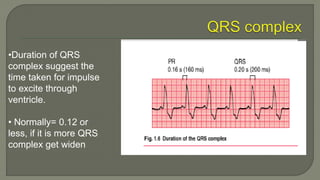
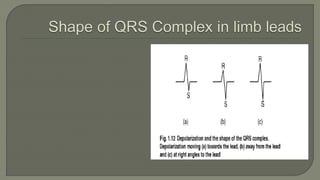
•Duration of QRS
complex suggest the
time taken for impulse
to excite through
ventricle.
• Normally= 0.12 or
less, if it is more QRS
complex get widen
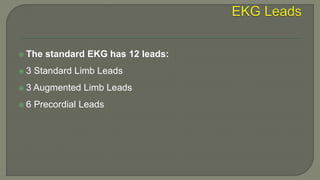
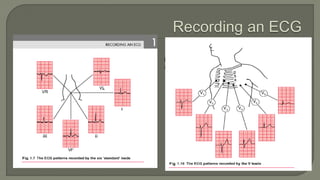
 The standard EKG has 12 leads:
 3 Standard Limb Leads
 3 Augmented Limb Leads
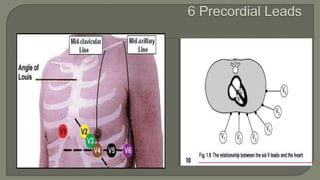
 6 Precordial Leads
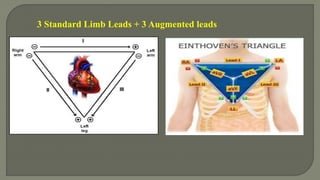
3 Standard Limb Leads + 3 Augmented leads
Lat
sur
RT
atrium
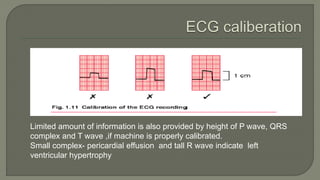
Limited amount of information is also provided by height of P wave, QRS
complex and T wave ,if machine is properly calibrated.
Small complex- pericardial effusion and tall R wave indicate left
ventricular hypertrophy
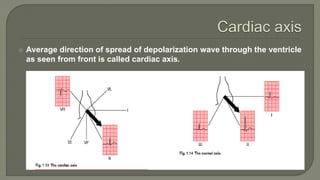
 Average direction of spread of depolarization wave through the ventricle
as seen from front is called cardiac axis.
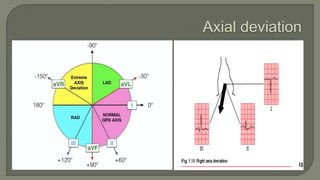
 Rt axial deviation:- rt ventricular hypertrophy, associated with pulmonary
condition put strain on rt side of heart and with congenital heart disease.
(pulmonary embolus)
 Lt axial deviation: lt ventricular hypertrophy, mostly problem is conduction
defect rather than increase in left ventriclar muscle bulk.
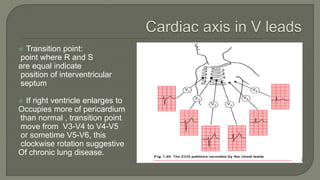
 Transition point:
point where R and S
are equal indicate
position of interventricular
septum
 If right ventricle enlarges to
Occupies more of pericardium
than normal , transition point
move from V3-V4 to V4-V5
or sometime V5-V6, this
clockwise rotation suggestive
Of chronic lung disease.
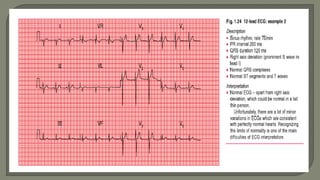
 Rhythm
 Conduction interval
 Cardiac axis
 Descripsion of QRS complex
 Description of ST segment and T wave
Ecg ppt
Ecg ppt

Ecg ppt

  • 1.
  • 2.
     Electric wiringof heart  Normal ECG  PR interval  QRS complex  Cardiac axis  Axial Deviation  How to report ECG  Example
  • 4.
    What is anEKG/ECG? • The electrocardiogram (ECG) is a representation of the electrical events of the cardiac cycle. • Each event has a distinctive waveform • the study of waveform can lead to greater insight into a patient’s cardiac patho-physiology.
  • 5.
    With ECGs wecan identify  Arrhythmias  Myocardial ischemia and infarction  Pericarditis  Chamber hypertrophy  Electrolyte disturbances (i.e. hyperkalemia, hypokalemia)  Drug toxicity (i.e. digoxin and drugs which prolong the QT interval)
  • 6.
    Depolarization • Contraction ofany muscle is associated with electrical changes called depolarization • These changes can be detected by electrodes attached to the surface of the body
  • 7.
    Pacemakers of theHeart • SA Node - Dominant pacemaker with an intrinsic rate of 60 - 100 beats/minute. • AV Node - Back-up pacemaker with an intrinsic rate of 40 - 60 beats/minute. • Ventricular cells - Back-up pacemaker with an intrinsic rate of 20 - 45 bpm.
  • 8.
    Sinoatrial node AV node Bundleof His Bundle Branches Purkinje fibers
  • 9.
    The “PQRST” • Pwave – Atrial depolarization • T wave – Ventricular repolarization • QRS – Ventricular depolarization
  • 11.
    The ECG Paper •Horizontally • Vertically – One small box - 0.04 s – One large box - 0.5 cm – One large box - 0.20 s 1mv signal moves stylus by 1cm
  • 14.
     If PRinterval is short ,suggest excitation takes place through AV conduction or spread/ conduction is abnormally fast from atrium to ventricle
  • 15.
    •Duration of QRS complexsuggest the time taken for impulse to excite through ventricle. • Normally= 0.12 or less, if it is more QRS complex get widen
  • 16.
     The standardEKG has 12 leads:  3 Standard Limb Leads  3 Augmented Limb Leads  6 Precordial Leads
  • 17.
    3 Standard LimbLeads + 3 Augmented leads
  • 19.
  • 20.
    Limited amount ofinformation is also provided by height of P wave, QRS complex and T wave ,if machine is properly calibrated. Small complex- pericardial effusion and tall R wave indicate left ventricular hypertrophy
  • 22.
     Average directionof spread of depolarization wave through the ventricle as seen from front is called cardiac axis.
  • 24.
     Rt axialdeviation:- rt ventricular hypertrophy, associated with pulmonary condition put strain on rt side of heart and with congenital heart disease. (pulmonary embolus)  Lt axial deviation: lt ventricular hypertrophy, mostly problem is conduction defect rather than increase in left ventriclar muscle bulk.
  • 25.
     Transition point: pointwhere R and S are equal indicate position of interventricular septum  If right ventricle enlarges to Occupies more of pericardium than normal , transition point move from V3-V4 to V4-V5 or sometime V5-V6, this clockwise rotation suggestive Of chronic lung disease.
  • 26.
     Rhythm  Conductioninterval  Cardiac axis  Descripsion of QRS complex  Description of ST segment and T wave