Abnormal ECG
ARRHYTHMIA IDENTIFICATION
Supraventricular Arrhythmias
Abnormality of impulse generation or conduction "above" the level of the ventricles.
Sinus arrhythmia,
Atrial arrhythmia,
Junctional arrhythmia.
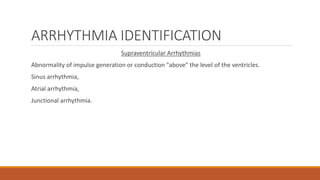
Sinus arrhythmia
Sinus arrhythmia is an irregular sinus rhythm with varying R-R intervals.
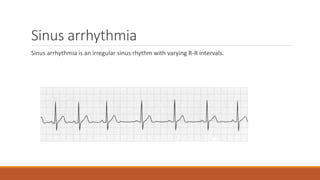
Sinus bradycardia
Sinus rhythm occurring at a rate of less than
60 BPM. This rhythm may significantly reduce
cardiac output, causing hemodynamic
compromise, manifested by hypotension or
symptoms such as dizziness, lightheadedness,
or syncope.
On the other hand, individuals taking beta-
blockers, medication that slows the heart, may
exhibit this as their normal rhythm, as may
individuals who achieve a high level of physical
conditioning.
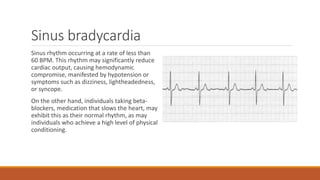
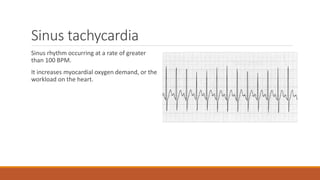
Sinus tachycardia
Sinus rhythm occurring at a rate of greater
than 100 BPM.
It increases myocardial oxygen demand, or the
workload on the heart.
Premature Arrhythmia
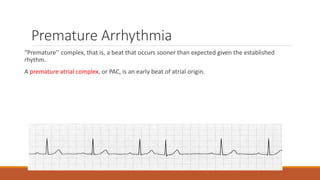
“Premature’’ complex, that is, a beat that occurs sooner than expected given the established
rhythm.
A premature atrial complex, or PAC, is an early beat of atrial origin.
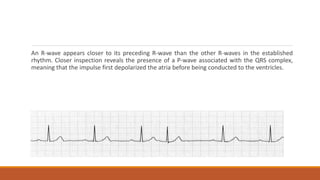
An R-wave appears closer to its preceding R-wave than the other R-waves in the established
rhythm. Closer inspection reveals the presence of a P-wave associated with the QRS complex,
meaning that the impulse first depolarized the atria before being conducted to the ventricles.
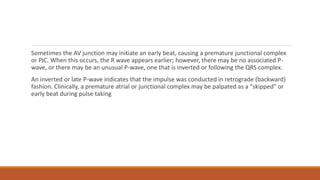
Sometimes the AV junction may initiate an early beat, causing a premature junctional complex
or PJC. When this occurs, the R wave appears earlier; however, there may be no associated P-
wave, or there may be an unusual P-wave, one that is inverted or following the QRS complex.
An inverted or late P-wave indicates that the impulse was conducted in retrograde (backward)
fashion. Clinically, a premature atrial or junctional complex may be palpated as a "skipped" or
early beat during pulse taking
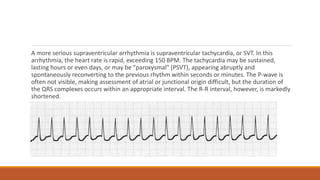
A more serious supraventricular arrhythmia is supraventricular tachycardia, or SVT. In this
arrhythmia, the heart rate is rapid, exceeding 150 BPM. The tachycardia may be sustained,
lasting hours or even days, or may be "paroxysmal" (PSVT), appearing abruptly and
spontaneously reconverting to the previous rhythm within seconds or minutes. The P-wave is
often not visible, making assessment of atrial or junctional origin difficult, but the duration of
the QRS complexes occurs within an appropriate interval. The R-R interval, however, is markedly
shortened.
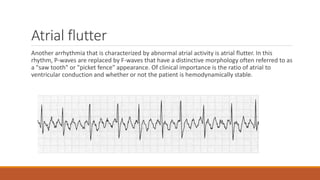
Atrial flutter
Another arrhythmia that is characterized by abnormal atrial activity is atrial flutter. In this
rhythm, P-waves are replaced by F-waves that have a distinctive morphology often referred to as
a "saw tooth" or "picket fence" appearance. Of clinical importance is the ratio of atrial to
ventricular conduction and whether or not the patient is hemodynamically stable.
Abnormal ECG- Arhythmia.pptx

Abnormal ECG- Arhythmia.pptx

  • 1.
  • 2.
    ARRHYTHMIA IDENTIFICATION Supraventricular Arrhythmias Abnormalityof impulse generation or conduction "above" the level of the ventricles. Sinus arrhythmia, Atrial arrhythmia, Junctional arrhythmia.
  • 3.
    Sinus arrhythmia Sinus arrhythmiais an irregular sinus rhythm with varying R-R intervals.
  • 4.
    Sinus bradycardia Sinus rhythmoccurring at a rate of less than 60 BPM. This rhythm may significantly reduce cardiac output, causing hemodynamic compromise, manifested by hypotension or symptoms such as dizziness, lightheadedness, or syncope. On the other hand, individuals taking beta- blockers, medication that slows the heart, may exhibit this as their normal rhythm, as may individuals who achieve a high level of physical conditioning.
  • 5.
    Sinus tachycardia Sinus rhythmoccurring at a rate of greater than 100 BPM. It increases myocardial oxygen demand, or the workload on the heart.
  • 6.
    Premature Arrhythmia “Premature’’ complex,that is, a beat that occurs sooner than expected given the established rhythm. A premature atrial complex, or PAC, is an early beat of atrial origin.
  • 7.
    An R-wave appearscloser to its preceding R-wave than the other R-waves in the established rhythm. Closer inspection reveals the presence of a P-wave associated with the QRS complex, meaning that the impulse first depolarized the atria before being conducted to the ventricles.
  • 8.
    Sometimes the AVjunction may initiate an early beat, causing a premature junctional complex or PJC. When this occurs, the R wave appears earlier; however, there may be no associated P- wave, or there may be an unusual P-wave, one that is inverted or following the QRS complex. An inverted or late P-wave indicates that the impulse was conducted in retrograde (backward) fashion. Clinically, a premature atrial or junctional complex may be palpated as a "skipped" or early beat during pulse taking
  • 9.
    A more serioussupraventricular arrhythmia is supraventricular tachycardia, or SVT. In this arrhythmia, the heart rate is rapid, exceeding 150 BPM. The tachycardia may be sustained, lasting hours or even days, or may be "paroxysmal" (PSVT), appearing abruptly and spontaneously reconverting to the previous rhythm within seconds or minutes. The P-wave is often not visible, making assessment of atrial or junctional origin difficult, but the duration of the QRS complexes occurs within an appropriate interval. The R-R interval, however, is markedly shortened.
  • 10.
    Atrial flutter Another arrhythmiathat is characterized by abnormal atrial activity is atrial flutter. In this rhythm, P-waves are replaced by F-waves that have a distinctive morphology often referred to as a "saw tooth" or "picket fence" appearance. Of clinical importance is the ratio of atrial to ventricular conduction and whether or not the patient is hemodynamically stable.