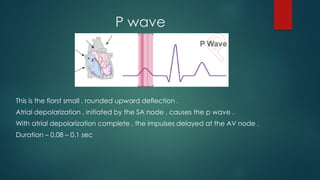
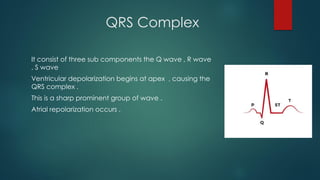
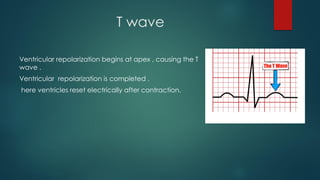
The QRST complex is a part of the electrocardiogram (ECG) that represents the electrical activity of the ventricles during one heartbeat. It begins with the QRS complex, which indicates ventricular depolarization and the contraction of the ventricles. The Q wave is the initial negative deflection, followed by the R wave (a positive deflection) and the S wave (a negative deflection). After this, the T wave appears, representing ventricular repolarization or recovery. The duration and shape of the QRST complex are clinically important for detecting heart abnormalities such as arrhythmias, conduction defects, and myocardial infarction. Overall, it reflects the complete cycle of ventricular contraction and relaxation.