The Rock Cycle
Amy de Jong
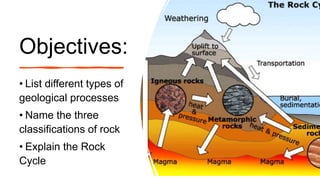
Objectives:
• List different types of
geological processes
• Name the three
classifications of rock
• Explain the Rock
Cycle
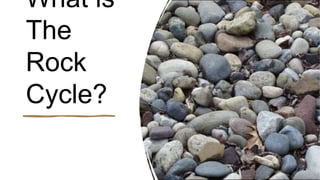
What is
The
Rock
Cycle?
Let’s
Break it
Down!
What is a rock?
• A rock is a solid mixture of one
or more minerals.
What is a Cycle?
• A cycle is a series of changes
Let’s put it together!
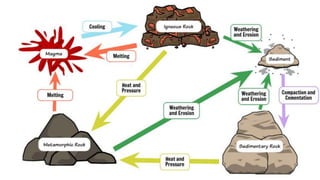
• The rock cycle is the geological
forces and processes that
cause rocks to change from
one type to another and back
again.
But What are these forces and
Processes?
Rock Cycle Processes
include:
• Weathering and Erosion
• Deposition
• Compaction and
Cementation
•Melting
•Cooling
•Solidification
•Metamorphism
What is
Weathering and
Erosion?
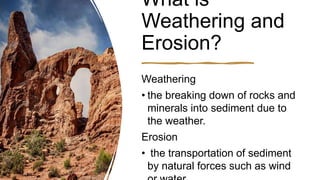
Weathering
• the breaking down of rocks and
minerals into sediment due to
the weather.
Erosion
• the transportation of sediment
by natural forces such as wind
What is
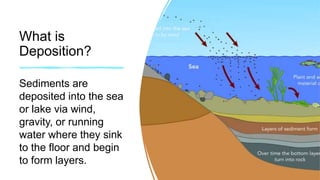
Deposition?
Sediments are
deposited into the sea
or lake via wind,
gravity, or running
water where they sink
to the floor and begin
to form layers.
What is
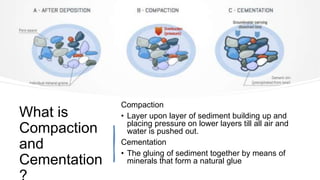
Compaction
and
Cementation
Compaction
• Layer upon layer of sediment building up and
placing pressure on lower layers till all air and
water is pushed out.
Cementation
• The gluing of sediment together by means of
minerals that form a natural glue
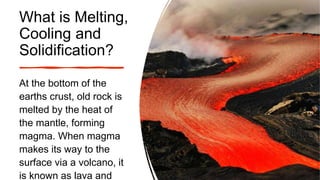
What is Melting,
Cooling and
Solidification?
At the bottom of the
earths crust, old rock is
melted by the heat of
the mantle, forming
magma. When magma
makes its way to the
surface via a volcano, it
is known as lava and
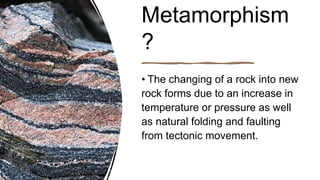
Metamorphism
?
• The changing of a rock into new
rock forms due to an increase in
temperature or pressure as well
as natural folding and faulting
from tectonic movement.
What do
these
different
processe
s create?
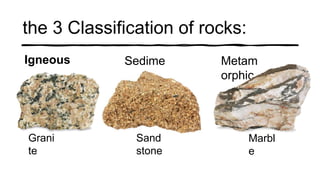
the 3 Classification of rocks:
Igneous Sedime
ntary
Metam
orphic
Grani
te
Sand
stone
Marbl
e
Igneous
Rock
“Igneous means to be made
from fire and heat.”
These rocks can form above
ground or form below the
surface.
• Extrusive igneous rock - Above
• Intrusive igneous rock - Below
Formed from
magma in the
molten layer the of
Earth’s mantle.
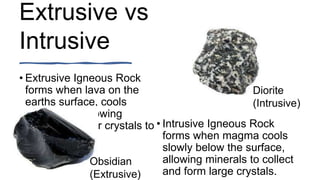
Extrusive vs
Intrusive
• Extrusive Igneous Rock
forms when lava on the
earths surface, cools
quickly, not allowing
enough time for crystals to
form.
• Intrusive Igneous Rock
forms when magma cools
slowly below the surface,
allowing minerals to collect
and form large crystals.
Diorite
(Intrusive)
Obsidian
(Extrusive)
Sedimenta
ry Rock
Rock
There are three category of
Sedimentary rock:
• Clastic rock – formed from
broken fragments of pre-
existing rock.
• Organic rock – formed from
plant and animal remains
• Chemical rock – formed from
minerals that solidify from
water
Formed from
sediments such as
sand, pebbles, shells
and remains of plants
and animals. They
harden due to the
Limestone –
formed from shells
and sea plants and
animals. Only
occurs underwater.
Shale – formed
from mud, fine silt
or clay. Also called
Mudstone
Conglomerate –
formed from
pebbles and
smooth round
stones
Chemica
l rock
Clastic
rock
Coal – formed from
decaying plant
matter.
Organic
rock
Metamorph
ic Rock
“Metamorphic means to have
been changed”.
There are two types of
Metamorphic Rock:
• Foliated (Banded Layers)
• Non – Foliated (Crystals)
Metamorphic rocks
are igneous or
sedimentary rocks
changed by extreme
heat and pressure.
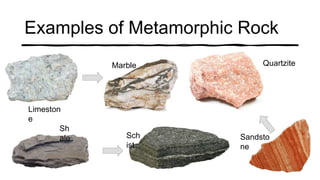
Examples of Metamorphic Rock
Limeston
e
Marble
Sandsto
ne
Quartzite
Sch
ist
Sh
ale
Thank
you!
Resources:
A. DeWitt (Dec. 09, 2008) The Rock Cycle [PowerPoint] SlideShare
https://www.slideshare.net/guest74968e/the-rock-cycle-presentation-
834378
C. Reich Little(Sep. 25, 2017) Rockcycle 2017 [PowerPoint]
SlideShare https://www.slideshare.net/mariejajaroa/rock-cycle-
57878723
Mojavehack (Feb. 26, 2015) 5.0 Rocks and Rock Cycle [PowerPoint]
SlideShare https://www.slideshare.net/mojavehack/50-rocks-and-rock-
cycle
R. Brindley (Sep. 27, 2011) The Rock Cycle and Rocks [PowerPoint]
SlideShare https://www.slideshare.net/rebelbrindley/the-rock-cycle-

The Rock Cycle.pptx

  • 1.
  • 2.
    Objectives: • List differenttypes of geological processes • Name the three classifications of rock • Explain the Rock Cycle
  • 3.
  • 4.
    Let’s Break it Down! What isa rock? • A rock is a solid mixture of one or more minerals. What is a Cycle? • A cycle is a series of changes Let’s put it together! • The rock cycle is the geological forces and processes that cause rocks to change from one type to another and back again.
  • 5.
    But What arethese forces and Processes? Rock Cycle Processes include: • Weathering and Erosion • Deposition • Compaction and Cementation •Melting •Cooling •Solidification •Metamorphism
  • 6.
    What is Weathering and Erosion? Weathering •the breaking down of rocks and minerals into sediment due to the weather. Erosion • the transportation of sediment by natural forces such as wind
  • 7.
    What is Deposition? Sediments are depositedinto the sea or lake via wind, gravity, or running water where they sink to the floor and begin to form layers.
  • 8.
    What is Compaction and Cementation Compaction • Layerupon layer of sediment building up and placing pressure on lower layers till all air and water is pushed out. Cementation • The gluing of sediment together by means of minerals that form a natural glue
  • 9.
    What is Melting, Coolingand Solidification? At the bottom of the earths crust, old rock is melted by the heat of the mantle, forming magma. When magma makes its way to the surface via a volcano, it is known as lava and
  • 10.
    Metamorphism ? • The changingof a rock into new rock forms due to an increase in temperature or pressure as well as natural folding and faulting from tectonic movement.
  • 11.
  • 12.
    the 3 Classificationof rocks: Igneous Sedime ntary Metam orphic Grani te Sand stone Marbl e
  • 13.
    Igneous Rock “Igneous means tobe made from fire and heat.” These rocks can form above ground or form below the surface. • Extrusive igneous rock - Above • Intrusive igneous rock - Below Formed from magma in the molten layer the of Earth’s mantle.
  • 14.
    Extrusive vs Intrusive • ExtrusiveIgneous Rock forms when lava on the earths surface, cools quickly, not allowing enough time for crystals to form. • Intrusive Igneous Rock forms when magma cools slowly below the surface, allowing minerals to collect and form large crystals. Diorite (Intrusive) Obsidian (Extrusive)
  • 15.
    Sedimenta ry Rock Rock There arethree category of Sedimentary rock: • Clastic rock – formed from broken fragments of pre- existing rock. • Organic rock – formed from plant and animal remains • Chemical rock – formed from minerals that solidify from water Formed from sediments such as sand, pebbles, shells and remains of plants and animals. They harden due to the
  • 16.
    Limestone – formed fromshells and sea plants and animals. Only occurs underwater. Shale – formed from mud, fine silt or clay. Also called Mudstone Conglomerate – formed from pebbles and smooth round stones Chemica l rock Clastic rock Coal – formed from decaying plant matter. Organic rock
  • 17.
    Metamorph ic Rock “Metamorphic meansto have been changed”. There are two types of Metamorphic Rock: • Foliated (Banded Layers) • Non – Foliated (Crystals) Metamorphic rocks are igneous or sedimentary rocks changed by extreme heat and pressure.
  • 18.
    Examples of MetamorphicRock Limeston e Marble Sandsto ne Quartzite Sch ist Sh ale
  • 20.
  • 21.
    Resources: A. DeWitt (Dec.09, 2008) The Rock Cycle [PowerPoint] SlideShare https://www.slideshare.net/guest74968e/the-rock-cycle-presentation- 834378 C. Reich Little(Sep. 25, 2017) Rockcycle 2017 [PowerPoint] SlideShare https://www.slideshare.net/mariejajaroa/rock-cycle- 57878723 Mojavehack (Feb. 26, 2015) 5.0 Rocks and Rock Cycle [PowerPoint] SlideShare https://www.slideshare.net/mojavehack/50-rocks-and-rock- cycle R. Brindley (Sep. 27, 2011) The Rock Cycle and Rocks [PowerPoint] SlideShare https://www.slideshare.net/rebelbrindley/the-rock-cycle-