11. Project Communications
Management
Communications Management
• The processes required to ensure
timely and appropriate generation,
collection, distribution, storage,
recovery, and ultimate disposition of
project information
Why Do We Manage Communications?
• Project Managers spend most of their time
communicating
• Communication is complex; requiring
choices between:
– Sender-Receiver models
– Choice of media
– Writing style
– Presentation techniques
– Meeting management
Communication Model
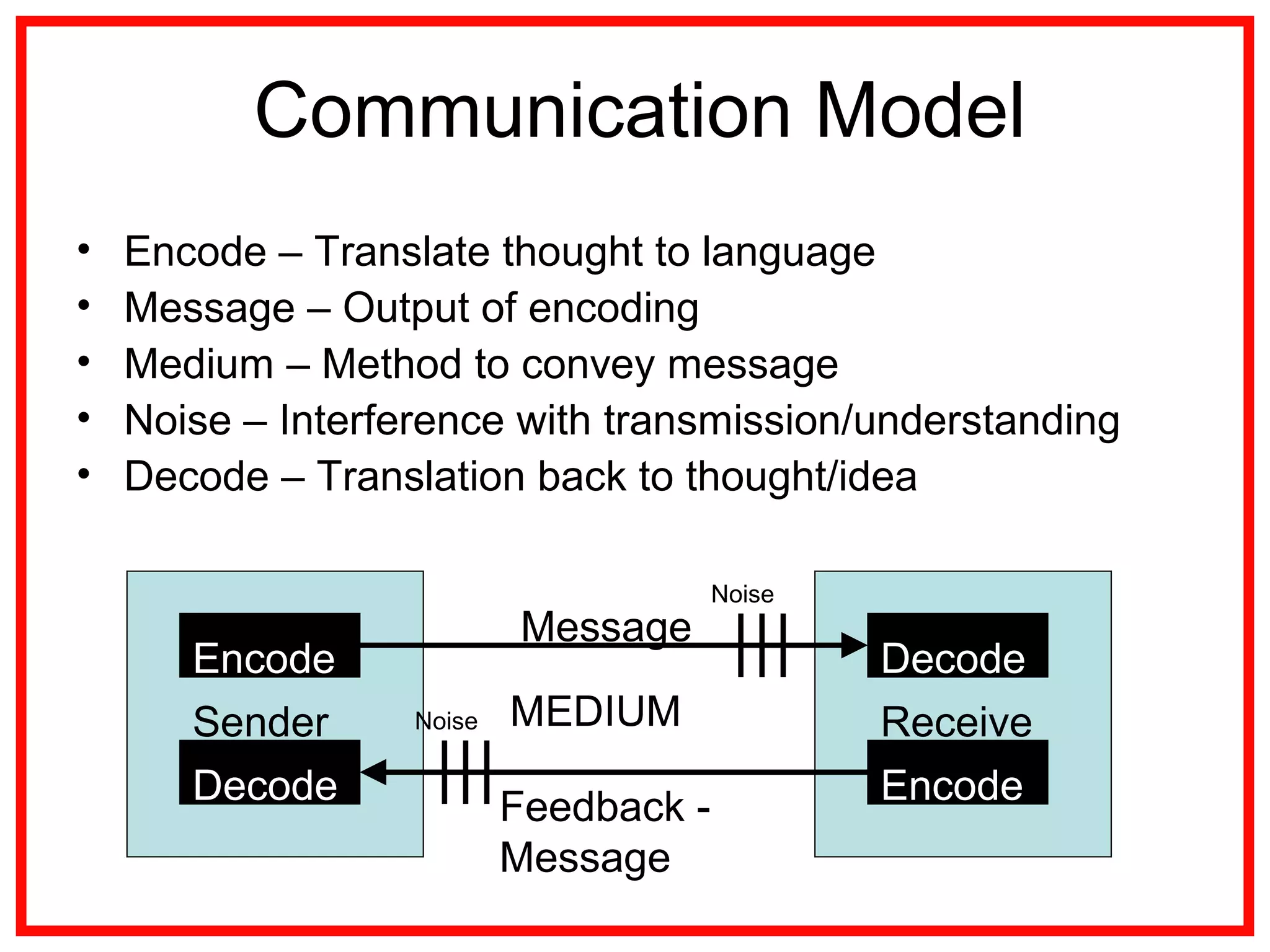
• Encode – Translate thought to language
• Message – Output of encoding
• Medium – Method to convey message
• Noise – Interference with transmission/understanding
• Decode – Translation back to thought/idea
Encode
Sender
Decode
Decode
Receive
rEncode
Message
Feedback -
Message
MEDIUM
Noise
Noise
Communication Model
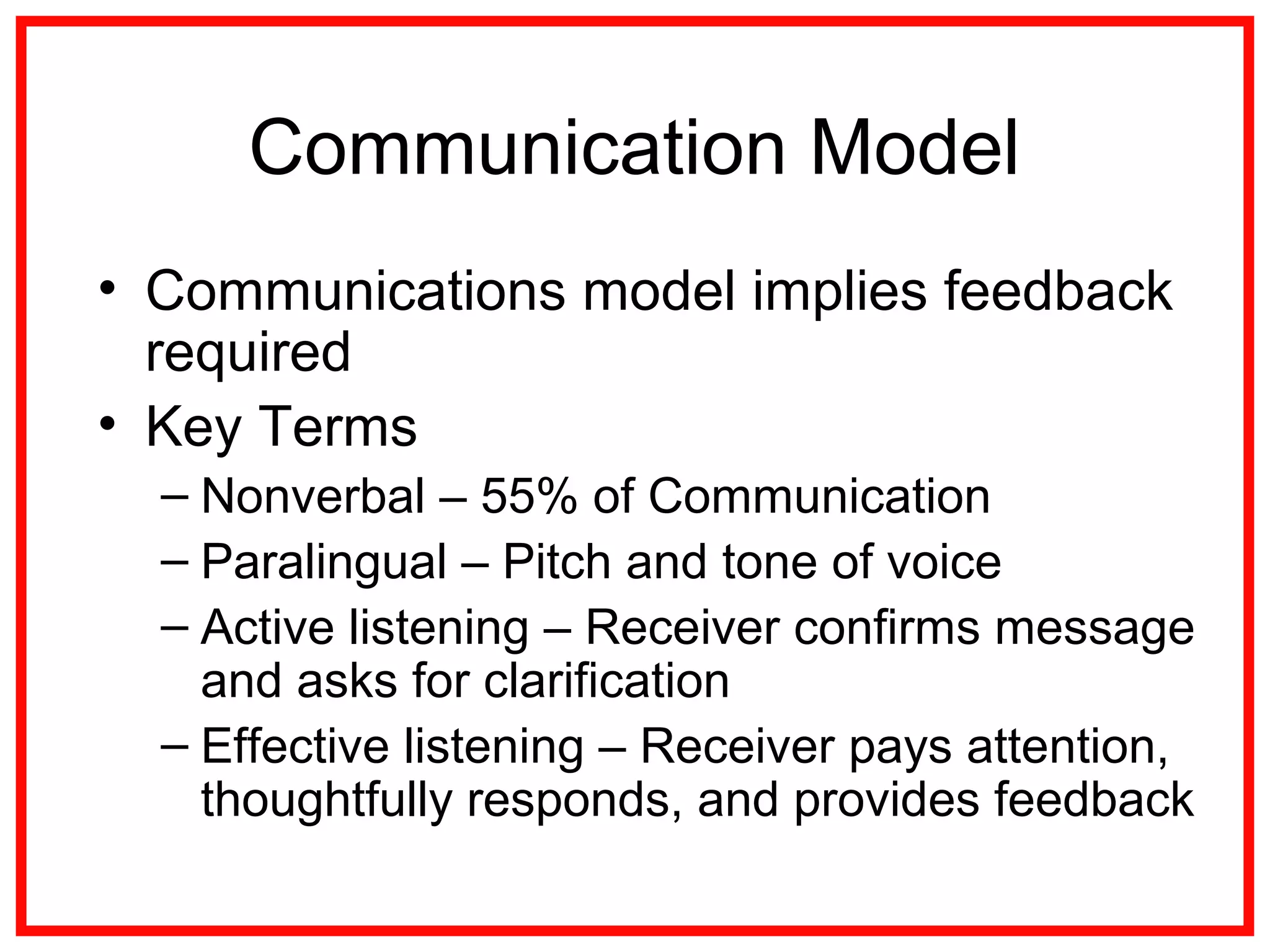
• Communications model implies feedback
required
• Key Terms
– Nonverbal – 55% of Communication
– Paralingual – Pitch and tone of voice
– Active listening – Receiver confirms message
and asks for clarification
– Effective listening – Receiver pays attention,
thoughtfully responds, and provides feedback
How Do We Manage Communications?
• Five processes
– Identify Stakeholders
– Plan Communications
– Distribute Information
– Manage Stakeholder Expectations
– Report Performance
Plan
Communication
s
Distribute
Information
Report
Performance
Manage
Stakeholder
Expectations
Identify
Stakeholders
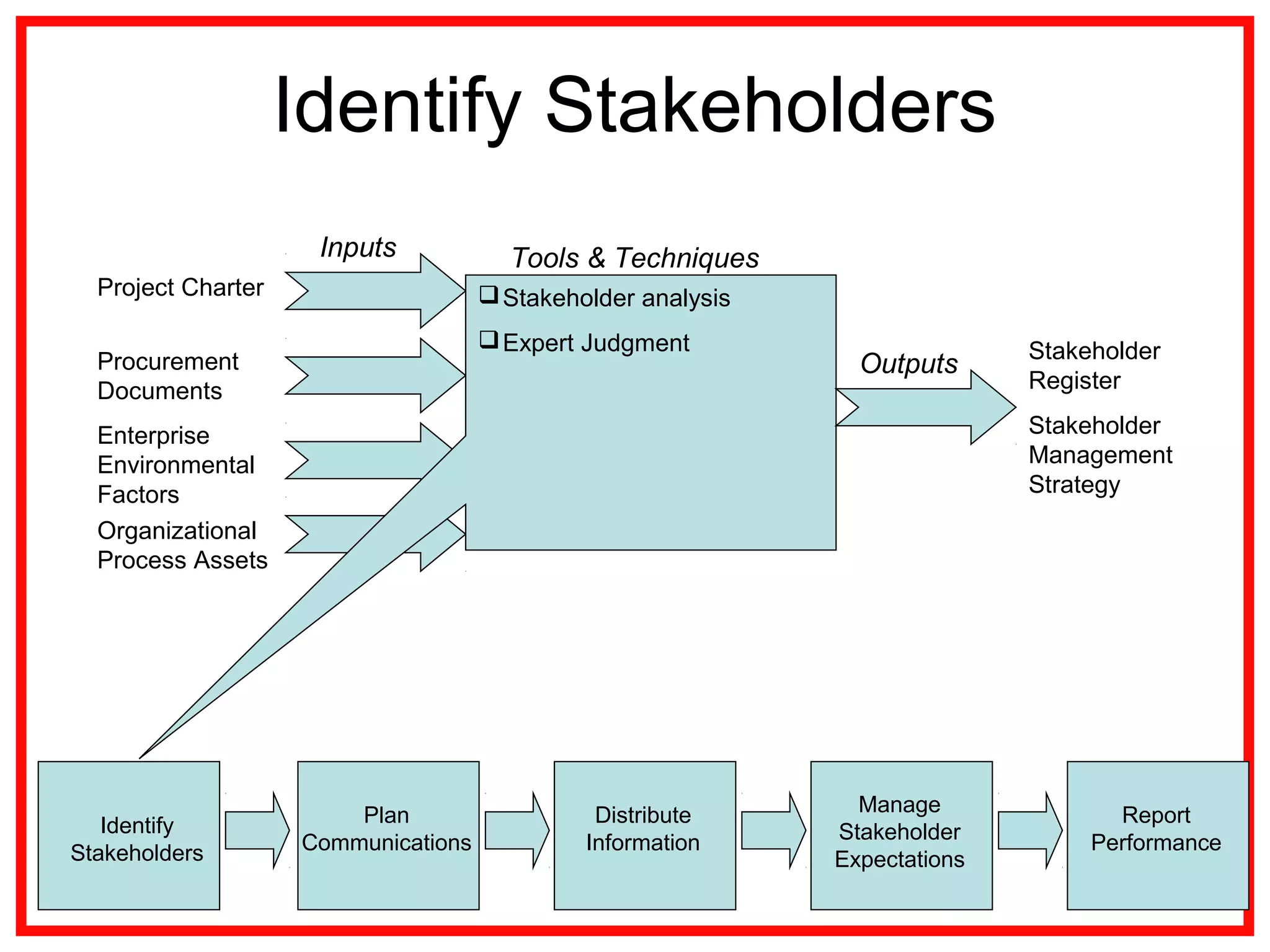
Identify Stakeholders
Project Charter
Enterprise
Environmental
Factors
Organizational
Process Assets
Procurement
Documents
Stakeholder
Register
Stakeholder
Management
Strategy
Stakeholder analysis
Expert Judgment
Inputs
Outputs
Tools & Techniques
Plan
Communications
Distribute
Information
Report
Performance
Manage
Stakeholder
Expectations
Identify
Stakeholders
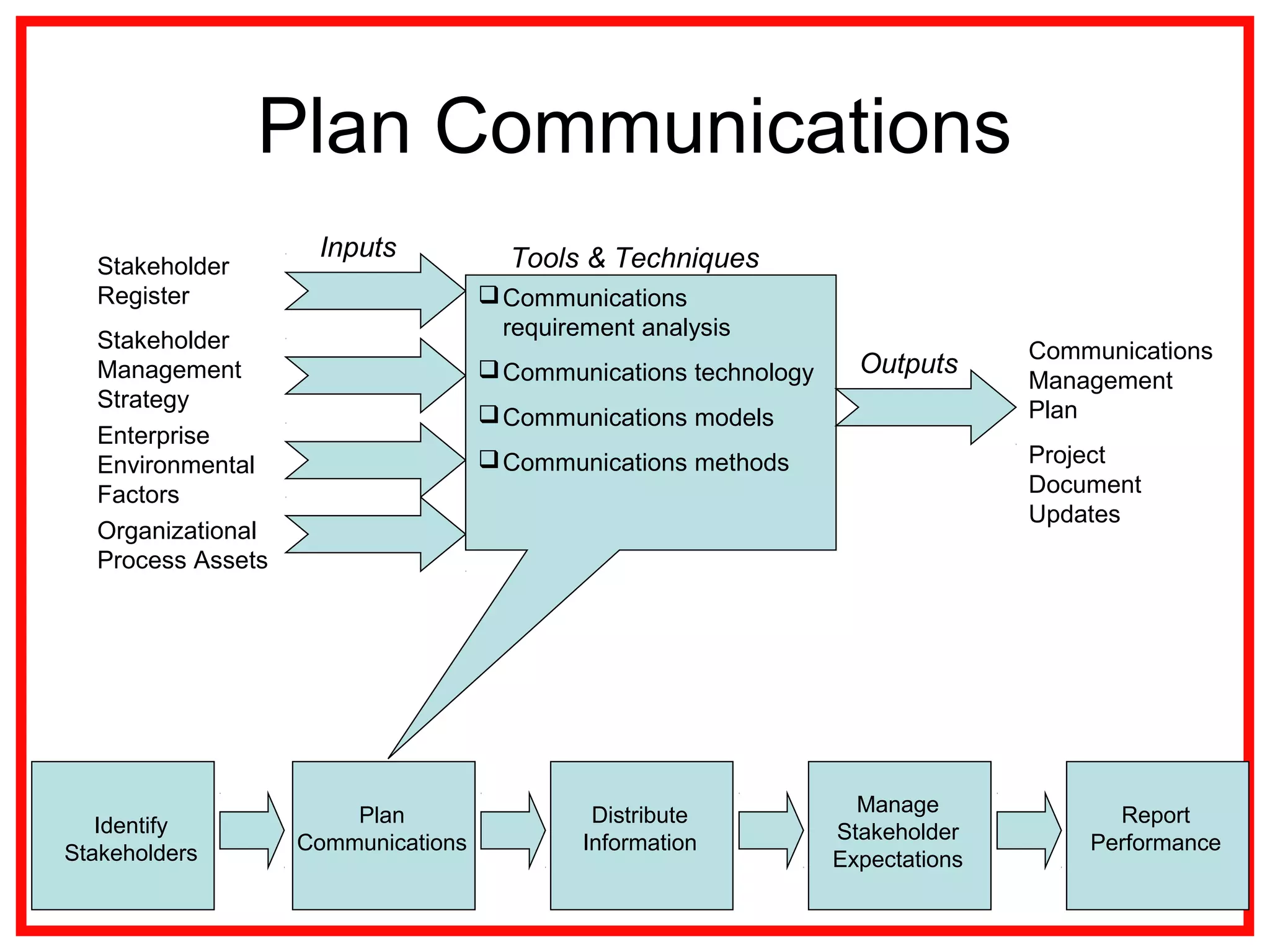
Plan Communications
Stakeholder
Register
Enterprise
Environmental
Factors
Organizational
Process Assets
Stakeholder
Management
Strategy
Communications
Management
Plan
Project
Document
Updates
Communications
requirement analysis
Communications technology
Communications models
Communications methods
Inputs
Outputs
Tools & Techniques
Plan
Communications
Distribute
Information
Report
Performance
Manage
Stakeholder
Expectations
Identify
Stakeholders
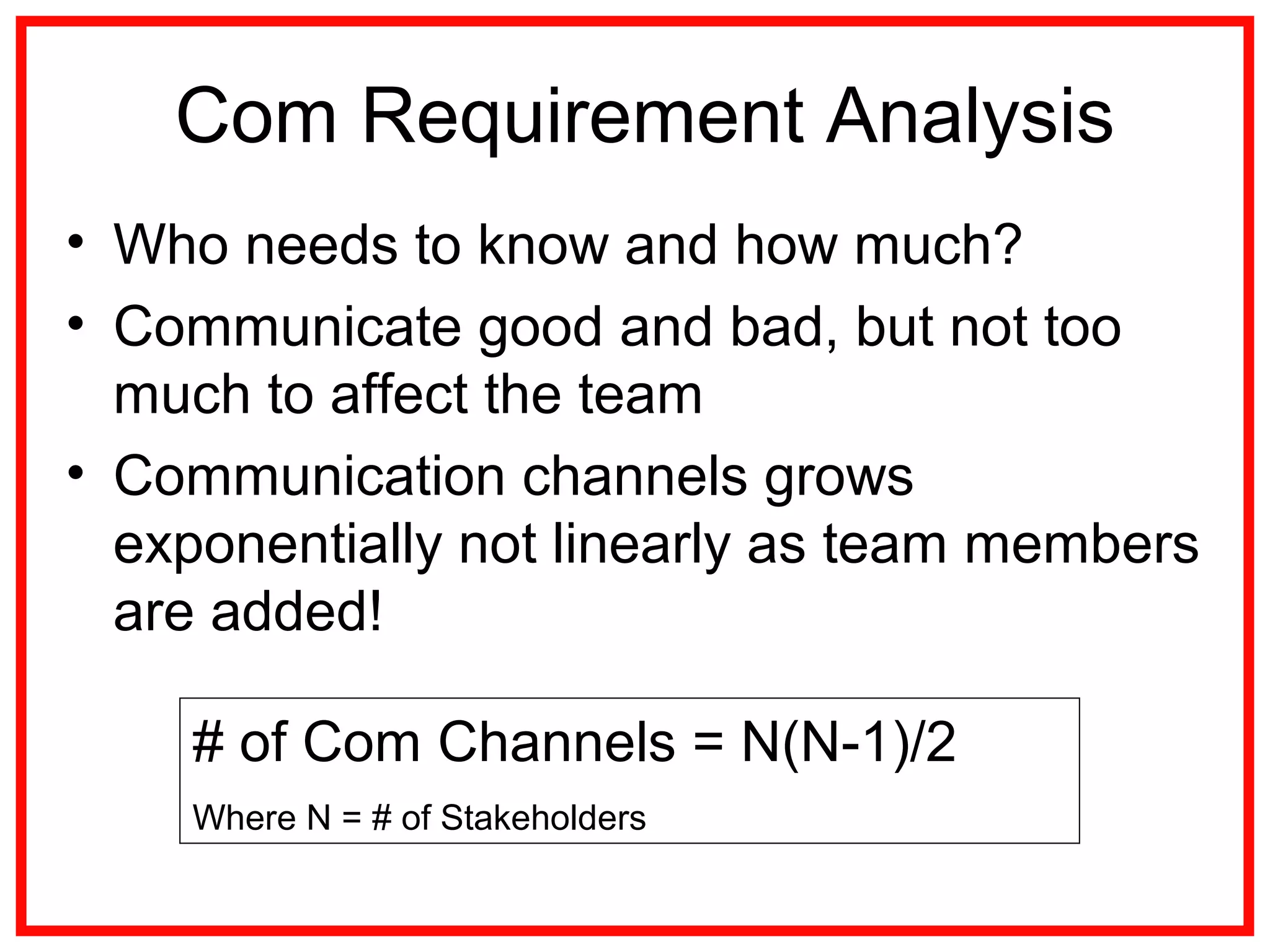
Com Requirement Analysis
• Who needs to know and how much?
• Communicate good and bad, but not too
much to affect the team
• Communication channels grows
exponentially not linearly as team members
are added!
# of Com Channels = N(N-1)/2
Where N = # of Stakeholders
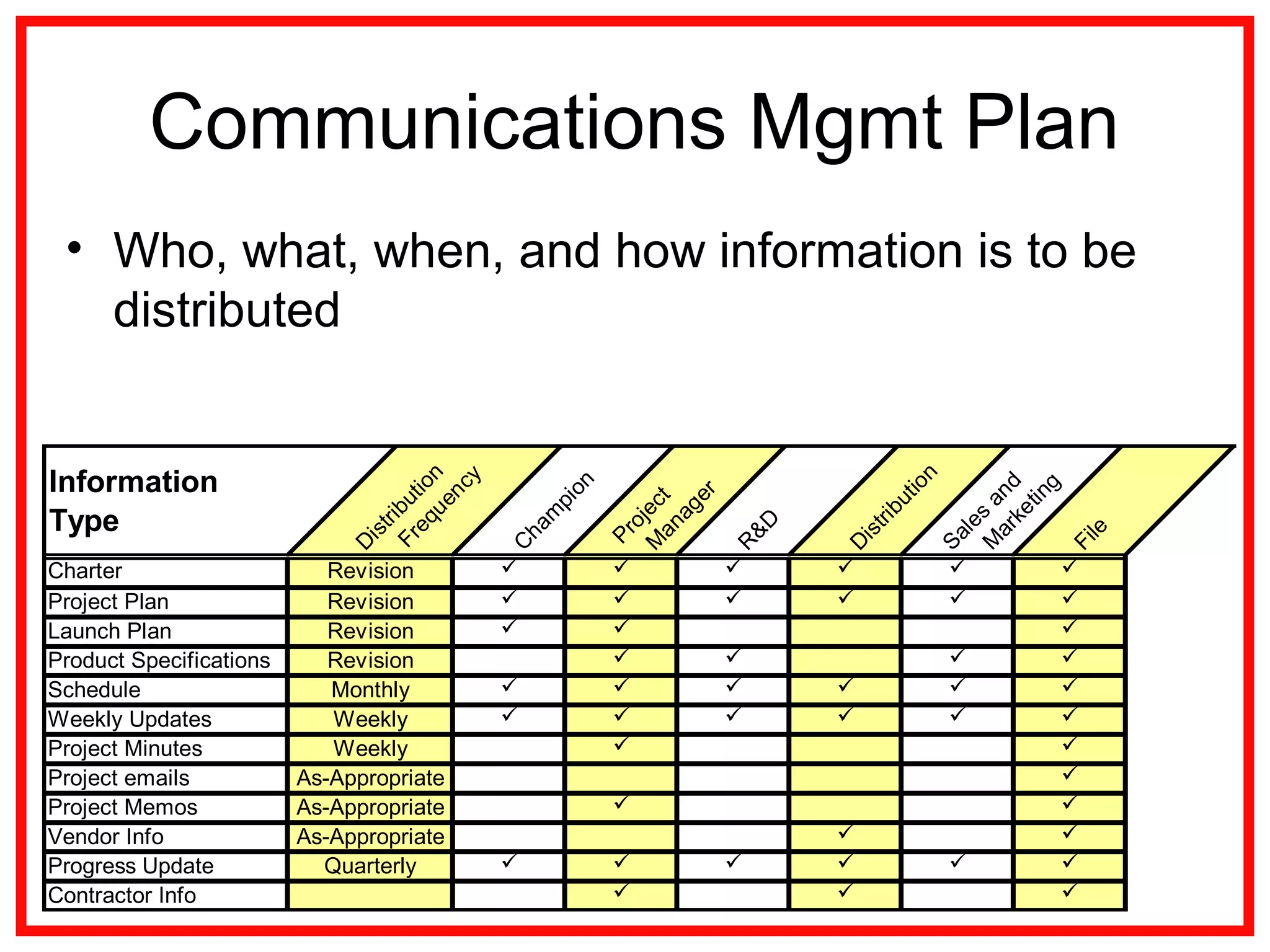
Communications Mgmt Plan
• Who, what, when, and how information is to be
distributed
Information
Type
D
istribution
Frequency
C
ham
pion
Project
M
anager
R
&D
D
istribution
Sales
and
M
arketing
File
Charter Revision      
Project Plan Revision      
Launch Plan Revision   
Product Specifications Revision    
Schedule Monthly      
Weekly Updates Weekly      
Project Minutes Weekly  
Project emails As-Appropriate 
Project Memos As-Appropriate  
Vendor Info As-Appropriate  
Progress Update Quarterly      
Contractor Info   
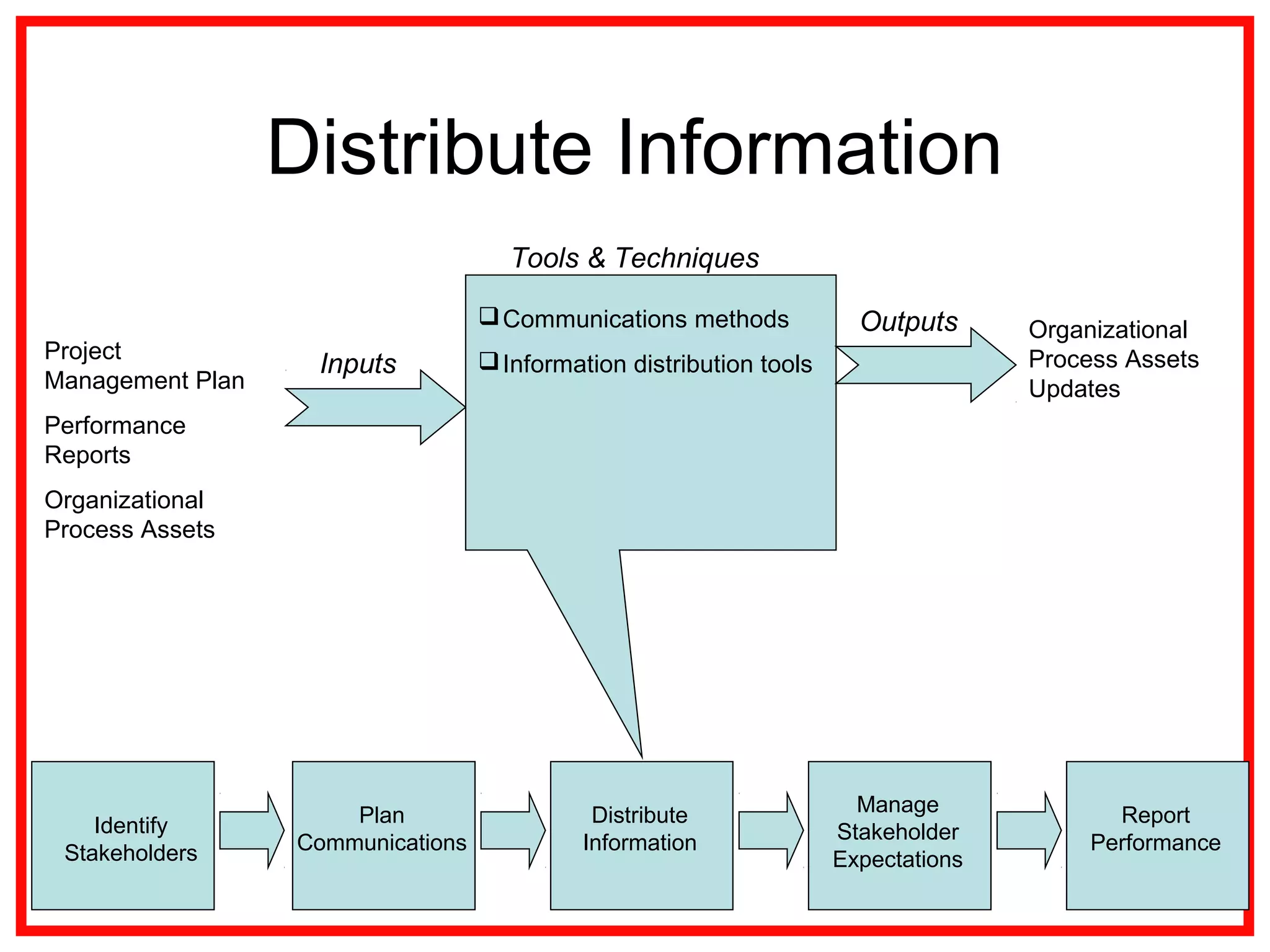
Distribute Information
Organizational
Process Assets
Updates
Communications methods
Information distribution toolsInputs
Outputs
Tools & Techniques
Project
Management Plan
Performance
Reports
Organizational
Process Assets
Plan
Communications
Distribute
Information
Report
Performance
Manage
Stakeholder
Expectations
Identify
Stakeholders
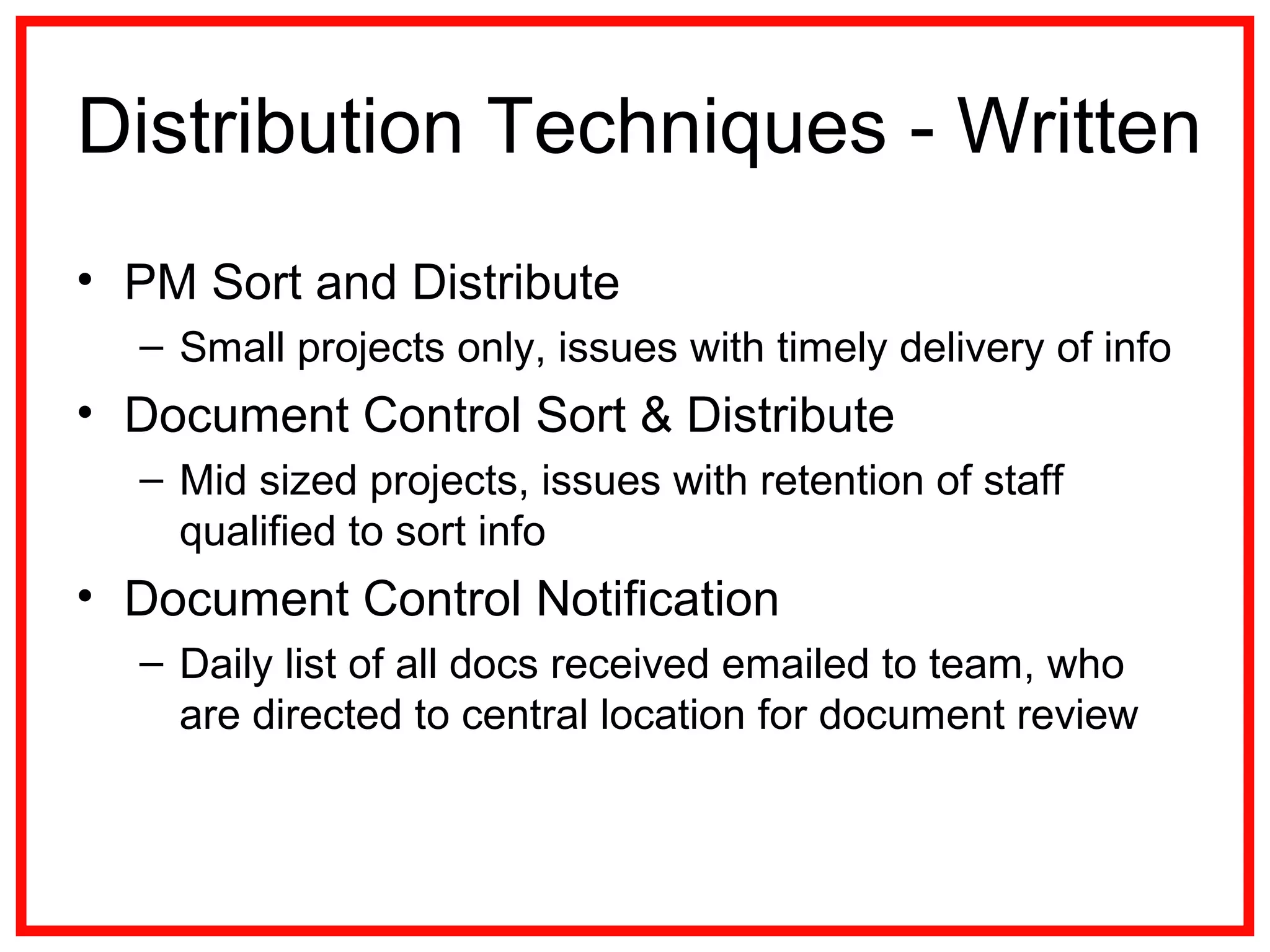
Distribution Techniques - Written
• PM Sort and Distribute
– Small projects only, issues with timely delivery of info
• Document Control Sort & Distribute
– Mid sized projects, issues with retention of staff
qualified to sort info
• Document Control Notification
– Daily list of all docs received emailed to team, who
are directed to central location for document review
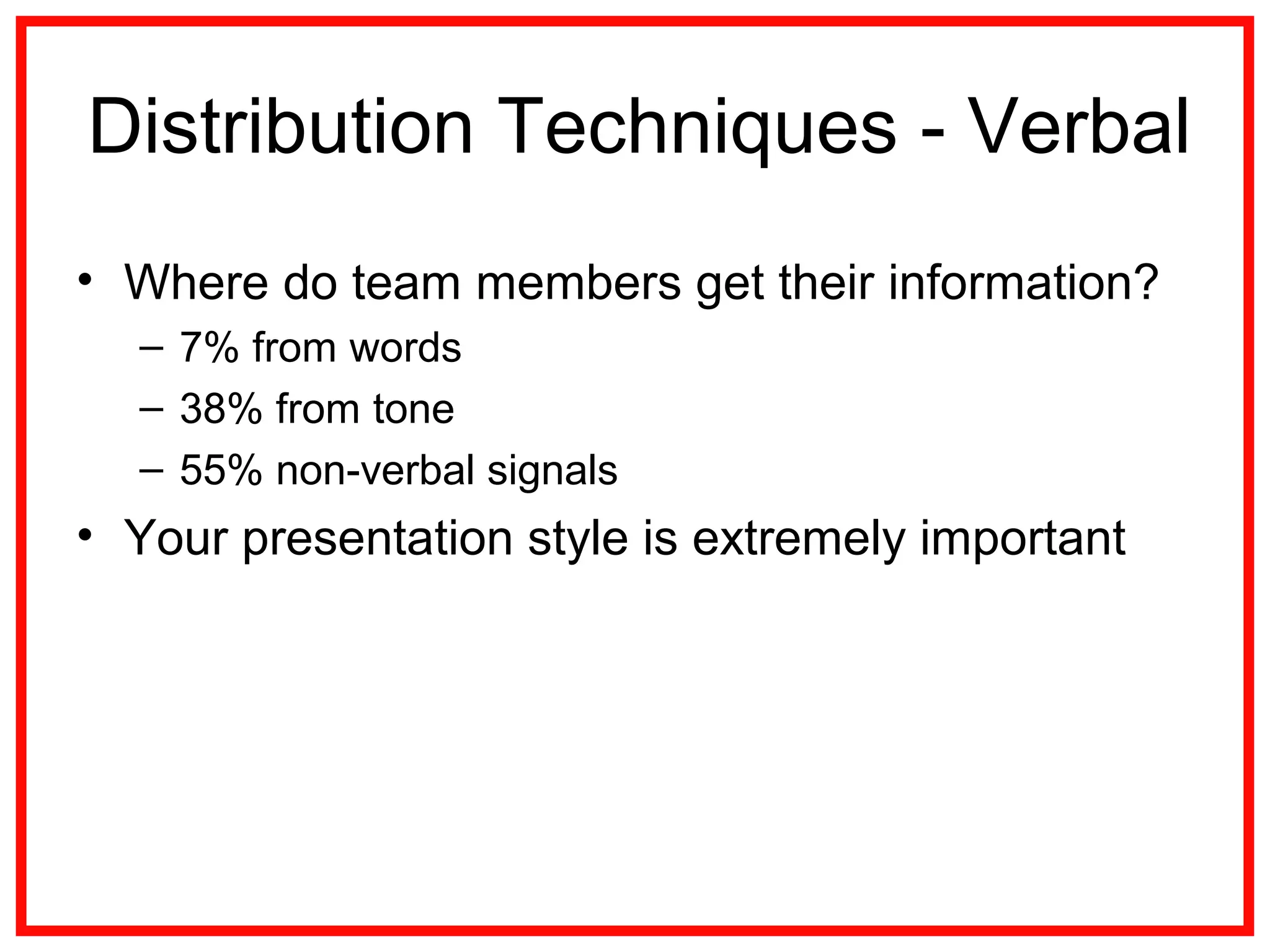
Distribution Techniques - Verbal
• Where do team members get their information?
– 7% from words
– 38% from tone
– 55% non-verbal signals
• Your presentation style is extremely important
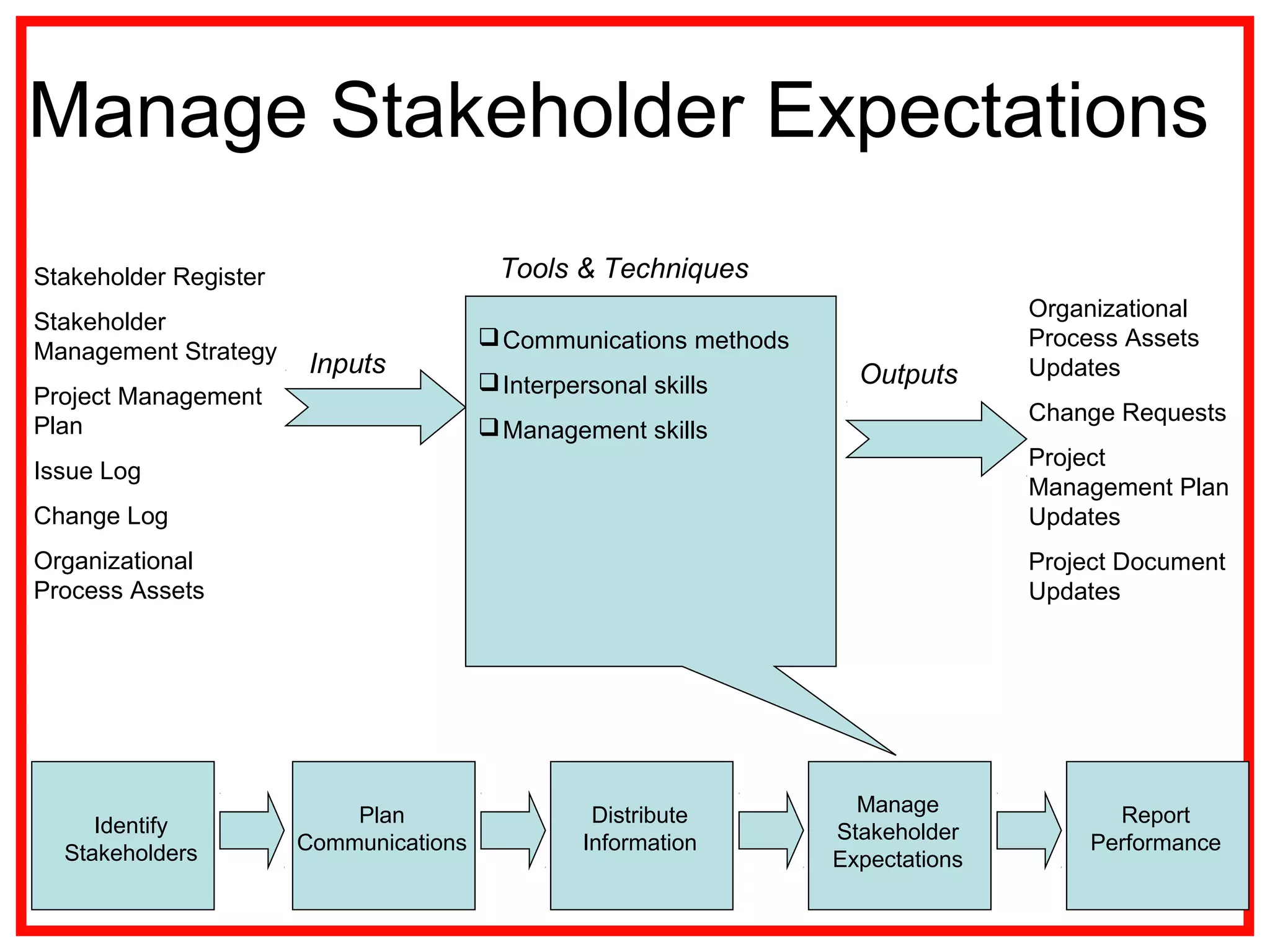
Manage Stakeholder Expectations
Stakeholder Register
Stakeholder
Management Strategy
Project Management
Plan
Issue Log
Change Log
Organizational
Process Assets
Communications methods
Interpersonal skills
Management skills
Inputs Outputs
Tools & Techniques
Organizational
Process Assets
Updates
Change Requests
Project
Management Plan
Updates
Project Document
Updates
Plan
Communications
Distribute
Information
Report
Performance
Manage
Stakeholder
Expectations
Identify
Stakeholders
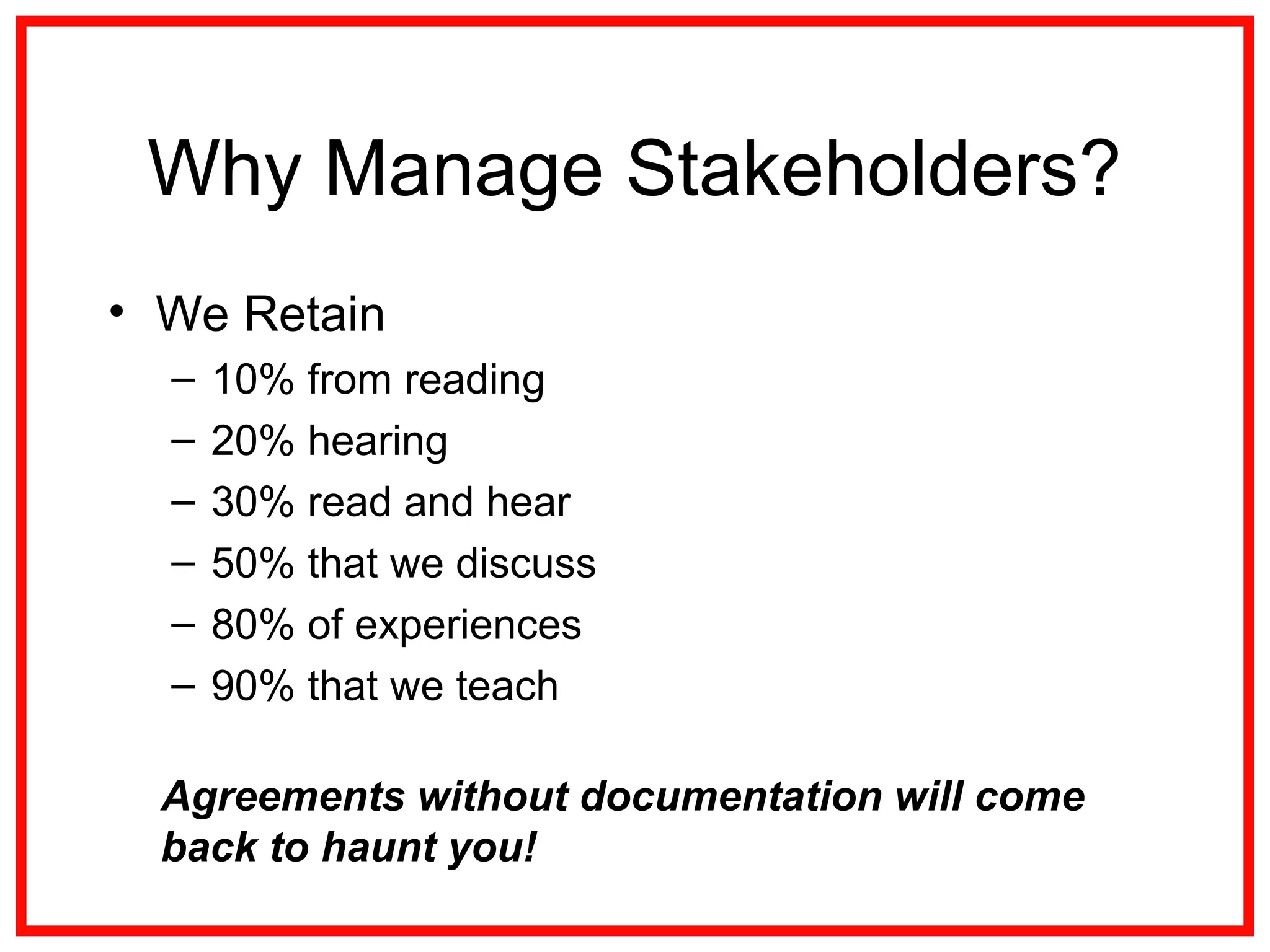
Why Manage Stakeholders?
• We Retain
– 10% from reading
– 20% hearing
– 30% read and hear
– 50% that we discuss
– 80% of experiences
– 90% that we teach
Agreements without documentation will come
back to haunt you!
Report Performance
Variance analysis
Forecasting methods
Communications methods
Reporting systems
Inputs
Outputs
Tools & Techniques
Project Management
Plan
Work Performance
Information
Work Performance
Measures
Budget Forecasts
Organizational
Process Maps
Performance
reports
Change
Requests
Organizational
Process Assets
Plan
Communications
Distribute
Information
Report
Performance
Manage
Stakeholder
Expectations
Identify
Stakeholders
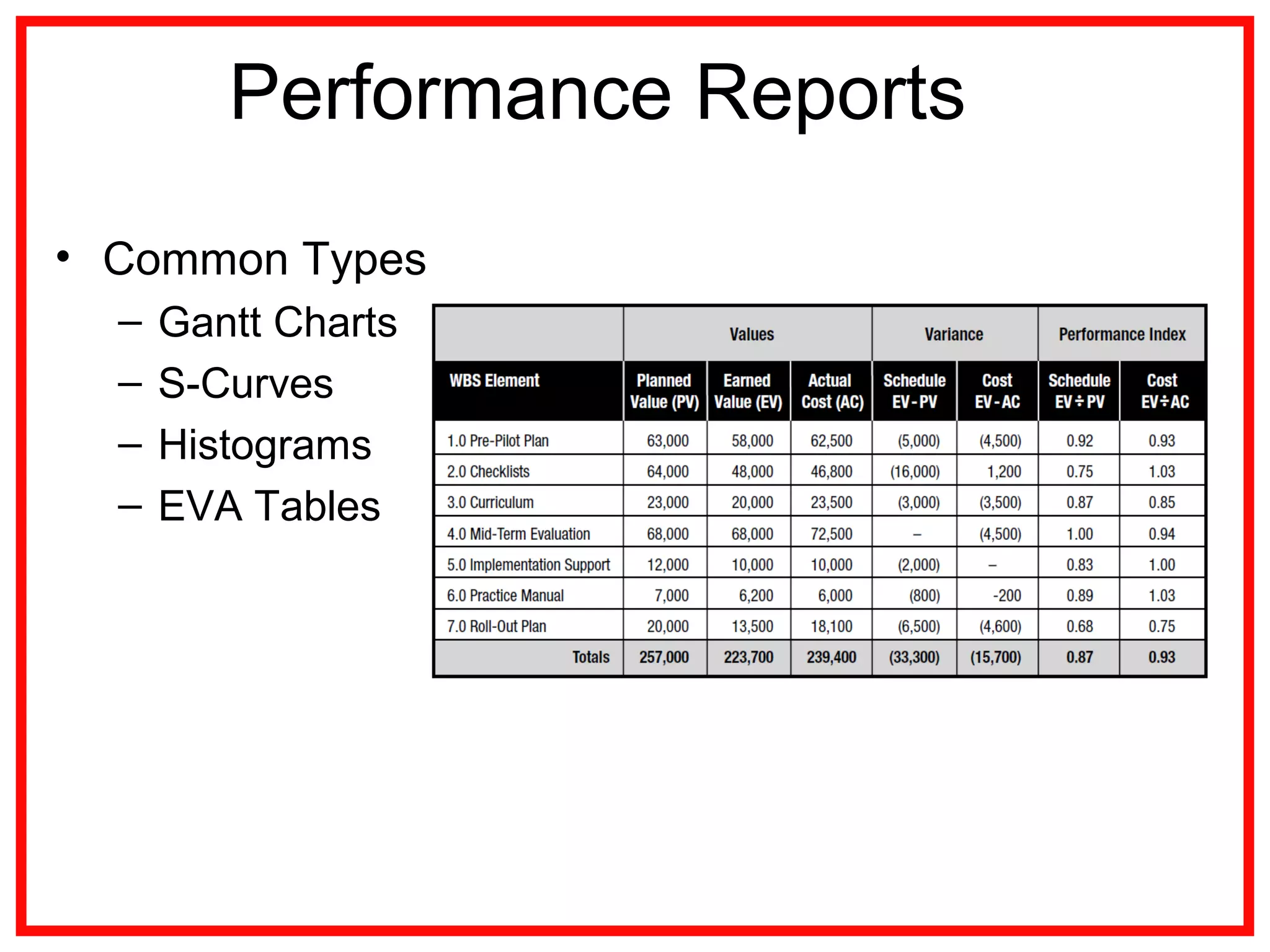
Performance Reports
• Common Types
– Gantt Charts
– S-Curves
– Histograms
– EVA Tables

11. Project Communication Management

  • 1.
  • 2.
    Communications Management • Theprocesses required to ensure timely and appropriate generation, collection, distribution, storage, recovery, and ultimate disposition of project information
  • 3.
    Why Do WeManage Communications? • Project Managers spend most of their time communicating • Communication is complex; requiring choices between: – Sender-Receiver models – Choice of media – Writing style – Presentation techniques – Meeting management
  • 4.
    Communication Model • Encode– Translate thought to language • Message – Output of encoding • Medium – Method to convey message • Noise – Interference with transmission/understanding • Decode – Translation back to thought/idea Encode Sender Decode Decode Receive rEncode Message Feedback - Message MEDIUM Noise Noise
  • 5.
    Communication Model • Communicationsmodel implies feedback required • Key Terms – Nonverbal – 55% of Communication – Paralingual – Pitch and tone of voice – Active listening – Receiver confirms message and asks for clarification – Effective listening – Receiver pays attention, thoughtfully responds, and provides feedback
  • 6.
    How Do WeManage Communications? • Five processes – Identify Stakeholders – Plan Communications – Distribute Information – Manage Stakeholder Expectations – Report Performance Plan Communication s Distribute Information Report Performance Manage Stakeholder Expectations Identify Stakeholders
  • 7.
    Identify Stakeholders Project Charter Enterprise Environmental Factors Organizational ProcessAssets Procurement Documents Stakeholder Register Stakeholder Management Strategy Stakeholder analysis Expert Judgment Inputs Outputs Tools & Techniques Plan Communications Distribute Information Report Performance Manage Stakeholder Expectations Identify Stakeholders
  • 8.
    Plan Communications Stakeholder Register Enterprise Environmental Factors Organizational Process Assets Stakeholder Management Strategy Communications Management Plan Project Document Updates Communications requirementanalysis Communications technology Communications models Communications methods Inputs Outputs Tools & Techniques Plan Communications Distribute Information Report Performance Manage Stakeholder Expectations Identify Stakeholders
  • 9.
    Com Requirement Analysis •Who needs to know and how much? • Communicate good and bad, but not too much to affect the team • Communication channels grows exponentially not linearly as team members are added! # of Com Channels = N(N-1)/2 Where N = # of Stakeholders
  • 10.
    Communications Mgmt Plan •Who, what, when, and how information is to be distributed Information Type D istribution Frequency C ham pion Project M anager R &D D istribution Sales and M arketing File Charter Revision       Project Plan Revision       Launch Plan Revision    Product Specifications Revision     Schedule Monthly       Weekly Updates Weekly       Project Minutes Weekly   Project emails As-Appropriate  Project Memos As-Appropriate   Vendor Info As-Appropriate   Progress Update Quarterly       Contractor Info   
  • 11.
    Distribute Information Organizational Process Assets Updates Communicationsmethods Information distribution toolsInputs Outputs Tools & Techniques Project Management Plan Performance Reports Organizational Process Assets Plan Communications Distribute Information Report Performance Manage Stakeholder Expectations Identify Stakeholders
  • 12.
    Distribution Techniques -Written • PM Sort and Distribute – Small projects only, issues with timely delivery of info • Document Control Sort & Distribute – Mid sized projects, issues with retention of staff qualified to sort info • Document Control Notification – Daily list of all docs received emailed to team, who are directed to central location for document review
  • 13.
    Distribution Techniques -Verbal • Where do team members get their information? – 7% from words – 38% from tone – 55% non-verbal signals • Your presentation style is extremely important
  • 14.
    Manage Stakeholder Expectations StakeholderRegister Stakeholder Management Strategy Project Management Plan Issue Log Change Log Organizational Process Assets Communications methods Interpersonal skills Management skills Inputs Outputs Tools & Techniques Organizational Process Assets Updates Change Requests Project Management Plan Updates Project Document Updates Plan Communications Distribute Information Report Performance Manage Stakeholder Expectations Identify Stakeholders
  • 15.
    Why Manage Stakeholders? •We Retain – 10% from reading – 20% hearing – 30% read and hear – 50% that we discuss – 80% of experiences – 90% that we teach Agreements without documentation will come back to haunt you!
  • 16.
    Report Performance Variance analysis Forecastingmethods Communications methods Reporting systems Inputs Outputs Tools & Techniques Project Management Plan Work Performance Information Work Performance Measures Budget Forecasts Organizational Process Maps Performance reports Change Requests Organizational Process Assets Plan Communications Distribute Information Report Performance Manage Stakeholder Expectations Identify Stakeholders
  • 17.
    Performance Reports • CommonTypes – Gantt Charts – S-Curves – Histograms – EVA Tables