PLANT EVOLUTION Evolutionary Trends Bryophytes The rise of the vascular plants The rise of the seed plants
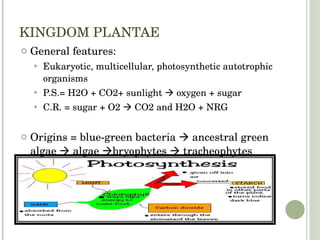
KINGDOM PLANTAE General features:  Eukaryotic, multicellular, photosynthetic autotrophic organisms P.S.= H2O + CO2+ sunlight    oxygen + sugar C.R. = sugar + O2    CO2 and H2O + NRG Origins = blue-green bacteria    ancestral green algae    algae   bryophytes    tracheophytes
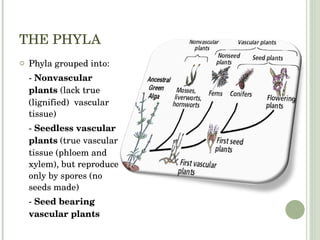
THE PHYLA Phyla grouped into: -  Nonvascular plants  (lack true (lignified)  vascular tissue) -  Seedless vascular plants  (true vascular tissue (phloem and xylem), but reproduce only by spores (no seeds made) -  Seed bearing vascular plants
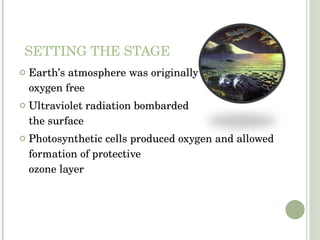
SETTING THE STAGE Earth’s atmosphere was originally oxygen free Ultraviolet radiation bombarded the surface Photosynthetic cells produced oxygen and allowed formation of protective ozone layer
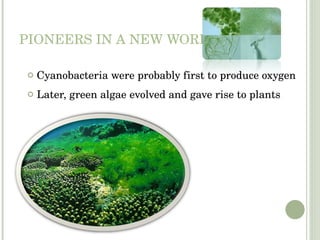
PIONEERS IN A NEW WORLD Cyanobacteria were probably first to produce oxygen Later, green algae evolved and gave rise to plants
ADVANTAGES AND DISADVANTAGES  OF LIFE ON LAND Sunlight unfiltered by water and plankton Atmosphere had more CO2 than water Soil was rich in mineral nutrients Originally relatively few herbivores and pathogens Relative scarcity of water Lack of structural support against gravity Advantages: Disadvantages:
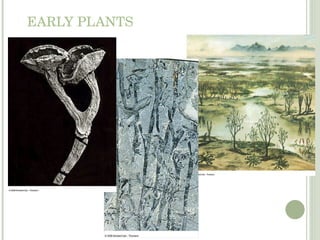
EARLY PLANTS
 
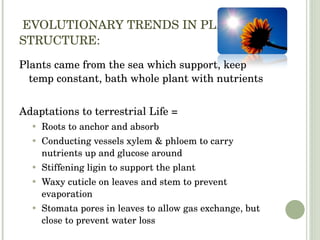
  EVOLUTIONARY TRENDS IN PLANTS STRUCTURE: Plants came from the sea which support, keep temp constant, bath whole plant with nutrients Adaptations to terrestrial Life =  Roots to anchor and absorb  Conducting vessels xylem & phloem to carry nutrients up and glucose around Stiffening ligin to support the plant Waxy cuticle on leaves and stem to prevent evaporation Stomata pores in leaves to allow gas exchange, but close to prevent water loss
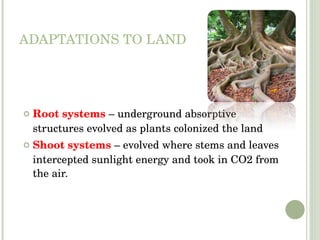
ADAPTATIONS TO LAND Root systems  – underground absorptive structures evolved as plants colonized the land Shoot systems  – evolved where stems and leaves  intercepted sunlight energy and took in CO2 from the air.
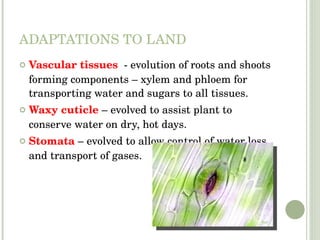
ADAPTATIONS TO LAND Vascular tissues  - evolution of roots and shoots forming components – xylem and phloem for transporting water and sugars to all tissues. Waxy cuticle  – evolved to assist plant to conserve water on dry, hot days.  Stomata  – evolved to allow control of water loss and transport of gases.
EVOLUTIONARY TRENDS IN REPRODUCTION: Algae reproduce in water so gametes are carries by water, form zygotes in water and disperse in water. Ie No protection from dehydration required Land  plants needed: Transport gametes (pollen, flowers) Protection from drying out (seeds) Dispersal (seed coats & fruits)
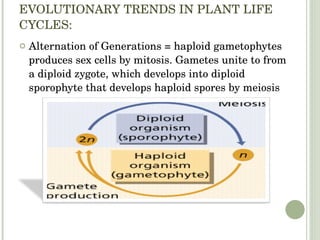
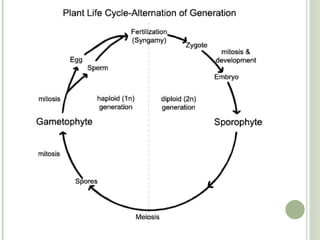
EVOLUTIONARY TRENDS IN PLANT LIFE CYCLES: Alternation of Generations = haploid gametophytes produces sex cells by mitosis. Gametes unite to from a diploid zygote, which develops into diploid sporophyte that develops haploid spores by meiosis
HAPLOID TO DIPLOID Gametophyte Haploid gamete producing body Sporophyte Diploid product of fused gametes Spore Resting structure The most recently evolved groups produce seeds and pollen grains which were the key innovations that allowed the seed plants to spread widely into diverse habitats.
 
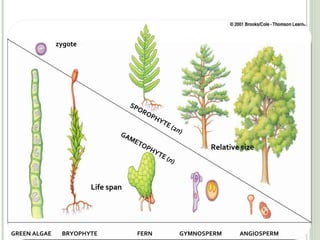
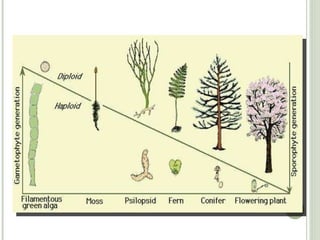
EVOLUTIONARY TREND zygote SPOROPHYTE (2 n ) GAMETOPHYTE ( n ) GREEN ALGAE BRYOPHYTE FERN GYMNOSPERM ANGIOSPERM Relative size Life span
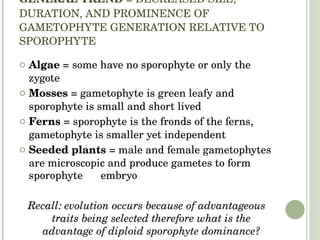
GENERAL TREND  = DECREASED SIZE, DURATION, AND PROMINENCE OF GAMETOPHYTE GENERATION RELATIVE TO SPOROPHYTE Algae  = some have no sporophyte or only the zygote Mosses  = gametophyte is green leafy and sporophyte is small and short lived Ferns  = sporophyte is the fronds of the ferns, gametophyte is smaller yet independent Seeded plants  = male and female gametophytes are microscopic and produce gametes to form sporophyte  embryo Recall: evolution occurs because of advantageous traits being selected therefore what is the advantage of diploid sporophyte dominance?
 
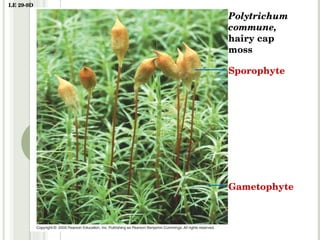
SPOROPHYTE The generation in the life cycle of a plant that produces spores. Is diploid but its spores are haploid. Either completely or partially dependent on the gametophyte generation in mosses and liverworts, but is the dominant plant in the life cycle of clubmosses, horsetails, ferns and seed plants.
LE 29-9D Polytrichum commune, hairy cap moss Sporophyte Gametophyte

Earland Plant Evolution Trends

  • 1.
    PLANT EVOLUTION EvolutionaryTrends Bryophytes The rise of the vascular plants The rise of the seed plants
  • 2.
    KINGDOM PLANTAE Generalfeatures: Eukaryotic, multicellular, photosynthetic autotrophic organisms P.S.= H2O + CO2+ sunlight  oxygen + sugar C.R. = sugar + O2  CO2 and H2O + NRG Origins = blue-green bacteria  ancestral green algae  algae  bryophytes  tracheophytes
  • 3.
    THE PHYLA Phylagrouped into: - Nonvascular plants (lack true (lignified) vascular tissue) - Seedless vascular plants (true vascular tissue (phloem and xylem), but reproduce only by spores (no seeds made) - Seed bearing vascular plants
  • 4.
    SETTING THE STAGEEarth’s atmosphere was originally oxygen free Ultraviolet radiation bombarded the surface Photosynthetic cells produced oxygen and allowed formation of protective ozone layer
  • 5.
    PIONEERS IN ANEW WORLD Cyanobacteria were probably first to produce oxygen Later, green algae evolved and gave rise to plants
  • 6.
    ADVANTAGES AND DISADVANTAGES OF LIFE ON LAND Sunlight unfiltered by water and plankton Atmosphere had more CO2 than water Soil was rich in mineral nutrients Originally relatively few herbivores and pathogens Relative scarcity of water Lack of structural support against gravity Advantages: Disadvantages:
  • 7.
  • 8.
  • 9.
    EVOLUTIONARYTRENDS IN PLANTS STRUCTURE: Plants came from the sea which support, keep temp constant, bath whole plant with nutrients Adaptations to terrestrial Life = Roots to anchor and absorb Conducting vessels xylem & phloem to carry nutrients up and glucose around Stiffening ligin to support the plant Waxy cuticle on leaves and stem to prevent evaporation Stomata pores in leaves to allow gas exchange, but close to prevent water loss
  • 10.
    ADAPTATIONS TO LANDRoot systems – underground absorptive structures evolved as plants colonized the land Shoot systems – evolved where stems and leaves intercepted sunlight energy and took in CO2 from the air.
  • 11.
    ADAPTATIONS TO LANDVascular tissues - evolution of roots and shoots forming components – xylem and phloem for transporting water and sugars to all tissues. Waxy cuticle – evolved to assist plant to conserve water on dry, hot days. Stomata – evolved to allow control of water loss and transport of gases.
  • 12.
    EVOLUTIONARY TRENDS INREPRODUCTION: Algae reproduce in water so gametes are carries by water, form zygotes in water and disperse in water. Ie No protection from dehydration required Land plants needed: Transport gametes (pollen, flowers) Protection from drying out (seeds) Dispersal (seed coats & fruits)
  • 13.
    EVOLUTIONARY TRENDS INPLANT LIFE CYCLES: Alternation of Generations = haploid gametophytes produces sex cells by mitosis. Gametes unite to from a diploid zygote, which develops into diploid sporophyte that develops haploid spores by meiosis
  • 14.
    HAPLOID TO DIPLOIDGametophyte Haploid gamete producing body Sporophyte Diploid product of fused gametes Spore Resting structure The most recently evolved groups produce seeds and pollen grains which were the key innovations that allowed the seed plants to spread widely into diverse habitats.
  • 15.
  • 16.
    EVOLUTIONARY TREND zygoteSPOROPHYTE (2 n ) GAMETOPHYTE ( n ) GREEN ALGAE BRYOPHYTE FERN GYMNOSPERM ANGIOSPERM Relative size Life span
  • 17.
    GENERAL TREND = DECREASED SIZE, DURATION, AND PROMINENCE OF GAMETOPHYTE GENERATION RELATIVE TO SPOROPHYTE Algae = some have no sporophyte or only the zygote Mosses = gametophyte is green leafy and sporophyte is small and short lived Ferns = sporophyte is the fronds of the ferns, gametophyte is smaller yet independent Seeded plants = male and female gametophytes are microscopic and produce gametes to form sporophyte embryo Recall: evolution occurs because of advantageous traits being selected therefore what is the advantage of diploid sporophyte dominance?
  • 18.
  • 19.
    SPOROPHYTE The generationin the life cycle of a plant that produces spores. Is diploid but its spores are haploid. Either completely or partially dependent on the gametophyte generation in mosses and liverworts, but is the dominant plant in the life cycle of clubmosses, horsetails, ferns and seed plants.
  • 20.
    LE 29-9D Polytrichumcommune, hairy cap moss Sporophyte Gametophyte