INTRODUCTION TO PLANTS   Characteristics of Plants Nonvascular Simple Vascular
 
Miscellaneous plant Info Plants live on land with some in water—range from microscopic to huge (giant sequoia) 1 st  plants probably algae washed up on land—grew rhizoids Red, yellow, or orange (think carrots) pigments found in some cells of plants are carotinoids Oldest plant fossils are from the Silurian period about 420 million yrs. ago
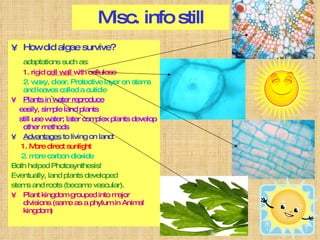
Misc. info still How did algae survive? adaptations such as: 1. rigid  cell wall  with cellulose 2. waxy, clear. Protective layer on stems and leaves called a cuticle Plants in water reproduce easily, simple land plants still use water; later complex plants develop other methods Advantages  to living on land: 1. More direct sunlight 2. more carbon dioxide Both helped Photosynthesis! Eventually, land plants developed stems and roots (became vascular). Plant kingdom grouped into major divisions (same as a phylum in Animal kingdom)
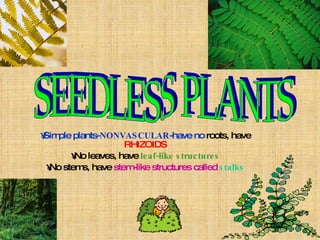
Simple plants- NONVASCULAR -have no  roots, have  RHIZOIDS No leaves, have  leaf-like structures No stems, have  stem-like structures called  stalks SEEDLESS PLANTS
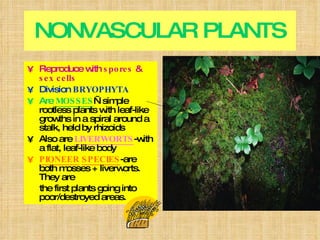
NONVASCULAR PLANTS Reproduce with  spores  &  sex   cells Division  BRYOPHYTA Are  MOSSES —simple rootless plants with leaf-like growths in a spiral around a stalk, held by rhizoids Also are  LIVERWORTS -with a flat, leaf-like body PIONEER   SPECIES -are both mosses + liverworts. They are the first plants going into poor/destroyed areas.
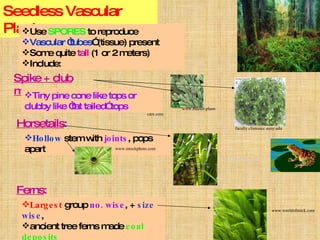
Seedless Vascular Plants: Use  SPORES  to reproduce Vascular “tubes ” (tissue) present Some quite  tall  (1 or 2 meters) Include: Spike + club moss : Tiny pine cone like tops or clubby like “fat tailed” tops  Horsetails : Hollow  stem with  joints , pops apart Ferns : Largest  group  no. wise , +  size wise ,  ancient tree ferns made  coal deposits www.istockphoto.com  www.istockphoto.com www.indoor-plant-care.com  faculty.clintoncc.suny.edu www.worldofstock.com
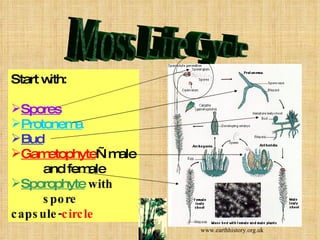
Moss Life Cycle www.earthhistory.org.uk  Start with: Spores Protonema Bud Gametophyte —male  and female Sporophyte   with  spore  capsule- circle
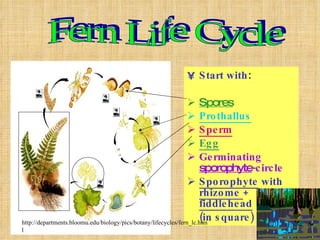
Start with : Spores Prothallus Sperm Egg Germinating  sporophyte -circle Sporophyte  with  rhizome  +  fiddlehead (in square) Fern Life Cycle http://departments.bloomu.edu/biology/pics/botany/lifecycles/fern_lc.html

Intro. to plants ppt ch.10

  • 1.
    INTRODUCTION TO PLANTS Characteristics of Plants Nonvascular Simple Vascular
  • 2.
  • 3.
    Miscellaneous plant InfoPlants live on land with some in water—range from microscopic to huge (giant sequoia) 1 st plants probably algae washed up on land—grew rhizoids Red, yellow, or orange (think carrots) pigments found in some cells of plants are carotinoids Oldest plant fossils are from the Silurian period about 420 million yrs. ago
  • 4.
    Misc. info stillHow did algae survive? adaptations such as: 1. rigid cell wall with cellulose 2. waxy, clear. Protective layer on stems and leaves called a cuticle Plants in water reproduce easily, simple land plants still use water; later complex plants develop other methods Advantages to living on land: 1. More direct sunlight 2. more carbon dioxide Both helped Photosynthesis! Eventually, land plants developed stems and roots (became vascular). Plant kingdom grouped into major divisions (same as a phylum in Animal kingdom)
  • 5.
    Simple plants- NONVASCULAR-have no roots, have RHIZOIDS No leaves, have leaf-like structures No stems, have stem-like structures called stalks SEEDLESS PLANTS
  • 6.
    NONVASCULAR PLANTS Reproducewith spores & sex cells Division BRYOPHYTA Are MOSSES —simple rootless plants with leaf-like growths in a spiral around a stalk, held by rhizoids Also are LIVERWORTS -with a flat, leaf-like body PIONEER SPECIES -are both mosses + liverworts. They are the first plants going into poor/destroyed areas.
  • 7.
    Seedless Vascular Plants:Use SPORES to reproduce Vascular “tubes ” (tissue) present Some quite tall (1 or 2 meters) Include: Spike + club moss : Tiny pine cone like tops or clubby like “fat tailed” tops Horsetails : Hollow stem with joints , pops apart Ferns : Largest group no. wise , + size wise , ancient tree ferns made coal deposits www.istockphoto.com www.istockphoto.com www.indoor-plant-care.com faculty.clintoncc.suny.edu www.worldofstock.com
  • 8.
    Moss Life Cyclewww.earthhistory.org.uk Start with: Spores Protonema Bud Gametophyte —male and female Sporophyte with spore capsule- circle
  • 9.
    Start with :Spores Prothallus Sperm Egg Germinating sporophyte -circle Sporophyte with rhizome + fiddlehead (in square) Fern Life Cycle http://departments.bloomu.edu/biology/pics/botany/lifecycles/fern_lc.html